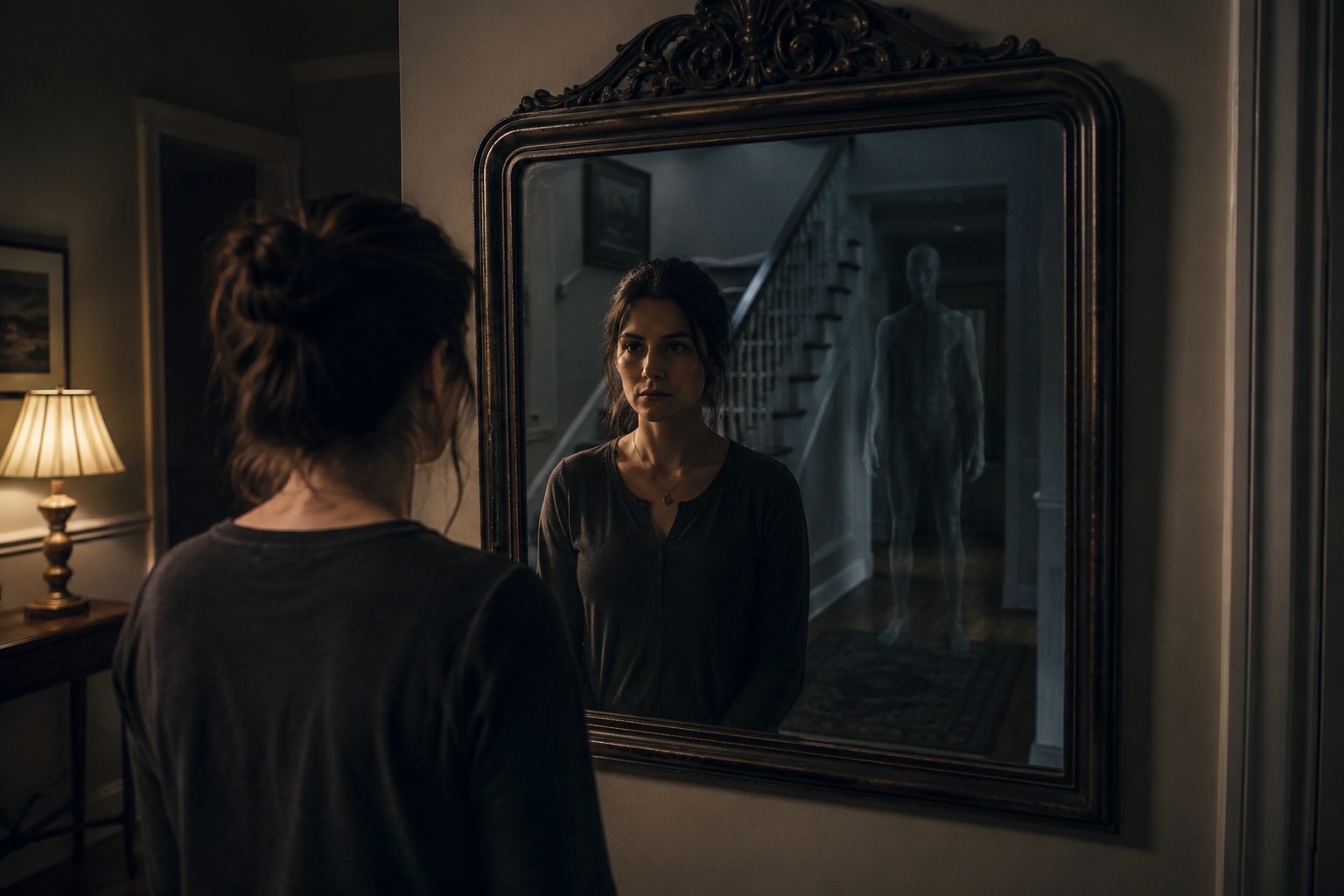
A woman stood in the hallway after midnight, brushing her hair before the old mirror hanging near the front door. The house was silent except for the slow hum of the refrigerator somewhere behind her. She looked tired, stared at her own reflection, and almost walked away.
Then she noticed someone standing several feet behind her. Not a clear person. Not someone she recognized. Just a tall human shape with no face, its shoulders slightly too low, as if its neck bent at the wrong angle. It wasn't touching the floor. It seemed to fade into the darkness near the staircase.
She spun around. The hallway was empty. Her heart slowed just enough for her to laugh at herself. Maybe it had been a coat hanging on the rack. Maybe her eyes had played a trick. She looked back into the mirror. The shape was there again.
This time it seemed closer, standing exactly where the empty hallway should have been. She looked over her shoulder once more. Nothing. The space behind her was still empty. Only the mirror insisted that someone was waiting. Stories like this have appeared for generations. Whether people believe they saw something supernatural or think their minds briefly misread what they were seeing, mirrors are one of the most common places where witnesses describe seeing a person who wasn't really standing behind them. Why does this happen so often, and why do these stories feel so much more frightening than ordinary shadows?
The First Time It Happened
Mirrors make small mistakes feel huge. Mirrors are strange because we trust them completely. When we glance at a doorway, we expect shadows and poor lighting. But when we look into a mirror, our brain assumes everything should match the real room perfectly. That expectation makes even a tiny mismatch feel alarming.
Many witness stories begin with someone checking their hair, washing their hands, or walking past a mirror without paying much attention. They aren't expecting anything unusual. Then they notice something that doesn't belong. Sometimes it's a blurred person standing behind them. Sometimes it's a pale face near a doorway reflected in the glass.
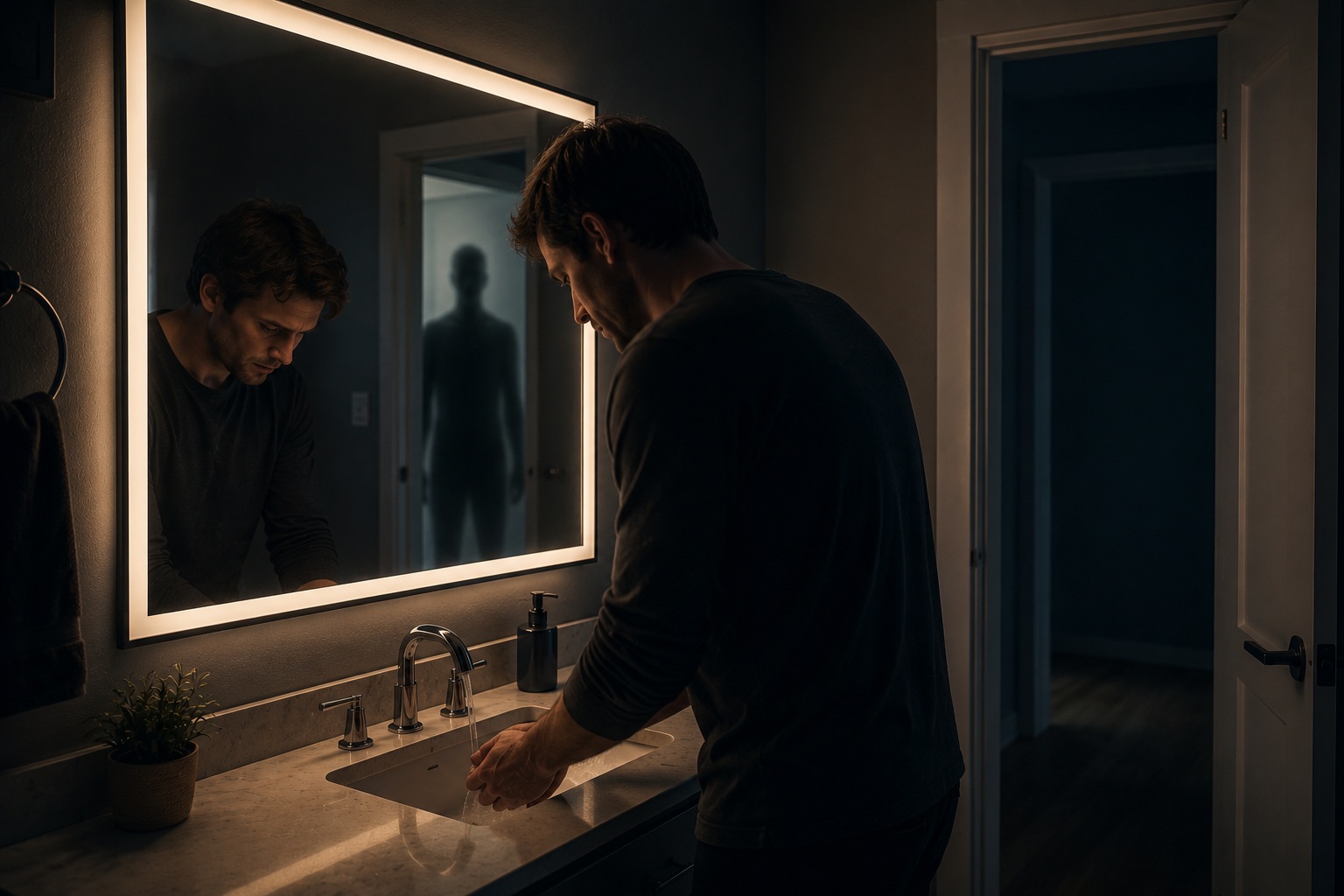
Sometimes it's a figure that seems too tall, too still, or partly hidden inside a wall that should be solid. The frightening part isn't only the figure itself. It's that the room behind them appears completely empty when they turn around. That impossible disagreement between the room and its reflection creates a feeling people struggle to forget.
Why The Place Felt Wrong
The reflection is wrong in only one way. Mirror stories are usually more effective when only one detail is impossible. If everything looked distorted, people would assume the mirror was damaged or the lighting was unusual. Instead, witnesses often describe an ordinary reflection with one clear contradiction.
The room looks normal. The furniture is where it should be. The lights match. Only one extra person appears.
Or the reflected figure has no face. Or it seems transparent. Or it is standing partly inside a closed door instead of in front of it. That single wrong detail is enough to turn an everyday reflection into something deeply unsettling.
Many paranormal stories use exactly this pattern because it feels believable at first glance. The brain accepts almost everything it sees before suddenly noticing the one thing that cannot fit. That delayed realization is what creates the shock.
The Detail Nobody Could Explain
Why people check the room again and again is part of the pattern. After seeing something unusual in a mirror, most people don't immediately decide it was paranormal. They begin checking ordinary explanations. They turn on brighter lights. They move coats hanging on hooks.
They look behind furniture. They check whether another room was reflecting into the glass. Some even leave the room and return a few minutes later. Others cover the mirror entirely because they no longer feel comfortable looking into it after dark.
Witness stories often describe repeated checking rather than immediate panic. That detail appears again and again because people naturally want reality to make sense. If the figure disappears after the lights come on, many decide they simply misunderstood what they saw. But some stories continue because the same shape reportedly appears again on another night.
Sometimes only in one particular mirror. Sometimes only when viewed from one angle. Sometimes only after the house has become completely quiet. Whether those experiences have ordinary explanations or not, the repeated checking becomes part of why the memory stays vivid.
What They Checked Afterward
The person keeps comparing what the mirror says with what the room says.
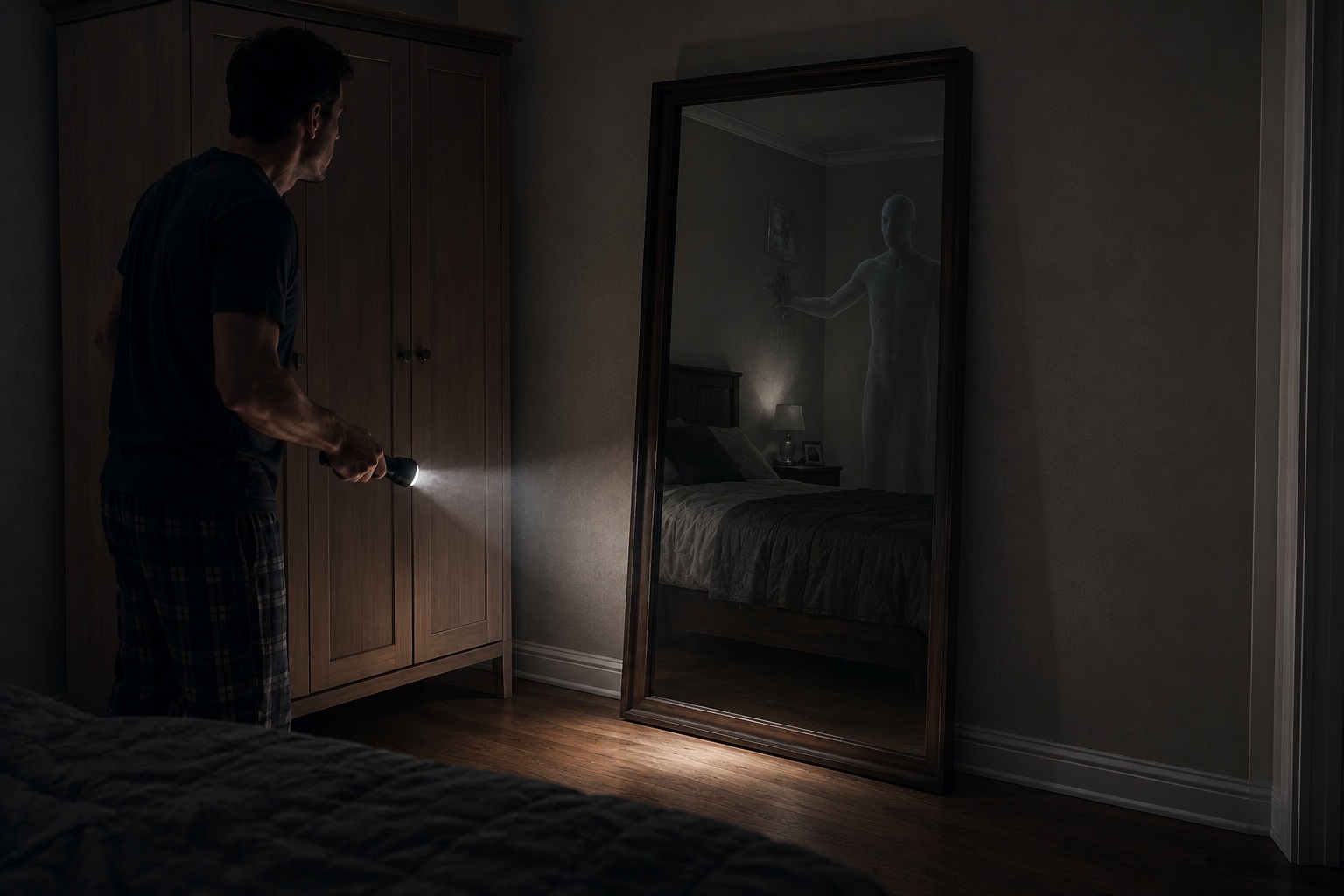
Why mirrors appear so often in ghost stories is easy to understand. Mirrors have long been connected with ghost stories across many cultures. Part of that may come from how reflections already feel slightly detached from reality.
You see yourself, but not directly. You see the room, but reversed. Your brain constantly translates what your eyes are looking at. Most of the time that happens so quickly that we never notice.
Late at night, however, dim lighting changes how easily we recognize shapes. Small reflections become uncertain. Dark corners blend together. A jacket hanging on a chair may briefly resemble shoulders.
The Moment It Became Harder To Ignore
A doorway reflected from another room can seem deeper than it really is. These ordinary conditions can make the imagination work harder. Paranormal stories build on that uncertainty. Instead of a normal mistake, the reflection contains someone who shouldn't exist.
Usually that figure doesn't move dramatically. It simply waits. Standing silently behind the witness. Watching without a face.
Remaining perfectly still while everything else in the reflection looks ordinary. That quiet presence often frightens readers more than a monster rushing toward the glass.
The stories rarely end with the mirror. Many reported experiences don't stop after the reflection disappears.
People often describe becoming uncomfortable around that room afterward. Some avoid walking past the mirror at night. Others refuse to look into it unless the lights are fully on. In many stories another strange event follows within days.
Why People Avoided That Spot Later
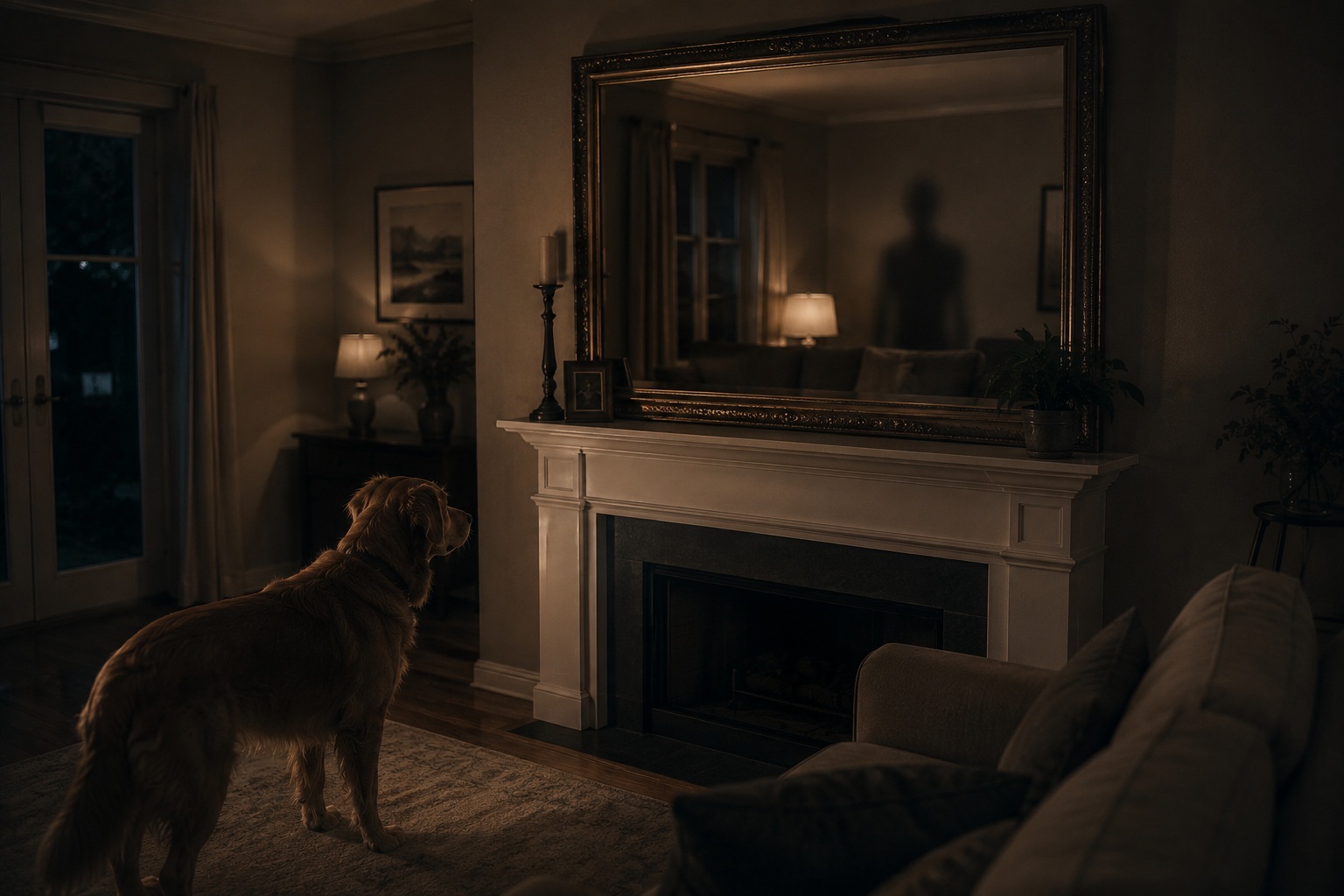
A dog begins staring toward the hallway beside the mirror. Someone hears footsteps upstairs while everyone is downstairs. A bedroom door is found open after being closed earlier in the evening. Whether connected or not, witnesses often remember these events together because the reflection changed how they viewed the house.
Once someone feels that a familiar room may be hiding something, ordinary sounds become more noticeable. That doesn't automatically explain every report, but it helps explain why mirror stories often grow into larger haunting stories instead of remaining isolated moments. The reflection becomes the beginning rather than the ending.
This pattern keeps returning because mirror stories combine two powerful fears. They continue because they combine two powerful fears. The first is the fear of someone standing behind you without making a sound. The second is the fear that reality itself may briefly disagree with what your own eyes are seeing.
Unlike many ghost stories, these moments usually happen during ordinary routines. Someone is brushing their teeth. Checking their clothes before leaving. Walking through a hallway.
Why The Story Still Gets Shared
Looking into a bathroom mirror before bed. Nothing dramatic has happened. Then one impossible detail appears for only a moment. The witness turns around.
Nothing is there. They look back. Sometimes the reflection is normal again. Sometimes the figure is still waiting.
Whether someone believes these stories are supernatural experiences, tricks of lighting, or brief mistakes in how the brain interprets reflections, the same pattern keeps appearing because it targets a simple human expectation. We trust mirrors to tell us exactly what is behind us. When they seem to tell a different story than the room itself, even for a second, that ordinary piece of glass becomes one of the most frightening places in the house.
That is why stories about figures standing behind people in mirrors continue to spread from one generation to the next. They don't rely on loud noises or dramatic monsters. They rely on one quiet question that lingers long after someone leaves the room: If the hallway was empty… who was standing in the reflection?