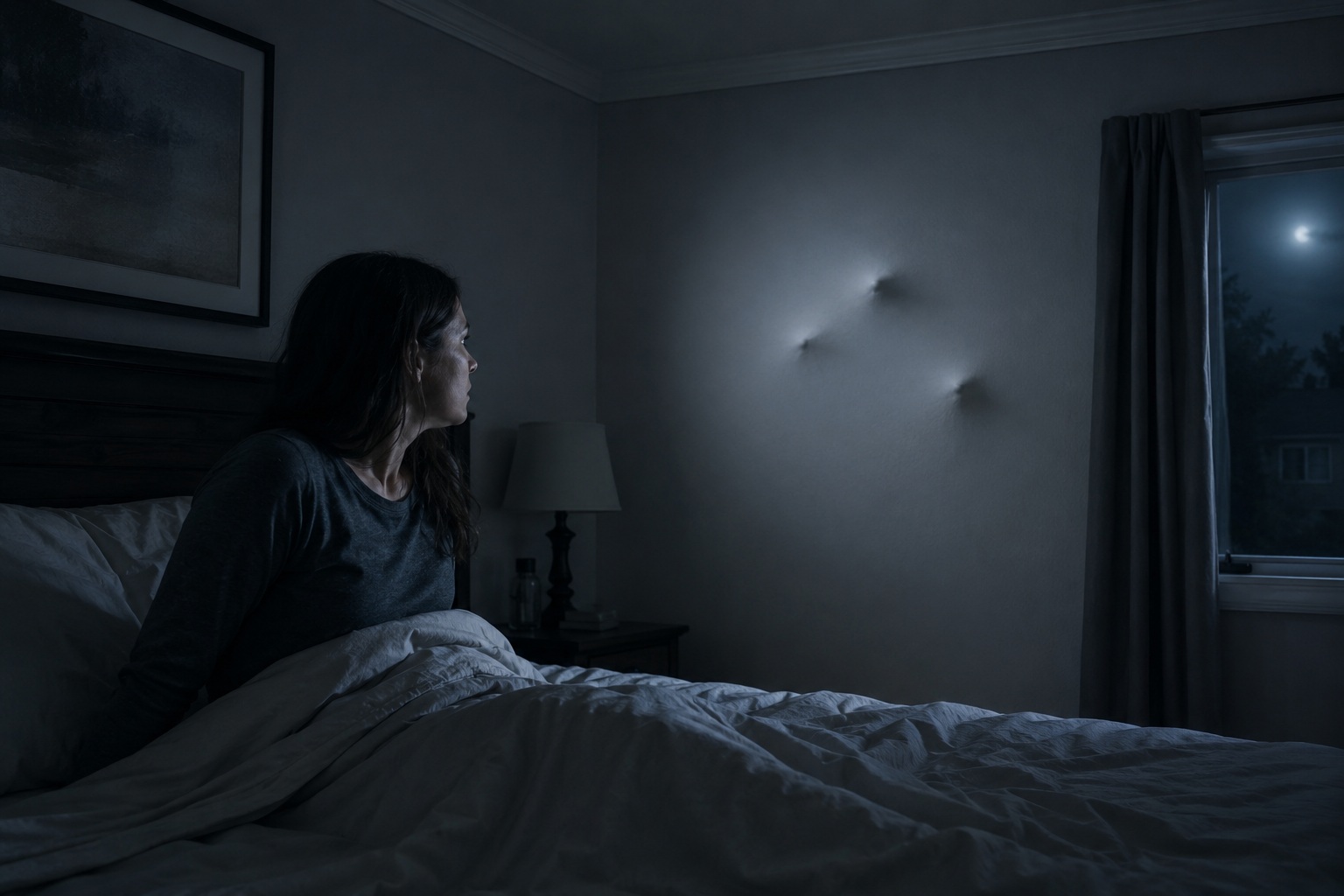
A woman had lived in the same small house for eight years before the knocking began. It always came after midnight. Three slow taps from inside the bedroom wall behind her bed. Not loud enough to sound like someone breaking in. Just loud enough to make her stop breathing and listen.
The first night she blamed old pipes. The second night she searched every room with a flashlight. The attic was empty. The crawlspace held nothing except dusty insulation and forgotten boxes. Outside, no branches touched the siding. On the fourth night she decided to answer.
She tapped three times against the wall. For several seconds, everything stayed silent. Then three knocks came back. Not from the place she had tapped.
From several feet higher, inside the same wall. She stepped away from the bed without taking her eyes off the wallpaper. Another slow knock followed. This time the sound seemed to travel downward, ending just above the floor, as though something inside the wall had moved while staying completely hidden.
Stories like this appear in ghost books, online discussions, family stories, and late-night conversations everywhere. Whether someone believes they have a normal explanation or something stranger, the question keeps coming back: why do so many people report hearing knocking from inside walls?
The First Time It Happened
Why Knocking Feels Different From Other Strange Sounds
Every home makes noise. Wood expands. Pipes shift. Heating systems click as temperatures change. Roofs settle after warm days and cold nights. Most of those sounds happen without any clear pattern. Knocking stories are different because people often describe rhythm instead of randomness.
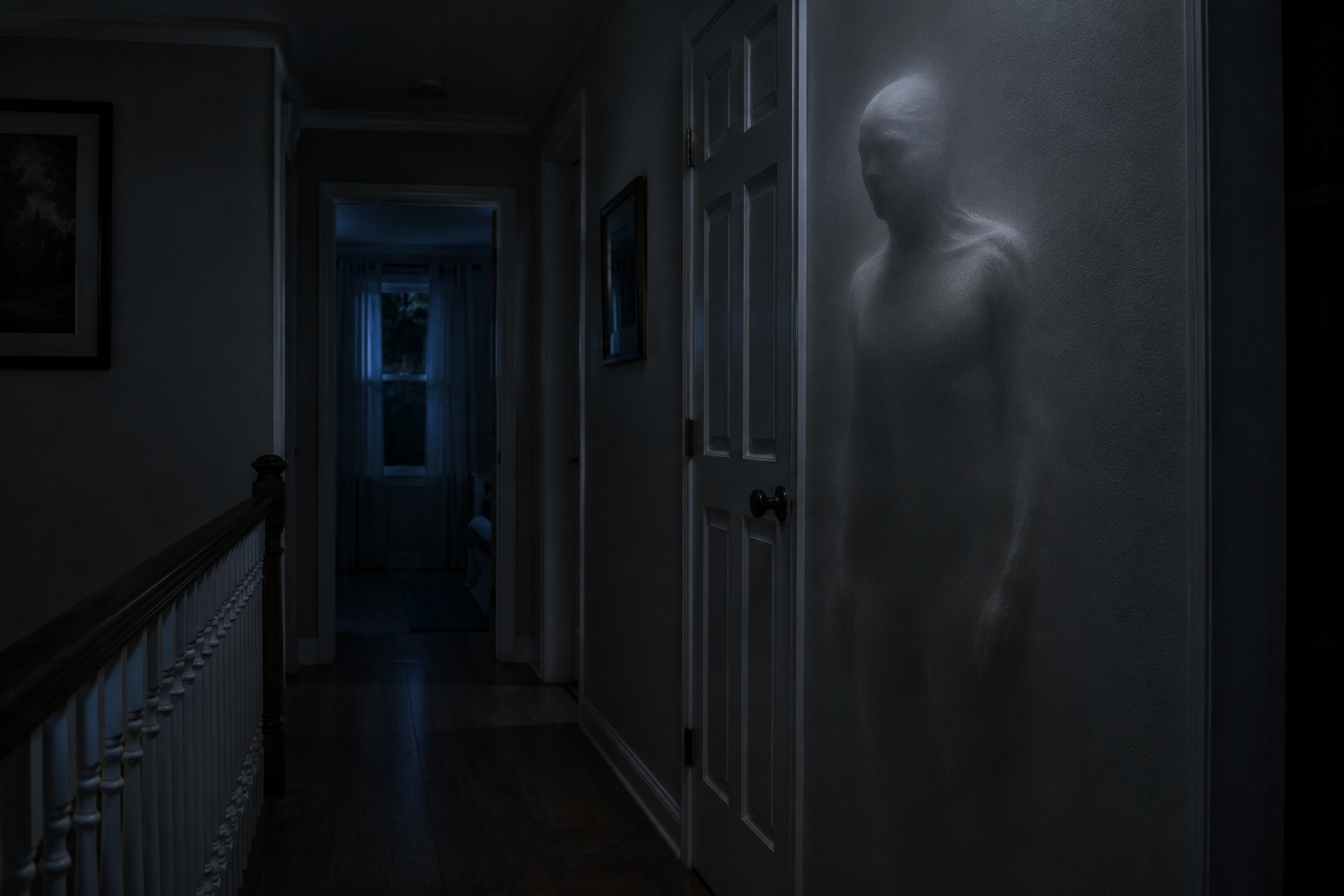
Instead of scattered creaks, they hear three evenly spaced taps. Instead of one loud crack, they hear a slow series that repeats night after night. Our brains naturally search for patterns. A repeated knock sounds less like a building settling and more like communication. Even when there is no reason to think someone is there, a measured rhythm immediately feels personal.
That is why these stories become so unsettling. The sound resembles the way people knock on doors, windows, or tables. It copies human behavior while coming from a place where nobody should be standing. Many witness stories also describe the strange feeling that the knocking is waiting for silence.
Someone turns off the television. The house becomes quiet. Only then do the knocks begin. That timing makes the experience feel deliberate, even if there may be an ordinary cause hidden somewhere inside the structure.
Why The Place Felt Wrong
What People Usually Check First
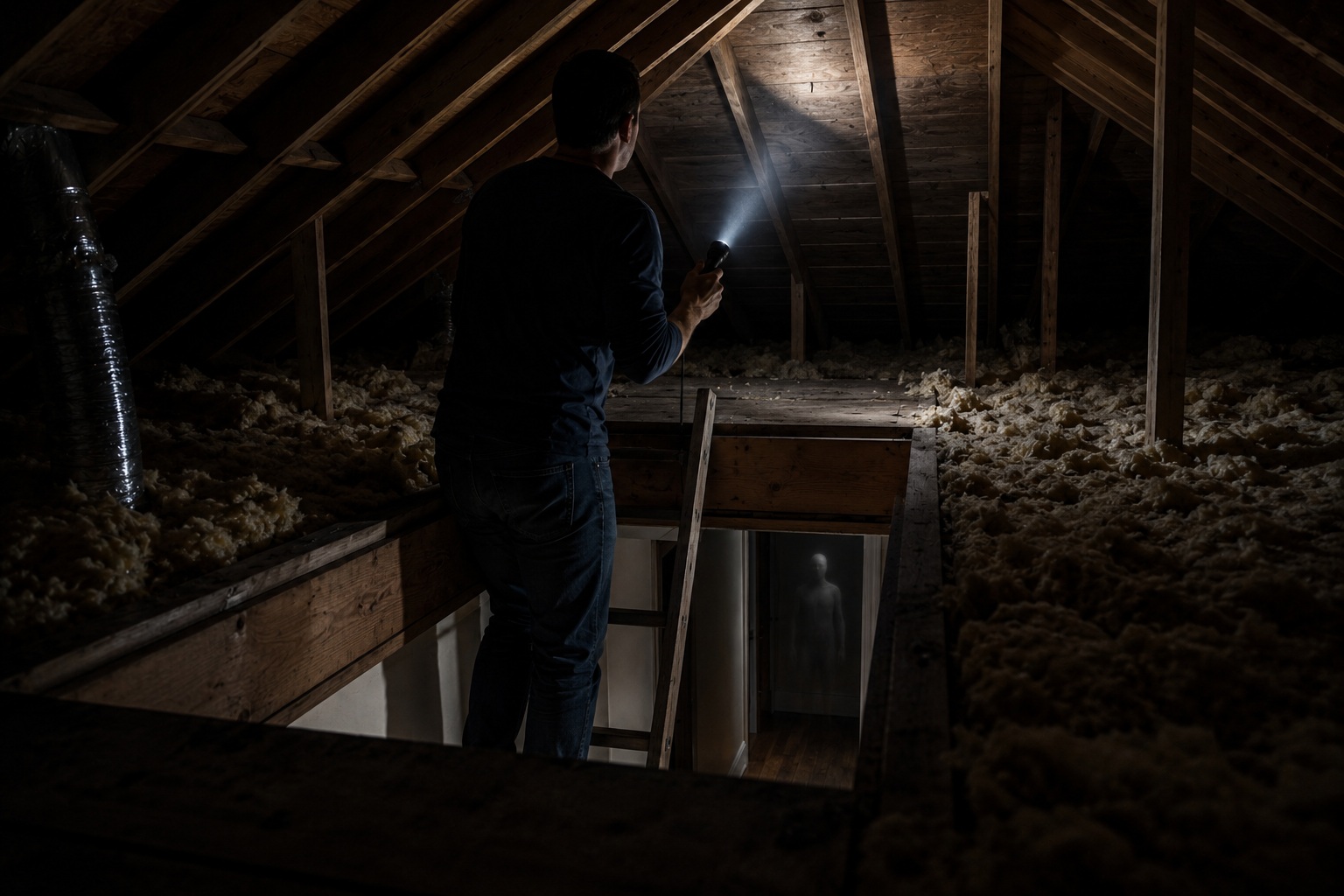
One reason wall-knocking stories spread so widely is because many people describe checking the obvious explanations before becoming frightened. They inspect the attic. They look in the basement.
They walk outside with a flashlight. They search for loose pipes, tree branches, birds, squirrels, mice, or raccoons. Sometimes they discover exactly what caused the sound. Other times, they find nothing unusual.
That uncertainty leaves room for imagination. A sound without a visible source is surprisingly powerful because the mind keeps trying to place a person behind it. Some reports become even stranger because the knocks seem to move. Instead of staying in one place, the tapping appears to travel across different walls or climb upward toward the ceiling.
The Detail Nobody Could Explain
People describe following the sound from room to room only for it to stop the moment they arrive. Others say the knocking always begins after they return to bed. Whether those details have ordinary explanations or not, they create the same emotional reaction. The house no longer feels predictable.
The Stories That Stay With People
Among the many versions of this pattern, a few details appear again and again. One is the answering knock. Someone taps once.
The wall answers once. Someone waits a few seconds. Another answer comes back. That simple exchange transforms a strange noise into something that feels interactive.
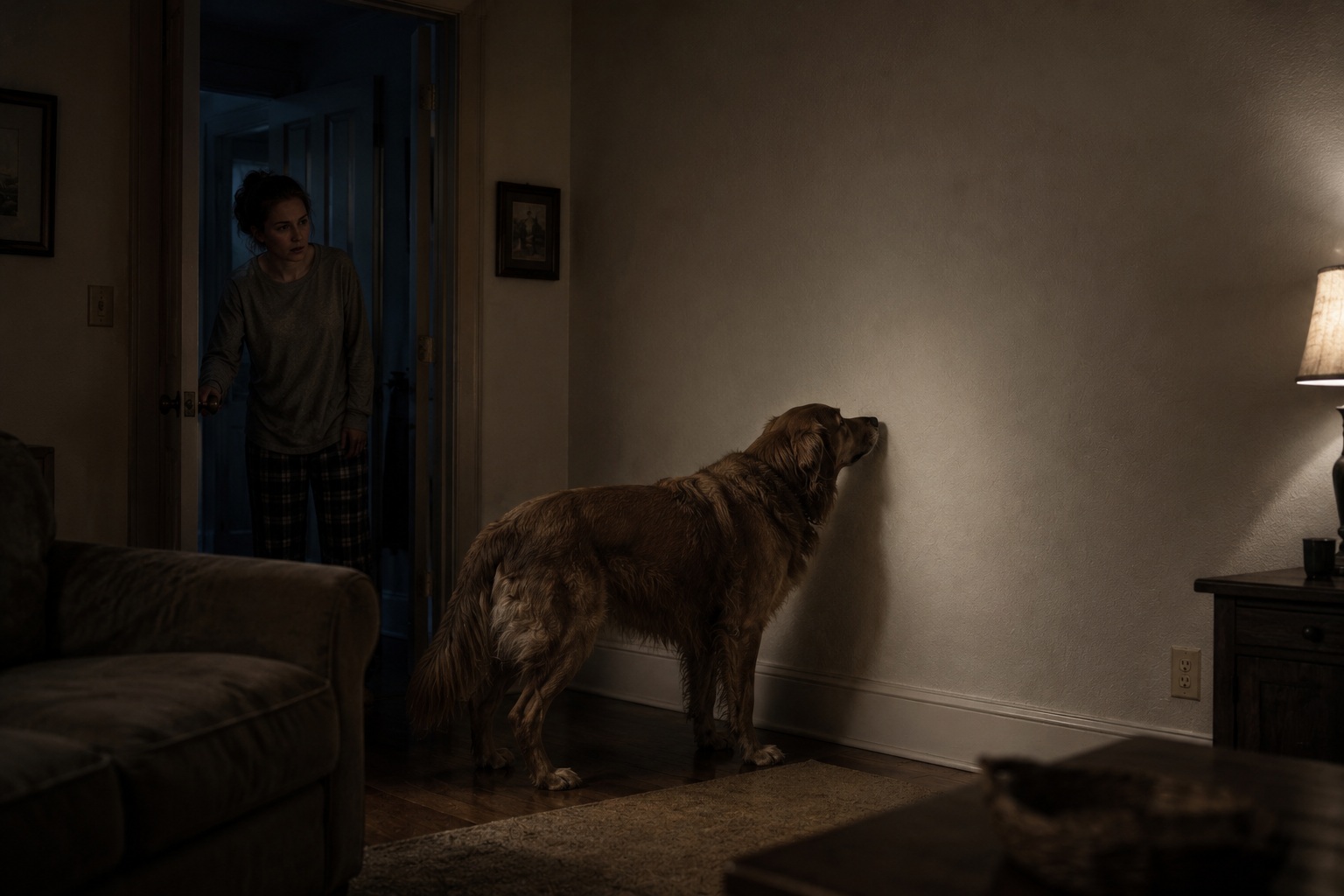
Another common detail involves pets. Dogs suddenly stop playing and stare at one section of the wall. Cats freeze with their ears pointed toward empty drywall before slowly backing away. Even people who do not immediately become frightened often remember their pet’s reaction more clearly than the sound itself.
What They Checked Afterward
Some witness statements also describe seeing something unusual after following the knocking. Not a normal person. Instead, they describe a transparent figure standing partly inside a hallway wall. Others mention a blurred human shape where two walls meet.
Some say they briefly noticed what looked like the outline of someone leaning halfway through plaster before it slowly faded. The wrong detail is almost always simple. No face. No clear features.
Or part of the figure seems to disappear into the wall instead of standing in front of it. Those descriptions stay memorable because they connect directly to the sound people were already trying to explain.
Why Empty Walls Become Scary So Quickly Most strange stories happen in places we can see.
A dark hallway. A staircase. A mirror. An empty room.
The Moment It Became Harder To Ignore
Wall-knocking stories are different because they suggest something hidden just beyond sight. The fear comes from not knowing what is on the other side. Drywall feels thin. People know there are empty spaces behind it.
Electrical wiring disappears there. Pipes run through it. Air moves through it. Those invisible spaces become easy places for the imagination to fill.
Once someone hears repeated knocking, every glance toward a blank wall feels different. Wallpaper seems too still. Corners look darker. Even harmless house sounds begin to feel connected.
Some people say they become afraid to place their ear against the wall. Others cannot resist doing exactly that. Many describe hearing nothing at all when they listen closely, only for the knocking to return after they step away. That stop-and-start pattern appears often enough that it has become one of the most recognizable parts of these stories.
Why People Avoided That Spot Later
Why The Pattern Appears In So Many Ghost Stories
Ghost stories often rely on ordinary places becoming unfamiliar. A kitchen. A bedroom.
A hallway. Wall knocking fits that idea perfectly. Unlike dramatic strange house scenes, it begins with something small. Three taps.
A pause. Three more. Nothing else changes. Because the sound is so simple, listeners imagine the rest themselves.
That makes the story easy to remember and easy to retell. Different cultures also give knocking different meanings. Some families see repeated knocking as a warning. Others think it signals someone trying to get attention.
Why The Story Still Gets Shared
Many simply treat it as one more unexplained event that happened in an old house. No matter the interpretation, the emotional reaction stays remarkably similar. People become quiet. They listen.
They wait for the next sound. That waiting often becomes scarier than the knocking itself. Silence stretches longer than expected. Every second raises tension.
Then another slow tap breaks the quiet. The cycle begins again. Whether someone believes these experiences have ordinary explanations, psychological causes, hidden animals, building noises, or something paranormal, the pattern continues because it combines two powerful fears. The first is hearing something that sounds intentionally human.
The second is realizing it comes from a place no person should be. That combination explains why stories about knocking inside walls have remained popular for generations. Even readers who have never experienced it themselves usually understand the fear immediately. Tonight, if your house settles with one ordinary creak, you probably will not think much about it.
But if three slow knocks come from inside the bedroom wall… …you may find yourself waiting to hear whether anything answers back.