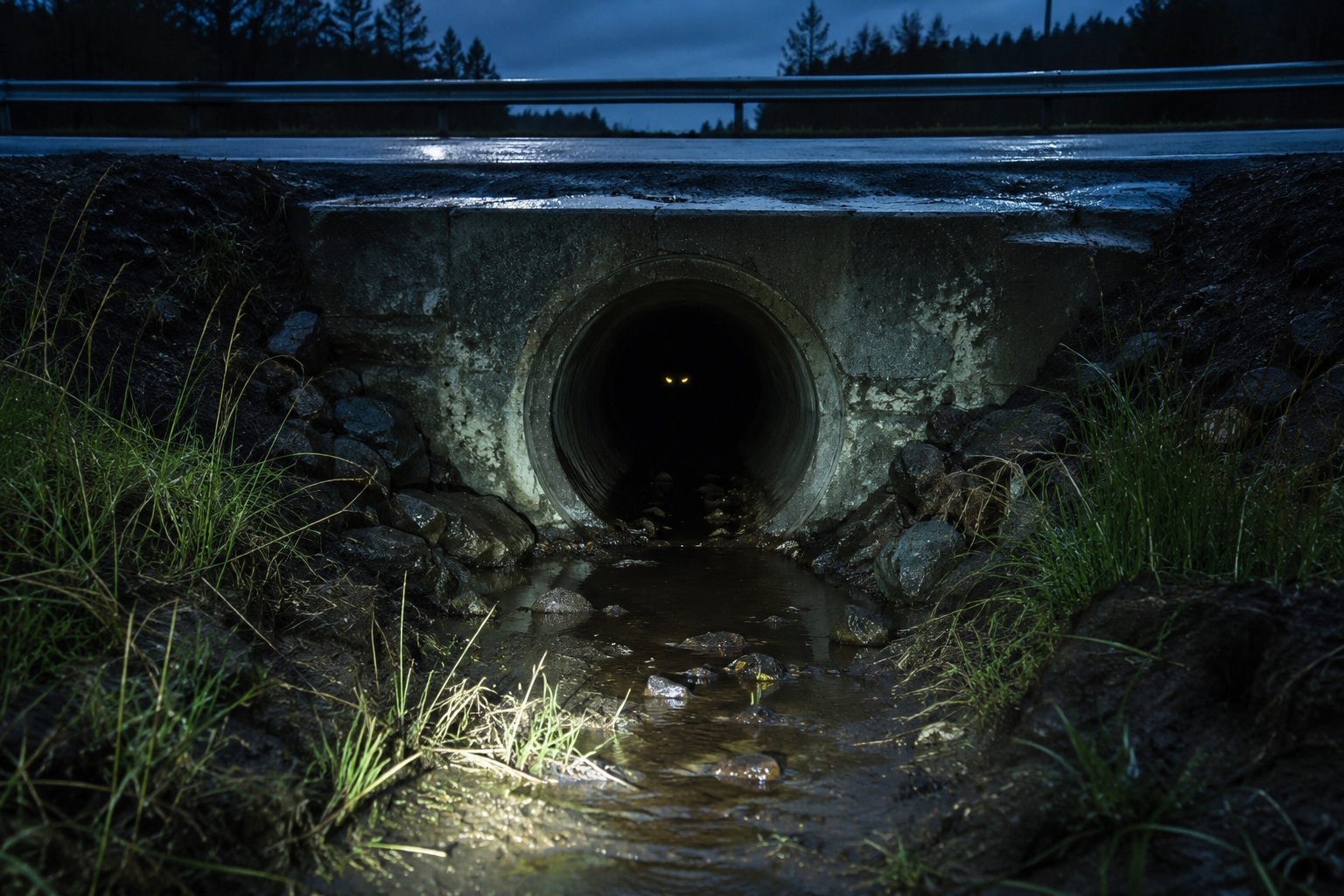
The road was almost empty when the man pulled over. A summer storm had ended only minutes earlier, and water still trickled through the concrete culvert beneath the highway. He had stopped because something had run across the shoulder. At first he assumed it was a stray dog or a deer. The flashlight on his phone swept across wet grass, broken branches, and the dark opening where rainwater disappeared beneath the road.
That was when he saw them. Two bright yellow eyes stared back from inside the pipe. They were too far apart for a cat, too steady for reflected water, and much higher than he expected. He waited for the animal to blink or move. Nothing happened. The eyes simply watched him from the darkness.
He took one cautious step closer. The eyes vanished. He listened for running feet, splashing water, or the sound of an animal climbing deeper into the tunnel. The culvert remained strangely quiet except for the slow flow of water. When he finally reached the entrance and shined his light inside, there was nothing there but damp concrete stretching into darkness.
Stories like this appear in many local ghost discussions, paranormal forums, and roadside legends. The details change, but one part stays remarkably similar: someone notices a pair of glowing yellow eyes inside or near an ordinary drainage culvert and cannot explain what they saw. Why do so many people describe nearly the same unsettling image?
Why
The Creepy Example People Recognize
Culverts Feel Wrong After Dark Most people barely notice culverts during the day. They are ordinary pieces of road construction built to carry water beneath highways, walking trails, or driveways. In daylight they seem practical and forgettable. At night they become something else.
A long concrete tunnel creates perfect darkness only a few feet from open ground. Your flashlight reaches only part of the way inside before the remaining space becomes completely black. That alone makes people uneasy. Unlike a cave, a culvert feels man-made and familiar. Seeing something unexpected inside one creates a stronger emotional reaction because your brain assumes you understand what belongs there.
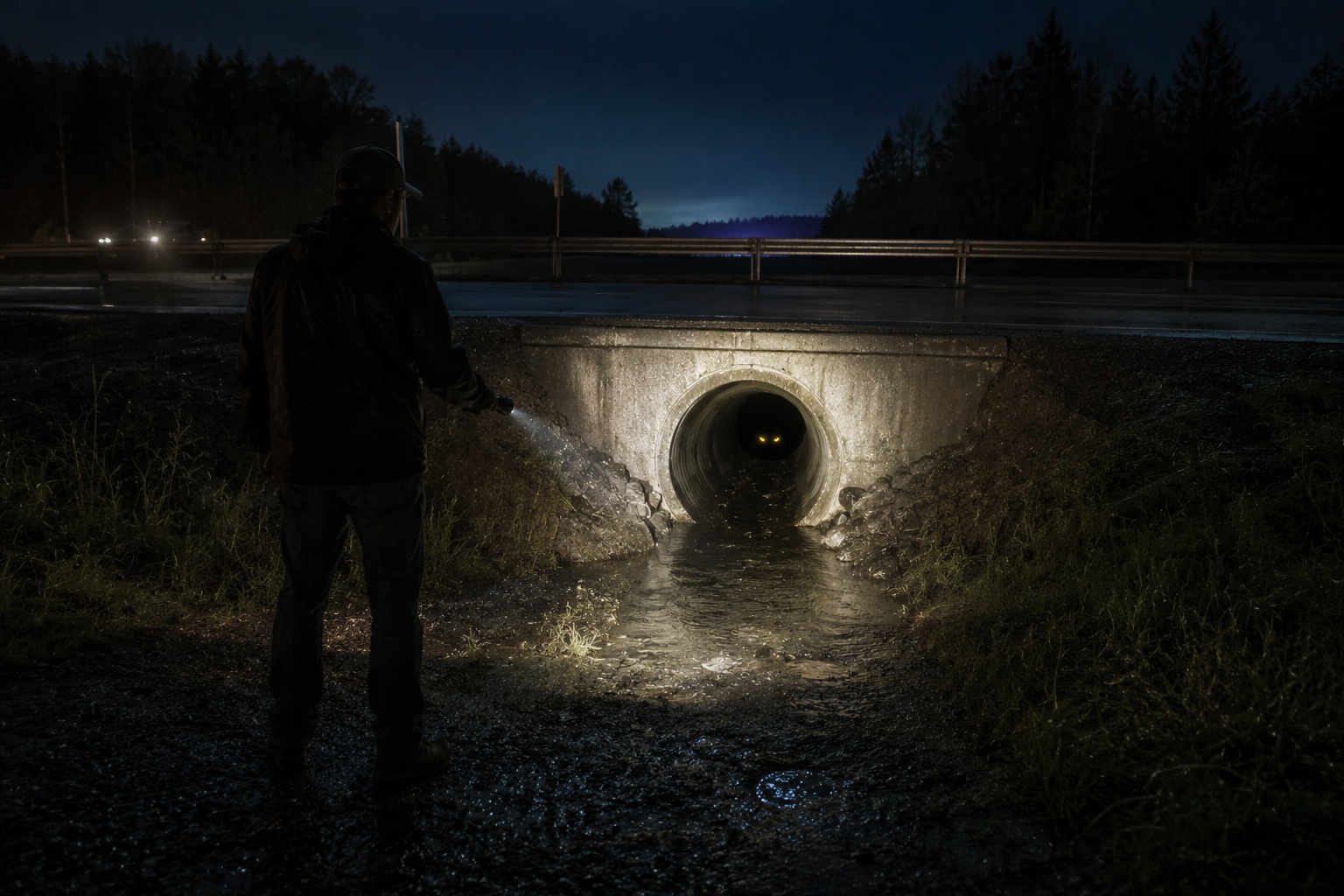
Witnesses often describe stopping because they heard water, rustling leaves, or something moving beside the road. They look toward the culvert expecting to find a raccoon, fox, or stray animal. Instead they notice eyes. The image is simple enough to remember for years afterward.
Why Yellow Eyes Appear So Often In These Stories
Why This Pattern Feels Personal
One of the most interesting parts of these reports is that people rarely describe an entire creature. They remember the eyes first. Sometimes they never see anything else at all. The surrounding darkness hides the body while the eyes remain strangely visible. In many stories the witness cannot judge whether the thing is crouching, standing, or crawling because there are no clear edges around it.
That uncertainty makes the memory much stronger. Yellow also stands out against black more than many other colors. People frequently describe the eyes as glowing even when they are unsure whether the light came from reflection or from the eyes themselves. Some say the eyes looked like amber glass.
Others compare them to old headlights seen from far away. Many insist they did not blink. That last detail appears repeatedly. People expect living animals to shift, breathe, or move. When the eyes remain perfectly still for several seconds, witnesses often become convinced they are looking at something unusual.
Whether that impression is accurate or not, it explains why the moment becomes unforgettable.
What Witnesses Usually Check First Most people do not immediately assume anything paranormal. Their first reaction is surprisingly practical.
The Detail That Makes People Stop
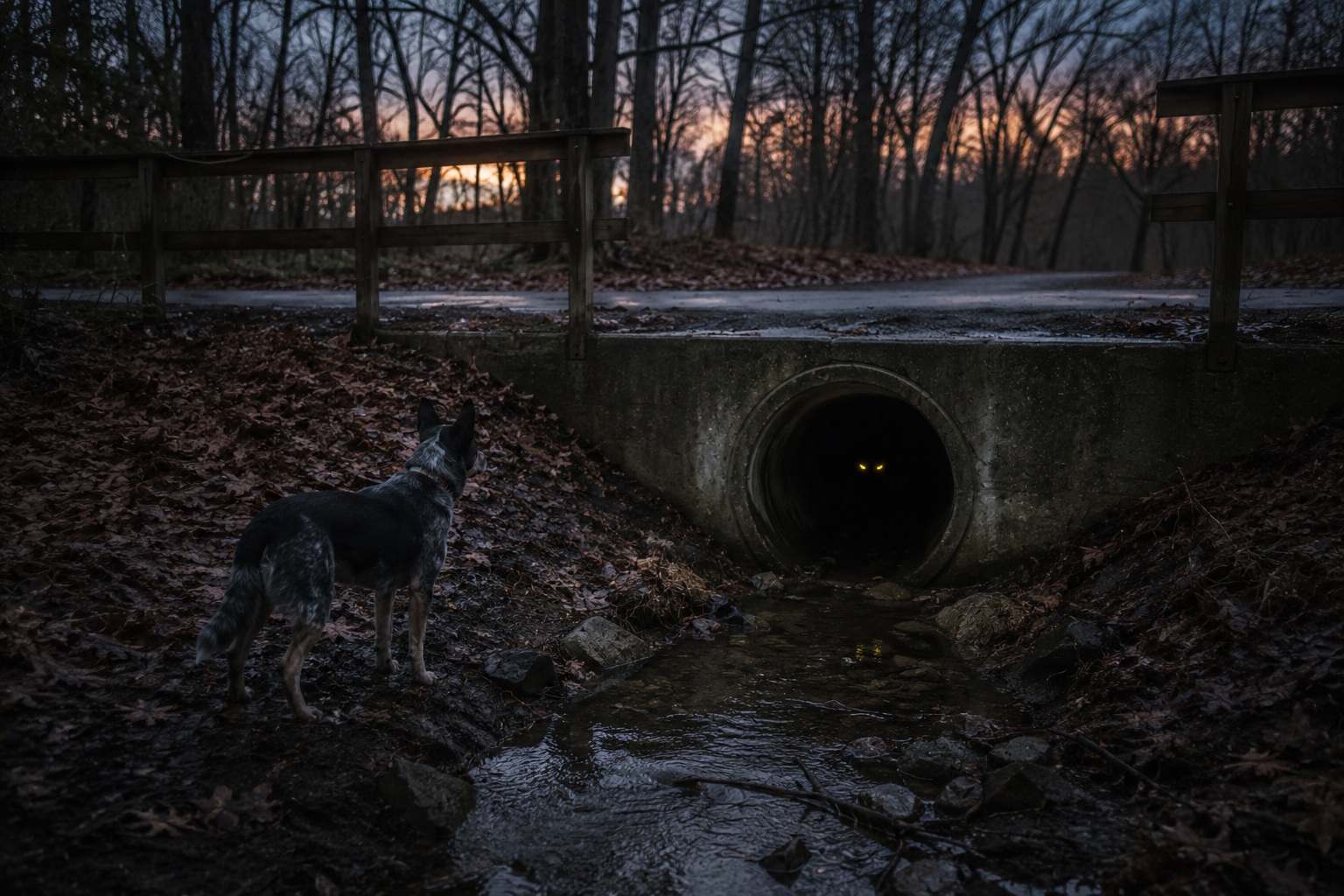
They look for an ordinary animal. A raccoon. A fox. A deer.
A stray dog. An owl. They also check whether rainwater, reflective trash, or wet rocks could have produced the effect. Some walk closer.
Others throw a small stick toward the entrance. Many sweep their flashlight from side to side hoping to reveal the rest of whatever they saw. According to many stories, that is where the experience becomes stranger. Sometimes the eyes disappear without any obvious movement.
Sometimes they seem deeper inside the tunnel than before. Occasionally the witness reaches the opening and finds no visible animal despite expecting one to run away. That missing moment often bothers people more than the original sighting. If there had been a raccoon, they expected to hear claws on concrete.
Ordinary Explanations People Check First
If there had been a deer, they expected crashing through brush. Instead they remember silence. Silence inside an otherwise noisy place becomes one of the strongest parts of many roadside stories.
The Creature Descriptions Stay Surprisingly Similar
Although every witness tells the story differently, several details appear again and again. Many describe the eyes as being farther apart than expected. Some believe whatever they saw was crouching just beyond the reach of the flashlight. Others remember a low shape that seemed reluctant to leave the darkness.
When more than the eyes become visible, the descriptions usually stay simple. A dark body. Long front limbs. A low crawling posture.
Occasionally witnesses describe pale skin around the eyes, while others remember shaggy fur that blended into the tunnel walls. Very few claim to see every detail clearly. Instead, the story often centers on one physical feature that remained easy to recognize even in poor light.
Why The Pattern Is Hard To Dismiss
The yellow eyes become the entire memory. That may also explain why artwork based on these stories almost always emphasizes the stare instead of showing every part of the creature. The eyes communicate the fear immediately. Everything else stays uncertain.
Why
These Stories Spread So Easily Culverts exist almost everywhere. Small towns. City parks.
Forest roads. Farm fields. Walking trails. Nearly everyone has passed one late at night.
Because the setting feels ordinary, readers can easily imagine themselves stopping beside the same roadside. The story does not require an abandoned mansion or an ancient cemetery. It begins somewhere completely familiar. That makes the strange moment easier to picture.
Why People Avoided That Spot Later
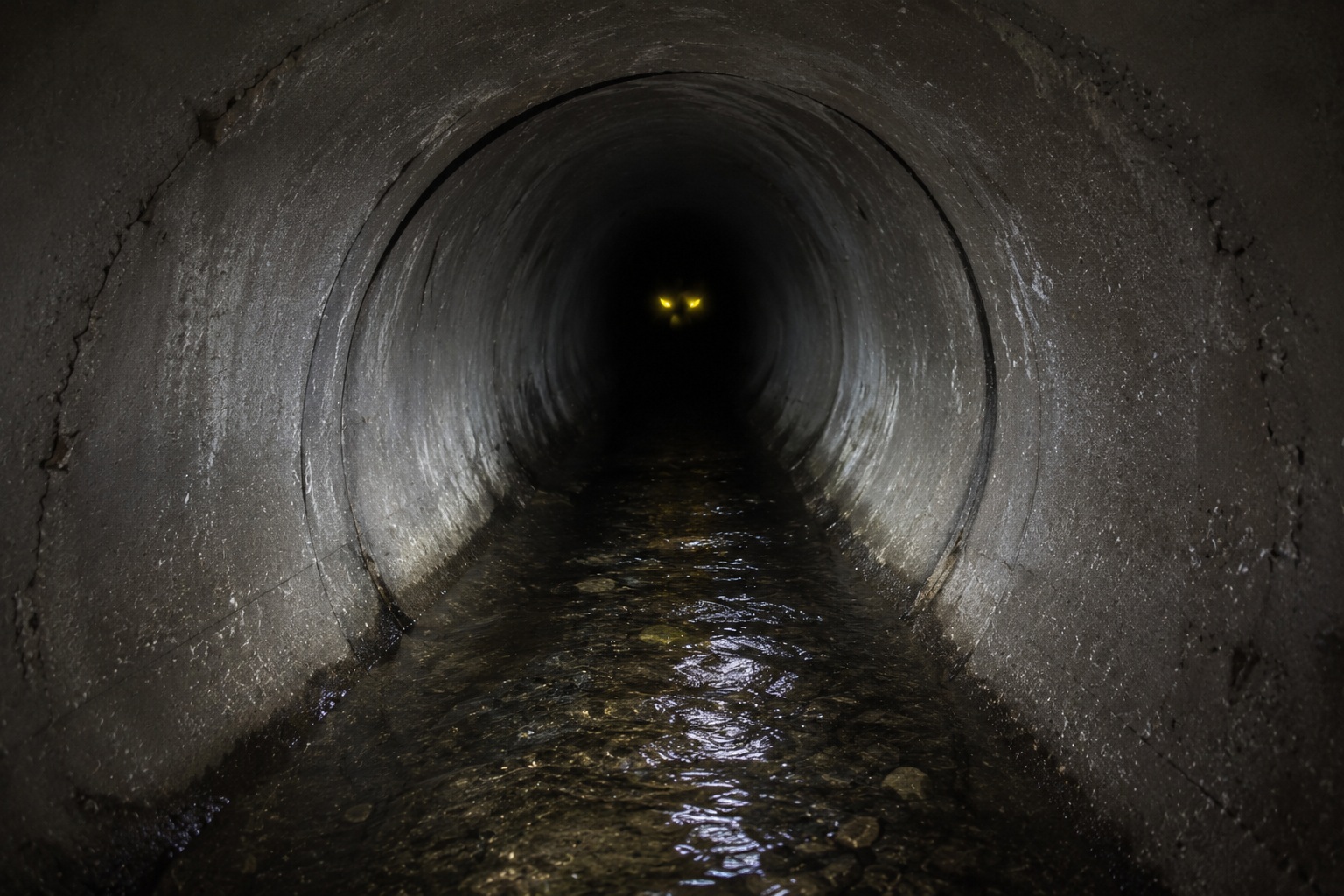
The image also remains wonderfully simple. Two yellow eyes. A dark tunnel. No clear answer.
Unlike stories filled with complicated details, this pattern leaves room for imagination. Every reader pictures something slightly different hiding inside the darkness. Some imagine a strange animal. Others picture a crawling figure with glowing eyes waiting just beyond the flashlight.
That uncertainty keeps the story alive. The ending rarely offers a neat explanation. People leave. The eyes disappear.
Nothing is found. Yet the witness still remembers exactly where the culvert was years later.
Why This Pattern Keeps Coming Back
Other Paranormal Patterns That Feel Similar Yellow-eye stories belong to a larger group of reports where one impossible detail appears in an otherwise ordinary place.
Instead of seeing an entire monster, witnesses often notice one feature that seems wrong. A face reflected somewhere it should not be. Someone standing motionless in a doorway long after everyone left. A voice calling from an empty room.
Hands visible beneath dark water. A pair of eyes watching from a place no person should fit. These stories become memorable because they focus attention on one impossible image rather than overwhelming the witness with many details. Whether someone believes these stories are misunderstood encounters, folklore, unusual wildlife sightings, or something stranger, the pattern remains remarkably consistent.
People remember the one detail they cannot stop thinking about. In roadside culvert stories, that detail is almost always the eyes. Perhaps that is why the reports continue to spread. The setting is ordinary.
The moment is brief. The witness checks for normal answers first. Nothing obvious appears. Then they drive away with a picture they cannot forget—a pair of yellow eyes waiting inside a dark concrete tunnel where only rainwater was supposed to be.