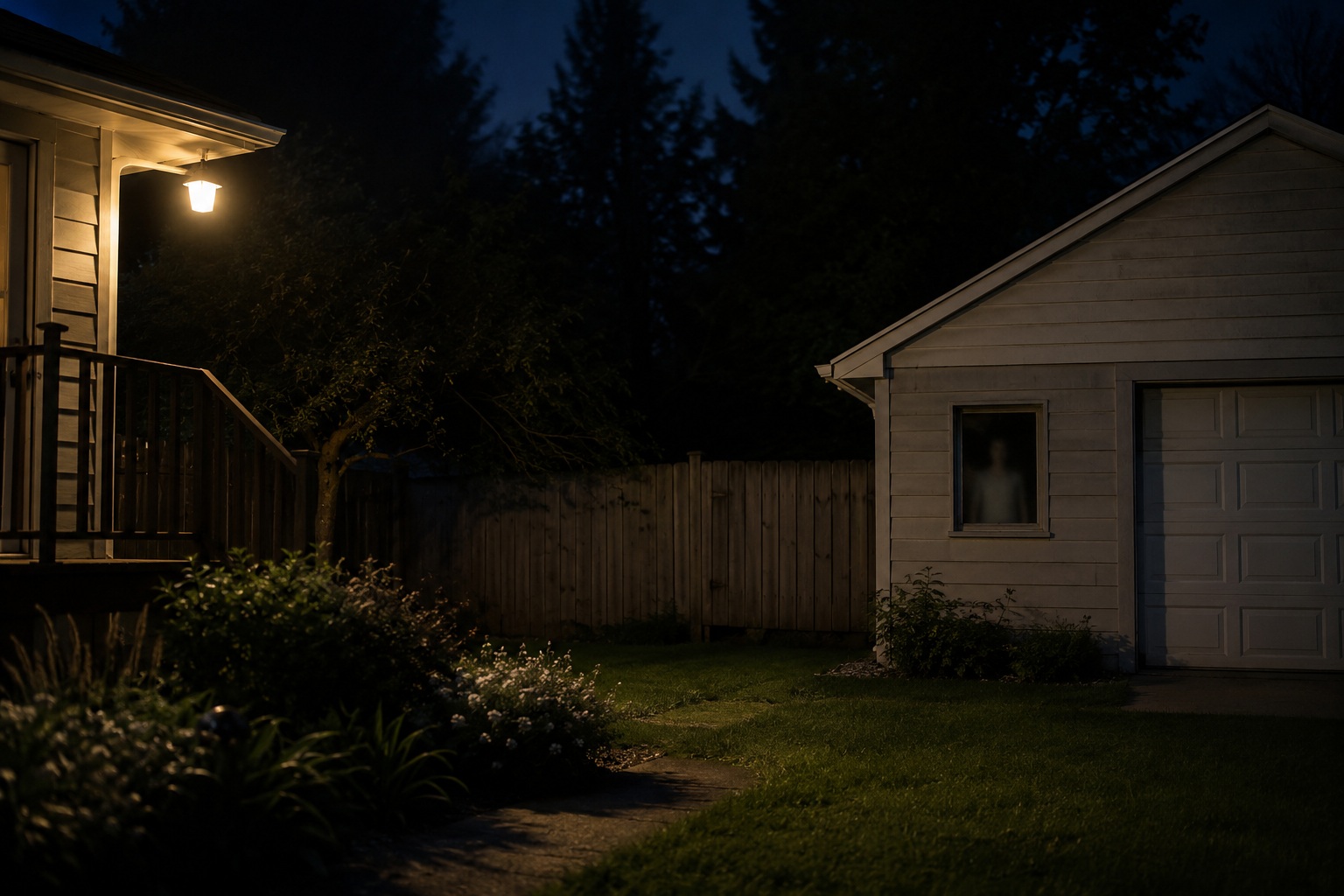
A man let his dog outside just before midnight. The backyard was quiet except for the sound of leaves brushing against the fence. While the dog sniffed around the grass, he looked toward the detached garage. One small window reflected the porch light.
At first he thought he was seeing his own reflection. Then he realized the face was too high. Someone appeared to be standing inside the dark garage, staring through the glass. The face was pale, blurred around the edges, with no clear eyes or mouth. It didn't look angry. It didn't move. It simply watched.
He froze. The dog suddenly stopped walking and stared at the same window. The man switched on the garage lights. The face disappeared instantly.
He checked inside. The garage was empty. Every corner, every shelf, every workbench looked exactly as it had before. Nothing seemed disturbed. Looking back toward the window from inside, he couldn't find any angle that recreated what he had seen. Stories like this appear everywhere. People describe looking toward a dark house, office, school, parked train, empty building, or even their own living room window and seeing what looks like someone silently watching from the other side. Sometimes the face vanishes when they blink. Sometimes the room turns out to be empty. Sometimes another person notices it too.
The First Time It Happened
So why do people keep reporting faces in dark windows at night? Why windows become some of the scariest places after dark Windows create an unusual situation that our brains rarely experience during the day. In daylight, glass mostly lets us see through it.
At night, the balance changes. A dark room behind glass becomes almost impossible to see clearly while outside lights create reflections that mix with whatever is beyond the window. That uncertainty makes every shape harder to understand. A curtain becomes hair.
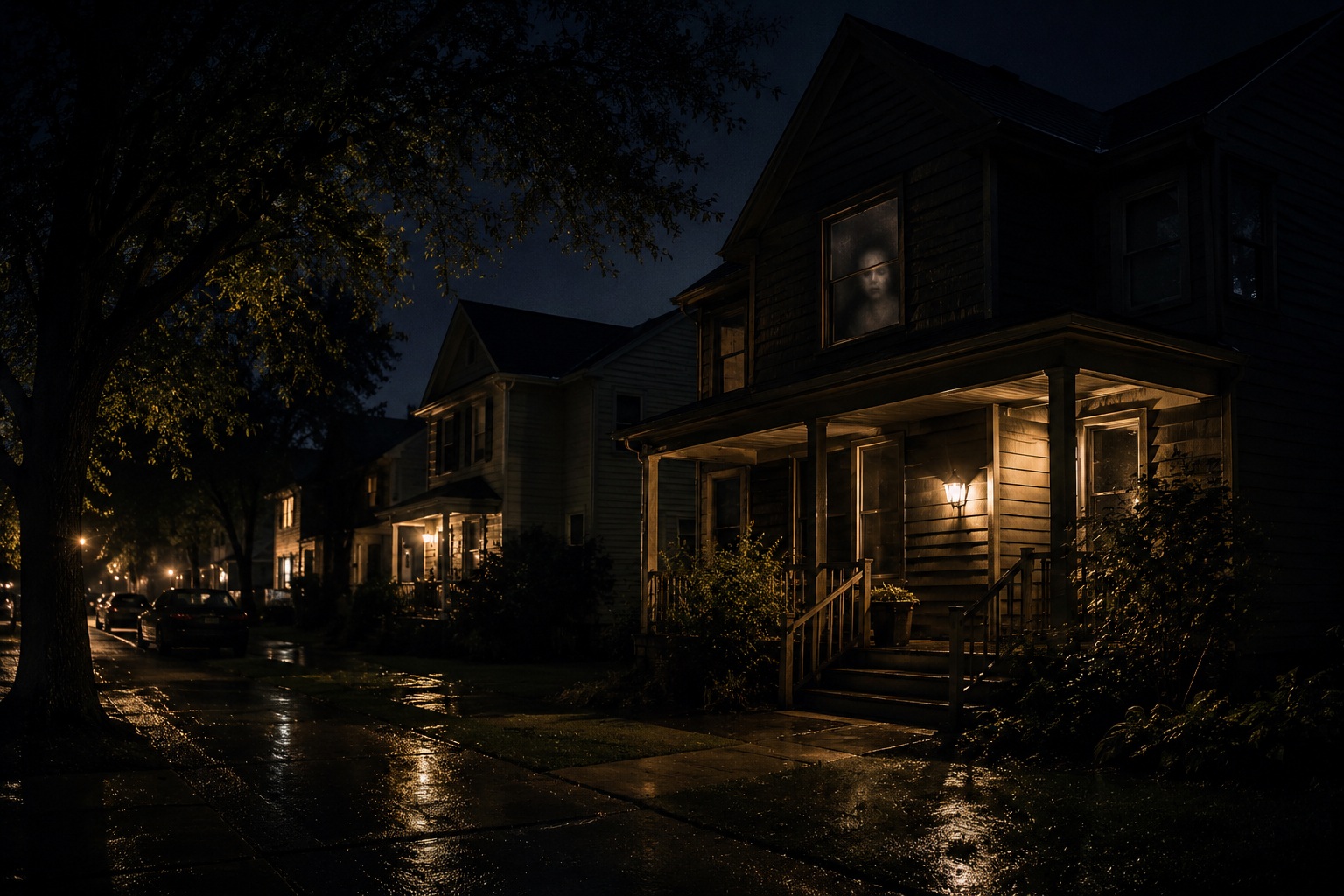
A hanging coat becomes shoulders. A plant becomes someone standing still. Most people have experienced this for a second before realizing what they were looking at. The strange part is that many witness stories continue after those normal explanations no longer seem to fit.
People often describe a face that remains visible after changing position. Others say the face seemed too large, too pale, or placed at an impossible height. Instead of simply looking like another person, it often has one obvious wrong detail. The eyes may be missing.
Why This Pattern Feels So Specific
The face may appear blurred while everything around it stays sharp. Sometimes the head seems to fade into the darkness instead of connecting to a body. Those simple details are what make these stories linger. The details people describe again and again
Although every story is different, certain patterns appear repeatedly. Many witnesses describe the face as unusually still. Living people shift their weight, blink, breathe, or glance around. The face in these stories often remains perfectly motionless for much longer than feels natural.
Another common detail is silence. People expect someone watching through a window to knock, wave, walk away, or react after being noticed. Instead, the figure simply remains there. Some people report that the face disappears only when they briefly look away.
Others walk closer expecting to confront someone, only to find the glass reflecting an empty room. A surprisingly common description is a face without clear features. Rather than seeing a frightening monster, witnesses often describe smooth pale skin, dark empty eye areas, or a face that looks slightly out of focus.
The Detail That Makes People Stop
That makes the experience stranger because the brain keeps trying to fill in missing details. Many stories also happen in ordinary places. Suburban homes. Apartment buildings.
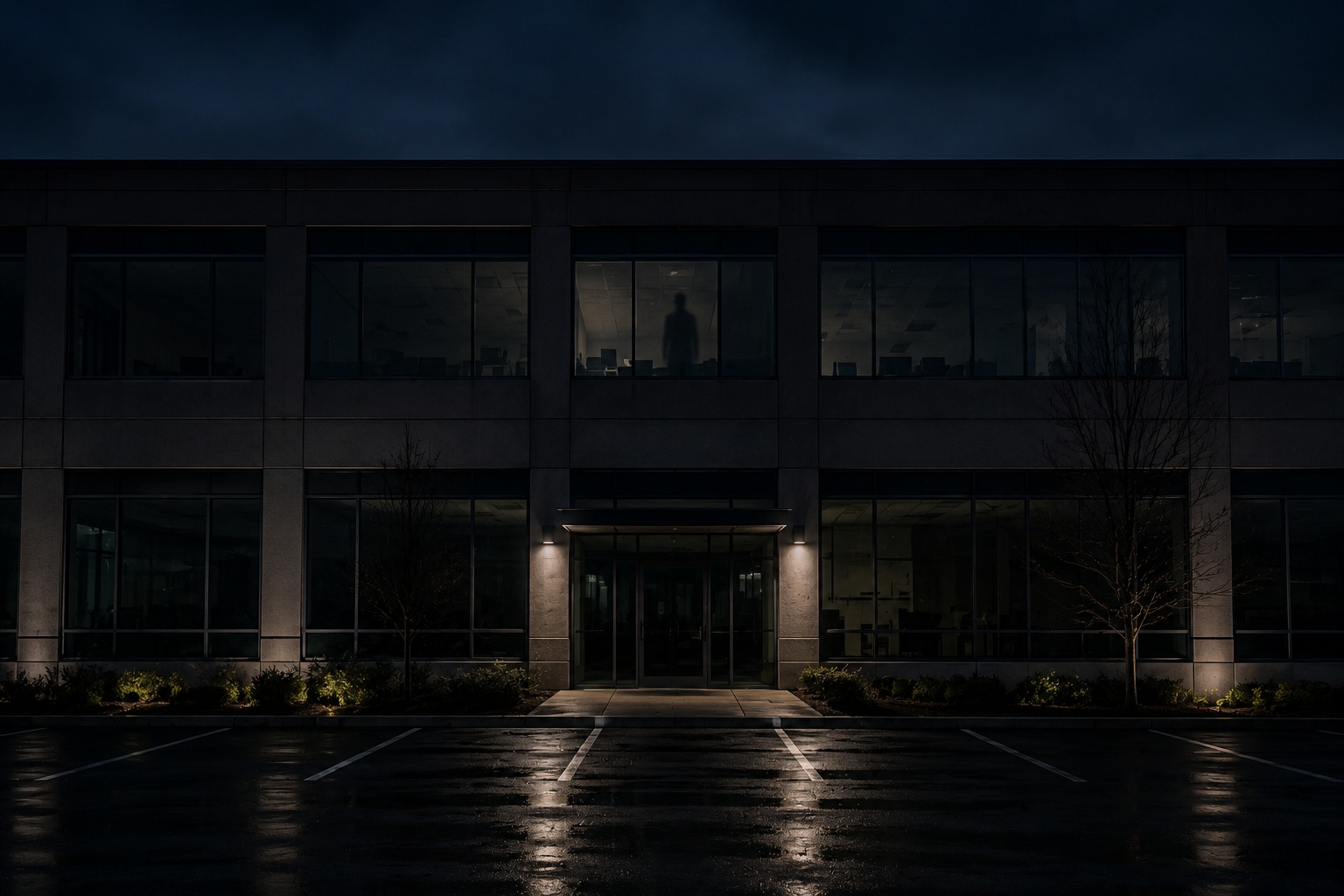
Old schools. Closed shops after business hours. Hospital corridors. Office buildings where only one room remains dark.
The setting feels familiar, which makes the impossible image stand out even more. What people usually check first After seeing something like this, most people immediately look for ordinary explanations. They change their viewing angle.
They switch lights on and off. They check whether another person was reflected in nearby glass. They look for coats hanging behind the window. They examine trees, curtains, shelves, furniture, or decorations.
Ordinary Explanations People Check First
Sometimes these checks solve the mystery. Reflections can produce surprisingly convincing illusions, especially when several light sources overlap. But witness stories that continue to circulate usually involve moments where those simple checks fail to explain everything the person remembers seeing. Someone may return seconds later and find nothing where the face appeared.
Another witness may report noticing the same window from a different location. In a few stories, a family member independently asks the same unsettling question. "Who was standing in the window?" That doesn't automatically mean something supernatural happened.
It simply explains why the memory becomes difficult to forget. People remember the experience because they actively tried to explain it before telling anyone else. Why faces behind glass feel different from other ghost stories Ghost stories include many familiar ideas.
People hear footsteps upstairs. Someone calls their name. A shadow crosses a hallway. But faces in windows create a different kind of fear.
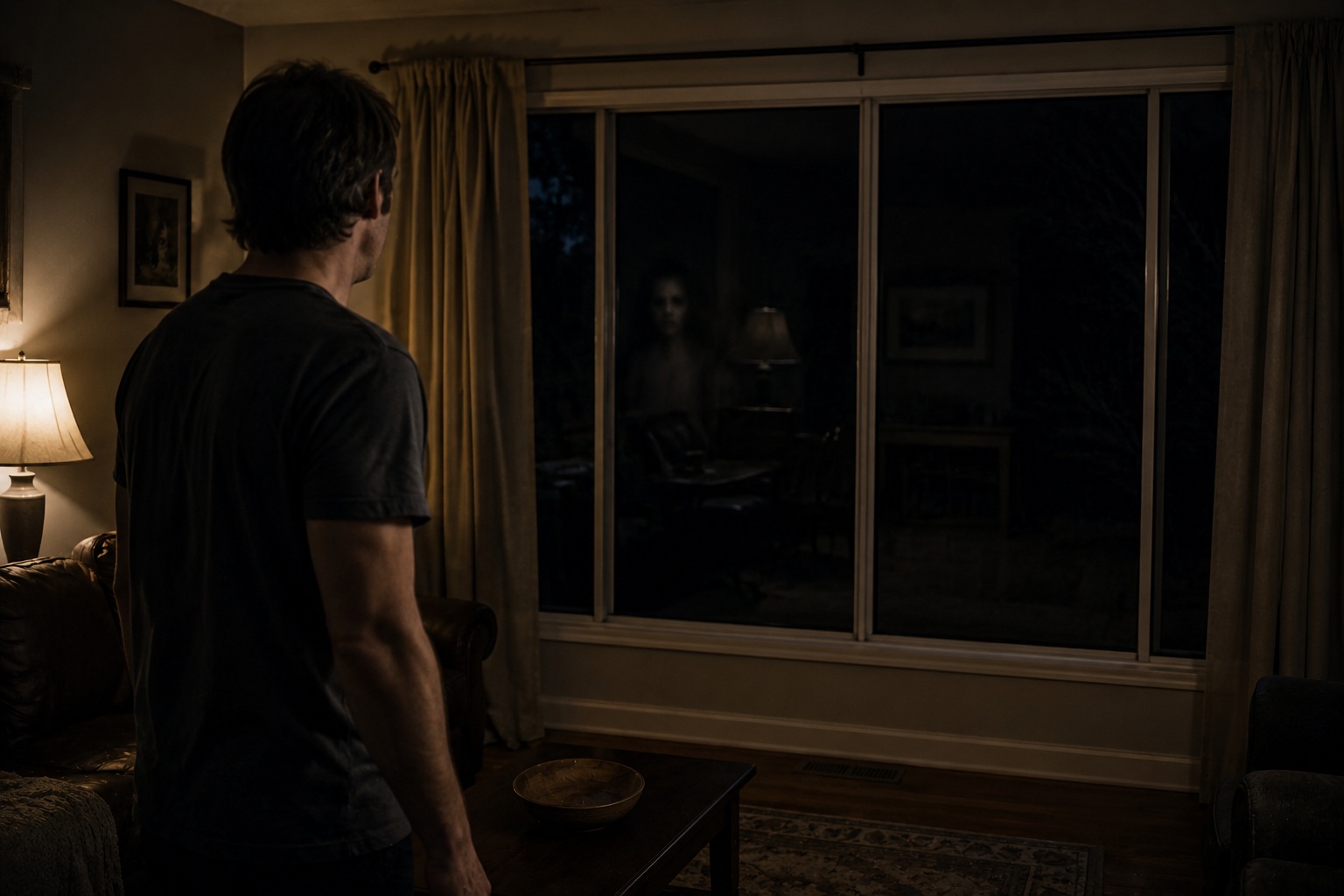
The glass acts like a boundary. One side feels safe. The other side feels unknown. Seeing someone inside your own house when you believe it is empty creates immediate tension.
The Moment It Became Harder To Ignore
Seeing someone watching from another building creates a different question. Why aren't they moving? Even if the face lasts only two seconds, the mind keeps returning to that frozen image. Windows also naturally frame whatever appears inside them.
Instead of seeing a full figure, witnesses often describe only the head and shoulders. That limited view leaves room for uncertainty. The brain fills missing information with possibilities. A blurred face becomes even harder to dismiss because it never gives enough detail to settle the question.
Many paranormal stories use this same idea. The figure is visible just long enough to recognize that someone is there, but not long enough to identify who. That uncertainty is often more frightening than seeing everything clearly. Why these stories appear in so many different places
Reports of faces in windows are not limited to old strange houses. People describe them in hotels. Hospitals. Office buildings after employees leave.
Why People Avoided That Spot Later
Vacation cabins. Farmhouses. Schools. Even parked buses or train cars sitting empty overnight.
The setting changes, but the basic story remains similar. Someone glances toward a dark window. A face is already looking back. Because windows exist almost everywhere, they become one of the easiest places for unusual experiences to happen.
They combine darkness, reflection, distance, and expectation into a single moment. That also explains why photographers, security guards, cleaners, delivery drivers, and night workers appear so often in these stories. They spend more time around buildings after dark than most people do. Many say the experience lasted only seconds.
Others say they refused to look back after the first glance. Some witness statements mention returning during daylight and feeling surprised by how ordinary the location appeared. The terrifying window from the night before becomes just another piece of glass. That contrast often makes the memory even stranger.
Why This Pattern Keeps Coming Back
Other strange patterns people connect with dark windows People who report faces behind glass often describe noticing other odd details around the same time. Some mention hearing soft knocks without finding anyone outside. Others describe a dog refusing to approach the window.
A few remember seeing the figure only in the reflection rather than directly through the glass. Mirror stories share similar ideas. So do reports of silent figures standing in open doorways. These experiences all rely on one unsettling question.
Did someone really stand there for a moment, or did the mind briefly create a person from darkness and reflection? Most stories never answer that question completely. That uncertainty is probably why the pattern continues to spread. A clear explanation ends a story.
An unanswered one keeps people thinking about it years later. Perhaps that is why so many people instinctively avoid looking into dark windows for too long. Not because they expect something terrifying. Because somewhere in the back of their mind lives the possibility that, instead of seeing only their own reflection, they might find a silent blurred face already waiting on the other side.