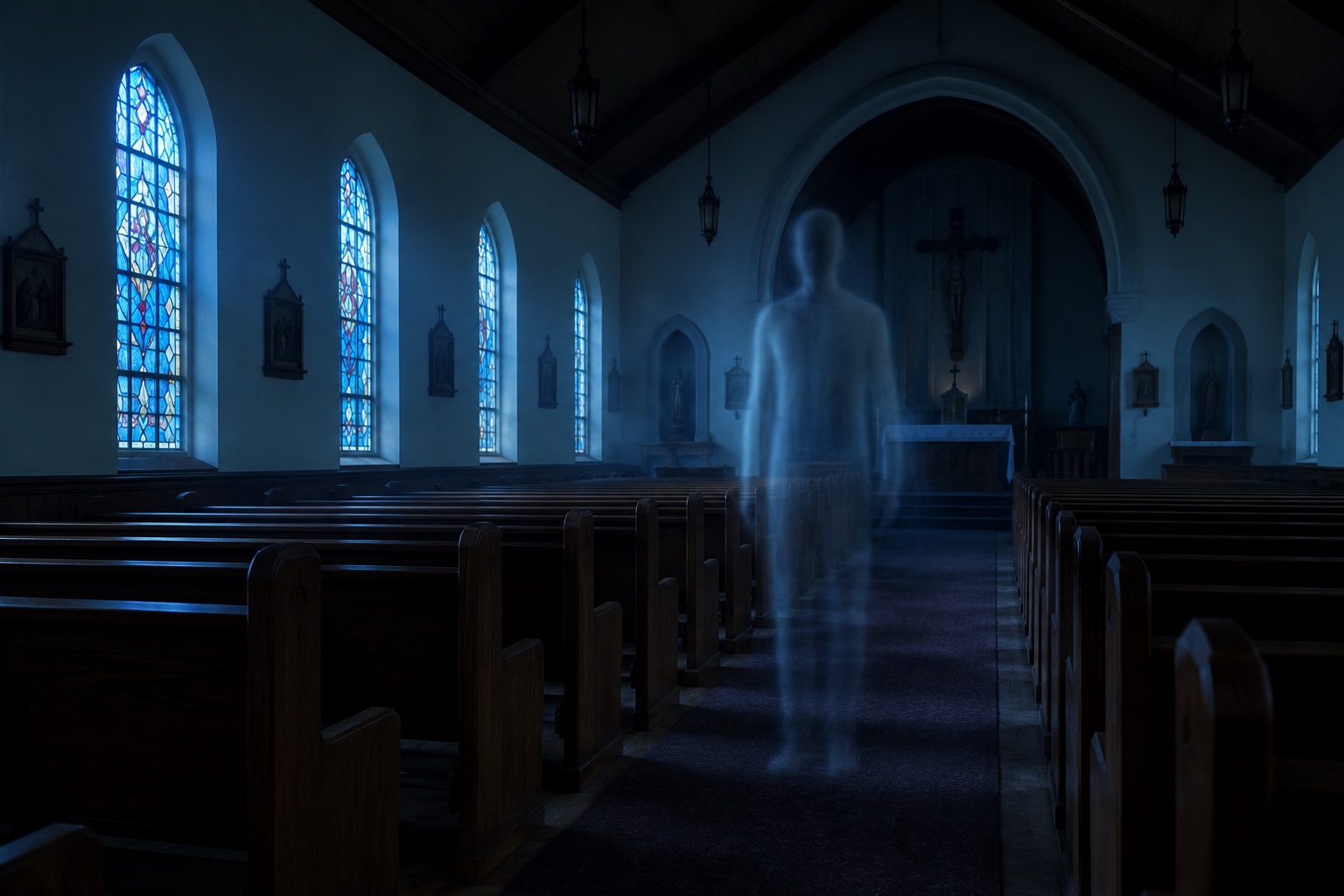
A volunteer arrived just before sunrise to unlock the small church for a weekday service. The building was quiet, exactly as it had been when everyone left the night before. The lights were still off except for the soft glow from the stained-glass windows catching the first hint of morning.
Before turning anything on, he glanced toward the back pews. For a second he thought someone was standing beside the center aisle. It looked like a tall person dressed in dark clothes, head lowered, completely still. He called out, expecting an embarrassed late visitor to answer. Nothing moved.
He stepped farther inside. The shape was gone. Later that morning he checked the overnight security review out of curiosity. During the same hour, one view of the sanctuary seemed to show a dark figure crossing between two rows of pews. It was not solid enough to look like a normal person. The shape appeared blurred, almost transparent, and its head seemed to fade into the darkness above it before disappearing near the front of the church.
Nothing else unusual happened that night. Stories like this appear again and again whenever people talk about old churches, chapels, and quiet places of worship. Whether someone notices a strange shape in person or later during a routine review, many people end up asking the same question: why do empty churches seem connected with reports of silent shadow figures?
Why
The First Time It Happened
Empty Churches Feel Different After Dark A church changes completely once everyone leaves. During the day it is filled with voices, music, footsteps, sunlight, and movement. At night it becomes one of the quietest public spaces most people can imagine. Long aisles stretch into darkness.
Rows of pews create repeating shapes. Tall ceilings swallow sound instead of reflecting it back quickly. Even people who never think about ghost stories often describe feeling unusually aware inside an empty sanctuary after sunset. That quiet matters.
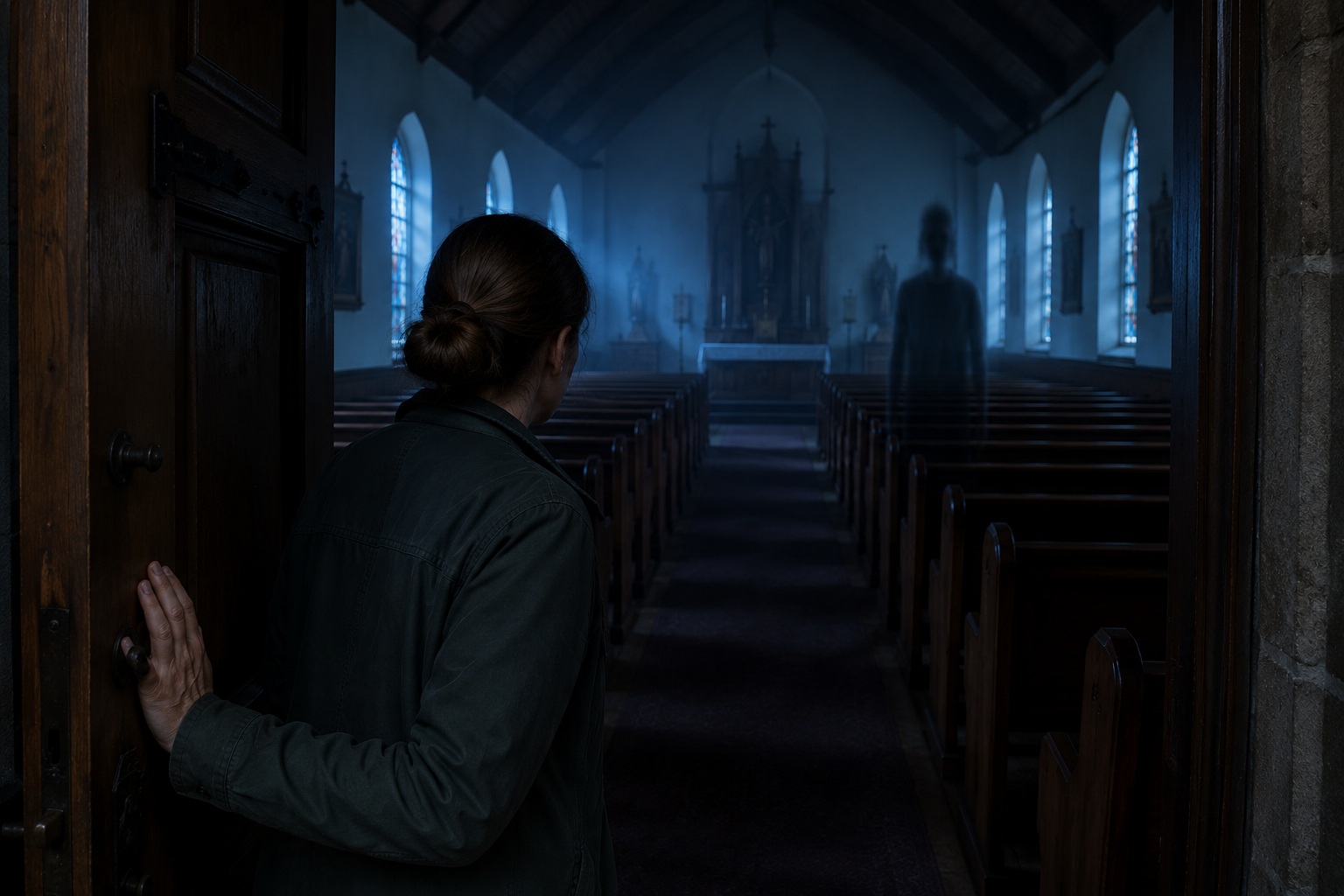
When the brain expects complete silence, every small sound becomes important. A settling beam, an old heating pipe, distant traffic, or a bird landing on the roof suddenly feels much closer than it really is. The same thing happens visually. Large dark spaces contain countless patches of shadow created by pillars, pews, stained glass, hanging lights, and balconies. Small changes in outside lighting can make those shadows seem to shift even though nothing is moving.
For people interested in paranormal stories, those ordinary conditions become the perfect setting for something that feels impossible. Why Witnesses Describe A Person Instead Of Just A Shadow One detail appears surprisingly often. People rarely say they saw a random dark patch.
Instead, they describe something that looked almost like a person. The figure may seem too tall. It may have no visible face. Its edges may appear blurred, transparent, or soft instead of solid.
Why The Place Felt Wrong
Sometimes witnesses say the shape stood between pews without moving. Others describe it slowly crossing an aisle before fading into darkness. The strange part is usually one simple detail. There is no face. The figure seems partly inside a wall.
Its feet never become visible. Its upper body slowly disappears while the lower half remains for another second. Those details separate these stories from reports of someone simply mistaking another visitor for a shadow. Many church stories also avoid dramatic action.
The figure does not chase anyone. It does not scream. It simply waits. That quiet behavior often makes the experience feel more unsettling than something loud or violent.
People naturally expect another person to react when noticed. A motionless figure that never answers creates a feeling that something is deeply wrong.
Why Security Reviews Sometimes Make People Look Twice Many church staff members review overnight activity for practical reasons.
The Detail Nobody Could Explain
They check doors. They check alarms. They look for signs of damage or trespassing. Most nights nothing unusual appears.
Occasionally, however, someone notices a shape that seems difficult to identify. Often it lasts only a moment. Perhaps it appears near the choir area. Perhaps it crosses behind several pews.
Perhaps it seems to stand beside the altar before fading into darkness. The first reaction is usually not excitement. People look for ordinary explanations. Could headlights from a passing vehicle have reached the stained glass?
Did insects pass close to the lens? Did changing exposure create an unusual blur? Could another volunteer have entered without anyone realizing it? Those questions come first because they are the easiest to answer.
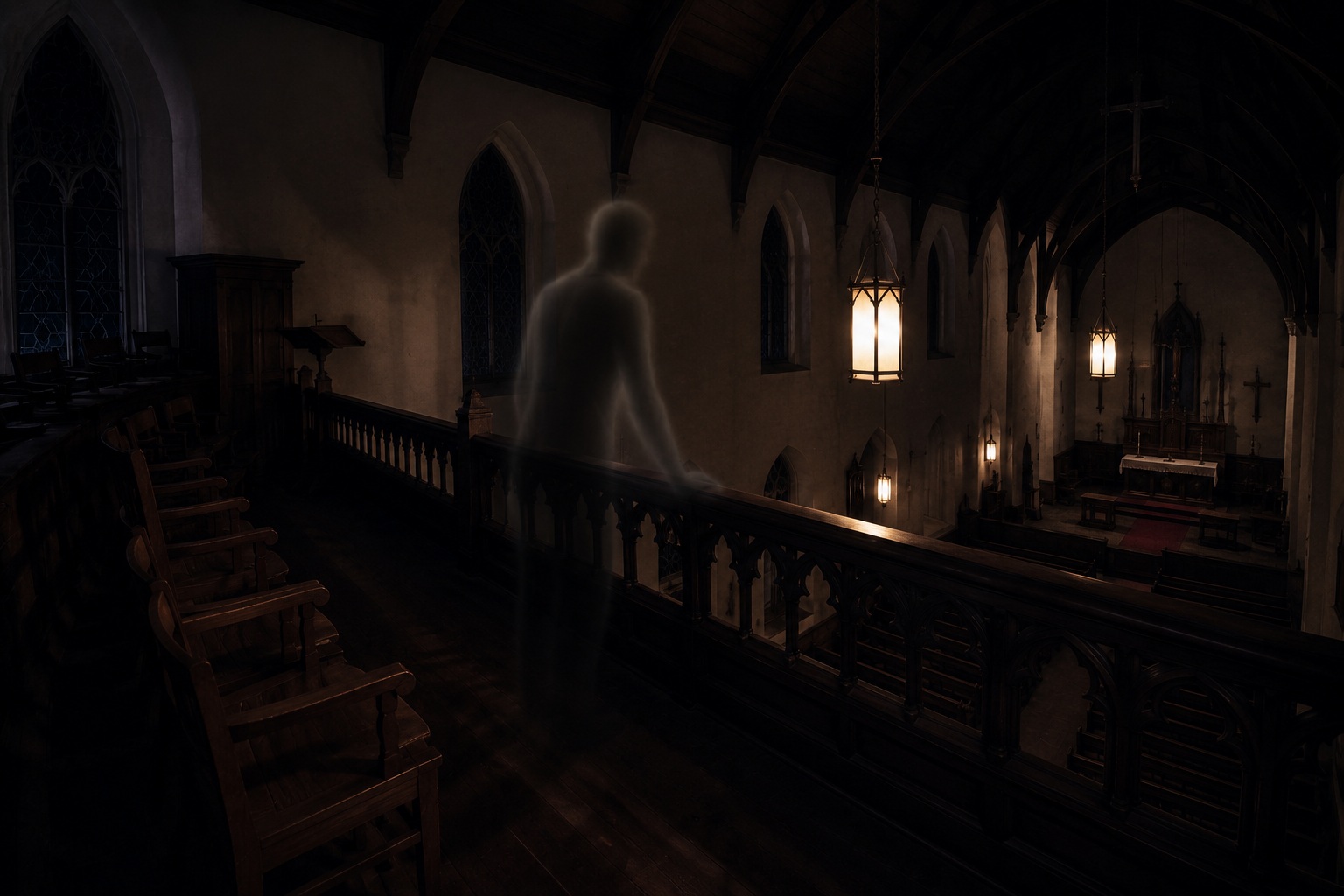
Many reported stories end there. Others remain uncertain because nobody finds a simple explanation that matches exactly what people thought they saw. That uncertainty is what keeps these stories circulating. Instead of claiming certainty, witnesses often say only that the image did not look like any person they expected to find inside an empty church.
What They Checked Afterward
Why
Churches Appear So Often In Paranormal Stories Churches already carry emotional weight before anything unusual happens. People celebrate weddings there. Families gather for funerals.
Children are baptized there. Communities return year after year for holidays. Even people who rarely attend religious services often connect churches with memory, grief, hope, and reflection. Because of that, unusual experiences inside these buildings tend to stay with people longer.
A strange shape in a shopping center may be forgotten within days. A silent figure inside a familiar church can remain in someone's memory for years. Architecture also plays a role. Long central aisles naturally pull the eye forward.
The Moment It Became Harder To Ignore
Balconies create deep overhead darkness. Columns interrupt sightlines. Candles and stained-glass windows produce soft, uneven light that changes as clouds pass or streetlights switch on. Those conditions encourage people to notice shapes that seem almost human before realizing they are simply part of the building.
But occasionally witnesses insist that what frightened them was not the darkness itself. It was that something seemed to stand within it.
What People Usually Check Before Calling It Strange Most reports follow a surprisingly ordinary pattern.
Someone notices the figure. They immediately assume another person is present. They call out. No answer comes.
They search the nearby area. Nothing is there. If another image exists from the same moment, they compare what they remember with what they later review. Then they begin checking practical possibilities.
Why People Avoided That Spot Later
Did someone leave through another door? Could changing light from outside explain the shape? Did another volunteer arrive early? Was there dust or moisture close to the lens?
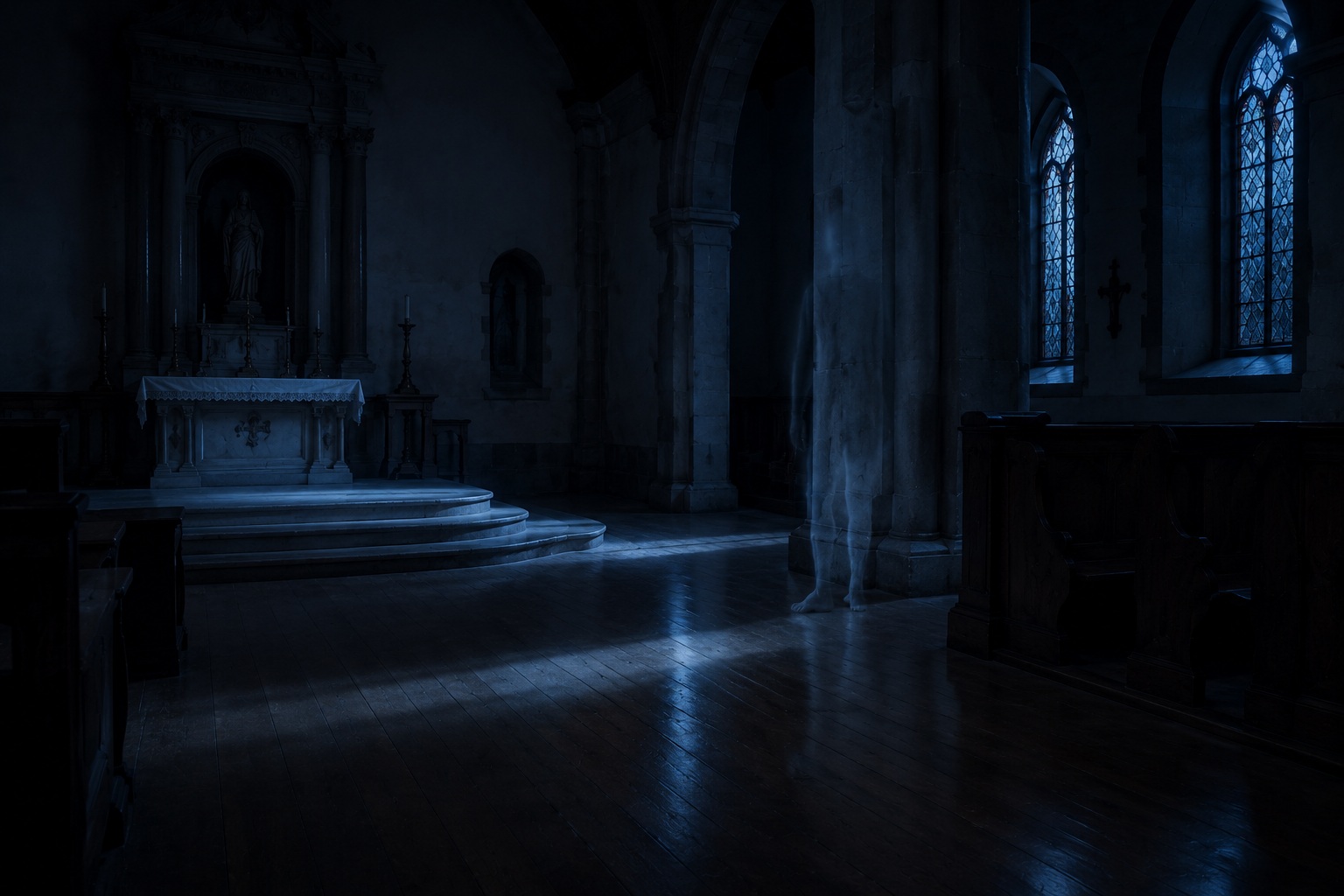
Did reflections from polished floors or glass create a human outline? Sometimes one of those explanations fits perfectly. Sometimes none seem to satisfy the witness completely. That uncertainty is important.
Most people telling these stories are not trying to convince everyone that ghosts exist. Instead they describe one moment that refused to make immediate sense. The unanswered question becomes more memorable than the image itself.
Why The Story Continues Long After The Night Ends
Reports of silent figures inside churches have lasted for generations because they combine two powerful ideas. The first is an ordinary place. Everyone understands what an empty church looks like. The second is one impossible detail.
Why The Story Still Gets Shared
Someone appears where nobody should be. The figure does not behave like a normal visitor. It stands perfectly still. It has no clear face.
It seems transparent. It fades into darkness instead of walking away. That single wrong detail is enough to transform an otherwise familiar building into something unsettling. Whether the explanation turns out to be unusual lighting, a misunderstanding, or something people simply cannot explain to their own satisfaction, the emotional experience remains remarkably similar.
Witnesses often remember how quiet the room felt. They remember the empty pews. They remember instinctively expecting another human being to answer. Instead they were left staring into silence.
That combination of expectation and uncertainty may be why these stories continue to spread from one generation to the next. People are not only fascinated by strange shadows. They are fascinated by the possibility that familiar places can suddenly feel unfamiliar. An empty church represents peace, routine, and safety.
When even a single silent figure seems to interrupt that feeling, the experience becomes difficult to forget. That is why stories about shadow figures in churches continue to appear in witness discussions, late-night conversations, and collections of unexplained experiences. The question is rarely whether every story has the same answer. It is why so many different people, in so many different places, describe almost the same silent figure waiting among empty pews long after everyone else has gone home.