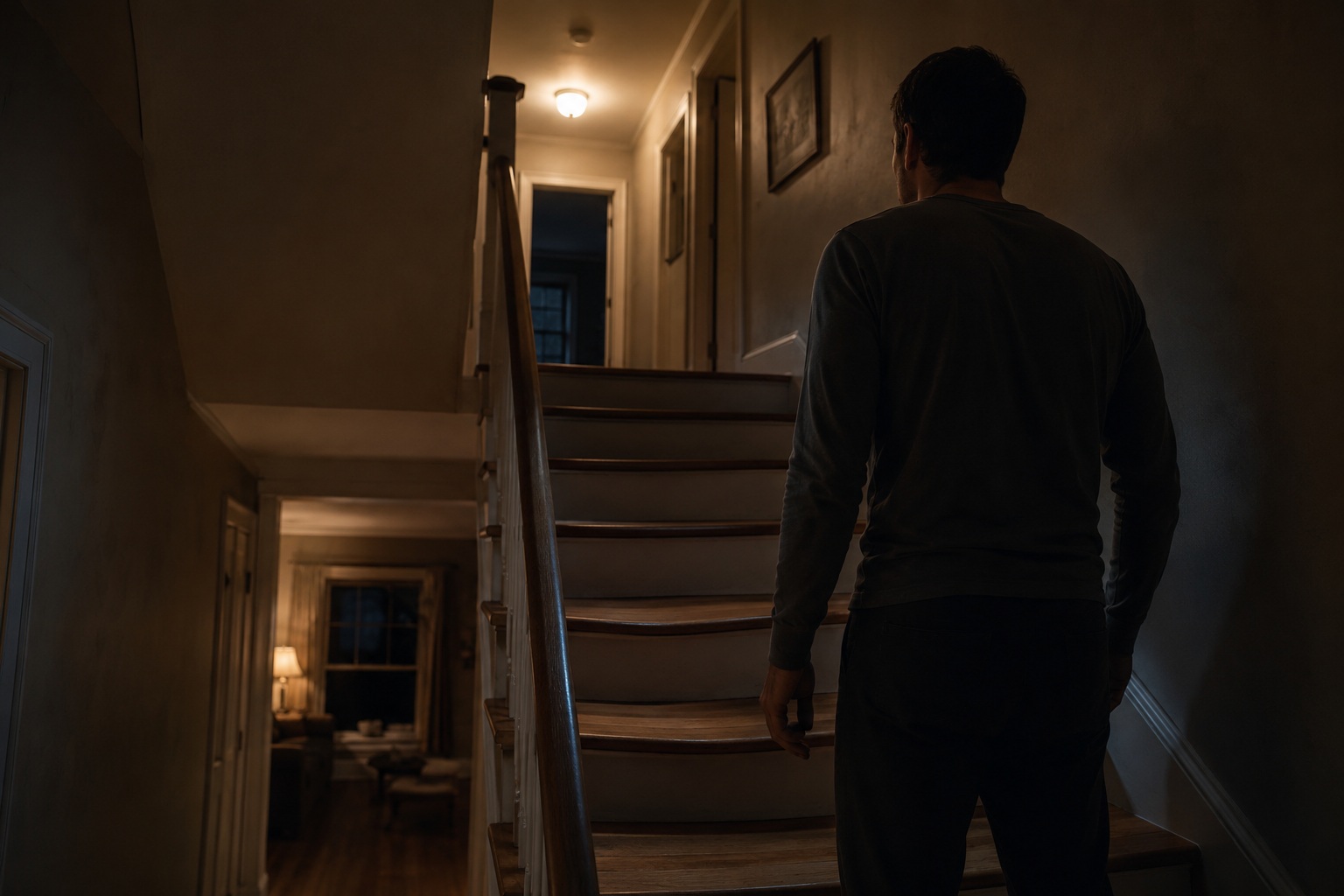
The last step echoed through the old townhouse exactly the way it always did. A man climbed to the second floor carrying a basket of laundry, reached the landing, and stopped beside the hallway light. His own footsteps faded into silence.
Then another step sounded below him. Just one. Heavy enough to make the wood complain. It wasn't behind him. It wasn't upstairs. It came from the middle of the staircase, as though someone had climbed one final step after he had already stopped.
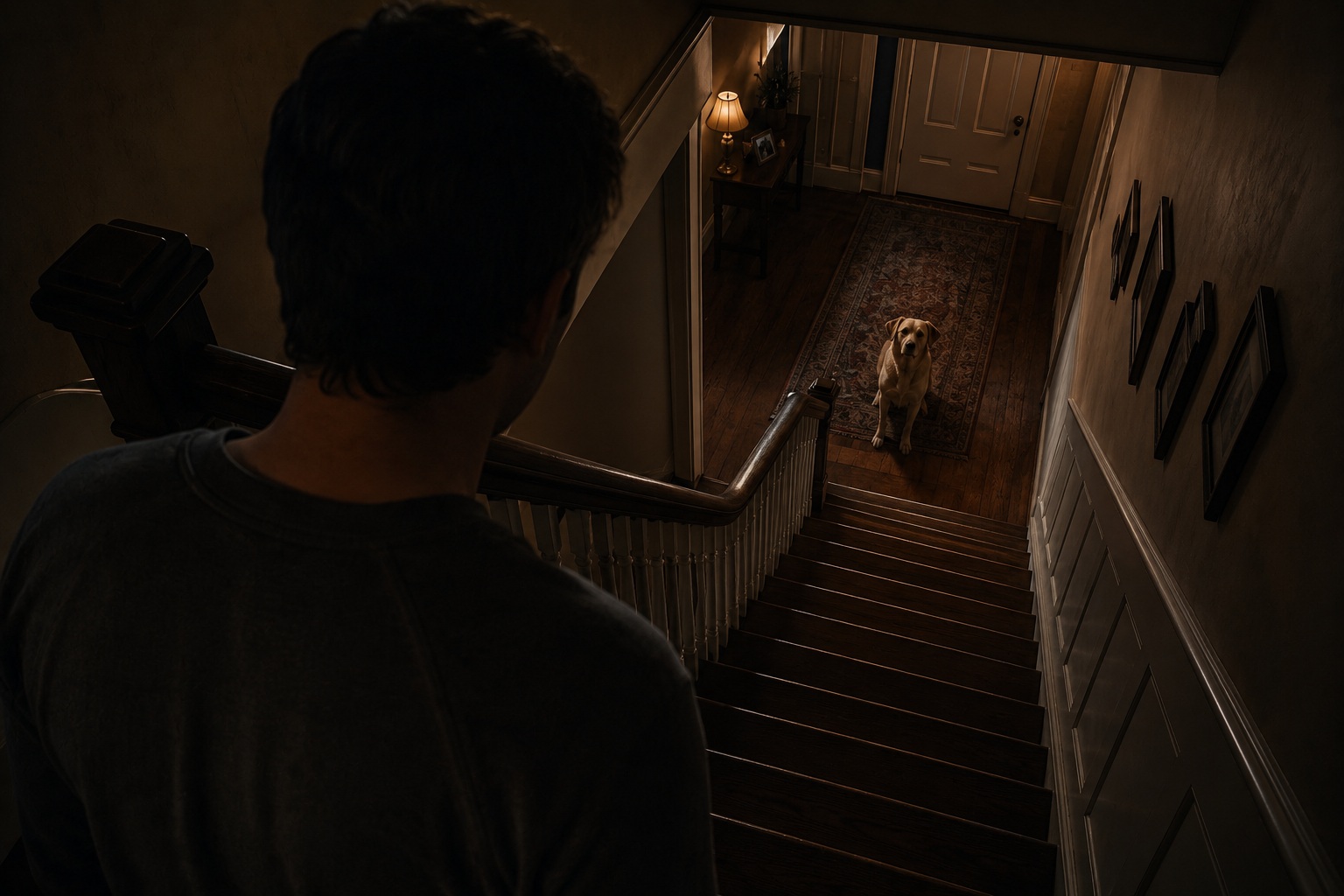
He waited. Nothing. He leaned over the banister expecting to see a family member halfway up the stairs, but every step was empty. The front door remained locked. The living room lights were still off. The house hadn't changed at all. As he turned away, another detail made the moment worse.
The staircase had stopped creaking completely. Whatever made that final sound had not continued climbing. It had simply reached the point where it wanted to stop.
Stories like this appear everywhere people talk about strange homes, old hotels, apartment buildings, and quiet family houses. The strange detail isn't endless footsteps or someone running up the stairs. It's that single extra step after the witness has already finished climbing. Why does this idea appear so often in ghost stories, and why does one additional footstep feel so much scarier than a whole series of unexplained noises?
The First Time It Happened
Our brains expect staircases to produce patterns. When someone climbs, each footstep follows the last with a rhythm that becomes almost automatic. Even if you aren't paying attention, your mind predicts where the next sound should happen and when it should end.
That's why one additional footstep feels so wrong. Instead of random noise, it sounds like another person matching your pace until the very last moment. People often describe it as if someone climbed the staircase beside them without being noticed until the final step. Others say it feels like they accidentally led someone upstairs.
That tiny change transforms an ordinary house sound into something that feels strangely personal. The fear isn't simply that the house made a noise. It's the feeling that someone else finished the climb.
These stories aren't limited to abandoned mansions. Many happen inside completely ordinary homes where families have lived for years without experiencing anything unusual. Older wooden staircases appear often because they naturally creak and echo. Apartment buildings also appear frequently because sound travels through walls, floors, and shared structures.
Hotels are another common setting. Night workers sometimes describe hearing a guest walk upstairs long after everyone has checked into their rooms. The footsteps stop outside no door. Instead, they simply end with one final step that seems to come from empty air. Schools, churches, theaters, and historic buildings produce similar stories.
Why This Pattern Feels So Specific
In each setting, the staircase becomes a narrow path where people expect movement to continue in only one direction. When that expectation breaks, even briefly, the experience becomes difficult to forget.
Nearly everyone reacts the same way.
They immediately look behind them. If nobody is there, they check the front door. Then they call out to family members. Some wait quietly, hoping another sound will explain the first one.
Others deliberately walk the stairs again, trying to recreate exactly what happened. They test individual steps. They listen for loose boards. They stomp harder.
Sometimes they discover one squeaky step that delayed its sound slightly. Sometimes heating pipes click beneath the floor. Sometimes another person in the house unknowingly creates a nearly identical noise. These explanations solve many stories.
The Detail That Makes People Stop
But not all of them. The reports that stay with people usually include one detail that refuses to fit the obvious answer. Perhaps the sound came from the middle of the staircase instead of the bottom. Perhaps everyone else was asleep.
Perhaps the witness immediately walked back down only to find every step silent. The unexplained part isn't always the sound itself. It's when the sound happens.
Before jumping to supernatural ideas, it's worth remembering how complicated houses can be. Wood expands and contracts as temperatures change. Heavy furniture settles slightly during the night. Heating systems send vibrations through beams hidden behind walls.
Pipes click. Floorboards shift. Even someone walking in another room can create sounds that seem to come from a staircase because echoes bounce through narrow hallways. Human hearing also fills in missing information.
If you expect footsteps, your brain naturally groups separate creaks into a walking pattern. That's one reason people often hear staircases more clearly late at night. The house is quieter. Outside traffic fades.
Ordinary Explanations People Check First
Small sounds become much easier to notice. Fatigue can also make ordinary noises feel strangely meaningful because the brain works harder to identify uncertain sounds in darkness. Many reports likely begin with these perfectly normal causes.
The stories people continue telling usually add one extra detail. The footstep arrives at exactly the right moment. Not five seconds later. Not during another noise.
It lands naturally after the witness's own final step, completing the rhythm almost perfectly. That timing is what many people remember most. Others describe hearing their own footsteps echo normally until reaching the landing. Only after stopping does one last step answer from below.
Some witnesses even pause halfway up the staircase. The sound pauses too. They continue climbing. A matching rhythm follows until the final extra step appears once again.
These stories are impossible to verify years later, but they reveal something interesting about how people experience fear. The frightening part isn't volume. It's imitation. Many ghost stories involve something quietly copying normal human behavior while remaining just out of sight.
The Moment It Became Harder To Ignore
A staircase provides the perfect setting because everyone already expects another person's footsteps there.
Across different cultures, staircases often represent movement between one place and another. They're neither upstairs nor downstairs.
They're somewhere in between. Because of that, they appear constantly in supernatural folklore. Some traditions describe staircases as places where spirits linger because people spend only a few seconds passing through them. Others suggest that hearing someone climb empty stairs means an unseen visitor is following just behind.
Modern stories usually remove the older folklore but keep the same emotional structure. Instead of describing a ghost directly, witnesses describe ordinary sounds behaving as though another invisible person is nearby. Notice how often these stories avoid dramatic endings. The witness rarely sees a frightening face.
There is no violent attack. The sound simply ends. That unfinished feeling leaves room for imagination. People naturally picture whoever might have taken that final step.
Why People Avoided That Spot Later
Because nothing is shown clearly, the mind invents possibilities that feel more frightening than a complete explanation.
Thousands of houses creak every night. Almost none become memorable stories.
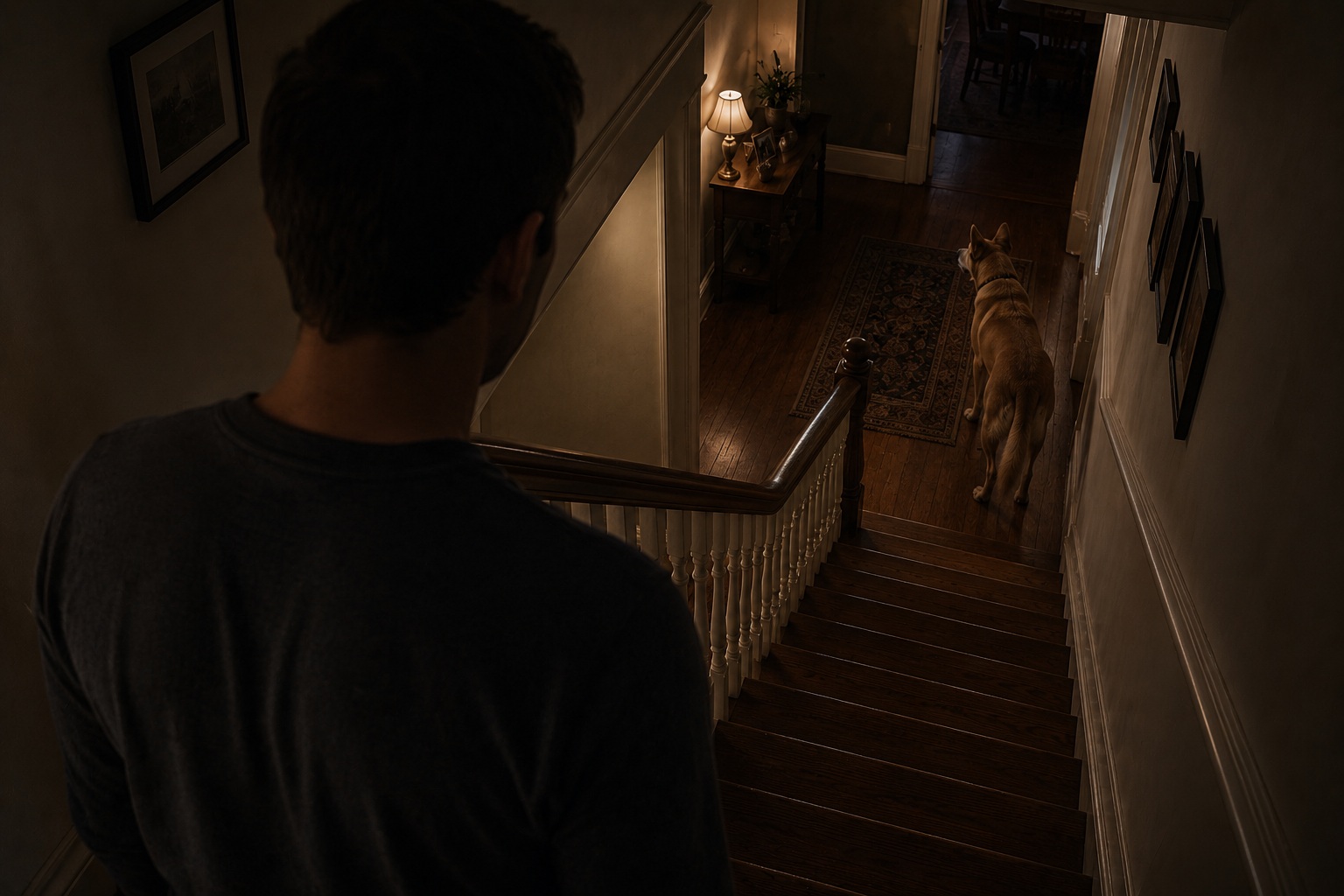
The ones people repeat usually contain one specific detail that changes everything. A family dog refuses to climb the staircase immediately afterward. A child asks who walked upstairs. A bedroom door that was open is now partly closed.
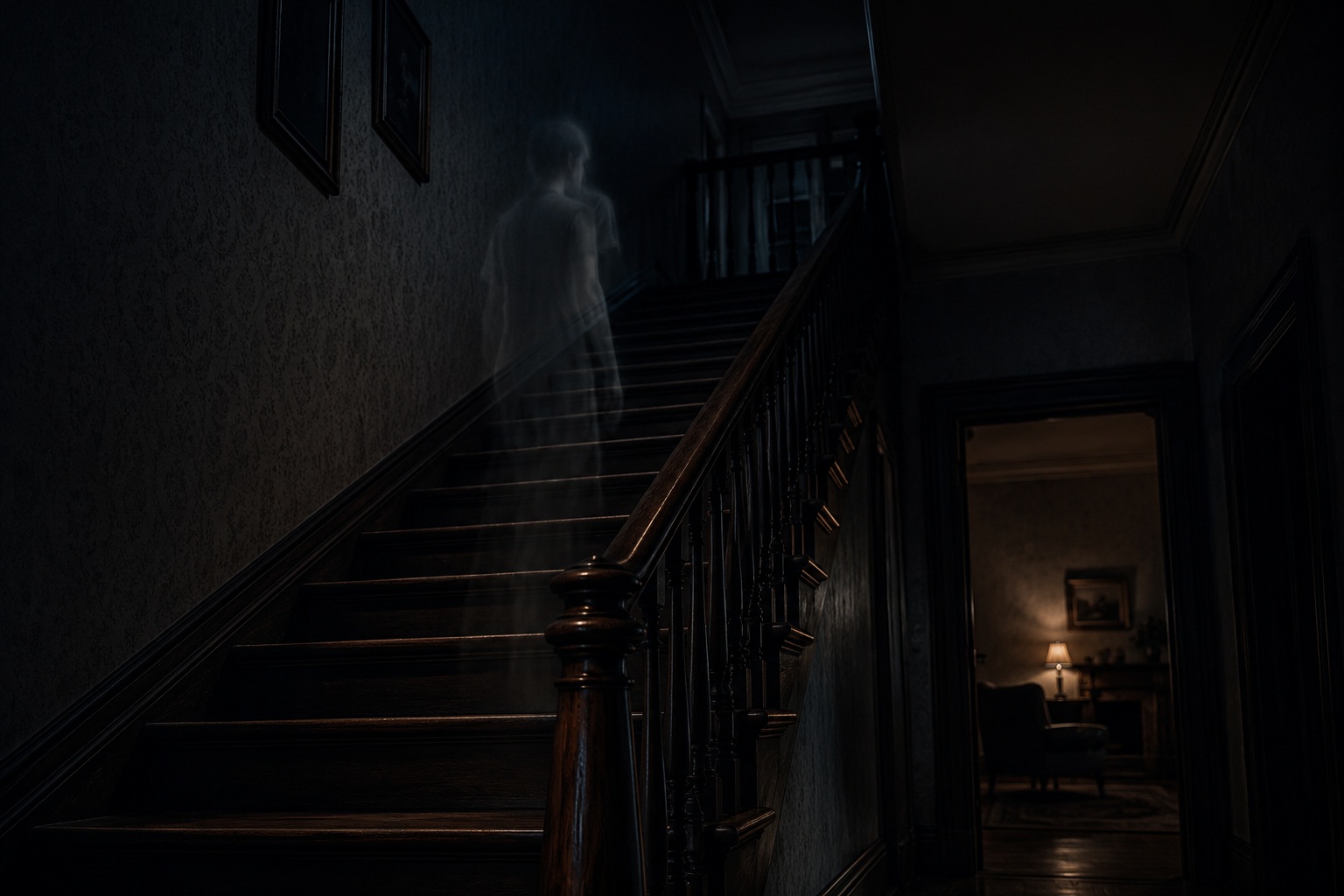
Someone standing downstairs insists they never moved. Occasionally, a witness catches sight of something only after hearing the sound. Instead of a normal person, they describe a pale figure standing halfway up the staircase with blurred edges, an empty face, or a body that seems slightly transparent before fading into the darkness.
That image appears far less often than the footstep itself. Most reports rely on sound rather than sight. Ironically, that makes them easier for readers to imagine happening in their own homes. Almost everyone has climbed stairs in silence.
Almost everyone has listened for another person in the house. The extra footstep fits naturally into everyday life. It doesn't require strange objects or abandoned places. It only needs one ordinary staircase and one moment when the house becomes completely still.
Why This Pattern Keeps Coming Back
Fear often grows from interrupted expectations rather than obvious danger. If someone heard random banging all night, they might blame old pipes. If footsteps continued endlessly, they might search for another person.
But one perfectly timed extra step offers neither certainty nor closure. It starts like something familiar. It ends with one detail that doesn't belong. Psychologists have long noted that incomplete experiences tend to stay in memory longer than neatly finished ones. A conversation cut short, a melody missing its last note, or a door that opens slightly before stopping all leave the mind searching for an ending.
The extra staircase footstep works the same way. Whether it began with settling wood, unusual acoustics, mistaken perception, or something a witness could never explain, the memory remains because it never truly finishes. The staircase falls silent. Nothing appears.
Nothing else happens. Yet many people describe walking those same stairs differently afterward. They pause before reaching the landing. They listen for one more step.
And for just a second, every quiet house seems capable of answering with a footstep that doesn't belong to anyone at all.