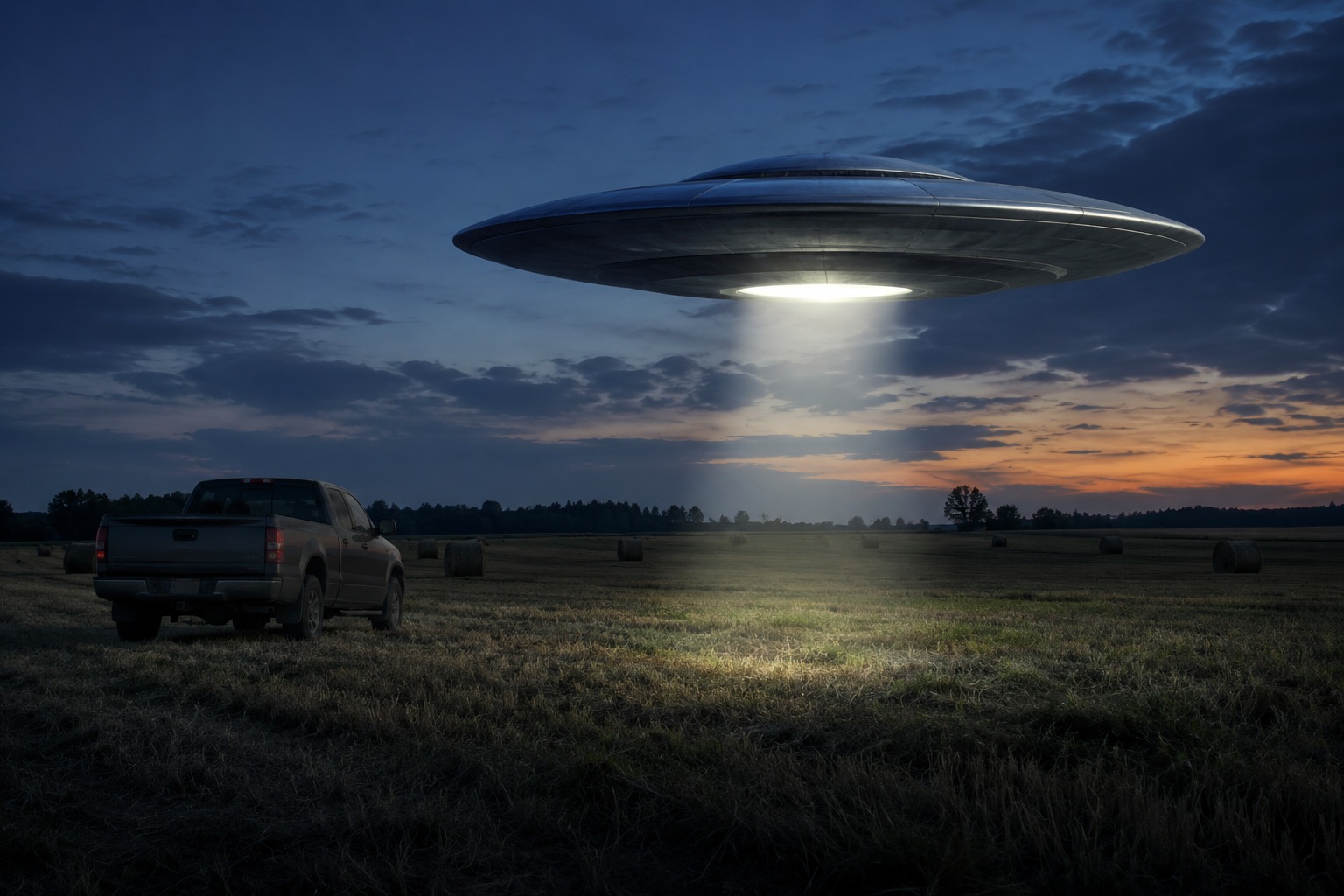
The old hay field was silent except for insects and the slow ticking sound of a cooling pickup truck. A farmer had stopped after noticing a bright silver disc hanging over the far side of the field. It was low enough that he could clearly see its smooth round shape against the dark blue sky. Nothing about it seemed rushed. It simply hovered without drifting, almost as though it had all the time in the world.
Then a soft white light appeared beneath it. Instead of sweeping across the ground like a normal spotlight, the beam drifted in slow, careful movements. It paused over one patch of grass, slid twenty feet to the left, stopped again, then crossed a narrow creek before returning to almost the exact same place. It did not move randomly. It looked patient.
The man later said the strangest part was not the object itself. It was the feeling that the light behaved like someone searching for something they expected to find. When the disc finally lifted away, the beam disappeared instantly. The field became dark again, leaving only quiet air and thousands of ordinary crickets.
Stories like this appear again and again whenever people talk about strange lights connected with UFO sightings. The object may change shape, the location may change, and the witness may describe different colors, but one detail often stays surprisingly similar. The lights do not simply shine. They move as if they are examining the ground below.
The Creepy Example People Recognize
Why do so many people describe that same unsettling pattern? What Makes A Searching Light Feel Different? People recognize searching behavior because they see it every day. Police helicopters sweep roads. Security guards move flashlights slowly across buildings. Campers search the woods by stopping, looking, and moving again. Human eyes naturally recognize those movements as purposeful.
That is why many witnesses become uncomfortable when they describe unusual lights behaving the same way. Instead of spinning wildly around the sky, the light slows down. Instead of covering everything evenly, it focuses on one place before moving somewhere else. Instead of making smooth circles, it pauses, changes direction, and seems almost curious.
Whether the object is unusual or something completely ordinary seen under confusing conditions, the movement itself creates the feeling that someone—or something—is making choices. That emotional reaction often becomes the strongest memory from the experience. Many witness statements spend far more time describing how the light behaved than describing the craft itself.
Where
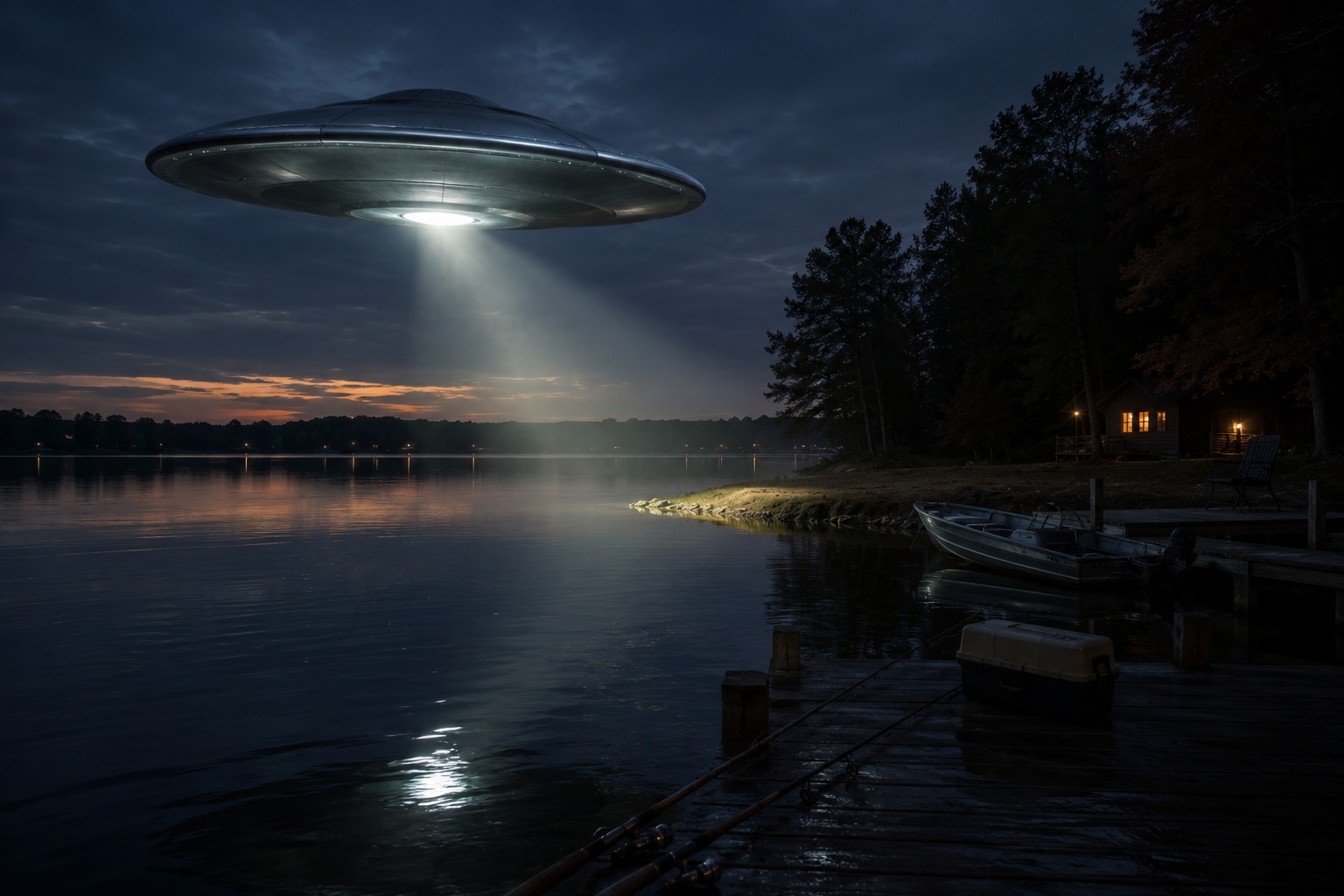
People Most Often Report This Pattern Reports describing searching lights usually happen in places with large open spaces. Farm fields appear often because there are few buildings blocking the view. Lakes are another common setting.
Why This Pattern Feels Personal
People standing on docks or beaches sometimes describe lights moving across calm water before returning toward the shoreline. Mountain valleys also appear repeatedly because a hovering object can remain visible for long periods without disappearing behind buildings. Some people describe lights moving across forests in slow lines rather than racing through the trees.
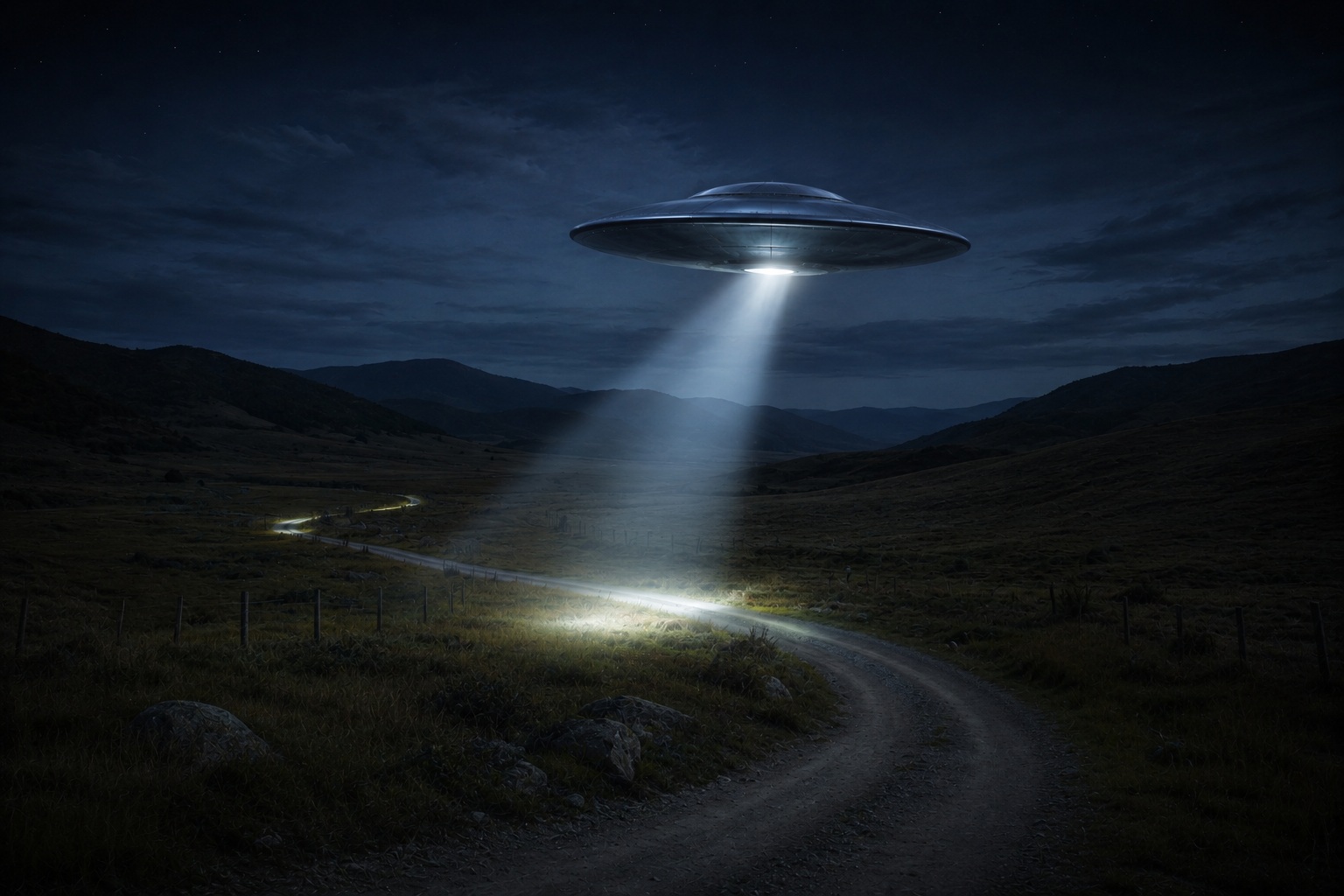
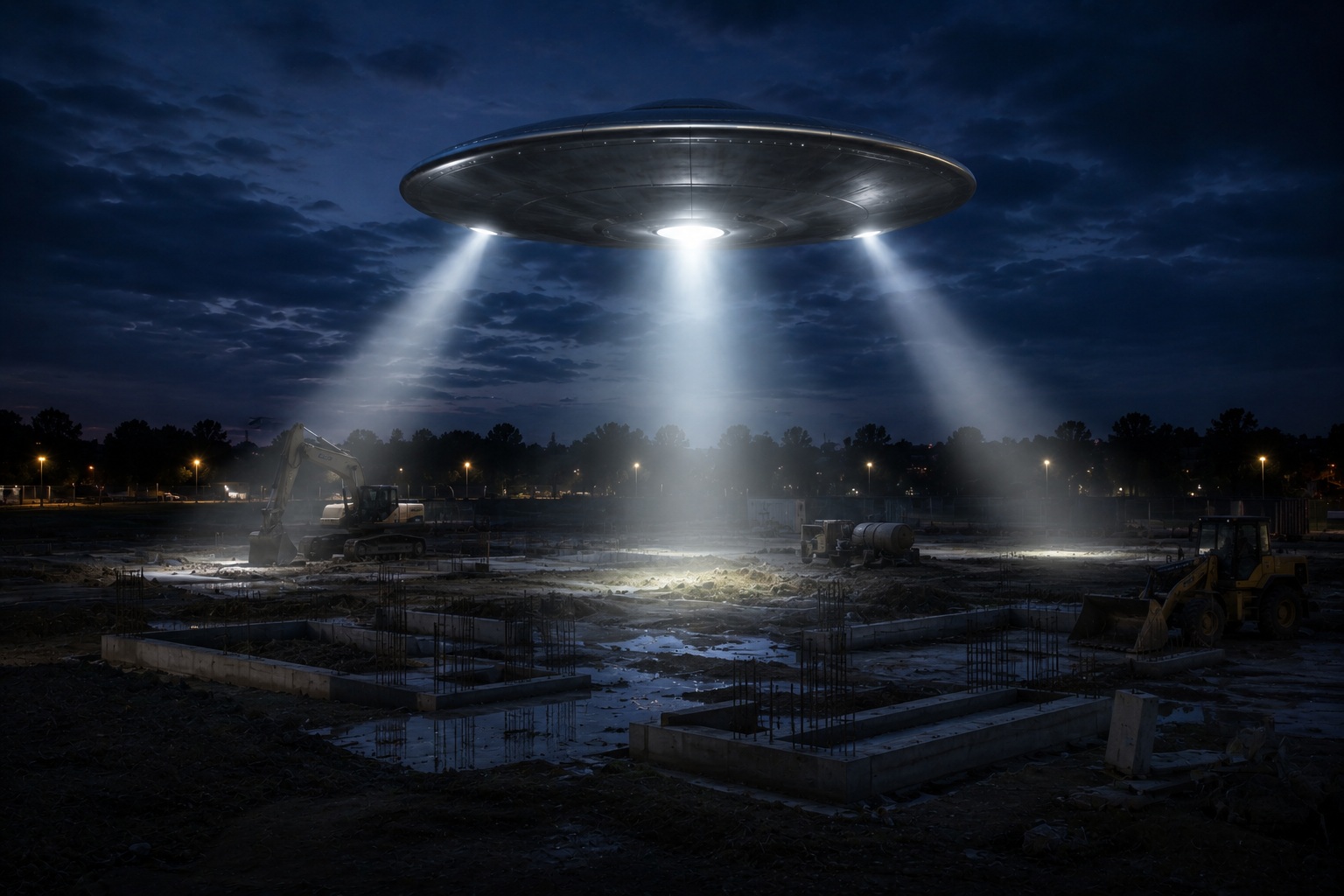
Others report beams crossing empty roads late at night where there are no nearby vehicles. Construction sites after workers have gone home also appear from time to time. Large parking lots, abandoned airfields, and quiet industrial areas create similar stories because witnesses can clearly see both the craft and the ground beneath it.
The shared detail is usually not the location itself. It is the amount of open space that allows someone to watch the light long enough to notice its strange movement.
What Witnesses Usually Check First People rarely begin by assuming they have seen something unusual.
The Detail That Makes People Stop
Most describe trying to explain the light before thinking about anything else. Was it a helicopter? Many immediately listen for rotor noise. If the object remains completely silent, that becomes part of the story.
Could it be a drone? Witnesses often watch for quick turns, blinking navigation lights, or the familiar buzzing sound. Could it be a spotlight from the ground? People sometimes look around for nearby vehicles, emergency crews, concerts, or work sites using powerful lights.
Others search for tall towers that might be reflecting light. Clouds are another common explanation people consider. Thin clouds can create strange effects when bright lights shine upward. Reflections from windows or windshields also fool people more often than they expect.
Only after checking these ordinary possibilities do many witnesses begin describing why the movement still felt unusual to them. Even then, most avoid making big conclusions. Instead, they simply describe what they watched. Why Slow, Careful Movements Feel So Unsettling
Fast objects can be exciting. Slow objects often become frightening. Our brains constantly try to guess intentions based on movement. An animal rushing across a road is easy to understand.
Ordinary Explanations People Check First
Someone slowly walking toward your house while stopping every few steps feels very different. The same idea appears in stories about searching lights. Quick flashes suggest speed. Slow pauses suggest attention.
That creates an uncomfortable question. If the light keeps stopping over certain places, what decides where it looks next? Witnesses often describe feeling watched even though the beam never directly shines on them. Others say they stayed perfectly still because moving suddenly felt like a mistake.
That reaction may come entirely from how human brains interpret deliberate movement. Or it may simply reflect how unsettling unfamiliar lights become when they refuse to behave the way people expect. Either way, the emotional response appears again and again. People remember feeling observed more than they remember feeling threatened.
Those are different emotions. Being watched creates a lingering discomfort that often stays with someone long after the light disappears.
Why The Pattern Is Hard To Dismiss
Similar Details That Often Appear Alongside Searching Lights Searching lights rarely appear completely alone in witness stories.
Some people say nearby animals suddenly became silent. Others describe dogs refusing to leave the porch while staring toward the same area. A few mention birds taking flight long after sunset for no obvious reason. Another repeated detail involves the object remaining perfectly still while only the light beneath it moves.
The craft itself seems frozen against the sky. Only the beam changes direction. Some stories describe several narrow beams working independently. Instead of one wide spotlight, different lights slowly sweep separate parts of the ground.
Others report the beam becoming brighter without growing wider. That detail often stands out because people expect brighter lights to spread farther. Witnesses sometimes mention that the light disappeared instantly instead of fading. One moment the beam was moving across the field.
Why People Avoided That Spot Later
The next moment it simply was not there. Again, none of these details automatically point toward one explanation. They simply appear often enough that people notice similar descriptions between stories told by complete strangers. That is one reason these reports continue to attract attention.
The repeated patterns are often more interesting than any single dramatic story.
Why This Question Keeps Returning People have wondered about unusual lights in the sky for generations. Technology changes.
Aircraft change. Drones become more common. Powerful LED lights appear in places that once stayed dark. Even so, the same question keeps returning.
Why did the light move like it was searching? Part of the answer may simply be human perception. People naturally describe unfamiliar movement using familiar ideas. A slow beam reminds them of someone looking for lost keys, a rescue worker scanning the woods, or a flashlight examining a room.
Why This Pattern Keeps Coming Back
Those comparisons make sense because they match everyday experience. Yet some witness statements remain difficult to forget because the descriptions are so specific. The beam pauses. It returns to the same patch of ground.
It skips empty areas. It changes direction without rushing. Those are the details people repeat years later. Whether someone believes they witnessed an unusual aircraft, a misunderstood natural event, or something they cannot identify at all, the memory often centers on behavior rather than appearance.
A silver disc is memorable. A light that seems to make decisions is harder to stop thinking about. That may explain why searching lights continue appearing in conversations, witness statements, books, and late-night discussions. The object itself may disappear into the darkness.
The feeling that it was looking for something often remains.