A silver disc stayed in exactly the same place above the passenger window for twenty miles. That was the detail the driver could never forget. At first he thought another car had fallen in behind him on the empty county highway. He checked the mirror every few seconds, expecting headlights to appear around the next bend. They never did. The road behind remained completely empty.
The bright object outside the passenger side moved when he moved. It slowed when he slowed. It drifted farther away whenever the road opened into farmland, then quietly slipped closer again as trees lined both sides of the highway. It never flashed like an aircraft. It never disappeared behind hills the way distant lights usually do.
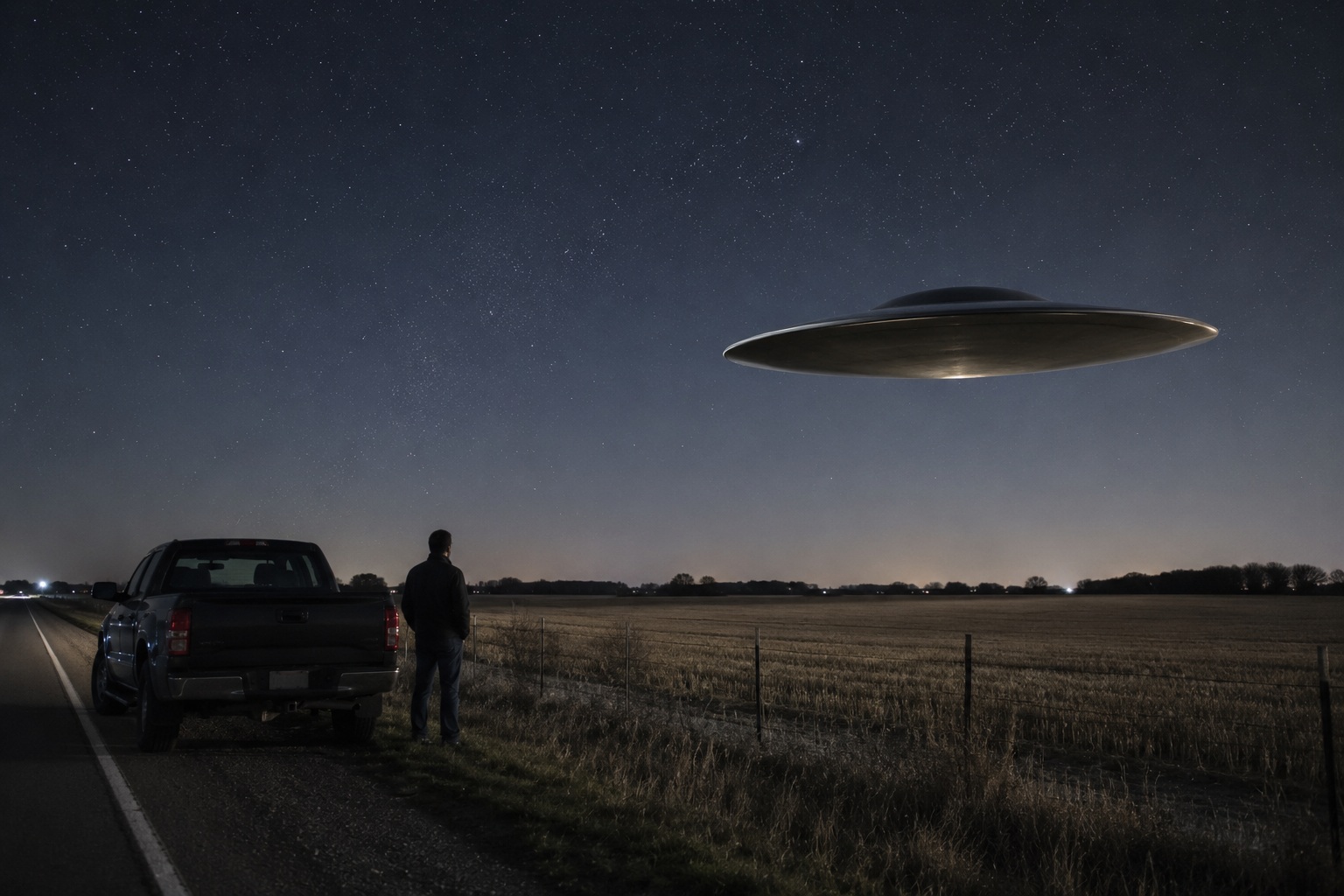
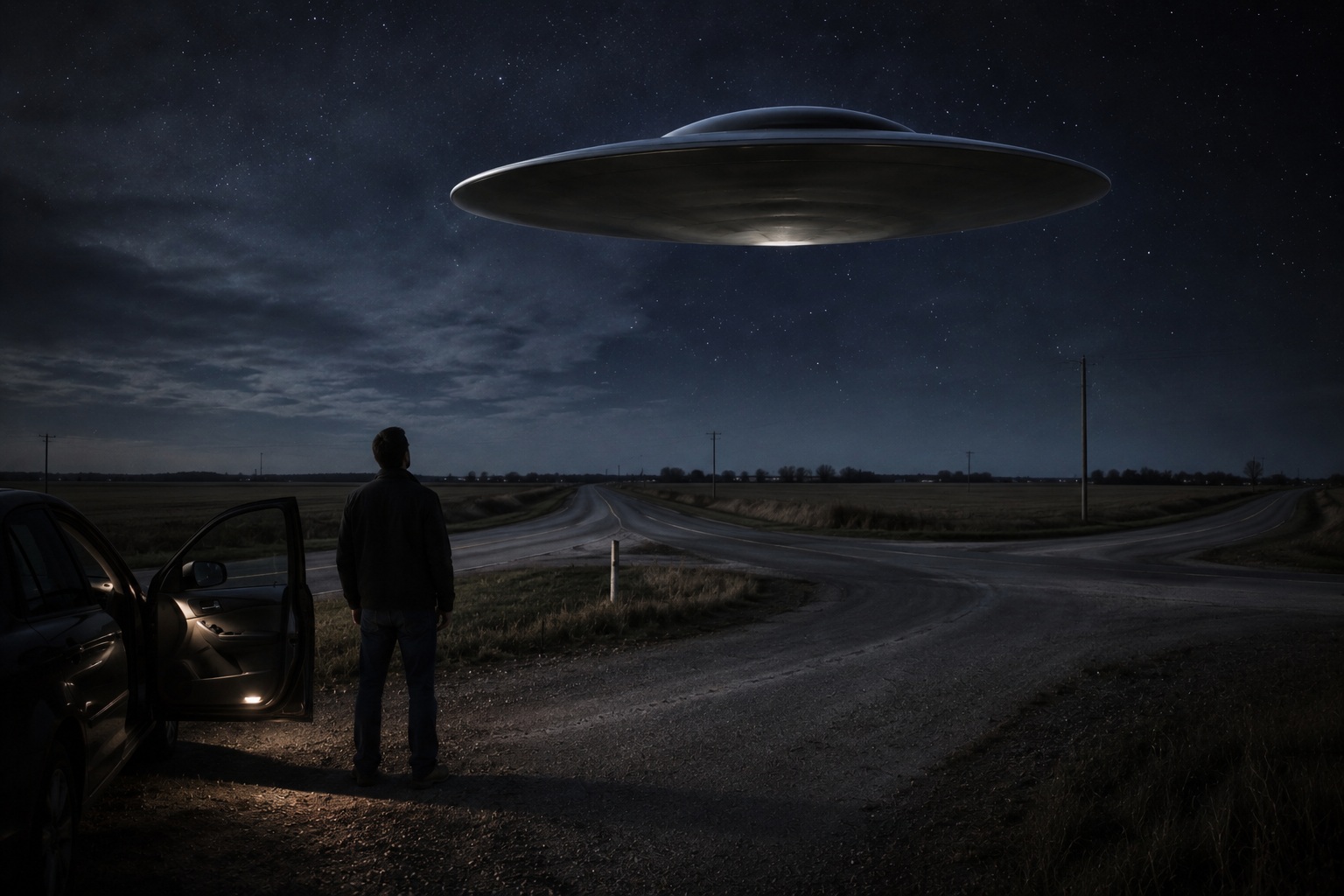
At a lonely crossroads he finally pulled onto the gravel shoulder. The engine idled. Crickets filled the silence. The object stopped too. It hovered above an empty field, large enough that he could clearly make out its smooth circular shape against the stars. After nearly a minute it began moving again—not across the sky, but toward the road.
He accelerated before it reached him. Stories like this appear everywhere people talk about strange lights in the night sky. Whether someone believes they are seeing something ordinary, something misunderstood, or something far stranger, one detail keeps returning: the feeling that the object is not simply flying nearby. It seems to be following the car itself.
So why do so many UFO witnesses describe lights that appear to pace them down lonely roads?
The First Time It Happened
Many reports begin in places where there are very few visual distractions. Long highways through farmland.
Desert roads. Mountain passes. Forest roads after midnight. In daylight it is easy to compare moving objects against buildings, trees, power poles, and other landmarks. At night those references almost disappear. A bright object against a dark sky can seem strangely detached from everything around it.
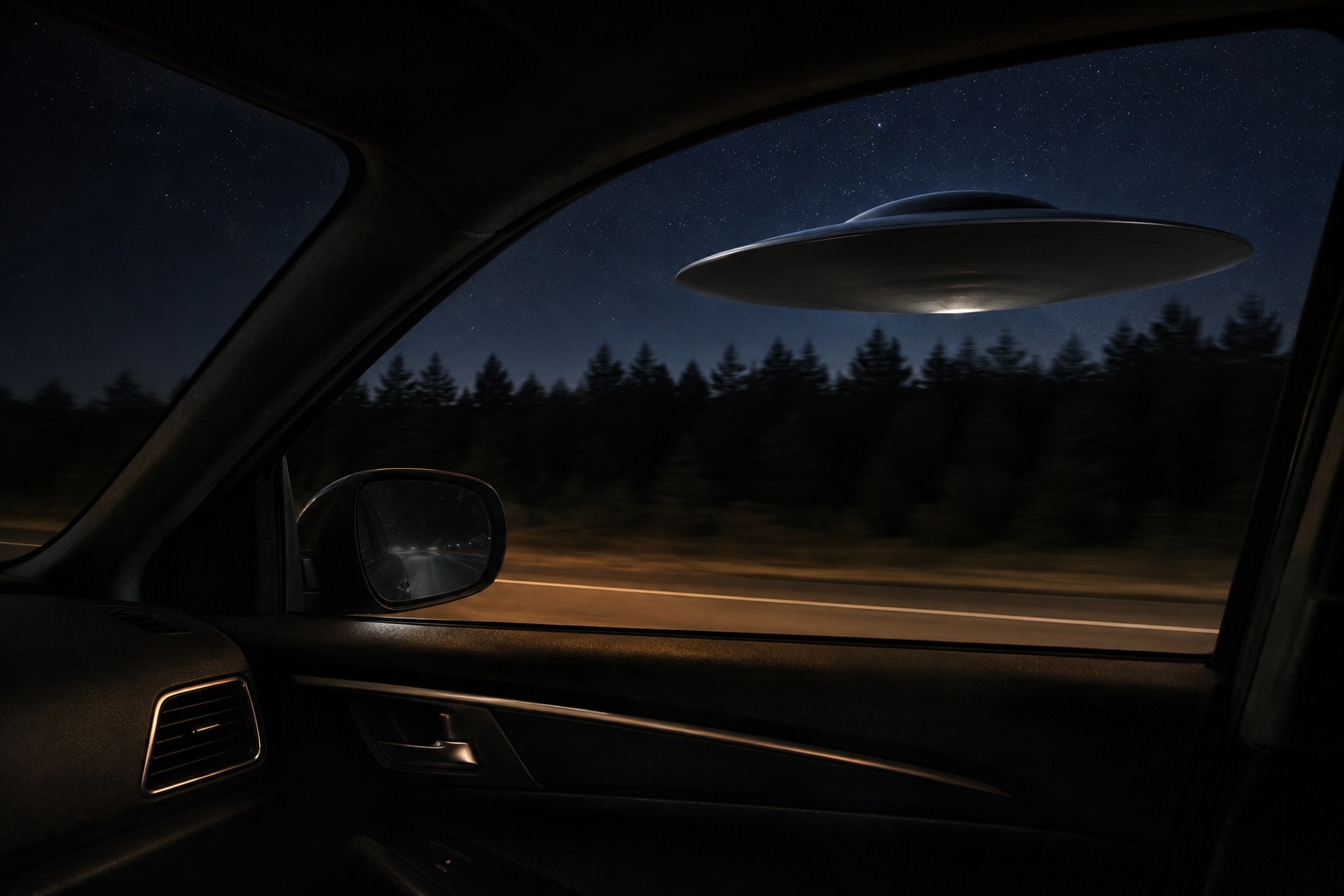
That alone explains many sightings. But witnesses who continue telling the story usually describe something more specific. They say the object reacts. Instead of remaining fixed in one part of the sky, it appears to match their speed or direction. When they slow down, it slows. When they speed up, it seems to remain nearby. When they turn onto another road, it somehow stays with them.
That feeling—that something is choosing to remain close—is what changes an interesting light into an unforgettable experience.
People often expect the first strange detail to be brightness. Instead, many say it is consistency.
Airplanes blink. Helicopters change position. Stars remain fixed. Cars appear and disappear with curves in the road.
Why The Place Felt Wrong
The object they describe does none of those things. It simply remains there. Witnesses often spend several minutes trying to convince themselves it must be a planet or bright star. They continue driving while waiting for the angle to change. Sometimes it never seems to.
Others describe a clearly visible craft rather than a distant light—a smooth disc, oval, triangle, or glowing object hanging low enough that its outline is easy to recognize. When people tell these stories years later, they often remember not the brightness but the impossible feeling that distance never seemed to change.
Most drivers do not immediately assume anything unusual. They start checking ordinary possibilities. Is another vehicle reflecting light?
Could it be the moon appearing between clouds? Is there a communications tower ahead? Did an aircraft happen to line up with the road? Many witnesses describe rolling down the window for a better view.
The Detail Nobody Could Explain
Others stop beneath trees to see whether the object disappears behind the branches. Some pull into gas stations or rest areas hoping nearby lights will reveal what they have been seeing. These small checks matter because they show how people naturally try to explain unusual experiences before reaching stranger ideas.
Sometimes the mystery ends there. The object turns out to be a bright planet sitting low on the horizon. A helicopter changes course. An approaching aircraft finally becomes obvious.
But in the stories people continue sharing, those explanations seem less satisfying because the object appears to respond instead of continuing on its own path.
Human perception at night can be surprisingly misleading. Without nearby landmarks, it is difficult to judge distance.
A bright object tens of miles away can appear much closer than it really is. A road that curves gently may create the impression that something is pacing the vehicle when it is actually standing still. This explains many famous "following light" experiences. Yet certain reports include details that make witnesses question those simple explanations.
Some say the object crossed from one side of the road to the other without changing its distance. Others describe it descending toward fields before rising again. A few claim they saw the craft hovering silently over intersections before it accelerated away in seconds. These descriptions are impossible to verify after the moment has passed, but they explain why the stories continue to circulate.
What They Checked Afterward
The witness is not simply describing a bright light. They are describing behavior. That difference is what keeps people asking questions.
Movies teach us to expect loud engines. Rotor blades. Jet noise. Electrical humming.
Instead, witnesses frequently describe almost complete silence. The only sounds are tires on asphalt. Wind through an open window. The engine.
In many stories the object appears large enough that people expect to hear something. Nothing comes. That absence creates an unsettling contradiction. Large things usually make noise.
The Moment It Became Harder To Ignore
Moving things usually disturb the air. When neither happens, the experience becomes difficult to fit into everyday expectations. Even people who later decide they probably misidentified an ordinary object often remember the silence more clearly than the light itself.
Memory tends to hold onto moments that interrupt ordinary expectations. Driving is normally repetitive. Road signs pass. Telephone poles repeat.
Headlights appear and disappear. When something seems to stay exactly where it should not, the brain pays attention. Witnesses often describe checking mirrors again and again. Each glance becomes another test.
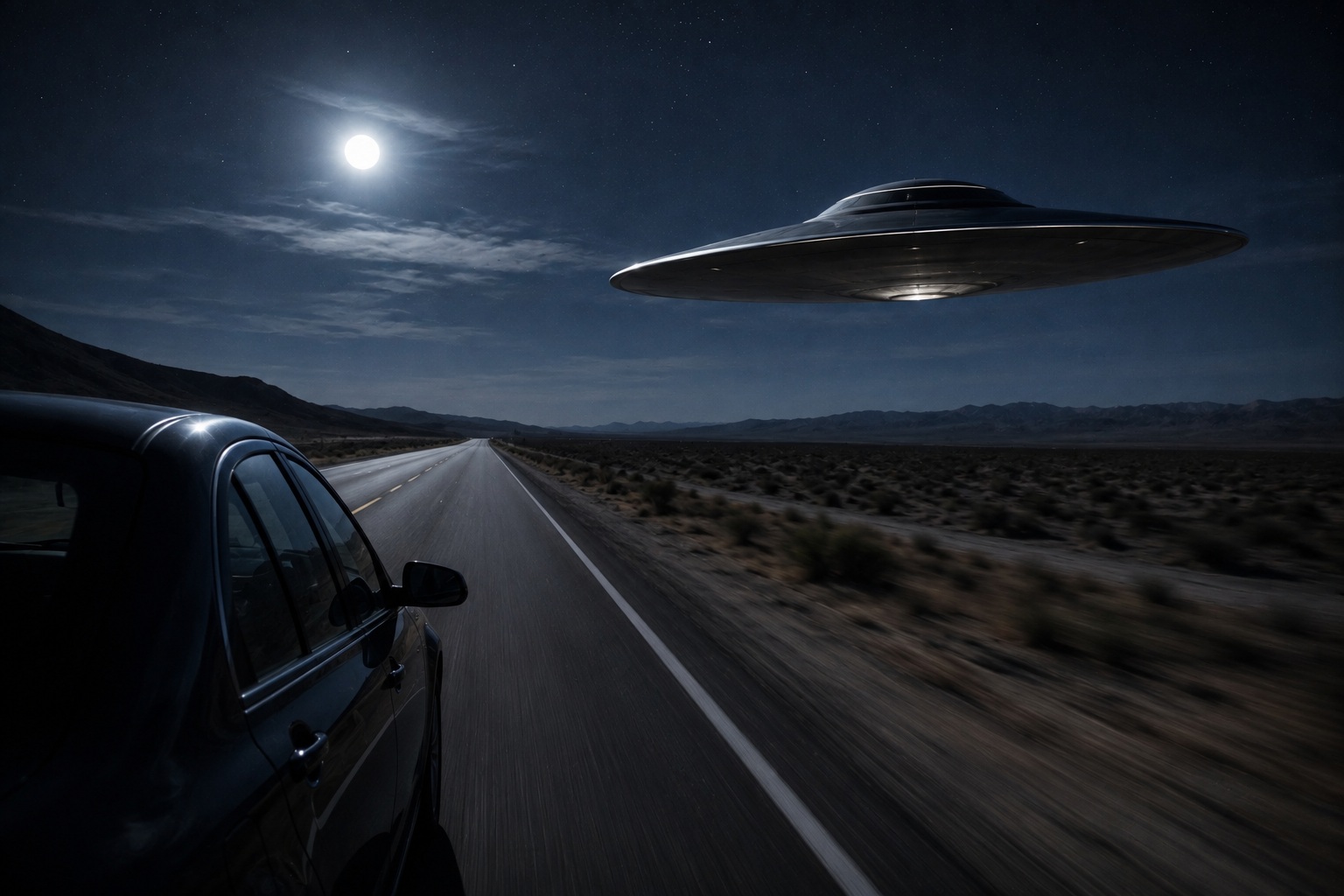
Surely it will be gone now. Instead, it remains. That repeated confirmation is what makes the experience stick in memory. Years later people may forget the exact date, weather, or destination.
Why People Avoided That Spot Later
But they remember the fourth or fifth glance into the mirror. They remember realizing that the object was still there. Whether the cause was unusual atmospheric conditions, a misunderstanding of distance, or something they still cannot explain, that repeated moment becomes the center of the story.
Lonely roads create a perfect setting for unusual experiences. There are fewer artificial lights. Long stretches of open sky.
Little traffic. Few people to compare observations with in the moment. Drivers are also more aware of anything unexpected because there is so little else demanding attention. A bright object above an empty field becomes impossible to ignore.
Many classic reports begin with someone simply trying to get home after work, returning from a late visit, or crossing a quiet stretch of countryside after midnight. Nothing dramatic is expected. That normal beginning makes the strange ending feel even more powerful. If the same object appeared above a busy city full of aircraft, streetlights, and tall buildings, it might never stand out at all.
Why The Story Still Gets Shared
The most interesting part of these stories is not whether every witness saw the same thing. They almost certainly did not. Some probably watched bright planets while driving along roads that created convincing visual illusions.
Others may have seen aircraft, satellites, helicopters, drones, or atmospheric effects that looked unusual from a moving vehicle. Those explanations account for many reports. Yet they do not erase the reason these stories continue to fascinate people. Across decades and across different countries, strangers describe remarkably similar feelings.
An object that remains nearby. A road with no other traffic. Repeated glances into the mirror. A decision to pull over.
Silence. Then the uneasy impression that whatever is hanging in the night sky is paying attention to the person below. Whether that feeling comes from the way our brains interpret darkness, from unusual but natural sights, or from something people still argue about, it has become one of the most recognizable patterns in UFO folklore.
Perhaps that is why these accounts remain so memorable. The story rarely ends with someone saying they saw a light. It ends with someone saying the light stayed with them long enough to make them wonder if they were the one being watched.