The Room Built to Be Boring
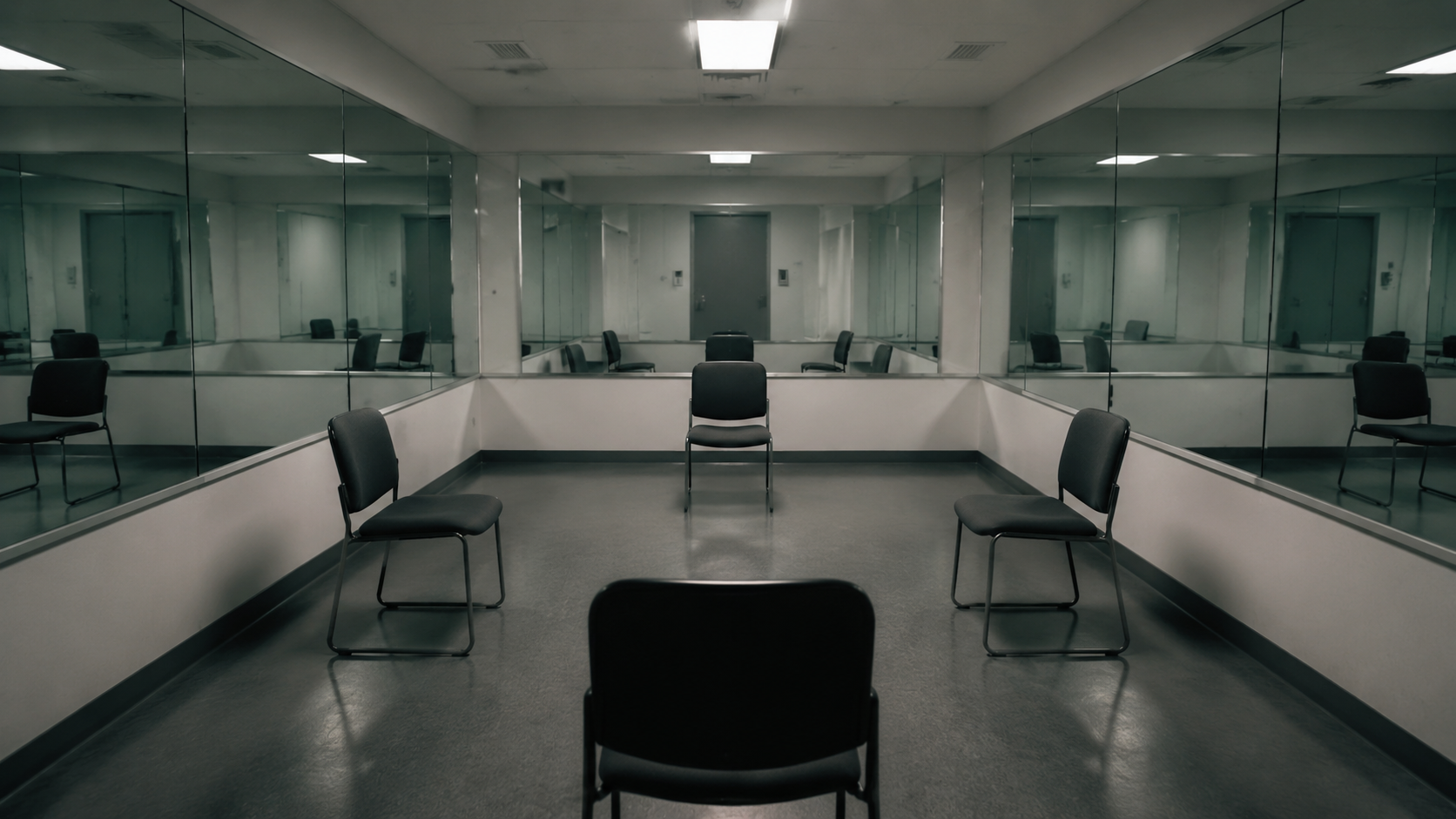
The mirror room was not built as a haunted attraction. It was built as a control space, the kind of small academic chamber meant to make perception measurable rather than dramatic.
A university perception lab had lined a small square room with plain mirror panels so researchers could study how people describe space when normal visual reference points become unreliable. The mirrors created repeated edges and false openings without adding any obvious story for participants to follow.
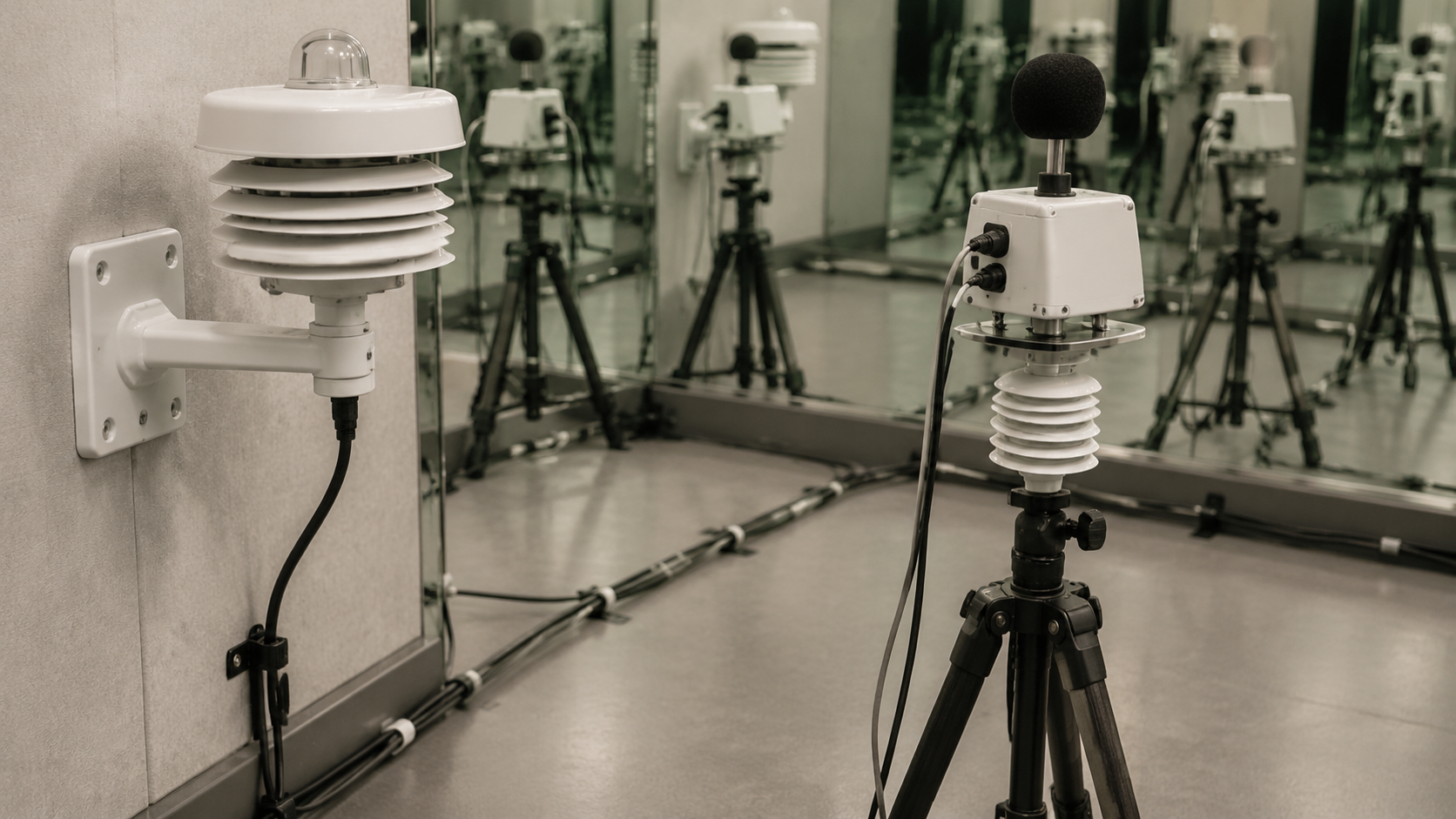
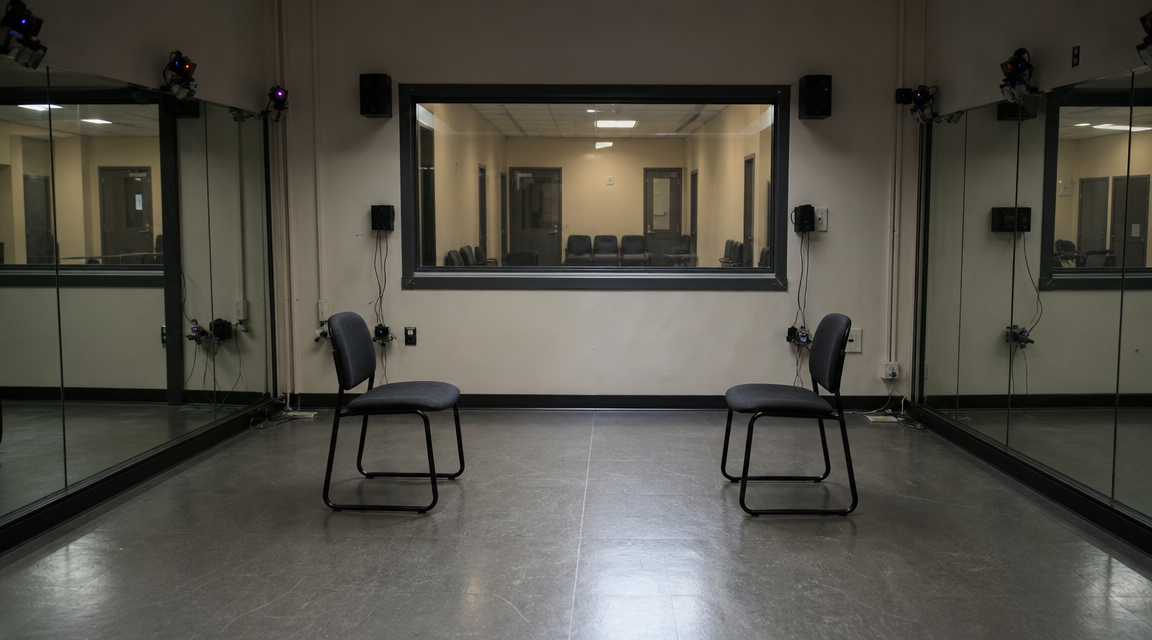
There were no props, portraits, candles, or theatrical hints. The room held chairs, a small table, a sealed observation window, and an environmental sensor array.
That is why the later story is still interesting. The oddity did not begin as folklore. It appeared in the records of a careful, ordinary study, preserved in the same matter-of-fact language used for timing sheets and equipment notes.
One corner of the room repeatedly drifted colder during a single kind of task: participants were asked to describe a person who was not present. The recorded drop was modest, closer to a laboratory nuisance than a horror-film event, but its timing made it difficult to ignore.
The Prompt That Changed the Room
The instruction sounded simple. Volunteers were told to describe someone absent in as much detail as possible, as if they were helping another person recognize that individual later.
The person could be real, remembered, imagined, or assembled from fragments. The task was about language, memory, and visual construction, not belief, and that neutral framing gives the result much of its tension.
Before that prompt, participants described objects, room layout, and imagined routes through a building. Afterward, they answered questions about comfort and orientation, giving the researchers several comparison tasks inside the same room.
The cold drift did not appear with the same consistency during object descriptions. It did not track every moment of unease. It was tied, in the clearest logs, to the absent-person prompt, which made the association harder to dismiss as general nervousness.
That narrow timing is the entire reason the case survived. A cold room is not unusual. A single corner cooling during one repeated verbal condition is harder to wave away.
What the Protocol Got Right
The study was not perfect, but it was not sloppy.
Sessions were timed. Sensors logged continuously. Participants were not told that temperature mattered. No one warned them about a cold corner, and the task sheet did not suggest any expected environmental change.
The researchers also ran empty-room baselines before and after blocks of testing. Those baselines showed normal slow changes, but not the same prompt-linked dip, which is an important distinction even if it is not a final answer.
That matters because many strange-room stories rely on memory after the fact. Here, the strongest detail came from instruments rather than frightened testimony, and the people in the chair were not recruited as witnesses.
Several participants apparently did not notice the temperature at all. The room recorded more than the people reported, which keeps the story from depending on goosebumps or suggestive interviews.
What the Protocol Could Not Control
A sealed room is not a perfect room.
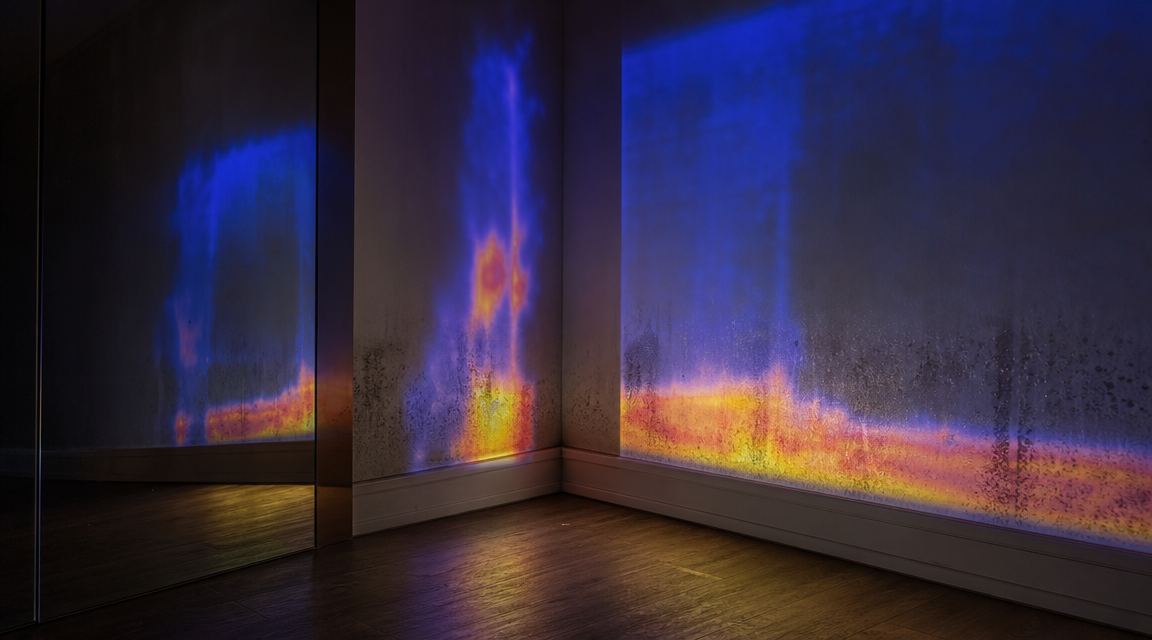
The door seal was good enough for perception work, not for high-grade environmental testing. The mirrors were mounted over existing walls, leaving seams, brackets, and hidden gaps that could have shaped small air movements.
The ceiling ventilation had been softened for sound, not rebuilt for thermal uniformity. The building itself could still breathe through ducts and wall cavities, especially as campus systems cycled through ordinary heating and cooling demands.
Human bodies complicated everything. People entered, warmed the air, shifted in chairs, spoke, paused, and exhaled. In a reflective room, even a small change in where someone faces can alter the path of warm breath and moving air.
Between sessions, the door opened. Equipment warmed. The room recovered in ways that were probably not identical each time, and those recovery periods may have left different starting conditions.
So the records cannot support a dramatic claim that the space was isolated from all ordinary influence. They can only support a narrower claim: within ordinary limitations, one corner behaved oddly.
The Sensor Placement Problem
The rear left corner, measured from the entry door, carried the main anomaly.
A temperature sensor sat near that corner, with other sensors near the remaining corners and a central reference point. Lower wall sensors were added after early readings suggested uneven cooling near the floor, making the later arrangement more informative than the pilot setup.
Corners are suspicious places to measure anything. They collect drafts, hide construction flaws, and exaggerate small thermal differences.
A mirrored seam can also conduct heat differently from the wall around it. A mounting strip, adhesive pad, or cable path may create a small environmental pocket, especially where two panels meet at an angle.
The researchers appear to have anticipated that objection. They swapped sensors after early sessions. The drift stayed with the corner rather than following a particular device, which is exactly the kind of check that keeps the file from feeling careless.
That does not solve the case. It only removes the easiest explanation: one faulty sensor inventing the pattern. The more interesting possibility is a real corner effect whose cause was never properly isolated.
Expectation Without a Ghost Story
Expectation still matters, even when no one mentions ghosts.
A mirrored room changes posture. Participants may stare at reflections, turn toward a duplicated corner, or sit more rigidly than they would in a normal office. The effect can be subtle enough that a participant would never report it.
The absent-person prompt may have changed behavior in a consistent way. People describing someone from memory often slow their speech, look down, breathe differently, and move less.
Less movement means less air mixing. Slower speech changes where warm breath travels. A slight turn of the body can redirect heat away from a sensitive corner, allowing that corner to reveal a weakness already present.
These are mundane mechanisms, but they are not trivial. In a small room with mirrors and delicate sensors, tiny habits can become measurable.
The difficulty is that simple stillness did not fully explain the records. Control prompts and quiet periods did not produce the same reliable corner drift, at least not in the summaries that made the case notable.
Why the Corner Still Looks Odd
The most sensible ordinary explanation is a combination effect, not a single dramatic cause hiding behind the mirror.
The corner may have had a hidden thermal weakness caused by mirror mounting, wall construction, or airflow. The absent-person prompt may have pushed participants into a posture or breathing rhythm that exposed that weakness at the same stage in the session.
In that version, the room did not respond to a missing person. It responded to the living person in the chair.
Another possibility is timing. If the prompt usually arrived at the same minute in each session, an HVAC pulse could have masqueraded as a psychological effect. That is why prompt randomization would matter in any repeat.
A third possibility is analysis bias. Once the first few dips looked meaningful, later readers may have noticed matching events more readily than ambiguous ones. Small temperature movements can become persuasive when they are plotted beside a suggestive sentence.
All three explanations are plausible. None is quite complete from the surviving description.
The awkward fact remains that the empty-room runs did not show the same repeated dips, and other prompts did not match the pattern as well. That does not prove the claim, but it prevents a neat dismissal.
The Question It Leaves Behind
The mirror room temperature drift does not prove that absent people affect instruments.
It does show how strange results can form at the boundary between human behavior, imperfect buildings, and sensitive measurement. Those three factors are enough to make a room seem almost responsive.
That boundary is where many valuable anomalies live. Not because they are automatically paranormal, but because they force better questions.
A modern repeat would need randomized prompt order, blinded analysis, airflow mapping, thermal imaging, posture tracking, and sensors behind the mirror panels. It would need to know not only what the participant said, but where every current of air went while they said it.
It would also need a less dramatic attitude than the story invites. The room itself may have been the most important participant, because walls, seams, and vents can answer questions no volunteer was consciously asked.
Until then, the case remains unresolved in a modest but persistent way.
A mirrored room asked volunteers to describe someone who was not there. The volunteers spoke. One corner cooled. The argument, unlike the temperature, has not settled.
Reader Context
This Weird Witnessed story is an editorial reconstruction, written as eerie visual storytelling rather than a verified report. For more context, see How to Read Weird Witnessed Stories and How WeirdWitnessed Creates Reconstructed Horror Stories.