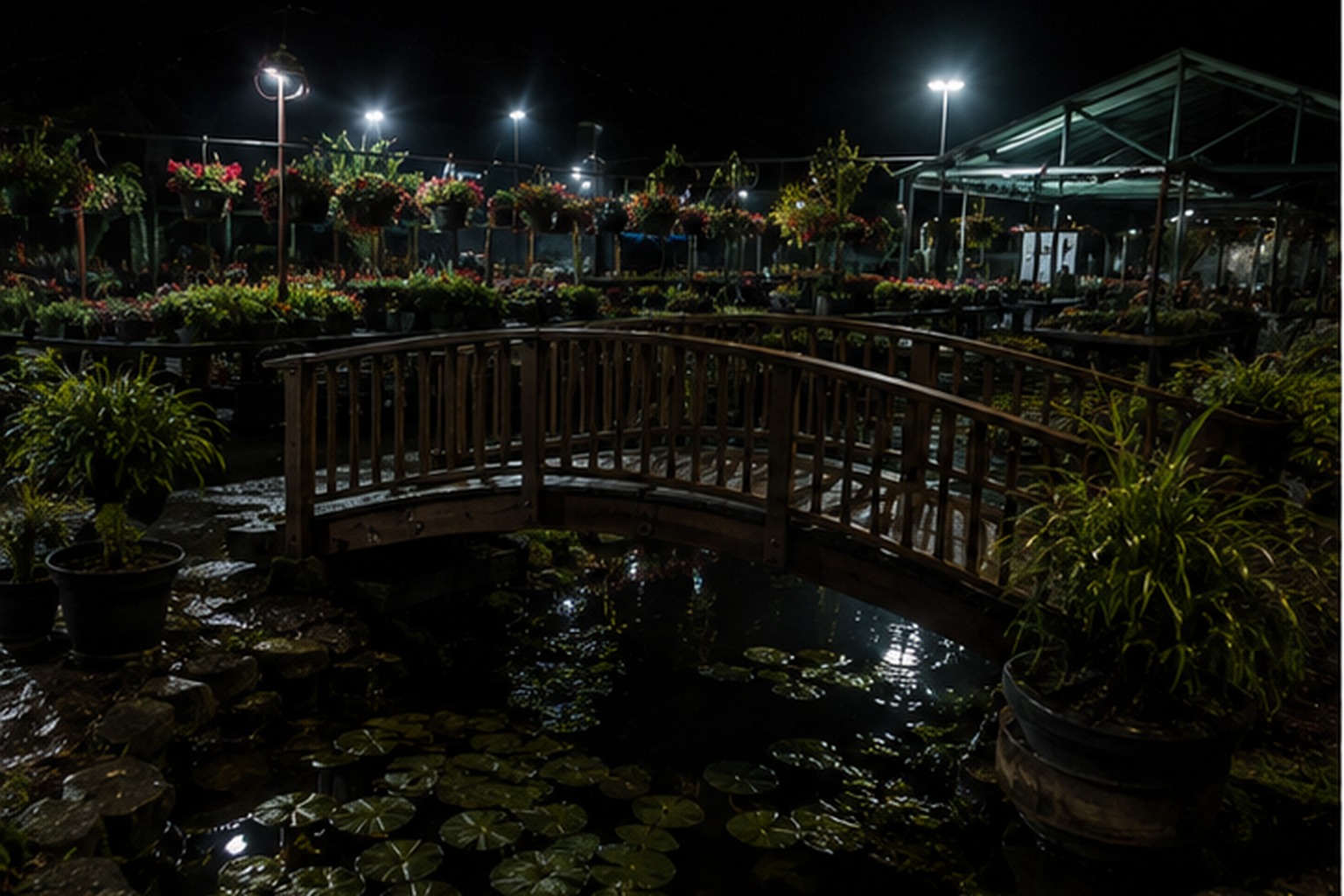
The first strange detail was not the creature.
It was the fish.
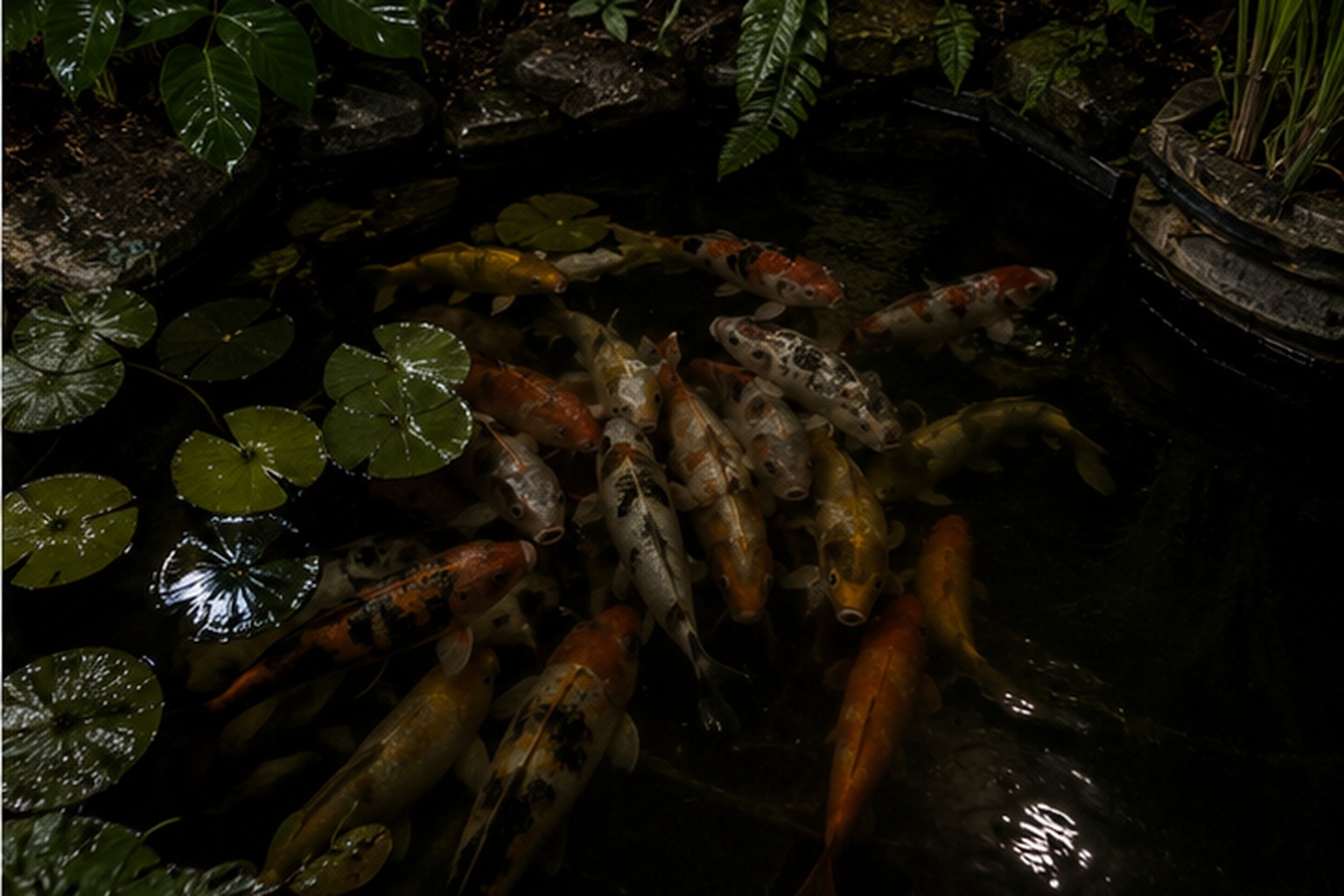
The koi usually moved as soon as someone crossed the garden center walkway. They knew the routine of footsteps, feed cups, water pumps, and shadows over the small footbridge. But that morning, the fish stayed pressed into one dark corner of the pond as if the rest of the water had become unsafe.
Only after that did someone check the camera.
The local version of the story survives because of five details:
- the koi gathered in one corner before opening
- nothing obvious had fallen into the pond
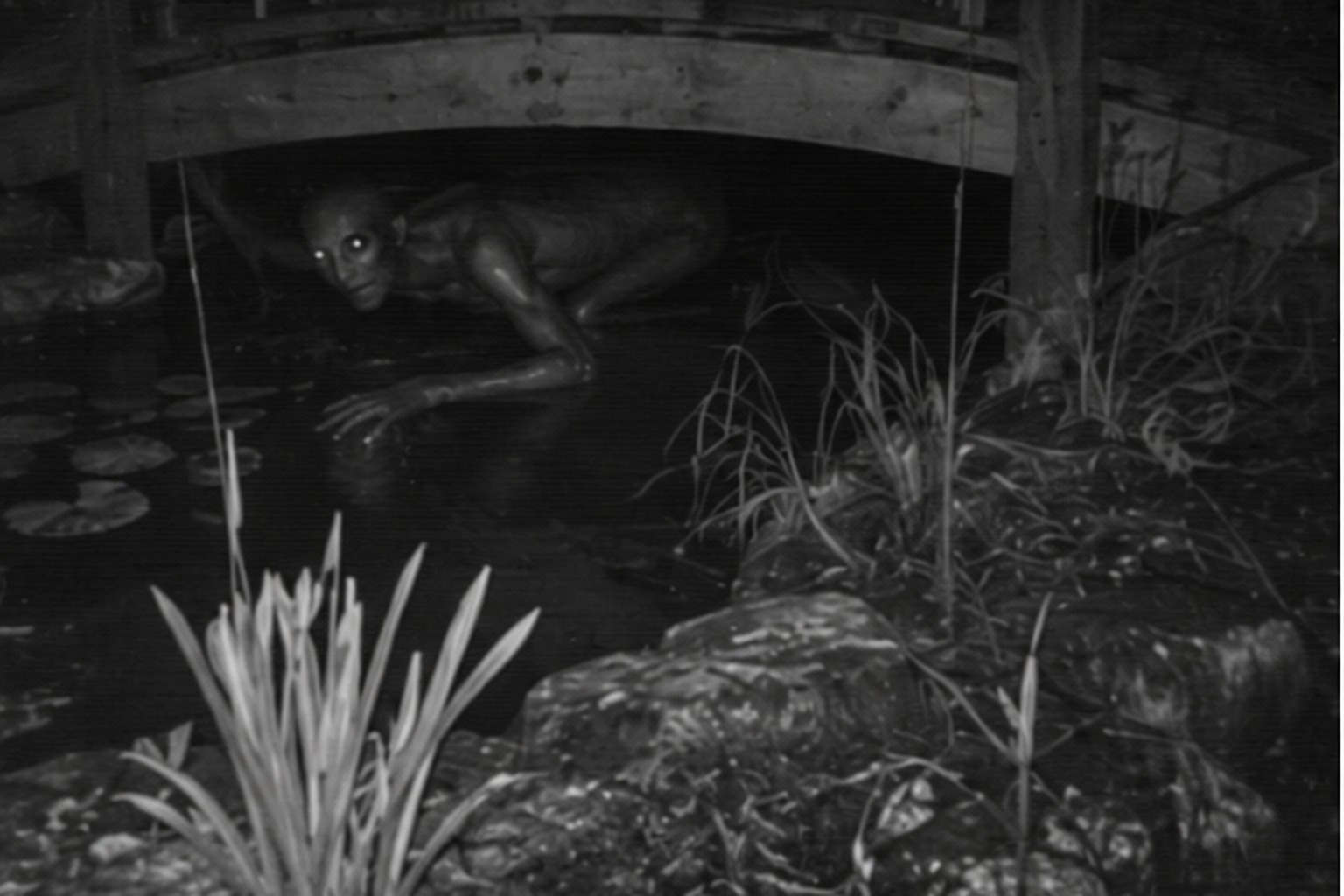
- the camera showed movement under the footbridge after closing
- the shape was low, hairless, and partly hidden
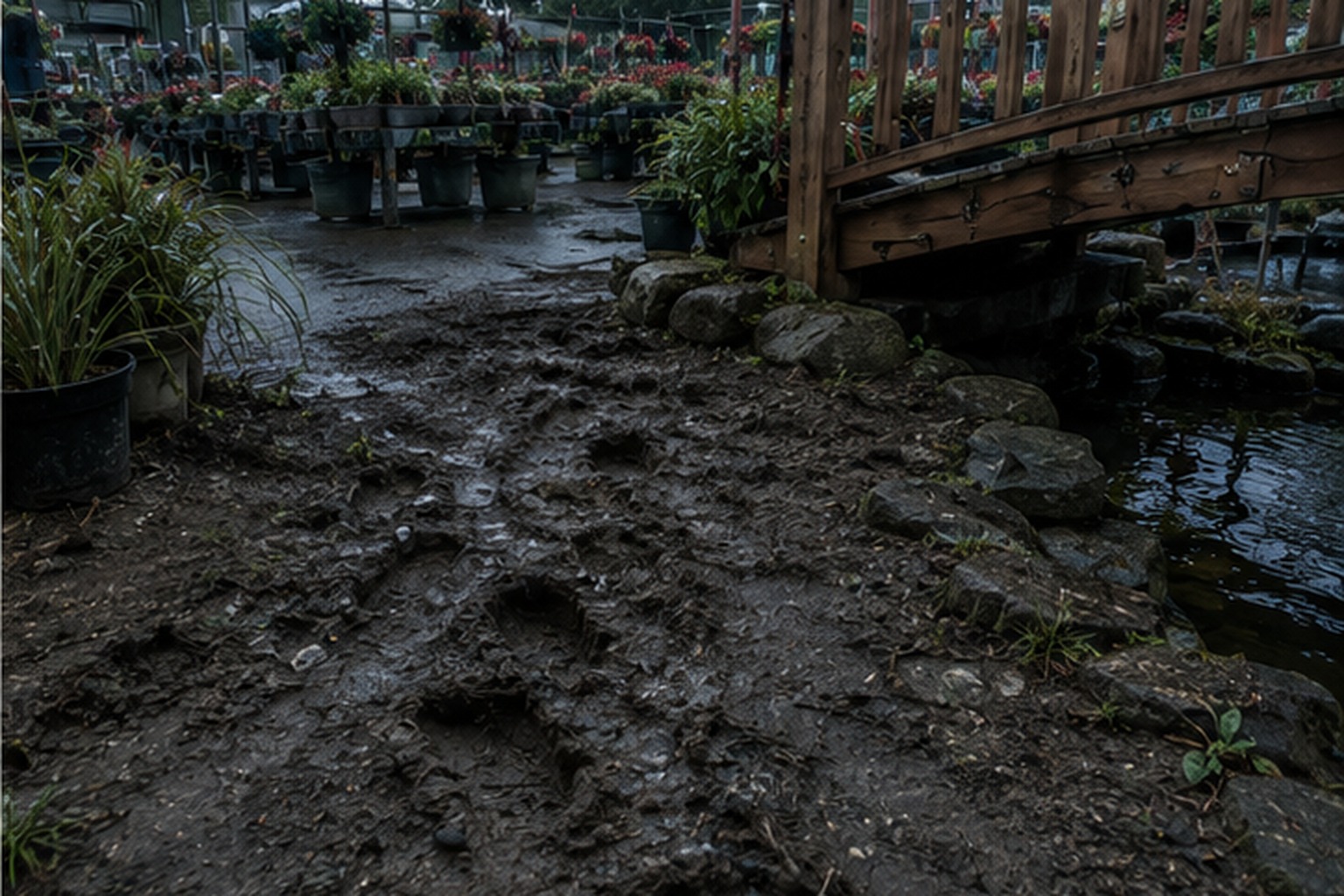
- the wet marks beside the bridge did not match normal raccoon tracks
That does not make the creature real in a proven sense. It makes the story difficult to forget, because the scene was so ordinary before the shape appeared.
1. The Pond Was A Display, Not A Wild Place
A garden center pond is meant to feel peaceful.
Customers walk past bags of soil, ceramic pots, hanging baskets, seed racks, and wind chimes. The koi pond sits there as a little pocket of calm, the kind of feature meant to make people slow down and imagine their own yard becoming nicer than it is.
That is why the setting feels wrong for a creature story.
This was not a swamp, forest road, abandoned barn, or deep drainage ditch. It was a retail display pond with a small wooden footbridge and rows of potted plants nearby. The camera was installed for practical reasons: after-hours trespassers, raccoons, and the occasional person who thought water lilies were free.
The pond was supposed to be watched.
It was not supposed to watch back.
2. The Fish Changed First
People who keep koi notice behavior.
Fish that are used to feeding do not all hide for no reason. They scatter when something startles them, but they usually return. They cruise under leaves, gather near the surface, and follow the edge where food appears.
On the morning in the story, they stayed low and tight.
Not one or two fish. Most of them.
They were said to be packed near the deepest corner, under a clump of floating leaves, facing outward in a loose nervous cluster. The owner first blamed a heron or raccoon. That would have been annoying but normal. Predators bother ornamental ponds all the time.
Then someone noticed wet marks under the footbridge.
3. The Camera Caught Movement Under The Bridge
The footage was not clean.
Garden center cameras rarely are. The lens had water spots. The night lights reflected off plastic plant trays. Leaves moved in the frame. The pond surface made every shadow look doubled.
For most of the clip, there was nothing dramatic.
Then a shape moved under the footbridge from the plant-table side toward the pond edge.
It stayed low enough that the bridge railing cut across its back. Only parts of it were visible: a pale dark body line, bent limbs, a head that seemed too narrow, and a quick sliding motion that did not look like a normal animal trot.
The shape was partly hidden the whole time.
That is what made it feel believable and worse.
4. It Did Not Move Like The Usual Animals
The ordinary suspects came first.
Raccoon. Fox. Feral cat. Sick dog. Opossum. Coyote pup. Maybe even a plastic bag pulled by wind and reflection, though that explanation did not last long with the people who said they watched the movement frame by frame.
A raccoon would make sense around a koi pond.
But the shape in the story seemed too long and too low, with a stretched bare look around the shoulders. It did not pause and paw at the water like a raccoon. It did not step delicately like a cat. It did not stand tall enough to look like a dog.
The movement was described as a crawl.
That word is probably why the story kept going.
Animals walk, skitter, lope, or climb. Something that crawls under a decorative footbridge after closing belongs to a different kind of fear.
5. The Wet Marks Were Almost Useless
By morning, the marks beside the pond were already messy.
Water drips from plants. Hoses leak. Employees step everywhere. Soil spills. Raccoons leave tracks that look stranger than people expect. A wet smear under a bridge is not a scientific record.
Still, the marks became part of the story because they matched the path in the footage.
There were scrapes in damp soil near the bridge support, as if something had dragged part of its body or slipped coming out. A few narrow impressions appeared near the pond stones, but they were broken by gravel and muddy plant debris.
Nothing formed a clear print.
That may actually be what made the scene scarier.
A perfect track would turn the story into an argument. A messy smear leaves it in the imagination.
Why The Hairless Detail Matters
People describe strange creatures in familiar pieces.
They reach for what they know: dog, coyote, raccoon, fox, deer, cat. When none of those words seems to fit, the description becomes negative. Not a dog. Not a raccoon. Not quite anything.
The garden center story uses the word hairless because the shape looked too smooth in the light.
That could mean many ordinary things. Wet fur can look hairless on bad footage. Mange can make a fox or coyote look shockingly wrong. Security cameras flatten texture and make patches of shadow read like bare skin. A sick animal near a pond is far more likely than a folklore creature.
Those explanations are responsible.
They are also exactly why the image bothered people. A normal animal can look monstrous when illness, water, darkness, and camera compression strip away the cues we use to recognize it.
The Chupacabra Comparison
Someone eventually used the word chupacabra.
That does not mean the story came from a classic chupacabra report. It means people needed a label for a low, hairless, uncomfortable-looking thing near animals and water. Online, that label appears whenever a camera catches a gaunt shape that does not look like the animal people expected.
For WeirdWitnessed, the safer reading is folklore-adjacent.
The creature is not presented as a literal monster. It is a reconstructed local story about a pond camera, nervous fish, and a shape that made ordinary explanations feel less satisfying than usual.
That distinction matters.
The fear comes from uncertainty, not certainty.
The Most Reasonable Explanation
The most reasonable explanation is a sick or wet animal.
A fox with mange can look unbelievably strange. A raccoon moving low under a bridge can appear stretched. A dog, coyote, or opossum can become almost unrecognizable in a cheap camera’s night mode, especially with water reflections breaking up the body.
The koi may have hidden because of a predator, a change in oxygen, a pump noise, or a disturbance unrelated to the shape.
The wet marks may have been from hoses, paws, or ordinary morning work.
All of that is possible.
But the story remains effective because every ordinary answer explains only part of it. The fish behavior explains fear. The camera explains a shape. The marks explain movement. None of them quite restores the pond to the peaceful little display it was meant to be.
What The Camera Did Not Show
The camera never gave a clean reveal.
No face. No full body. No dramatic turn toward the lens. Just a low shape under the bridge, partly hidden by wood and plants, moving through a place where customers had probably stood the day before admiring flowers.
That is enough for a story to live.
By opening time, the garden center looked normal again. The bridge was still charming. The koi eventually spread out. Customers walked past without knowing why one employee kept looking under the rails.
But the people who saw the clip remembered the wrongness of it.
A peaceful pond. Fish gathered in one corner. Wet scrapes in the soil. A hairless low thing crossing under the footbridge after the gates were locked.
Maybe it was a sick fox.
Maybe it was a raccoon in bad light.
Maybe the camera turned an ordinary animal into a local monster because the human mind is very good at fearing what it cannot classify.
Or maybe, for a few seconds, the garden center camera caught something that belonged less to retail landscaping and more to the old stories people tell when animals know to hide before people do.