The first thing the landfill crew noticed was the row of lids.
Not open. Not scattered. Not torn away.
Bent upward.
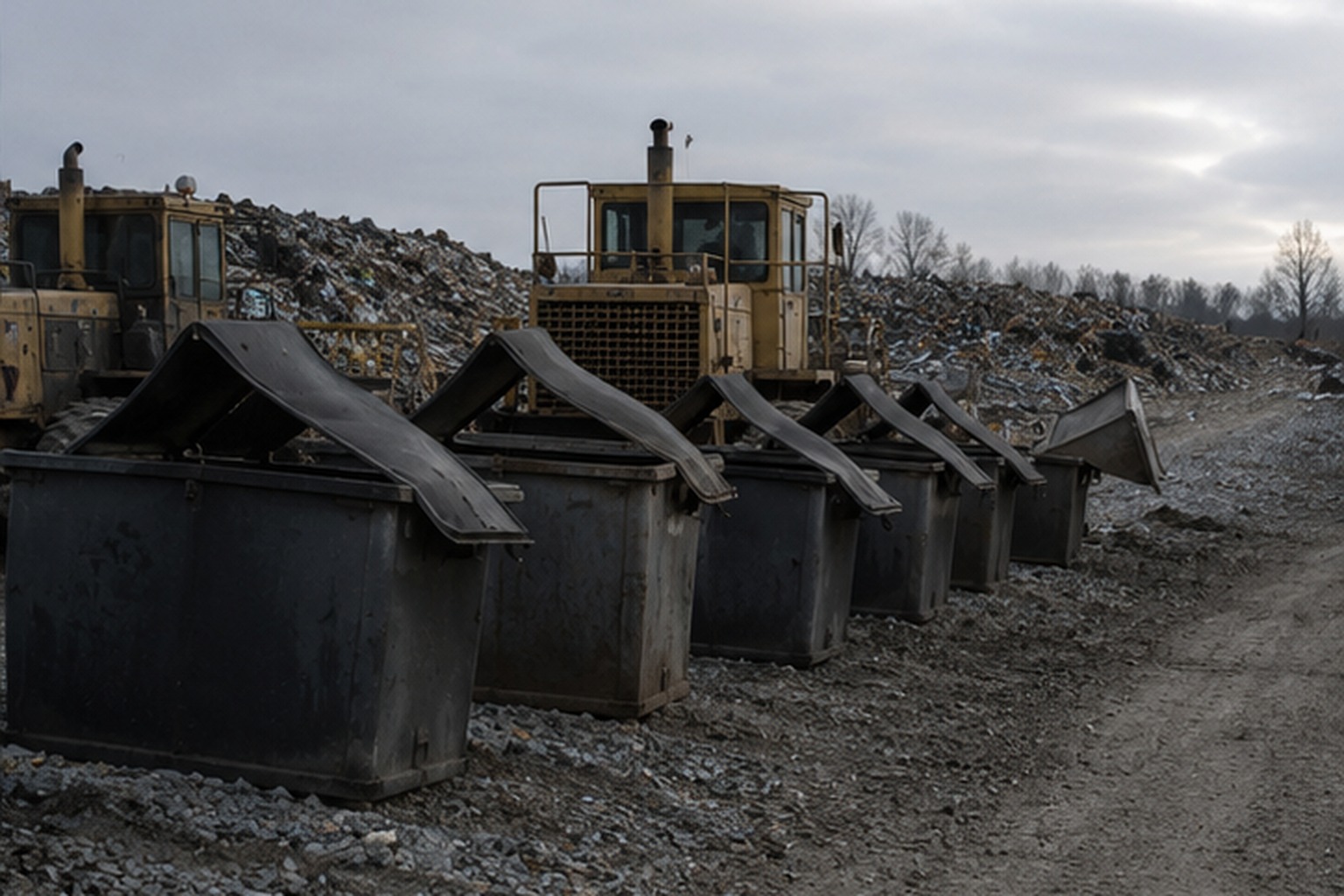
That was the detail that made the morning feel wrong. Heavy trash-bin lids near the compactors had been lifted past the angle they were built for, leaving them warped like someone had tried to peel them back. The crew had seen bears, wind damage, careless drivers, and plenty of people dumping things they should not dump.
This looked different enough to make them check the camera.
The short version is the whole reason the story spread:
- several bin lids were bent upward overnight
- the damage happened near the compactors
- the landfill was closed when it occurred
- the scale camera caught movement in the yard
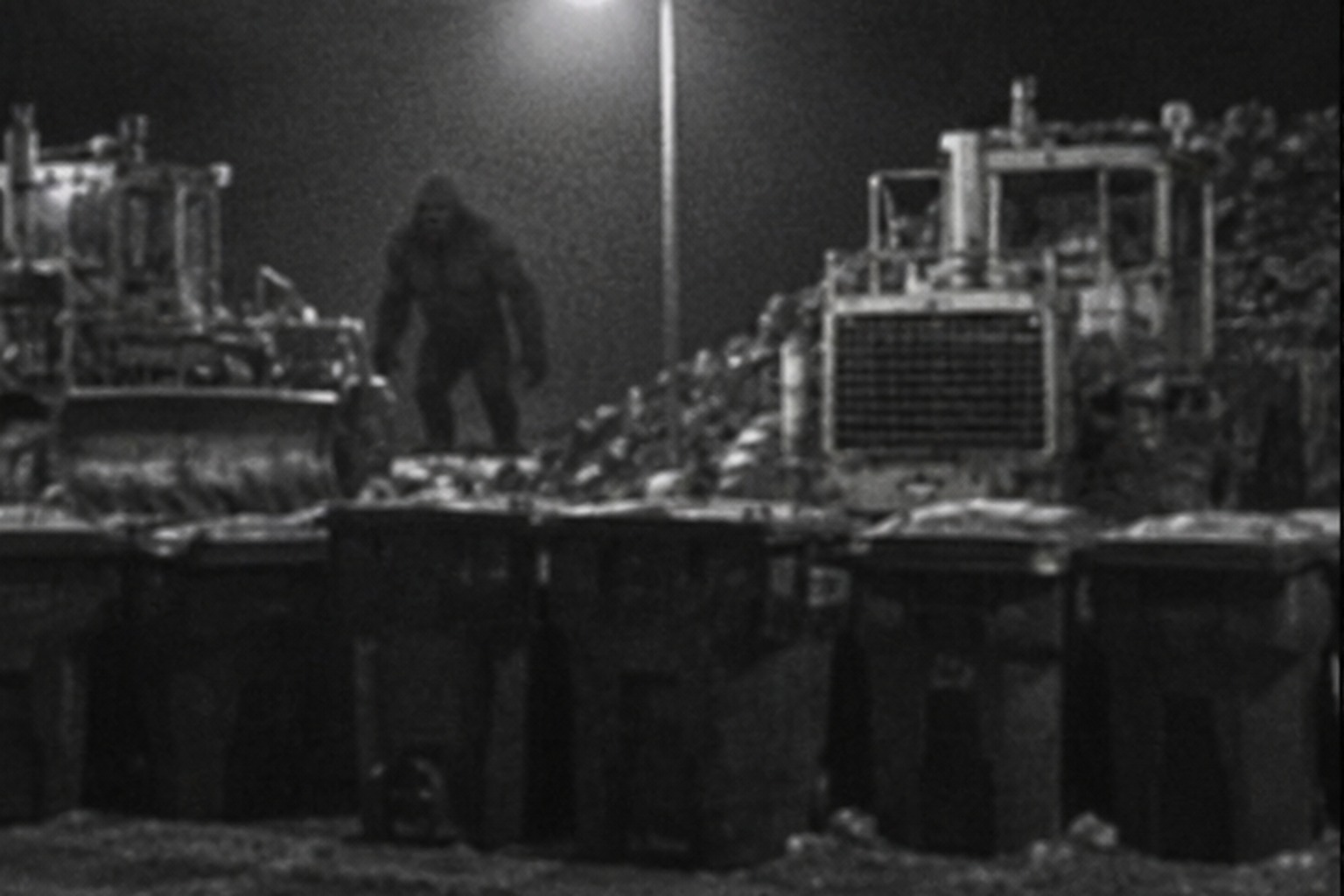
- one frame showed an upright dark shape standing behind the machines
That does not make it proof of Bigfoot. It makes it the kind of industrial night image that people keep zooming into even when they know zooming will not solve it.
The Landfill Was Not A Forest Scene
That may be what makes the story more unsettling.
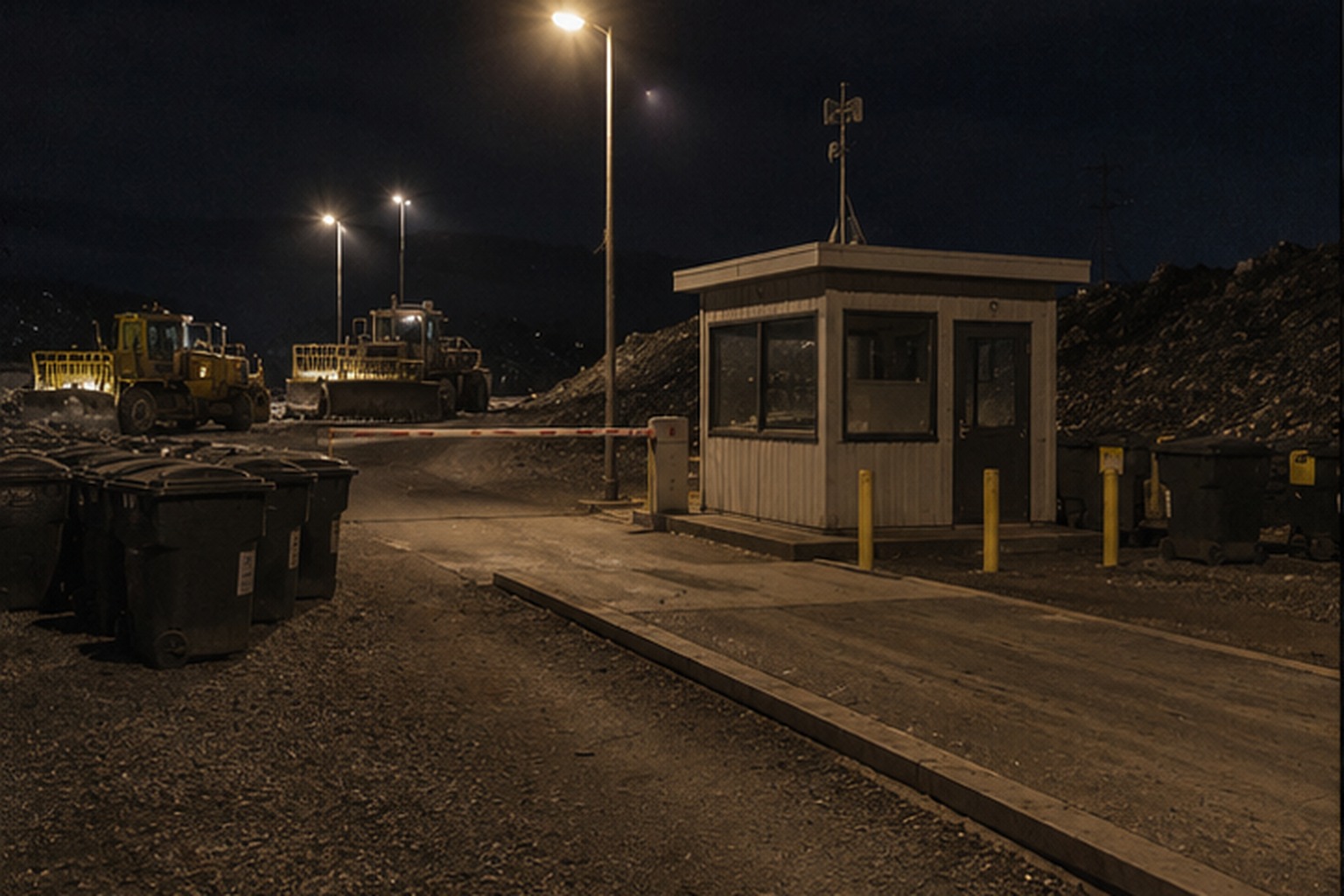
People expect Bigfoot stories to happen on logging roads, creek beds, campgrounds, or ridgelines. A county landfill feels too practical for folklore. It has gates, weigh scales, radios, warning signs, fuel stains, gulls, and the sour smell of everything people throw away.
But landfills sit at the edge of wild places more often than people notice.
A county yard can back up to timber, drainage ditches, power cuts, and brushy property nobody walks unless they are paid to. Animals use those edges. Raccoons, coyotes, deer, bears, and feral dogs all learn where humans leave food behind.
If something large and cautious moved along those same margins, the landfill would be a logical place to visit after closing.
Not magical. Not impossible.
Just uncomfortable.
The Lids Were Too Neat
A bear can wreck a bin.
Everyone involved knew that. Bears are strong, curious, and persistent. They can bend metal, crack plastic, tip containers, and leave a scene looking like a small disaster. A forklift can do even more by accident. Wind can catch a loose lid and slam it repeatedly until a hinge fails.
The problem was the pattern.
Several lids were bent upward in the same general direction, not crushed inward or ripped off. They looked as if something had lifted them, tested them, and moved down the row. One lid had a hand-wide bow near the edge. Another would not close because the hinge bracket had twisted.
Nothing valuable had been taken. Nothing edible was obvious in the damaged bins. The mess was limited and strangely deliberate.
That is when someone asked whether the scale camera had caught anything.
The Scale Camera Was Pointed The Wrong Way
The camera’s main job was not security.
It watched the scale lane so trucks could be identified, weighed, and logged. Its view included the gate, the edge of the scale house, and a slice of the working yard beyond. The compactors were not centered. They sat in the background, partly blocked by bins, rails, and industrial clutter.
That poor angle became important.
If someone wanted to fake a clean monster clip, this was a bad place to do it. The camera was too far away. The lights were uneven. The compactors broke up the view. Anything behind them became a stack of shadow and machinery.
For most of the night, the footage showed nothing but insects, shifting exposure, and the occasional pale flicker from reflective metal.
Then a dark vertical mass moved behind the compactors.
The Shape Did Not Look Like A Worker
At first, the crew thought it was a person.
That was the sensible answer. A trespasser could have entered after hours, messed with the lids, and left through a side cut or broken section of fence. A worker could have returned without being logged properly. Someone in dark clothes can look huge when a camera compresses distance.
But the shape in the clearest frame looked wrong in quiet ways.
It stood high behind the compactor housing, with a dark shoulder line that seemed wider than a person’s. The head was not distinct. There was no reflective vest, no flashlight beam, no tool bag, no obvious hat brim. It appeared to lean forward slightly, as if looking down at the row of bins rather than walking past them.
The frame was not sharp enough to measure anything with confidence.
It was sharp enough to make people pause.
The Moment That Kept Getting Shared
The strongest visual moment lasted only a few seconds.
In the foreground, the trash bins formed a low dark line. Behind them, the compactors sat under harsh yard lights. Between two machines, an upright shape filled a space that had been empty in the frames before.
It blocked the light behind it.
That mattered because it made the shape feel solid, not like a smear on the lens. The outline was rough, almost absorbing the weak light around it. One long arm-like line seemed to hang lower than expected, though the camera quality made that detail easy to argue about.
Then the shape shifted behind the machinery and disappeared into the overlapping dark areas near the fence line.
No dramatic sprint. No roar. No glowing eyes.
Just a large thing standing where no one expected to see a large thing standing.
The Normal Explanations Came First
The ordinary explanations remain the best place to begin.
A bear could have bent the lids. A person could have trespassed. A forklift might have struck multiple bins earlier, with the damage noticed only in the morning. Camera compression could have turned a worker, shadow, or piece of moving equipment into a figure.
Landfills are visually chaotic at night. Steam rises from warm refuse. Plastic sheets flap. Birds move in strange bursts. Industrial lights create hard shadows that look alive when the exposure shifts.
There is no reason to throw away those possibilities.
In fact, the story is stronger because they exist.
The frightening part is that none of them tidies up every detail. A bear explains strength but not the upright, still shape in that location. A person explains the posture but not the odd scale and lack of light or gear. Equipment explains damage but not the timed movement after closing.
Each answer leaves a corner of the scene sticking out.
The Gravel Did Not Give A Clean Track
Everyone wants the perfect footprint.
Stories rarely give one.
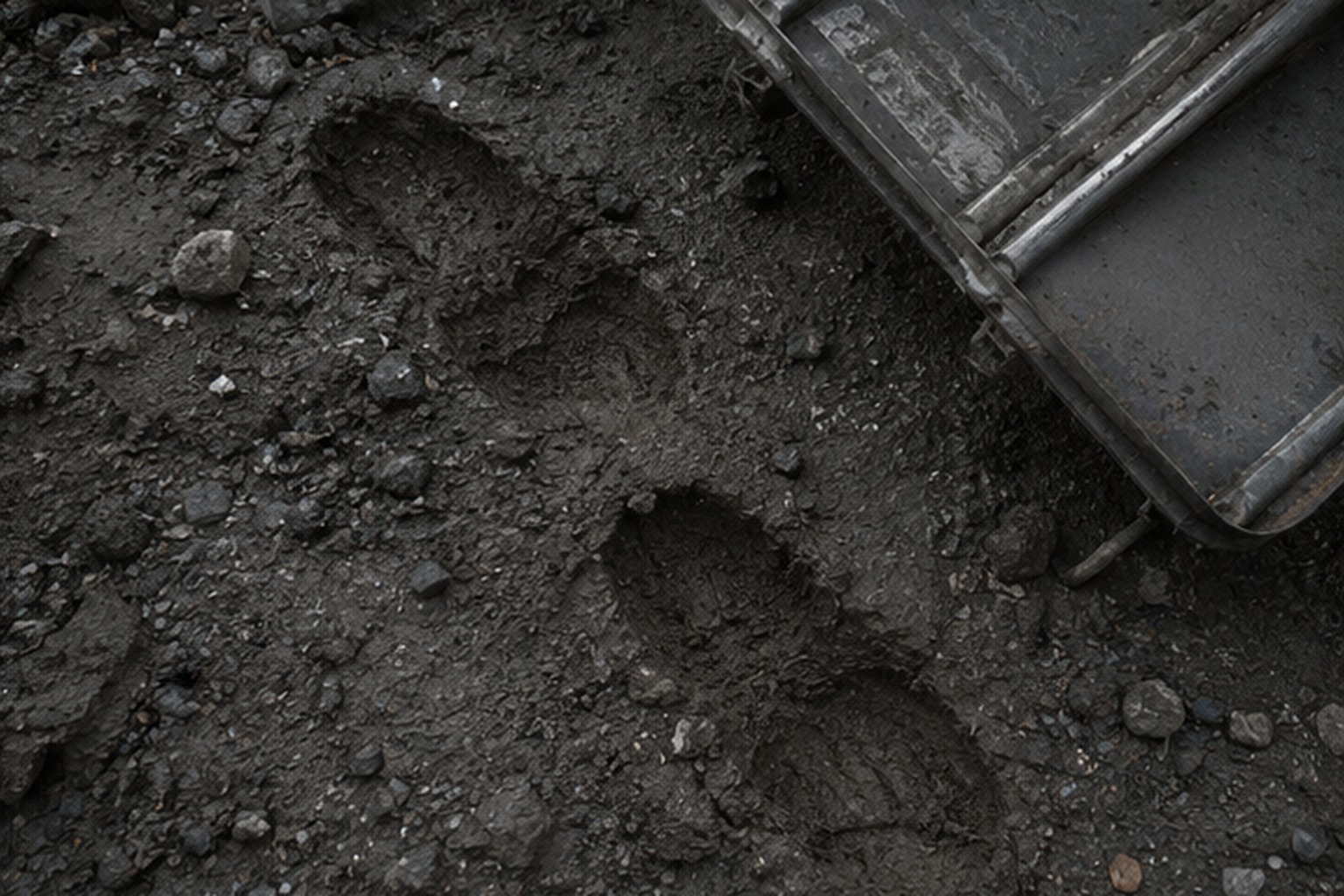
The ground near the compactors was a mix of gravel, mud, tire ruts, and compacted trash dust. By the time the damage was found, normal morning activity had already disturbed part of the area. Trucks had rolled in. Workers had walked the lane. Gulls had landed and lifted off.
Still, there were a few deep impressions near the bent lids that did not look like ordinary boot marks.
They were not clean enough to call tracks. They were too partial, too smeared, too interrupted by gravel. One had a broad front edge and a darker wet center. Another looked like a heel or the end of a dragged load.
A careful person would not build a case on them.
A nervous person would remember them.
The Last Look At The Lids
By the end of the day, the damaged lids were practical problems again.
They had to be repaired or replaced. The hinge brackets had to be checked. Someone had to decide whether to add a light, angle another camera, or lock the bins differently after hours.
That is how most strange events end: with maintenance.
But one bent lid reportedly stayed propped open longer than the others because the bracket would not sit flat. In the evening light, it looked like it was still being lifted by an invisible hand.
That image paired too well with the scale-camera frame.
The low row of bins. The compactors behind them. The upright dark shape blocking the industrial light. The suggestion of size without enough clarity to prove anything.
Maybe it was a bear.
Maybe it was a trespasser in dark clothes.
Maybe a camera turned landfill clutter into a legend because the human mind is built to find bodies in shadows.
Or maybe something large came in from the brush, tested the lids one by one, and stood behind the compactors long enough for a camera meant for trucks to catch the wrong kind of visitor.
For WeirdWitnessed, the safest version is not a claim that the creature was real. It is the uneasy reconstruction of a closed county landfill, a row of metal lids bent upward before dawn, and one dark upright shape in the place where the ordinary explanations all begin to strain.