The dryer door was the first thing anyone noticed.
Not the figure. Not at first.
In the still image that moved from one employee phone to another, the open door sits in the center of the service hallway, round and black, cutting into the frame like an eye. A laundromat owner sees that kind of thing immediately. It means a latch problem, a damaged hinge, or a customer who forced something before closing.
Then someone brightened the image and pointed behind the towels.
That was when the ordinary after-hours nuisance became one of those clips people replay because it is too quiet to dismiss easily.
The account is simple. A coin-operated laundromat was closed, the front doors were locked, the back hallway was not open to customers, and at 3:12 a.m. one dryer door appeared to open by itself. In the same view, behind a line of hanging service towels, a dark featureless figure seemed to be standing in the hall.
This is not presented as proof of a haunting. It is a cautious reconstruction of what people say the camera showed, and why the setting made it feel wrong.
The Hall Behind The Machines
Every laundromat has a public face and a working face.
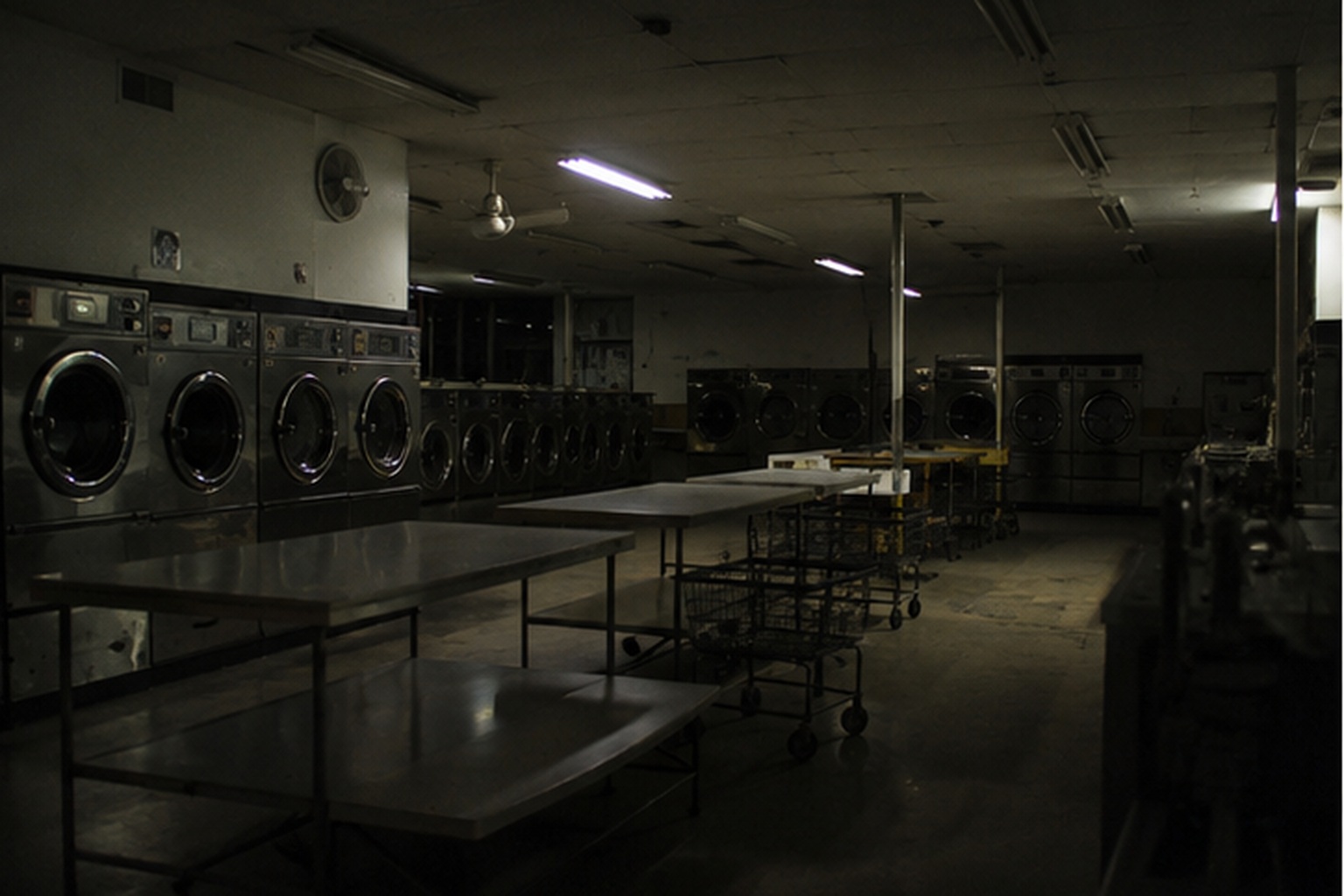
The public face is bright tile, plastic chairs, rolling carts, detergent spilled blue in the cracks, and the steady rattle of coins. The working face is behind a door most customers never notice: water lines, breaker panels, lint bags, mop buckets, and the narrow clearance behind machines that run all day.
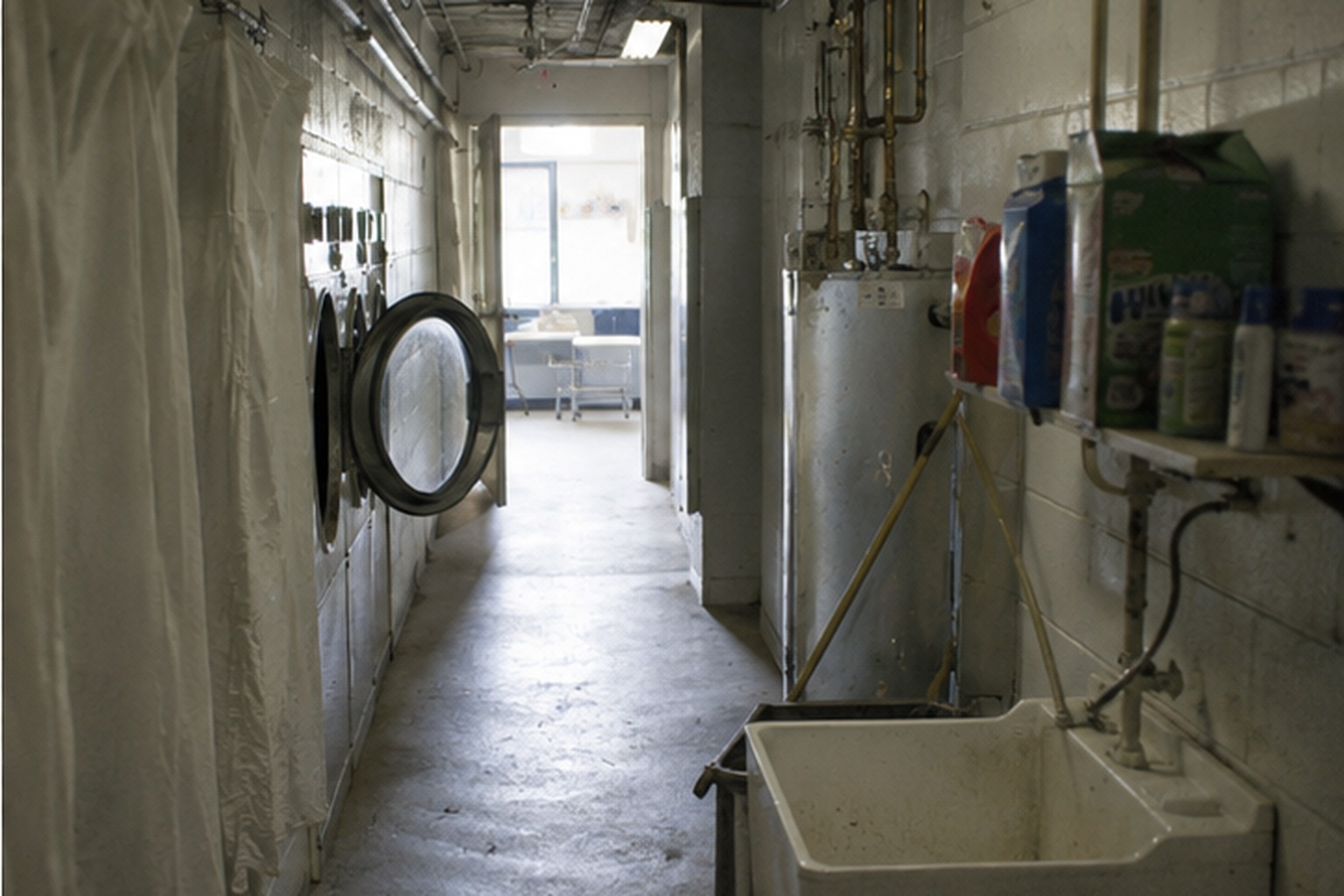
This laundromat had a service hall behind the dryer bank. Staff used it to reach rear panels, clear lint, hang towels, and reset coin mechanisms. It was not meant to be inviting. It was meant to be useful.
A short rod near the mop sink held white service towels. They were the rough towels used for leaks, detergent spills, and gray lint. On the camera, they hung like pale strips across the darker back wall.
The camera was mounted high and aimed down the hallway. It caught a patch of concrete floor, the towel rod, a utility shelf, and several dryer doors visible through service access openings.
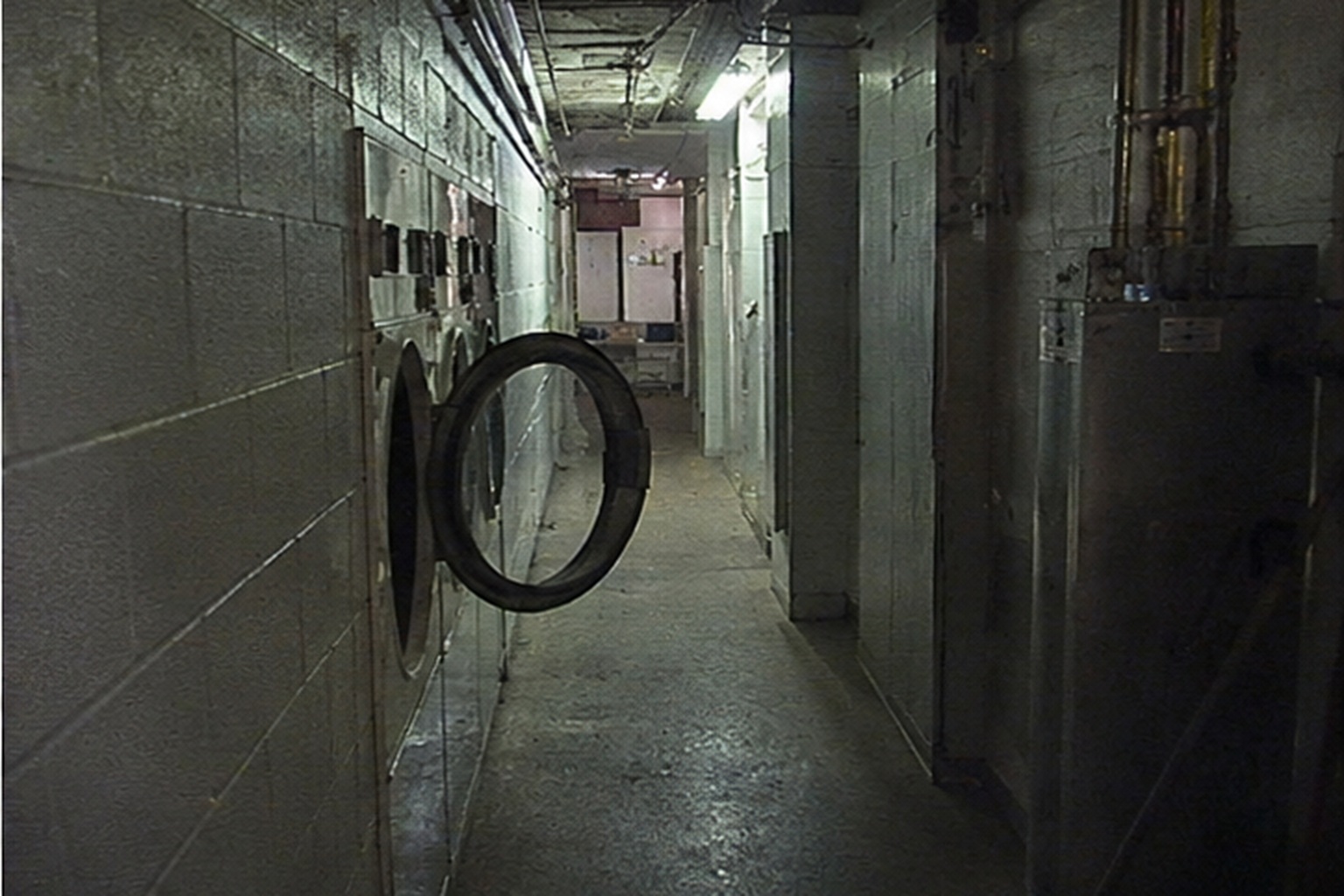
Most nights, it recorded nothing but that frozen corridor.
Closing Looked Normal
The closing worker did what tired closing workers do.
He emptied the coin boxes into the safe pouch. He checked the bathroom. He made sure nobody had clothes turning in a dryer. He pushed the last carts back to the folding tables, locked the customer entrance, and checked the latch twice because it sometimes caught badly.
In the back, he remembered the service towels hanging straight and still.
That memory mattered later, though memories are never perfect. He had rinsed the mop, wiped down machines, and left damp towels spaced along the rod so they could dry. He did not remember any dryer door being open. He did not remember anything in the hallway that looked unusual.
By 11:00 p.m., the laundromat had gone into its after-hours silence.
People imagine that means peace. It does not. A laundromat cools slowly. Metal ticks. Pipes knock inside walls. Empty dryer drums shift when air pressure changes. Fluorescent fixtures hum even after most lights are off.
The room sounds occupied long after everyone leaves.
3:12 A.M.
The timestamp on the clip was 3:12 a.m.
There was no dramatic start. No alarm. No burst of static. The camera simply showed the same back hallway it had shown all night.
Then the nearest dryer door moved.
It opened slowly enough that, on first viewing, some people thought the frame rate had glitched. The black circle widened by degrees. The hinge crept outward. It did not spring as if a latch had failed under pressure. It eased open into the hallway like someone on the other side had placed a hand on it and pushed.
That distinction is easy to overstate, but it is why the clip bothered people who knew the machines. Old doors sag or pop. This one seemed patient.
When it stopped, the round window faced the camera.
Behind it, the hall remained dim.
For several seconds, nothing else changed.
The Towels Looked Wrong
The figure was not obvious until the clip was watched again.
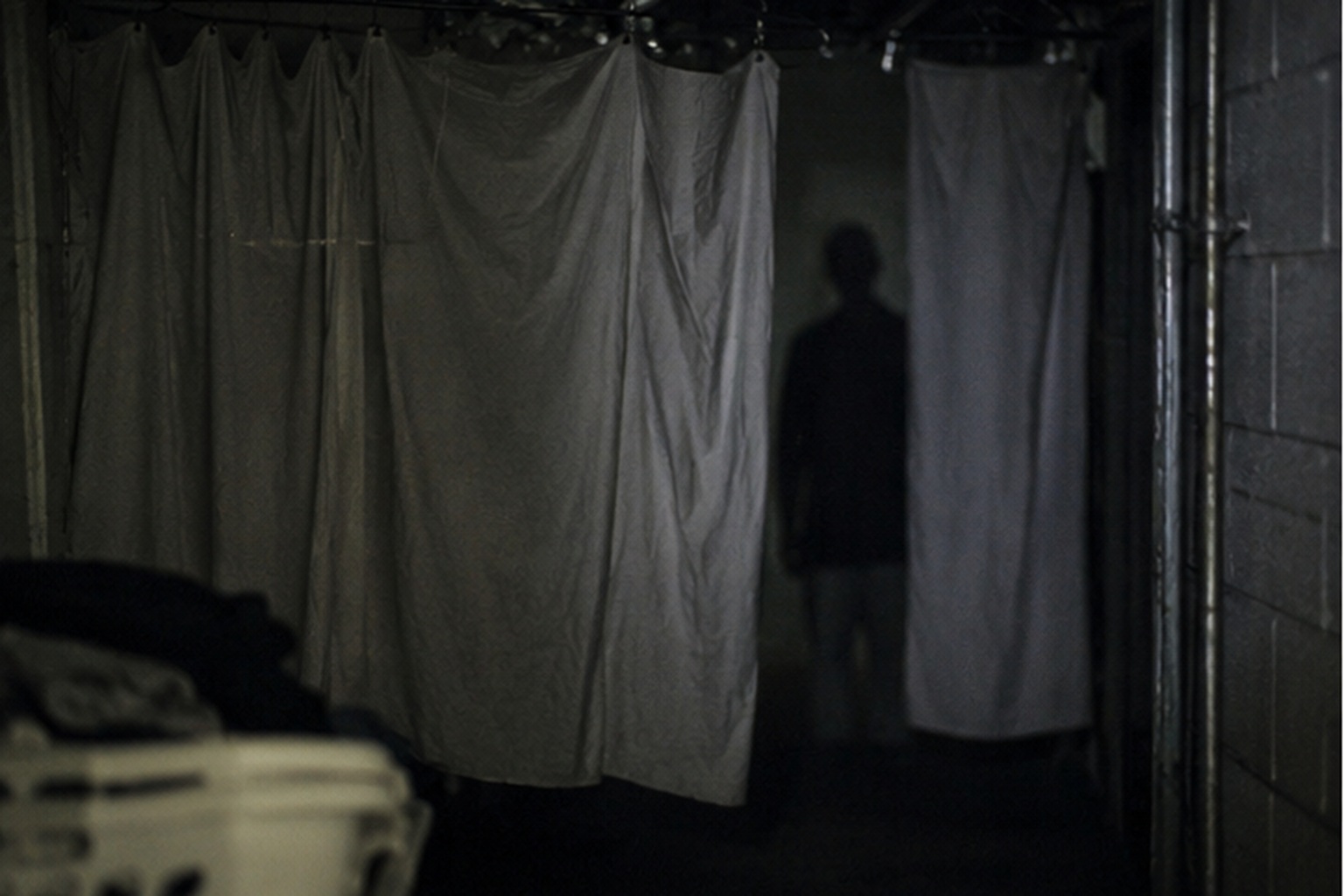
The hanging towels made the background confusing. They broke the dark wall into pale vertical strips, each one moving slightly in the building draft. At first, the black area behind them looked like a normal pocket of shadow.
On the second pass, it looked too solid.
A shape stood behind the towels, farther back than the open dryer door. It was darker than the shelf, darker than the mop bucket, darker than the gap where the hall turned toward the rear exit. The top rose above the towel line. The sides tapered in a way that made people use the word shoulders, though no shoulders could be clearly seen.
There were no eyes. No face. No hands reaching through cloth.
Just a featureless vertical presence in a place where a person would have had to stand very still.
That stillness was the frightening part. A burglar moves. A staff member works. A trespasser stumbles, looks around, tests doors, tries machines. This thing seemed not to be doing anything except being there.
The towels closest to it did not whip or swing. They shifted only a little, the way towels already shift in old buildings. The dark form behind them remained fixed.
Morning In The Service Hall
The opening worker found the dryer door still ajar.
That moved the story out of the phone screen and back into the building. A strange clip can be blamed on bad video. A physical door standing open in a locked service hall is harder to ignore.
The front entrance showed no sign of forced entry. The rear service door was locked. Nothing had been stolen. The coin boxes were not disturbed. The towels were still hanging on the rod, dry at the lower edges and stiff with detergent residue.
No one found footprints. No one found anyone sleeping in the back. No loose animal or fallen shelf explained the door.
The dryer latch was inspected and did not seem broken. It was old, yes. Many things in the laundromat were old. But it clicked shut when pressed. The owner closed it, opened it, closed it again, and watched it hold.
That did not prove anything supernatural. It only removed the easiest explanation.
The Cautious Explanation
The cautious explanation still matters.
Maybe the latch failed at the wrong hour. Maybe vibration from pipes or ventilation nudged it open. Maybe the figure was a stack of supplies partly hidden behind towels, made human by low-resolution video. Maybe someone with a key entered and left without admitting it.
None of those possibilities should be thrown away.
But the story persists because the details line up in a way that feels personal: a closed building, a back hall, a door opening slowly, and a figure with no face standing behind the towels.
Laundromats are already strange at night. Rows of circular doors become dark portholes. Folding tables look like examination slabs. Vending machines glow at no one. The air smells like heat, lint, bleach, and wet cotton.
A haunting story does not need a mansion when it has a room like that.
By morning, the place looked almost normal again. The washers waited. The dryers took coins. Customers came in with baskets and complaints about missing socks, never knowing that a few hours earlier the room behind the machines had appeared to hold someone who had no reason to be there.
Maybe it was a glitch of light and cloth.
Maybe it was an old latch giving up in the night.
Or maybe the camera caught the moment something in the back hallway noticed it had finally been seen.