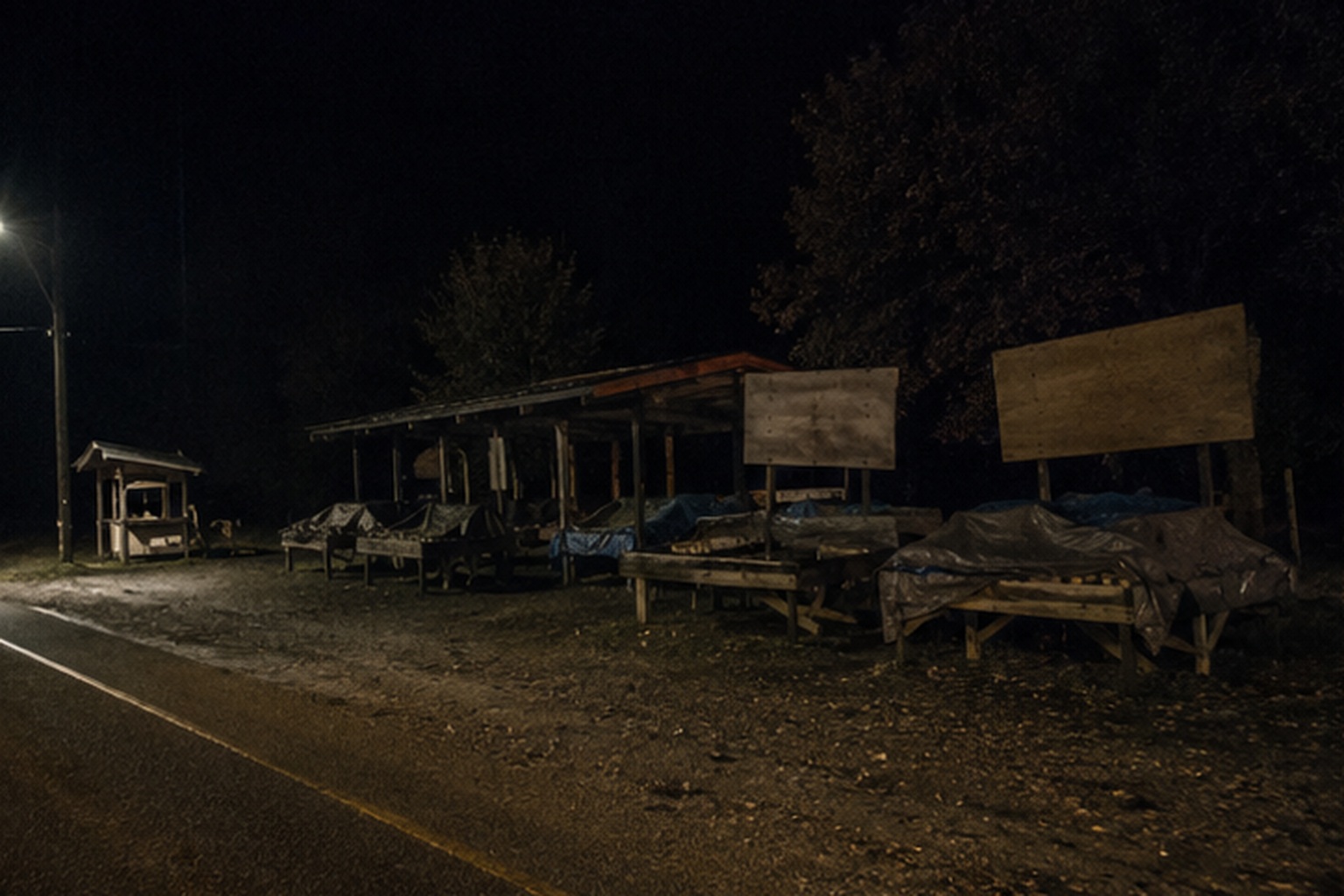
The trail camera was supposed to solve a small produce-stand problem.
Something was getting into the melons.
Not every night. Not enough to ruin the business. Just often enough to be irritating: a tarp tugged loose, a rind split open, fruit nosed out of place, damp marks on the boards beneath the bin. The owner assumed raccoons. Maybe possums. Maybe a hungry stray dog that had learned the stand was unguarded after dark.
So a trail camera went up on a post facing the melon bin.
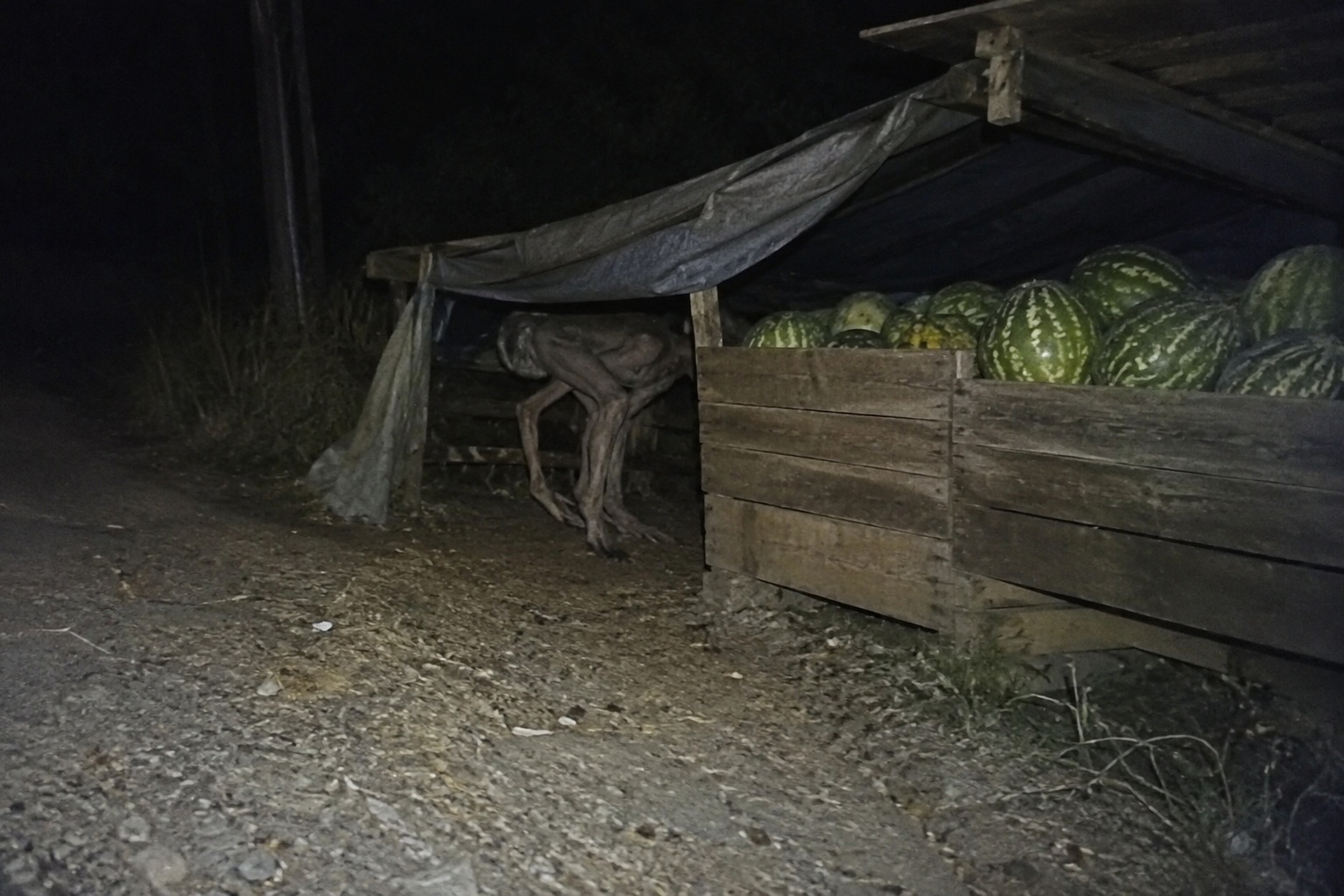
The first few nights showed nothing unusual. Insects blew close to the lens. A truck passed on the road. A cat slipped along the far table and vanished. Then the camera caught a low, hairless creature with bent limbs nosing under the tarp after midnight.
The account is remembered because it did not look like an ordinary scavenger caught at a bad angle. It looked deformed, deliberate, and wrong for the place.
The basic details usually stay the same:
- the produce stand was closed and unattended
- the camera was aimed at a tarp-covered melon bin
- the creature moved low to the ground on bent limbs
- its body appeared hairless or nearly hairless
- it nosed beneath the tarp instead of tearing wildly at it
- the morning damage did not match a clean raccoon raid
That does not prove a chupacabra. It does explain why a simple melon-bin nuisance became a local creature story.
1. The Stand Was Ordinary In Daylight
By day, the roadside stand was the kind of place drivers passed without thinking about it.
Wooden tables. Baskets. A money box when someone trusted the neighborhood. Tomatoes, squash, peaches when they were good, and melons stacked heavy under shade. Dust from the road settled on everything by afternoon. Bees worked the sweet fruit. Customers leaned on truck doors and asked what was fresh.
Nothing about it felt like a horror setting.
At night, though, small roadside stands change. Without people, they become exposed little stages at the edge of fields and road noise. Tarps move in the wind. Bins hold dark shapes. Fruit gives off a sweet smell that draws animals from the ditch, the tree line, and the culvert.
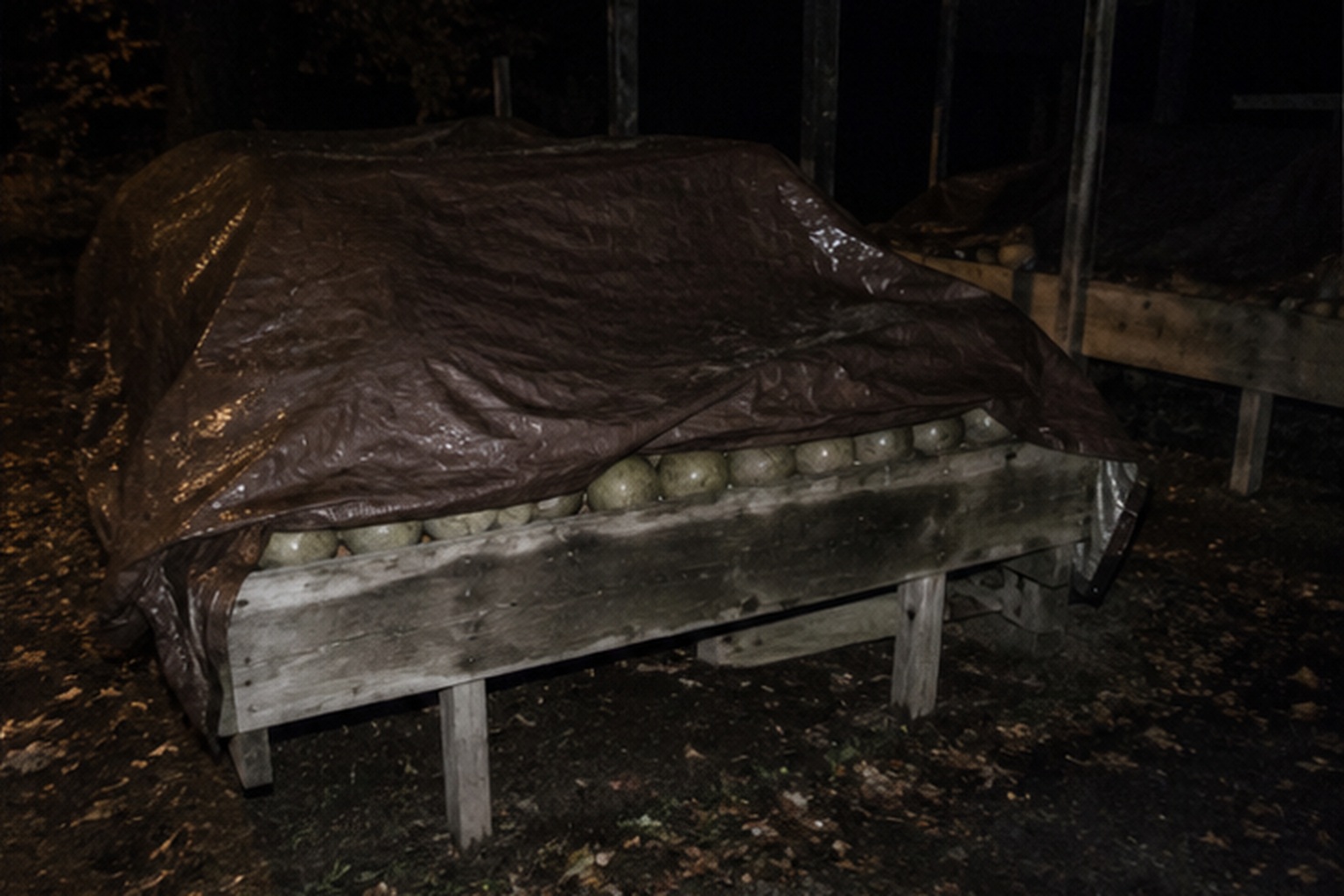
That was why the owner expected a normal thief.
Produce stands invite raccoons. Everybody knows that. They pry, tug, roll, test, and waste more than they eat. A camera should have caught ringed tails and bright eyes. Instead, it caught something that made the owner stop blaming raccoons so quickly.
2. The Creature Was Low, But Not Small
The first strange detail was height.
The thing kept close to the ground, lower than a medium dog would normally move, but it did not read as tiny. Its back formed a long, uneven slope. The head stayed near the tarp edge, and the rear of the body seemed tucked under itself as if the hips did not work cleanly.
That crouched movement led some viewers to suggest an injured coyote or mange-sick dog.
Those are reasonable guesses. Mange can make an animal look monstrous. Hair loss changes the whole outline. A starving dog can hunch, limp, and look alien under infrared light. Trail cameras flatten depth, blur motion, and make legs disappear into shadow.
But the people who saw the clip kept coming back to the limbs.
The front legs appeared bent in a way that seemed more jointed than injured. The rear limbs did not track like a dog’s hind legs. The creature’s stance looked folded, almost insect-like for a mammal, as if it was built to crawl under low things rather than run across open ground.
It was not just hairless.
It was put together wrong.
3. It Nosed Under The Tarp
The action was quiet.
That may be the most unsettling part.
The creature did not leap onto the bin. It did not scatter fruit across the stand. It did not fight the tarp like a trapped animal or claw frantically at the boards. It lowered its head and nosed beneath the tarp with a slow, testing motion.
That made it feel familiar and unfamiliar at the same time.
Any scavenger investigates with its nose. Raccoons use paws. Dogs shove their muzzles into gaps. Coyotes test before committing. But this thing’s posture made the simple act look purposeful, almost careful. It found the tarp edge, lifted it just enough, and pushed into the dark space where the melons were stacked.
The camera caught a pale strip of body in the infrared glare. The skin looked tight over the shoulders. The head shape was hard to read, partly hidden by the tarp, but it appeared narrow and low rather than broad like a dog rooting at food.
If the footage had shown teeth and a dramatic attack, it might have felt less believable.
Instead, it showed patience.
4. Why People Said Chupacabra
The word chupacabra gets used too easily.
Any hairless animal on a bad camera becomes one. Most of the time, the explanation is more ordinary: mange, disease, malnutrition, injury, or a known animal seen from an ugly angle. Skepticism is not only fair here; it is necessary.
But folklore attaches to shape before evidence.
A low hairless body, bent limbs, nocturnal feeding, and a rural food source are enough to wake up the old category in people’s minds. It may not match the classic goat-sucker legend exactly. There were no drained animals, no livestock deaths, no theatrical red eyes in the account. The creature was nosing under a melon tarp, not stalking a barn.
Still, the name arrived because the footage made familiar animals feel insufficient.
A sick dog should still look like a dog in motion. A coyote should still have a coyote’s mechanical rhythm. A raccoon should use its hands. This creature seemed to borrow pieces from several explanations without settling into any of them.
That is where cryptid stories live.
Not in perfect proof, but in the gap where recognition fails.
5. The Morning Damage Was Strange, Not Dramatic
By sunrise, the stand was not destroyed.
That detail matters.
The tarp had been pulled loose at one corner. A few melons were shifted. One rind had a wet, ragged opening near the side rather than a clean bite pattern anyone wanted to identify with confidence. There were muddy marks near the table legs and a track that looked too smeared to measure.
No one found deep claw gouges or giant prints. No one found tufts of hair, which would have helped if the animal had been a diseased dog or coyote. There was no blood trail into the weeds and no clear path showing where it came from.
The scene was annoying more than spectacular.
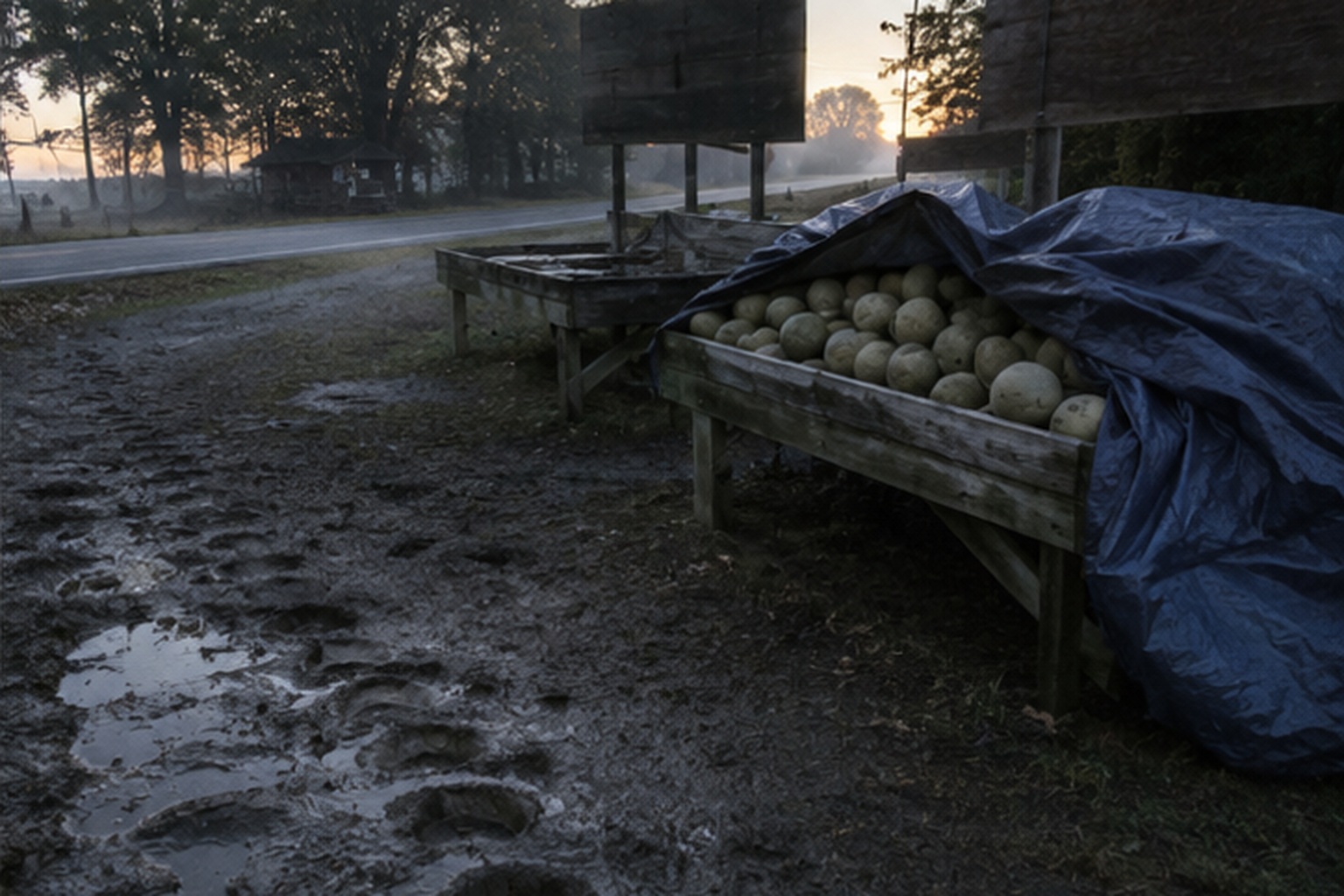
That is one reason the account feels plausible as a local mystery. Real nuisance animals often leave petty messes, not cinematic destruction. The strange part was not the damage. It was the body captured doing it.
The stand looked like it had been visited by something that knew exactly how much effort was needed and no more.
The Best Normal Explanation
The best ordinary explanation is a sick or injured animal caught at a bad angle.
A mange-afflicted coyote can look hairless and unnatural. A dog with an injury can crawl low and hold its limbs oddly. A raccoon with wet fur or disease can appear almost unrecognizable in infrared. Trail cameras distort size, erase texture, and turn ordinary motion into broken frames. A tarp edge can hide crucial anatomy at the exact moment viewers most want clarity.
That explanation should be taken seriously.
The problem is that the clip did not give people one clean feature to settle on. The body looked too long for a raccoon, too low for a healthy dog, too hairless for a normal coyote, and too bent in the limbs to be dismissed as simple shadow. Every explanation helped a little and failed a little.
The produce stand setting made the footage stranger because it was so plain. This was not a deep-woods encounter told around a campfire. It was a camera pointed at melons beside a road.
The ordinary frame made the creature look worse.
Why The Melon Bin Story Lasted
The stand kept selling produce.
The tarp was retied. The camera stayed up for a while. Customers heard the story and asked to see the frame. Some laughed and said mangy coyote. Some said dog. Some said they did not know what it was, which is usually the most honest answer.
What lasted was the image of the creature’s head disappearing under the tarp.
There is something unsettling about a cryptid not acting grand. It is not roaring in the road or posing at the tree line. It is hungry, cautious, and low to the boards, working at the edge of a melon bin after everyone has gone home.
That smallness makes it feel less like a legend and more like a pest problem from a world that does not fit ours neatly.
By morning, the roadside stand looked ordinary again: wood tables, tarps, fruit, dust, and the road humming past. But in the trail camera’s gray frame, a hairless bent-limb thing crouched where raccoons were supposed to be, nosing under the tarp as if it had learned exactly what people left behind after dark.