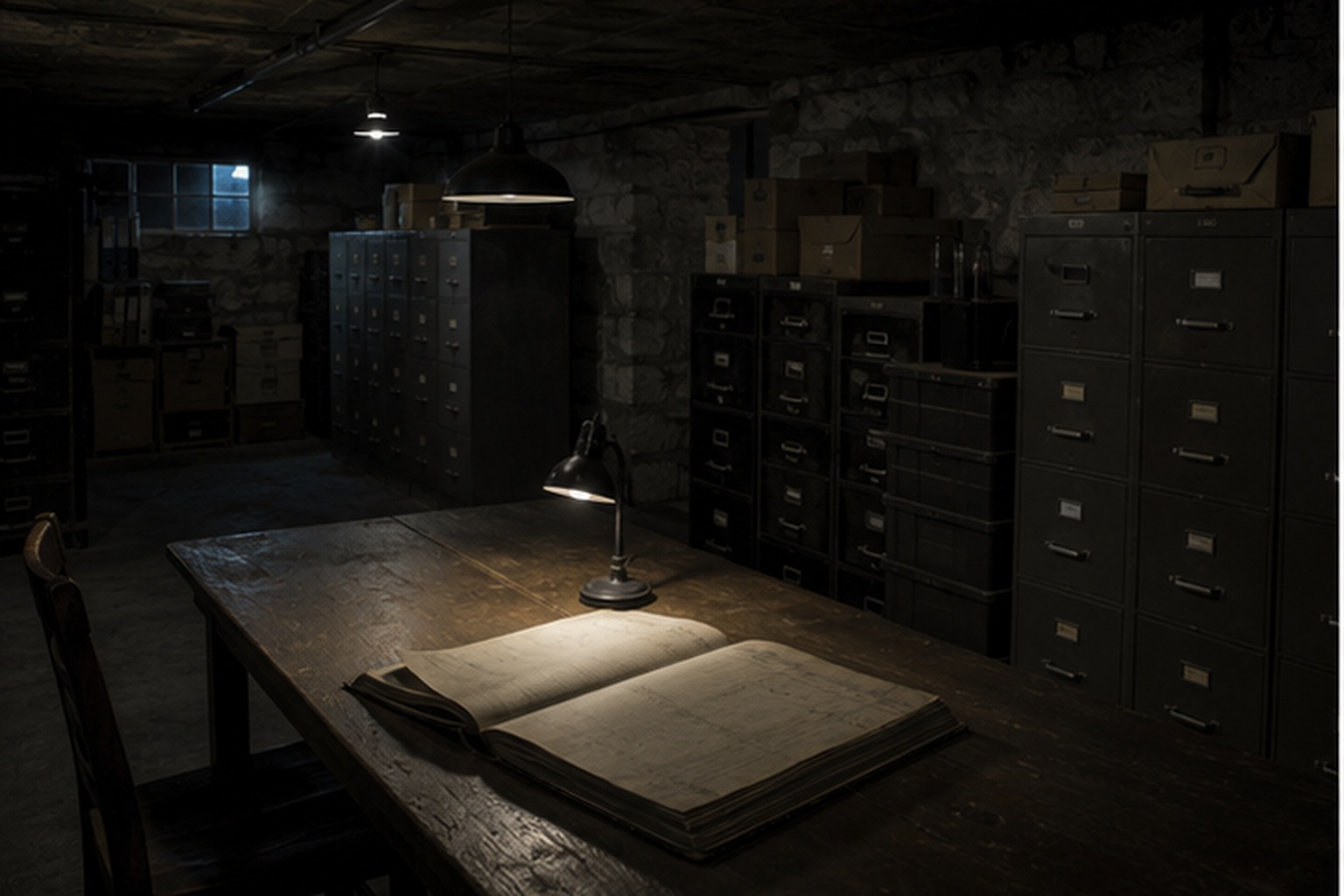
The ledger was never meant to frighten anyone.
It was too practical for that.
It lay on a scarred wooden table in the basement record room of the old town hall, between a pencil cup, a cracked blotter, and three file boxes nobody wanted to carry upstairs. Residents had signed similar books for generations: permits, births, meeting attendance, deed requests, clerk copies, names placed in ink because the town believed ink made things orderly.
By the time the strange entry was noticed, the ledger was mostly ceremonial. The active records lived in computers on the first floor. The old book remained downstairs because moving it felt unnecessary, and because the older clerks liked the continuity of it.
Then one morning, the basement smelled sharply of fresh ink.
The book was open to a page no one had used in years.
On the bottom line, where the paper had yellowed around older entries, a new name had been written in dark, wet-looking strokes.
No one remembered writing it.
The Basement Record Room
The town hall had been built in the 1890s and remodeled badly at least four times. Its upstairs rooms had dropped ceilings and office carpet the color of oatmeal. The basement was older in every way that mattered: sweating stone walls, tagged pipes, and metal cabinets with paper labels curling at the edges.
The public ledger rested on the central table because that was where it had always been kept. It was a heavy volume with marbled covers, frayed corners, and a spine that creaked when opened too far. Most of its pages were filled with names arranged in neat columns, dates, parcel numbers, witness marks, and occasional notes made by clerks who assumed their shorthand would remain obvious.
It was not behind glass. It was not in a display case. It was simply part of the room, as ordinary as the cabinets and the smell of damp paper.
That ordinariness made what happened harder to dismiss.
The Morning Of The Entry
The deputy clerk found it shortly after eight.
She had come downstairs for an old boundary file requested by a surveyor. The stairwell light flickered once as she descended, which was common enough that she barely noticed. At the bottom, she paused because the record room lamp was on.
The old green shade threw a small island of light onto the table. Beneath it, the ledger lay open. The clerk first thought someone had checked a reference and forgotten to close the book, which was careless but not frightening.
Then she saw the ink.
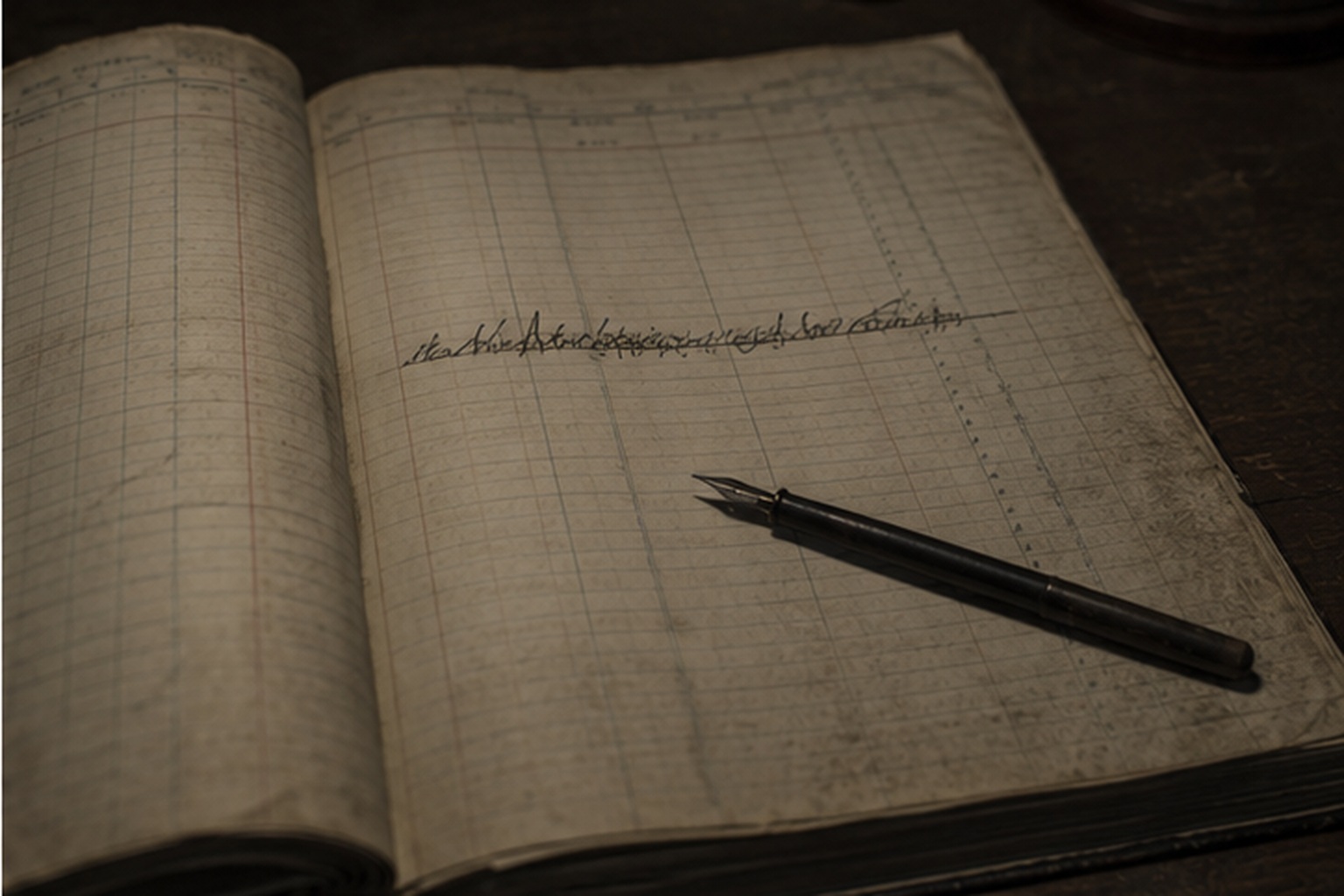
A line near the bottom of the page looked new enough to shine when she moved. It was not a clean printed entry. It had the uneven pressure of a hand pressing harder at the first stroke and fading at the end. The name was difficult to read, familiar in pieces and uncertain as a whole.
The pen on the table was capped.
The ink on the page was not dry.
What The Camera Showed
The town hall had one basement camera, installed after a pipe theft in a neighboring municipal building. It watched the stairwell door and part of the record room from a high corner. The picture was grainy in low light, and the ledger table sat partly outside the best angle.
Still, there was enough to see the book.
At 11:48 p.m., the room was dark except for a faint safety light near the stairs. The table appeared as a pale shape. The ledger looked closed.
At 1:16 a.m., the image glitched for several seconds, filling with blocky gray squares. When it cleared, the table was unchanged.
At 2:07 a.m., something moved.
No person entered from the stairs. No flashlight crossed the room. No hand appeared clearly in frame. But the pale block of the ledger shifted, or seemed to. One side lifted slightly, then dropped. A minute later, the pages moved again in a slow ripple, the kind a book makes when a draft travels under loose paper.
The problem was that the basement ventilation had been off since evening.
For nearly six minutes, the camera showed small changes at the table. The ledger widened from a closed shape into an open one. The lamp remained off. The room stayed empty.
Then, near the row of file cabinets, a darker vertical smear appeared in the footage.
It could have been compression noise. It could have been a shadow from the stairwell light. It could have been nothing more than the camera struggling with darkness.
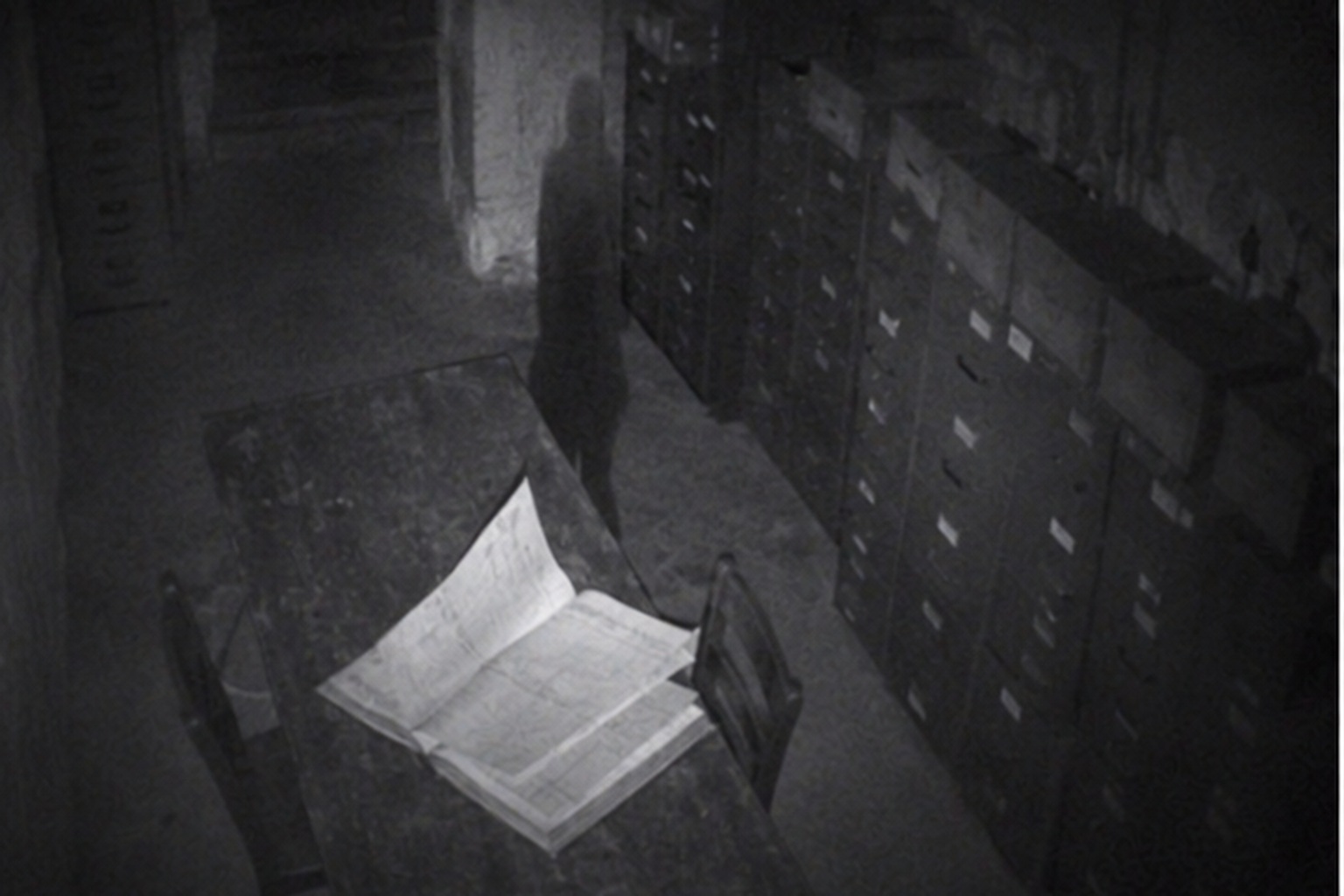
But when the page moved for the last time, the smear seemed to lean toward the table.
By morning, the lamp was on.
The Name No One Could Place
The town did what towns do with uneasy things. It tried to turn the question into paperwork.
Staff compared the entry to pens kept in the room. The ink seemed close to the fountain pen in the drawer, though no one could prove it had been used. They checked sign-out sheets, door logs, and the alarm report. Nothing obvious was missing. No forced entry was found.
The name was searched in local records. That made the uneasiness worse, not better.
There were near matches: a child who died before the First World War, a woman listed once in a church supper notice, a laborer whose surname had been misspelled in a census. None matched exactly. Every possible answer required changing a letter, ignoring a loop, or deciding the fresh ink had blurred.
The oldest clerk kept saying she knew it.
Not knew the person. Knew the shape of it.
She said it had the feeling of a name you see written on a folder for years without ever opening it, then find you cannot remember where the folder is kept.
That was not evidence. It was only a feeling. But feelings sometimes decide which rooms people avoid after dark.
The Book Afterward
The ledger was photographed, wrapped, and moved upstairs for preservation review. A new policy stated that historical volumes were not to be left open overnight. The basement lamp was replaced. The camera angle was adjusted to cover the table more clearly.
Nothing else happened.
That is usually where a sensible version of the story ends. An old book, a wet line of ink, a camera with poor resolution, and a group of tired municipal employees trying to make a strange morning fit inside normal explanations.
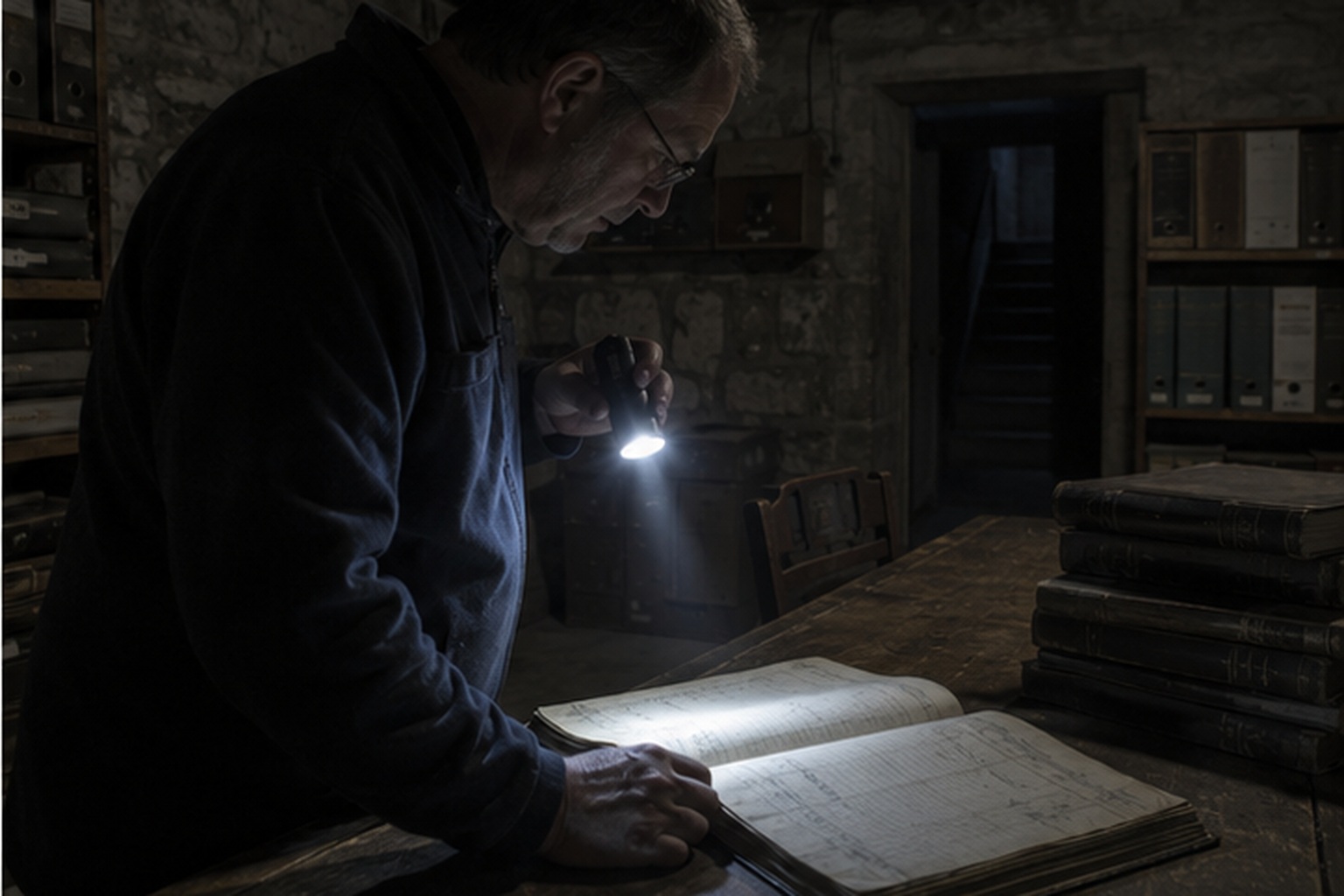
Maybe someone wrote the name and forgot. Maybe the book had been left open, and the lamp had been switched on during an unnoticed errand. Maybe the camera only made paper settling look like pages turning.
All of those are possible.
But the deputy clerk said the record room felt different afterward.
Not haunted in the theatrical sense. Not full of whispers or cold hands. Just attentive.
As if the cabinets were waiting to be asked the right question.
A week later, while reorganizing old deed folders, staff found one thin file stuck behind a drawer where it had slipped years before. Its tab was blank except for a brown stain where ink had once run. Inside were three brittle pages concerning a property line dispute that had never been fully resolved.
One witness signature had been cut away, probably by water damage or mice.
The missing space was exactly where a name should have been.
No one claimed the discovery proved anything. The ledger entry remained difficult to read. The camera remained inconclusive. The town hall continued opening at eight, closing at five, and filing its records in the usual imperfect order.
Still, the old clerks stopped leaving pens on the basement table.
And when anyone had to go down after closing, they made sure the ledger was shut before turning off the light.
Not because they believed the book could write.
Because none of them wanted to come back in the morning and find it had remembered someone else.