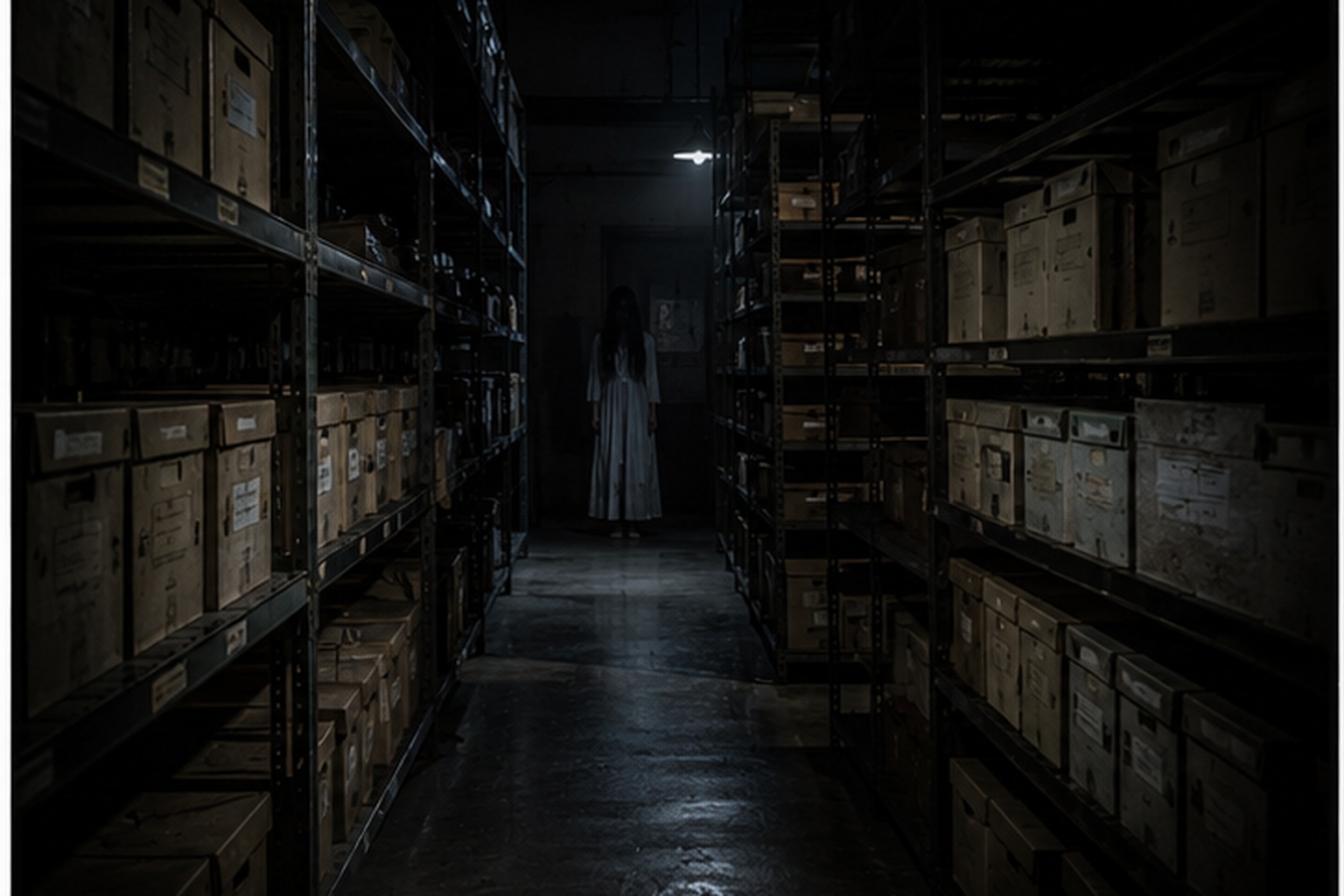
The clerk went down after the public counters closed, when the courthouse stopped sounding like a courthouse. Upstairs, the last attorneys had left. The copy machine was quiet. The hallway lights had switched to their late setting, leaving only the old stairwell and the basement door bright enough to use.
The evidence vault waited below with its metal shelves, sealed boxes, and institutional dust. It was not a theatrical place. It was a room built to make things stay named.
That was why the ledger mattered. If a box moved, the book was supposed to know. If a shelf changed, the book was supposed to explain how. That night, during a storage review, it did something else.
The Basement Job
The task was ordinary: compare the old ledger against the current storage map and mark anything that needed follow-up. The clerk set the heavy book on a worktable under a greenish light.
Its pages were ruled into narrow columns for dates, case numbers, names, item descriptions, shelf locations, and final disposition.
Most entries were boring in the reassuring way records should be. Clothing. Sealed packet. Tool. Photographs. Box transferred. Destroyed by order.
Then, near the front of the book, one name made the clerk pause. It was written in pale, careful ink beside an old date. The shelf column read 9C.
A Name Already In The Room
The name was not frightening by itself. Names repeat, especially in counties where families remain for generations. A child can inherit a full name. Cousins can share one.
Two unrelated people can end up with the same combination of letters on different forms decades apart. The clerk knew all that and kept working.
Many pages later, the same name appeared again.
This time the handwriting was darker and hurried. The entry belonged to a much later period, after the vault had been rearranged and relabeled more than once.
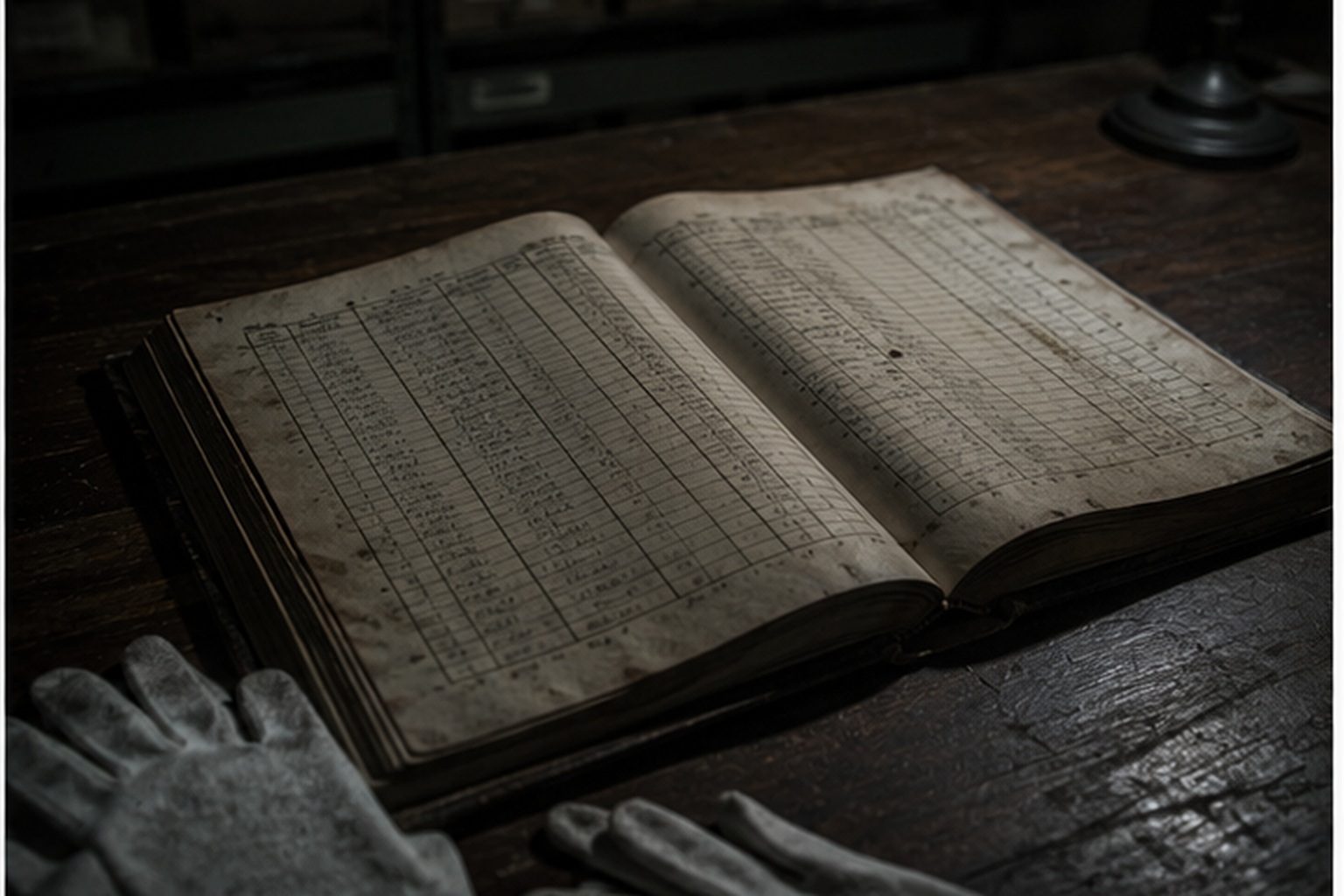
It did not look copied from the older line. It looked newly written, as if someone had taken in a living case and entered it without thinking about the page near the front of the book.
Then the clerk looked across to the shelf column. 9C again.
The Location That Was Missing
The current vault had no Shelf 9C. The active rows ran through the older numbered bays, then into compact storage installed during a later renovation. Laminated labels covered the shelves that still existed. None of them carried that code.
The clerk checked the wall map, then the binder by the door. No 9C in either place.
At first, this was only a records problem. Old buildings keep dead systems in their paperwork. A shelf becomes a cabinet. A cabinet becomes a cage. A cage is removed, and the code survives because no one updates every book.
Still, the clerk walked the aisle. Boxes leaned under their own age. Some labels had newer stickers pasted over older ones. On the floor, cleaner rectangles showed where racks had stood before.
Where 9C should have been, if the sequence continued, there was wall, patched floor, and silence.
A retired employee, if called the next morning, might have remembered a ninth bay near the boiler room. Another might have sworn the old system never went that high. That was the trouble with buildings that have been rearranged for decades: every memory sounds useful until it disagrees with the next one.
The Blank Beside The Older Date
Back at the table, the first entry looked worse. The name could be read. The date could be read. The shelf location could be read. The item description could not.
Around that line, the ledger behaved normally. Each row gave the object a plain identity: a coat, a tool bag, a sealed envelope, personal effects.
This row gave only a person and a place. A blank column is not automatically strange. Ink fades. Damp paper loses words. A tired clerk skips a field and plans to return later. A description may exist in another folder, far from the book that first received the case.
But the missing description changed the mood of the page. It seemed to say that something had been carried to Shelf 9C, stored under that name, and left unnamed by the one book meant to name it.
The clerk angled the page under the light. A faint mark sat where the item should have been, but it might have been a letter, a smear, or a scar in the paper.
The Vault After Hours
By then, the courthouse above had settled into night noises. A pipe clicked behind the wall. Somewhere upstairs, a door closer sighed. The fluorescent light in the vault made a low hum that seemed louder every time the clerk stopped moving.
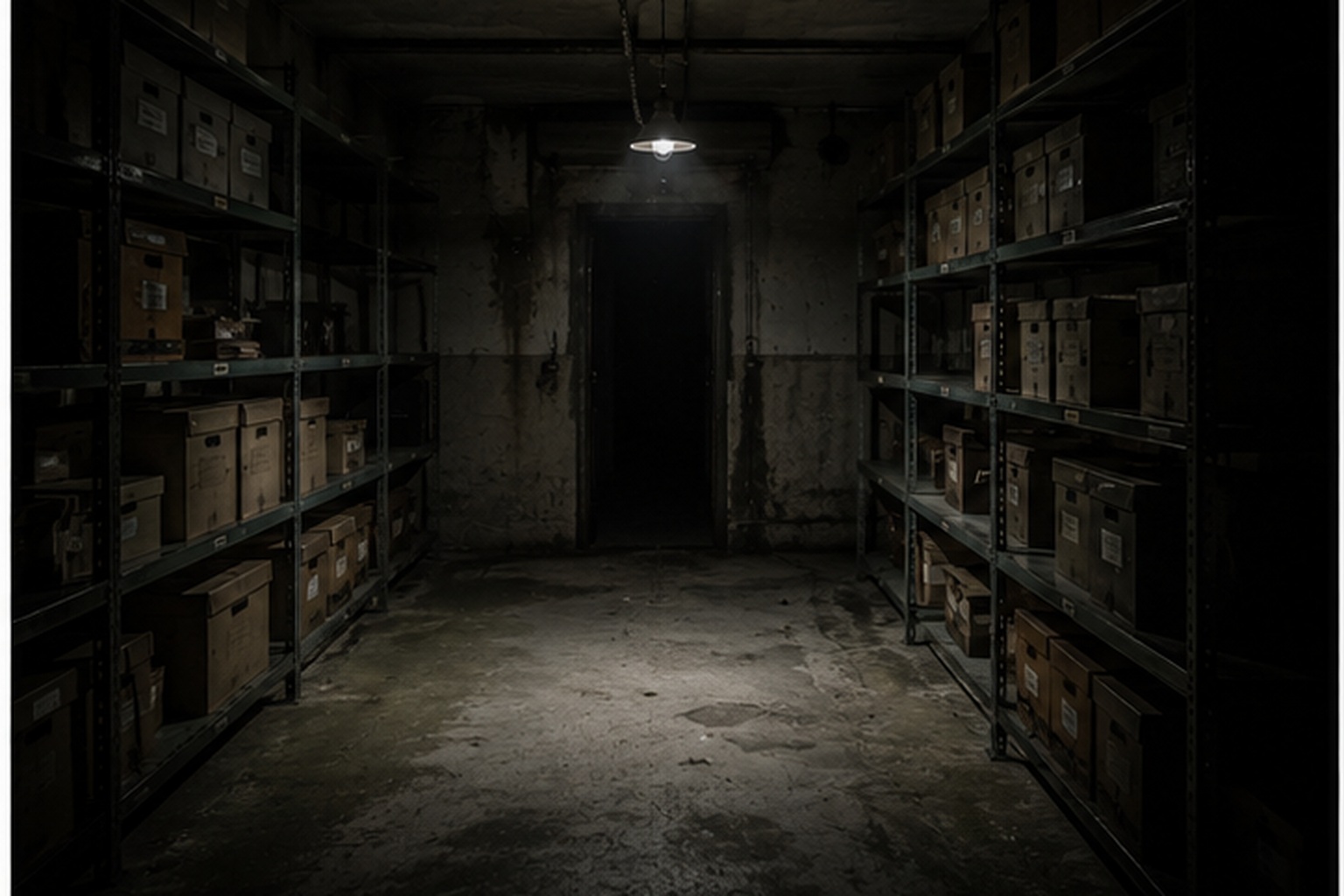
Nothing appeared in the aisle. No box fell. No door opened. That almost made it worse.
The fear belonged to the room itself: shelves full of sealed histories, labels written by people long gone, and one location the book still remembered better than the building did.
The clerk returned to the missing stretch of wall and looked for any practical sign of the old shelf. There were no clear bolt scars, no hidden panel, no forgotten rack behind another row.
Only the shape of absence, exactly where the ledger said to look.
The Second Line Leaves The Room
The newer entry had a final note. It appeared to say transferred.
That should have helped. A transfer means the item left one place for another, and the destination should narrow the search.
But the rest of the notation was damaged or incomplete. The word trailed into the worn edge of the page, then into marks that could not be separated from age.
The clerk looked for a companion entry and found nothing obvious. For a while, the search widened into the usual paper maze: old binders, accession cards, destruction lists, index drawers, and folders with labels curling away from their tabs.
A reasonable answer still existed. The destination may have been recorded in a different book. The newer index may have dropped a field. Someone may have copied an old shelf code forward because it was already attached to the case file.
Courthouses create these problems without meaning to. They renovate, merge offices, replace clerks, and carry old abbreviations into new systems until nobody remembers the first meaning.
But the second line left a colder shape than the first. The name had returned, reached Shelf 9C again, and then departed without a clear destination.
The Mundane Answer
In daylight, the explanation is probably simple. Two different people may have shared the name. Shelf 9C may have been a legitimate old bay removed during a basement renovation. The blank item field may be damage, and the transfer note may continue in a record that was boxed somewhere else.
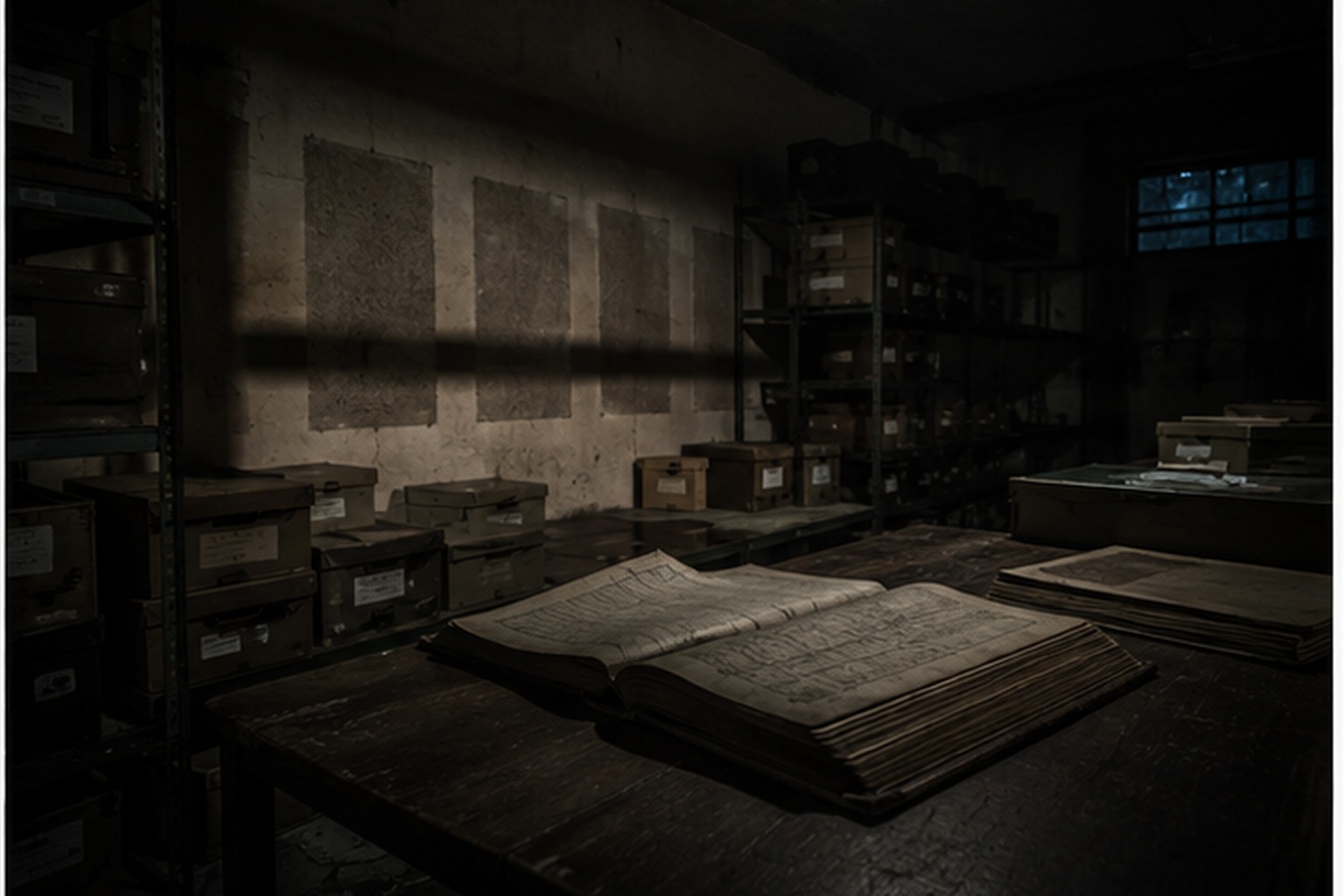
None of that requires a hidden room or a haunting.
It may have been nothing more than clerical drift: one old location code surviving too long, one repeated name making the error look intentional, and one tired clerk discovering both at the worst possible hour.
That answer is sensible. It is the kind of answer that lets the vault become a workplace again. It is also the kind that never quite follows you down the stairs when the building is empty.
It fails to put anything back. It does not restore the shelf, fill the blank, finish the transfer note, or explain why the same name met the same vanished location twice.
What Remained In The Ledger
The clerk left with notes instead of resolution. The ledger went back into storage. The shelves stayed as they were. The wall where 9C might have stood remained only a wall.
Maybe a later review matched the entries to ordinary files. Maybe the old shelf had been a cabinet, a temporary rack, or a corner cage removed without a surviving map.
Maybe the strangest part was only that the book kept a better memory than the building.
That is why the story endures. It is not loud. It does not need a face at the end of the aisle. It is only a ledger insisting on a destination no one can reach.
A name appears once, then again decades later. Both times, the book points to Shelf 9C.
And Shelf 9C is gone.