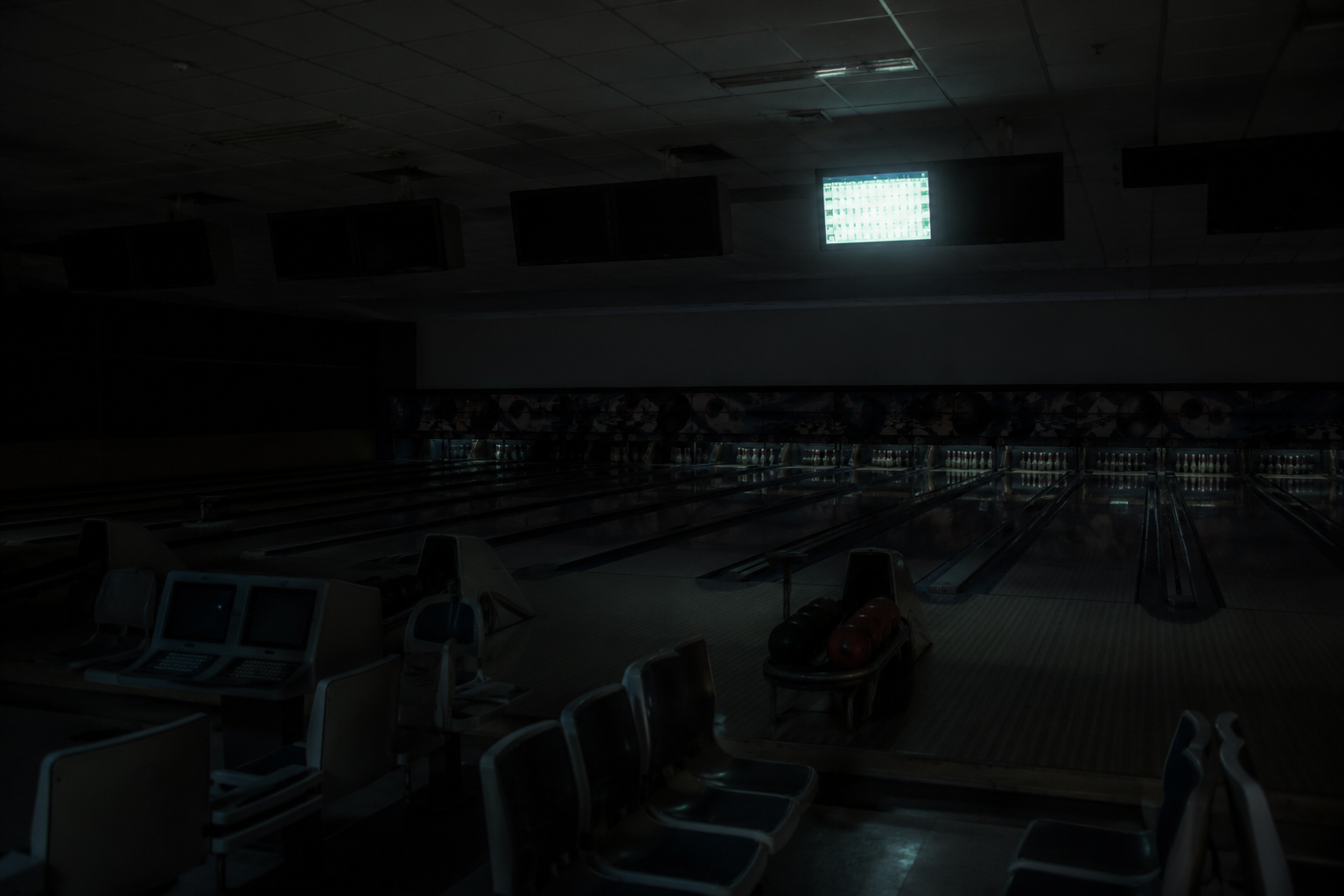
The bowling alley looked most unsettling only after it had been made clean.
During business hours, the place was noise and neon. Balls hammered wood. Pins cracked apart. Arcade machines shouted from the back wall. Someone was always laughing too loudly near the shoe counter, and someone else was always standing at the ball return with one hand in the dryer, waiting for a second chance.
After closing, the same building became a long box of polished lanes and dead screens.
That is when the camera over the concourse reportedly caught the one detail staff could not file away as a normal electrical hiccup. One overhead scoreboard turned on above lane seven. It glowed alone in the dark, while every other monitor stayed black.
Then it displayed a frame number no lane had played.
The Last Game Of The Night
The alley was the kind of older family bowling center found at the edge of a shopping plaza, with a flat roof, a faded sign, and league photos yellowing near the bathrooms. It had sixteen lanes, overhead scoring monitors, plastic molded chairs, and ball returns that sounded tired even when they were working correctly.
On the night in question, staff had closed after a slow weekday league session. Lane seven had not been assigned in the final hour. A pair of regulars used lanes three and four. A birthday group had finished on ten and eleven before the cake plates were cleared. The rest of the lanes sat dark, waiting for oiling in the morning.
The closing routine was ordinary. Rental shoes were sprayed and stacked. The snack bar warmer was wiped down. Trash bags went out the rear door. The manager walked the lane approaches, checked the bathrooms, shut down the scoring system from the front desk, and watched the overhead monitors blink out one by one.
Nothing seemed wrong when the last employee set the alarm and left.
A Screen Wakes In The Dark
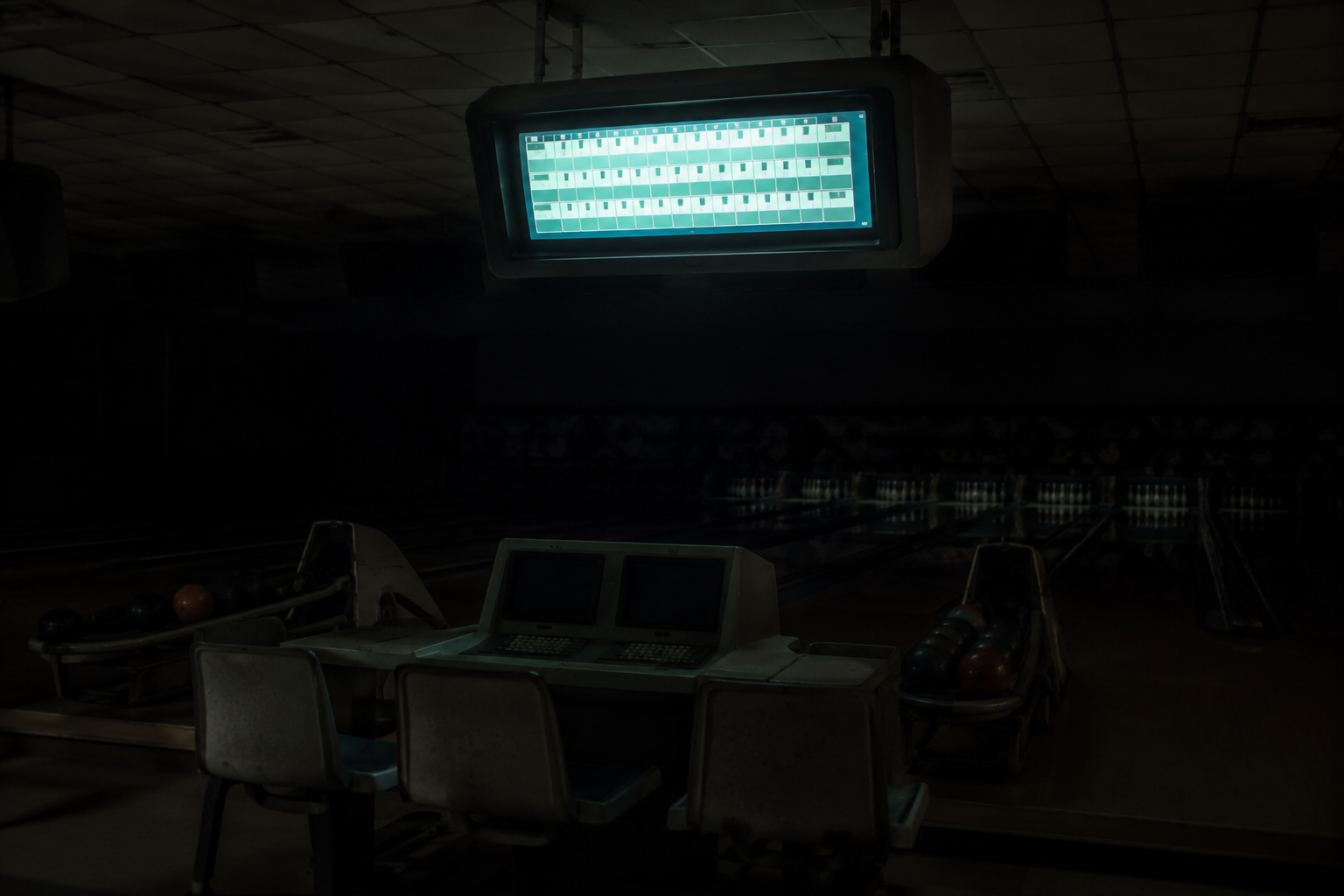
The camera angle covered center lanes from high above the concourse. It showed the backs of the empty seats, the scorer tables, the glossy boards running toward the pin decks, and the row of overhead scoreboards hanging like dark rectangles from the ceiling.
For nearly forty minutes after closing, nothing moved except small changes in the camera noise. The lanes reflected a few emergency lights. The ball returns sat still. At the far end, the pinsetters were quiet behind the masking units.
Then the monitor above lane seven flickered.
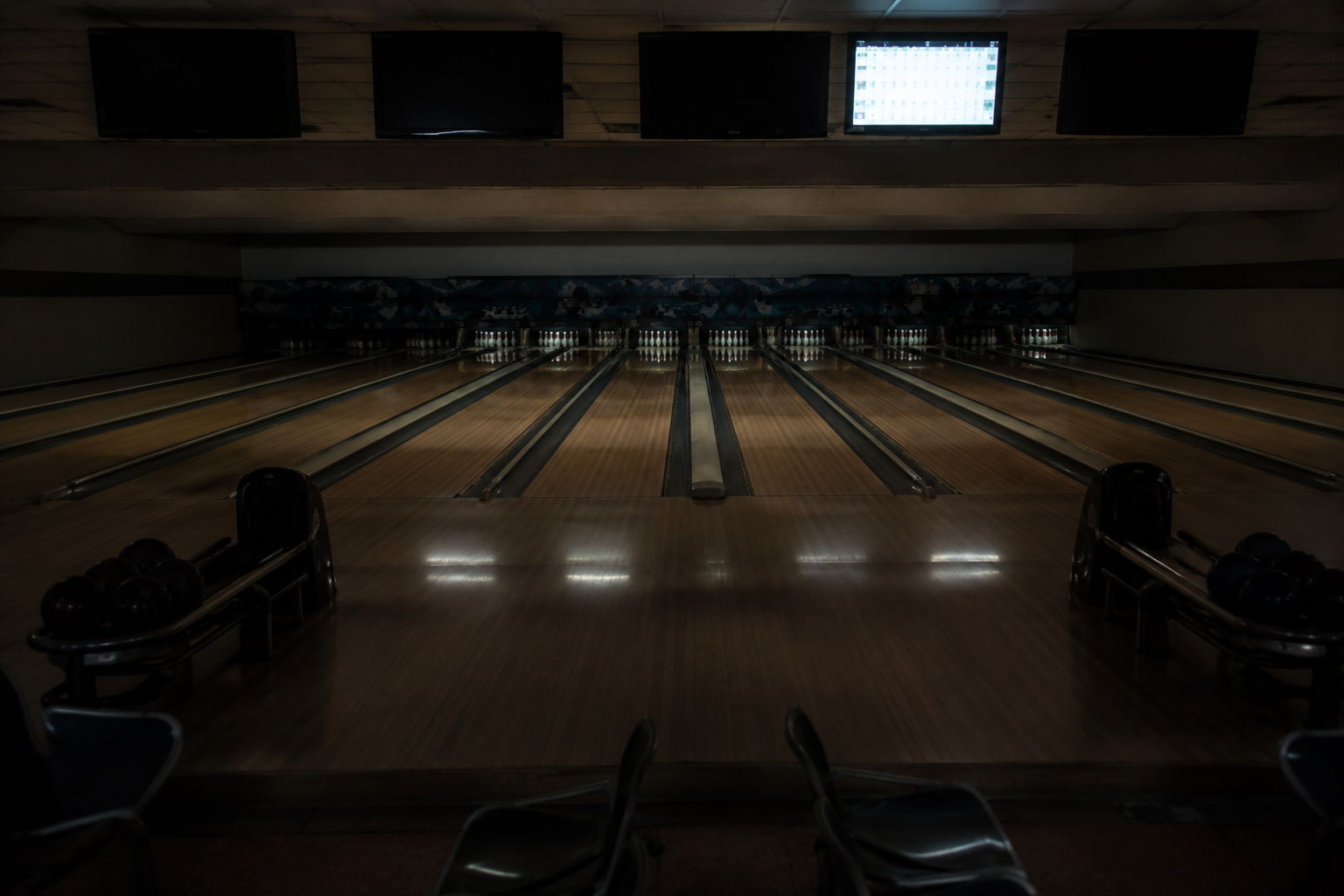
It did not come on with the bright cheerful menus customers usually saw. There was no welcome screen, no player name, no cartoon bowling animation. The screen pulsed once, dim and gray-green, then steadied into a cold rectangular glow that spilled down onto the chairs beneath it.
In the camera record, that glow is what catches the eye first. The rest of the alley remains flat and dark. Lane seven suddenly has a little island of color above it, as if somebody unseen has selected that lane from behind the counter.
But the front desk was empty. The doors were locked. No shadow crossed the concourse.
The Frame Number
The strange part was not just that the scoreboard powered on. Old electronics wake for stupid reasons. A bad relay, a stuck command, a voltage dip, or a scheduled reboot can turn a harmless screen into a ghost story if it happens at the right hour.
What bothered the staff was what the screen showed.
Instead of a score grid, it displayed a single frame indicator. The account describes it as a number where a player frame should have been, isolated and too large, sitting in the wrong part of the scoring layout. It was not paired with a player name. There were no scores beneath it. No lane assignment from that night matched it.
The manager checked the system the next morning and found no open game on lane seven. The final league games were closed out properly. Lane seven had no late transaction, no manual restart, and no record of a bowler being moved there.
Yet in the after-hours frame, the monitor had behaved like it was waiting for the next ball.
That detail changed the mood of the camera record. A blank monitor turning on is a fault. A monitor displaying a frame number feels wrong.
No One At The Approach
People who have watched enough security stills know how easily an empty building can lie. Compression creates false shapes. Reflections can look like movement. Automatic systems can make a place seem occupied when it is only running its own maintenance.
The lane seven frame is unnerving because it does not rely on a figure walking past the camera. There is no pale face at the masking unit. No shadow bending over the ball return. No hand reaching from behind a chair.
There is only absence arranged too neatly.
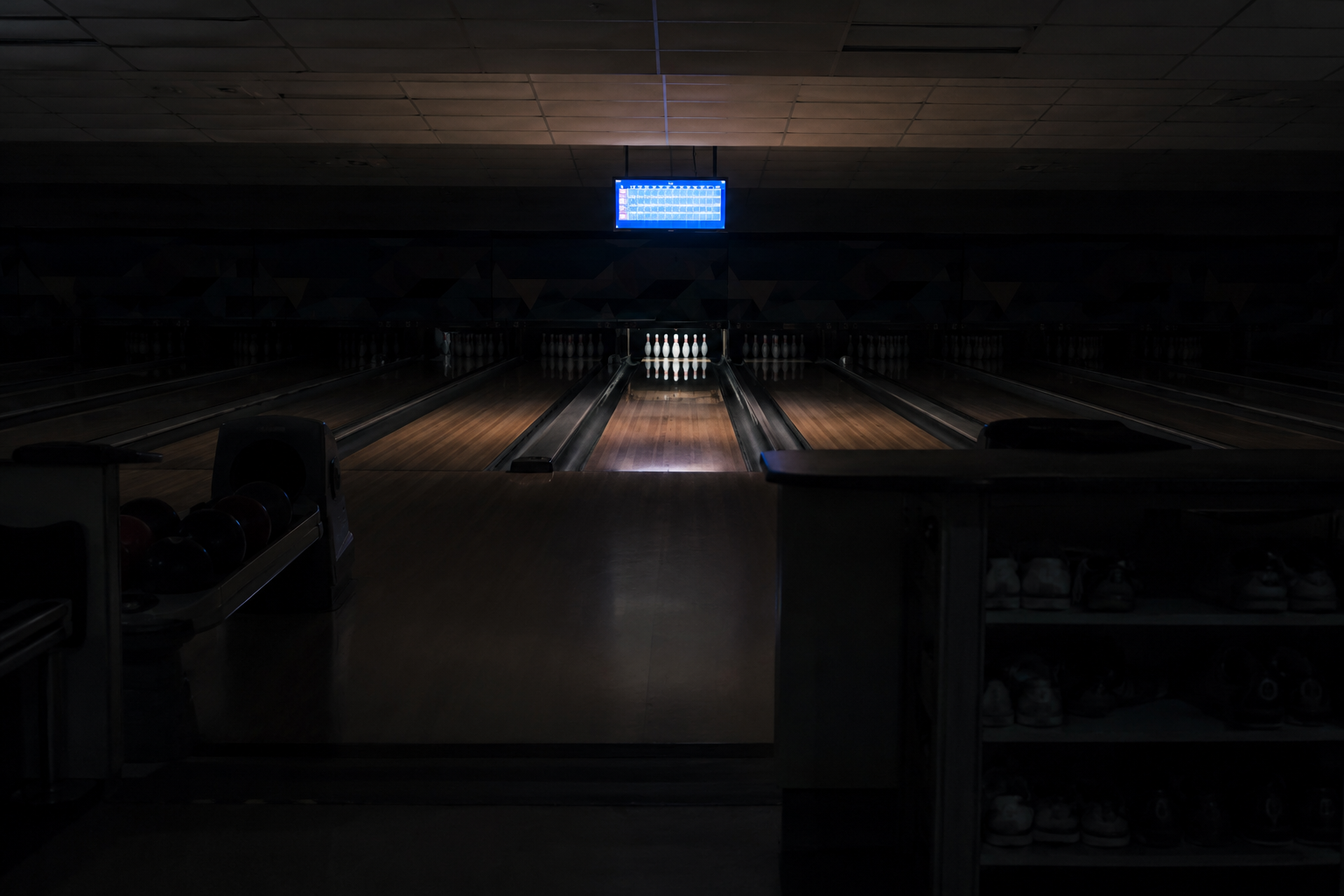
The approach area below the screen stays empty. The chairs remain pushed back. No bowling ball rolls from the return. No pins drop at the far end. The lane itself is still, with the oil reflecting the monitor's glow in a thin broken stripe.
If someone had somehow hidden inside after closing, the camera record does not show them crossing to the lane. If someone had triggered the scoring computer remotely, the system log did not make that simple. If it was only a screen fault, the choice of lane and the lonely frame indicator were an awkward coincidence.
The monitor stayed on long enough for the camera to catch several minutes of the glow. Then it went dark again.
No one touched it.
The Morning Review
The camera file was found the next day because the manager noticed lane seven's overhead unit had a different boot state than the others. It was not obviously broken, but it showed a service message before the morning open, as if it had cycled during the night.
That sent him to the security stills.
At first, he expected to see a power bump. Maybe all the screens had blinked and only lane seven looked dramatic from that angle. But the other monitors stayed black. The arcade lights did not flash. The snack bar clock did not reset. The camera did not show the whole building losing power and coming back.
Only one scoreboard woke.
The staff reportedly played the camera file at the front desk before opening. In daylight, with the carpet stains visible and the smell of lane cleaner in the air, it was easier to joke about it. Someone said lane seven wanted one more game. Someone else said the computer was haunted by league bowlers who refused to leave before finishing a set.
Then they slowed the camera file down and watched the empty approach under the lit screen.
The jokes thinned out.
The Lane Nobody Wanted
Every bowling alley has a lane people complain about. It hooks wrong. It leaves weird corner pins. Its ball return chews fingers or sends balls back with a clunk that sounds personal. Lane seven already had that kind of reputation, but only in the normal league-night way.
After the scoreboard incident, small stories gathered around it.
A mechanic remembered hearing a single pin fall in the back while cleaning machines weeks earlier. A bartender said she once saw the same screen flash while counting the register. Neither memory would matter without the camera file. They are the kind of ordinary scraps people collect after something strange happens.
A dark monitor is just a monitor until it turns on after closing.
Possible Explanations
The practical explanations remain plausible. Bowling centers run on aging computers, control boxes, cables, and monitors. A single lane terminal can reboot without the whole system doing the same. Old scoring software can display fragments from a previous game. A corrupted screen state might show a frame indicator without pulling the full score table back onto the monitor.
Lane seven might have held forgotten data from earlier that week. A command might have been delayed. A maintenance process might have pinged the wrong unit.
Nothing about the frame requires a haunting.
But the story lingers because the camera record seems to imitate intent. The screen did not simply glow white. It woke over one unused lane, after everyone left, and showed the part of a game that marks progress through turns.
A place in the middle of something.
What The Camera Did Not Show
The stills never show a bowler. That may be why it feels worse.
A figure would give the fear a body. Viewers could argue about a trespasser, a reflection, or a prank. Instead, the frame leaves only the system responding to a player who never enters the frame.
The chairs are empty. The ball return holds still. The pins wait untouched at the end of the lane. Above them, for a few minutes in the after-hours dark, the scoreboard behaves like a game has reached a moment no living customer started.
By morning, lane seven looked normal again. Customers bowled on it. Shoes squeaked on the approach. Balls spun through the oil and scattered pins into the pit. The overhead monitor kept score like any other screen.
But for the employees who saw the stills, closing felt different after that. The row of black scoreboards no longer looked fully asleep. Lane seven no longer seemed empty just because nobody stood there.
Sometimes the most frightening thing a camera records is not a shape in the dark.
Sometimes it is a machine acting like it has seen someone take their turn.