The Ordinary Detail That Started It
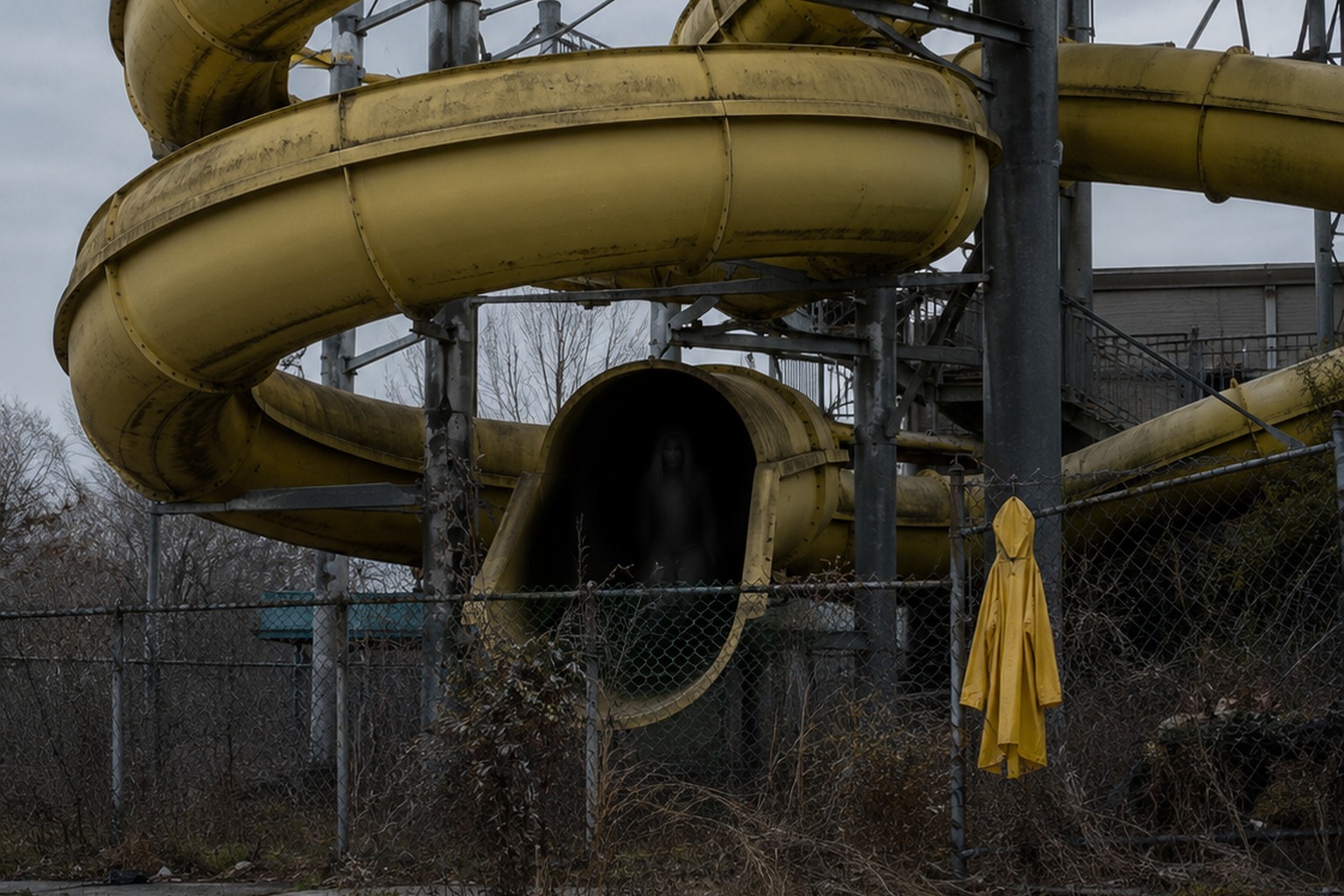
The first thing people noticed was that the child never seemed to get any closer. Every photograph showed the same distance. No matter where the camera was placed, no matter which side of the abandoned water park someone explored, the small figure always stood just beyond where anyone could confidently identify a face. Close enough to recognize a child. Far enough that details dissolved into shadows and faded colors.
It became less like finding someone. More like being found. The water park had been closed for nearly fifteen years. At its peak, families packed the wave pool every summer. Bright umbrellas covered the concrete decks. Lifeguards shouted over whistles while children sprinted barefoot between twisting blue slides and fountains shaped like giant sea creatures. It had once been noisy enough that conversation required raised voices.
Then ownership changed. Repairs were delayed. Attendance declined. Eventually the gates were locked, leaving everything exactly where the final season had ended.
Plastic lounge chairs remained stacked beside empty pools. Sun-faded warning signs peeled away from cracked walls. Artificial waterfalls dried into streaks of white mineral deposits that looked like frozen rivers running down concrete cliffs. Nature arrived slowly. Grass pushed through expansion joints. Small trees rooted inside empty splash pools.
Vines climbed handrails once polished by thousands of wet hands. The first photograph appeared on a forgotten exploration forum. A local photographer documented abandoned buildings across the region. He uploaded dozens of pictures from the park—collapsed ticket booths, rusting lockers, algae covering the lazy river.
Only after posting did someone comment on the final image. "Who's standing at the top of the yellow slide?" The photographer hadn't noticed anyone. He enlarged the original file.
Hands at the sides. Head tilted slightly downward. Watching. The image quality wasn't good enough to identify age or expression.
Why People Looked Twice
He assumed another explorer had wandered into frame. Nothing seemed unusual. Months later another group entered the park from a completely different entrance. While reviewing drone camera still that evening, they paused on one frame.
Standing beside the empty kiddie pool… The same child. Yellow clothing. Same height.
Same posture. Again too distant to identify. Oddly, nobody remembered seeing anyone throughout the visit. One member joked that they had discovered the park's permanent resident.
The others laughed. Until someone compared both photographs. The child appeared identical. Not simply similar.
Exactly the same. The yellow jacket hadn't faded differently despite months between visits. The posture matched. The slight lean of the head matched.
Even the angle of one foot appeared unchanged. Curiosity replaced coincidence. Several photographers intentionally visited hoping to recreate the image. Most found nothing unusual.
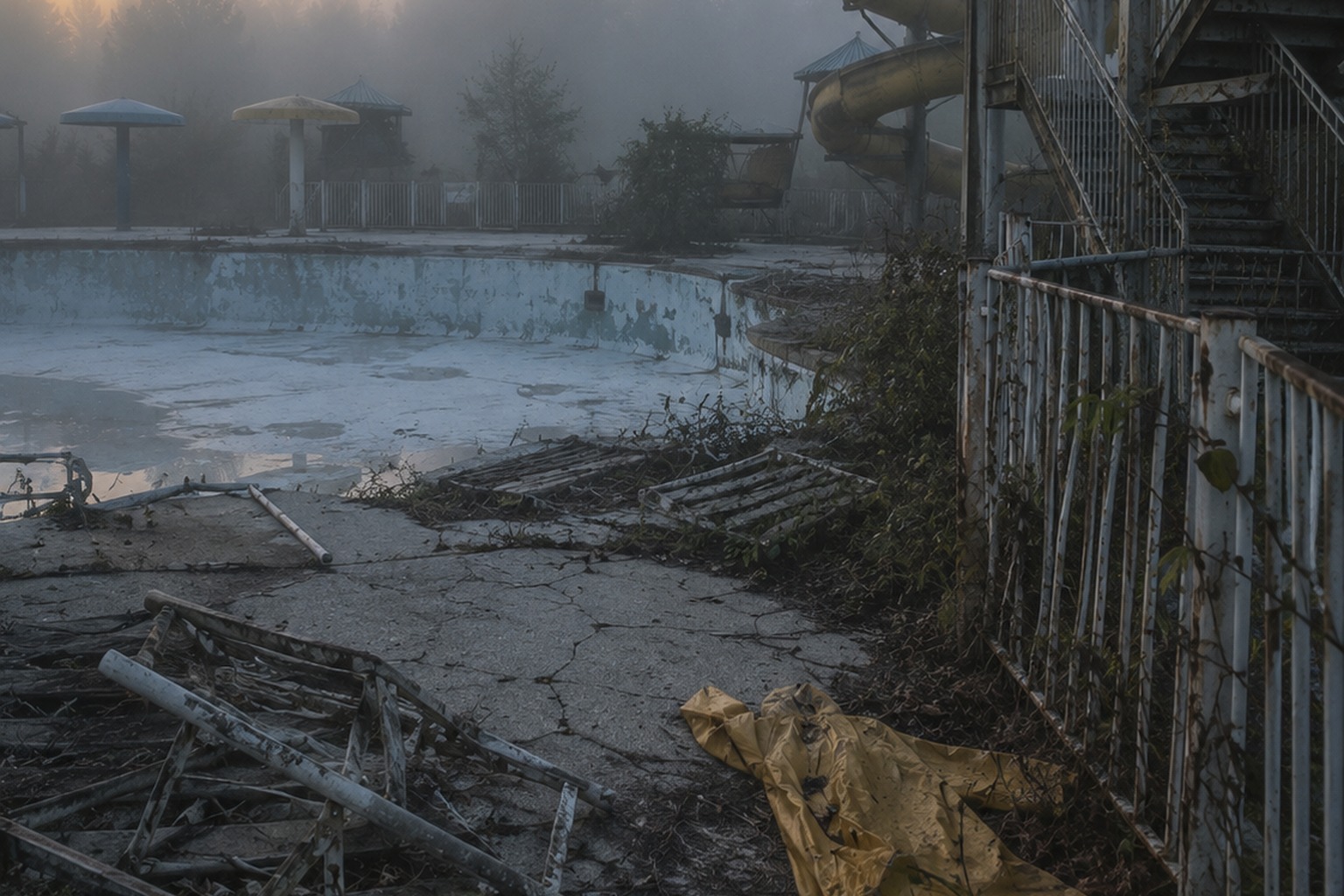
A few returned disappointed. Then another picture surfaced. This time the child stood halfway inside the entrance tunnel of the tallest enclosed slide.
The Part That Did Not Fit
The photographer remembered aiming directly toward that opening because sunlight created dramatic shadows inside the tube. He distinctly recalled the entrance being empty. Yet the photograph suggested someone had been watching from inside the darkness. Again…
Too far away. Always too far. As interest grew, explorers began searching older pictures taken years before. Some found nothing.
Others became strangely quiet. One man uploaded vacation photos from the park taken while it still operated. Families floated through the lazy river. Children climbed brightly painted stairs.
Parents waited near snack stands. Then someone noticed a familiar figure standing alone beside a maintenance fence behind the main slides. Yellow raincoat. Hands at the sides.
Nobody nearby acknowledged the child. The date stamp showed seventeen years earlier. Long before abandonment. Long before anyone started discussing the photographs.
The thread exploded with theories. Perhaps identical siblings. Perhaps digital artifacts. Perhaps everyone was convincing themselves that different children looked alike.
Reasonable explanations held together… Until someone mapped every appearance. The locations formed an impossible pattern. Every photograph had been taken facing generally toward the central slide tower.
What A Simple Explanation Could Be
The child always appeared somewhere between the camera and that tower. Never elsewhere. Never behind photographers. Never inside buildings beyond the slides.
Always between observer and slide. As though something refused to let anyone look toward the attraction without first looking at it. One exploration team decided to spend an afternoon documenting every platform inside the tallest structure. The climb felt strangely uncomfortable.
The stairs echoed despite everyone moving quietly. Pigeons nested beneath fiberglass tubes, occasionally exploding into flight with startling noise. Most belonged to adults. One set belonged to a child.
Small sneakers. Perfectly clean impressions. They didn't continue toward the slide entrance. The tracks stopped there.
No return prints. No second direction. Just a neat pair of footprints ending before the black opening. One explorer laughed nervously.
"Guess they went down." Except… The slide no longer existed. Its lower section had collapsed years earlier. Anyone entering would have fallen into twisted steel. Nobody had. There were no rescue records.
Why That Answer Still Felt Incomplete
No missing child reports connected to the park. Nothing. The footprints became another unexplained detail. A month later a camera stillgrapher visited before sunrise.
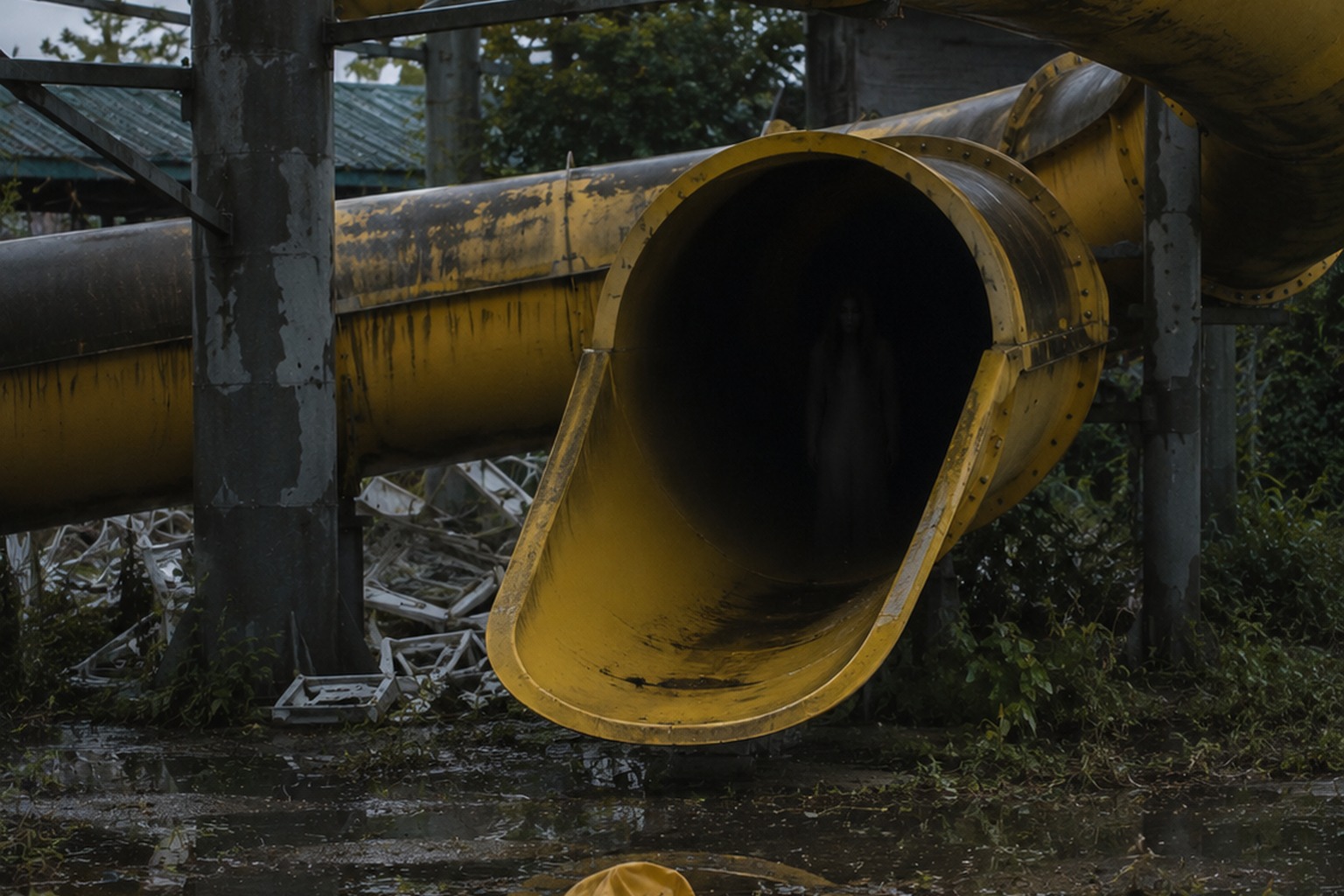
Fog drifted across the empty pools while pale morning light softened the abandoned structures. He carried two cameras. One recorded continuously from a chest mount. The other captured still photographs every few seconds automatically.
The camera still showed no people. Only empty pathways. Wind moving weeds. Birds.
Silence. But among hundreds of automatic still photographs, the child appeared twelve separate times. Different locations. Same posture.
Sometimes beneath the slide tower. Sometimes beside the wave pool fence. Sometimes standing inside the shallow children's splash area. Never moving.
Never blurred. The timestamps were only seconds apart. Walking between those positions should have taken several minutes. He overlaid the images onto a park map.
The child hadn't traveled. The cameras had. It appeared exactly wherever he happened to be looking. As though every photograph belonged to a different version of the same moment.
The Detail People Kept Returning To
After that discovery, people stopped focusing on finding the child. Instead they watched the backgrounds. Something else emerged. Whenever the child appeared, every nearby slide entrance looked unusually dark.
Not shadowed. Dark. The interiors absorbed light even during bright afternoons. Photographers who remembered standing there insisted the tunnels had been fully illuminated.
Only the photographs showed impossible darkness. One retired maintenance worker eventually contacted the exploration group. He had worked summers at the park during its busiest years. When shown the pictures, he stared silently for several minutes.
Then he pointed toward the tallest enclosed slide. "We used to tell new employees not to leave kids waiting alone up there." Why? "Because they always said someone was standing below watching."
He smiled awkwardly afterward, embarrassed by the memory. Children have imaginations. Parents dismissed the stories. Staff ignored them.
Eventually nobody talked about it anymore. Until the photographs. He refused to identify the child. Only said the yellow raincoat reminded him of someone.
But he couldn't remember who. Or maybe didn't want to. Years continued passing. The water park deteriorated further.
How The Story Changed Afterward
Storms tore sections from colorful fiberglass tubes. The wave pool cracked apart as tree roots lifted concrete slabs. Graffiti covered walls that once displayed smiling cartoon dolphins. The photographs never stopped.
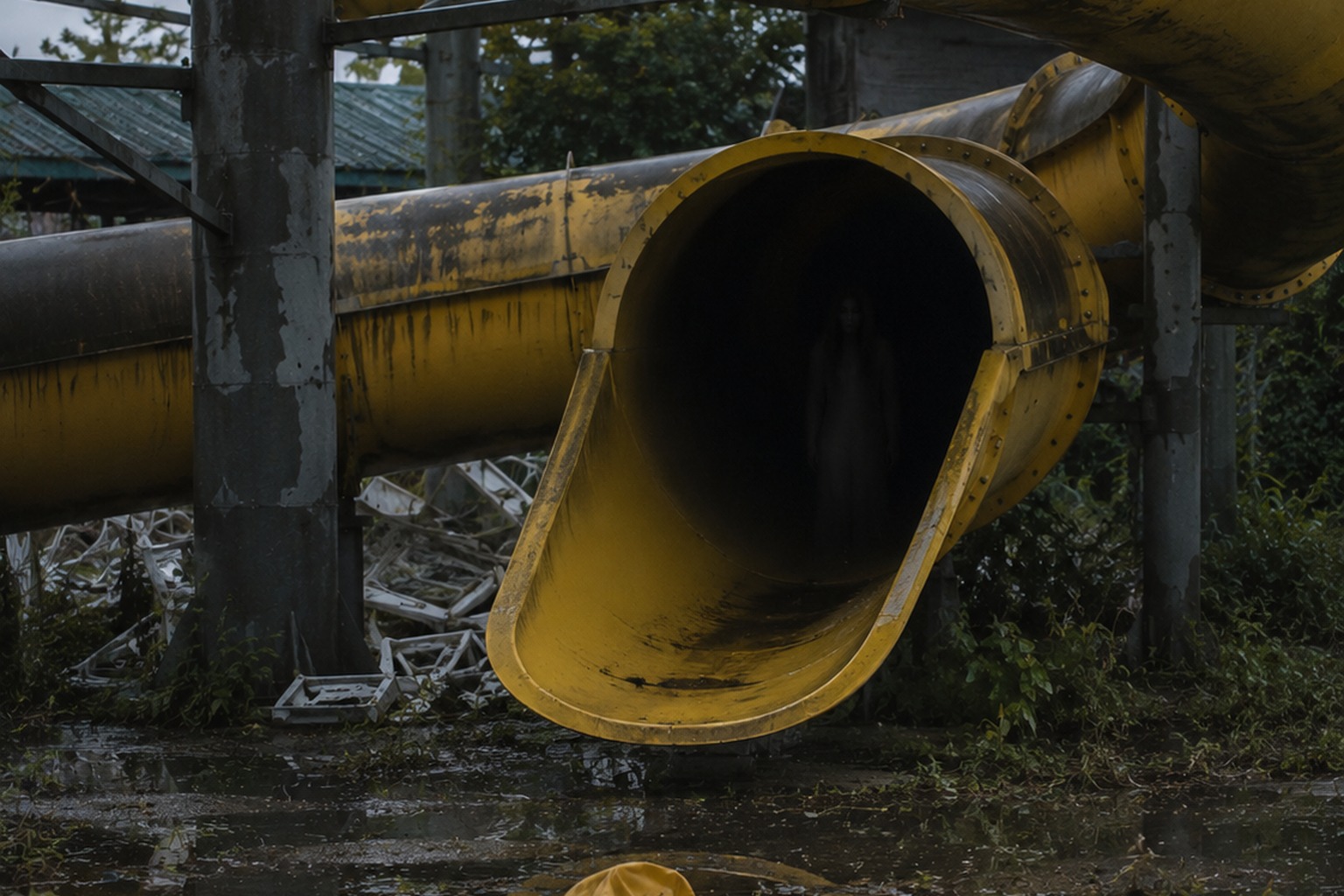
Every year another visitor uploaded new images. Every year someone eventually spotted the child. Different camera. Different season.
Different photographer. Same distance. Always impossible to reach. One explorer finally tried.
Twenty seconds later he reached the location. Nobody. Only weeds growing through broken pavement. He checked the photograph.
The child wasn't standing where he'd walked. The figure appeared much farther back than he'd remembered. Near the opposite side of the pool. Confused, he crossed there.
Again nothing. Another glance. Now the photograph somehow made the child appear halfway up the slide stairs. He insisted he never saw movement. Only changing certainty. Like memory itself refused to decide where the figure had actually been. He left before sunset.
Why It Still Feels Unsettled
His final picture became one of the clearest ever taken. The child stood beneath the giant spiral slide, facing directly toward the camera. The yellow raincoat looked soaked despite years without running water. One sleeve hung slightly longer than the other.
Tiny muddy shoes rested perfectly together. For the first time, someone enlarged the image enough to examine the face. There wasn't one. Not because it was hidden.
Not because of blur. The hood framed only darkness, as though the opening contained no features at all. Just a space where a face should have been. Most people stopped looking after that.
Not because the mystery ended. Because every attempt to solve it only seemed to produce another photograph. Another angle. Another impossible appearance.
The abandoned park continues collapsing into the surrounding forest. Soon the tallest slide tower may finally fall, taking decades of rust and silence with it. Perhaps the photographs will stop. Perhaps there will be nowhere left for the child to stand.
Or perhaps that was never the point. Because across every image, taken years apart by strangers who never met, one detail never changes. The child is never waving. Never asking for help.
Never trying to be found. Only standing between the camera… …and the slide. As though waiting for someone else to make the mistake of climbing one last time.