The Detail That Made The Story Unsettling
The train museum always closed before sunset. That wasn't because the volunteers wanted shorter days.
It was simply how the place had always operated. Families wandered through restored passenger coaches during the afternoon, children rang polished brass bells, retired engineers answered questions about steam locomotives, and by early evening every display was locked, lights switched off one building at a time.
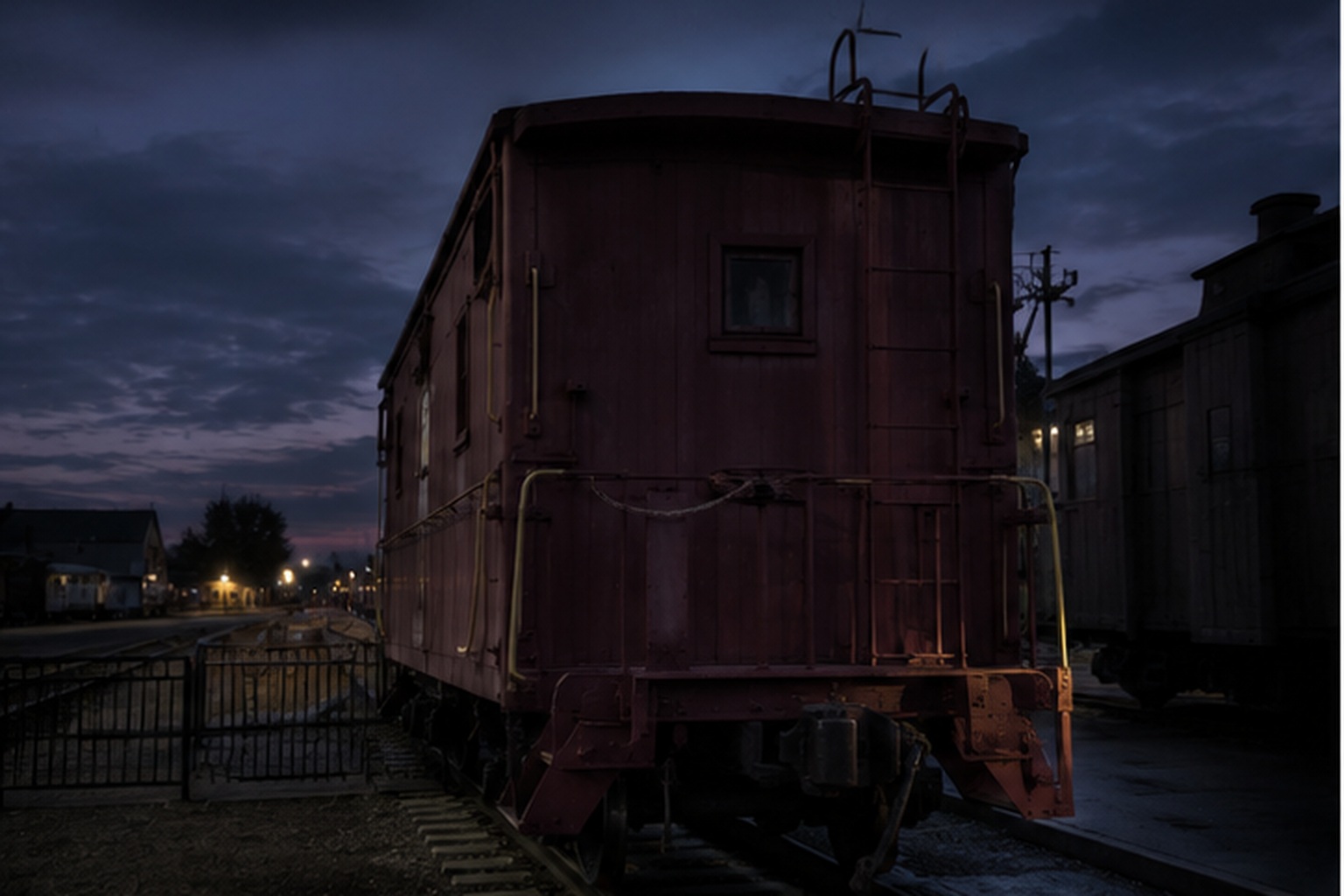
The caboose was always the last exhibit checked. It sat by itself at the far end of an unused siding beyond the main depot, separated from the larger locomotives by about eighty yards of cracked platform and rusting rails.
Fresh red paint covered most of its exterior, but the restoration had intentionally left weather marks around the steel steps and roofline. Visitors loved climbing inside during open hours because the cupola offered a view over the entire museum grounds.
After closing, however, every curtain was pulled shut except for one narrow rear window facing the parking lot. No one ever questioned why. The story began with a local photographer who had arrived just after dusk hoping to capture long-exposure images of old rail equipment under approaching thunderstorms. The museum gates had already been chained.
Everything looked perfectly ordinary beyond them—silent locomotives, empty tracks, scattered maintenance carts. He started photographing through the fence anyway. The caboose happened to sit directly in line with the fading western sky. One final photograph caught the reflection of distant lightning behind it.
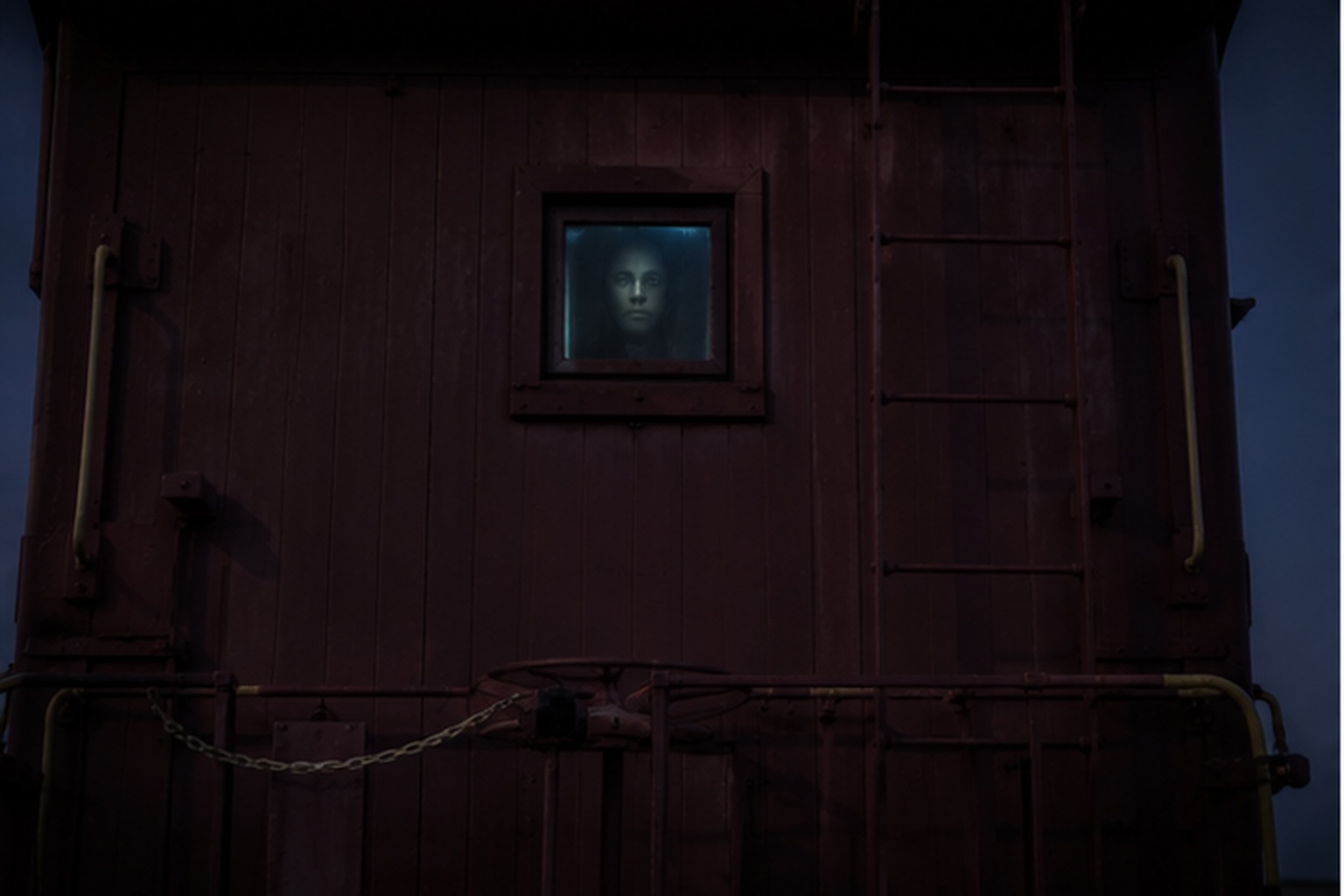
Only later, while reviewing the images at home, something interrupted the symmetry. Someone appeared to be standing inside the rear window. Not leaning. Not walking. Standing absolutely still. The first assumption was obvious. Perhaps a volunteer had forgotten something inside before locking up. But the more the image was enlarged, the stranger the proportions became.
The face filled nearly the entire window despite the fact that anyone standing on the caboose floor should have appeared much lower. It looked as though the head was floating several feet above where shoulders ought to be.
What The Camera Or Witnesses Noticed
The photographer drove back the next morning. The volunteer unlocking the museum laughed politely. "No one was inside." He unlocked the caboose immediately. There was nowhere a person could have stood.
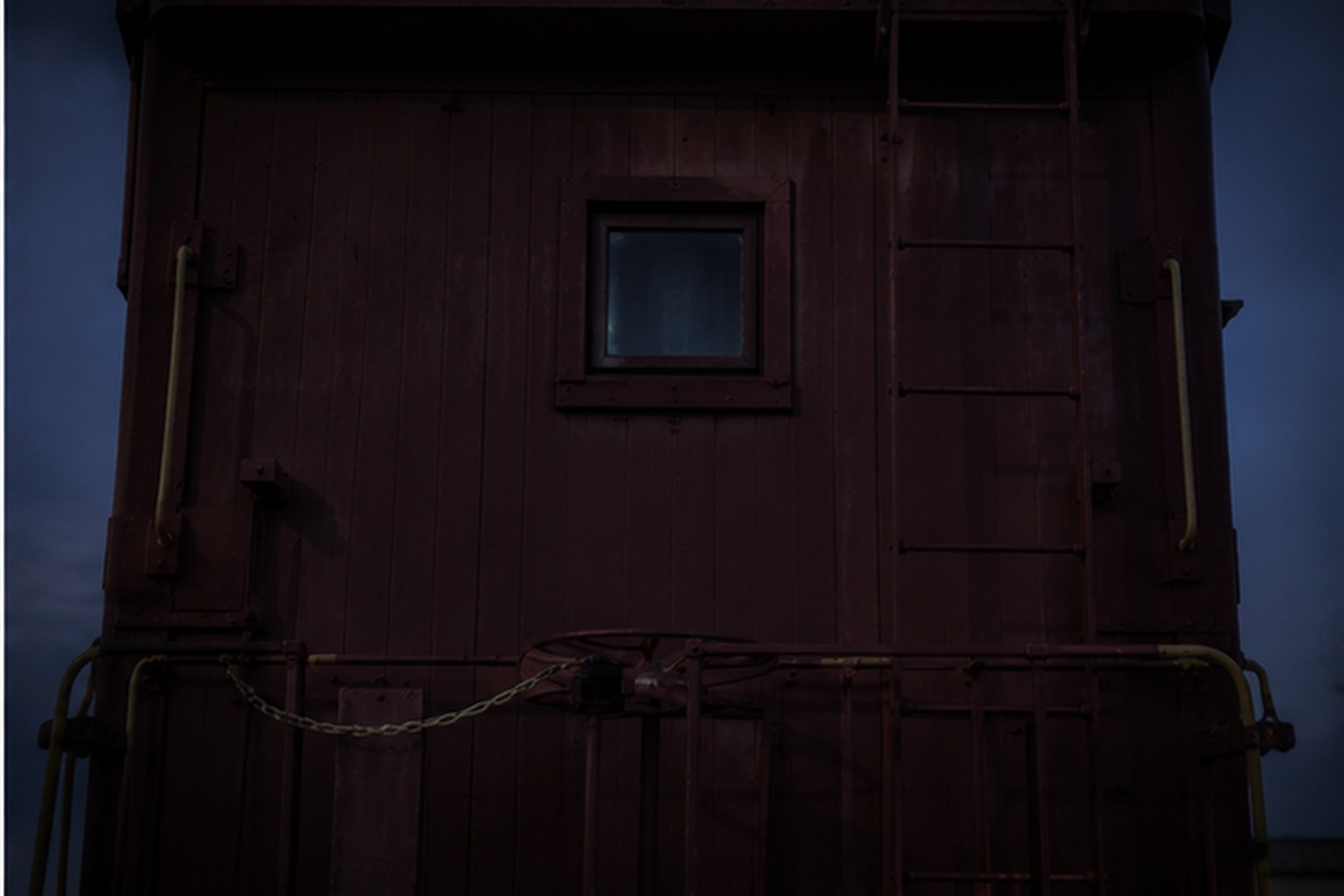
The rear window overlooked an empty corner where the floor dropped away into a built-in storage compartment beneath the observation platform. Standing directly against that glass would have placed someone's head far below the window frame. To match the photograph, someone would have needed to suspend themselves in midair. The photographer accepted the explanation, shrugged, and forgot about it.
For almost six months. Then another picture surfaced. This one came from an entirely different visitor. Unlike the first, it hadn't been taken through the fence. It had been captured during a seasonal evening event held after public hours, when guests gathered near the depot for a lantern presentation while the caboose remained closed.
Children were roasting marshmallows near portable fire pits.
Parents wandered between food trucks. Someone snapped a casual photo looking toward the caboose simply because the sunset painted its red sides orange. Again, there was someone in the rear window. The same pale face. The same impossible height. No lights had been on inside.
People who enlarged the picture noticed something else. The face wasn't looking out toward the parking lot. It appeared to be staring directly at whoever held the phone. Even though they had been nearly two hundred feet away. Stories accumulated quietly after that. Museum volunteers insisted nobody had ever reported strange experiences during daytime tours.
Why The Location Matters
Everything happened after locking up. One maintenance worker claimed he had finished replacing exterior trim boards one autumn evening when he heard footsteps moving slowly through the caboose above him. The building was already secured. Assuming another volunteer remained inside, he climbed the metal steps and unlocked the door.
Every room sat exactly as he had left it. The conductor's desk. The bunks. The tiny stove. Dust lay undisturbed. Yet moments after stepping outside again, he heard the same footsteps crossing from one end of the car to the other. Measured. Heavy.
Never hurried. Another volunteer disliked closing alone because the cupola windows reflected movement after sunset. Not shadows. Reflections. As though someone crossed behind him inside the caboose whenever he checked the exterior locks. He eventually stopped looking upward.
Visitors occasionally noticed stranger details without realizing they mattered. One family reviewing vacation photographs discovered every picture facing the caboose contained someone staring through the rear window. Not always clearly. Sometimes only the outline of a forehead. Sometimes only eyes. Sometimes a pale oval interrupted by darkness where the mouth should have been.
The odd part wasn't that the figure appeared repeatedly. It was that each photograph had been taken months apart by different cameras.
The Part That Changed After Dark
The weather changed. The seasons changed. Even the paint gradually faded between pictures. The face never seemed to age. A local history enthusiast became fascinated enough to compare restoration photographs taken years before the caboose entered museum service. The images documented every stage of the renovation. Workers replacing windows. Volunteers stripping paint. Fresh flooring being installed. Dozens of pictures.
Nothing unusual. Until the final week before opening. One photograph showed the restored caboose parked inside a maintenance shed with its rear door wide open. A volunteer stood smiling beside fresh lettering. Inside the rear window floated a pale face. The volunteer later said no one else had been inside.
The restoration crew counted everyone present that afternoon because lunch had just arrived. The face had somehow entered the photograph anyway. Nobody could explain it. Curiosity eventually drew several amateur photographers together one October evening. They positioned cameras outside the museum fence before sunset and waited until darkness settled over the grounds. Nothing happened for nearly two hours.
Then one photographer noticed something subtle. The caboose window wasn't becoming darker as night deepened. It remained faintly gray. Almost illuminated.
The Small Detail People Usually Miss
Not brightly. Just enough to separate it from every other black window across the museum. One person suggested moonlight. Except clouds completely covered the sky. They took another picture. Nothing.
Another. Still nothing. The fifth image froze everyone. The face had returned. Closer than before. Not merely standing inside. Pressed gently against the glass. Its forehead touched the upper frame.
Its cheeks flattened slightly as though leaning outward. Its eyes appeared almost human until enlarged. Then tiny details emerged. There were no reflections inside the pupils. No visible moisture on the skin. Most unsettling of all, there were no eyelids.
The eyes simply ended against smooth pale skin that never blinked. Someone joked nervously that perhaps a mannequin had been left inside for restoration work. Nobody laughed. They zoomed farther. The lower half of the face dissolved into darkness. No shoulders.
How The Story Spread Quietly
No neck. Only a head emerging from blackness impossible to measure. One photographer refused to remain any longer. The others packed their equipment shortly afterward. As they walked back toward the parking lot, one happened to glance over his shoulder. The window looked empty. Completely ordinary. He kept walking.
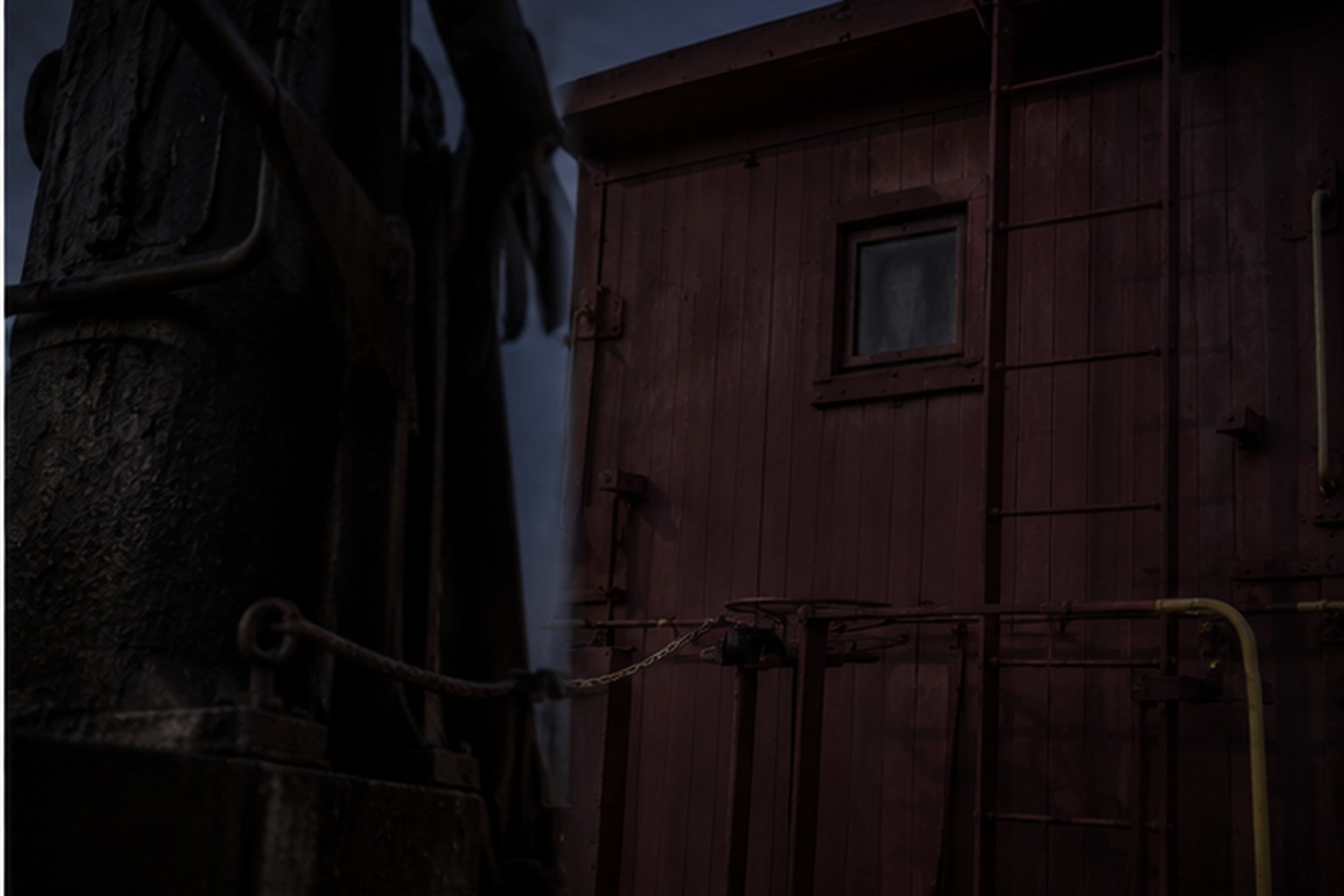
Then instinct made him check once more. The face had reappeared. Not behind the glass. Beside it. Just enough for half of it to emerge from the darkness inside the caboose. Watching them leave. No photograph captured that moment. The witness insisted he never raised his camera because his hands stopped cooperating.
Several weeks later the museum temporarily closed for roof repairs. Workers removed portions of the ceiling inside the caboose. The project exposed hidden framing above the observation platform. Everyone expected decades of dust and old insulation. Instead they discovered remarkably little empty space. Certainly nowhere a person could crouch.
Nowhere someone might secretly position themselves near the rear window. Once repairs finished, the ceiling was sealed again. Nothing unusual occurred during construction. Or at least nothing anyone admitted.
Why It Still Feels Hard To Explain
The following spring, another image quietly circulated among local rail enthusiasts. Unlike earlier photographs, this one had been accidental. A father had been taking portraits of his daughter beside an antique signal lantern near the museum entrance. The caboose occupied only a tiny corner of the background.
When he enlarged the picture later to sharpen focus, he noticed the rear window once again. There wasn't one face this time. There were two. One remained in its familiar impossible position near the top of the glass. The second appeared lower. Only partially visible.
As though someone—or something—had begun climbing upward from beneath the floor where no person could possibly stand. He never released the original high-resolution file publicly. Friends who claimed to have seen it described fingers wrapped around the inside edge of the window frame. Not normal fingers.
Too many joints. But those who lingered until closing occasionally experienced an odd feeling while walking back toward the parking lot. Almost everyone glanced over one final time. Not because they expected to see anything. Because it somehow felt rude not to. The rear window always reflected the fading sky. Sometimes trees. Sometimes clouds.
Sometimes only darkness. And once in a while, according to people who no longer enjoy looking through telephoto lenses after sunset, something pale would already be standing inside. Not moving. Not knocking. Simply waiting in the one place where the restored interior offered absolutely nowhere for anyone to stand.