Heavy rain had pounded the farming valley for nearly three straight days. By sunrise, the creek that usually trickled beneath the county road had become a fast-moving brown ribbon carrying branches, fence posts, and clumps of grass downstream.
The county maintenance crew spent the morning checking culverts before another storm arrived. Most inspections were routine. Remove debris. Photograph the entrance.
Measure water flow. Move to the next location. One forgotten drainage tunnel at the edge of an abandoned pasture seemed no different. Until someone zoomed in later.
The
Culvert Nobody Ever Mentioned The gravel road served only three farms now. Two had active cattle. The third property had sat empty for years after its owners moved away.
Nature had slowly reclaimed everything. Tall weeds leaned across the cracked driveway. An old mailbox tilted toward the ditch, rust staining the faded white paint. The culvert beneath the road was larger than most.
What The First Photo Seemed To Show
Instead of a simple concrete opening, it ended behind an old steel grate installed decades earlier to stop large debris from clogging the tunnel. The bars were thick. The spaces between them barely wide enough for a person to squeeze an arm through. During heavy rain, leaves collected there in dense mats.
That morning the grate looked unusually clean. Almost polished. The maintenance worker assumed rushing floodwater had stripped everything away. He stepped back, snapped several inspection photos, noted the water level, and continued down the road.
Nothing unusual caught anyone's attention. At least not while standing there.
Something Standing Behind The Bars Back at the county workshop, the photographs were uploaded with dozens of others collected that morning.
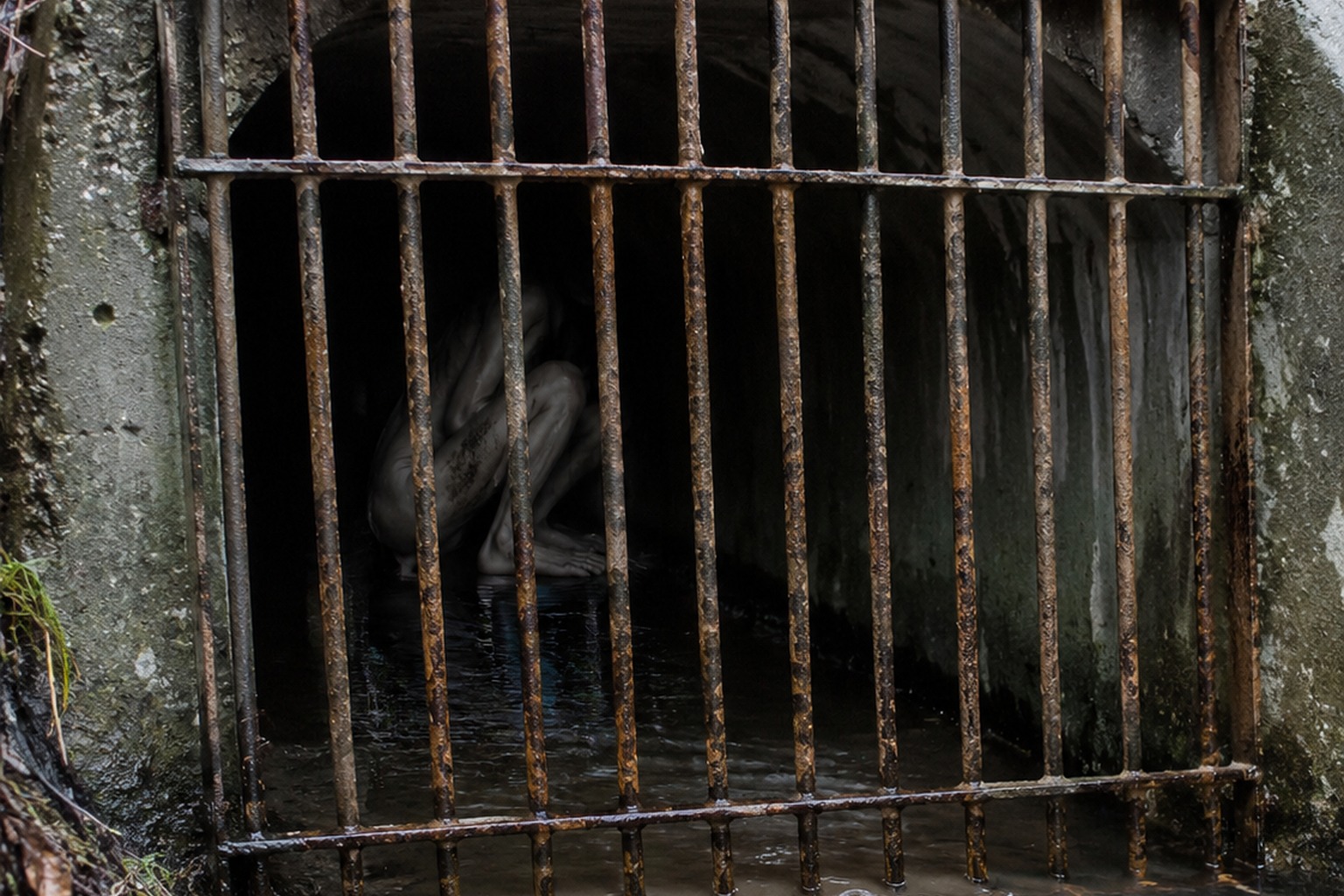
Someone enlarged the culvert image while checking whether branches needed removal. At first they noticed only darkness. The tunnel curved gently after several yards, leaving most of its interior hidden in shadow. Then someone pointed toward the left side.
There, several feet behind the steel grate, stood what looked disturbingly like folded legs. Not animal legs. Human-shaped. Except they bent the wrong way.
Why The Location Felt Wrong After Closing
The pale figure appeared crouched so deeply its knees rose almost beside its shoulders. Its skin looked smooth and completely hairless. Its head leaned sideways between two concrete seams as though listening. Long arms disappeared into darkness below the frame.
No facial features could be made out. Only a faint suggestion of deep eye sockets staring toward daylight. Everyone assumed it had to be an illusion created by wet concrete. But nobody could identify what natural shape matched the proportions.
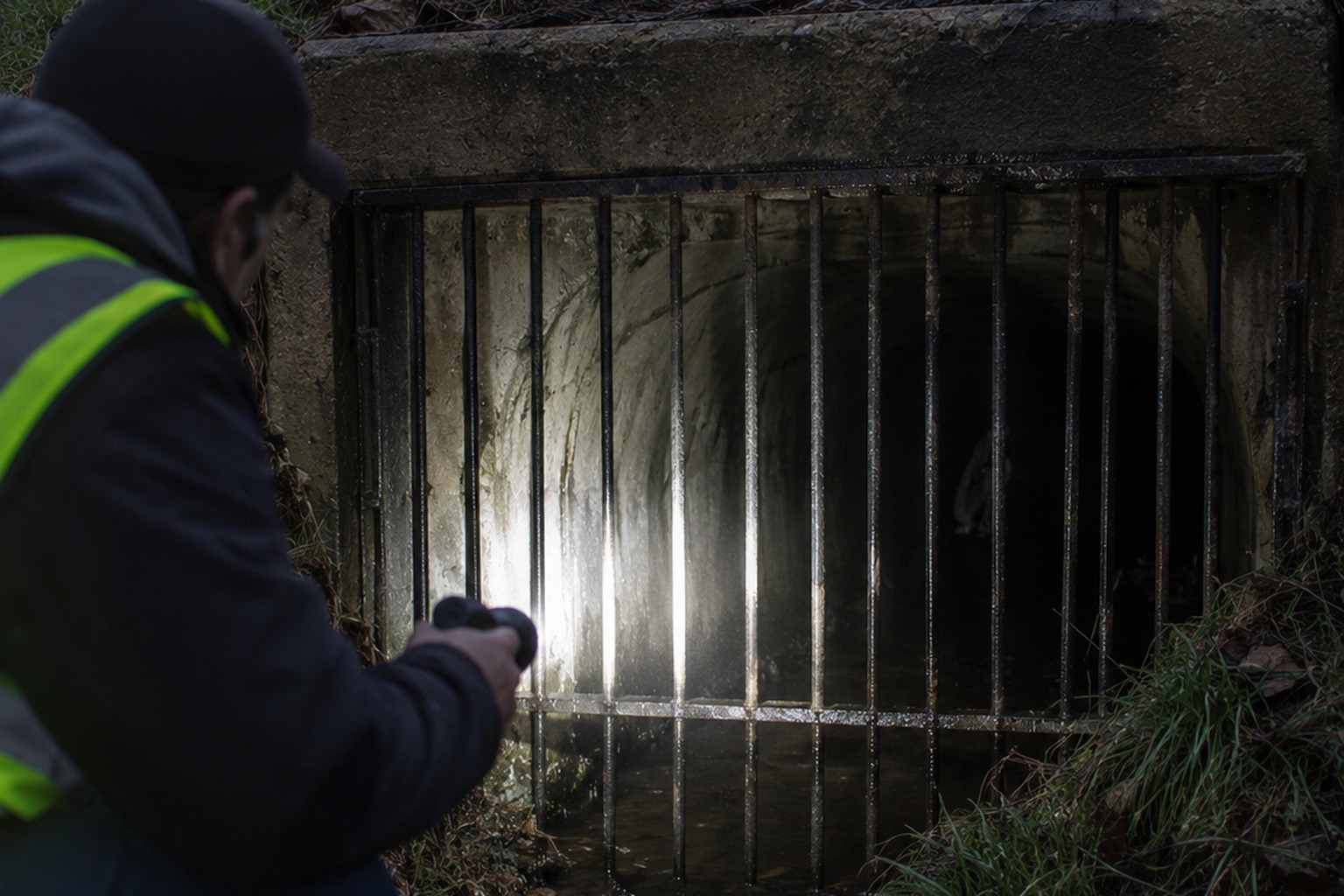
The worker who had taken the image insisted the tunnel had appeared completely empty. Returning Before Sunset Curiosity outweighed common sense. Late that afternoon two workers returned with flashlights, reflective vests, and a long hooked pole normally used for clearing branches.
The storm clouds had mostly passed. Only occasional drops still fell from overhanging trees. The ditch smelled strongly of wet clay and crushed vegetation. Water continued rushing beneath the road, though the level had dropped several inches.
The grate remained exactly as before. No leaves. No sticks. No obvious place where anything could hide.
One worker shined a flashlight through the bars. The beam traveled deep into the tunnel before disappearing around the gentle curve. Nothing moved. They carefully photographed every angle.
The Detail People Noticed Later
Every image showed only empty concrete. Even the area where the pale shape had appeared looked ordinary. Still, both workers admitted the tunnel felt strangely deeper than it should. Sound echoed unevenly.
Dripping water seemed to come from several directions at once. Neither person wanted to crawl inside. Not because of floodwater. Because something about the darkness ahead seemed occupied.
Not visibly. Simply occupied. They finished their inspection in silence.
The Tracks That Made No Sense
Rain softened the muddy bank overnight. The following morning another inspection was scheduled before additional storms rolled through. This time the workers noticed marks surrounding the drainage ditch. No ordinary footprints crossed the mud.
Instead, there were long narrow impressions spaced unusually far apart. Each ended in a rounded point. Almost like something balanced on the front of its feet without ever placing a heel on the ground. The spacing between impressions suggested enormous strides.
What They Found When They Went Back
Yet none entered from nearby woods. They simply began several yards from the culvert. Circled once around the ditch. Stopped beside the grate.
Then vanished where the grass remained completely undisturbed. One worker measured the distance between the marks. Another photographed them from above. Neither could explain why mud between impressions remained untouched.
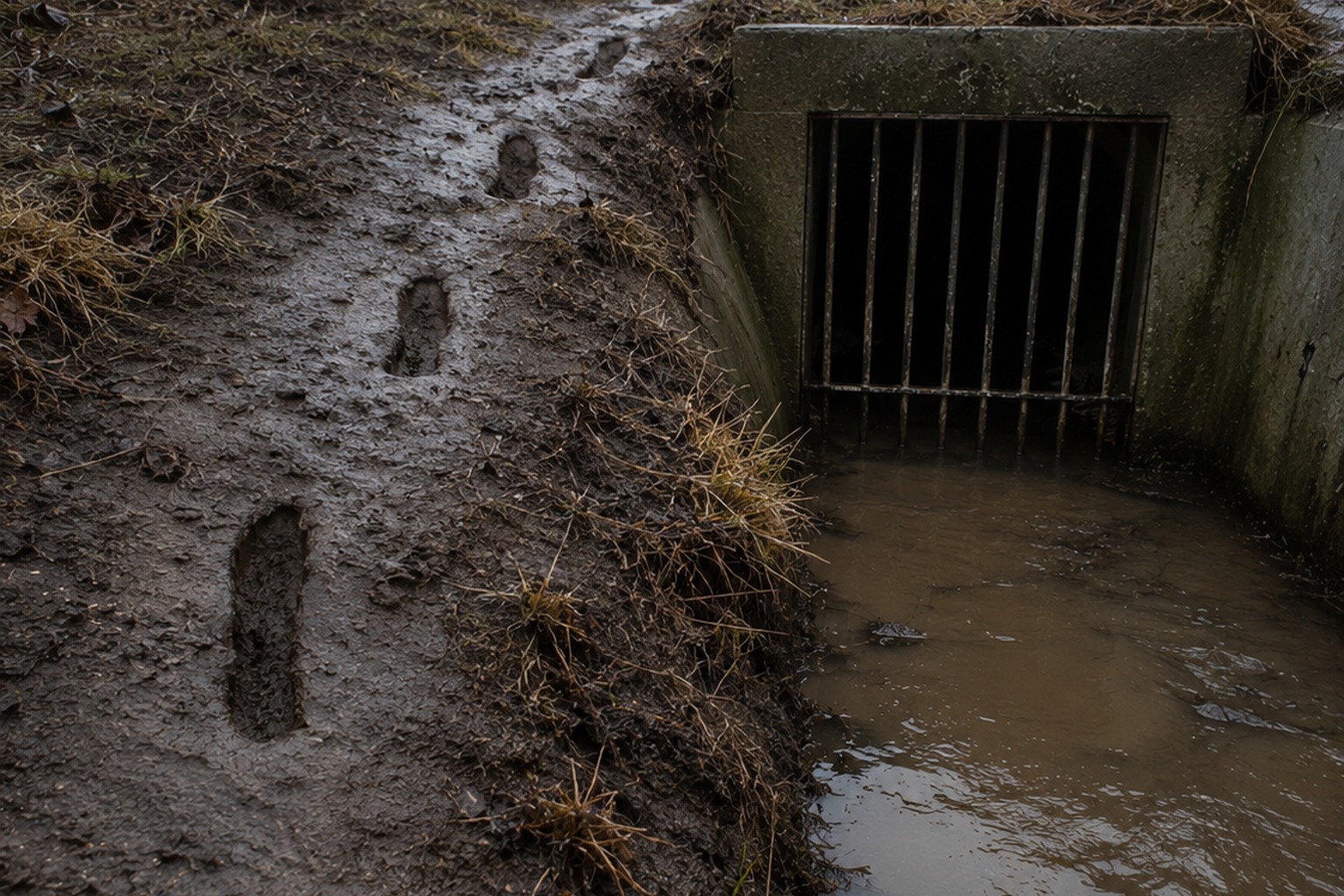
Nearby deer tracks looked perfectly normal. So did raccoon prints along the creek bank. Only these elongated marks ignored the soft ground in impossible ways. The tunnel itself remained empty.
Or appeared to. Every glance toward its dark interior brought the uncomfortable feeling that someone had just stepped farther back beyond the curve. Always barely out of sight.
The Farmer Across The Field
An elderly farmer eventually wandered over after noticing the county truck. He asked whether the culvert had clogged again. When told they were simply documenting conditions, he looked toward the tunnel without surprise. He said livestock avoided drinking near that ditch after storms.
Not every time. Only certain nights. The cattle gathered in another pasture instead, refusing to cross the road until sunrise. Dogs behaved even stranger.
The Part That Did Not Fit A Simple Explanation
They barked furiously toward the drainage tunnel before suddenly falling quiet. Sometimes they tucked their tails and refused to leave the porch. The farmer laughed softly after sharing the stories. He dismissed them as old countryside gossip.
Still, before returning home, he offered one final comment. "If you're coming back after dark," he said, "don't stand directly in front of the grate." When asked why, he shrugged. "My grandfather always said whatever lives in drainage places likes people looking straight at it."
No one asked another question. The conversation ended there.
One Last Look Into The Tunnel Several days later, clear weather finally returned.
One worker stopped at the culvert while driving home. Not because he had been assigned. Simply because he wanted to convince himself the strange photograph meant nothing. The afternoon sun illuminated nearly the entire entrance.
Dragonflies hovered above the ditch. Wind stirred tall grass along the fence line. Everything looked peaceful. He stepped closer than before.
How The Story Changed Around The Place
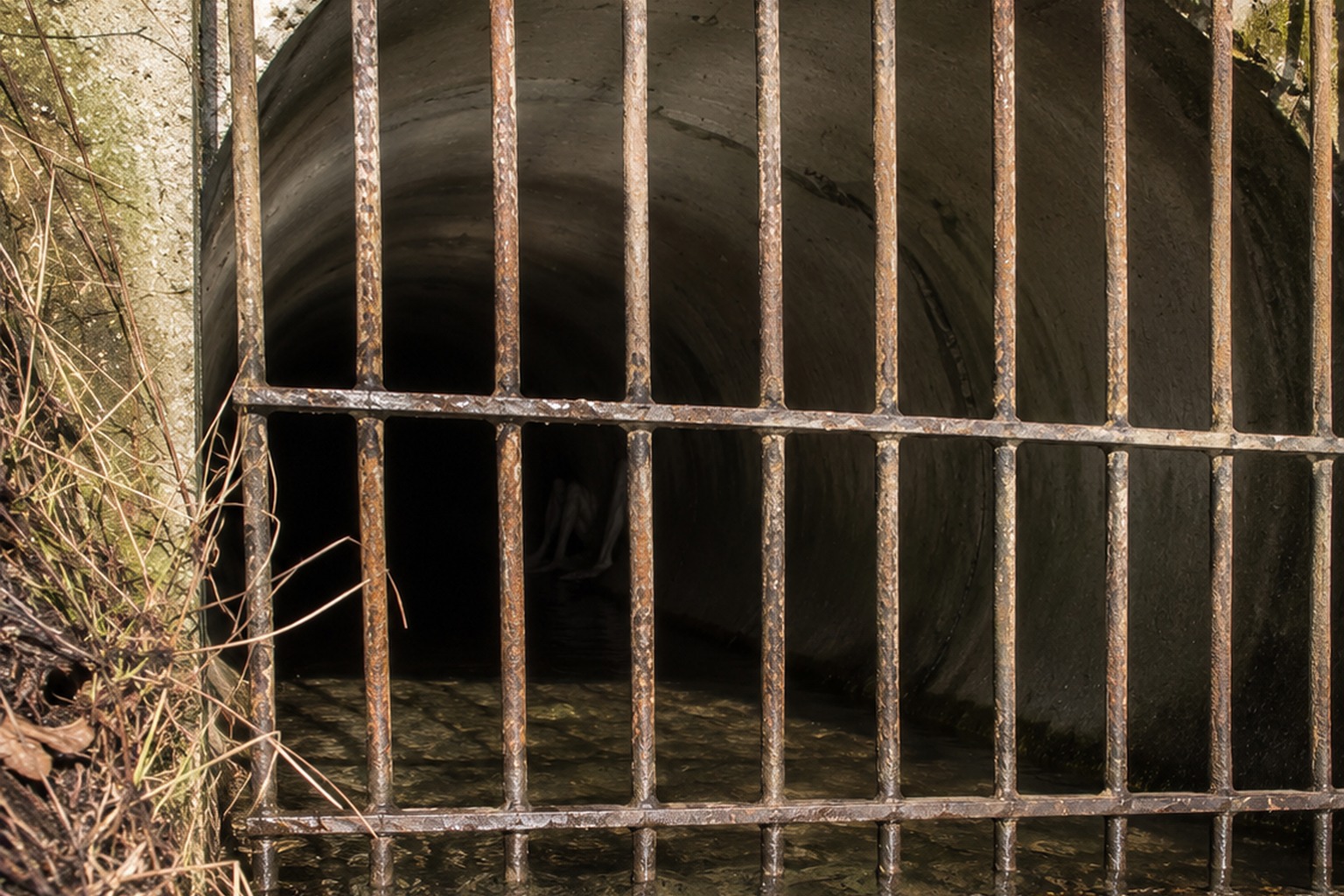
The steel grate cast striped shadows across damp concrete. He crouched and peered through the bars. The tunnel appeared completely empty. He remained there longer than intended.
Listening. Water trickled somewhere deep inside. Then another sound arrived. Not footsteps.
Not dripping. A slow scraping noise. Concrete against something dry. It lasted only two seconds.
Silence returned immediately. He waited another minute. Nothing happened. Feeling embarrassed, he laughed to himself and stood.
As he turned away, something instinctively made him glance back. For just a heartbeat, far beyond where sunlight ended, two pale shapes appeared impossibly low to the ground. Like folded knees. Then darkness swallowed everything again.
He drove away without taking another photograph.
Why This Image Still Gets Shared
Why The Image Still Lingers Most inspection images disappear into forgotten folders. They document bridges, culverts, cracked pavement, and washed-out shoulders before fading into routine paperwork.
This one refused to become ordinary. Not because anyone claimed certainty about what stood behind the drain gate. Because every explanation seemed incomplete. Concrete stains rarely resemble balanced limbs.
Shadows seldom suggest joints bending in impossible directions. And empty tunnels should feel less crowded after repeated inspections. The unsettling part was never the pale shape itself. It was the posture.
Whatever seemed to occupy that darkness looked perfectly adapted to the cramped tunnel. Its folded frame appeared comfortable beneath low concrete where no person could remain for long. It looked less like something hiding there. More like something built for places exactly like that.
Perhaps every rural road hides forgotten drainage passages carrying rain beneath fields year after year. Most remain unnoticed except during storms. Most receive only quick inspections before workers continue down the next stretch of gravel. Perhaps that is why the image lingers.
It transforms one of the most ordinary structures imaginable into something impossible to ignore. After all, nearly everyone has walked past a roadside culvert without thinking twice. Very few stop to wonder what might be standing several yards beyond the first bend. Waiting where daylight never quite reaches.