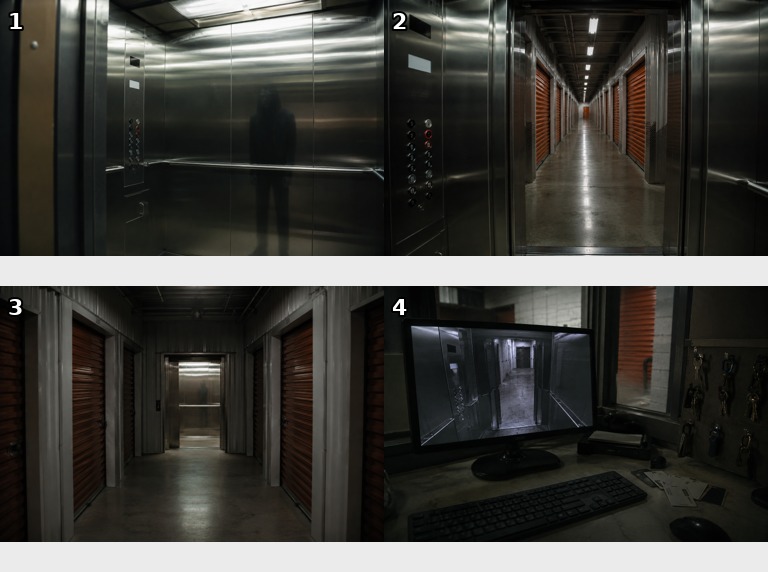
The elevator was supposed to be parked for the night.
That is the ordinary detail that makes the story work. Not a haunted mansion elevator. Not an abandoned hospital lift. Just the practical freight-style elevator in a self-storage building, the kind with scuffed metal walls, a rubber floor, and enough room for mattresses, boxes, and one nervous person pushing a cart after dark.
According to the account shared around the facility, the after-hours camera did not show a break-in, a fight, or a dramatic chase. It showed the doors opening on an empty floor.
Then, for a few seconds, the polished wall seemed to reflect someone who was not there.
The Building After Lockup
Self-storage places become strange after closing because they are designed for people without feeling lived in. During the day, there are rolling carts, padlocks, family arguments, and the dry scrape of cardboard being dragged across concrete.
At night, the same hallways look like a maze built for nobody. Identical orange doors line up under fluorescent lights. Unit numbers repeat in rows. The climate-control system clicks and exhales behind the ceiling panels.
The facility in this story was described as a multi-floor indoor storage building with keypad access, cameras, and an elevator large enough for furniture. Staff locked the office, checked the loading bay, then left the cameras to watch the corridors until morning.
That camera is also why the account survived.
The Elevator That Moved Anyway
The elevator reportedly became active well after the last registered entry. No customer code was logged at the main door. No delivery driver had been scheduled. The loading bay was shut.
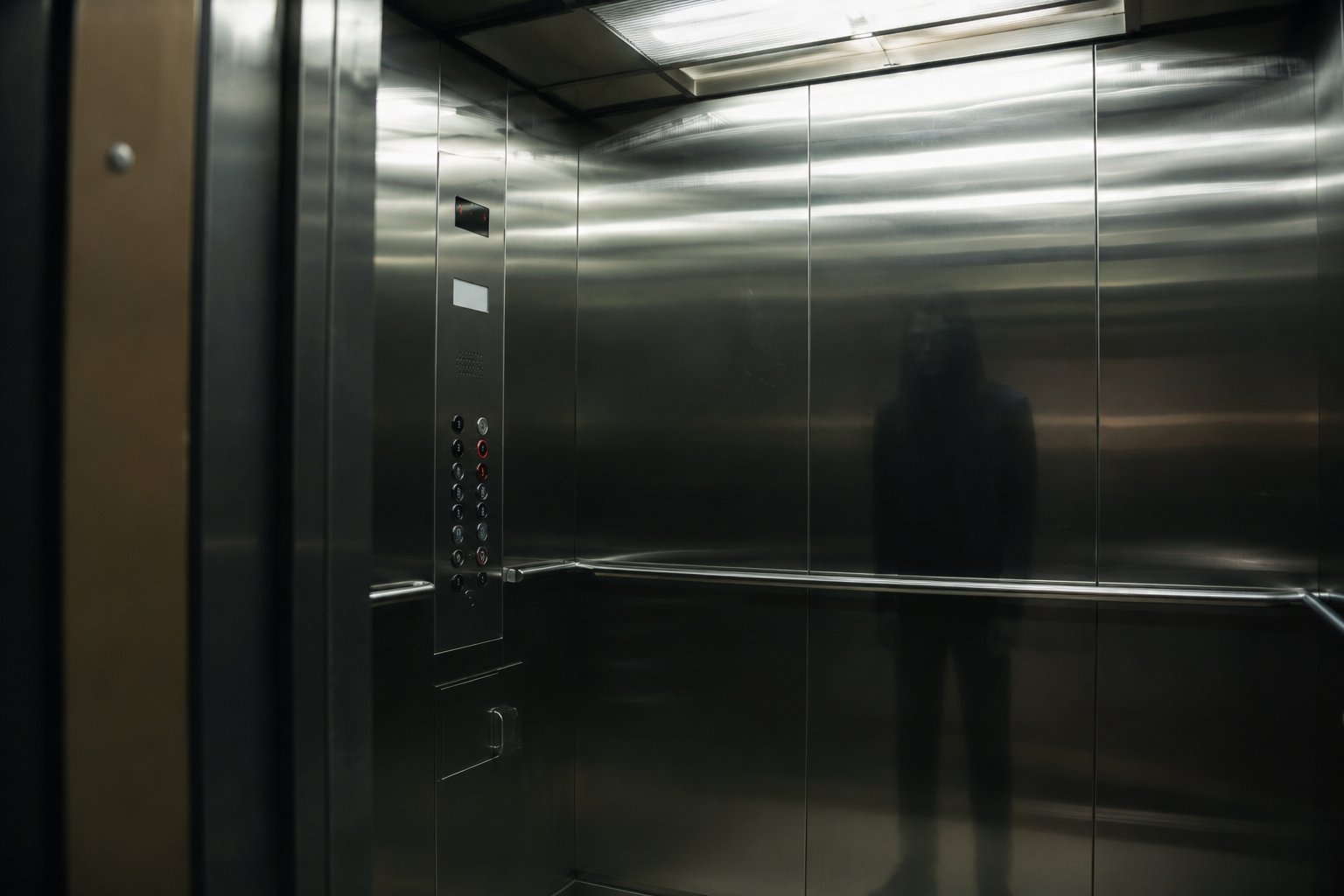
Still, the elevator doors opened on an upper floor.
From the camera angle inside the cab, the scene would have looked almost boring at first. The doors part. A storage corridor appears. Fluorescent lights hum over a polished concrete floor. Roll-up doors sit closed on both sides, each one holding somebody's forgotten furniture, holiday bins, files, or grief.
There was no person waiting outside. No cart wheel crossed the threshold. Nothing fell into view.
The doors stayed open just long enough for the empty hallway to feel less like a hallway and more like a held breath. Then they closed again.
If that had been the whole recording, it might have been filed away as a sensor fault. Elevators do odd things when a button sticks, a door contact misreads, or a maintenance cycle runs at the wrong time.
But the story says the wall caught something else.
What The Metal Wall Showed
Many storage elevators have brushed stainless steel panels along the sides. They are not mirrors, exactly. They bend light into streaks. They flatten faces. They turn moving people into dark vertical smears.
In this account, the camera faced the doors, but part of the side wall was visible. When the doors opened to the empty floor, that metal panel reflected the inside of the cab in a distorted way.
That is where the dark figure appeared.
It was not crisp. Stories like this usually become less believable when the shape is described too perfectly, and this one was not. It was a tall, dark, human-like reflection near the rear half of the cab, angled as if standing just behind and to the side of the camera.
No face could be made out. No clothing details were certain. The figure seemed to have a head and shoulders, with a narrow body below, darker than the elevator's usual shadows.
The troubling part was placement. If the reflection was showing a person, that person should have been inside the elevator.
The camera view showed no person inside the elevator.
A Floor With No One Waiting
The hallway beyond the open doors did not help explain it. It was empty in the plain, unromantic way security cameras show emptiness.
No shadow moved along the floor. No storage unit door rattled upward. No customer stepped backward out of frame. The corridor lights were steady, and the nearest doors were shut.
Self-storage buildings can carry sound in misleading ways. A cart on one floor can make a person on another floor think someone is directly around the corner. A settling wall can sound like a knock from inside a unit.
But cameras do not hear those impressions. They show surfaces. In this case, the visible surfaces offered very little: the elevator threshold, the hallway, the closed doors, the side panel shining with a dark shape that did not seem to belong to either space.
That is why people who hear the story often focus less on the elevator opening and more on the reflection. Mechanical problems are common. Reflections that look like a person standing where no person appears are harder to dismiss quickly.
Harder does not mean impossible. It only means the image invites a second look.
The Few Seconds Everyone Replays
The most unsettling version of the account centers on timing.
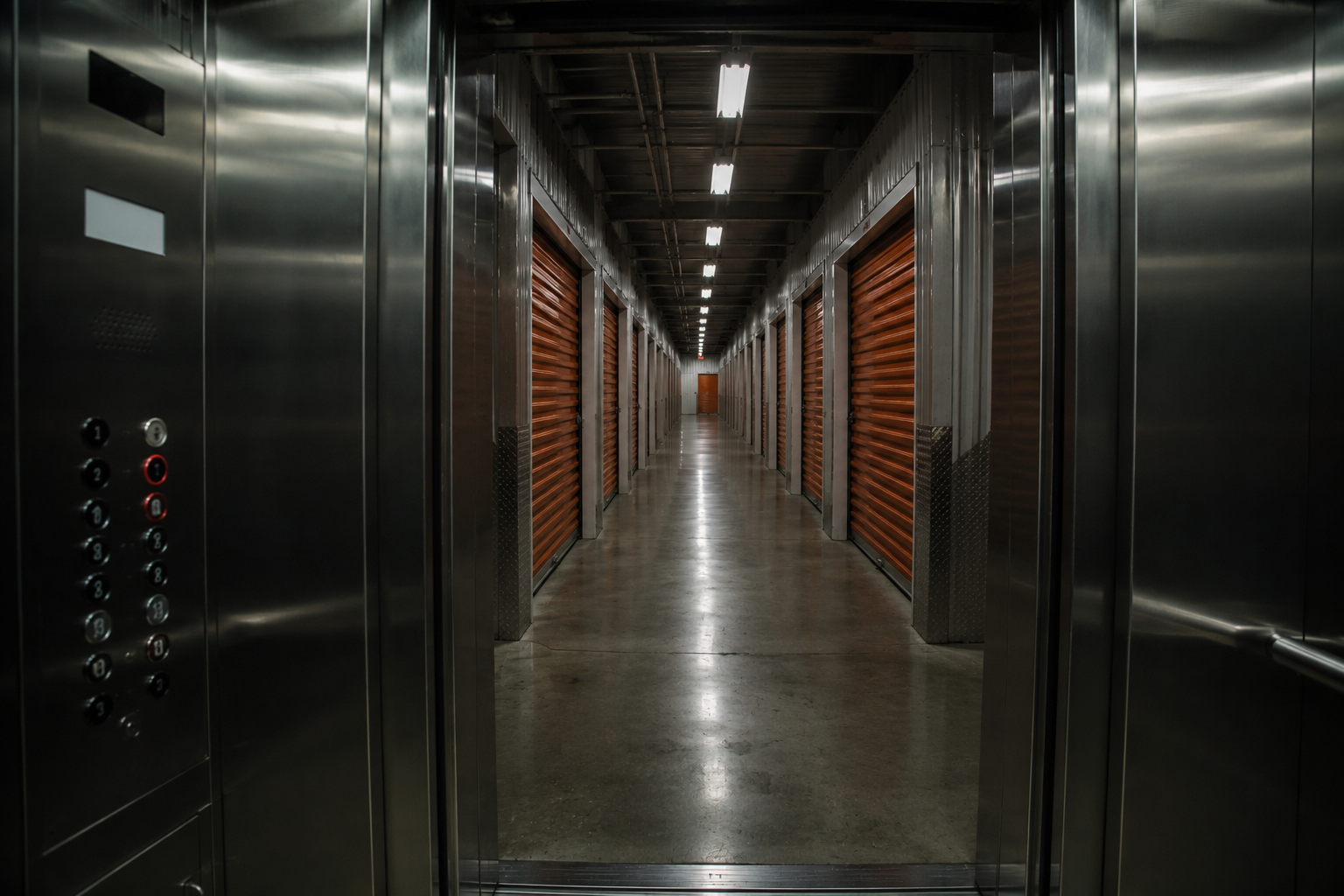
The dark reflected shape is said to become noticeable right as the doors finish opening. It does not stride into view. It does not lean toward the camera. It is simply there in the metal, almost as if the cab contains a silent passenger who can only be seen indirectly.
For a moment, the elevator seems to be waiting for that passenger to leave.
But nobody exits.
The doors remain open to the vacant floor. The reflected shape holds in roughly the same place. Then the elevator times out, the doors slide shut, and the metal wall loses the shape as the lighting changes. A machine completes a task for a person who is absent, or hidden, or only visible in a warped piece of metal.
People tend to imagine the security worker watching it the next morning, rewinding once because the elevator log showed activity it should not have shown, then rewinding again because the wall looked wrong.
Why Storage Places Feel Wrong At Night
Part of the fear comes from the setting. Self-storage buildings are archives of private lives, but nobody lives there. They hold wedding dresses, inherited furniture, children's bikes, old business records, divorce boxes, and the things people cannot keep but cannot throw away.
A closed storage floor can feel crowded even when it is empty. Every door suggests a room you cannot see. Every padlock says there is a story behind it, sealed and numbered.
An elevator adds another layer because it is a moving room inside that maze. Once the doors close, the building decides where the room goes. You hear cables, relays, and the soft bump of arrival before you know what will be outside.
In daylight, that is convenience. After hours, it can feel like being delivered.
That is why the empty floor matters. The camera does not show a monster rushing in. It shows the building opening itself to a quiet corridor, as if responding to someone waiting just outside normal view.
The reflected figure gives that unseen someone a shape.
Possible Ordinary Explanations
There are several mundane explanations, and none should be ignored.
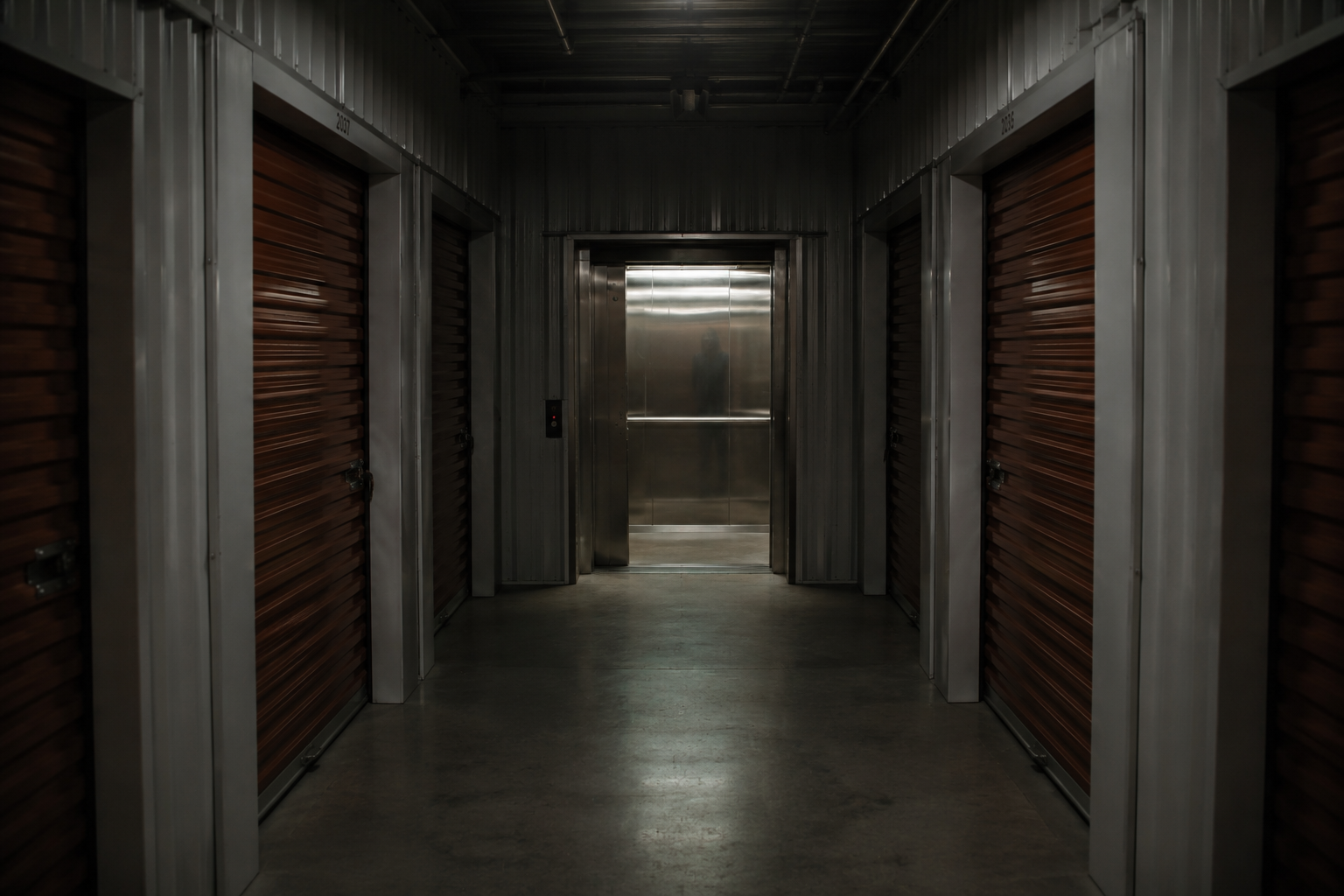
A reflective wall can create strange double images from lights outside the cab. If the elevator doors opened onto a corridor with glossy floors, bright fixtures, or a dark doorway farther down, the metal panel could have stretched those shapes into a human-looking silhouette.
A camera housing can also reflect into metal at odd angles. A black dome, bracket, or corner shadow near the lens might appear like a figure when the door lights change.
Elevator doors may open because of a sticky call button, a control fault, scheduled maintenance behavior, or a person who entered with authorization earlier than the log summary suggested. Access systems are useful, but they are not perfect diaries.
There is also the possibility of compression artifacts. Security cameras often reduce dark areas into blocky shapes, especially in low light. A shadow that would look meaningless in person can become a person-like blotch after recording, exporting, and replaying.
Those explanations are the responsible way to look at a story like this. They also do not erase why the image stayed with people.
The Detail That Stayed
The strange thing about a reflected figure is that it creates a question the room cannot answer directly.
If someone was in the elevator, why were they not visible? If someone was in the hallway, why did they not appear outside the doors? If the figure was only a reflection, what object lined up so neatly at that exact moment?
The story does not need to prove anything to be unsettling. It works because the scene is small and familiar. Many people have stood alone in a service elevator, watching their own warped shape in the metal wall while the doors open onto a silent floor.
Most of the time, the reflection is only us. In this account, the reflection seemed to have company.
By morning, the elevator was just an elevator again. Customers came in with tape guns and plastic tubs. Staff answered questions about unit sizes. Someone probably rode that same cab without thinking about the few seconds it opened after hours.
But stories like this linger because they attach to ordinary architecture. The next time a storage elevator opens on an empty corridor, the mind remembers the dark shape in the brushed steel.
Not as certainty about anything.
Just as a reason to step out quickly, and not look too long at the wall.