A Bathhouse Built Around Heat
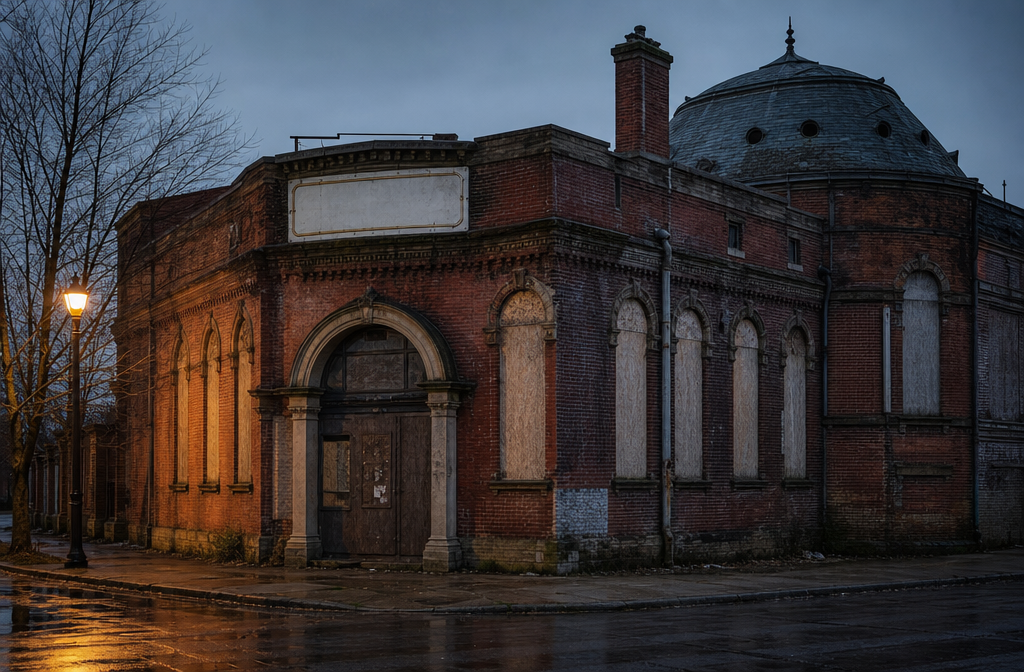
Redwater Thermal Bath was never the grandest public bath in the region. It was practical, municipal, and a little severe. The building stood on a low mineral spring east of the old railway yard, with brick walls, arched windows, and a tiled lobby that smelled faintly of iron even in summer.
People came for the hot plunge pools, the vapor rooms, and the doctor-recommended soaking schedule printed on cards at reception. The public rooms were plain but bright. Below them was a different building entirely.
Under the pools ran a service tunnel and steam gallery, a narrow working corridor used by attendants, mechanics, laundry staff, and boiler men. It connected the filtration room, towel storage, valve banks, coal chute, and employee stair. Most guests never saw it. They only heard the building breathe.
That hidden level is the part people still talk about.
The Closure That Did Not Feel Final
The bath closed in the late 1990s after repeated maintenance failures and a long argument over renovation costs. The mineral water had corroded pipes for decades. Concrete around the warm pools cracked. Steam controls were outdated. A consultant called the service level “technically accessible but operationally exhausted,” which is the sort of phrase cities use when they have already decided to stop paying.
The front doors were chained. The pools were drained. The sign stayed up because nobody wanted to pay to remove it.
For a while, Redwater became an ordinary abandoned landmark. Teenagers dared each other to touch the doors. Photographers took pictures through broken glass.
Then the reports settled around the same detail: the bathhouse did not sound empty from below.
Not music. Not voices from the street.
Witnesses described work sounds.
The Service Tunnel Layout
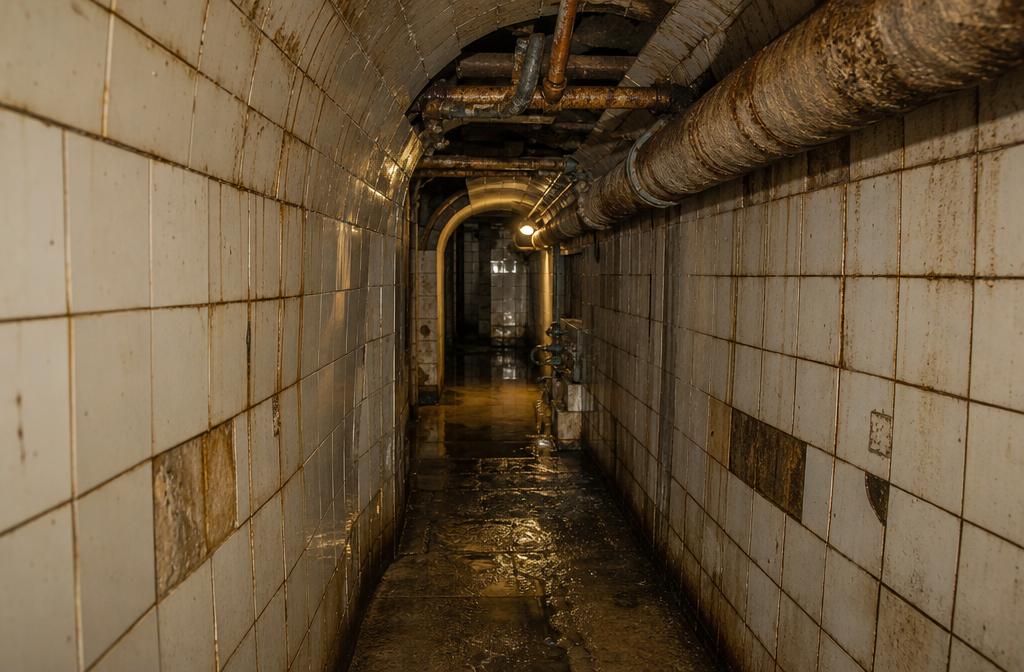
The service entrance sits behind the building, half hidden by a concrete retaining wall and a row of volunteer trees. A steel door opens onto a short stair that descends beneath the former men’s changing room. At the bottom is a tiled corridor just wide enough for a cart.
Old maintenance sketches show the tunnel running in a long hook shape. One branch passed beneath the soaking rooms. Another led toward the boiler plant and steam gallery. A smaller cross-passage served a linen cage and chemical store. The ceiling was low enough that tall workers learned where to duck.
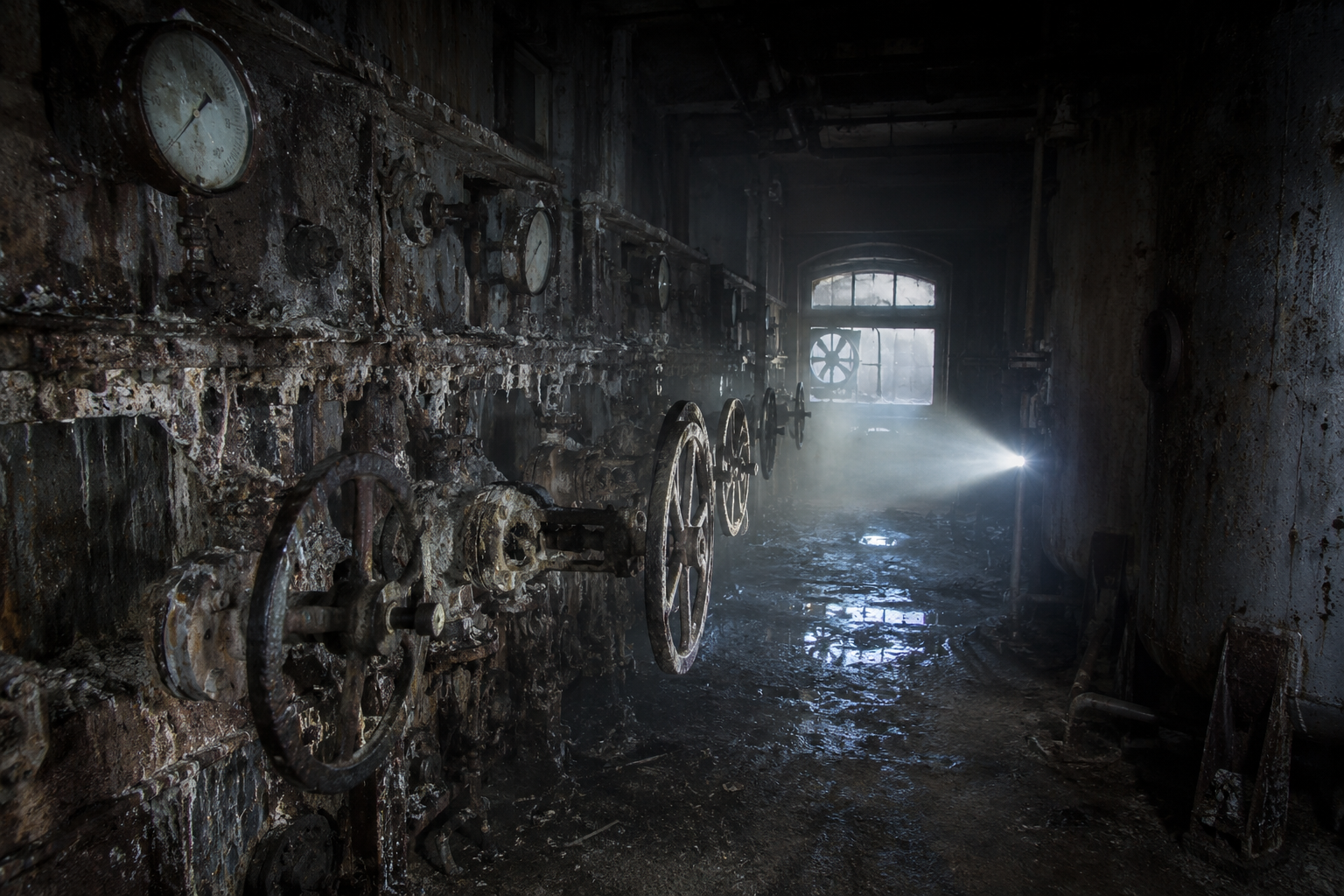
The walls were finished in glazed white tile, now yellowed by moisture and mineral staining. Pipes still crowd the ceiling. Some are wrapped in brittle insulation. Others are bare and rusting. Several valve wheels remain tagged with faded numbers.
This is not a theatrical ruin. It is cramped, damp, and practical. That is part of why the accounts have lasted. The place does not offer much room for imagination to dress itself up. It offers echo, darkness, tile, and metal.
First Reports From Workers
The earliest stories did not come from ghost hunters. They came from contractors.
In 2003, a small crew was hired to inspect the building for possible conversion into offices. One worker later told a local history volunteer that he heard a cart moving in the tunnel while he was measuring a doorway above. He described hard rubber wheels crossing tile, stopping, and then starting again.
The crew assumed another team had entered from the rear. When they checked, the service door was still locked from their side and blocked by debris from outside. No cart was found in the corridor, though several rusted laundry trolleys remained in a storage room.
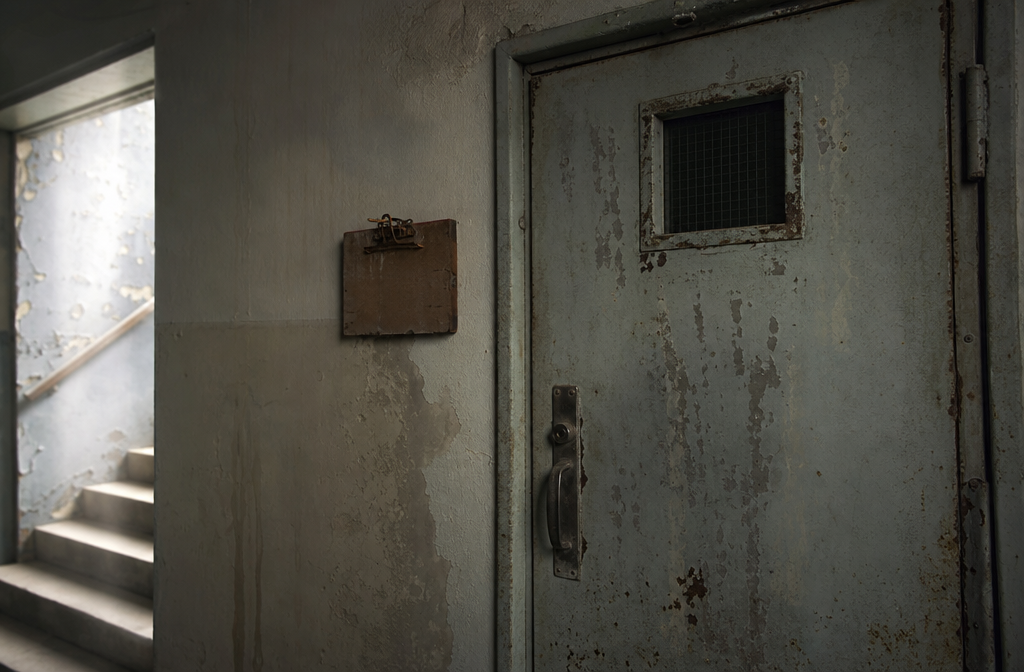
A second contractor reported hearing keys. Not a single jingle, but the steady sorting sound of someone selecting the right one at a door. He heard it from the employee stair while waiting for a colleague. The sound came from below, paused, and ended with what he called “a polite little knock.”
There was no one there when the stairwell was checked.
The Sound Of Steam Without Steam
The most repeated account concerns the hiss.
Former employees remembered the old steam system as loud and uneven. Valves clicked. Pipes ticked as they warmed. Condensate traps spat and coughed. The gallery had its own rhythm, and workers learned to understand it the way sailors understand a ship.
After closure, the boilers were disconnected. Later inspections found no active steam supply to the building. Yet visitors standing near the rear wall have described hearing a thin pressure hiss from inside, sometimes followed by a deep knock in the pipework.
Skeptics point out that old buildings make noises. Temperature changes can move metal. Water can collect in low sections of pipe. Animals can travel through crawlspaces. A service tunnel with tile walls will amplify small sounds until they seem purposeful.
Those explanations account for some reports. They do not account for the witnesses who say the hiss moves.
Several people describe it beginning near the boiler room and traveling along the corridor, valve by valve, as if someone is opening a line for morning service.
What Former Staff Remember
Former attendants interviewed for a neighborhood archive were divided. Some refused to discuss the tunnel at all, not out of fear, but irritation. They felt outsiders had turned a difficult workplace into a spooky attraction.
Others admitted the service level had always been strange.
One retired towel-room worker said the tunnel carried voices in misleading ways. A conversation in the boiler room could appear to come from directly behind you. A shout from the plunge pool floor might slip through a pipe chase and arrive as a whisper near the linen cage.
But she also remembered the closing month, when staff were removing supplies and draining the last tanks. According to her, several workers heard the night shift bell ring after the bell circuit had been shut off. It rang once, from below, at the usual time for the late towel count.
She did not call it a haunting. She called it “the building keeping habit.”
That phrase appears often now in discussions of Redwater. It is less dramatic than ghost, and perhaps more accurate to the way witnesses describe the place.
The Occupied Corridor Effect
People who have entered the service tunnel illegally or with permission tend to describe the same emotional sequence. At first, the space feels dead. Then it begins to feel not haunted exactly, but staffed.
A latch clicks somewhere ahead. A pipe gives a small ring. Water drops from the ceiling into a puddle with the timing of footsteps. The corridor bends, and the listener becomes convinced someone is just around it, pushing a trolley or checking gauges.
One photographer said the strongest moment came when he was leaving. He heard a low voice behind him, not speaking words, more like someone calling through steam. He turned and saw only the reflective line of tiles narrowing into darkness.
Another visitor described hearing a woman say “mind the hose” near the linen cage. The phrase matched the type of warning an attendant might give in a cramped service area. It was too ordinary to feel invented afterward, she said. That ordinariness frightened her more than a scream would have.
Redwater’s stories are full of these minor, workplace details.
Possible Natural Explanations
A cautious reading has to begin with the building itself. The bathhouse is a sound machine.
The drained pools form hollow chambers. The old ducts connect rooms in unexpected ways. The service tunnel is lined with hard tile and threaded with pipes. Traffic from the road can enter through broken windows and reappear underground as a rolling cart sound. Wind can move loose metal. Expanding pipework can knock even without active steam.
There is also expectation. Once a place has a reputation, visitors listen differently. A drop of water becomes a footstep. A distant door becomes a worker. The mind completes patterns, especially in darkness.
But the Redwater reports remain interesting because many began before the reputation spread. Contractors, former staff, and municipal inspectors had little reason to flatter the building with mystery. Their descriptions are restrained, and they often sound annoyed by what they heard.
The best skeptical explanation may be that Redwater preserves its old working acoustics so well that ordinary noises take on human organization.
The best weird explanation is nearly the same, only with one question left open: organization by what?
Why The Tunnel Still Holds Attention
Haunted places are often remembered for tragedy. Redwater is remembered for routine. There is no widely verified disaster attached to the service tunnel, no famous death in the steam gallery, no single legend strong enough to explain everything.
Instead, the unease comes from repetition. Wheels. Keys. A bell. A warning about a hose. Steam prepared for bathers who will never return.
That makes the story harder to dismiss and harder to sensationalize. The tunnel does not behave like a stage for apparitions. It behaves like a workplace that missed the announcement that work had ended.
For now, the building remains closed and unsafe. The service door is periodically resealed. Water continues to find its way down the walls. The city has considered demolition, stabilization, sale, and silence.
Whatever happens above ground, the accounts have already given Redwater a second architecture: not the pools people used, but the hidden corridor that kept them running.
If witnesses are right, that corridor still keeps time. Somewhere beneath the drained baths, a cart begins its route, a valve answers with a metal tick, and an unseen worker moves through the steam gallery as if the first guests of the morning are about to be let in.
Reader Context
This Weird Witnessed story is an editorial reconstruction, written as eerie visual storytelling rather than a verified report. For more context, see Apparitions and Hauntings Guide and How WeirdWitnessed Creates Reconstructed Horror Stories.