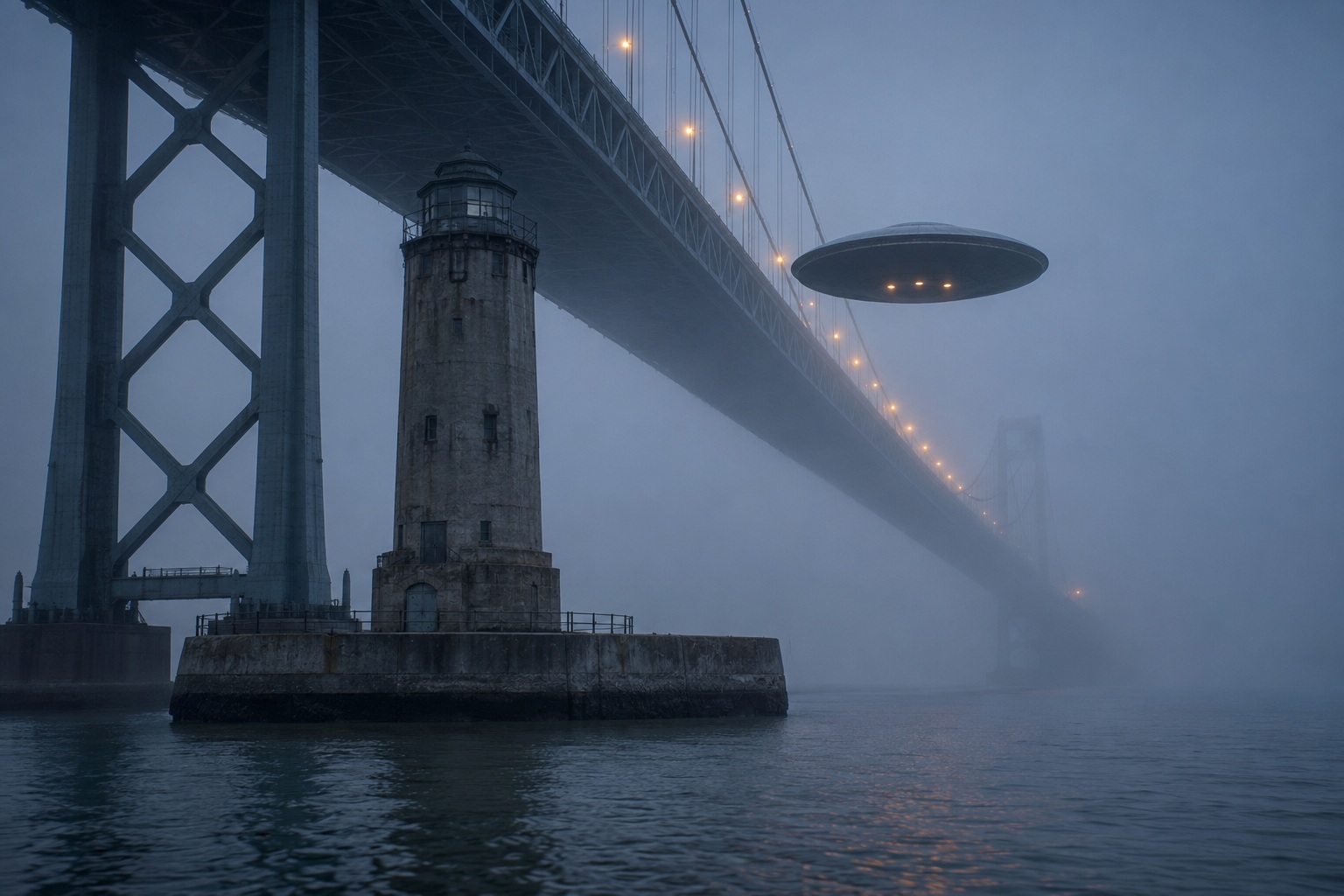
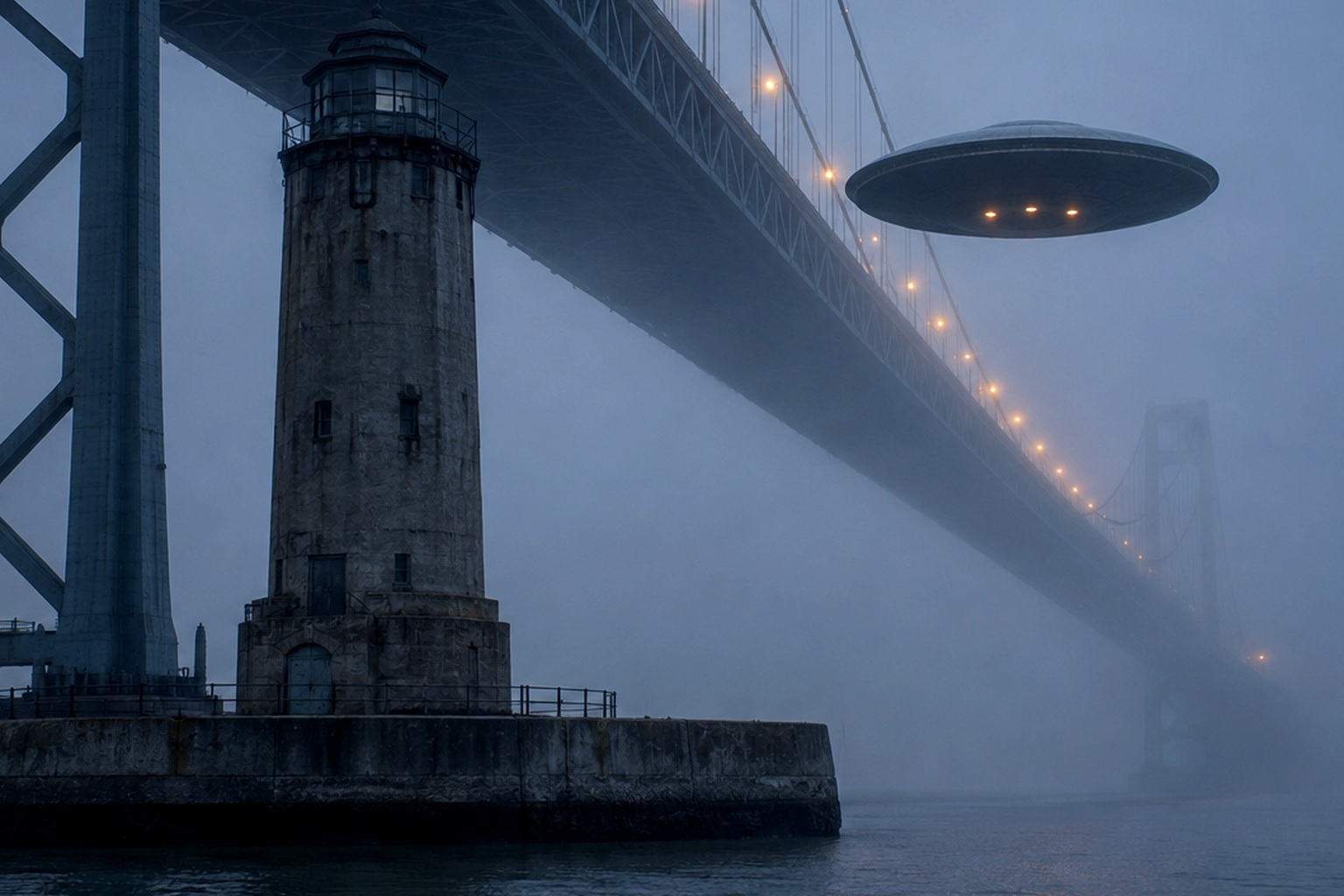
The bridge belonged to the kind of harbor that never really slept. Cargo ships drifted through before sunrise. Fishing boats returned while the sky was still gray. Commuters crossed the long suspension span every morning without giving much thought to the old foghorn tower standing on its concrete island beneath the western support.
Most people only noticed it when thick fog rolled in. The tower itself had been automated years earlier. The horn still sounded during heavy weather, but maintenance crews only visited every few weeks to inspect the machinery, repaint rusted railings, and check the navigation lights around the platform.
Everything else was left alone. A city traffic camera overlooked the western half of the bridge from a tall steel mast. Its purpose was simple: monitor traffic flow, accidents, and weather conditions. It also happened to point directly toward the foghorn tower. For years the camera captured nothing more interesting than gulls riding the wind or ships sliding beneath the bridge.
Then one damp autumn morning, three amber lights appeared where no lights should have been.
The Harbor Before Sunrise The morning began with low clouds pressing against the water. Fog drifted across the shipping channel in slow waves, sometimes revealing the tower completely before swallowing it again only seconds later.
Cars crossed the bridge with headlights glowing softly through the mist. Everything looked ordinary. The navigation lights around the tower flashed exactly as expected. White markers reflected across the water. Red beacons blinked near the bridge supports. Nothing unusual interrupted the quiet rhythm of the harbor.
What The Camera Seemed To Show
Then, near the base of the tower, three amber lights appeared in a perfect vertical line. They were brighter than navigation lights but softer than vehicle headlights. They hung motionless for several seconds. Anyone glancing quickly might have assumed they belonged to a maintenance boat hidden inside the fog.
Except there wasn’t enough room for a boat where the lights appeared. They seemed to float directly against the tower itself. The Impossible Descent The strange part wasn’t their appearance.
It was what happened next. Without changing brightness, the three lights began moving downward together. Not drifting. Not falling.
Descending. Each light maintained the exact same spacing from the others, as though attached to an invisible frame. They slipped behind the foghorn tower at a perfectly steady speed. No swinging.
No bouncing. No uneven movement. The harbor below remained calm. There was no crane operating nearby.
Why The Setting Made It Hard To Dismiss
No maintenance lift. No helicopter overhead. No ship passing behind the narrow island. The lights simply disappeared one after another behind the concrete structure.
The highest vanished first. Then the middle. Finally the lowest. After that, the tower stood alone again against the fog.
Drivers continued crossing the bridge without slowing. Nothing else seemed out of place.
The Island That Should Have Been Empty Curiosity spread among workers who knew the harbor well.
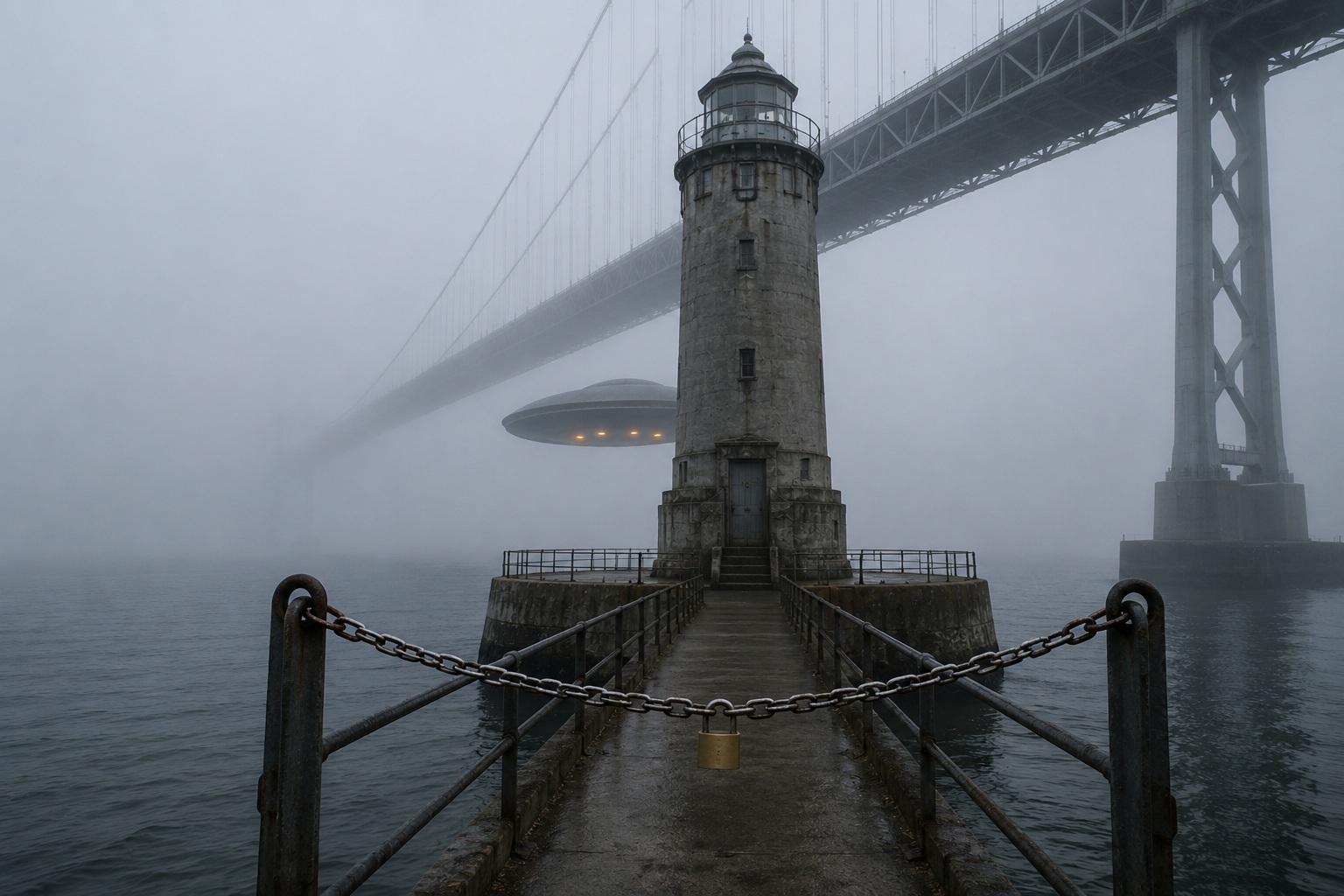
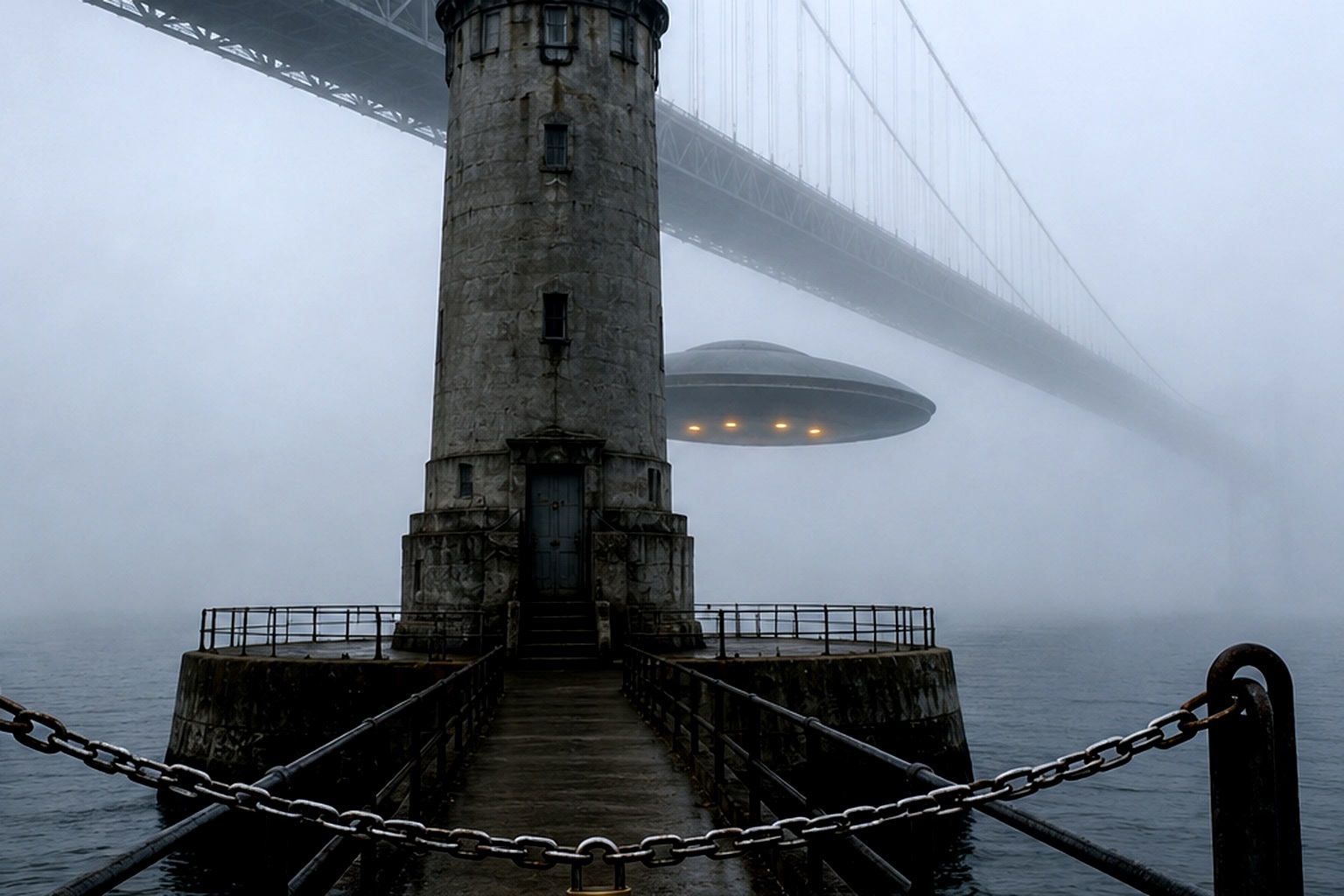
The foghorn platform wasn’t connected to shore except by a locked maintenance walkway that remained chained outside scheduled inspections. The island itself was tiny. Barely enough room for the tower, electrical cabinet, and metal staircase. There was nowhere for heavy equipment to hide.
Later that afternoon, maintenance crews checked the site during routine inspections. The access chain remained locked exactly as they had left it. The gate showed fresh paint marks that hadn’t been disturbed. Rust along the hinges remained unbroken.
The Concrete Detail That Did Not Fit
Inside, everything appeared perfectly ordinary. The foghorn machinery was dry. Electrical panels were sealed. No ladders stood against the tower.
No portable lighting had been left behind. Even more strangely, the damp concrete surrounding the tower showed only seabird tracks. If someone had carried equipment capable of producing three synchronized lights, there should have been signs of their visit. Instead, the platform looked untouched.
The
Gulls Refused To Land The following mornings became strangely repetitive. Nothing happened with the lights. The bridge traffic remained normal.
Ships arrived on schedule. Fog drifted in and out as usual. But harbor workers noticed something odd about the birds. Hundreds of gulls normally rested on the foghorn platform before sunrise.
What People Checked Afterward
One morning they circled above it instead. Another morning they landed on nearby bridge supports while avoiding the tower entirely. Some hovered briefly over the island before turning sharply away. It became common enough that fishermen joked the tower had become strange by invisible tenants.
One deckhand laughed about it until his captain pointed toward the island. Every piling around the tower held resting birds. The metal railing remained completely empty. It looked as though an invisible circle surrounded the upper platform.
Even when the foghorn blasted across the harbor, gulls preferred the noisy bridge cables instead. Days later, they returned to normal without explanation. The railings filled once again. The strange avoidance ended as suddenly as it had begun.
A Closer
Look Through The Fog Someone later enlarged the distant harbor view simply to examine the tower more carefully. The amber lights were easy enough to find. But something else appeared nearby.
Just before the lowest light disappeared behind the tower, the fog shifted for only an instant. Behind the steel safety railing on the upper observation deck stood a pale figure. Not standing beside the railing. Standing behind it.
The Small Detail That Changed The Story
Its hands appeared wrapped around two vertical bars. Its face looked toward the bridge instead of the water. The shape wasn’t transparent. It wasn’t glowing.
It simply looked wrong. Its clothing appeared unusually light compared to everything around it, almost blending with the mist while remaining sharply outlined against the darker tower wall. Moments later another bank of fog drifted across the structure. When visibility returned, the deck stood empty.
Nothing remained behind the railing. Workers later climbed those same stairs. The railing hadn’t been disturbed. The observation deck gate remained secured from the inside exactly as maintenance regulations required.
No loose equipment. No forgotten clothing. Nothing capable of explaining why anyone would have been standing there.
Stories Older Than The Bridge
Harbor towns rarely run short of stories. Older dockworkers remembered hearing one long before the modern bridge existed. According to local tradition, lighthouse keepers sometimes claimed they saw descending lanterns over the channel before heavy fog settled across the bay. Not floating.
How The Place Felt Different Later
Lowering. Always three. They were supposedly visible only for a short time before disappearing near isolated navigation structures. No one agreed on what the lights meant.
Some believed they warned ships away from hidden rocks. Others claimed they marked places where people had vanished into the water generations earlier. The stories changed with every retelling. The details never stayed consistent.
Only one part remained surprisingly familiar. Three amber lights. Always descending together. Always disappearing before sunrise.
Long after automated foghorns replaced human keepers, the tale slowly faded into local folklore. Until someone happened to notice the same pattern again from a bridge carrying thousands of commuters every day. Most drivers never looked toward the old tower long enough to notice anything unusual.
Perhaps they crossed at the wrong time. Perhaps the fog simply hid whatever appeared there. Or perhaps some mornings the harbor preferred to keep its oldest routines quietly to itself. The Bridge At Dawn
Why This Image Still Gets Shared
Today the traffic camera still watches the western span. Morning traffic continues exactly as it always has. Ships pass beneath steel cables stretched across the water. The foghorn sounds whenever thick weather rolls through.
Maintenance crews still unlock the narrow walkway during scheduled inspections before securing it again when they leave. The rusted chain hangs exactly where it belongs. The tower continues standing alone on its weathered island. Some mornings the harbor looks perfectly ordinary.
Other mornings the fog arrives before sunrise and softens every outline into pale gray shapes. Drivers heading to work rarely glance toward the old tower. They’re watching brake lights ahead. Checking mirrors.
Listening to the weather report. Few notice the lonely platform beneath the bridge. Fewer still notice when gulls choose every piling except the railing surrounding the observation deck. And almost no one watches long enough to see three amber lights emerge from the mist.
If they ever return, they’ll probably appear exactly as before. Perfectly aligned. Perfectly steady. Descending together behind the foghorn tower until each one quietly disappears.
Leaving only calm water, empty railings, and a harbor that looks as though nothing unusual ever happened there. At least until the next foggy morning invites another careful look across the channel.