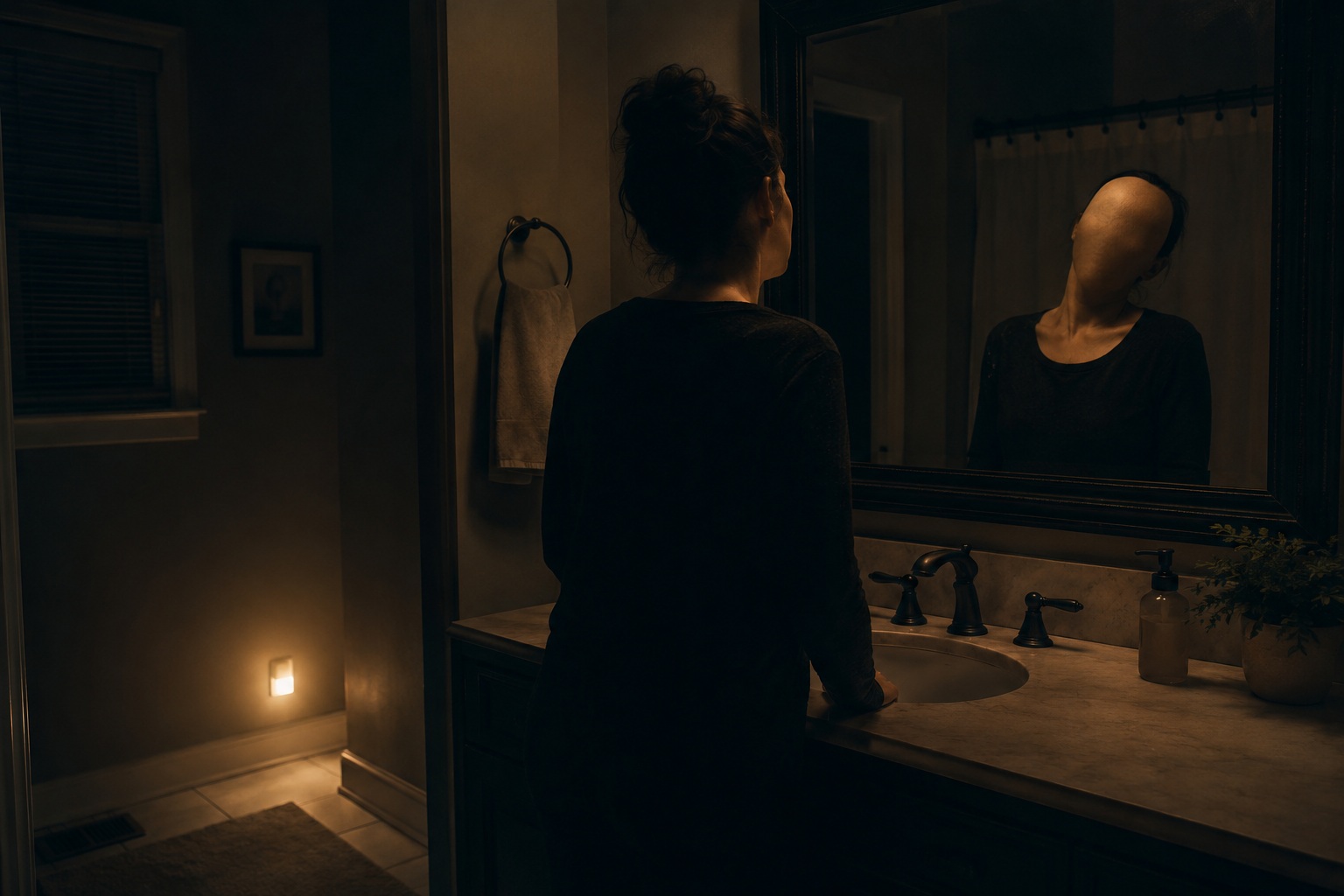
A woman woke just after 2:00 a.m. and walked into the bathroom without turning on the main light. Only the small night light near the floor was glowing, leaving the room filled with soft gray shadows. As she washed her hands, she glanced toward the mirror above the sink.
At first everything looked normal. Then she noticed the reflection was not looking back at her. It was standing in the same place, but its head seemed tilted a little farther than her own. The face looked washed out, almost smooth, as if someone had wiped away every feature except the outline. For one long second she froze, convinced another person was somehow standing inside the glass.
She spun around. The bathroom behind her was empty. When she looked back, her own reflection had returned. The mirror showed exactly what it should have shown all along. She turned on every light in the house anyway and never walked past that mirror in darkness again.
Stories like this appear everywhere. Bedrooms, bathrooms, hotel rooms, old houses, dressing rooms, even ordinary hallway mirrors become unsettling after sunset. Whether people believe in ghosts or not, mirrors seem to change the feeling of a room once darkness falls. That raises a question many people have asked for generations.
The First Time It Happened
Why do mirrors feel strange after dark? Darkness changes the way we read reflections Mirrors work because they give our brains a familiar picture. During the day that picture is full of detail.
At night, much of that detail disappears. Only parts of a face remain visible while everything else blends into darkness. Small changes in light make eyes seem deeper, smiles disappear, and shadows collect around the edges of the glass. Our brains are built to recognize faces quickly.
That same ability also means we sometimes see faces where there are only patches of light and shadow. When a mirror reflects a dim room, tiny movements of your own body can make those shadows shift in unexpected ways. People often describe the feeling that the reflection hesitated before moving.
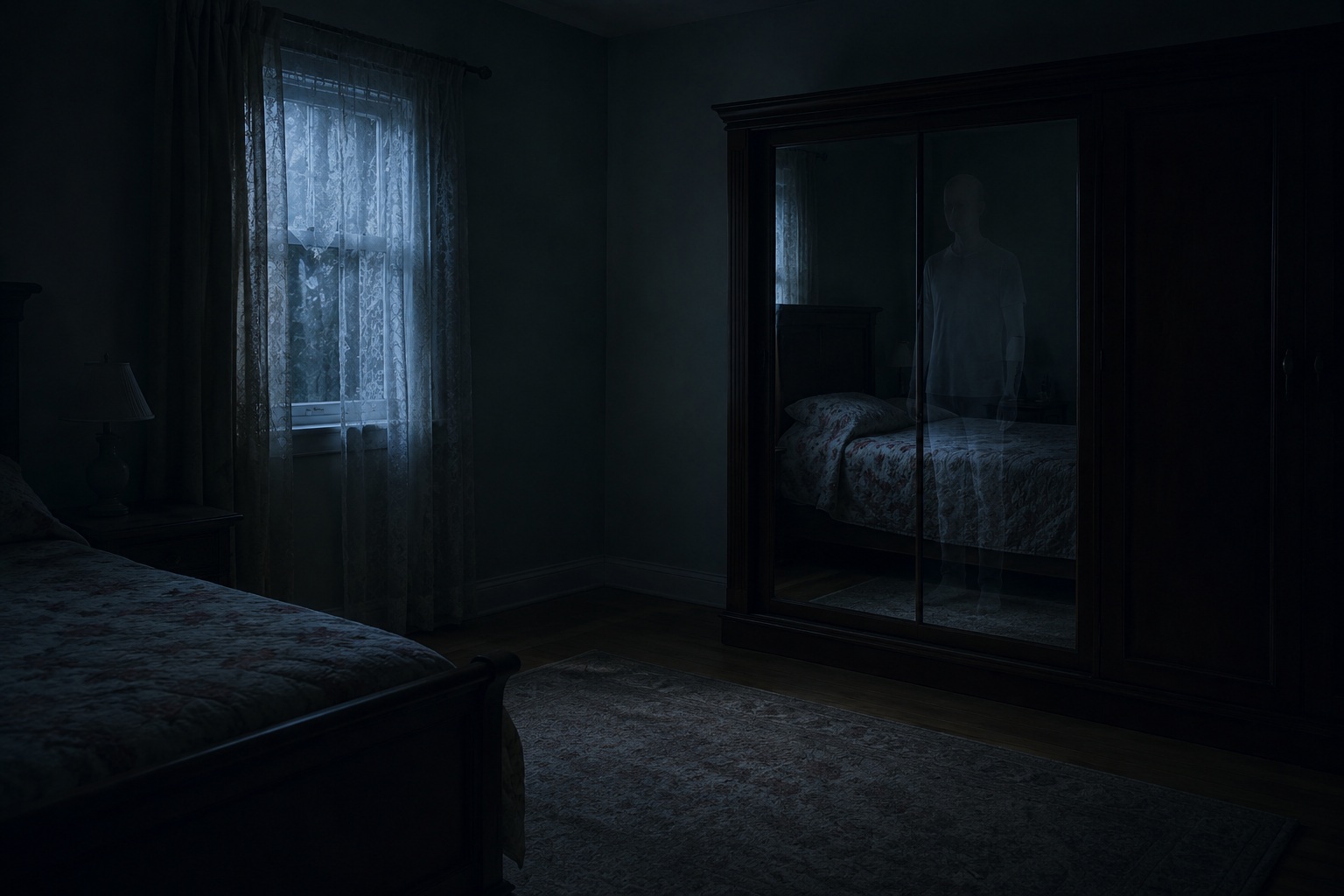
Others say it looked like someone was standing just behind them. The strange part is that the room itself usually looks ordinary. The uneasy feeling seems attached to the mirror rather than the space around it. That difference is why mirrors appear so often in ghost stories.
Why This Pattern Feels So Specific
The glass is not simply reflecting a room. It becomes a place where people begin wondering if they are seeing something else entirely. Mirror ghost stories follow the same pattern Across different countries, mirror stories sound surprisingly similar.
Someone walks past a mirror late at night without expecting anything unusual. The room is quiet. Nothing has moved. Then one detail feels wrong.
The reflection smiles first. The face has no clear features. Someone appears behind the witness even though the room is empty. A pale figure is visible only inside the glass.
Or the reflection seems to keep watching after the person walks away. Most stories involve only one impossible detail. That simplicity makes them memorable. Instead of describing a terrifying monster, people remember one quiet moment that refused to make sense.
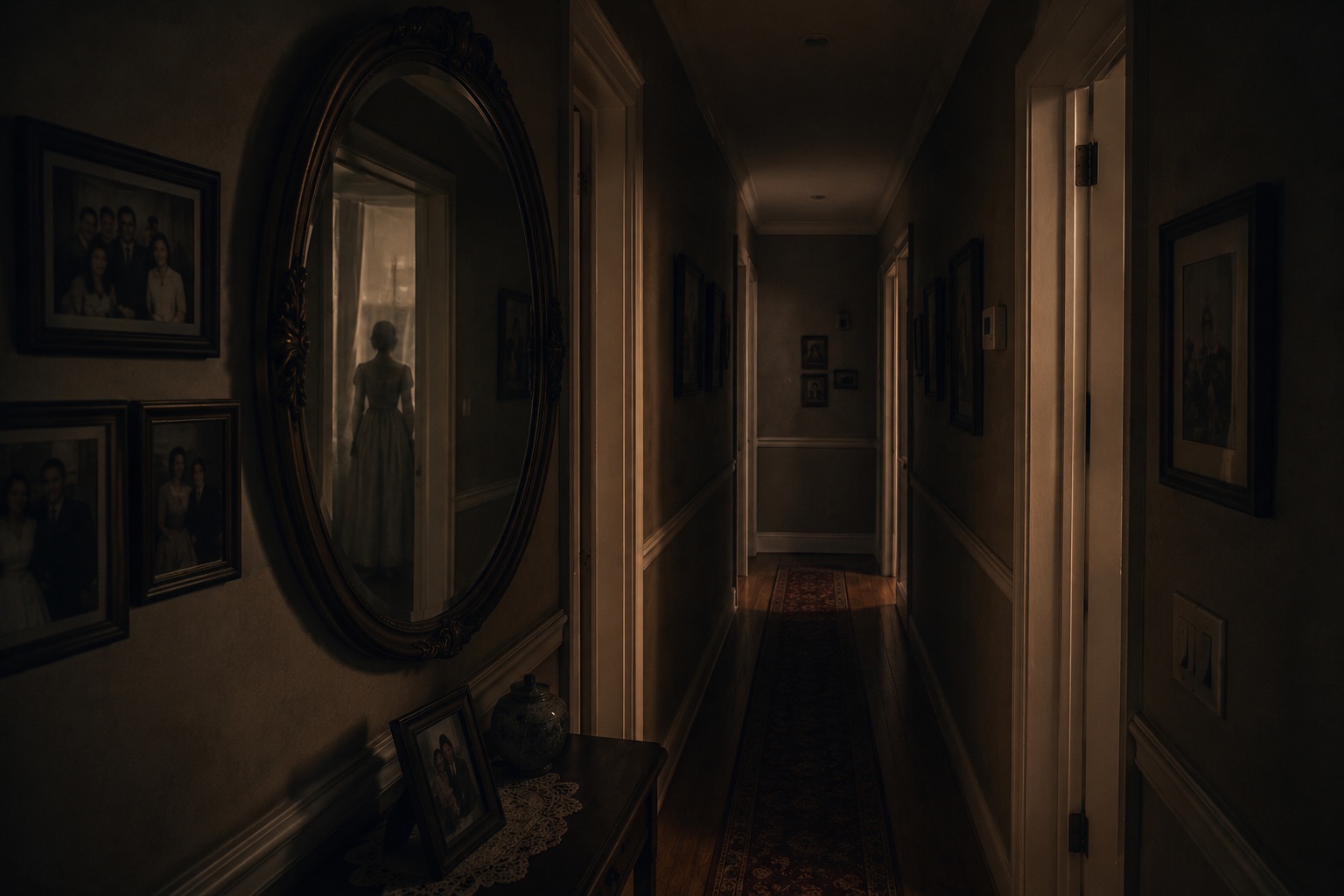
A blurred woman standing behind the bed. A transparent man reflected in the hallway doorway. A child-sized figure whose face never becomes clear. A reflection that appears calm while the real person is panicking.
The Detail That Makes People Stop
These stories spread because almost everyone has experienced looking into a mirror at night. The setting already feels familiar. Adding one impossible detail turns an ordinary bathroom or bedroom into a place people remember for years. What people usually check first
Most people do not immediately decide something supernatural happened. They begin checking practical explanations. They turn on brighter lights. They clean the mirror.
They move closer. They step to one side. They look behind themselves. Some check nearby windows to see whether another reflection bounced into the glass.
Others blame tired eyes or the angle of a night light. Sometimes these checks explain everything. A towel hanging behind a door suddenly looks like a person. A dark coat on a chair becomes a standing figure.
Ordinary Explanations People Check First
A reflection from another room creates a shape that disappears after a light is switched on. But not every story ends that way. Witnesses often say what frightened them most was not seeing a shape. It was the feeling that the reflection behaved differently from everything around it.
They describe looking away for only a second before noticing something had changed. Whether that change happened outside the mirror or only inside their own perception becomes almost impossible to separate afterward. That uncertainty is exactly what keeps these stories alive. Why mirrors appear in so many paranormal traditions
Long before modern homes, mirrors carried strange meanings. Many traditions treated them as more than simple pieces of glass. Some families covered mirrors after a death. Others avoided sleeping where a mirror reflected the bed.
Stories warned children not to stare into mirrors too long after midnight. Different cultures explained these customs in different ways. Some believed mirrors could attract wandering spirits. Others thought they could trap part of a person's presence.
The Moment It Became Harder To Ignore
Many simply believed nighttime reflections were unlucky. Even people who do not believe those traditions often know about them. That background matters. When someone enters a dark room and remembers an old warning about mirrors, the experience already feels different before anything unusual happens.
Ghost stories grow more easily around objects that already carry generations of mystery. A mirror is ordinary enough to exist in almost every home. Yet it has also been treated as something unusual for hundreds of years. That combination makes it one of the most powerful settings for paranormal stories.
Why the quiet matters more than the ghost One interesting pattern appears again and again. Mirror stories rarely happen during busy moments. They happen when someone is alone.
The house is silent. The television is off. The only sound might be a dripping faucet or distant air vent. Silence gives people time to notice tiny changes.
A slight movement. A strange shadow. A reflection that feels unfamiliar for half a second. Many witnesses say the fear arrived before they could explain why.
Why People Avoided That Spot Later
They looked at the mirror and immediately felt something was wrong. Only afterward did they begin describing a blurred face, a transparent figure, or someone standing where nobody should have been. That emotional order makes these stories especially unsettling. The feeling comes first.
The explanation comes later. Whether the cause is imagination, tired eyes, unusual lighting, or something people cannot explain, the memory stays vivid because the fear arrived so quickly. Other strange experiences that often happen nearby People who tell mirror stories sometimes mention other unusual events happening around the same time.
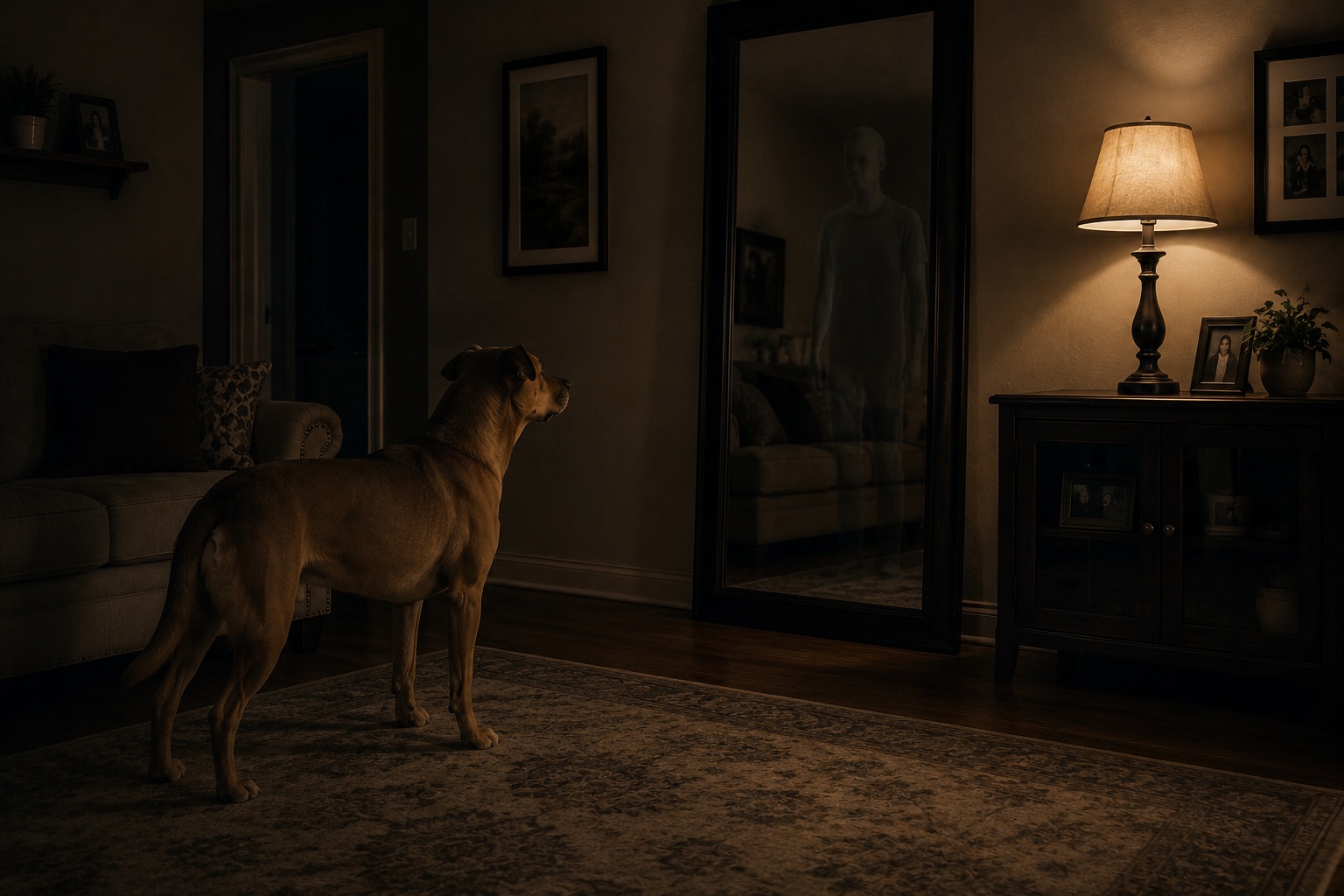
A bedroom door slowly opening by itself. Soft footsteps somewhere upstairs. A dog refusing to walk past the bathroom. A hallway feeling unusually cold.
A name quietly whispered from another room. None of these details appear in every story. But they often become part of the larger memory. Instead of remembering only the reflection, people begin connecting several small experiences into one frightening night.
Why This Pattern Keeps Coming Back
That is why mirrors appear alongside so many other paranormal questions. Why do people feel watched in empty rooms? Why do shadow figures seem to stand in doorways? Why do footsteps always stop before someone reaches the hallway?
Each experience shares the same basic idea. An ordinary place suddenly feels occupied. Mirrors simply provide one of the clearest stages for that feeling because they already show us a second version of the room. When that second version seems even slightly different, the effect can be unforgettable.
Whether someone believes the answer lies in psychology, old traditions, unusual lighting, or something beyond normal explanation, one fact remains the same. Very few people enjoy staring into a mirror in a dark, silent house. Most eventually look away. Not because they definitely expect to see a ghost.
But because almost everyone has wondered what they would do if, just once, the reflection failed to look back exactly the way it should.