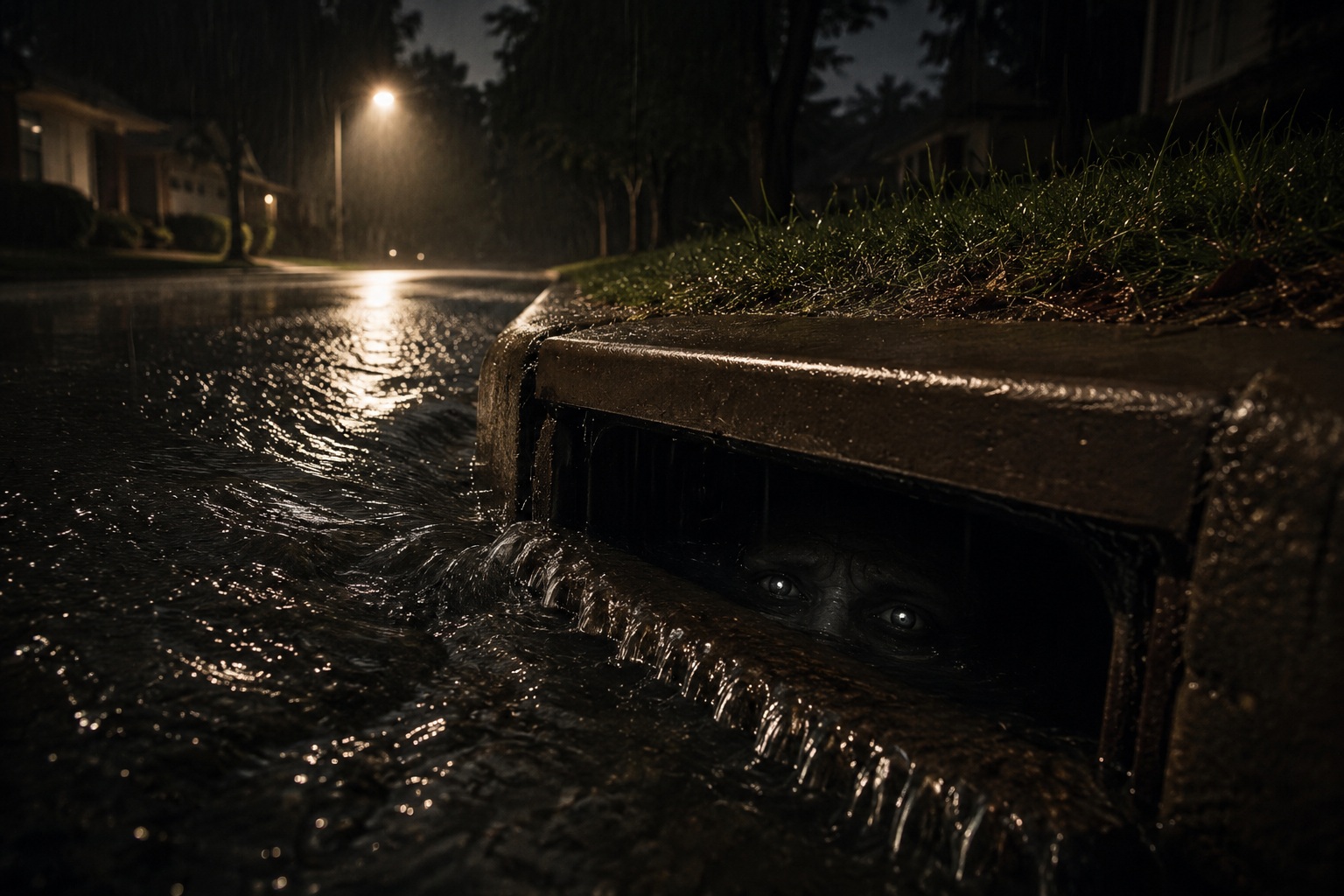
The rain had stopped only twenty minutes earlier. Water still rushed along the curb as a man walked home through a quiet neighborhood. The streetlights reflected off puddles that had swallowed the painted lines on the road. Every storm drain roared with water disappearing into the darkness below.
As he passed one of them, he heard something strange. Not a splash. Not moving water. Breathing.
He slowed down and looked toward the iron grate. At first there was only muddy water spinning into the opening. Then two pale eyes appeared several feet below the street, just long enough to catch the light. They did not blink. They simply watched. He stepped backward, expecting whatever he had seen to wash away with the current.
Instead, one long gray hand slowly wrapped around the inside edge of the drain before disappearing beneath the rushing water again. The next morning he returned with a friend. The water level had dropped. The grate looked completely ordinary. There were leaves, mud, and a few broken branches caught against the metal, but nothing else.
The First Time It Happened
Stories like this appear in towns around the world after major storms. Whether people believe they saw something impossible or simply misunderstood what heavy rain can reveal, one question keeps coming back whenever streets begin to flood. Why do sewer monster stories seem to start after heavy rain?
Heavy
Rain Changes Places Most People Never See Most people rarely think about what exists beneath city streets. Storm drains, culverts, tunnels, and underground pipes stay hidden for years. They quietly carry away rainwater while everyone walks above them without paying attention. Heavy rain changes that.
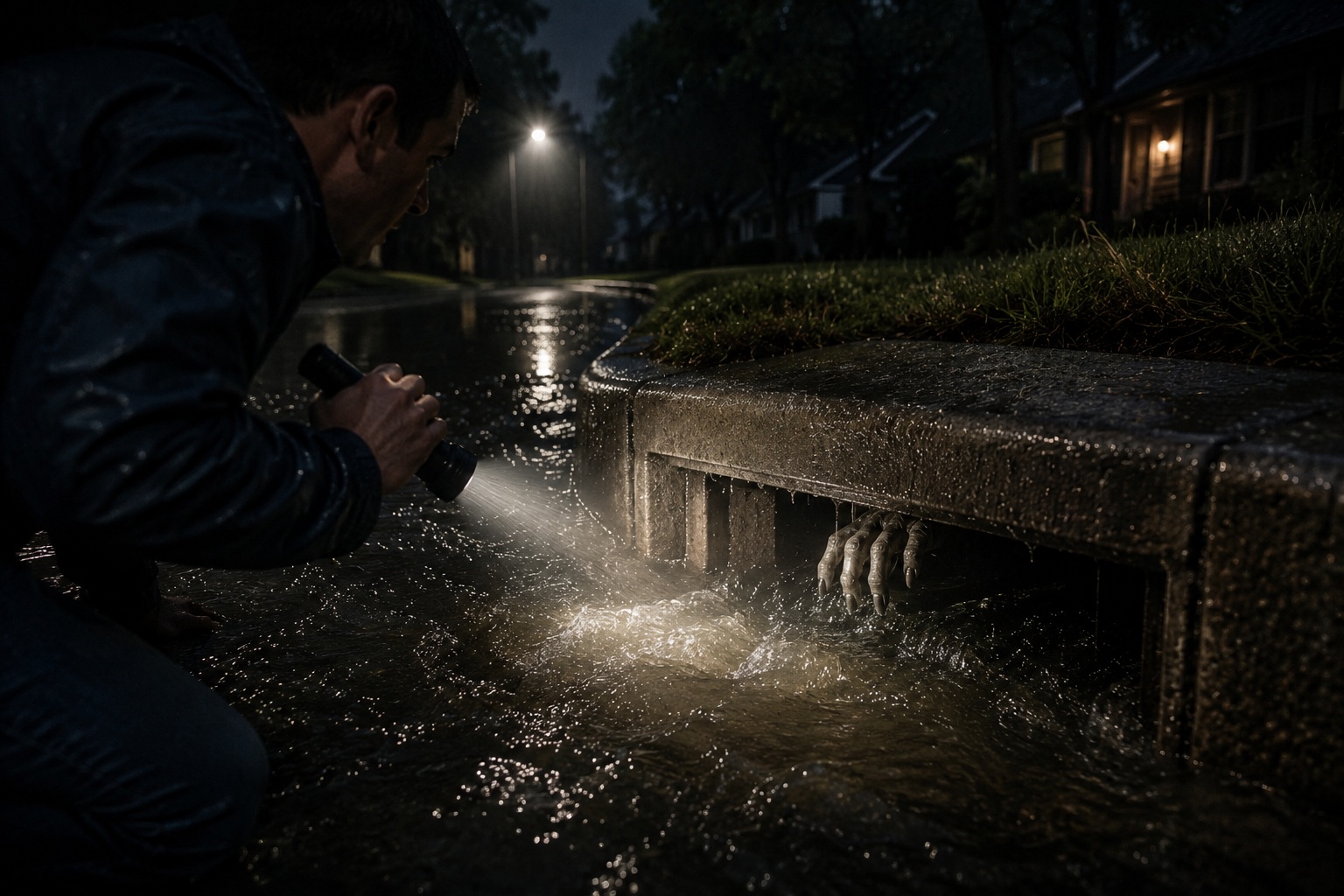
Water rises high enough to fill spaces that normally stay dark and empty. It creates loud echoes, moving shadows, and fast currents that expose openings people usually ignore. After a storm, those places suddenly become impossible to overlook. Witnesses often describe stopping because they hear an unusual sound before they ever claim to see anything. Sometimes it is scratching beneath flowing water. Sometimes it sounds like slow breathing mixed with rushing water. Others describe what seems like someone moving through tunnels where no person should be standing.
The setting itself does much of the work. Dark openings beneath familiar streets already invite uncomfortable questions. Rain simply draws attention toward them.
Why The Place Felt Wrong
Why Witnesses Often Describe Eyes Looking Up
One detail appears again and again in sewer monster stories. Eyes. Not glowing like movie monsters. Usually they are pale, reflective, or strangely still.
Witnesses often say the eyes seemed to be looking upward from inside the drain instead of across the street. That single detail makes many stories memorable. People naturally expect underground spaces to be empty except for flowing water. Looking down and feeling watched from below creates an immediate sense that something about the scene is wrong.
Some reports go further. Instead of only seeing eyes, witnesses describe part of a face appearing beneath muddy water before slipping away. Others remember a gray forehead. A long arm.
The Detail Nobody Could Explain
Thin fingers resting against wet concrete. A shape that never fully climbed out. Even when descriptions differ, they usually stay surprisingly restrained. The creature is rarely described in full. People remember only the part they believe they saw before it disappeared. That uncertainty often makes the story feel more unsettling than a complete description would.
Why
Floodwater Makes Ordinary Things Look Unfamiliar Heavy rain changes more than visibility. It changes sound. Water bouncing through underground tunnels creates echoes that travel in unusual directions. A noise several yards away may seem to come directly beneath someone's feet.
Moving water also reflects light differently. Streetlights bounce across muddy surfaces, producing quick flashes inside drains and culverts. Floating branches, trapped plastic, or shifting debris can briefly resemble moving hands or faces before drifting away. People often check these explanations first. They shine flashlights into the drain.
They wait for another reflection. They look for an animal trapped below. Many stories end right there because the strange detail has an ordinary cause. The stories that continue usually do so because witnesses believe one detail remained difficult to explain.
What They Checked Afterward
Perhaps the eyes stayed perfectly still while water rushed around them. Perhaps the gray hand appeared to grip the concrete instead of floating with the current. Perhaps several people claimed they saw the same shape before it disappeared beneath the water. That single lingering question is often enough for the story to survive long after the storm ends.
Where
Sewer Monster Legends Usually Appear These stories rarely happen in the middle of crowded city streets during busy afternoons. Instead, they tend to appear in places with a mixture of ordinary life and temporary isolation. Residential neighborhoods after everyone has gone inside.
Walking paths beside drainage channels. Parking lots behind shopping centers. Roads where floodwater slowly drains after sunset. Large culverts near parks.
The Moment It Became Harder To Ignore
Old concrete tunnels beneath railroad crossings. These places feel familiar enough that people know how they normally look. When heavy rain changes them, every unusual sound seems larger than it should. Witnesses also tend to notice simple physical details rather than dramatic attacks.
Water rippling against concrete despite no visible current. Fresh mud spread across pavement leading away from a drain before stopping. Branches bent upward instead of downstream. A foul smell that disappears by morning.
Stories built around small observations often spread farther because listeners can imagine finding those same details themselves.
What People Usually Check First Most people who tell these stories also describe trying to explain them. They do not immediately assume they found a monster.
Why People Avoided That Spot Later
First they look for animals. Storms sometimes wash raccoons, possums, turtles, or other wildlife into drainage systems. Then they check the water itself. Fast-moving currents can carry large objects that appear strangely shaped for only a second.
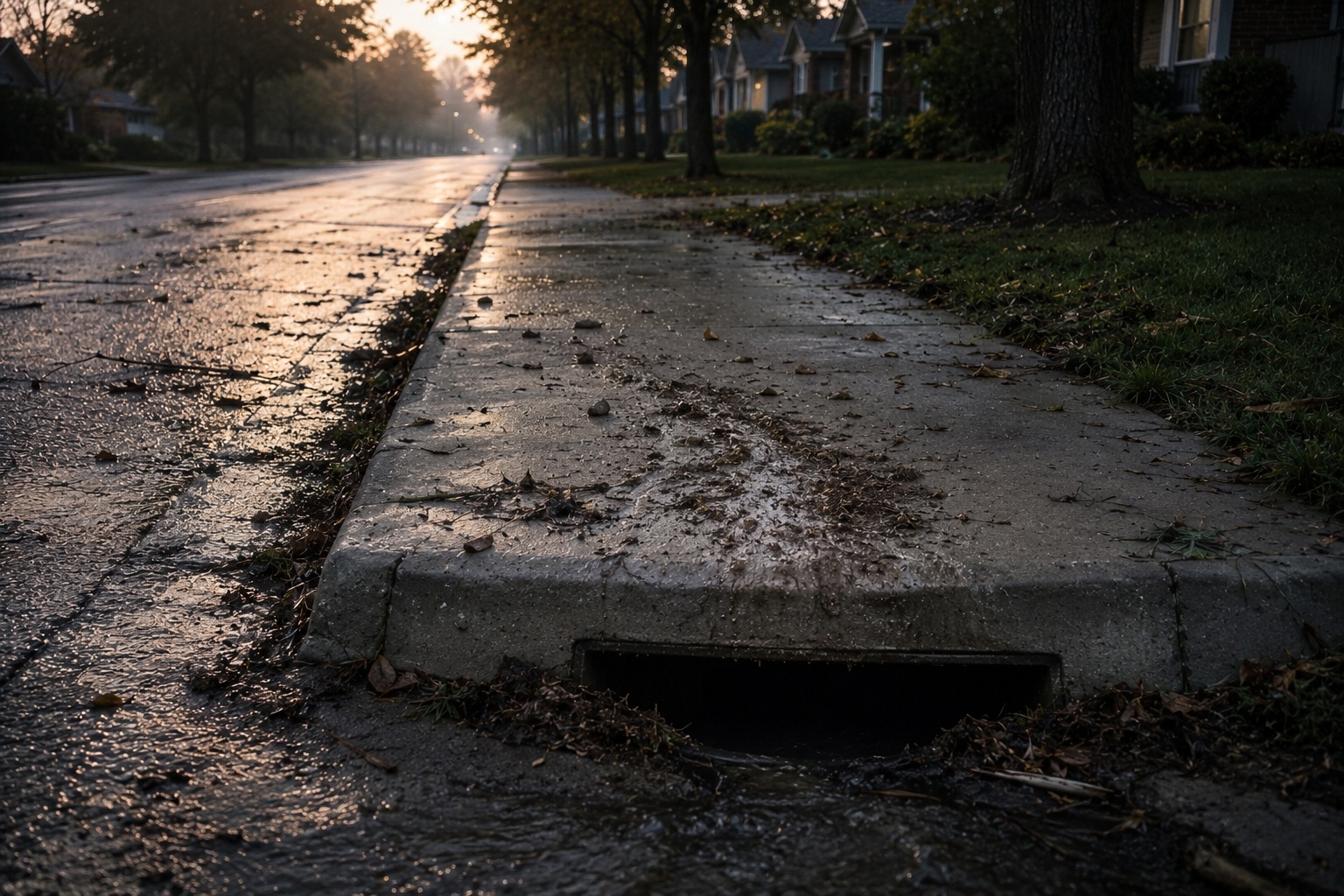
Many witnesses also return during daylight. Without darkness and rushing water, the same location often feels completely ordinary. Some even discover exactly what caused the strange moment. Others leave more uncertain.
Perhaps they find nothing that matches what they remember. Perhaps they notice scratch marks on wet concrete that seem fresh but impossible to identify. Perhaps neighbors quietly admit they avoid walking near that drain after storms because they have experienced something similar. Those conversations keep local legends alive.
Instead of one dramatic event, communities collect many small stories that sound just different enough to remain interesting.
Why These Stories Keep Returning After Every Storm Every generation seems to create its own version of the sewer monster. The details change.
Why The Story Still Gets Shared
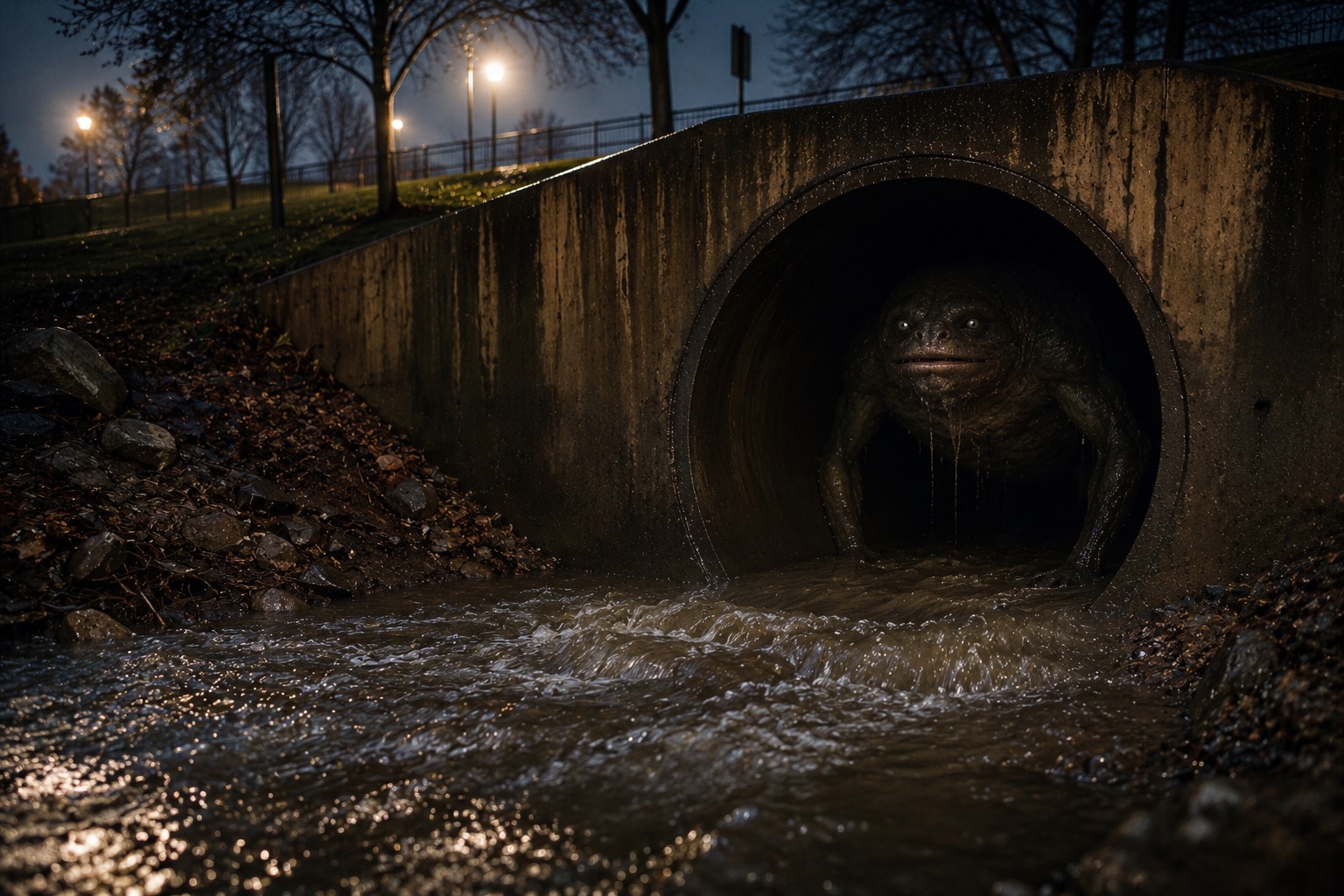
Sometimes it resembles a huge amphibian. Sometimes witnesses describe a pale human-like figure partly hidden beneath flowing water. Sometimes it is nothing more than two silent eyes below a grate. But the setting almost always stays the same.
Heavy rain transforms familiar streets into places filled with rushing sound, hidden movement, and dark openings that suddenly demand attention. Most people pass hundreds of storm drains without thinking about them. After a major storm, those same drains become loud enough to notice and mysterious enough to imagine.
That combination makes the stories easy to remember and easy to retell. Even people who doubt every monster story often admit they hesitate before looking directly into a flooded drain at night. Perhaps because they know exactly what they expect to find. Flowing water.
Wet concrete. Nothing else. And if, for just a second, something appears to be looking back from beneath the street, it becomes one of those stories that returns every time the forecast calls for heavy rain.