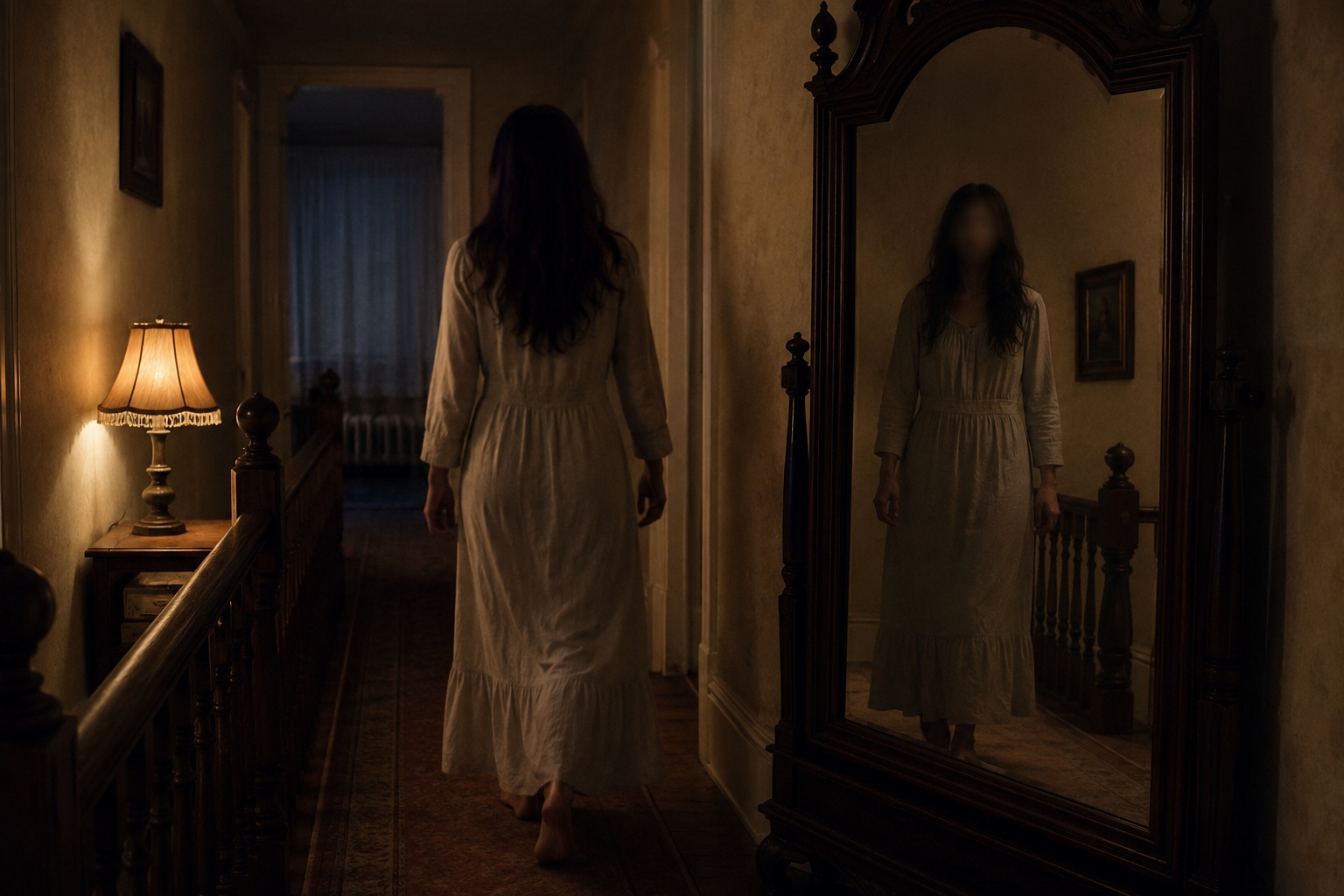
A woman stayed one night in an old country house that had been turned into a guest rental. The rooms looked ordinary during the day. Fresh paint covered the walls, the furniture was clean, and every window opened to quiet trees.
Just after midnight she walked down the upstairs hallway carrying a glass of water. At the end of the hall hung a tall mirror in a dark wooden frame. As she passed it, something made her glance sideways. Her reflection had stopped. She took another step, but the figure in the glass seemed half a second behind. It wasn't moving naturally. Its shoulders stayed angled toward the hallway while her real body faced forward. She froze.
The face looking back wasn't clear anymore. Instead of eyes and a mouth there was only a smooth blur, as if someone had wiped that part of the reflection away. For a moment the shape appeared slightly farther back than the wall itself, standing inside the darkness behind the glass rather than on its surface.
She spun around. The hallway behind her was empty. When she looked back at the mirror, everything matched again. The reflection copied every movement perfectly. The strange figure was gone. Stories like this appear again and again whenever people talk about strange houses. Whether someone believes in ghosts or not, mirrors seem to play a special role in frightening experiences. People don't simply report seeing someone standing behind them. They often describe a reflection that behaves differently from the room around it.
The First Time It Happened
Why does this happen so often? And why do mirrors seem far more unsettling than ordinary windows or pieces of glass? Mirrors make us question what should never change Most objects in a room can surprise us. A chair can creak. A curtain can move. A floorboard can pop as the house settles.
A mirror is different. It follows strict rules every second of every day. Raise your hand, and the reflection raises its hand immediately. Turn your head, and it does exactly the same. Because we trust those rules completely, even the smallest mismatch feels enormous. Many strange house stories involve tiny details rather than dramatic monsters.
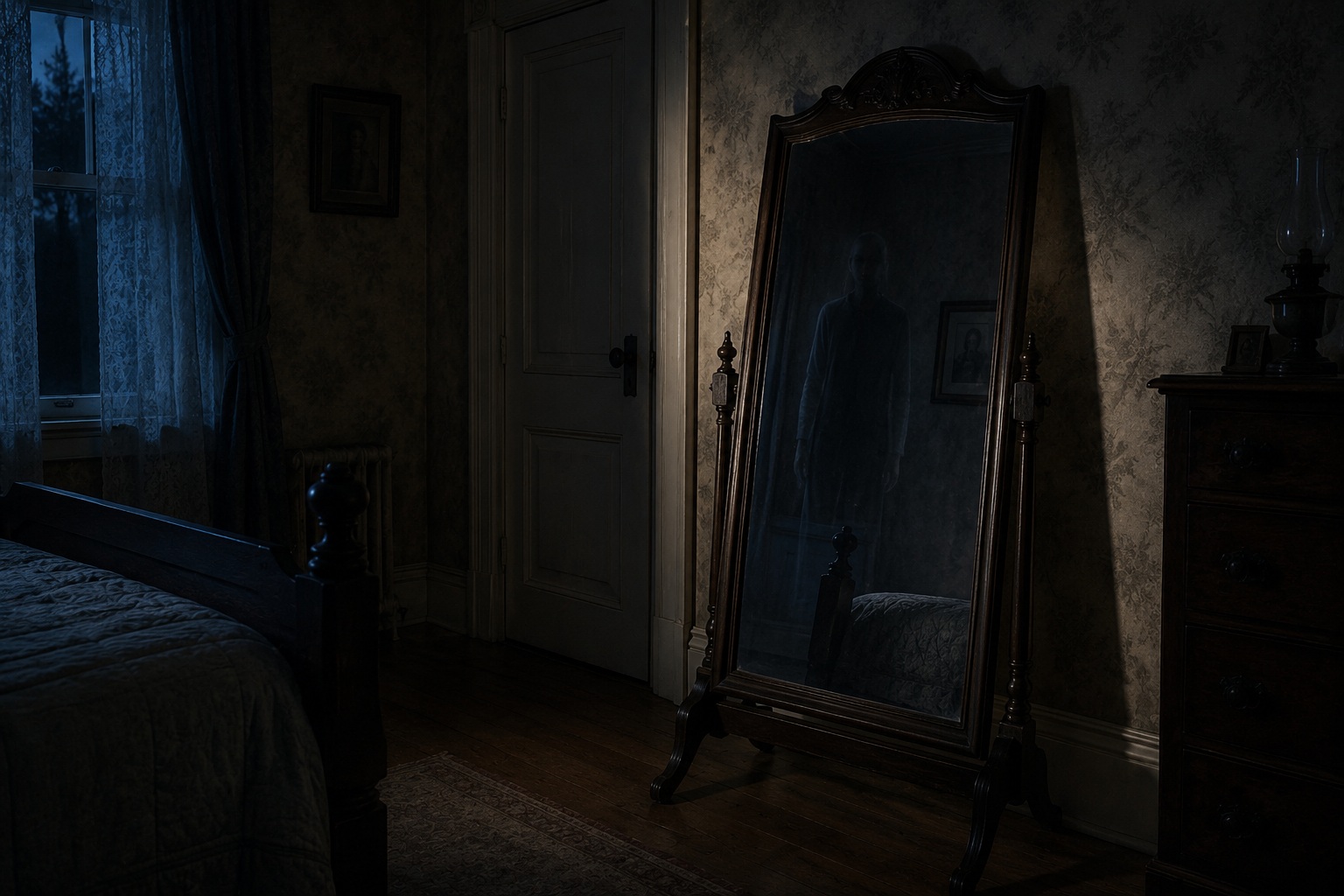
Someone notices their reflection blinking at the wrong moment. A transparent person appears standing deeper inside the mirror than the room should allow. A blurred face seems to remain still while the body moves. Sometimes the reflection appears slightly darker than everything around it, even though the lighting has not changed.
Why The Place Felt Wrong
None of these details need loud noises or sudden movement. The fear comes from the feeling that something familiar has quietly stopped behaving the way it always has. That simple idea makes mirrors one of the strongest settings in ghost stories across many countries. strange house stories rarely describe broken mirrors
One interesting pattern is what people usually do first. They look for a normal explanation. Witnesses often step closer to inspect the glass. They change their viewing angle.
They switch on another light. They wipe fingerprints away. Some even move furniture to see whether another object could have created an unusual reflection. Most reports end with the mirror looking perfectly normal once these simple checks are finished.
That is part of what keeps the story alive in the person's memory. The strange moment lasted only seconds. By the time they tried to understand it, nothing looked unusual anymore. People are often less disturbed by objects that stay obviously strange.
The Detail Nobody Could Explain
A broken mirror is easy to explain because everyone can see the damage. A perfectly normal mirror that behaved strangely for only one moment creates a much more unsettling memory because there is nothing left to examine afterward. Whether someone believes the experience had a normal cause or something stranger, the feeling remains surprisingly vivid.
Why reflections feel more frightening than seeing someone directly Imagine walking into an empty bedroom. A transparent figure standing beside the closet would certainly be frightening. Now imagine the bedroom is empty, but the mirror shows a blurred person standing behind you.
Most people find the second situation even worse. The reason is simple. A reflection should only show what already exists in the room. If it appears to contain something extra, our minds immediately begin comparing two different versions of reality.
What They Checked Afterward
One says the room is empty. The other says someone is waiting there. That conflict creates instant tension. strange house stories often use one clear wrong detail instead of many impossible events.
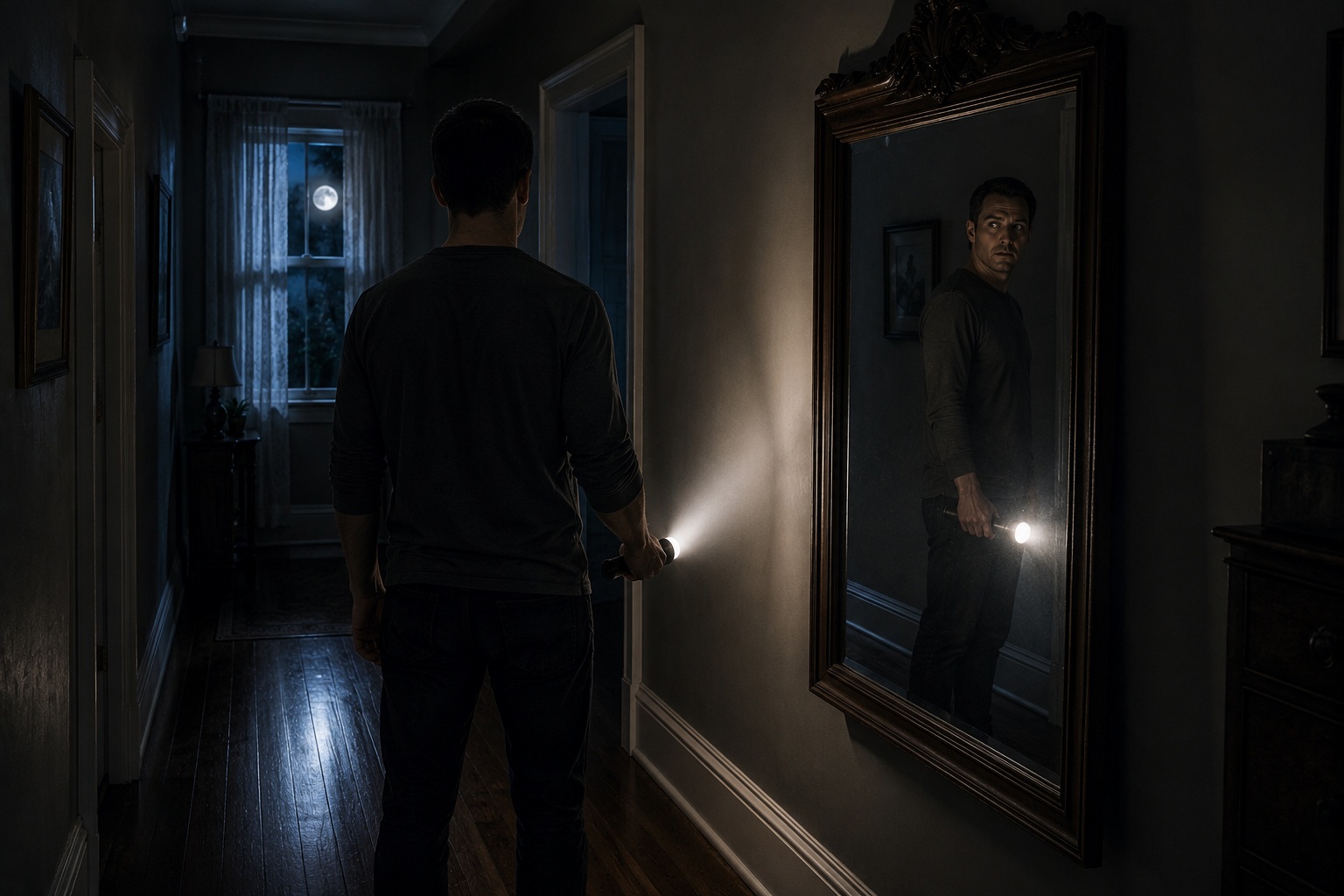
The reflection may keep its head lowered while the real person looks up. A transparent shape may appear halfway inside the wall behind the mirror. The reflected hallway may seem longer than the real hallway. Sometimes witnesses say they could see someone standing in the reflection, but turning around revealed only empty space.
These stories stay memorable because they disturb something people normally never question. Why old mirrors appear so often in ghost stories Many people expect strange houses to contain old mirrors, but age alone is not what creates the fear. Large mirrors naturally become part of a home's daily routine.
People glance into them dozens of times without thinking. That familiarity makes any unusual moment stand out immediately. Older homes also tend to have long hallways, uneven lighting, and deeper shadows. Soft light from lamps or moonlight creates reflections with less detail than bright daylight.
The Moment It Became Harder To Ignore
Corners become darker. Faces become less clear. Depth becomes harder to judge. Under those conditions it becomes much easier for someone to feel uncertain about exactly what they saw.
Ghost stories build on that uncertainty. Instead of describing monsters jumping from the glass, they usually describe something quieter. A blurred person standing too far back. A face with missing features.
A transparent figure whose posture doesn't match a living person. Someone waiting in the reflection but nowhere else. These details are simple enough that readers can imagine them happening in their own homes. That makes the stories feel personal.
What people usually remember after the experience The reflection itself is not always the part people remember most clearly. Instead, they remember what happened immediately afterward. Many describe avoiding that mirror for days or weeks.
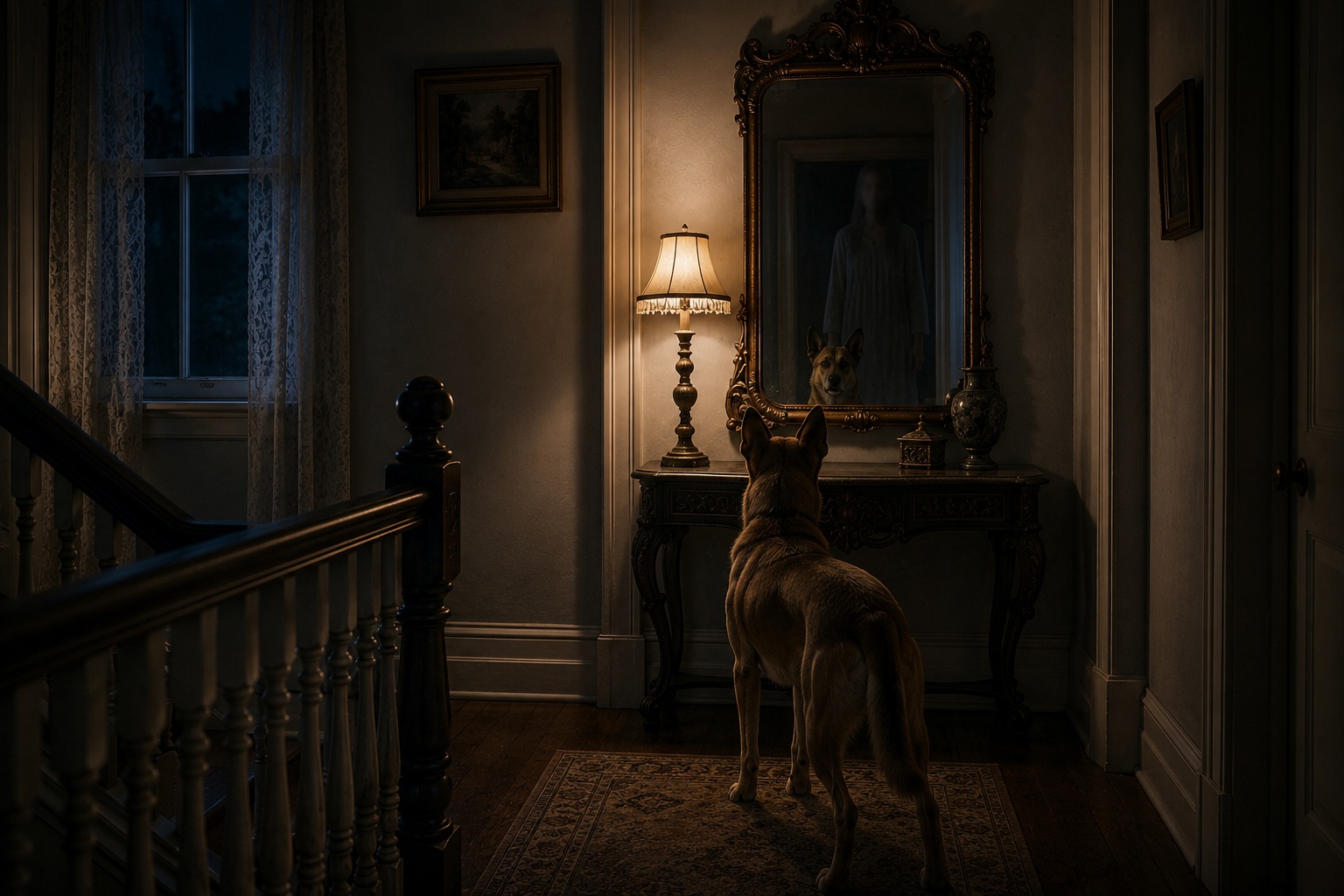
Why People Avoided That Spot Later
Some begin checking reflections automatically whenever they enter unfamiliar houses. Others report feeling uneasy whenever they pass mirrors at night, even though nothing strange happens again. Another common detail appears in witness statements. People often say they felt watched before noticing anything unusual.
Only afterward did they realize they had been looking toward the mirror almost without thinking. Whether that feeling came from imagination, the atmosphere of the building, or something they cannot explain, it became connected to the reflection itself. That is why mirrors continue appearing in strange house stories generation after generation.
They create fear without requiring dramatic action. One wrong reflection is enough. Why mirror stories continue to spread Mirror stories survive because almost everyone understands the basic situation immediately.
Why The Story Still Gets Shared
Nearly every home has one. Everyone knows how reflections are supposed to behave. That shared expectation allows storytellers to change only one small detail. The reflection hesitates.
The face disappears. A transparent person stands inside the glass. Someone appears in the mirror but not in the room. Those changes are simple enough to picture instantly.
They also leave room for different explanations. Some readers see them as examples of how our minds react to darkness, unfamiliar surroundings, and expectation. Others believe strange places may affect reflections in ways people still argue about today. Either way, the stories remain effective because they focus on something ordinary.
A mirror is meant to reassure us that the world is exactly where it should be. When the reflection quietly suggests otherwise—even for a single heartbeat—it transforms an ordinary hallway into one of the most frightening places in the house. That is why mirrors continue to appear in strange house stories, why people instinctively glance twice when passing one after dark, and why a single reflection that looks just slightly wrong can stay in someone's memory long after the house itself has been left behind.
That is why these mirror reports keep circulating: the image is not loud or complicated, but it leaves one ordinary room feeling slightly out of sync with itself.