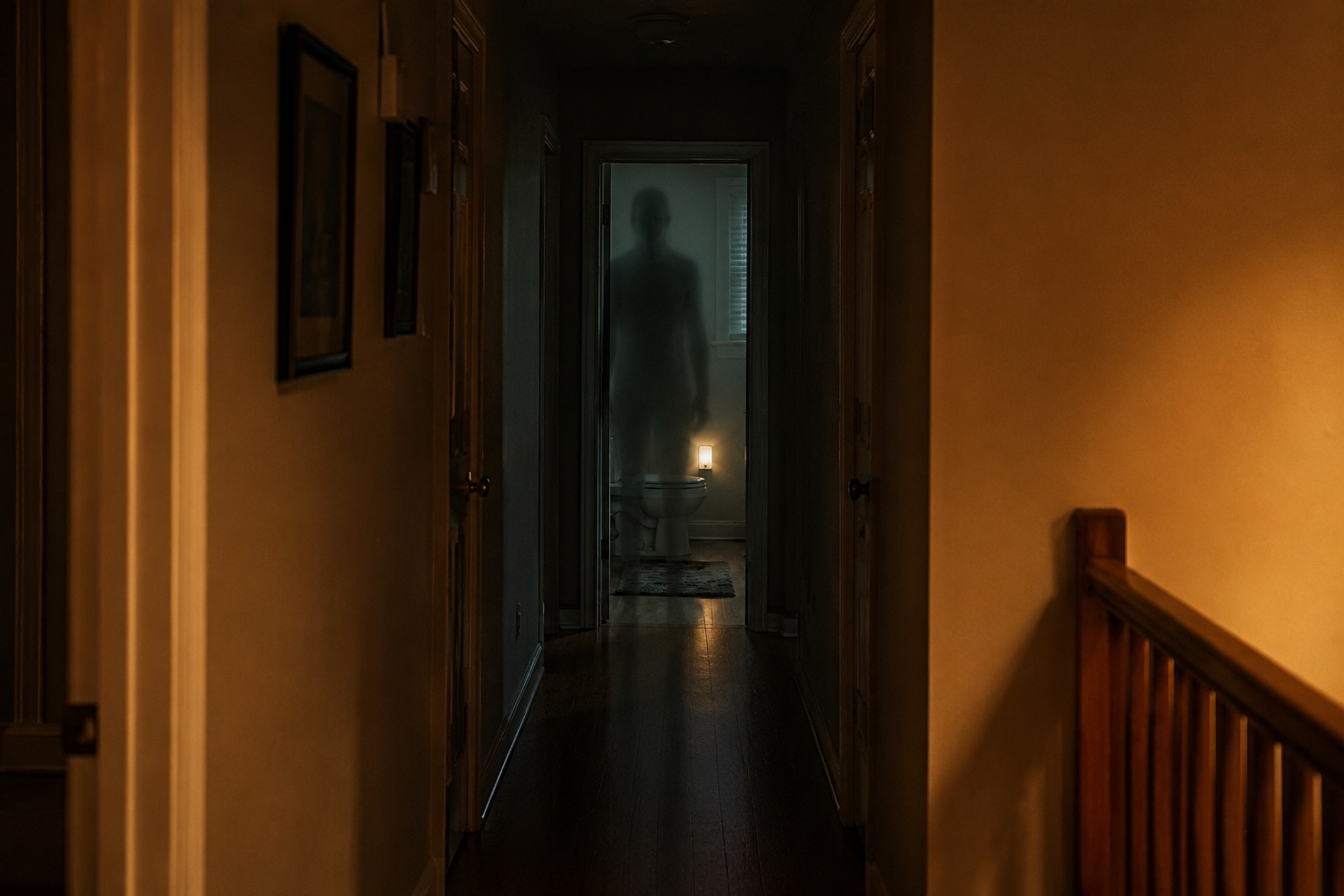
A man woke just after 3 a.m. because he thought someone had walked into the hallway outside his bedroom. His house was quiet. The air conditioner hummed. Nothing sounded out of place. Still, he had the strange feeling that someone was standing there, waiting just beyond the bedroom door.
He looked into the hallway. At the far end, where the darkness met the faint glow from a small bathroom nightlight, stood what looked like a person. It was tall and perfectly still. The shape blocked part of the light behind it, but it had no face. No clothes. No movement.
He blinked. The figure remained exactly where it was. He called out, expecting a family member to answer. Nothing.
When he reached for the hallway light, the shape seemed to fade before the switch even clicked. Moments later he searched the house from room to room. Every door was closed. Every window was locked. Everyone else was asleep. Years later, he said he still avoided looking toward the end of dark hallways.
The First Time It Happened
Stories like this appear everywhere. Some people describe a black shape. Others mention a transparent person, a blurred figure, or someone standing where no one should be. Whether someone believes these stories have a normal explanation or something stranger, one question keeps coming back: Why do people so often report seeing shadows at the end of hallways?
Why Hallways Feel Different From Other Parts Of A House
Hallways are built to connect rooms, but they also create long, narrow views that naturally draw attention. Unlike a living room or kitchen, a hallway often has only one direction to look. Your eyes automatically travel toward the far end.
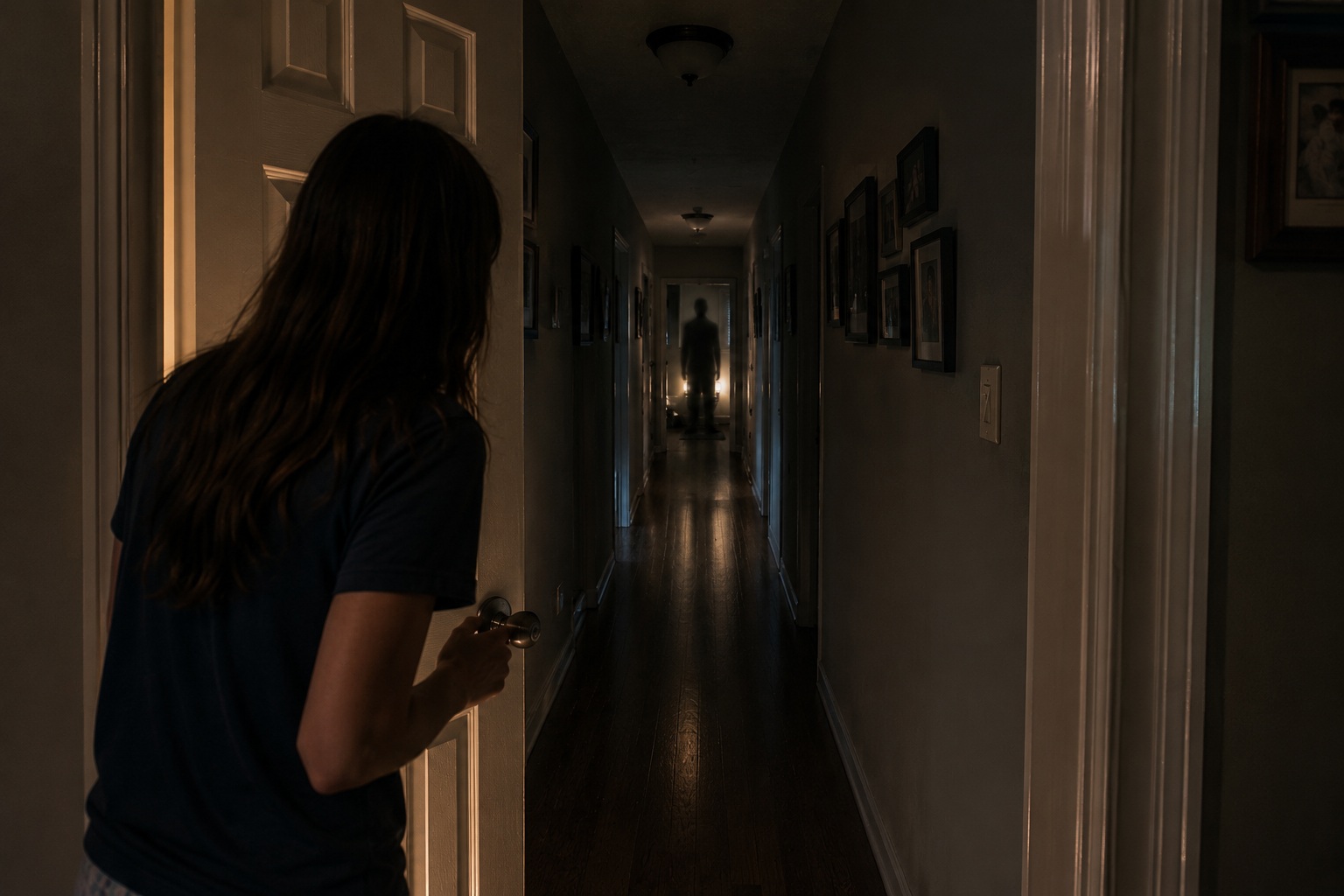
That creates a strange psychological effect. The farther away something is, the fewer details you can see. A coat hanging on a hook, an open door, stacked boxes, or uneven lighting can briefly resemble a standing person before your brain gathers enough information. Most people have experienced this at least once.
The unusual part is when witnesses insist the shape stayed recognizable longer than a simple mistake should have. Instead of instantly becoming a jacket or piece of furniture, the figure appears to remain person-shaped for several seconds. That delay is what many people remember most.
Why The Place Felt Wrong
The setting also matters. Hallways often have mixed lighting. One room may be bright while another is almost completely dark. A single lamp or nightlight can leave the far end in heavy shadow while nearby walls remain visible. Those contrasts create perfect conditions for uncertain shapes.
What Witnesses Usually Describe Although every story is different, many descriptions sound surprisingly similar. People often say the figure is standing rather than walking. It usually waits near the end of the hallway instead of approaching.
Many describe it as human-sized but missing normal details. Some cannot make out a face. Others say the figure looks transparent or blurred around the edges. A common detail is complete stillness.
Even after being noticed, the shape does not react. That lack of movement often feels more disturbing than if it had walked away. Another repeated detail is disappearance without normal motion. Instead of turning a corner or stepping into another room, witnesses say the figure seems to fade, blend into darkness, or simply no longer be there after they look away for a second.
Paranormal stories sometimes describe these figures as silent watchers rather than active ghosts. Whether someone believes that interpretation or not, the pattern appears often enough that people continue asking why hallways seem connected to these reports.
The Detail Nobody Could Explain
Why The End Of The Hallway Becomes The Focus
Fear changes the way people pay attention. When someone hears an unexpected sound at night, they instinctively search the place that gives the longest view. That is usually the hallway. The far end becomes the center of attention because it is also the place with the least visual information.
Your brain tries to answer an important question as quickly as possible. Is someone there? If the answer is uncertain, the mind sometimes fills missing details with familiar human shapes. That is one reason people report seeing someone standing perfectly still.
But this explanation does not fully satisfy every witness. Many insist they continued looking for several seconds. They describe seeing shoulders, arms, or the outline of a head before the figure slowly disappeared. Some even report feeling watched before noticing the shape.
What They Checked Afterward
That feeling is difficult to measure, yet it appears repeatedly in witness statements shared over many years. The combination of uncertainty, darkness, and expectation makes hallways one of the most memorable places for strange experiences.
What People Usually Check First One reason these stories spread is that many witnesses immediately try to explain what they saw.
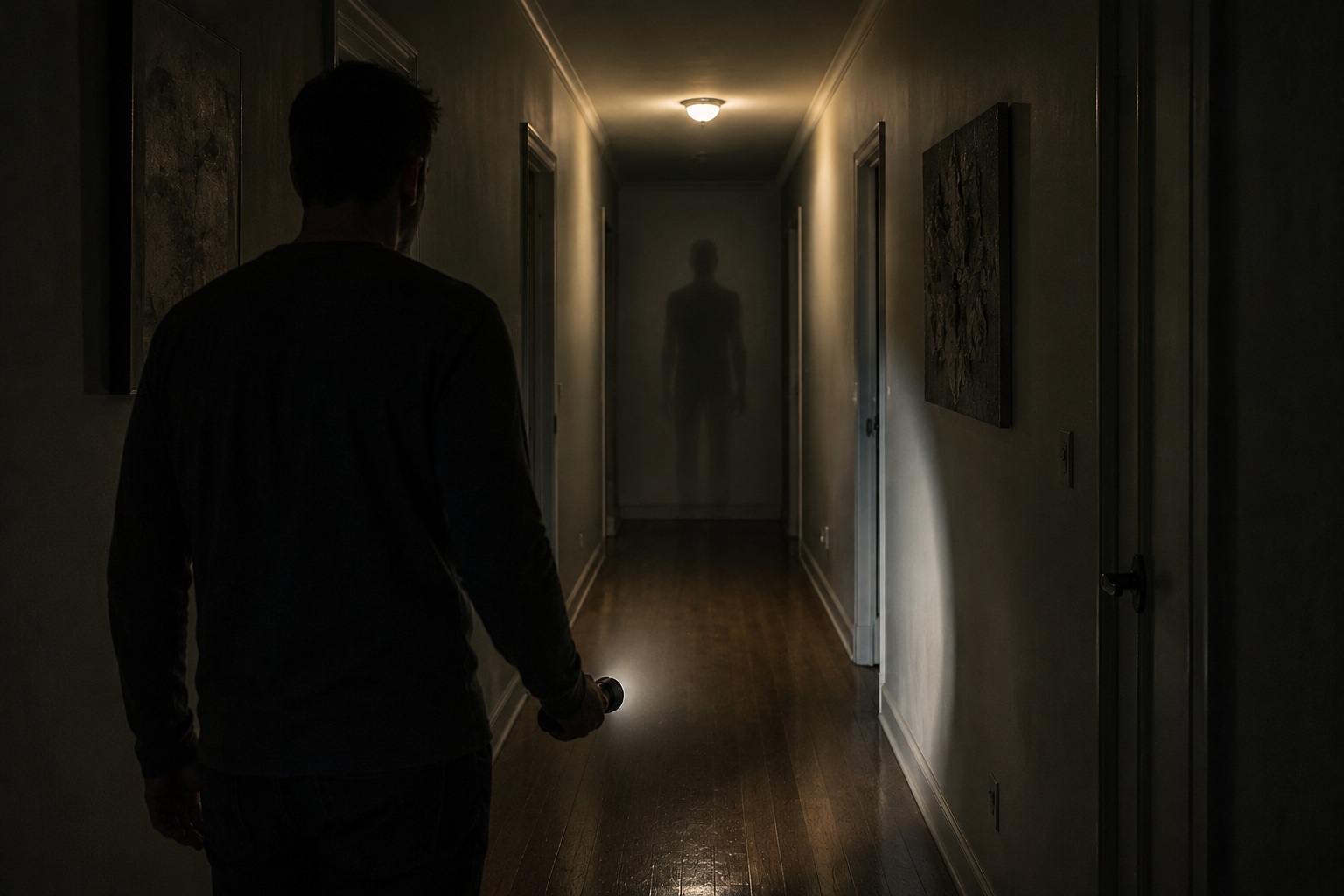
They turn on every light. They walk to the end of the hallway. They check nearby rooms. Some look for hanging clothes, mirrors, or furniture that could have created the illusion.
Others return to the same spot the next day to compare the lighting. Sometimes they discover an ordinary explanation. A jacket on a chair may have lined up perfectly with a doorway. A mirror may have reflected part of another room.
The Moment It Became Harder To Ignore
A partially open door might have created an unexpected shadow. Other times they cannot recreate the shape at all. That uncertainty keeps the experience alive in memory. Many witnesses are careful about how they describe it.
Instead of saying they definitely saw a ghost, they simply say they saw someone standing there until they looked again. That careful wording appears again and again in personal stories. It leaves room for different explanations while preserving the feeling that something genuinely strange happened.
Why Shadow Figures Appear In So Many Paranormal Stories
Shadow figures have become one of the most recognizable parts of modern ghost stories. Unlike traditional ghosts wearing old-fashioned clothing, these figures are usually simple. They resemble people but lack clear identity.
No face. No expression. No obvious age. That simplicity makes them unsettling.
Why People Avoided That Spot Later
Our brains are excellent at recognizing human forms. When those forms appear incomplete, they become difficult to understand. A blurred person feels stranger than a detailed one because there are fewer clues explaining what we are seeing. Hallways strengthen that effect.
The long perspective naturally frames a standing figure. The walls guide your eyes directly toward it. The narrow space also creates a feeling that there is nowhere else to look. Many storytellers use hallways for exactly this reason.
Movies, novels, and television often place frightening figures at the far end of a corridor because the image immediately creates tension. Real witness stories may also borrow language from familiar horror scenes without anyone realizing it. That does not mean people invent their experiences. It simply shows how memory, fear, and familiar images can combine when someone tries to describe a confusing moment.
Other Strange Hallway Experiences People Connect Together
People who report shadow figures often describe other unusual details from the same night. Some hear slow footsteps that stop before reaching the bedroom. Others say they briefly hear their name whispered from an empty part of the house.
Why The Story Still Gets Shared
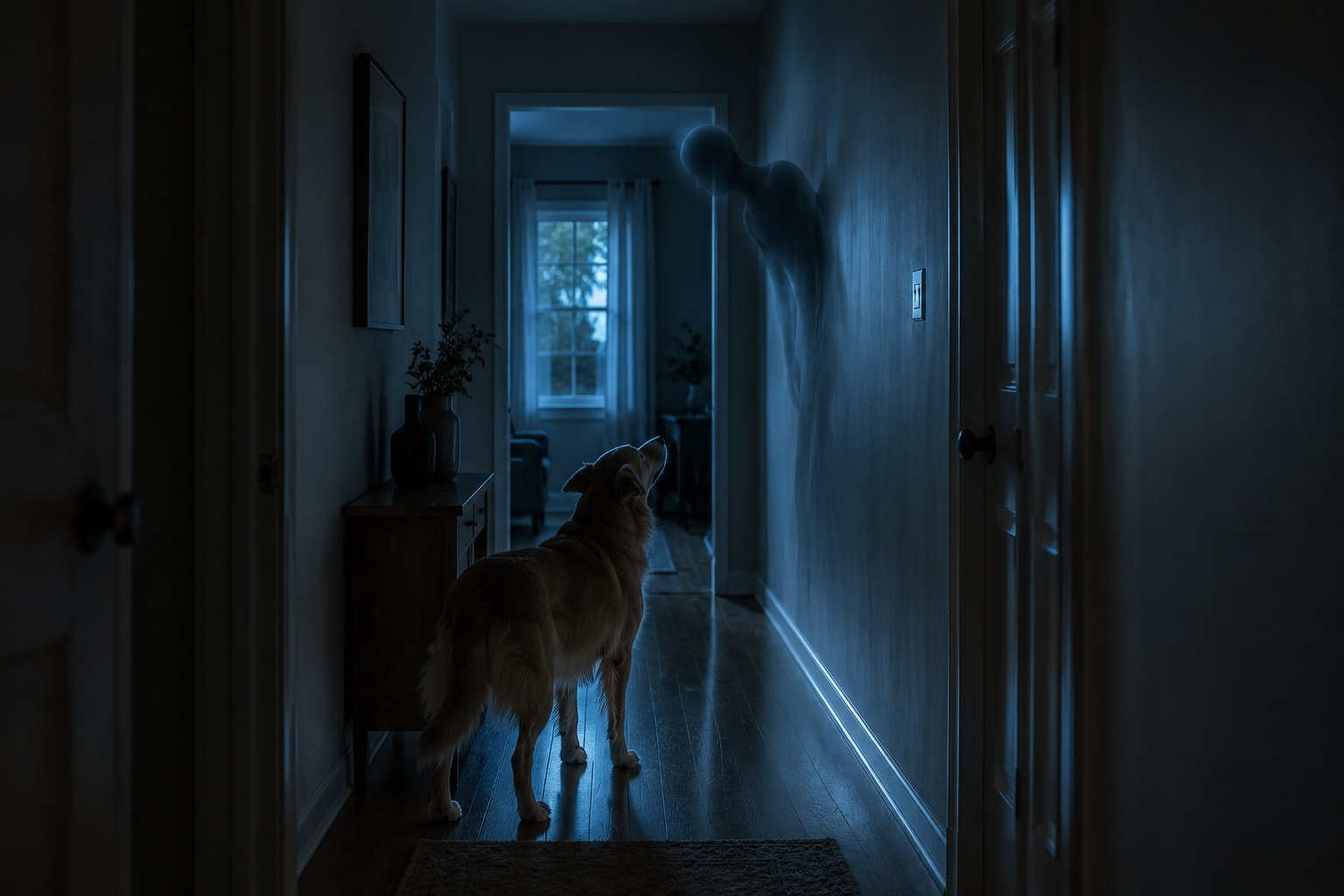
A few mention pets behaving strangely. Dogs sometimes stare down an empty hallway without barking. Cats may freeze while looking toward the same dark corner. These details do not appear in every story, but they show how experiences tend to gather around the same location.
Hallways connect nearly every room in a house. People naturally pass through them many times each day. At night they become quiet transition spaces filled with changing light and deep shadows. That combination makes them memorable.
Whether someone believes these stories reflect unusual perception, vivid imagination, environmental conditions, or something paranormal, the image remains remarkably consistent. A silent figure. Standing at the far end. Watching without moving.
Perhaps that is why the question continues to appear generation after generation. Not because everyone agrees on what they saw, but because so many people describe almost exactly the same unsettling scene before reaching the same uncertain ending. They looked again. And the hallway was empty.