A man had lived in the same house for twelve years before he finally decided to clear out the basement. The room had always felt unfinished. Concrete walls. Old shelves. A furnace humming in the corner. Nothing unusual except one narrow wooden door built into the foundation wall. The previous owner had painted over it years earlier, and heavy shelving had been pushed in front as if nobody expected it to be opened again.
As he carried boxes across the floor, he noticed the same thing every time he passed that corner. The air turned sharply cold. Not gradually. Not because of a draft across the whole basement. Just one patch no wider than a doorway. It was cold enough to raise goosebumps even during summer.
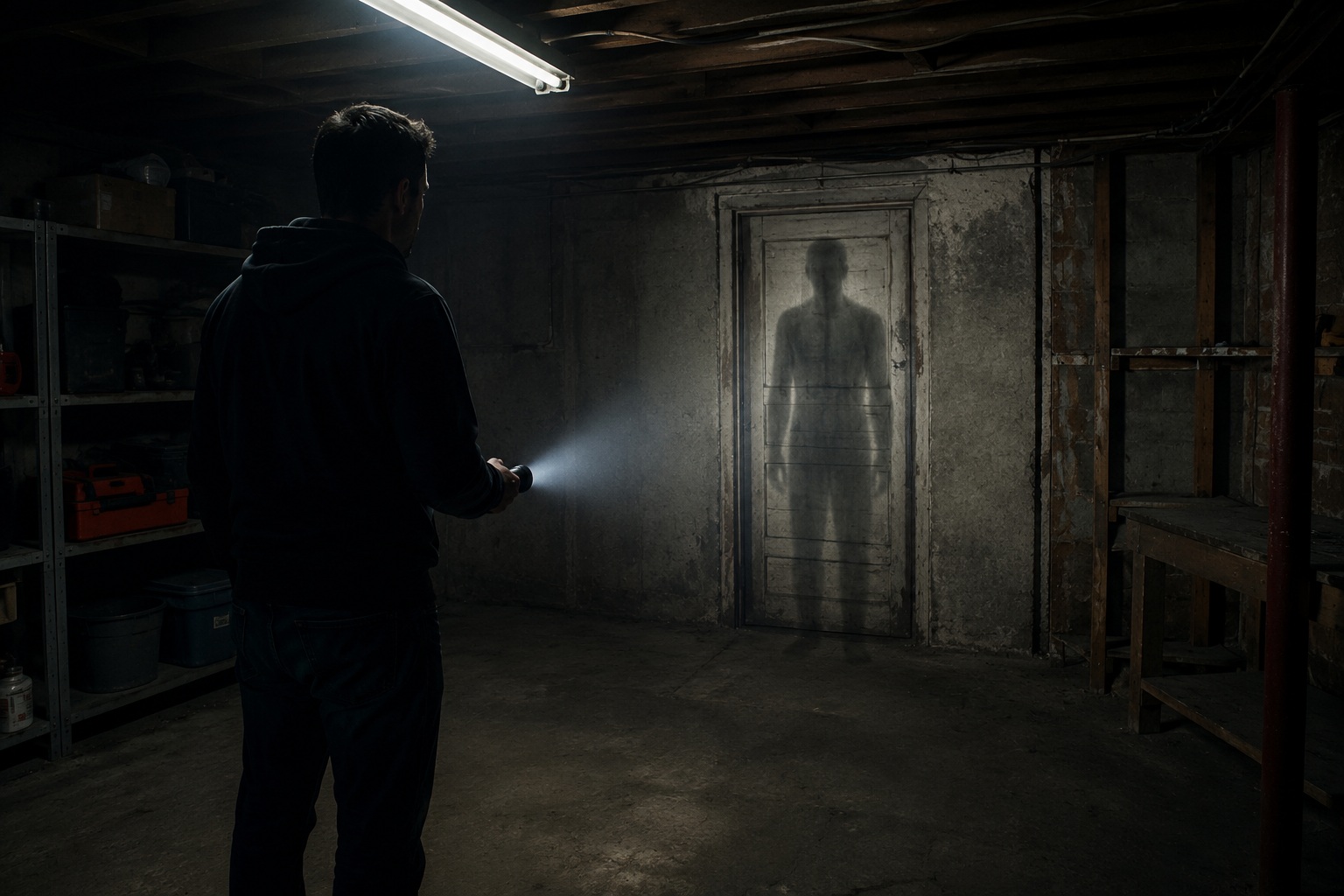
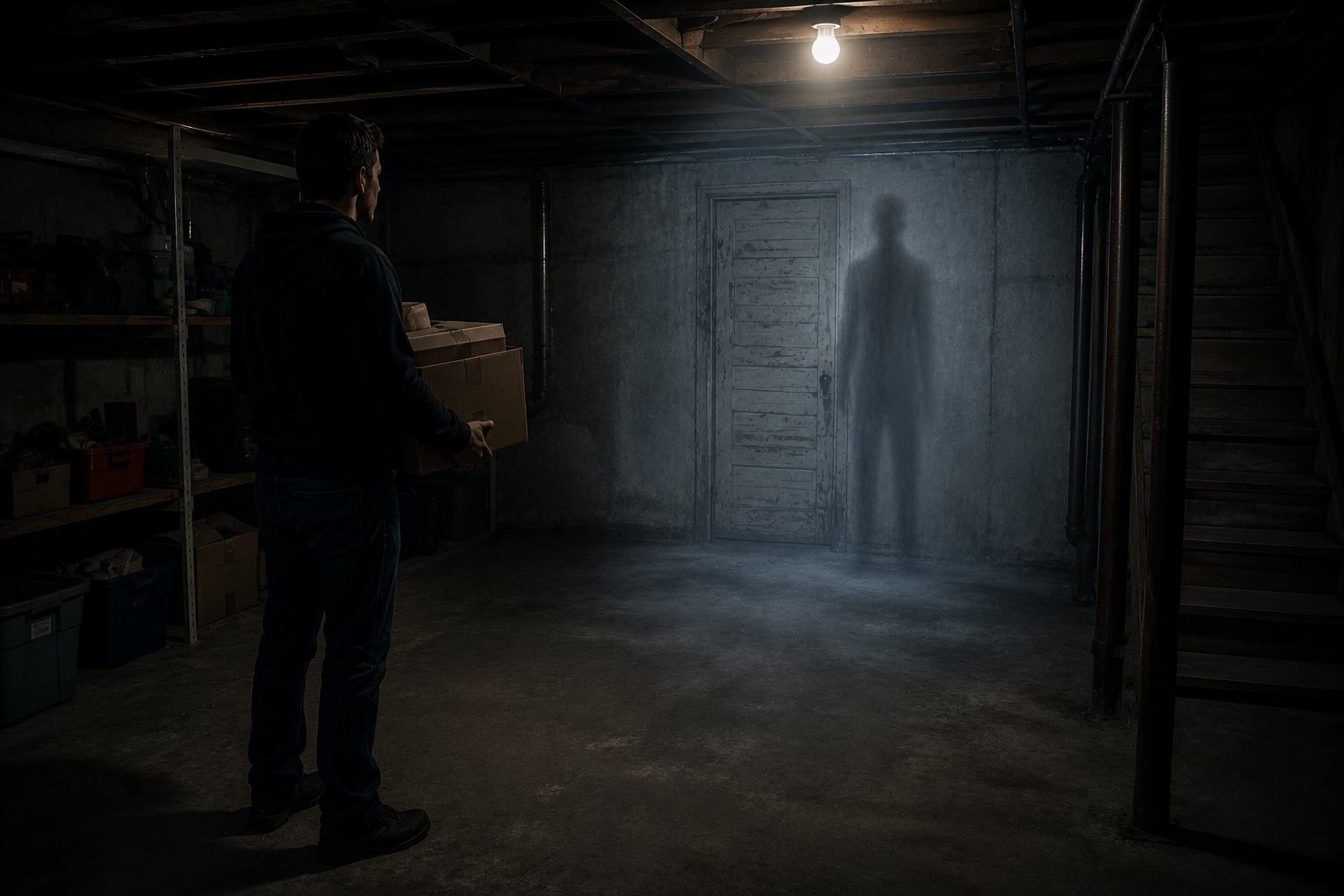
Curious, he moved the shelves away. The door was still shut tight, its edges sealed with old paint. He reached toward the handle. Just before his hand touched it, he looked up. Someone appeared to be standing directly in front of the door. The shape was pale, taller than the doorway, and strangely blurred, as though seen through thin fog. It had shoulders, arms hanging loosely at its sides, but no face. It seemed to lean slightly forward without moving its feet.
He stepped backward. The shape slowly faded into the wall until only the painted door remained. Stories like this appear in many strange-house discussions, old family tales, and witness statements. People often describe one strange detail repeating itself: an isolated cold spot near a basement door that nobody opens anymore. Whether someone believes these stories have a supernatural cause or not, the pattern has become one of the most recognizable parts of modern ghost folklore.
The First Time It Happened
Why sealed basement doors become the center of strange stories Basements already feel different from the rest of a home. The ceilings are lower. Light is weaker. Concrete absorbs sound instead of reflecting it. Small noises echo in unusual ways. When one part of that basement seems colder than everywhere else, people notice immediately.
Many stories describe old storage rooms, coal rooms, root cellars, or unused utility spaces separated by a single forgotten door. Sometimes the door is painted shut. Sometimes furniture has blocked it for years. Sometimes nobody remembers what is behind it.
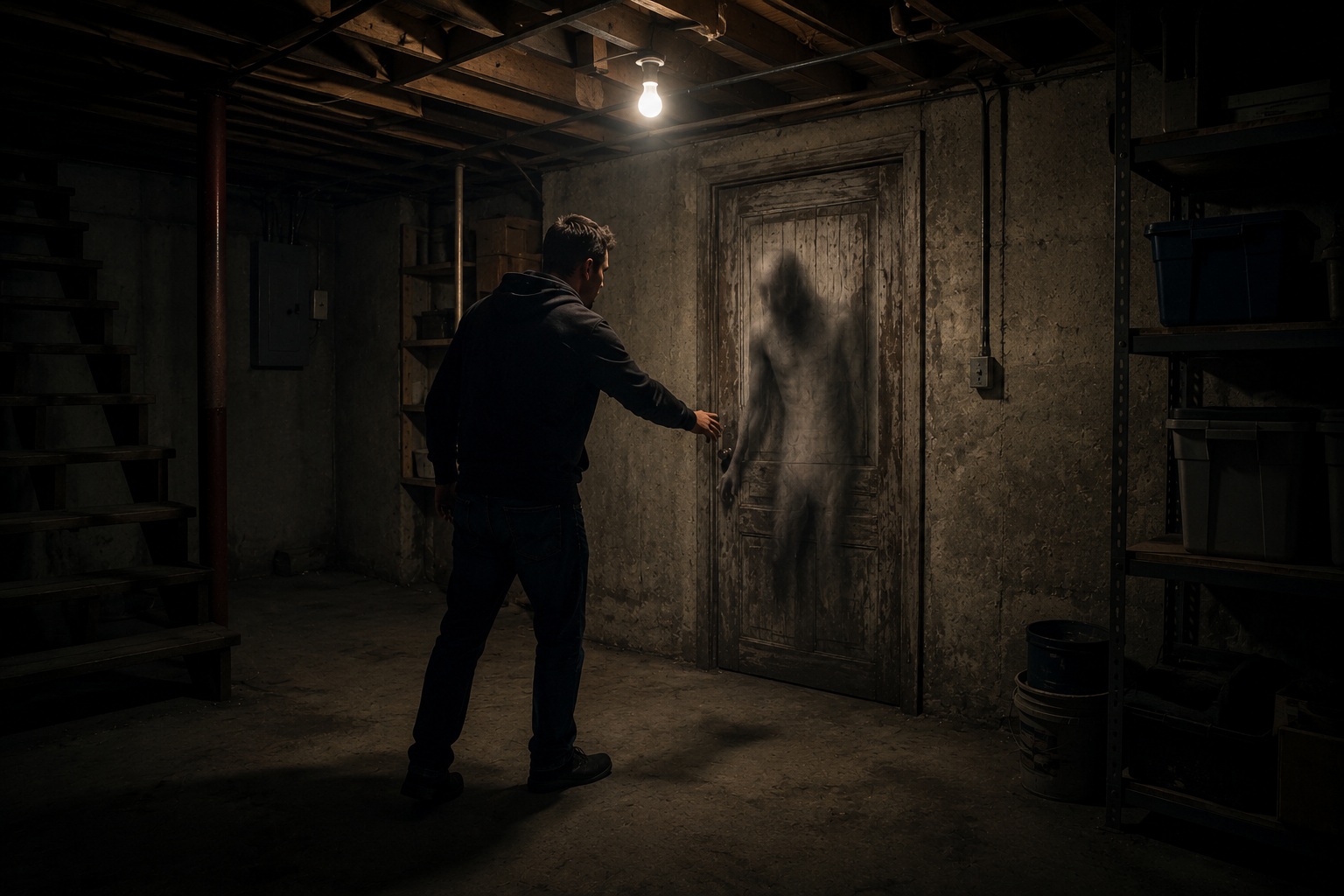
That uncertainty becomes part of the fear. Unlike an ordinary closet upstairs, a basement door often represents somewhere people have intentionally stopped visiting. The imagination naturally fills empty spaces with possibilities. Many witnesses say they only became interested after repeatedly walking through exactly the same cold patch.
Not the entire basement. Only one small area directly beside the closed door. That repeated experience is what makes people wonder whether the location itself matters. Why cold spots feel so unsettling
Why The Place Felt Wrong
Cold air by itself is not frightening. People experience cool drafts every day without thinking much about them. What makes these stories different is how isolated the cold feels. Witnesses often describe stepping into a space only a few feet wide where the temperature suddenly changes before returning to normal after another step or two.
Because the change happens so suddenly, many people instinctively stop walking. They look around. They listen. Once someone expects something unusual, every ordinary basement sound becomes more noticeable.
The furnace starts. Water moves through pipes. Wood settles overhead. Small echoes seem louder than before.
In ghost stories, this is often the moment when people report seeing something that should not be there. Usually it is not a detailed person. Instead they describe a transparent figure standing perfectly still near the sealed door. Sometimes it appears partly inside the wall.
The Detail Nobody Could Explain
Sometimes it seems slightly taller than normal. Almost always, the face cannot be seen. That simple wrong detail is enough to make an ordinary basement feel completely different. What people usually check first
Most people do not immediately assume anything supernatural. Witness stories often describe the same practical checks. They look for an open basement window. They inspect foundation cracks.
They check whether an air vent is blowing toward the door. They examine the weather outside. Some discover ordinary explanations. Older homes can have hidden drafts inside walls.
Cool air may travel through forgotten openings behind paneling. Concrete naturally stays colder than finished rooms above. Seasonal temperature differences can become concentrated near exterior foundation walls. Even after finding possible reasons for the cold, however, some people remain unsettled because of everything happening alongside it.
What They Checked Afterward
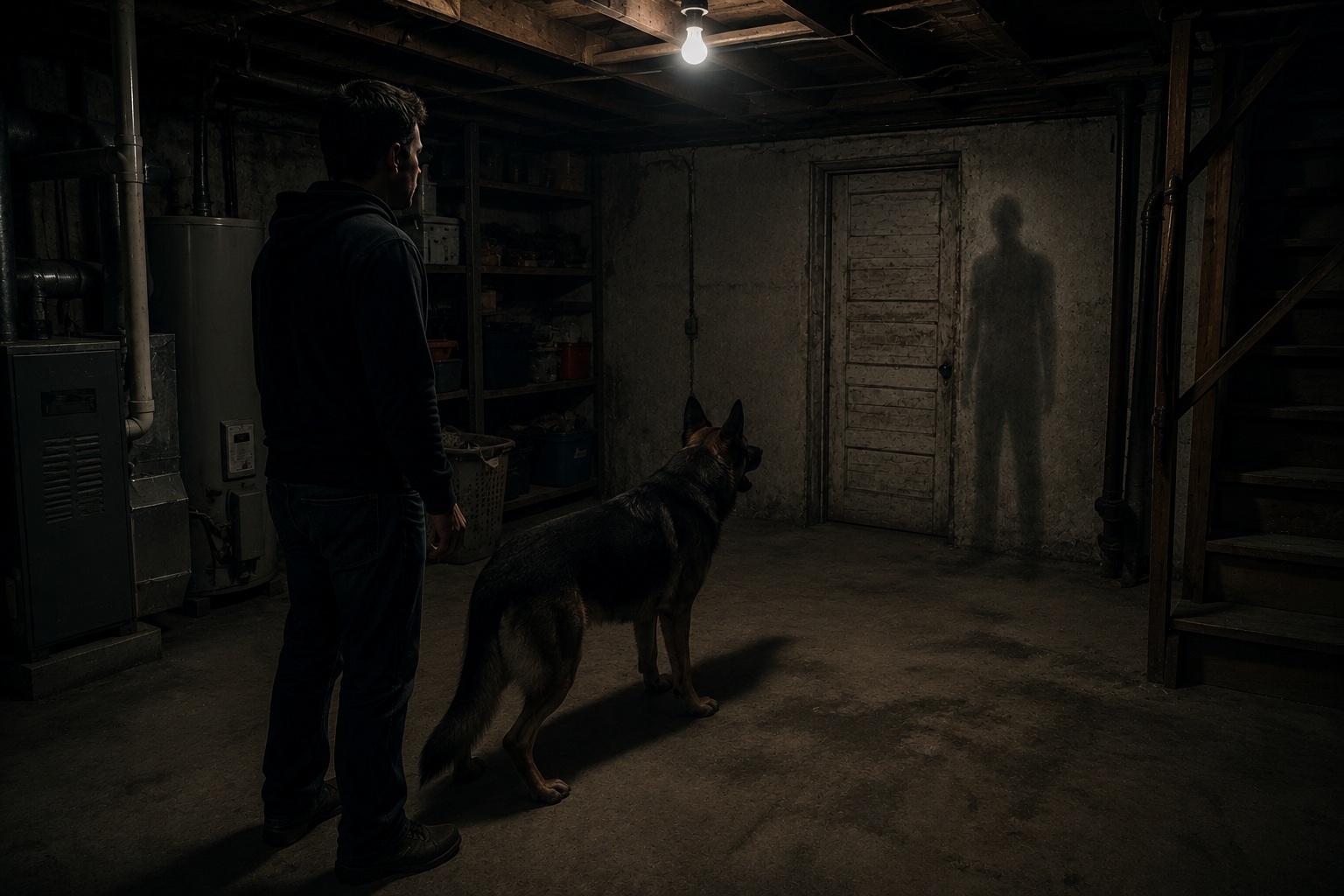
Perhaps the cold spot always seems to appear at the same place. Perhaps the family dog refuses to walk through that corner. Perhaps someone repeatedly feels watched while standing near the door. These extra details are what keep the stories alive long after the temperature itself has been explained.
Ghost folklore rarely depends on one strange thing alone. Instead, several ordinary experiences gather in the same location until people begin connecting them. Why the figure is almost always standing by the door One curious detail appears in many versions of this pattern.
The strange figure is rarely seen walking through the basement. Instead it simply waits. It stands directly beside the sealed doorway. Or in front of it.
Or partly inside it. The figure usually remains silent. Witnesses often describe blurred edges rather than clothing. Some say the arms hang unnaturally low.
The Moment It Became Harder To Ignore
Others describe the upper body fading into the wall while the lower half remains visible. The lack of movement often makes the experience more disturbing. Our brains expect people to shift their weight, breathe, or react when noticed. When something simply stands perfectly still, it feels wrong in a way that is difficult to ignore.
Because the doorway itself is already mysterious, many ghost stories naturally place the figure there rather than somewhere random in the basement. The closed door becomes a visual anchor for the entire experience. Even readers hearing the story years later immediately picture the same scene.
A dim concrete room. One forgotten door. One silent shape waiting in front of it. Why these stories stay with people
Most people eventually stop visiting unfinished basements unless they need something. That means strange moments there remain isolated memories rather than experiences repeated every day. Someone may think about the cold spot every time they carry holiday decorations downstairs. Another person remembers refusing to stand near one particular wall after seeing something they could never explain.
Why People Avoided That Spot Later
Whether the cause was unusual lighting, expectation, a draft, or something harder to describe, the memory often becomes attached to that exact place. Unlike stories about monsters chasing people through forests, basement stories happen somewhere completely ordinary. Millions of homes have basements. Many contain old doors that nobody uses.
Readers can easily imagine discovering one themselves. That familiarity makes the stories feel personal. The setting is ordinary enough that readers begin looking around their own homes. That reaction is part of why these tales continue spreading across generations.
They do not require abandoned castles or forgotten hospitals. Only an old house. One sealed basement door. A patch of cold air that seems just a little too small to be natural.
And, if the story takes its darkest turn, a blurred faceless figure quietly waiting where nobody remembers anyone ever standing. Other strange-house patterns linked to basement cold spots Cold spots rarely appear alone in paranormal folklore. They often appear alongside several other recurring experiences.
Why The Story Still Gets Shared
People sometimes report hearing slow footsteps overhead while standing near the cold area, even when the house is empty. Others describe hearing a single knock from behind the sealed door that never repeats when they investigate. Some say pets react first. A dog may stop several feet away, staring toward the doorway without barking.
A cat may refuse to enter that section of the basement entirely. Another common pattern involves reflections. Someone carrying a flashlight past the door catches what looks like a person standing behind them in a nearby water heater, glass cabinet, or shiny furnace panel. Turning around reveals nothing.
Whether these moments have ordinary explanations or remain personal mysteries, they share the same structure. A familiar place suddenly feels unfamiliar. A forgotten corner becomes impossible to ignore. And a sealed basement door transforms from an ordinary part of an old house into the center of a story people remember for years.
That is why cold spots near sealed basement doors continue appearing in ghost discussions, witness stories, and strange-house folklore. The temperature itself is only the beginning. What people believe they saw—or felt waiting beside that cold patch—is the part they never forget.