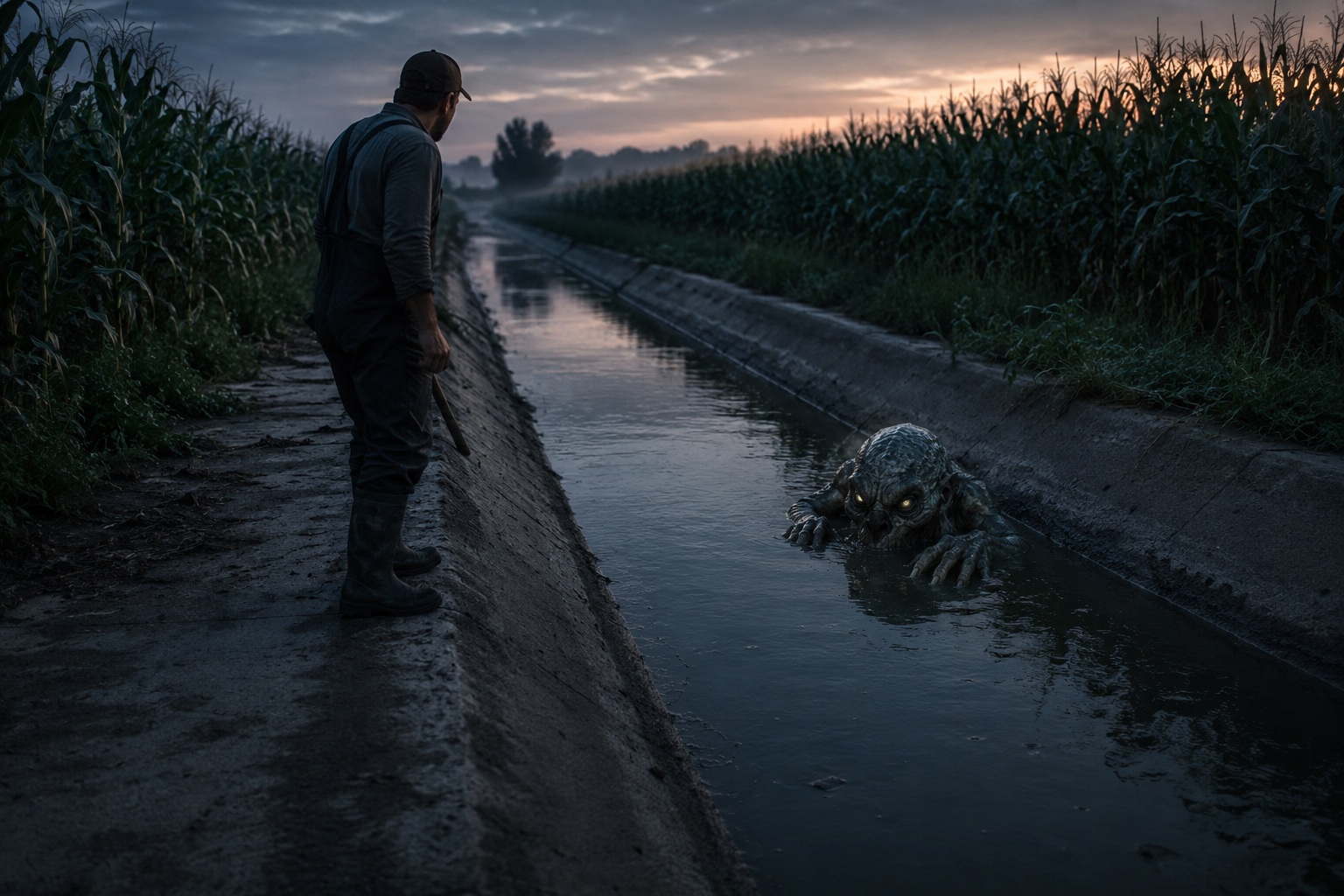
The eyes appeared where the water should have been moving. A farm worker had stopped his pickup beside an irrigation ditch just before sunrise to clear a fallen branch. The concrete channel stretched straight through rows of corn, carrying only a few inches of slow water. Nothing looked unusual until he climbed down the bank.
Halfway to the bottom he noticed that the reflection wasn't changing. The water rippled around the branch, but two bright yellow eyes beneath the surface stayed perfectly still, as if they weren't part of the reflection at all. He froze. The eyes slowly rose until a gray, flat face sat just below the waterline. Long webbed fingers rested on the concrete edge without making a splash. The shape never climbed out. It never blinked. It simply watched him from less than ten feet away.
The man backed uphill without taking his eyes off it. When he reached the truck and looked again, the ditch was empty. The branch still blocked the water. The slow current still flowed around it. There were no footprints in the mud, no large animal running through the nearby crops, and no obvious place for something so large to disappear.
Stories like this appear all over farming communities. The creature changes. Sometimes it has glowing eyes. Sometimes witnesses describe a long pale face, a scaled back, horns, or clawed hands. But one detail repeats surprisingly often: the encounter begins beside an ordinary irrigation ditch that people pass every day without thinking twice.
Why the Ditch Feels Ordinary First
Part of what makes irrigation ditches unsettling is how familiar they are. Unlike abandoned buildings or deep forests, they are designed to be practical. Farmers inspect them every day. Children ride bicycles beside them. Utility workers cross them. Wildlife drinks from them. Nothing about them seems naturally frightening.
That normal setting makes any strange detail stand out immediately. A pair of eyes in the woods might belong to a deer. A face just beneath the water in a narrow concrete ditch feels much harder to explain because people instinctively assume nothing large could live there.
The contrast between an everyday location and an impossible sight is exactly what gives these stories their staying power. The ditch isn't supposed to hide anything. That's why readers immediately imagine themselves standing there.
Most irrigation channels are surprisingly difficult to see into. Dark water reflects the sky while hiding everything below the surface. Algae, mud, floating plants, shadows from crops, and uneven concrete all create moving shapes that constantly change. At sunrise and sunset those reflections become even stronger.
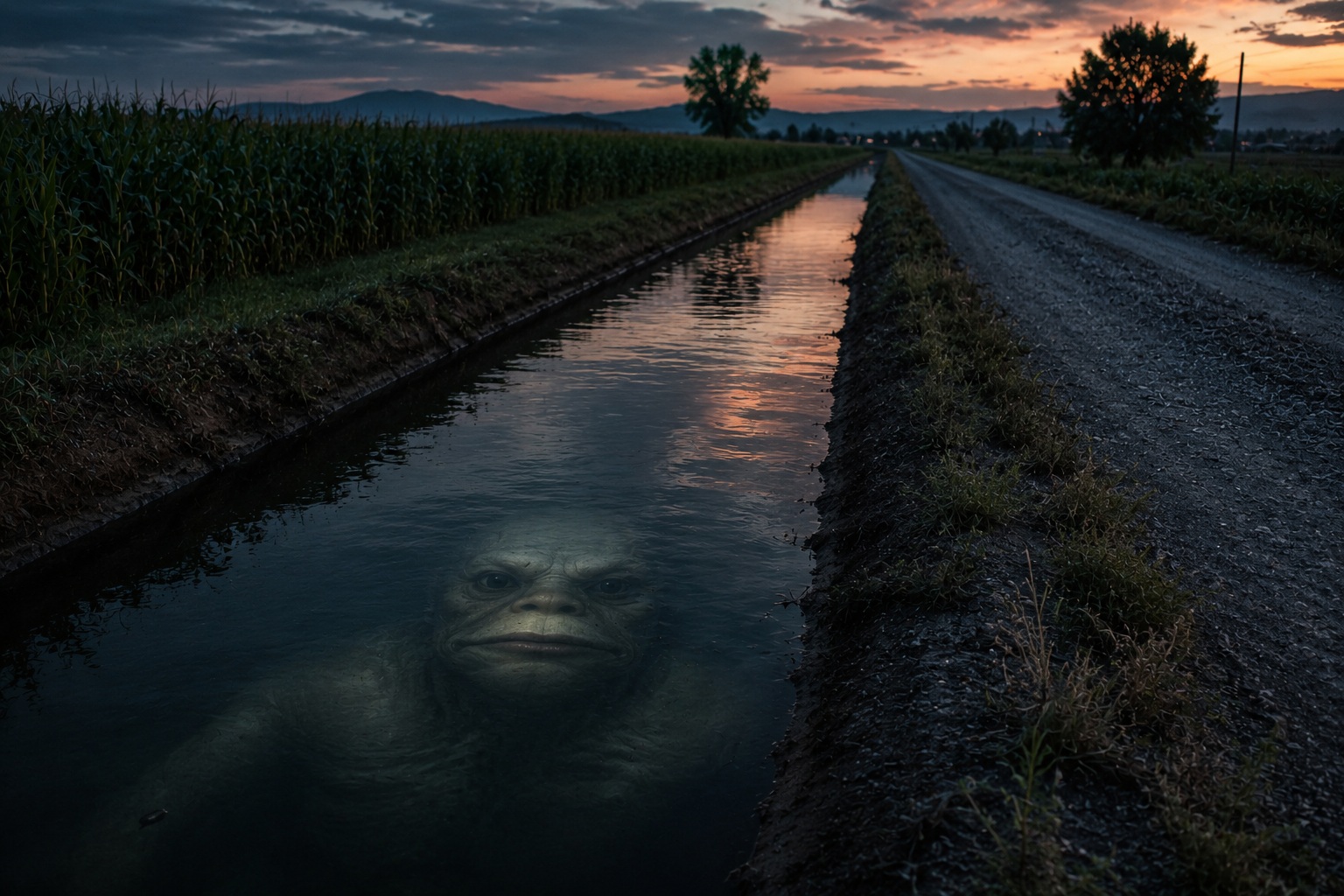
Someone walking beside the ditch might suddenly catch what looks like a face where only water should be. Most of the time there is a normal explanation. A turtle lifting its head. A large carp rolling near the surface.
Why Water Hides More Than People Expect
A muskrat. A floating branch turning in the current. Even reflections from nearby vegetation can briefly resemble eyes or a head. Our brains are extremely good at turning incomplete shapes into recognizable faces.
That's one reason these stories appear so often anywhere calm water meets changing light.
Although every story is different, certain details appear again and again. People often describe the creature remaining almost perfectly still.
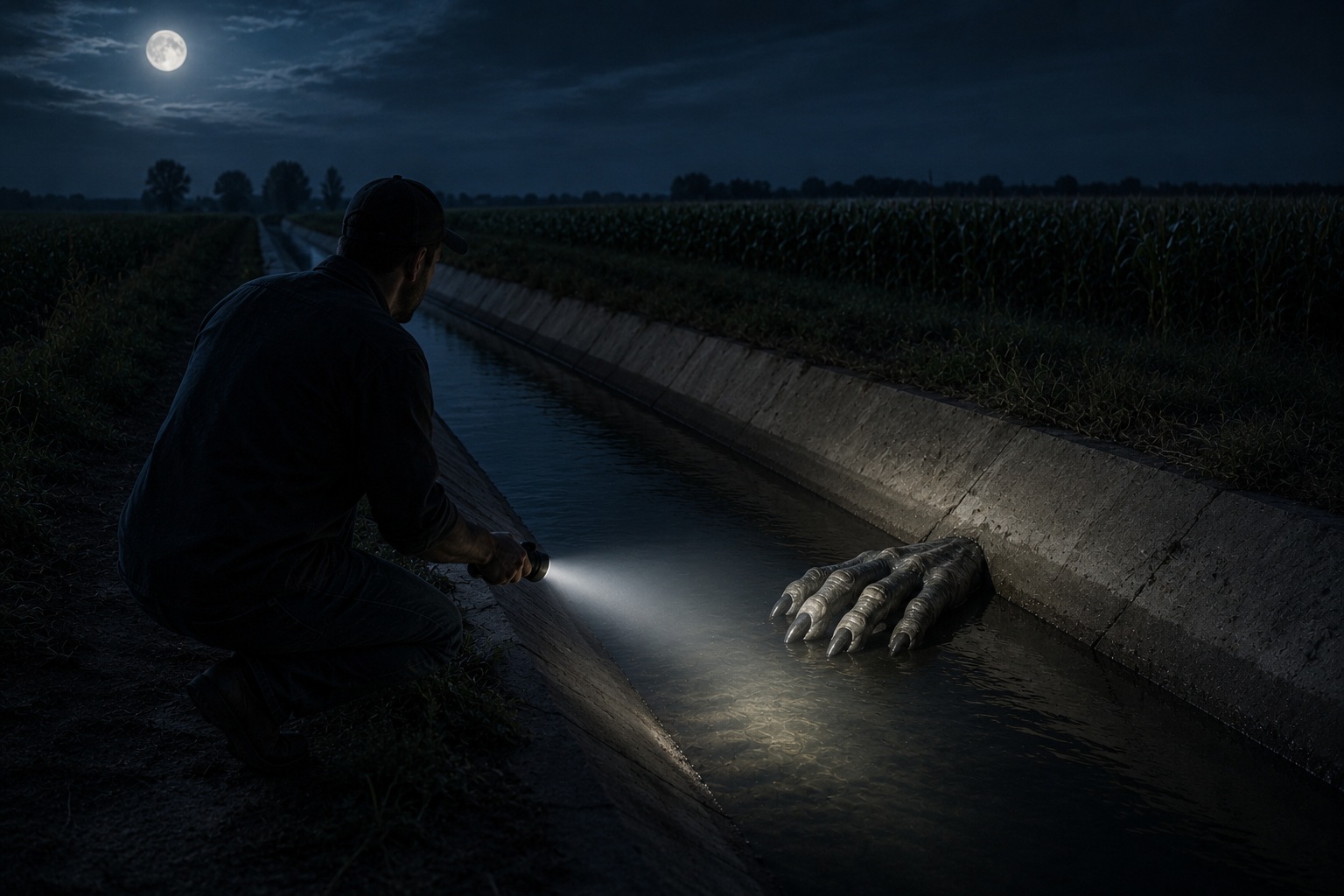
Instead of chasing anyone, it watches. Many reports mention only part of the body becoming visible. Just a hand gripping the concrete edge. Just a pair of eyes.
Just a long face rising slowly above the surface. That limited view leaves room for imagination. The less someone clearly sees, the more their memory fills in afterward. Interestingly, witnesses also tend to remember one physical feature more vividly than everything else.
Large yellow eyes. Webbed fingers. A mouth that seemed too wide. Small horns above the water.
The Detail Witnesses Remember First
A scaled back slipping below the surface. That single memorable feature becomes the image people tell others, while the rest of the encounter becomes less certain over time.
Folklore usually grows around places that sit between two worlds.
Bridges. Riverbanks. Swamps. Caves.
Shorelines. Irrigation ditches fit surprisingly well into that pattern. They aren't natural rivers, yet they carry living water. They cut through otherwise open farmland, creating long narrow corridors where animals travel unseen.
At night those concrete walls trap shadows, making the bottom appear much deeper than it really is. The sound adds another layer. Flowing water masks footsteps. Wind through crops covers small noises.
What People Check Before Believing It
A person inspecting pumps or clearing debris often works alone with limited visibility. Those conditions encourage uncertainty. When something unexpected appears, the location already feels slightly separated from the familiar world just a few yards away. That emotional shift matters almost as much as whatever someone thinks they saw.
One interesting pattern in these stories isn't the sighting itself. It's what happens immediately afterward. People usually look for practical answers before telling anyone.
They search for animal tracks in the mud. They inspect nearby culverts. They look for broken reeds or disturbed water. Some return during daylight expecting to find a logical explanation.
Often they do. Large fish occasionally become trapped in irrigation systems. Otters, beavers, muskrats, raccoons, and other wildlife use canals as travel routes. In some regions even alligators or large snakes unexpectedly appear inside irrigation channels.
Those discoveries explain many frightening experiences. But every so often witnesses report finding nothing unusual at all. The water looks exactly as it always has. That absence of an obvious answer is usually the part they remember most.
When Natural Explanations Feel Less Complete
Not because it settles what happened. Because the ordinary explanation they expected never arrived.
There are moments when people feel the usual answers don't quite match what they experienced.
Someone describes eyes remaining completely motionless while water flowed around them. Another person says the face disappeared without ripples. Someone else insists the creature seemed far too large for the shallow channel. Those details naturally invite paranormal interpretations.
At the same time, memory is not a perfect recording. Fear changes perception remarkably quickly. Distance becomes difficult to judge. Objects appear larger.
Time seems slower. Our brains also tend to smooth missing information into complete stories afterward. That doesn't mean witnesses are inventing what they experienced. It simply means frightening moments are rarely remembered with photographic precision.
Why Farming Communities Repeat These Stories
Understanding that helps explain why two honest people can describe the same event differently.
Creature stories don't survive because everyone believes them. They survive because everyone knows the location.
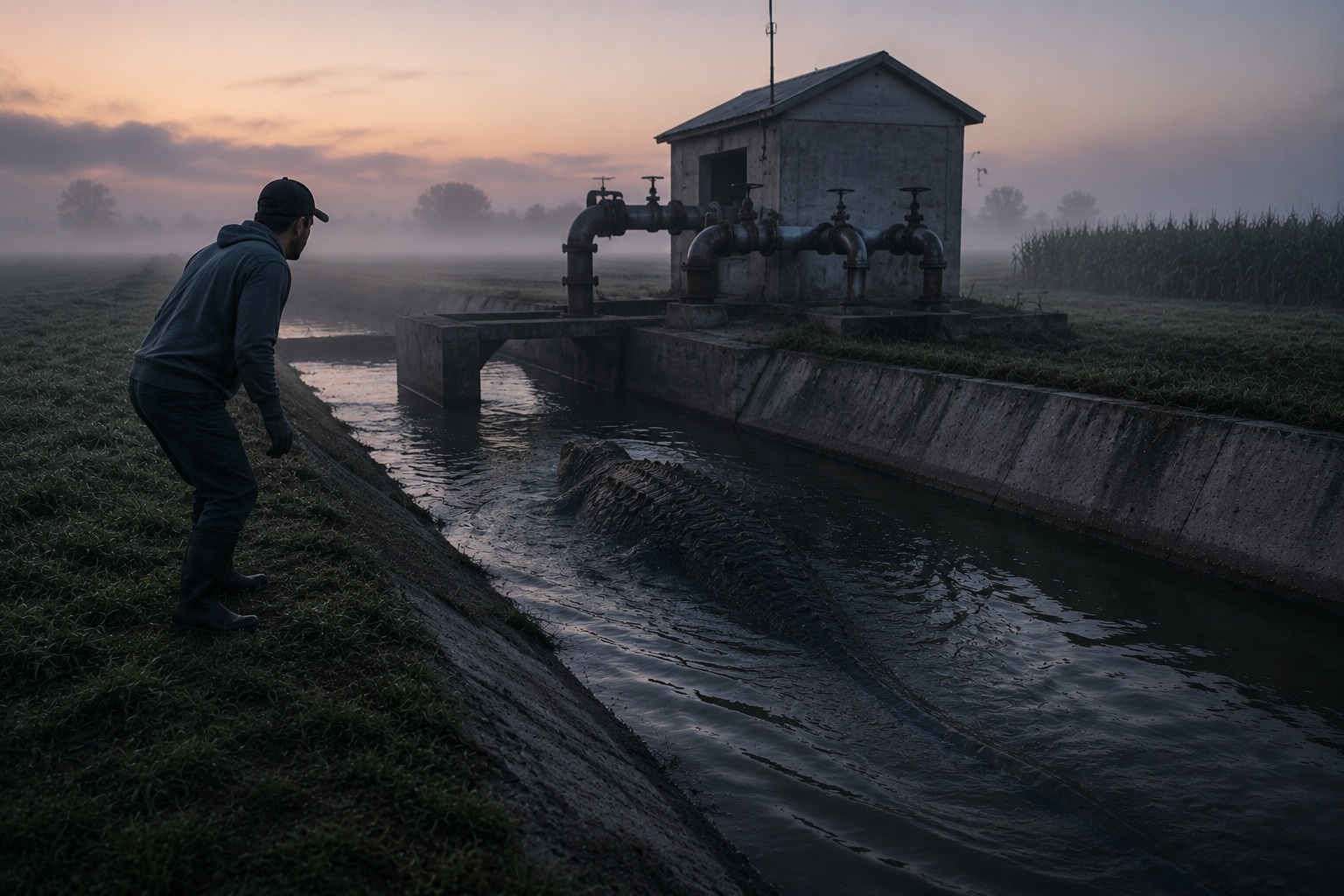
Nearly every farming community has a drainage ditch, irrigation canal, pump station, or narrow water crossing. That shared landscape makes each new story feel possible. Someone listening can immediately picture the place. The next time they drive past before sunrise, they remember the tale.
Suddenly every floating log deserves another look. Every ripple catches attention. Every pair of reflected headlights across water seems slightly stranger than before. That's how folklore grows.
The location becomes part of the story itself. Eventually people stop talking about one specific sighting and start talking about "the ditch where strange things happen." Whether anything unusual ever lived there becomes almost secondary. The place has already earned a reputation.
Image Refuses To Leave Your Mind Many monster stories involve forests, mountains, or isolated lakes. Irrigation ditches are different. They exist beside ordinary roads, working farms, and places people visit every week.
Why the Image Refuses to Leave Your Mind
That familiarity creates a disturbing question. If something impossible could appear there, where else might it appear? The strongest versions of these stories rarely end with an attack. Instead they end with a silent stare.
The creature doesn't leap from the water. It doesn't roar. It simply watches until the witness leaves. That ending feels unfinished, which is exactly why it lingers.
Our minds naturally search for conclusions, and these stories never provide one. Was it a hidden animal seen under terrible lighting? A mistaken reflection remembered years later? A piece of local folklore attached to a familiar landmark?
Or did someone briefly see something that doesn't fit comfortably into any of those answers? No one can say for certain. But the next time you pass an irrigation ditch early in the morning, you may notice something you ignored before. Not the water.
Not the concrete. The quiet. Because in almost every version of these stories, the unsettling moment begins only after everything else becomes completely still.