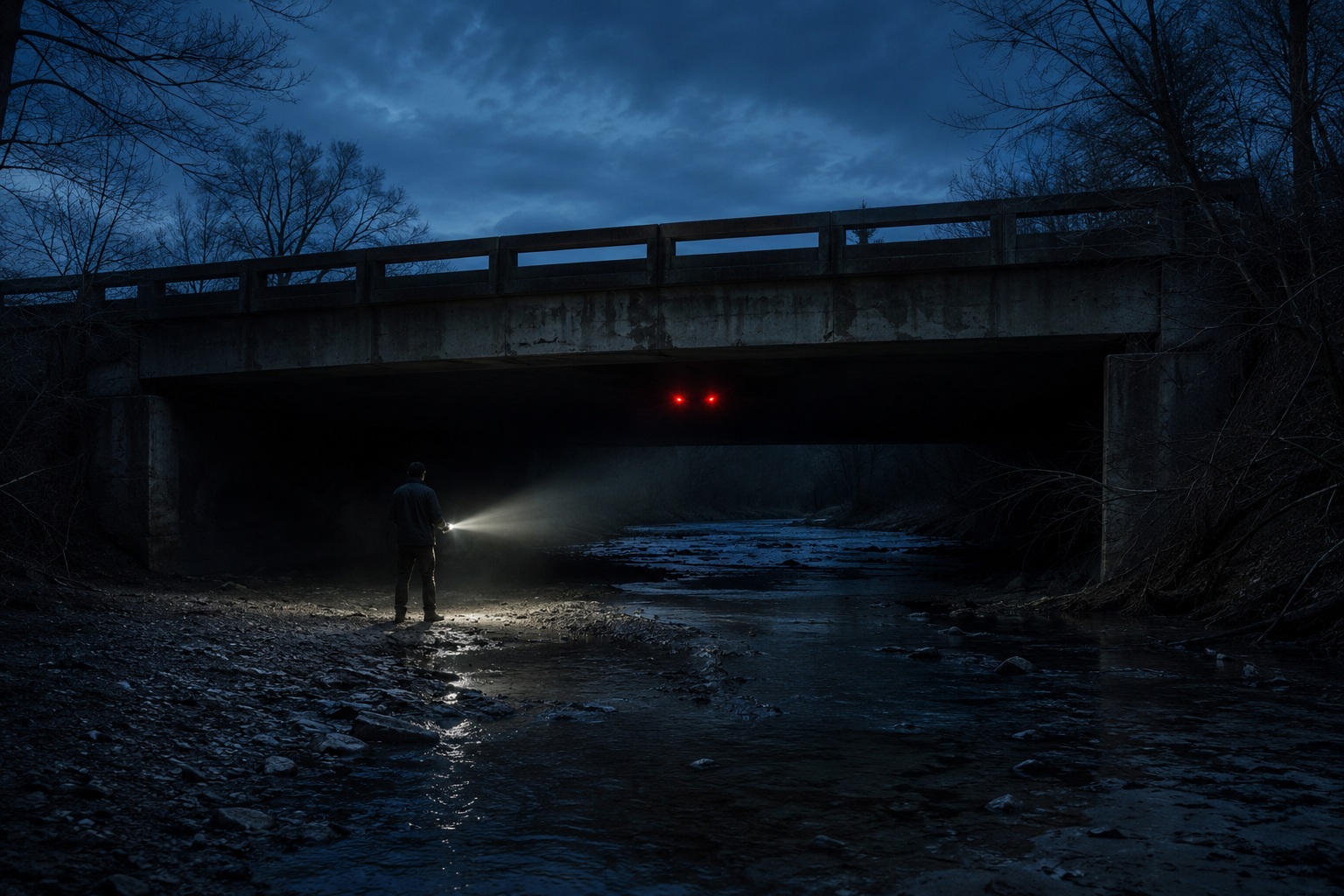
The eyes blinked exactly once. That was the detail the man couldn't explain later. He had walked beneath the old concrete bridge dozens of times on evening fishing trips. The narrow creek below was almost dry, leaving scattered pools between rocks and patches of reeds. Nothing unusual ever happened there.
As he passed under the center span, he noticed two deep red points reflecting from the darkness beneath the bridge where the concrete met the water. At first he assumed they belonged to a raccoon or another animal hiding from the fading daylight. He stopped, expecting the creature to run.
Instead, the eyes stayed perfectly level. Then they blinked together. The strange part wasn't the color. It was the height. Whatever owned those eyes wasn't standing on the creek bed. They appeared several feet above the water, as though something was crouched against the underside of the bridge itself. The man raised his flashlight. The beam reached cracked concrete, damp stains, and hanging roots—but nothing with a face.
When he lowered the light, the eyes were back. Stories like this appear almost everywhere bridges cross quiet water. Some describe glowing red eyes beneath railroad bridges. Others mention old stone arches, highway overpasses, or forgotten footbridges in the woods. Sometimes witnesses report seeing only the eyes. Other times they describe claws, a broad head, or a shape that disappears the moment they try to get a better look.
Why do so many creature stories return to the same unsettling image? Why are bridges—and especially the darkness beneath them—such common settings for glowing red eyes?
The First Time It Happened
Bridges change the landscape in a way few other places do.
Even during daylight, they create deep shadows that don't match the surrounding environment. Sound echoes strangely beneath them. Water reflects movement. Wind changes direction. Animals often shelter there because the space stays cooler and drier than open ground. At night those ordinary features become far more unsettling.
A flashlight doesn't spread evenly beneath a bridge. Concrete pillars break the beam into separate pools of light. Reflections shimmer across wet surfaces. Looking into darkness under a bridge often means staring into layers of shadow rather than one empty space. Many witness stories begin with someone noticing something that doesn't seem to belong there.
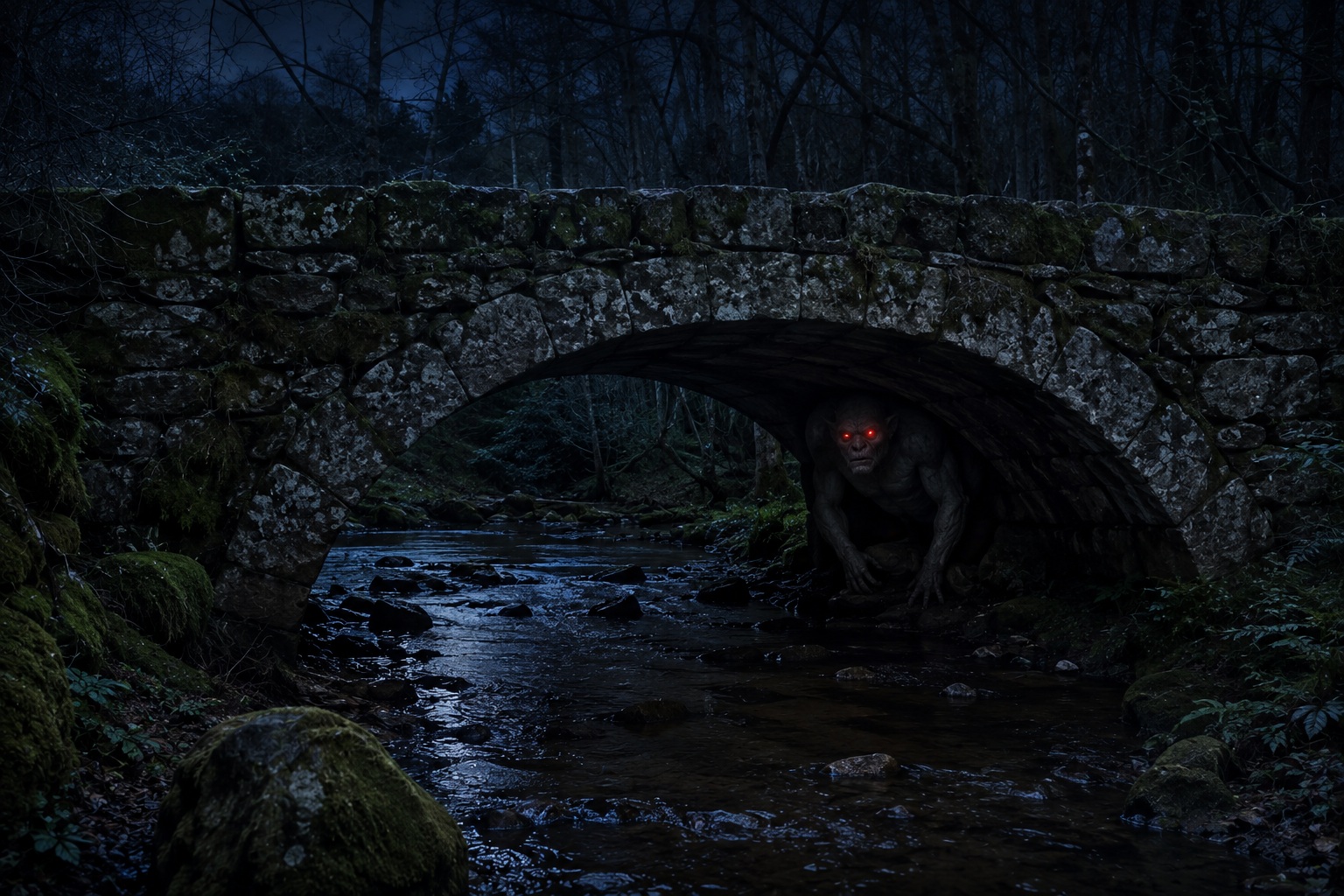
Perhaps two glowing points remain motionless while insects fly past them. Maybe something appears to be watching from a gap between support beams. Sometimes the eyes disappear the instant someone takes another step forward. The setting itself creates tension before anything unusual is even described.
That helps explain why bridges have become such popular locations in folklore. They already feel like places where something could be hiding.
Interestingly, many reports don't begin with someone seeing an entire creature. They notice the eyes first.
Why The Place Felt Wrong
That small detail matters because human vision is naturally drawn toward bright points in darkness. Two matching reflections immediately suggest a living face, even when the surrounding body cannot be seen clearly. Witnesses often describe stopping to identify the animal. They expect deer. They expect an owl.
They expect a stray dog. Instead, the details slowly stop fitting. The eyes appear too far apart. Too high above the ground.
Too close together. Perfectly still for far too long. Some reports describe the reflections remaining visible even after the witness changes position, something normal eye shine from an animal usually doesn't do. Others mention the eyes seeming to watch without the small head movements most animals make.
Whether these memories are perfectly accurate or shaped by fear afterward, the pattern repeats often enough that glowing eyes become the entire focus of the story. The creature itself stays uncertain. The eyes remain unforgettable.
The Detail Nobody Could Explain
Most people don't immediately decide they've seen something impossible. Instead, they begin eliminating ordinary explanations. They shine a brighter flashlight. They throw a pebble toward the water.
They listen for movement. Some walk farther downstream to change the viewing angle. Others return during daylight to inspect the exact location. Many discover ordinary things that could explain part of what happened.
Bridge reflectors. Wet bolts. Discarded bottles. Animal tracks.
Owls nesting among beams. Raccoons climbing along supports. Foxes hiding beneath brush. These discoveries explain many frightening moments.
Bridges attract wildlife because they provide shelter, nesting locations, and easy access to water. Yet some stories continue because witnesses insist those explanations don't quite match what they remember. Perhaps the reflections were too large. Perhaps they blinked after the flashlight moved away.
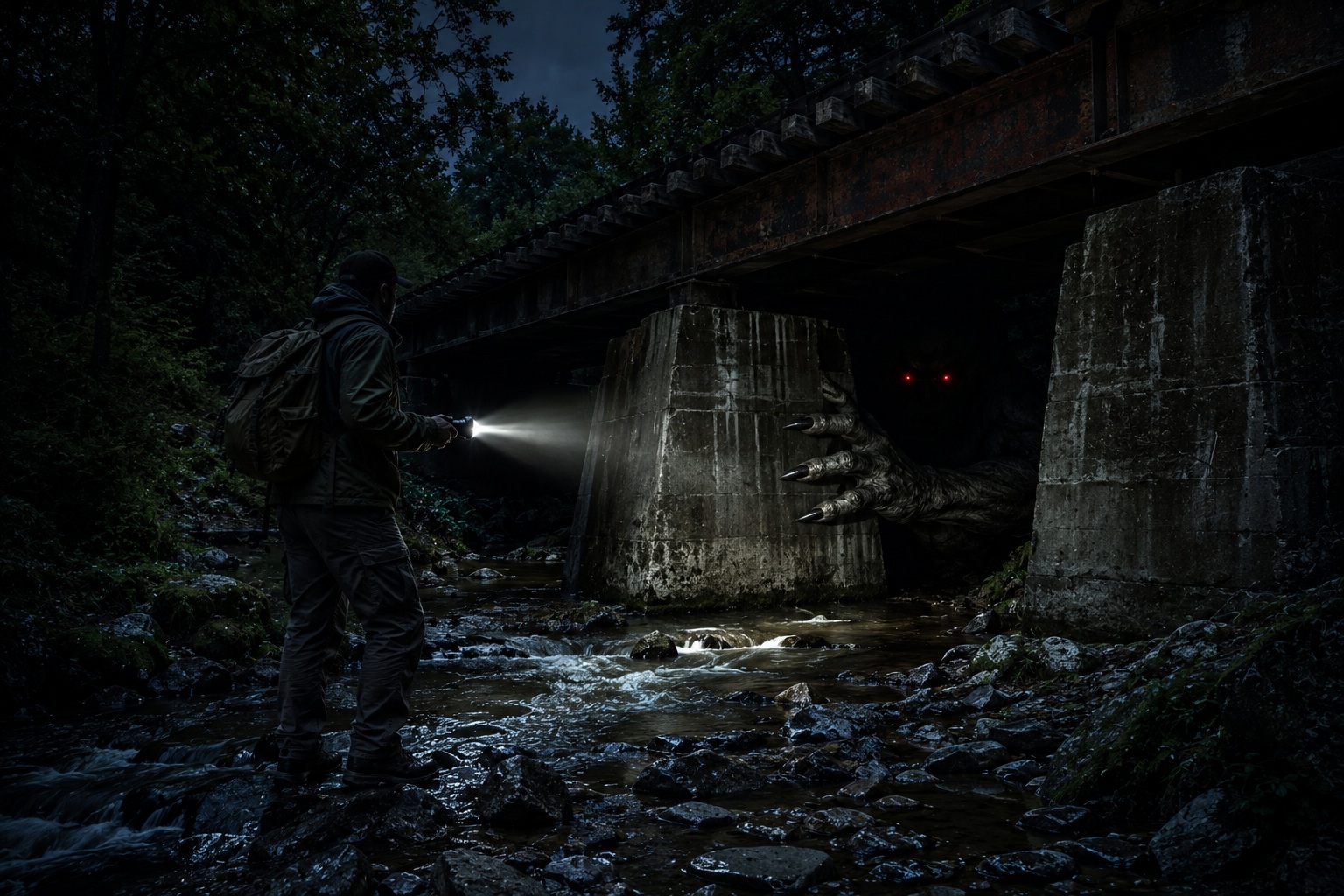
Perhaps the height simply didn't make sense. Those unanswered details keep the memory alive long after the walk home.
What They Checked Afterward
Nearly every creature story eventually reaches the point where someone says, "It couldn't have been…"
That sentence deserves careful examination. People frequently overestimate distances at night. A branch hanging over water may seem much farther away than it really is. Reflections on moving water can shift the apparent location of glowing eyes by several feet. Fear also changes perception. Once the brain suspects danger, it begins filling missing information with possibilities instead of certainty.
But some witness accounts include combinations of details that continue to puzzle the people who experienced them. The eyes remain visible while no body can be seen. A large splash never follows. No climbing sounds echo against the concrete.
Nothing runs into nearby brush. Several witnesses describe the eyes disappearing instantly without obvious movement. These aren't impossible events. They simply become harder for the witness to match with what they expected to find.
That uncertainty is exactly where folklore grows. Instead of ending with an identified animal, the story ends with a question.
The Moment It Became Harder To Ignore
Glowing red eyes appear in creature legends from many cultures.
Interestingly, most animals don't actually have naturally red glowing eyes. The color often comes from artificial light, flashlight angles, or camera flashes reflecting inside the eye. Different animals produce different reflection colors depending on lighting conditions. Memory can also exaggerate color over time. Someone who first described orange reflections may later remember them as deep red after repeatedly telling the story.
Red carries emotional weight. People associate it with danger, warning lights, blood, and predators. When an already frightening memory becomes part of local storytelling, the color often grows more dramatic with each retelling. Eventually the creature isn't remembered for its size.
It becomes "the thing with the red eyes under the bridge." The eyes become its identity. Every later story borrows that image because listeners immediately recognize it.
Why People Avoided That Spot Later
Bridges appear in creature stories across rural roads, city drainage channels, hiking trails, and abandoned railway crossings. Despite the different locations, many descriptions share similar surroundings. There is usually shallow moving water. Heavy shadows.
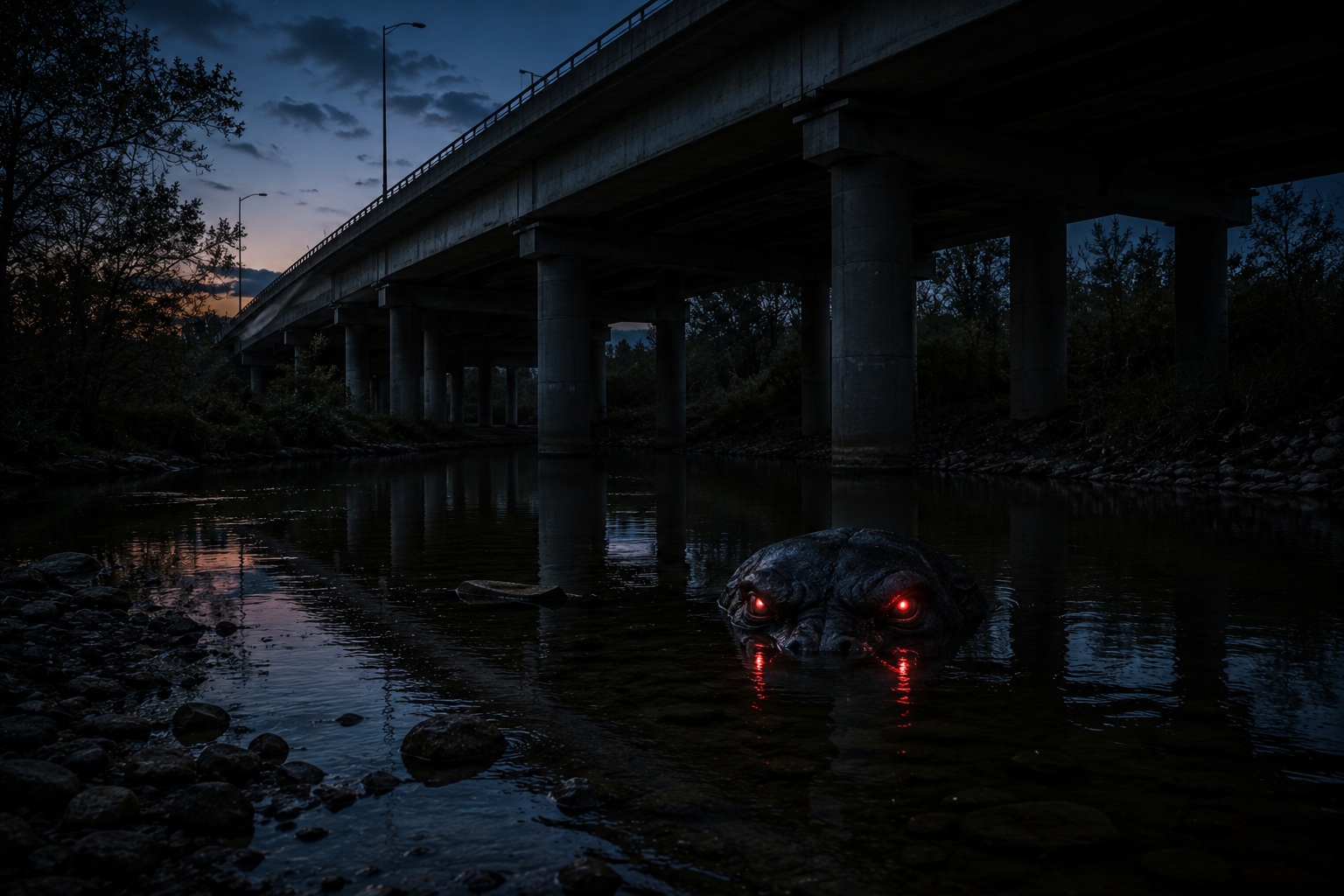
Limited escape routes. Concrete or stone surfaces that reflect sound strangely. People are often alone. Some are fishing after sunset.
Others are walking dogs. Drivers stop after noticing something unusual from the roadside and investigate on foot. The bridge becomes more than scenery. It creates a narrow passage where people naturally slow down.
That slower pace gives them time to notice details they might ignore elsewhere. A strange reflection. An unexpected sound. Eyes watching from the darkness.
Because bridges already occupy an unusual place between one side and another, many cultures have long treated them as symbolic crossing points. That symbolism quietly reinforces modern creature stories even when witnesses never think about folklore at all.
Why These Stories Stay With People Most frightening experiences disappear quickly once an explanation appears.
Why The Story Still Gets Shared
Creature stories beneath bridges often survive because the explanation remains incomplete. Perhaps every detail individually has a reasonable answer. The glowing eyes might belong to an owl. The strange height might result from perspective.
The silence might simply reflect an animal freezing instead of running. Yet people rarely remember experiences as separate facts. They remember the feeling. The bridge suddenly becoming quiet.
The sensation that something noticed them first. The uncomfortable pause before deciding whether to walk forward or turn back. Even years later, witnesses often say they remember the moment they realized they were no longer casually observing the darkness. They felt the darkness observing them.
Whether the cause was an unusually positioned animal, unusual lighting, mistaken distance, or something the witness still can't explain, that emotional shift becomes the heart of the story. Perhaps that's why red eyes beneath bridges appear again and again in creature folklore. The image combines an ordinary place everyone recognizes with one simple impossible detail.
Two silent eyes. Perfectly still. Waiting beneath the bridge until someone looks down.