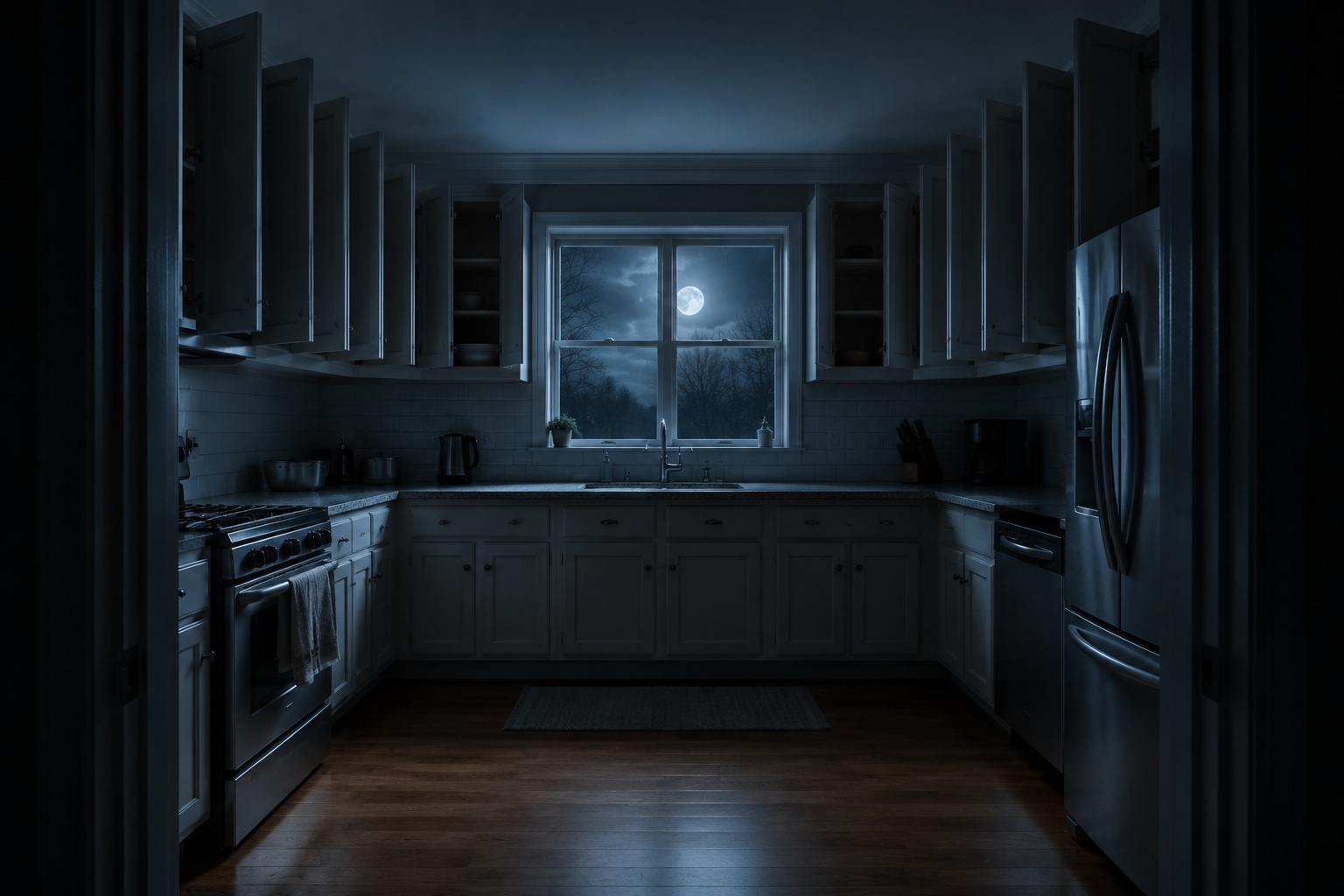
The first cabinet wasn't the frightening part. It was the third one. A woman walked into her kitchen after waking suddenly a few minutes after 3 a.m. She had only come downstairs for a glass of water. The room was quiet except for the soft hum of the refrigerator. Moonlight reached across the floor, turning the white cabinets gray.
The cabinet above the coffee maker stood open. She frowned because she always closed it before bed. Then she noticed the cabinet beside it was open too. And the next one.
Not hanging at random. Not partly open from worn hinges. Every upper cabinet stretched outward at nearly the same angle, creating one perfectly even row across the wall. The lower cabinets remained closed. Every drawer stayed shut. Nothing had fallen onto the counter. She closed them without thinking.
The last cabinet clicked shut. From somewhere behind her came another quiet click. When she turned around, the first cabinet had opened again by itself. Stories like this appear in ghost collections, online discussions, family stories, and late-night conversations surprisingly often. The details change, but one strange feature returns again and again: the doors don't seem randomly disturbed. They appear arranged, almost as though someone deliberately opened them into a neat pattern.
That unusual detail is what makes people remember the story—and why the question keeps coming back.
The First Time It Happened
If you walked into a kitchen after midnight and found one cabinet open, most people would assume they forgot to close it.
Two cabinets? Still believable. But an entire row opening to nearly identical positions creates a very different feeling. Human minds are good at recognizing patterns. We naturally assume organized arrangements come from intention. Even if there is no clear explanation, the brain immediately begins asking who created the pattern instead of whether the pattern happened naturally.
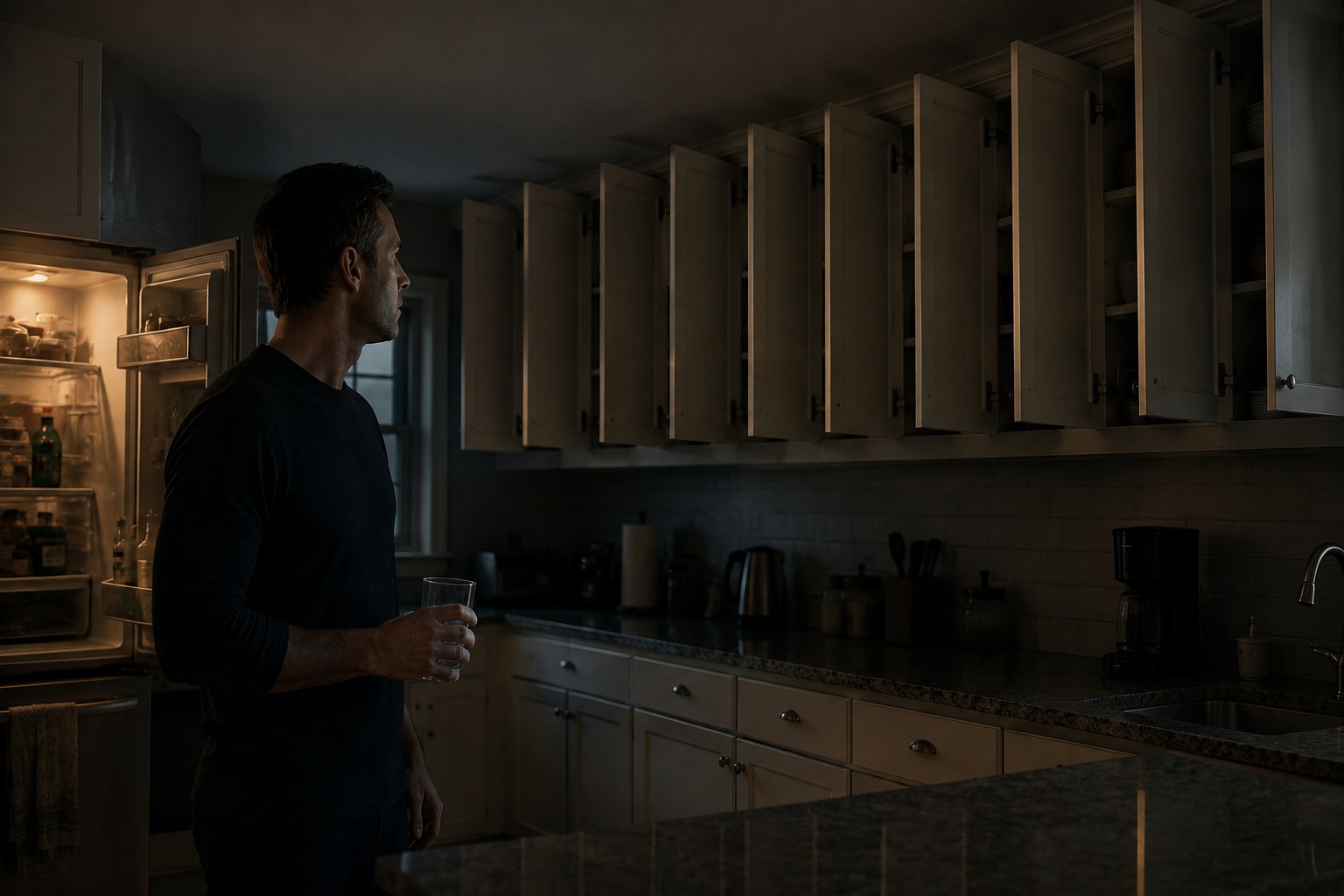
That is why these stories spread so easily. The frightening part isn't simply that doors are open. It's that they appear organized. Witnesses often describe every cabinet stopping at almost exactly the same angle, as though someone measured the spacing. Others report alternating cabinets standing open while the ones between remain closed. Some describe only the upper cabinets opening while everything below stays untouched.
The order itself becomes the mystery.
People who tell these stories usually remember surprisingly ordinary things before anything strange. The kitchen lights were still off.
Why This Pattern Feels So Specific
Nothing had been knocked from the shelves. Glassware remained standing. Pet food stayed untouched. There were no muddy footprints.
Many people even describe the silence. Instead of hearing cabinets swing open, they simply discover them already waiting. Others hear one soft wooden click every few seconds before finding another cabinet slowly moving outward. The sounds are rarely loud.
They're often compared to someone gently opening a cupboard while trying not to wake the rest of the house. Some witnesses say only one side of the kitchen changes. Others notice every cabinet facing a dining table but not those on another wall. Whether those details matter or not, they become unforgettable because they make the room feel intentional instead of messy.
Most cabinet stories have ordinary explanations. Kitchen cabinets can drift open if they're slightly tilted, if hinges have loosened, or if magnetic catches have worn down over time. Older homes may settle enough for doors to swing.
Humidity can slightly change wooden frames. Even vibrations from heavy appliances may move doors that weren't fully latched. People also underestimate how often they leave one cabinet partly open during busy evenings. Memory after waking suddenly can be unreliable.
The Detail That Makes People Stop
Because of those possibilities, many witnesses immediately test everything. They reopen and close every cabinet. They examine the hinges. They check whether doors swing naturally.
They look for pets climbing counters. Some even place tape on cabinet edges before bed to see whether doors really move overnight. Most of the time, one of those checks explains the problem. The story ends there.
But the reports people continue talking about usually have one extra detail that doesn't fit as neatly.
Imagine every upper cabinet in a long kitchen standing open to almost exactly forty-five degrees. Not one wider.
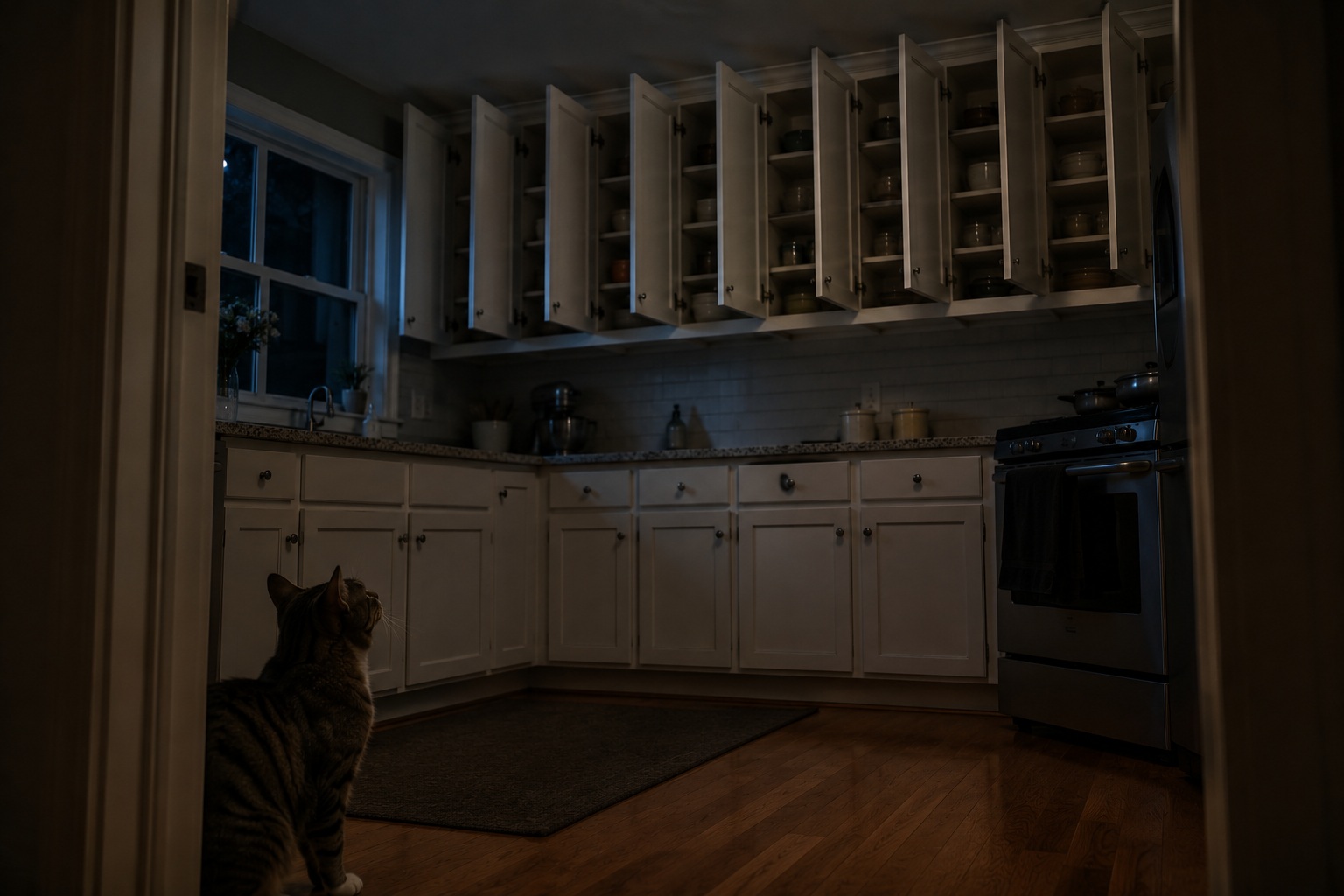
Not one narrower. If loose hinges caused the movement, people wonder why every cabinet stopped so evenly. Others describe finding every cabinet closed after checking them carefully, only to return minutes later and discover the row open again. Some report hearing only a single click, yet finding multiple doors already open.
Ordinary Explanations People Check First
Others mention pets behaving oddly. Cats freeze at the kitchen entrance without entering. Dogs stare toward the cabinets while refusing treats. Animal behavior doesn't automatically mean anything supernatural, but it becomes another memorable piece of the story because it happens alongside the unusual arrangement.
A few stories become stranger still. Witnesses say one cabinet remains open no matter how many times they close it. Or the row slowly changes over several nights, with one additional cabinet joining the pattern each evening. Those details keep people wondering because they seem less random than ordinary household movement.
Unlike attics or abandoned houses, kitchens are ordinary places. Everyone knows how a kitchen should look. Every cup has a shelf.
Every plate belongs somewhere. The room represents routine. Morning coffee. Family meals.
The Moment It Became Harder To Ignore
Late-night snacks. Finding that familiar place quietly rearranged creates a stronger emotional reaction than discovering something strange somewhere already expected to feel creepy. Many traditional ghost stories also treat kitchens as places where people gather every day. Because families spend so much time there, even small changes become obvious.
An open cabinet stands out immediately. A moved chair gets noticed. A missing mug feels important. The kitchen becomes unsettling precisely because it is so familiar.
In older folklore, household spirits were often said to move everyday objects instead of performing dramatic events. Doors opened. Bowls shifted. Chairs scraped.
Cupboards clicked. Modern cabinet stories fit comfortably into that tradition even if the people telling them don't think about old folklore at all. The kitchen is where routine meets surprise.
Always Happen Around 3 A.M.
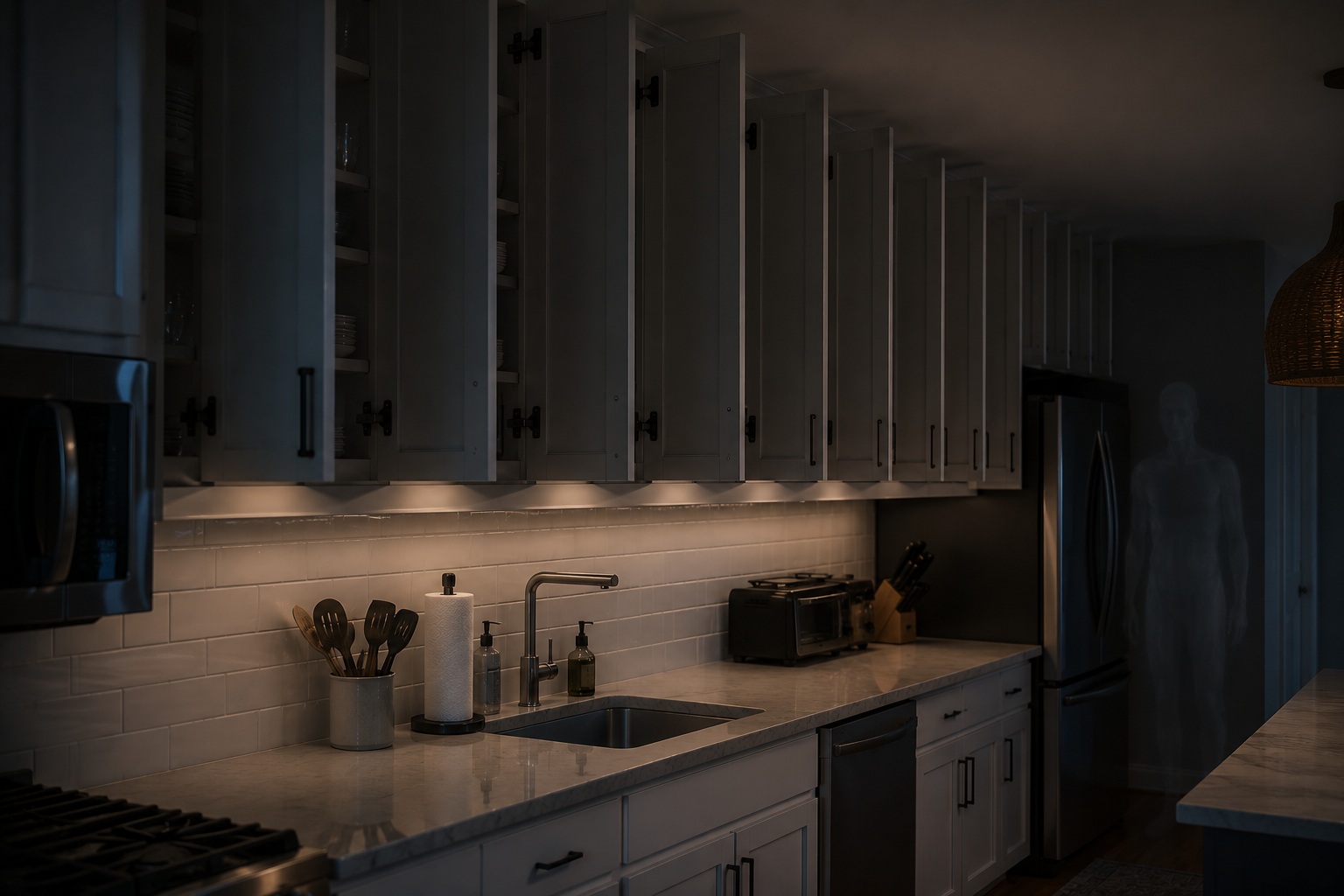
The famous "3 a.m." detail appears in countless paranormal stories, but there is no reason to believe strange events are limited to one specific minute. Many experiences happen earlier or later. Still, witnesses often remember waking somewhere around that hour. There are practical reasons.
Why People Avoided That Spot Later
Homes are usually quiet then. Traffic fades. Televisions are off. Dishwashers have finished running.
Small household noises become much easier to notice. People also wake naturally during the night more often than they realize. A person who briefly wakes, notices something unexpected, and checks the kitchen is far more likely to remember both the unusual sight and the time glowing on a nearby clock.
Once the story is told, the time becomes part of the memory. Future stories often repeat it because readers already associate that hour with mysterious experiences. The result is a pattern reinforced by storytelling as much as by the events themselves.
Ask someone to describe a frightening cabinet story months later, and they rarely remember every conversation or every sound. They remember the picture. A silent kitchen. A line of cabinet doors standing open together.
Why This Pattern Keeps Coming Back
Nothing broken. Nothing stolen. Just a neat row waiting in the dark. That image feels wrong because it suggests purpose without revealing whose purpose it was.
If everything had been thrown across the room, people might assume an accident or even an intruder. Perfect order creates more questions than chaos. Who opened them? Why stop at exactly the same angle?
Why only those cabinets? Why leave everything else untouched? Whether the explanation ends up being worn hardware, unusual airflow, forgotten habits, coincidence, or something no witness feels satisfied explaining, the visual stays with people long after the details fade. Perhaps that is why these stories continue to spread.
Not because they promise answers. Because they leave behind a single ordinary room that suddenly feels occupied by someone who never needed to make a sound. The next time you wake during the night and wander into the kitchen, you'll probably find everything exactly where you left it.
Most people do. But if every cabinet door is standing open in one silent, perfectly spaced row, the first thing you'll probably notice won't be the cabinets themselves. It will be the uncomfortable feeling that someone cared enough to arrange them. And that thought is often far harder to close than any cupboard door.