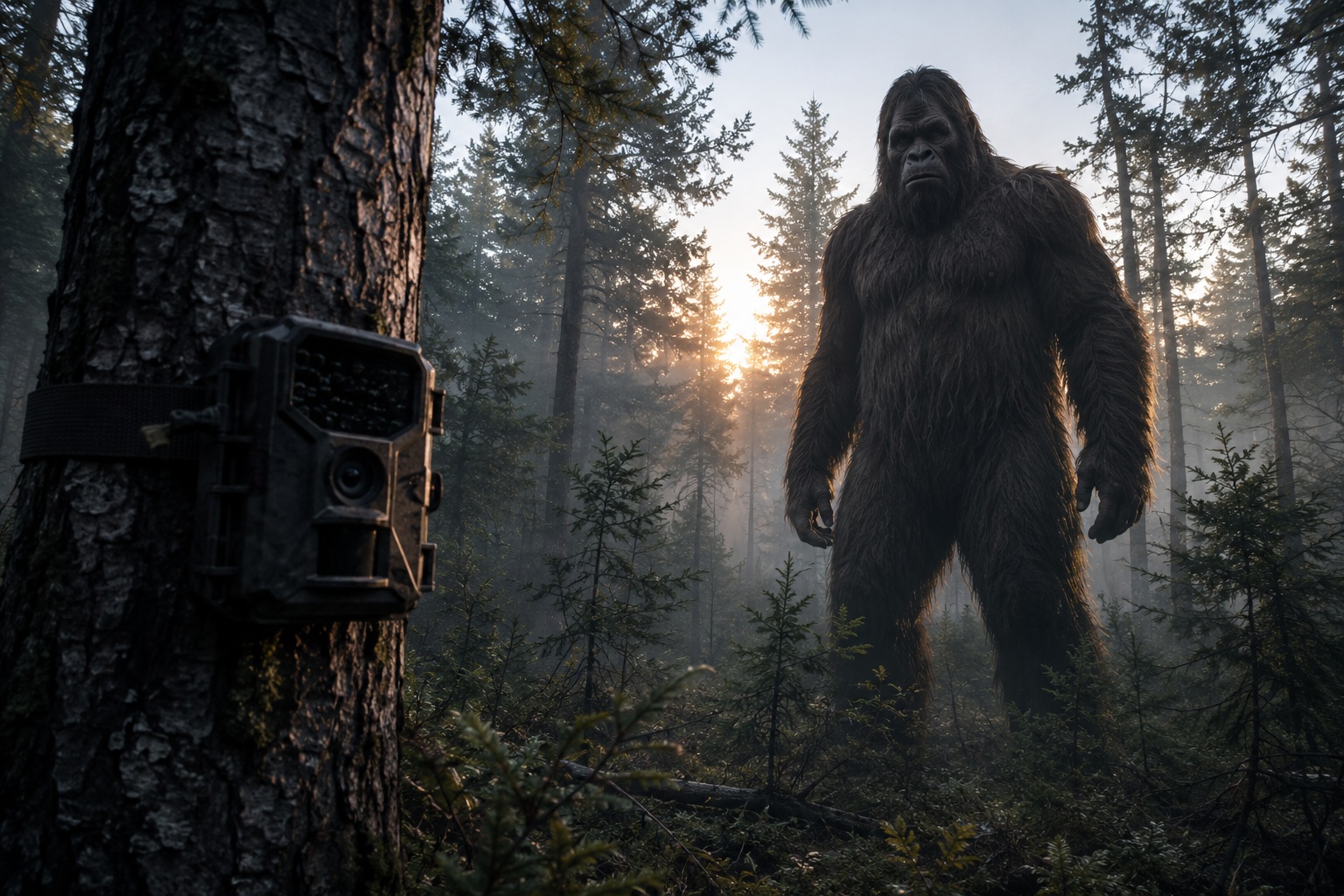
The battery meter still showed eighty-six percent when the hunter strapped the trail camera to a pine tree before sunset. The next afternoon, he returned expecting photos of deer crossing the narrow game trail. Instead, the camera was completely dead. Not low. Dead. The batteries were so empty the screen would not even flash. Thinking something had failed, he replaced them with a fresh pack and turned the unit back on.
The memory card held only one image. It was taken at 2:17 a.m.
The picture showed the edge of the trail, a line of ferns, and the side of a massive tree trunk. Nothing unusual at first glance. Then he noticed a patch of dark brown hair filling one side of the frame. It wasn't centered as if something had walked past. It looked as though an enormous shoulder had been standing only inches from the lens, too close for the camera to capture its full shape.
No second picture followed. The batteries that had been nearly full before sunset were completely drained after that single frame. Stories like this appear again and again whenever people discuss Bigfoot sightings. Sometimes the batteries die before anything is captured. Sometimes they fail immediately afterward. Sometimes every nearby electronic device keeps working except the trail camera. Whether these stories describe something strange, simple bad luck, or the way frightening memories grow over time, the dead battery has become one of the most recognizable details in modern Bigfoot folklore.
People Mention Before They Describe The Creature
Interestingly, many people tell the battery story before they ever describe what they believe they saw. Instead of beginning with a huge footprint or a towering hairy figure, they start by explaining that something stopped working.
The trail camera refused to power on. Fresh batteries suddenly measured empty. A unit that had operated perfectly for months failed during the one night something unusual supposedly passed through the area. That order matters because the broken equipment becomes part of the mystery before the creature ever enters the story.
People remember small problems when they happen immediately before something frightening. Once a strange encounter follows, the earlier problem suddenly feels connected. A dead camera by itself is forgettable. A dead camera followed by an enormous figure crossing the trail becomes a story that sticks in someone's memory for years.
Why Trail Cameras Are Perfect For These Stories
Trail cameras quietly watch places that people rarely visit. Hunters leave them on game trails. Researchers use them near rivers, ridges, and feeding areas.
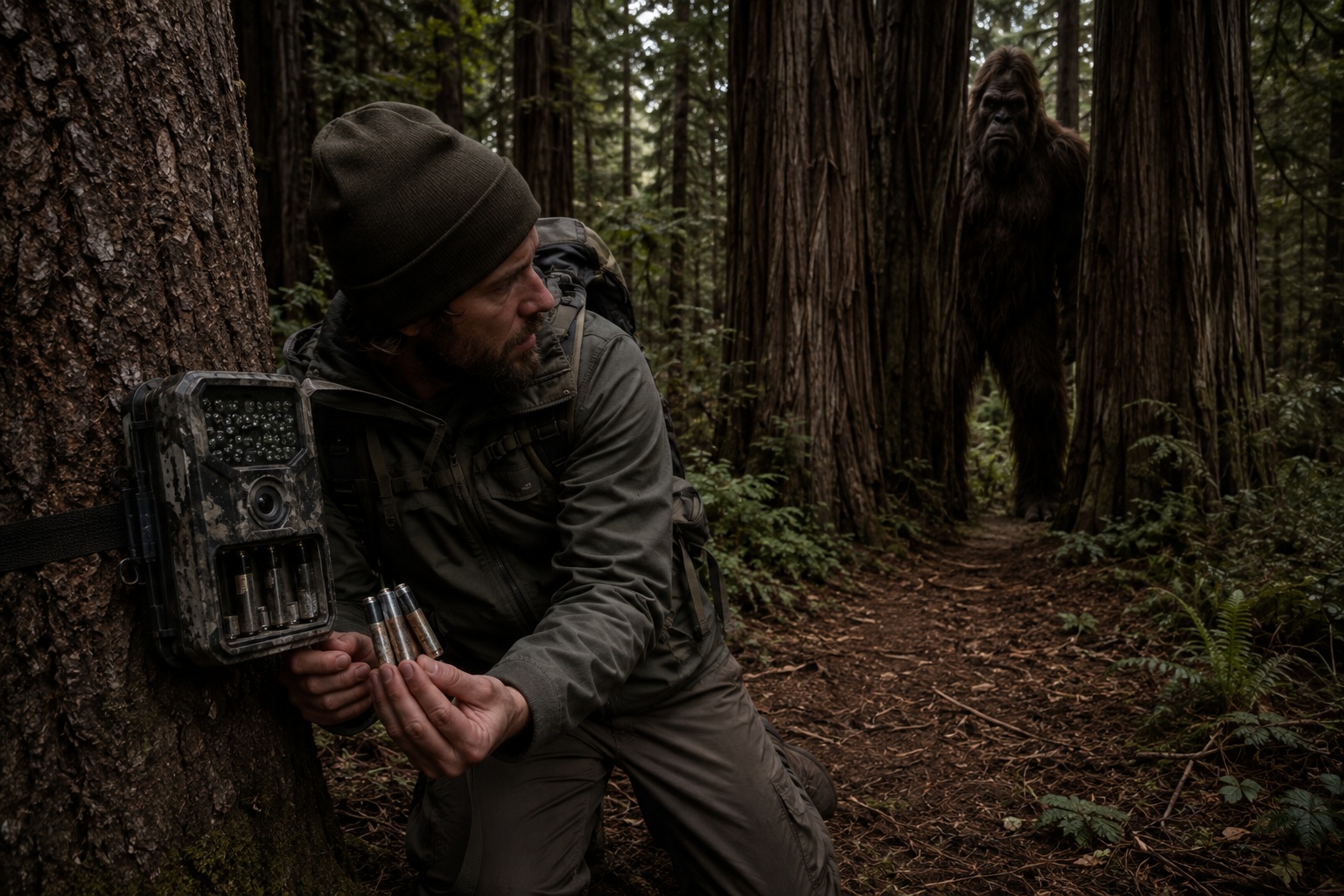
Landowners place them along logging roads and remote clearings. Because they work alone at night, they become stand-ins for the people who are not there. That also means they invite questions whenever something unexpected happens. If the camera captured nothing, people wonder why.
If it stopped working, they naturally ask what caused it.
If it restarted later without explanation, the timing feels unsettling. Most wildlife cameras operate for weeks or even months on one set of batteries. When one suddenly dies after behaving normally, it stands out. Even if there is a completely ordinary reason, the failure becomes memorable because it interrupts something designed to watch continuously.
What Witnesses Usually Check First
People rarely jump straight to paranormal ideas. Most describe checking everything they can think of. They replace the batteries.
They inspect the battery compartment for corrosion or moisture.
They test the memory card. They confirm the time settings. They check whether rain entered the housing or whether an animal knocked the camera loose.
Many also compare nearby cameras. If another unit only fifty yards away kept working perfectly while one failed, that difference often becomes part of the story. Sometimes they discover an ordinary explanation. Cold weather shortens battery life.
Cheap batteries fail faster than expected. Older cameras sometimes develop electrical faults. Moisture can slowly drain power over several nights. Wild animals occasionally bump cameras hard enough to interrupt connections.
Those explanations solve many cases. But not every witness feels they explain what happened in their particular situation, especially when the batteries seem to fail all at once rather than gradually.
When The Normal Explanation Starts Feeling Less Satisfying
The stories become stranger when several unusual details happen together.
Someone finds large footprints nearby. A strong musky smell lingers around the trees. Birdsong disappears during the night. Branches appear freshly broken high above the trail.
Then the camera refuses to turn on. None of those details automatically point toward a giant hidden creature. Each one has ordinary possibilities. Large prints can become distorted by weather.
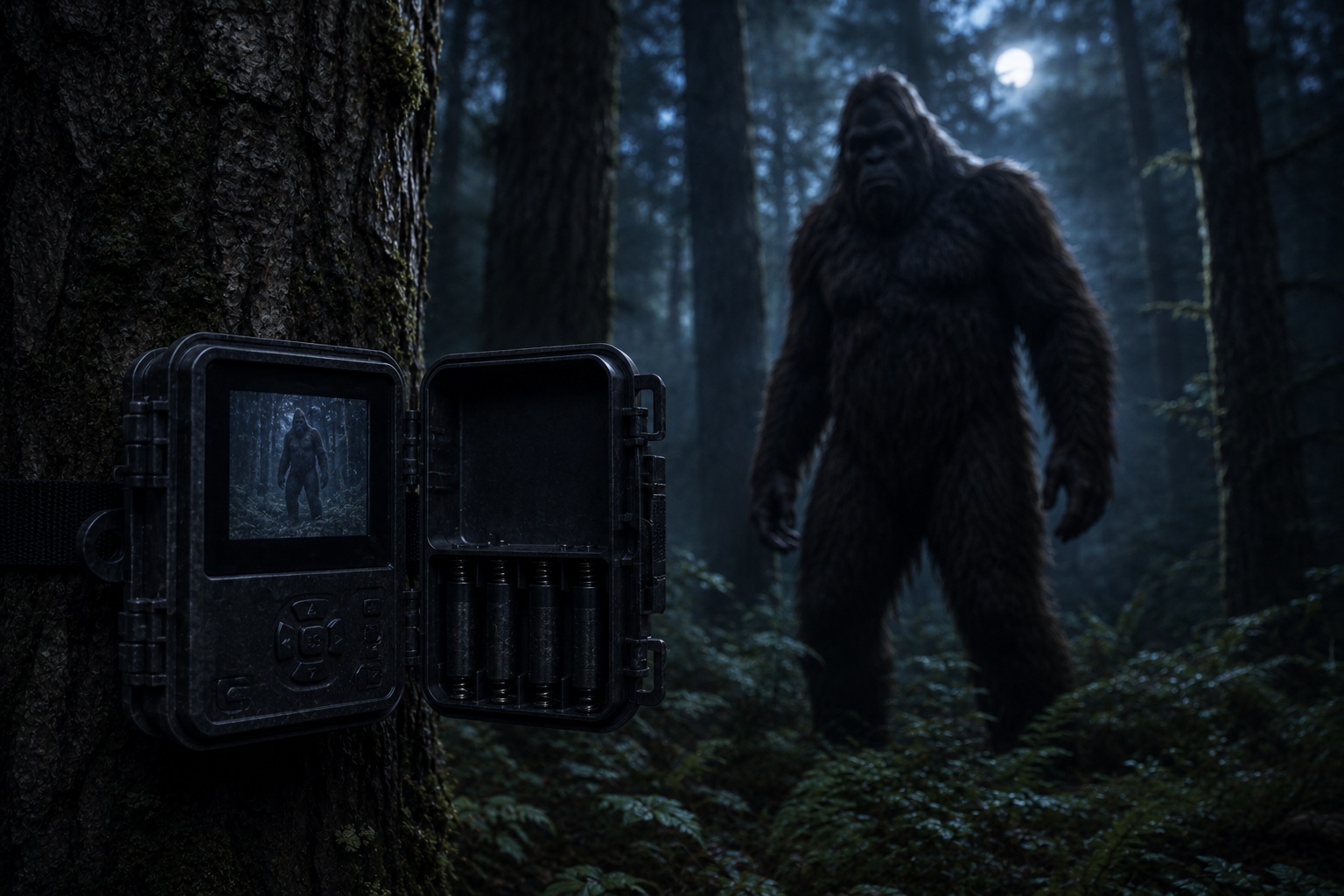
Animals break branches every day. Strong smells drift through forests for many reasons. Electronics fail. Yet when they appear together, the human brain naturally looks for one answer instead of several separate ones.
That search for a single explanation is one reason these stories spread so easily. The battery failure becomes another piece in a puzzle that people continue assembling long after leaving the woods.
The Forest Already Feels Different At Night
Remote forests change dramatically after sunset.
The sounds become harder to identify. Distances become difficult to judge. Large trees block moonlight and create deep shadows that seem to move whenever the wind changes. Most people visiting these places already expect wildlife.
Every snapping branch raises attention.
Every sudden silence feels important. If equipment begins failing at the same time, the emotional impact grows stronger. Imagine standing beside a tree at midnight while your flashlight flickers and your trail camera refuses to power on.
Even without seeing anything unusual, the situation feels wrong. If you then hear heavy footsteps disappearing into darkness, you are unlikely to forget the order those events happened. Memory often preserves the emotional sequence more clearly than every technical detail.
Why Bigfoot Stories Often Include Electronics
Unlike older legends, modern Bigfoot stories happen in a world full of technology. People carry GPS units. Phones. Digital watches.
Thermal cameras. Trail cameras. Portable power banks. As technology becomes part of outdoor life, equipment naturally becomes part of the stories.
Years ago, people might have described lanterns burning strangely. Today they mention batteries draining unexpectedly. The mystery adapts to the tools people use. This pattern appears across many kinds of unexplained stories.
Some UFO witnesses describe watches stopping.
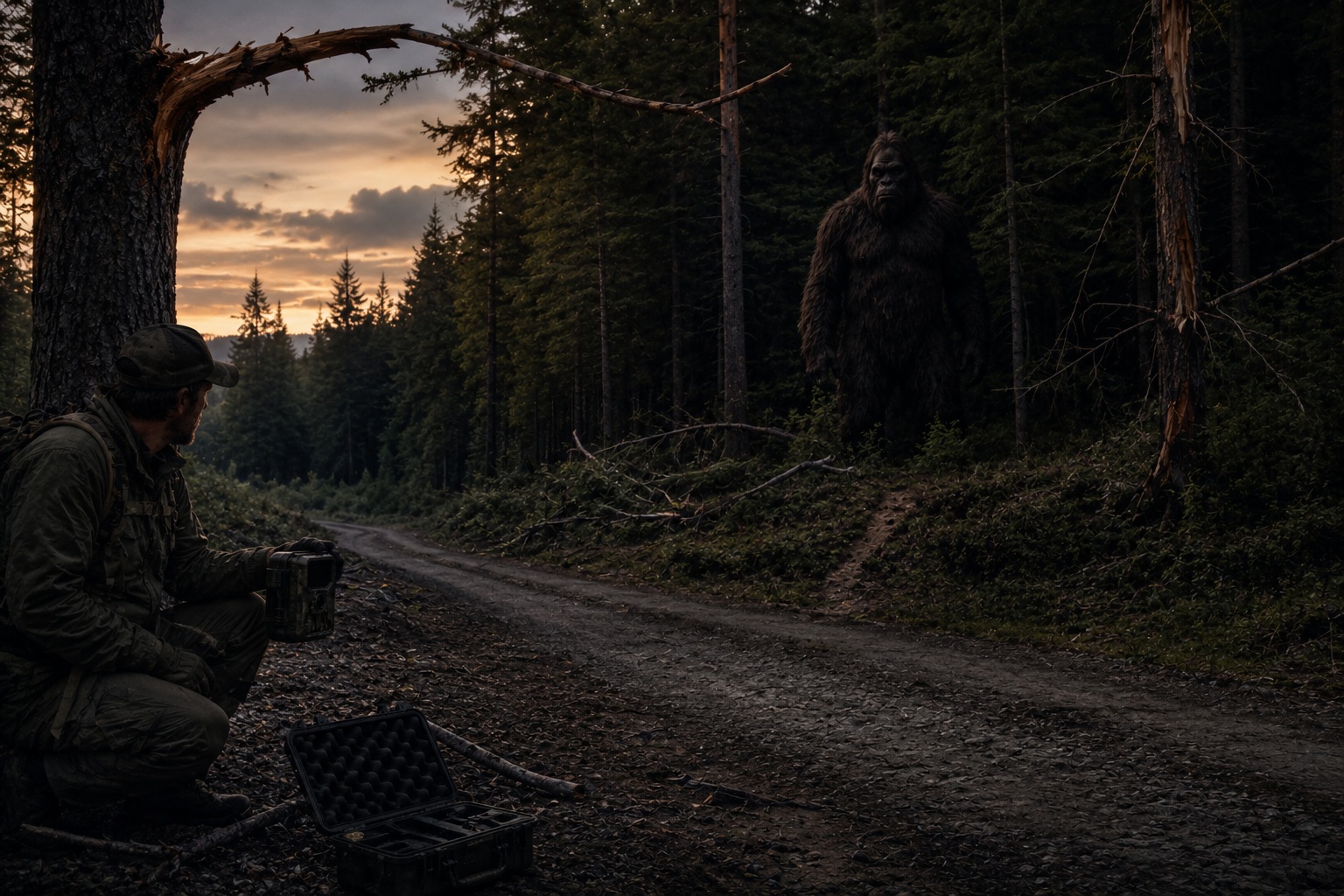
Some ghost stories mention flashlights dimming in empty buildings. Bigfoot reports often focus on trail cameras because those devices are already watching the places where people hope to find signs of a large unknown animal. Whether the battery failure happened first or simply became unforgettable afterward, the electronic problem fits naturally into the larger story.
Why One Close Image Feels Scarier Than A Clear Photograph
Perhaps the creepiest versions of these stories do not involve a perfect picture. Instead, they involve almost getting one. A frame filled with coarse brown hair.
An enormous hand partly covering the lens. A shoulder that seems impossibly high compared with nearby bushes. A shadow that blocks half the image before the camera shuts down forever. Readers often find these stories more frightening than a perfectly clear photograph.
A complete image would answer questions. An incomplete one creates them. How close was whatever stood there? Why did it stop directly in front of the camera?
Did it notice the faint red glow from the sensor?
If the batteries died immediately afterward, people naturally imagine the two events sharing a cause even if none can be demonstrated. That unanswered moment keeps the story alive.
Why The Dead Battery Refuses To Leave Bigfoot Folklore
Dead trail-camera batteries probably remain popular because they combine two different fears. The first is losing the chance to know what happened. The second is wondering why the opportunity disappeared at exactly the wrong moment. People accept that electronics sometimes fail.
They also accept that forests are unpredictable. When those two facts collide during an already frightening night, the story gains emotional weight. Over time, listeners remember the drained batteries almost as clearly as the huge footprints or towering figure. Whether every account has an ordinary explanation or whether some remain genuinely puzzling, the pattern continues because it captures a feeling nearly everyone understands.
Imagine hiking back to a camera that should still be running.
Imagine finding it completely lifeless. Then imagine discovering one final image on the memory card—a close wall of coarse hair standing where no bear, elk, or person should have been. The batteries can be replaced.
The questions usually cannot.