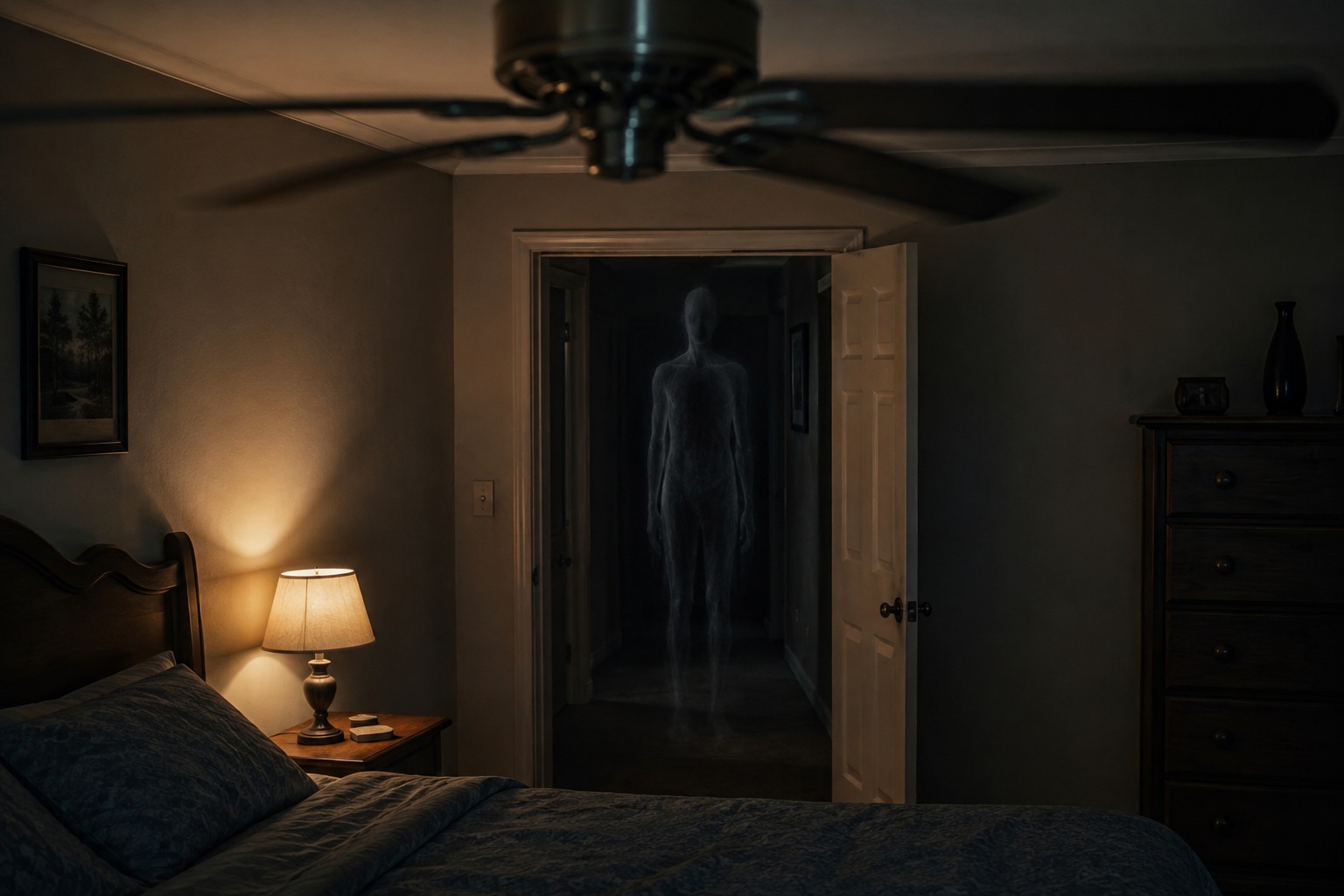
The ceiling fan had been turning so slowly that the woman almost forgot it was moving. Its blades made one lazy circle every few seconds, pushing warm summer air through the old guest bedroom. She glanced up while folding blankets and noticed something strange. Every time one blade passed in front of the hallway doorway, the space behind it looked empty. Every time the blade moved away, someone appeared to be standing there.
Not a person with a face. Just a pale shape the height of an adult, perfectly still in the dark hallway. She looked directly at the doorway. Nothing. She looked back through the turning fan. There it was again, returning with each slow rotation as though the moving blades were uncovering someone who should not have been there. The figure never walked closer. It never waved. It simply waited, visible for a heartbeat, then hidden again behind the next passing blade.
She finally switched the fan off. The room became completely silent. The hallway stayed empty.
Stories like this appear surprisingly often in ghost discussions, old house stories, and late-night conversations. They are not really about ceiling fans. They are about ordinary movement changing the way people notice a room. A slowly turning fan becomes memorable when witnesses believe it repeatedly reveals someone who disappears the moment they look directly. That strange combination of movement, expectation, and a human-shaped figure has made ceiling fans an unexpected part of many reported apparition stories.
A fast ceiling fan quickly becomes background noise. Your brain stops paying attention because nothing seems to change between one rotation and the next. A slow fan works differently. Each blade briefly blocks part of the room before revealing it again.
The First Time It Happened
That repeated hiding and revealing naturally draws attention. People begin checking what appears behind each blade almost without realizing it. If a coat hangs in a doorway, if light shifts across a wall, or if shadows from another room move slightly, the brain starts comparing each new glimpse with the last one.
In ordinary situations nothing unusual happens. But witness stories often begin when someone believes the view behind every rotation changes in exactly one impossible way. The room stays the same. The furniture stays the same.
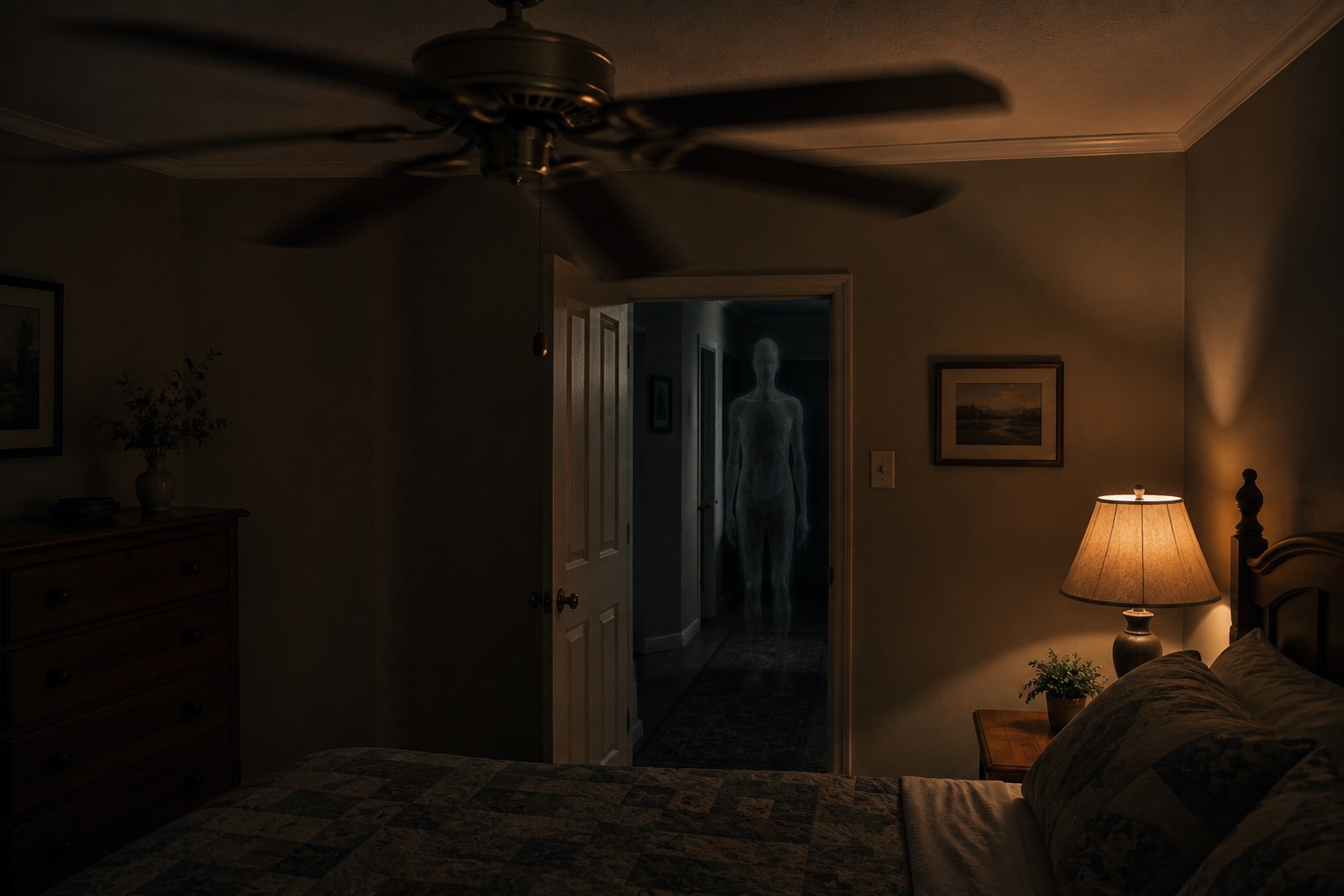
Only the shape standing in the doorway seems to come and go. That repeated appearance is what makes people remember the experience long after the fan has stopped.
Interestingly, people rarely begin by saying they saw a ghost.
Instead they describe one detail that refuses to behave normally. The figure never seems to breathe. It does not shift its weight. It has no visible face.
Why The Place Felt Wrong
Sometimes it appears slightly transparent. Sometimes it looks darker than the hallway around it. Occasionally witnesses describe clothing without describing a head or hands. The stillness becomes more frightening than movement. Human beings naturally make tiny adjustments while standing. Even someone trying to remain perfectly still will blink, breathe, or sway slightly.
Many apparition stories involving ceiling fans describe the opposite. The figure appears exactly the same every time the blades uncover it. Almost like a photograph placed inside the room. That consistency is often the detail people mention before anything else.
Most reported encounters happen where one room opens into another. Bedrooms connected to hallways. Living rooms facing staircases.
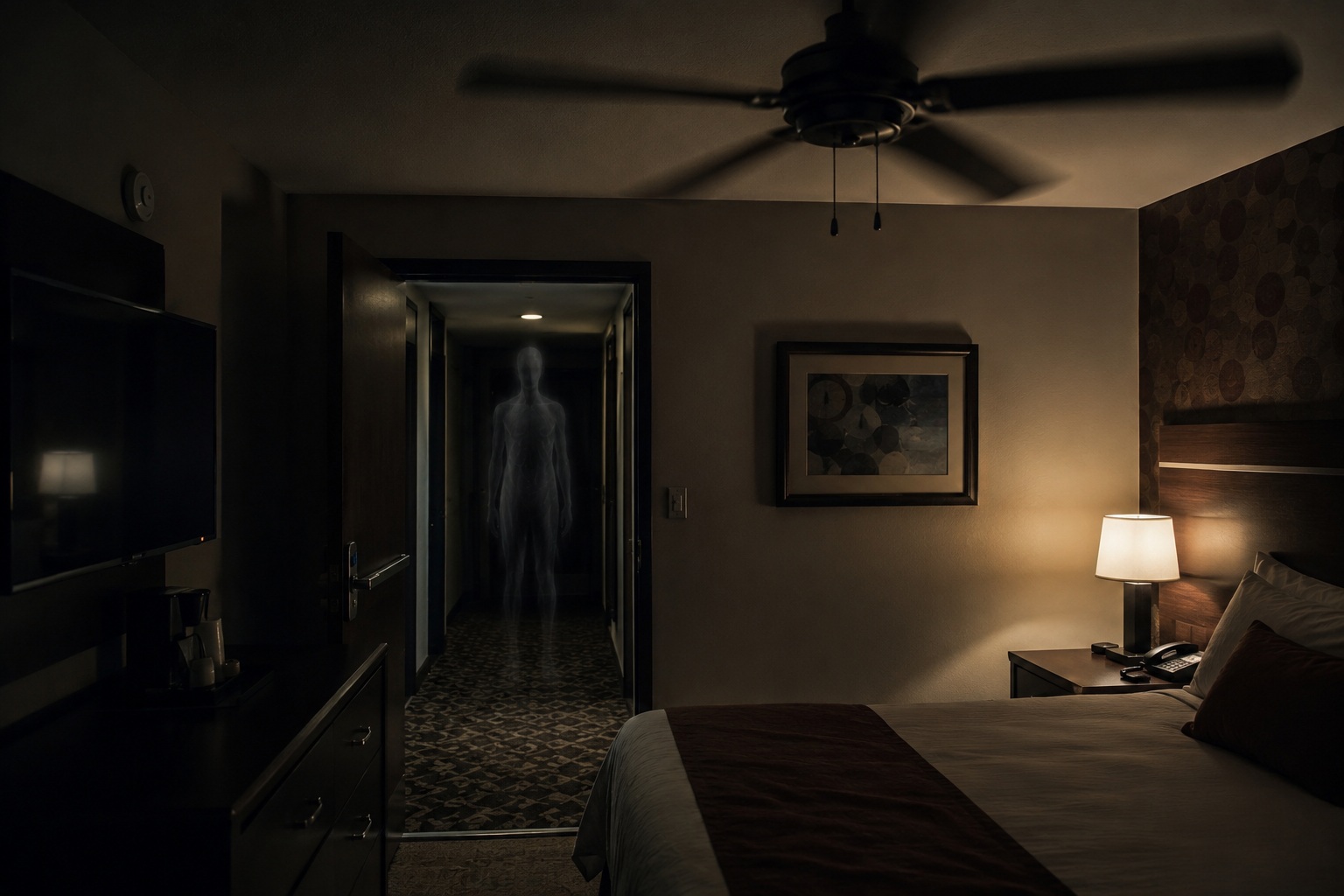
Hotel rooms opening toward long corridors. These places naturally contain darker spaces beyond brighter ones. A slow ceiling fan repeatedly interrupts that view. Each passing blade briefly resets what the eyes expect to see.
The Detail Nobody Could Explain
Many people compare it to looking through gaps in a fence or watching scenery flash between trees while riding in a train. Your brain fills in missing information incredibly quickly. Most of the time it fills those gaps correctly. Occasionally it creates something that feels unusually human.
That does not automatically mean anything paranormal happened. But it helps explain why the setting appears so often in stories shared by witnesses. The architecture itself encourages repeated glimpses rather than one continuous view.
Almost everyone reacts the same way. They stop the fan. That simple action appears again and again in personal stories. People expect the figure either to remain standing there or disappear completely.
When nothing is there, many assume the fan somehow created the illusion. Others remain uneasy because they are certain they saw the shape several times before stopping it. Some walk into the hallway. Others switch every light on.
Many check whether a hanging coat, plant, lamp, or mirror could have lined up with the moving blades in a strange way. Sometimes they find an obvious explanation. A jacket hanging behind an open door. A floor lamp casting an unusual shadow.
What They Checked Afterward
A towel over a chair. But many stories continue because nothing seems capable of matching the shape they believed they saw. That unanswered question becomes the part they remember.
There are several perfectly normal reasons why someone might briefly think they saw a person through a rotating fan. Changing light can create repeating patterns that look surprisingly lifelike. The brain is also extremely good at recognizing faces and bodies even when only fragments are visible.
This tendency helps humans react quickly to other people. It also means we occasionally identify people where none exist. Fatigue makes this effect stronger. So does staring into dim rooms for several minutes.
If someone already feels nervous because they are alone in an unfamiliar house or old hotel, every repeated glimpse carries extra emotional weight. The slow rhythm of the fan itself can also keep drawing attention back toward the same location. Each rotation becomes another chance to check.
Another chance to compare. Another chance to wonder whether the figure is still there. For most experiences, these ordinary explanations are enough. But they do not explain why some witnesses insist the figure changed position only after the fan stopped, or why two people occasionally describe noticing the same shape independently.
The Moment It Became Harder To Ignore
Those reports are much rarer, yet they keep the stories alive.
The stories that spread the most usually contain one additional detail beyond simply seeing a figure. Someone speaks to the hallway and receives no answer, yet the shape remains.
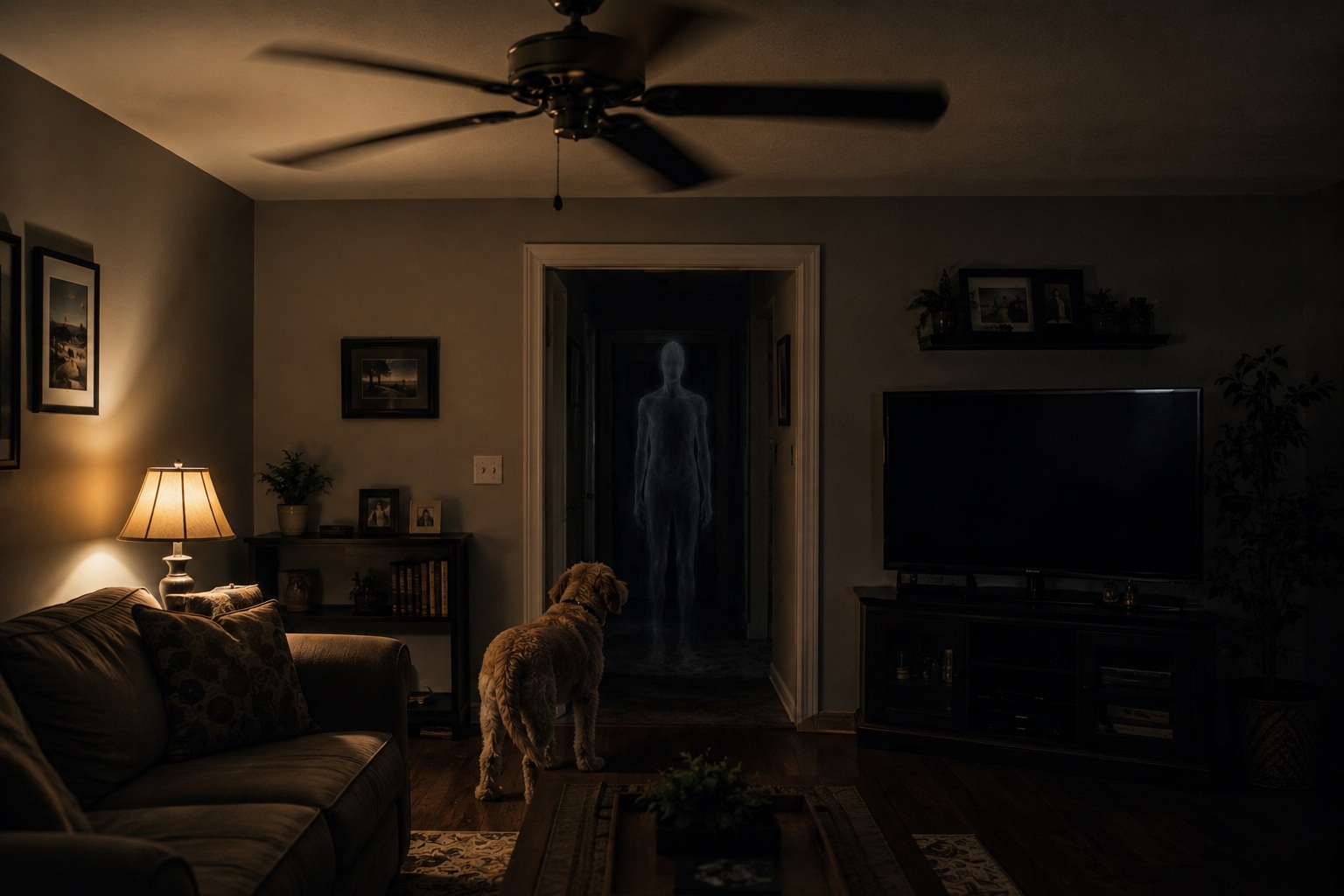
A pet refuses to enter the room while staring toward the same doorway. Another family member walks past and casually asks who is standing in the hall before realizing nobody should be there. In some accounts, the figure appears only while the fan moves slowly.
Turning the fan to maximum speed makes it disappear. Stopping it completely also removes it. Only that slow, steady rotation seems connected to the repeated glimpse. Whether that reflects changing shadows or something harder to explain depends entirely on how someone interprets the experience.
Either way, these extra details make the memory much harder to forget. People stop talking about a trick of the light. They start talking about the feeling that someone had been quietly watching them.
Why People Avoided That Spot Later
Most frightening experiences end with a loud noise, sudden movement, or immediate danger. Ceiling fan stories are different. Almost nothing happens. The fan turns.
The room stays quiet. The figure never rushes forward. That lack of action leaves space for imagination. People replay the moment repeatedly.
Did the shoulders move? Was there really a head? Could someone have been standing there for those few seconds? Or did the brain simply build a person from darkness and motion?
Because the event feels incomplete, it becomes strangely unforgettable. Many witnesses remember the exact sound of the fan more clearly than the figure itself. The slow clicking motor. The gentle rush of air.
Why The Story Still Gets Shared
The repeating rhythm that divided the doorway into tiny moments of expectation. Every rotation invited one more look.
Very few people believe the fan itself is strange.
Instead, it becomes the stage where an unsettling experience unfolds. Its slow movement repeatedly interrupts the view just enough for uncertainty to grow. If someone already feels tired, emotionally stressed, or alone, that uncertainty becomes even more powerful. Yet the reason these stories continue to circulate is that not every account ends with an obvious explanation.
Some people insist the shape vanished only after another person entered the room. Others describe seeing the same faceless figure in different houses years apart whenever an old ceiling fan turned slowly overhead. No one can easily verify memories like these. They remain personal stories shared between families, friends, hotel guests, and late-night readers who suddenly become aware of the ceiling fan above them.
Perhaps that is why the question keeps returning. A slow fan is an ordinary household object. A quiet hallway is an ordinary part of a home. Neither should feel frightening.
But when the same pale figure appears between every passing blade and disappears the instant the room falls still, people are left wondering whether they witnessed a simple trick of light—or whether, for a few silent minutes, someone else had been standing in the doorway all along.