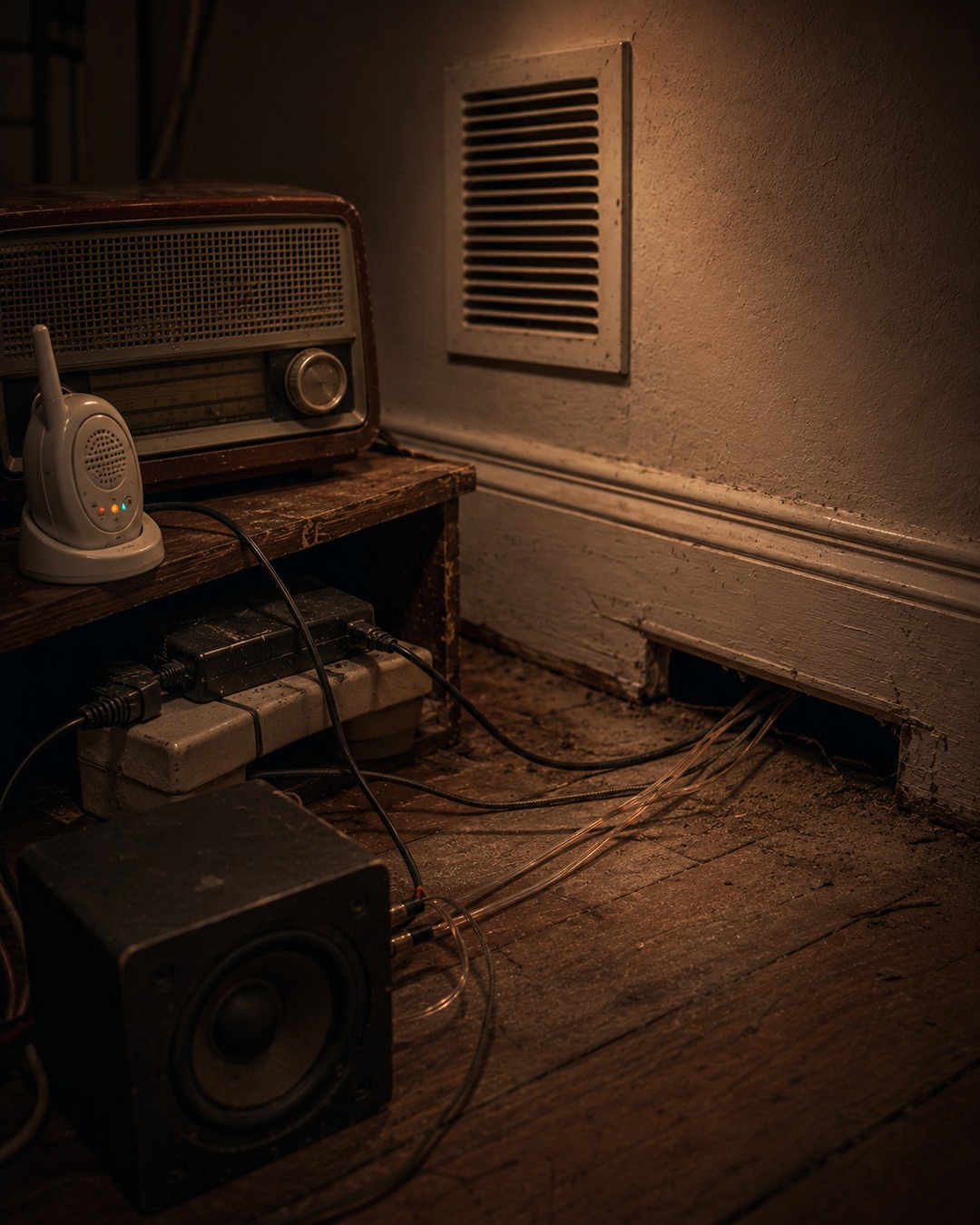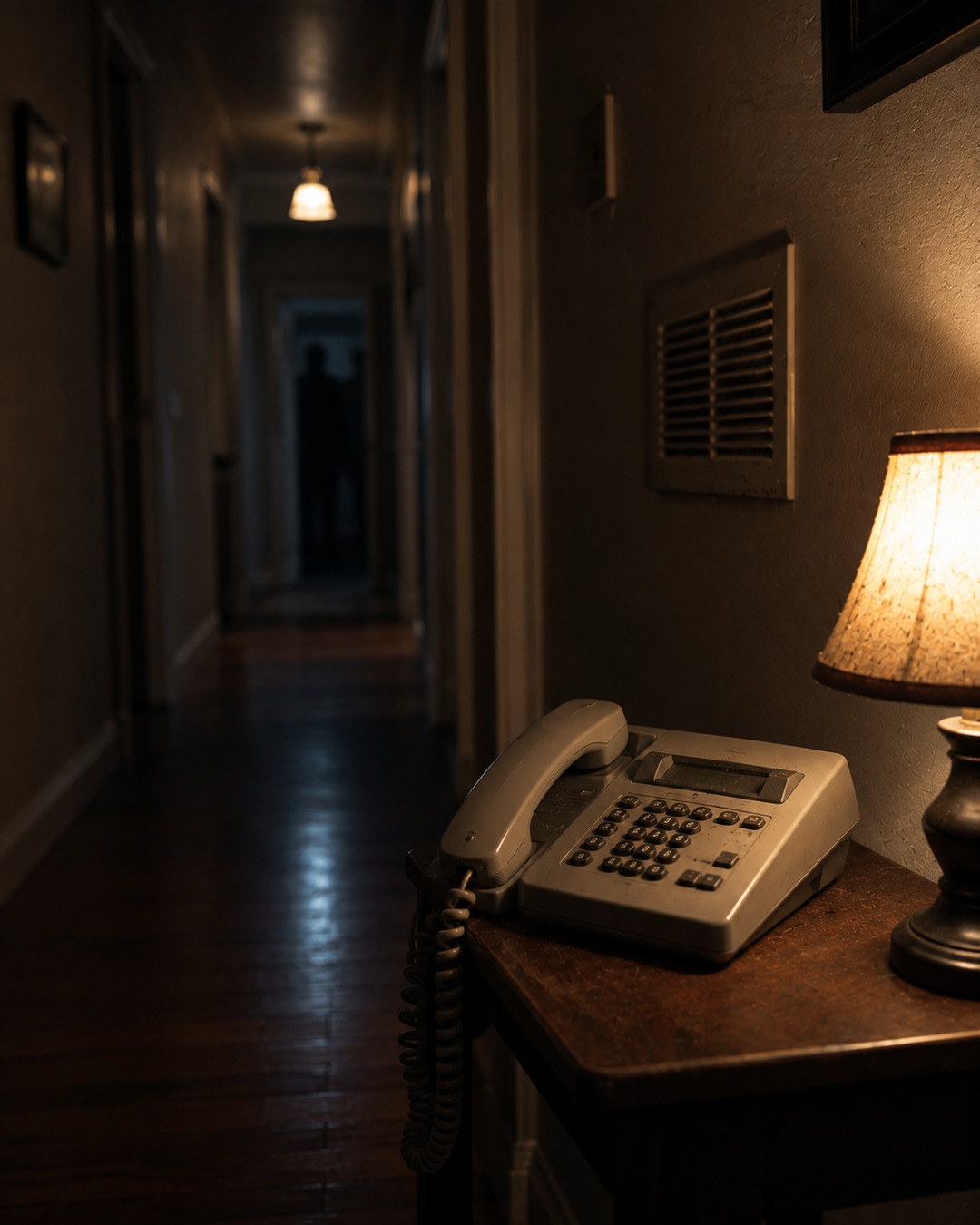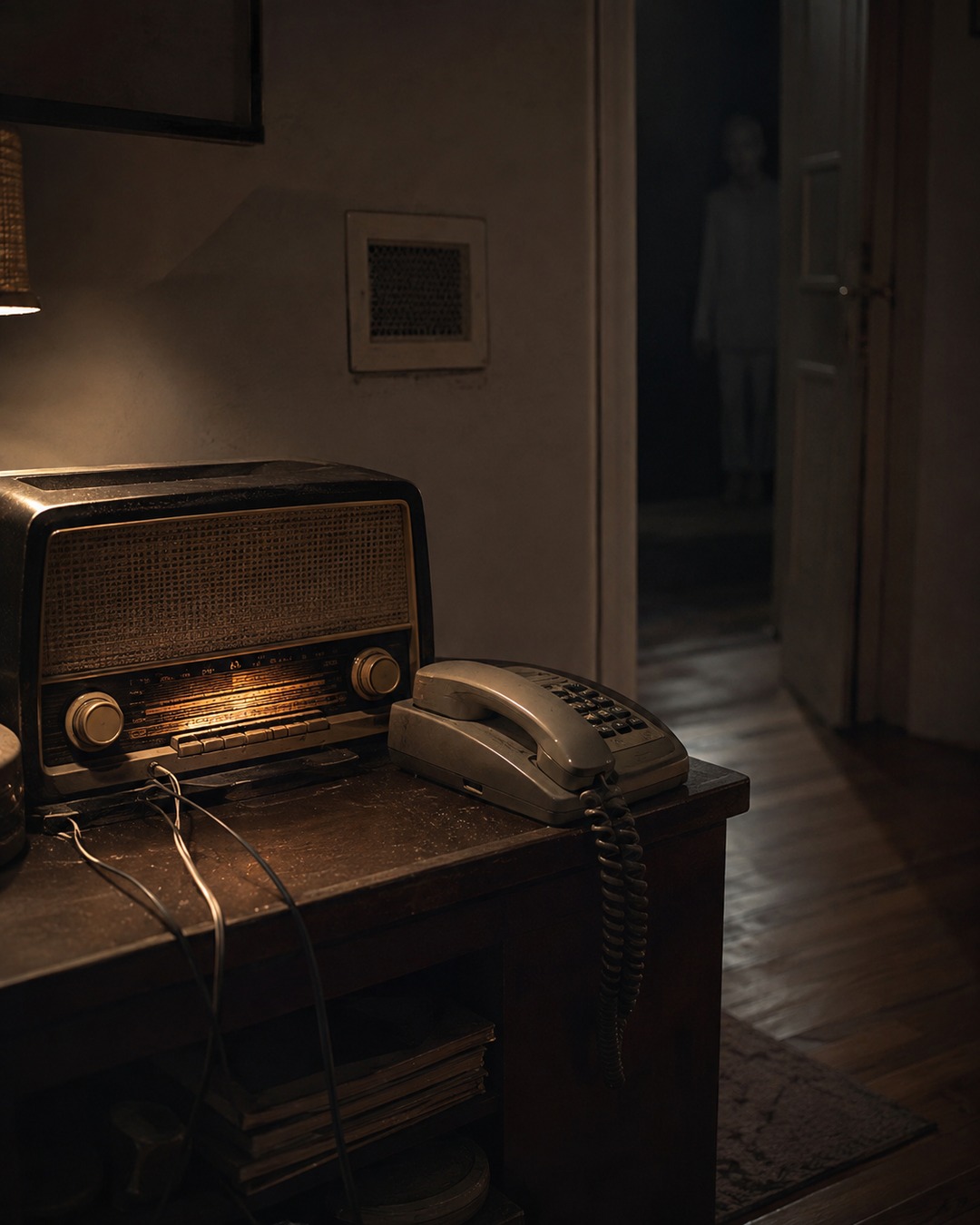
The first thing she noticed was that the static stopped the moment she opened the nursery door. For almost a minute the baby monitor downstairs had hissed with loud white noise, broken by soft clicks that sounded almost like breathing. The screen still showed the crib, the blanket, and the dim glow of the night-light. Nothing looked wrong.
She climbed the stairs expecting to find the monitor sitting too close to a router or another wireless device. Instead, the room was perfectly quiet. As she stood beside the crib, the speaker in her hand stayed silent. She stepped back into the hallway. The static came back immediately.
She looked through the open doorway instead of entering again. The nursery was exactly as she had left it, except for one detail she was suddenly certain had changed. A tall, pale shape seemed to be standing between the crib and the window—not blocking either one, but somehow occupying the same space. It had no face she could recognize. It did not move. When she blinked, it faded into the darkness.
The static ended. Stories like this have circulated for decades. Sometimes they involve old analog baby monitors, sometimes modern digital ones. The details change, but the emotional pattern stays surprisingly similar. People don't usually remember random interference. They remember interference that arrives with the feeling that someone—or something—is already inside the room.
So what is it about baby-monitor static that makes so many people describe it as a ghost warning?
A Child's Room Most people ignore radio interference in everyday life. A car speaker crackles. A walkie-talkie hisses. An old radio picks up distant stations. We barely think about it.
The First Time It Happened
A baby monitor is different because it represents a place that should feel completely safe. Parents expect silence interrupted only by a baby's voice or movement. Anything outside that expectation immediately feels personal. Static also has an unusual quality. Unlike a clear sound, it constantly changes. Our brains naturally search changing noise for recognizable patterns.
That is why people sometimes think they hear whispers, names, footsteps, or breathing hidden inside ordinary white noise. When those impressions happen in a nursery at two in the morning, they become much harder to dismiss emotionally, even if a technical explanation is possible.

One detail appears again and again in ghost stories involving baby monitors. The strange sound comes before anything else. The static begins. Then the room feels colder.
Then someone notices the hallway seems darker than usual. Then they become aware of a figure near the crib, reflected in the window, standing beside the rocking chair, or waiting in the doorway. The order matters. If someone sees a frightening shape first, they may naturally expect other strange things afterward.
Why The Place Felt Wrong
But when an unexpected sound arrives first, people often describe it as a warning rather than part of the haunting itself. That sequence gives the story its emotional weight. It feels less like imagination and more like something announcing its arrival. Whether that interpretation is correct is another question entirely, but it explains why these stories stay memorable.
The ghost itself is rarely the part people remember most clearly. Instead, witnesses often describe one small detail that doesn't fit. The figure has no face.
Its shoulders seem too high. It appears partly inside the wall beside the crib. Its feet never reach the floor. Its reflection exists in the nursery window but nowhere else.
Sometimes the shape disappears the instant someone switches on the main light. Sometimes it remains visible only from the hallway and vanishes when they enter the room. These simple contradictions are much harder to forget than dramatic monsters or loud scares. They're specific enough to feel believable while remaining impossible to explain within the story.
The Detail Nobody Could Explain
That combination keeps people thinking about the experience long after it ends.
It Something Strange Most witnesses don't immediately assume they've encountered a ghost. In fact, the first reactions are usually practical.
They check the monitor's battery. They move it away from Wi-Fi equipment. They restart both units. They look for nearby cordless phones, wireless cameras, Bluetooth devices, or other electronics sharing similar frequencies.
Older analog baby monitors were especially vulnerable to interference. In some neighborhoods they could even pick up fragments of nearby devices. Modern digital systems reduce many of those problems, but interference can still happen for perfectly ordinary reasons. Parents also check the nursery itself.
Is the window open? Is the heating system cycling? Did a curtain move because of air conditioning? Did the rocking chair shift slightly after someone bumped it earlier?
These checks explain many reports. Yet the stories that survive usually include one detail none of those checks seem to address. Someone insists they saw a person-shaped figure standing where no one could possibly have been. Or they describe the static stopping at exactly the moment they entered the room, only to begin again once they stepped into the hallway.

What They Checked Afterward
That repeated pattern is what pushes the story beyond simple equipment trouble.
Interestingly, many nursery ghost stories aren't centered on the crib itself. They're centered on the doorway.
Witnesses frequently describe feeling watched while standing outside the room rather than inside it. Some say the nursery feels perfectly ordinary once they cross the threshold. Others claim the opposite. The hallway feels normal.
The room feels wrong. That sharp change between two ordinary spaces makes the experience especially unsettling. Doorways already represent transitions. Moving from light into darkness, from occupied rooms into quiet ones, naturally raises awareness.
When static begins or ends exactly at that boundary, people connect the two events even if they may be unrelated. The doorway becomes part of the story. Instead of asking why the monitor made noise, witnesses begin asking why it behaved differently depending on where they stood.
That question is far harder to answer emotionally than technically.
The Moment It Became Harder To Ignore
Baby monitors appear in paranormal stories for the same reason mirrors, staircases, and empty hallways do. They're ordinary objects connected to vulnerable moments.
Late-night feedings. Exhaustion. Silence. Listening closely for tiny sounds.
Parents spend long periods focusing on faint noises most people would never notice. That heightened attention increases the chance of hearing ambiguous sounds. It also increases emotional reactions when those sounds seem unusual. Ghost stories naturally grow around places where people already expect to stay alert.
A nursery after midnight fits that description almost perfectly. Even people who don't believe in ghosts often admit they would hesitate before opening the nursery door if the monitor suddenly filled with loud static and then went completely silent. The emotional response arrives before any rational explanation.
Why People Avoided That Spot Later
There are many realistic reasons for unexpected monitor noise. Wireless interference. Weak signals.

Electrical equipment. Software glitches. Environmental sounds. Even the acoustics of a quiet house can create strange impressions.
Those explanations solve most situations. But certain reports linger because they combine several unlikely details. The static begins only at one specific time. It stops whenever someone enters the room.
A witness independently notices a pale figure. Another family member later describes seeing someone standing near the same window without knowing the earlier story. None of these details automatically point to anything supernatural. Human memory is imperfect.
Fear changes perception. Stories evolve each time they're retold. Yet people continue discussing these experiences because the emotional sequence feels internally consistent. The sounds don't simply happen.
Why The Story Still Gets Shared
They seem connected to the appearance of someone who should not be there. Whether that connection exists outside memory is impossible to know.
The Noise If a baby monitor produces random static on an ordinary afternoon, few people remember it.
If the same sound arrives during a silent night, outside a nursery, moments before someone thinks they see a blurred figure beside the crib, the memory can stay vivid for years. Our minds naturally link separate events into meaningful stories. That tendency helps us recognize genuine danger.
It also means coincidence can become unforgettable. Ghost stories involving baby monitors sit directly between those two possibilities. The technology offers ordinary reasons for strange sounds. The setting encourages heightened awareness.
The darkness fills in missing details. Then one small contradiction—a faceless figure that seemed to stand inside the window, static that vanished the instant the nursery door opened, or the unmistakable feeling that someone else was quietly waiting beside the crib—transforms a technical problem into something people tell for decades.
Perhaps that's why baby-monitor static feels less like background noise and more like a warning. The sound itself isn't usually what frightens people. It's the unsettling suspicion that the monitor isn't introducing something new. It's drawing attention to something that was already there, standing silently in the room before anyone thought to listen.