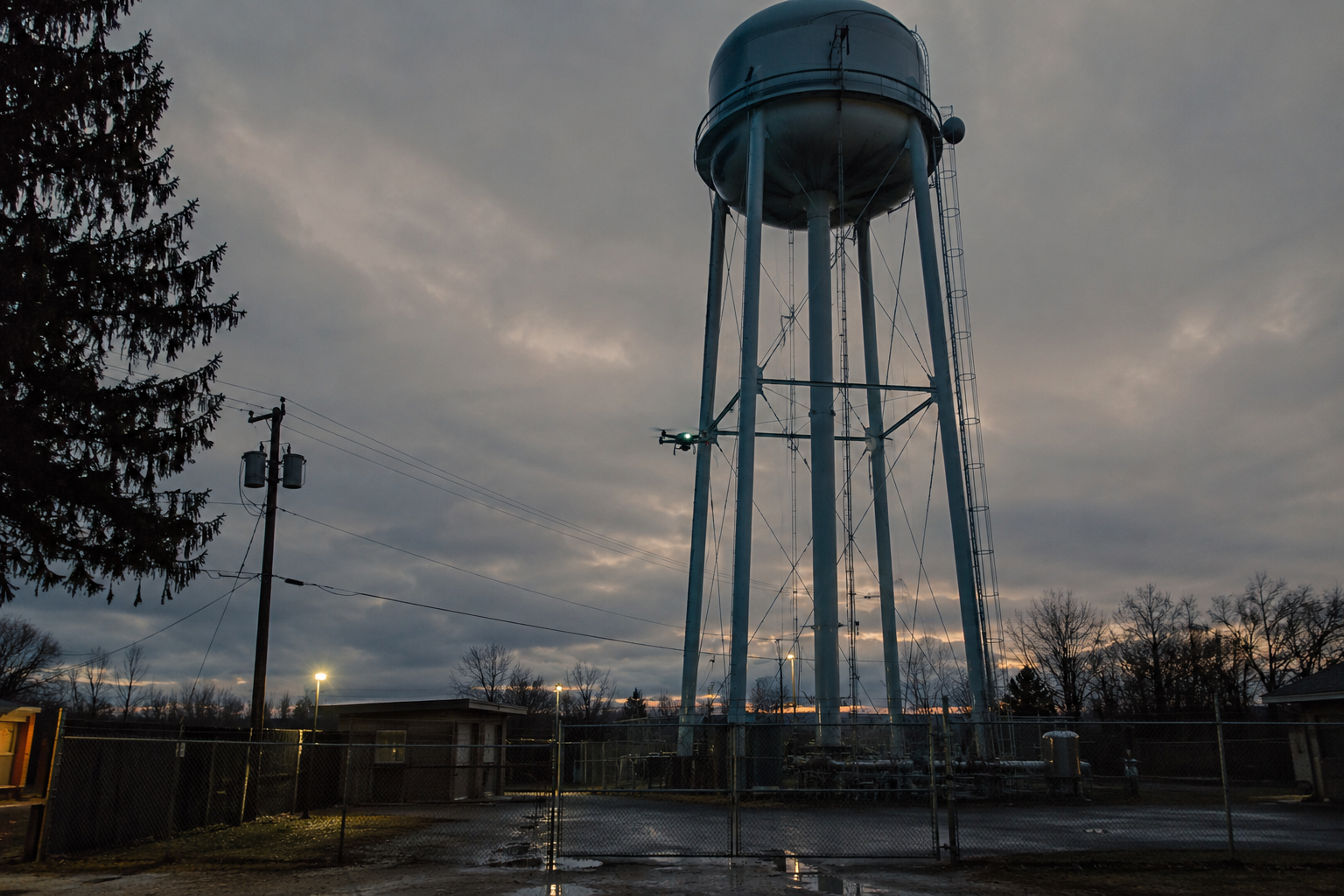
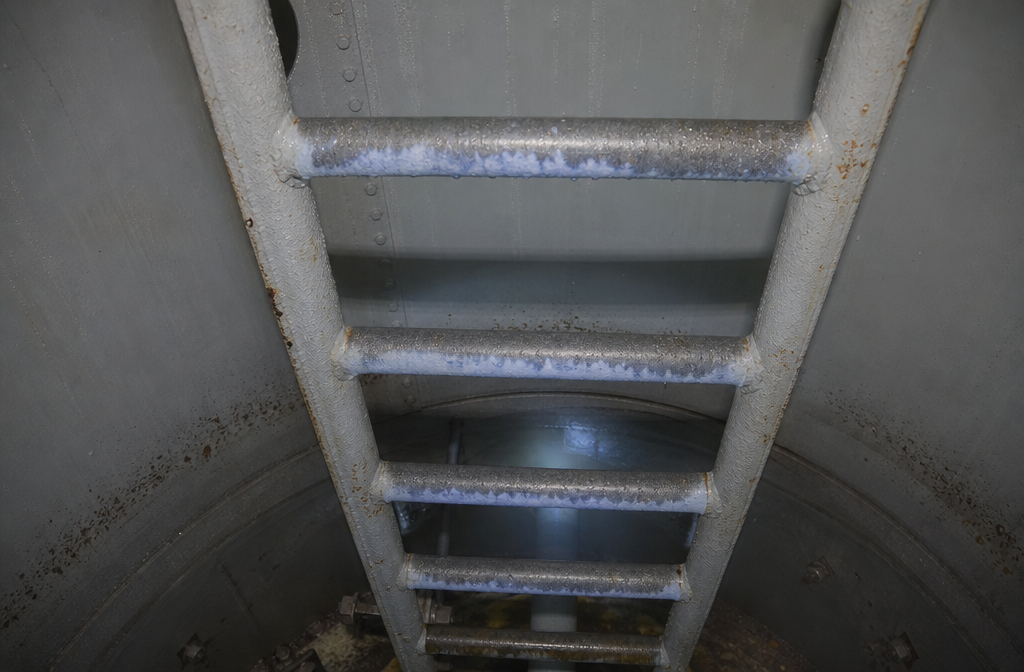
The blue-white ring appeared on the inside ladder before anyone admitted entering the Riverton water tower housing.
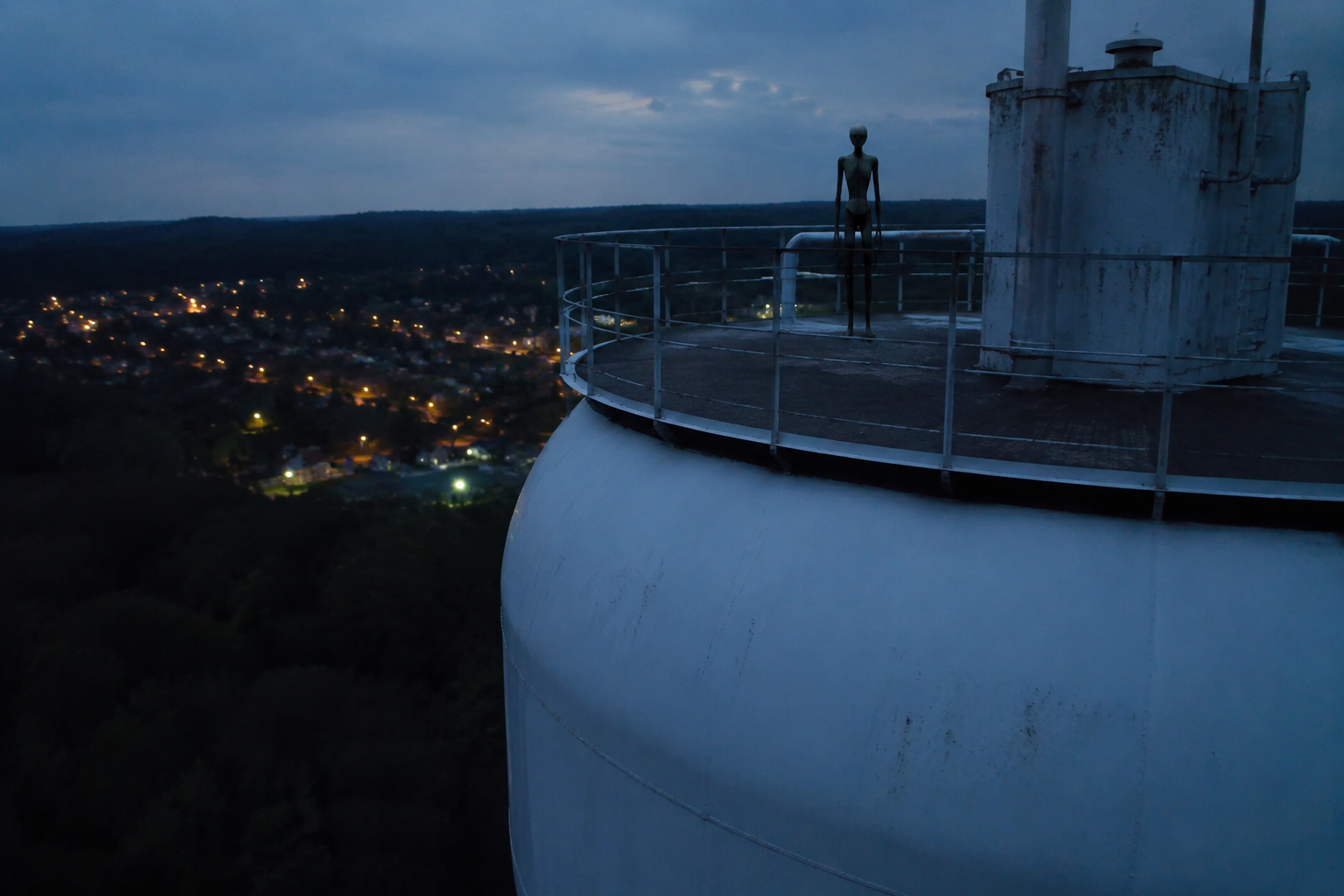
That is the first strange detail in the drone camera images, but it is not the one most people notice first. The later pass appears to show a thin, visitor-like shape near the upper catwalk rail, still enough to look placed there and narrow enough to feel wrong when paused.
The camera images was supposed to be ordinary maintenance work. The drone had been sent up after a pressure complaint to document corrosion, loose hardware, and storm wear. Instead, it recorded a mark on the ladder, no matching service entry, and a possible figure where no crew was logged.
WHAT THE DRONE SHOWS:
- A routine water tower inspection on a clear, wind-light morning.
- A blue-white ring on the inside ladder across several seconds of camera images.
- No matching service log for a person entering the tower housing.
- A second pass showing a narrow shape near the upper catwalk rail.
- No obvious vehicle, lift, or ground crew visible during the anomaly.
That combination is why Riverton keeps circulating. The camera still does not give a clean answer. It gives a maintenance record that seems to disagree with itself.
1. The Inspection Was Supposed to Be Boring
The Riverton camera images begins with municipal routine. A small drone circles a water tower after residents reported brief pressure drops overnight.
The operator’s job was not to hunt for anything strange. It was to record seams, ladder access, paint wear, and possible storm damage. Most of the camera images looks exactly like that: slow, flat, and practical.
That makes the first anomaly feel less staged. It appears inside an inspection, not inside a ghost hunt. The camera is looking for infrastructure problems when it catches something that does not read like a normal maintenance note.
2. The Ring Was Too Clean to Ignore
Water towers sweat. Metal collects condensation. Drone lenses catch glare. Those are the first explanations to consider.
The problem is the shape of the ring. It appears narrow, pale, and organized around the ladder area. It does not spread downward like an ordinary drip pattern, and it does not look like a wide wash of sunlight across the whole surface.
A glare explanation may still work, but it has to explain why the brightness stayed tied to the rungs instead of sliding through the frame. A condensation explanation has to explain why the mark seemed so selective.
3. No One Was Logged Inside the Tower
The most useful evidence is not the ring by itself. It is the paperwork around it.
According to the account, no service crew logged entry into the tower enclosure during the relevant window. No contractor was scheduled for ladder work. No gate sign-out explained why a person would have been inside or near the upper access route.
Municipal records are not perfect, but water towers are not casual spaces. Entry usually requires keys, clearance, and a reason. A missing log does not prove an unknown visitor, but it removes the easiest answer.
4. The Later Catwalk Shape Changed the Case
If the camera images ended with the ring, Riverton might remain a minor maintenance oddity. The later pass changed that.
Near the upper catwalk rail, the drone appears to catch a thin upright shape. It is distant and partly aligned with the metalwork, which makes it ambiguous. But it is still enough, and narrow enough, to read as a figure before the camera angle shifts.
Skeptics can reasonably point to pipes, rail shadows, compression blur, or a structure seen from an unlucky angle. Drone camera images can turn hardware into bodies.
Still, the sequence matters. First there is a strange mark on the ladder. Then there is a possible figure near the catwalk. The two details feel connected because one could be the route to the other.
5. The Ground Scene Did Not Support a Normal Crew Visit
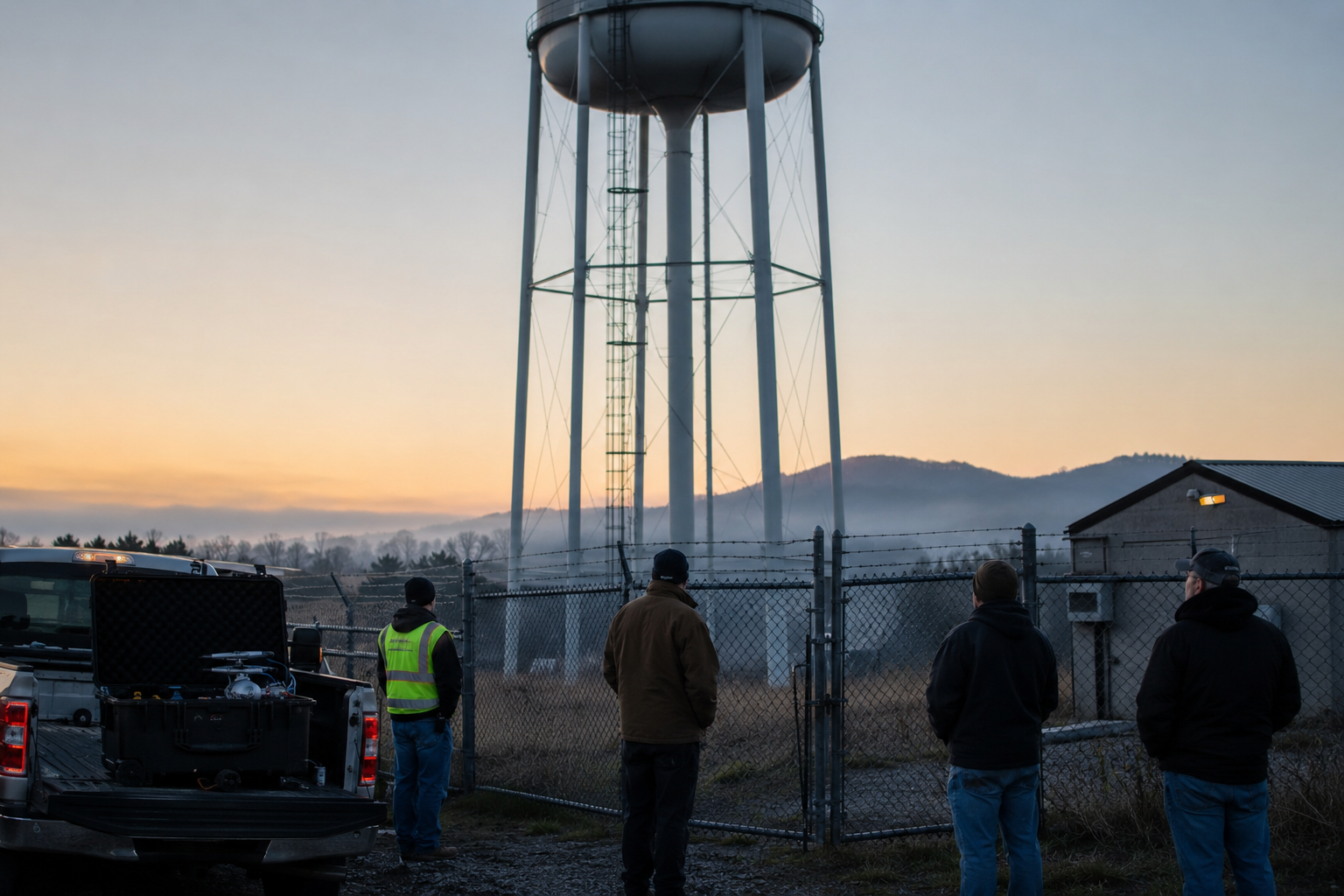
A simple human explanation would be easier if the ground camera images showed a vehicle, lift, tool bag, or worker near the fence line.
The available account says the base looked quiet. No crew was visible during the anomaly. No obvious ladder equipment or service setup appeared below the tower.
That does not eliminate a human presence. Someone could have entered earlier, approached from a blind angle, or stayed hidden from the drone. But the lack of ground activity makes the catwalk shape feel disconnected from the ordinary signs of access.
Why the Ring Matters More Than the Figure
The thin shape is the detail that grabs attention, but the ring may be the stronger clue.
Distant figures in camera images are unstable. Shadows and rails can become bodies once the viewer expects to find one. The ring, however, appears as a physical-looking change on a specific access point.
If the ring was truly present on the ladder, it asks how something contacted that area without a logged entry. If it was glare, the case weakens. If it was condensation, the case becomes a weather-and-metal story.
The unresolved part is that the ring appears before the catwalk shape becomes the center of the case, giving the camera images a sequence instead of a single odd frame.
That sequence is what separates Riverton from a random pause-screen mystery. A single odd shape on a catwalk can be blamed on rail geometry. A single bright mark can be blamed on weather. But a mark on the access path followed by a shape near the upper rail makes viewers read the camera images as movement through the structure, whether or not that movement was truly there.
The Most Reasonable Explanations Still Leave Gaps
The best skeptical answer is probably a stack of ordinary causes. The blue-white band could be glare on damp metal. The missing entry could be a paperwork error. The catwalk figure could be a rail assembly or shadow.
That combination is possible. Most strange evidence becomes less strange when multiple coincidences are allowed to line up.
Unauthorized human access is another possibility. A trespasser or unlogged worker could have climbed the tower, left moisture or residue on the ladder, and appeared on the catwalk later.
But that explanation raises its own questions. Why was no vehicle seen? Why did the person not react to the drone? Why did no service record explain the presence after the fact?
The simplest answer may still be a paperwork failure. Small departments make mistakes, contractors communicate poorly, and inspection camera images often outlives the notes that would explain it. Even so, the case remains useful because it shows how quickly an ordinary municipal object becomes unsettling when one visual record and one written record stop agreeing.
Why Riverton Still Feels Unresolved
The Riverton case is unsettling because every answer needs one extra assumption.
Assume glare, and the ring becomes unusually shaped. Assume a worker, and the missing log becomes a problem. Assume a trespasser, and the quiet ground scene becomes harder to explain. Assume a camera artifact, and the timing between the ring and the catwalk shape becomes an odd coincidence.
That is why the camera images remains interesting. It is not the clearest unknown-visitor case, but it has the kind of bureaucratic contradiction that makes a simple maintenance camera file feel watched.
Maybe Riverton recorded wet metal, a bad angle, and a missed signature. Or maybe a routine drone flight caught something using municipal infrastructure as cover. If you were reviewing the camera images, which detail would make you pause first: the blue-white ring, the missing entry log, or the thin shape on the rail?
Reader Context
This Weird Witnessed story is an editorial reconstruction, written as eerie visual storytelling rather than a verified report. For more context, see UFOs and Unknown Visitors Guide and How WeirdWitnessed Creates Reconstructed Horror Stories.