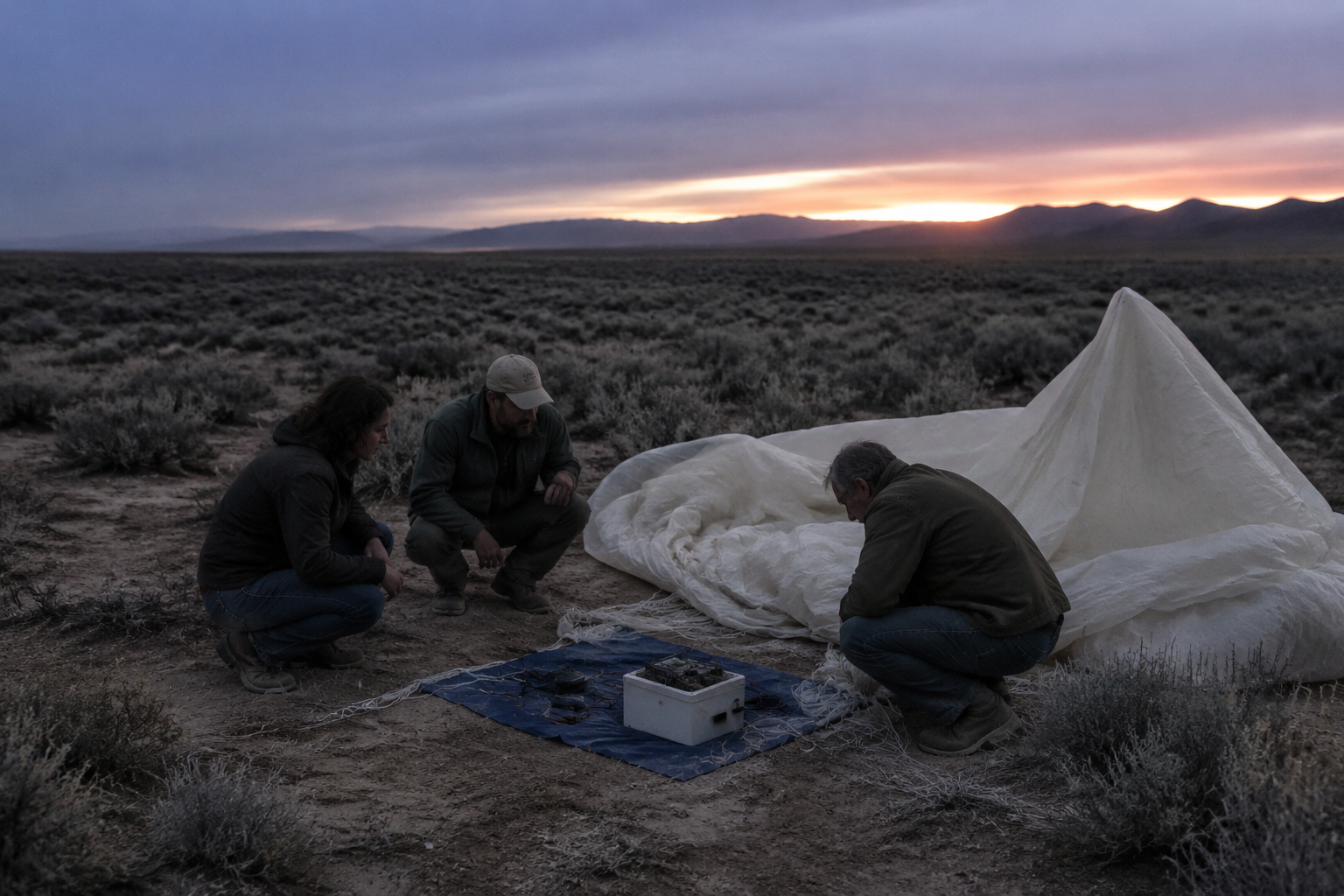
The survey tarp was supposed to make the recovery scene easier to read.
In the volunteer’s first phone photo, it did: a blue tarp on pale dust, the white balloon skin collapsed beside it, the payload box tipped on one corner, and two people kneeling with gloves on.
Most viewers would file that image under ordinary desert clutter. Weather-balloon recoveries are not rare, and dusk can make every fencepost or tired volunteer look stranger than it is.
But the Dry Fork set has lasted because one frame includes a thin upright shape beyond the tarp, and because several small details around that frame refuse to line up cleanly. None prove an unknown visitor was standing there. Together, they make the easiest explanation feel less complete than it should.
1. The Figure Appears Where No Volunteer Was Supposed to Be
The Dry Fork account begins with a routine recovery call. A hobby balloon group lost contact with a weather payload after a high-altitude launch, then traced its last coordinates to dry rangeland cut by cattle paths and shallow washes.
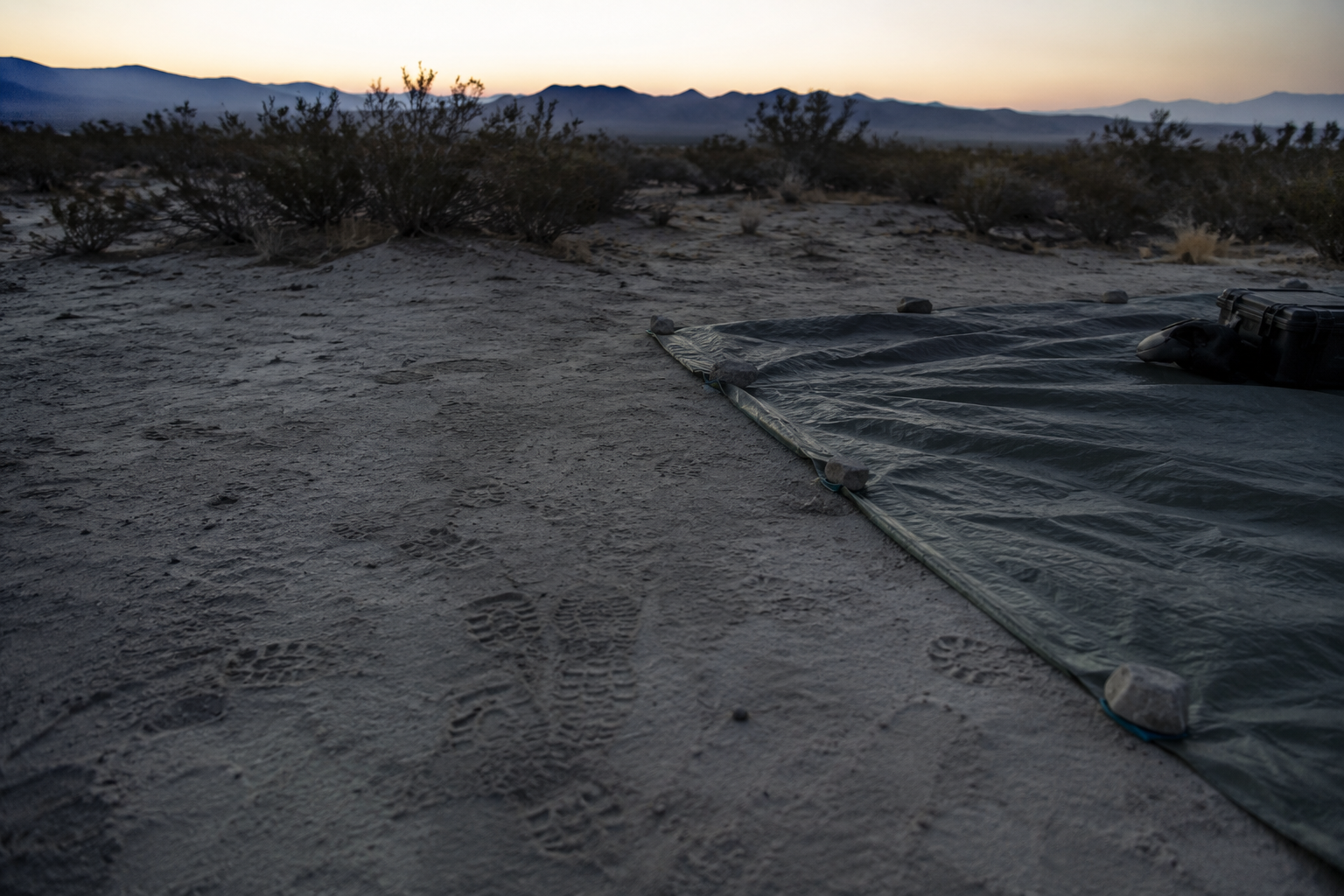
By the time volunteers reached the spot, the light was almost gone. They spread a survey tarp, photographed the payload before moving it, and started logging what could be reused.
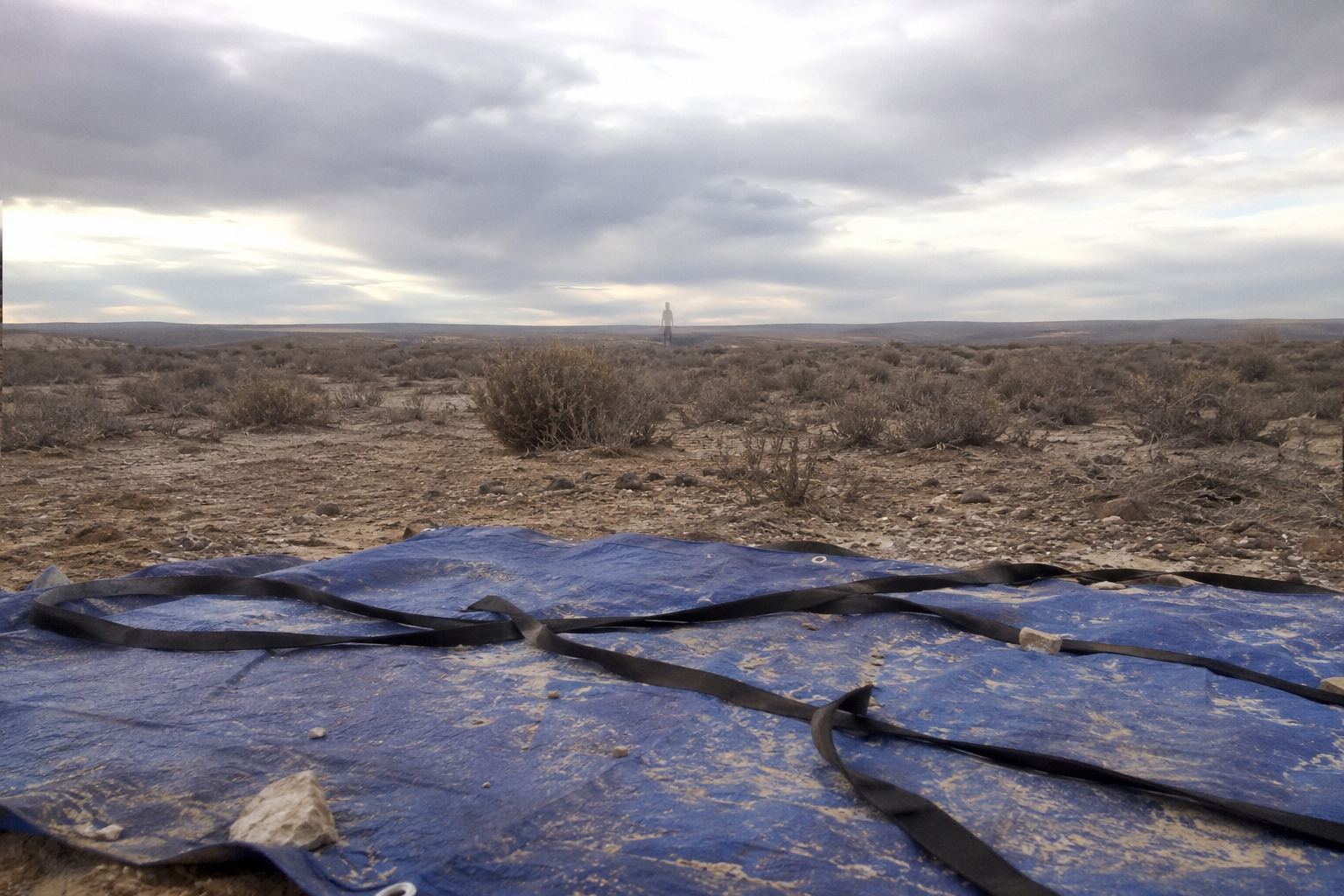
The disputed image appears in the middle of the sequence, after the tarp was down but before the main box was bagged.
Behind the tarp, near a darker line of brush, stands a narrow pale-gray figure. It is taller than the scrub around it and thinner than a person in a jacket.
The volunteers later said nobody had been assigned to stand out there. That does not eliminate a bystander or another searcher outside the shot list. It only gives the first reason people pause: the figure is in the wrong part of a controlled recovery scene.
2. The Tarp Gives the Photo a Useful Scale
Dry Fork is harder because the scene contains familiar objects at known distances: a survey tarp, payload straps, kneeling adults, and a collapsed balloon envelope.
The tarp appears wide enough for two volunteers to work beside without crowding. The payload box sits near its front corner. The thin figure is beyond the back edge, not right beside the camera and not lost on the horizon.
That middle distance matters. If the shape were a twig close to the lens, it should blur differently. If it were a fencepost far behind the brush, it should not overlap the dust line in the same way.
Skeptics point out that dusk photography compresses distance. Phone cameras sharpen some edges while smearing others. Still, the tarp makes the comparison less vague than many alleged visitor photos.
3. The Payload Straps Changed Between Frames
The second detail is less dramatic than the figure, which is why it may be more interesting.
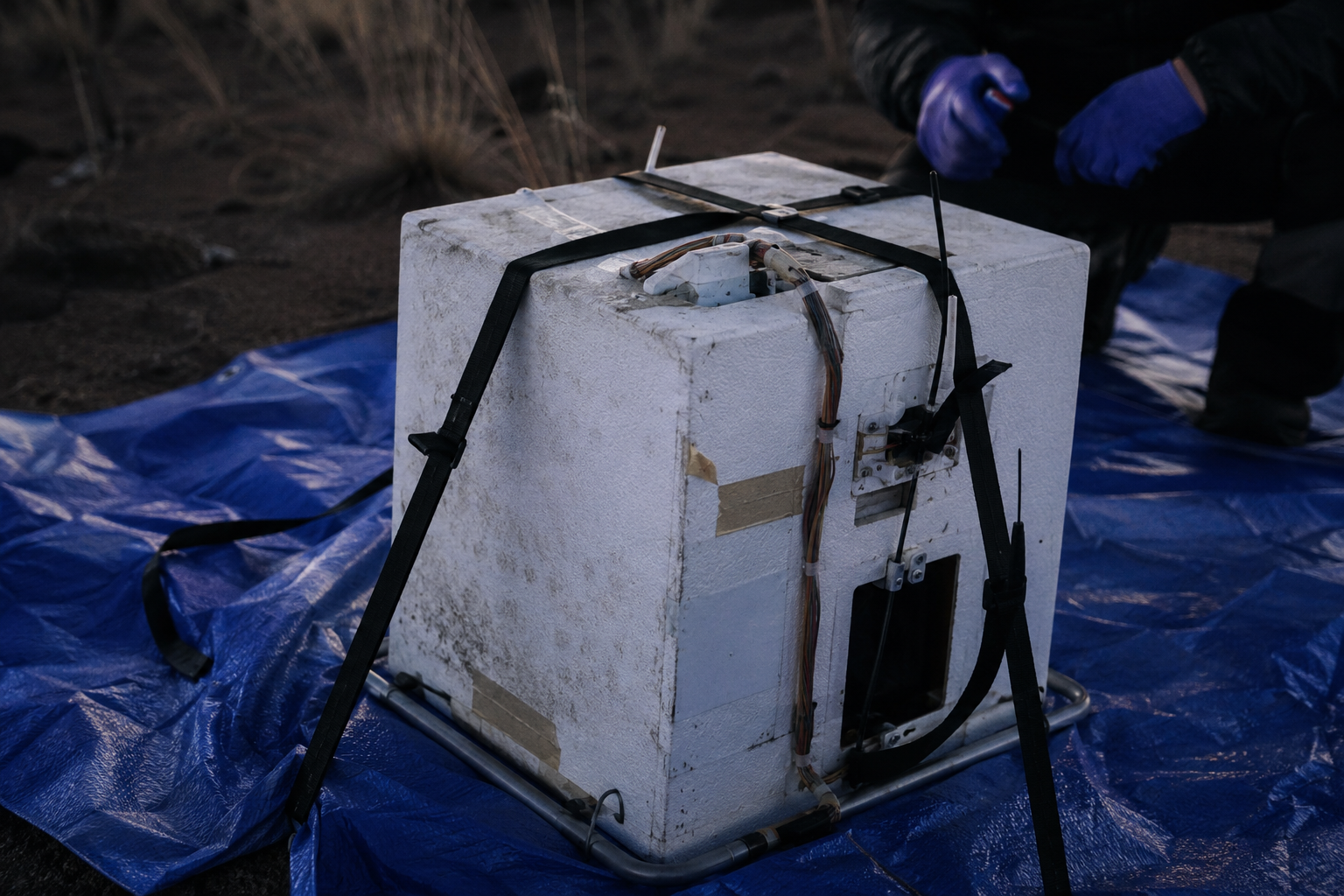
In the photo before the disputed frame, two dark straps from the payload lie loose across the tarp. In the disputed frame, they appear shifted into a neater diagonal, as if the box had been rotated or cinched.
The volunteers disagreed about whether anyone touched the payload during that minute.
A simple explanation exists: someone adjusted it, forgot doing so, or the next angle made the straps appear rearranged. Field recoveries are messy. People step around each other and later remember the order too cleanly.
But the strap change matters because the thin figure appears during the same interval. If nobody touched the box, both the strap position and the background shape become part of the same unexplained gap.
Neither reading is conclusive. The problem is that the photo sequence asks for two ordinary coincidences at once.
4. The Compass App Reportedly Glitched at the Same Spot
One volunteer said he opened a compass app to note the direction of the payload trail and got a spinning heading that would not settle. He closed it, reopened it, and still saw the orientation jump several times before correcting itself back at the truck.
On its own, that is not paranormal evidence. Phones misread direction around magnets, metal cases, low batteries, and software errors. A payload can also include electronics, wire, batteries, and hardware that create interference.
The app glitch becomes relevant only because it was written down in the recovery notes before the photo became a topic online.
That timing is important. If the instrument detail appeared only after viewers noticed a figure, it would feel like decoration. Here, the compass complaint was reportedly part of the normal recovery log: annoying, practical, and not yet connected to anything extraordinary.
The cautious interpretation is that the payload hardware confused the phone. The more unsettling interpretation is that Dry Fork produced an unusual cluster: a visual anomaly, an equipment complaint, and a physical scene that did not match memory.
5. No Footprints Showed in the Powdery Dust
The dust around the tarp was fine enough to preserve boot edges. Several volunteer tracks can be seen near the lower part of the photo set.
That is why the empty ground beyond the tarp has become one of the most argued details.
If the thin figure was a person standing near the brush, some disturbance should have been visible between the tarp and that position. Later photos show scuffed areas around the work zone but no clear line of fresh tracks leading to the background shape.
There are ordinary reasons this may not mean much. The figure could have stood on harder ground. The camera may not show the exact path. The group may have trampled over weaker marks after the disputed frame.
Even so, the footprint issue keeps the photo from becoming just another mistaken silhouette. A human explanation works best when it also explains how someone entered and left that patch without a trail the recovery team noticed.
6. The Thin Shape Does Not Behave Like the Brush Around It
The brush line includes plenty of natural shapes. Some stalks are vertical. Some bend in ways that resemble shoulders or arms. Low light turns ordinary plants into suggestive outlines.
The thin figure, however, has a different visual rhythm. It appears as one uninterrupted upright form with a small upper narrowing, a long central section, and a lower split or taper that suggests two supports.
That does not mean it is a body. It means it is visually separate from the messier scrub around it.
The strongest skeptical case is a cluster illusion: several pale branches lined up just right, with the phone processing them into one smoother shape. This happens often in poor light.
The reason the Dry Fork image remains difficult is that the figure seems cleaner than the brush but less solid than a person. It sits in the uncomfortable middle: too organized to dismiss instantly and too indistinct to identify responsibly.
7. The Witnesses Did Not Claim a Close Encounter
One reason the Dry Fork account feels different from louder alien stories is its restraint. The volunteers did not describe lights landing, messages, burns on the ground, missing time, or a chase across the range.
Most of them said they noticed nothing strange while they were working.
The figure was found later, when the photos were reviewed. That makes the story less cinematic but harder to categorize. If someone wanted to invent a dramatic visitor encounter, the account is surprisingly small: a thin shape in one image, a strap discrepancy, a compass complaint, and no tracks where tracks might be expected.
That restraint does not make it true. Hoaxes can be quiet too. But it changes the tone of the case. The mystery is not what the volunteers said they saw. It is what their ordinary documentation may have caught while they were focused on a balloon payload.
8. The Best Explanation Is Still Imperfect
The most reasonable explanation remains a combination of low light, background vegetation, ordinary movement around the tarp, and memory error.
That explanation accounts for the thin shape as misidentified brush or a person outside the work area. It explains the strap shift as normal handling, the compass issue as electronics near a payload, and the missing tracks as incomplete documentation.
The weakness is not that any single part is impossible. The weakness is that the photo asks every ordinary answer to arrive at once, in the same narrow window.
A good skeptical reading should not pretend the case is meaningless. The Dry Fork photos are interesting because they show how small field details can support each other or accidentally imitate a pattern.
That is not a detail people read as an unknown visitor. It is a reminder that unexplained does not always mean impossible, and explained does not always mean fully settled.
9. Why the Dry Fork Photos Still Linger
The Dry Fork balloon recovery photos linger because they are not built like a science-fiction scene. There is no shining craft, no dramatic beam, no monster stepping into frame.
There is only a tired recovery crew, a tarp, a payload, fading light, and one thin form standing where the scene says nothing should be standing.
That is enough to make the image uncomfortable.
The safest conclusion is that the photo records an ambiguous shape during a messy outdoor recovery. The more curious conclusion is that the surrounding details make the ambiguity harder to flatten.
For WeirdWitnessed, the case belongs in that cautious space. It should not be treated as confirmation that a non-human visitor watched a balloon team. It should be treated as a strange little archive problem: four ordinary details, one disputed figure, and a photo sequence that becomes less simple the longer you look.
Reader Context
This Weird Witnessed story is an editorial reconstruction, written as eerie visual storytelling rather than a verified report. For more context, see UFOs and Unknown Visitors Guide and How WeirdWitnessed Creates Reconstructed Horror Stories.