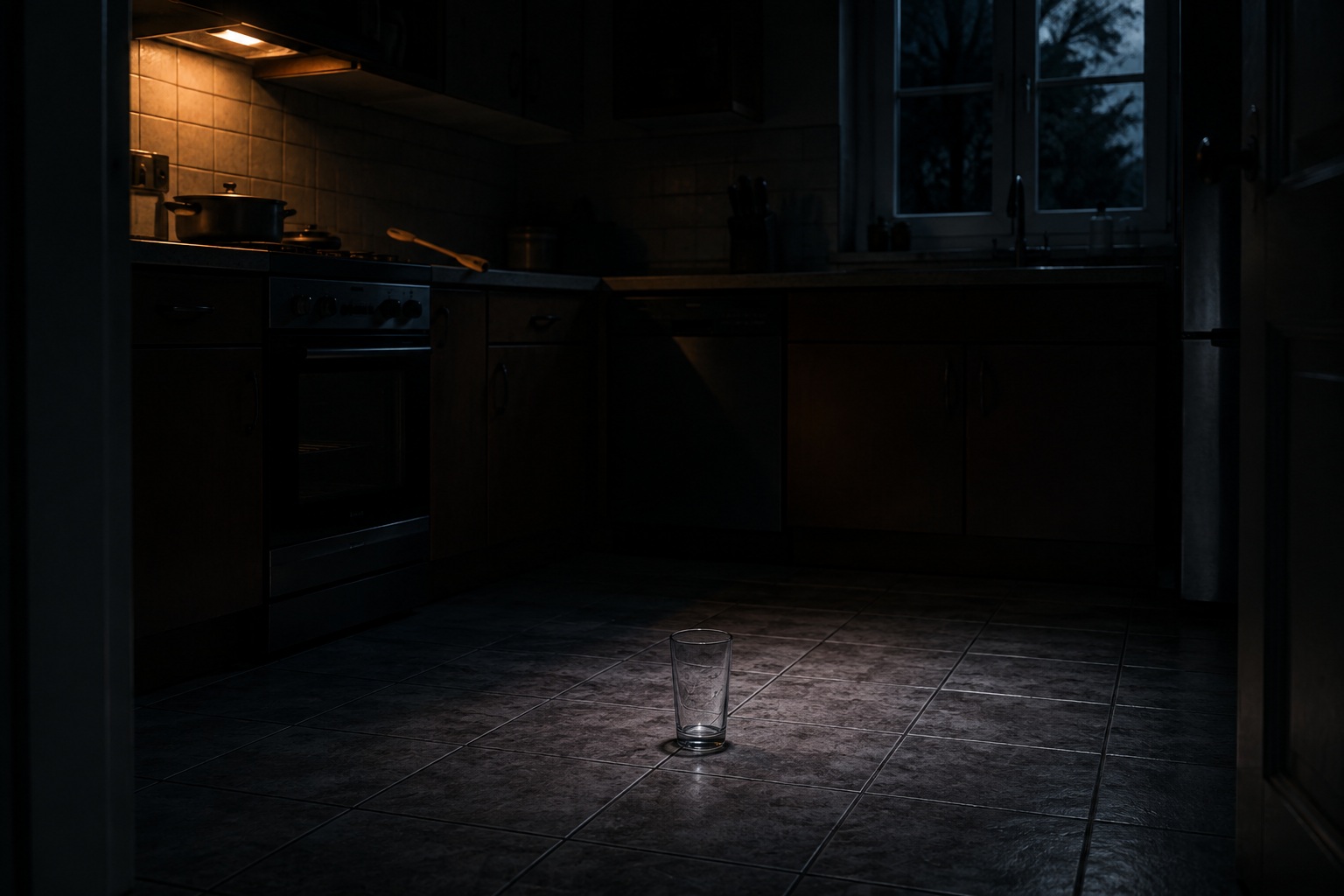
Why Do Objects Move When Nobody Touched Them? The drinking glass was no longer beside the sink. It was standing in the middle of the kitchen floor. A woman had left it on the counter before going upstairs, far enough from the edge that it could not simply tip off. When she came back down after midnight, the kitchen was dark except for the light above the stove. The glass stood upright on the tile several feet from where she remembered leaving it.
Nothing was broken. There was no spilled water. The chairs had not moved. She picked up the glass, returned it to the counter, and spent several minutes trying to recreate what might have happened. She pushed it. She shook the counter. She opened and closed the refrigerator hard enough to rattle the bottles inside.
The glass barely shifted. Then, while she was standing in the doorway, a wooden spoon resting beside the stove slowly rolled several inches across the counter and stopped. Stories about objects apparently moving by themselves are some of the oldest and most unsettling household ghost stories. They can involve glasses, keys, chairs, photographs, toys, doors, kitchen utensils, or objects that seem to disappear from one place and turn up somewhere else.
Most have ordinary possibilities worth checking first. But the reason these stories stay frightening is simple: sometimes the object does not merely fall. It seems to have gone somewhere. Why a Moved Object Feels Worse Than a Strange Noise
Houses constantly make noises. Pipes knock. Wood expands. Refrigerators hum and click. Wind pushes against windows. Something falling in another room can sound much closer than it really is. A moved object feels different because it leaves something behind that can be inspected. You can stare at the chair that is suddenly facing the hallway. You can pick up the keys that were supposedly on the table but are now lying on the stairs. You can measure the distance between the shelf and the place where a picture frame landed.
That physical change makes the experience harder to dismiss emotionally. The most disturbing stories usually involve purposeful-looking movement. A pen rolling off a slanted desk is one thing. A pen appearing inside a closed drawer is another. A cupboard door drifting open can have a loose hinge.
The First Time It Happened
Five cupboard doors standing open when someone walks into the kitchen creates a pattern. That distinction matters. People become frightened when the movement looks less like gravity and more like a choice. The object may be positioned neatly rather than knocked over. Something may move against an expected slope. A familiar possession may repeatedly appear in the same strange location.
Even when there is eventually a normal explanation, the first impression can be powerful: someone handled this. And if everyone in the house says they did not, the obvious next question is uncomfortable. Who did? The First Things People Usually Check
Before treating a moved object as mysterious, the best place to start is the object itself. Was the surface actually level? Could vibration have moved it? Was there water, grease, condensation, dust, or another substance underneath it that reduced friction? Small slopes can be surprisingly difficult to notice.
A round object on a countertop may remain still for hours before a vibration finally starts it rolling. Washing machines, dryers, heating systems, passing trucks, heavy footsteps, doors slamming, and even construction nearby can shake parts of a building. Air movement is another common culprit.
An open window can move papers, hanging decorations, lightweight doors, curtains, and objects balanced near edges. Heating and cooling systems can produce stronger localized airflow than people realize. Pets deserve suspicion too. Cats are particularly good at creating mysteries and then being nowhere near the scene when someone discovers them. Dogs can bump furniture. Rodents can disturb small objects inside cupboards, walls, attics, and storage spaces.
Why The Place Felt Wrong
Then there is the least supernatural explanation of all: another person. Someone may have moved an object and forgotten. A child may deny touching it. A partner may relocate something without considering it important enough to remember. Memory itself is imperfect. People often remember where an object normally belongs rather than where they actually left it.
That explains a surprising number of disappearing-key and relocated-phone stories. But it does not explain every type of movement equally well. Sliding, Falling and Appearing Somewhere Else Are Different Mysteries When people say an object "moved by itself," they can mean several very different things.
The simplest version is movement that someone directly sees: a glass slides, a door swings, a toy rolls, or a picture frame falls. These cases often give the most information because the movement itself was witnessed. Direction, speed, sound, surface angle, airflow, and vibration can all be considered.
The second type is discovered movement. Someone leaves a room and later returns to find a chair pulled away from the table or an object on the floor. Nobody actually saw how it got there. These stories feel eerie, but they contain a large blind spot: anything could have happened while the room was empty.
The third type is stranger. An object disappears from one location and is later found somewhere that seems difficult to explain. Keys left on a kitchen table turn up on a bedroom pillow. A framed photograph appears face-down in another room. A child's toy repeatedly ends up in a hallway after being put away.
Paranormal stories sometimes describe this as an object being deliberately relocated. But before reaching that conclusion, it is worth considering ordinary human behavior. People carry things while distracted. Children move objects. Sleepwalking happens. Memory can combine several similar moments into one confident but incorrect recollection.
The Detail Nobody Could Explain
The genuinely creepy detail is not simply distance. It is placement. A fallen object looks accidental. An object carefully positioned somewhere unexpected can look intentional.
Why Certain Objects Keep Appearing in These Stories Ghost stories about moving objects rarely center on a bag of frozen peas shifting two inches inside a freezer. They tend to involve recognizable personal things. Photographs. Wedding rings. Keys. Toys. Religious objects. Chairs. Clocks. Books. Glasses.
There is a reason. People notice meaningful objects more quickly, and they remember their usual locations more confidently. If a decorative object nobody pays attention to changes position slightly, the movement may go unnoticed for days. If someone's wedding ring is missing from the bedside table, its location becomes immediately important.
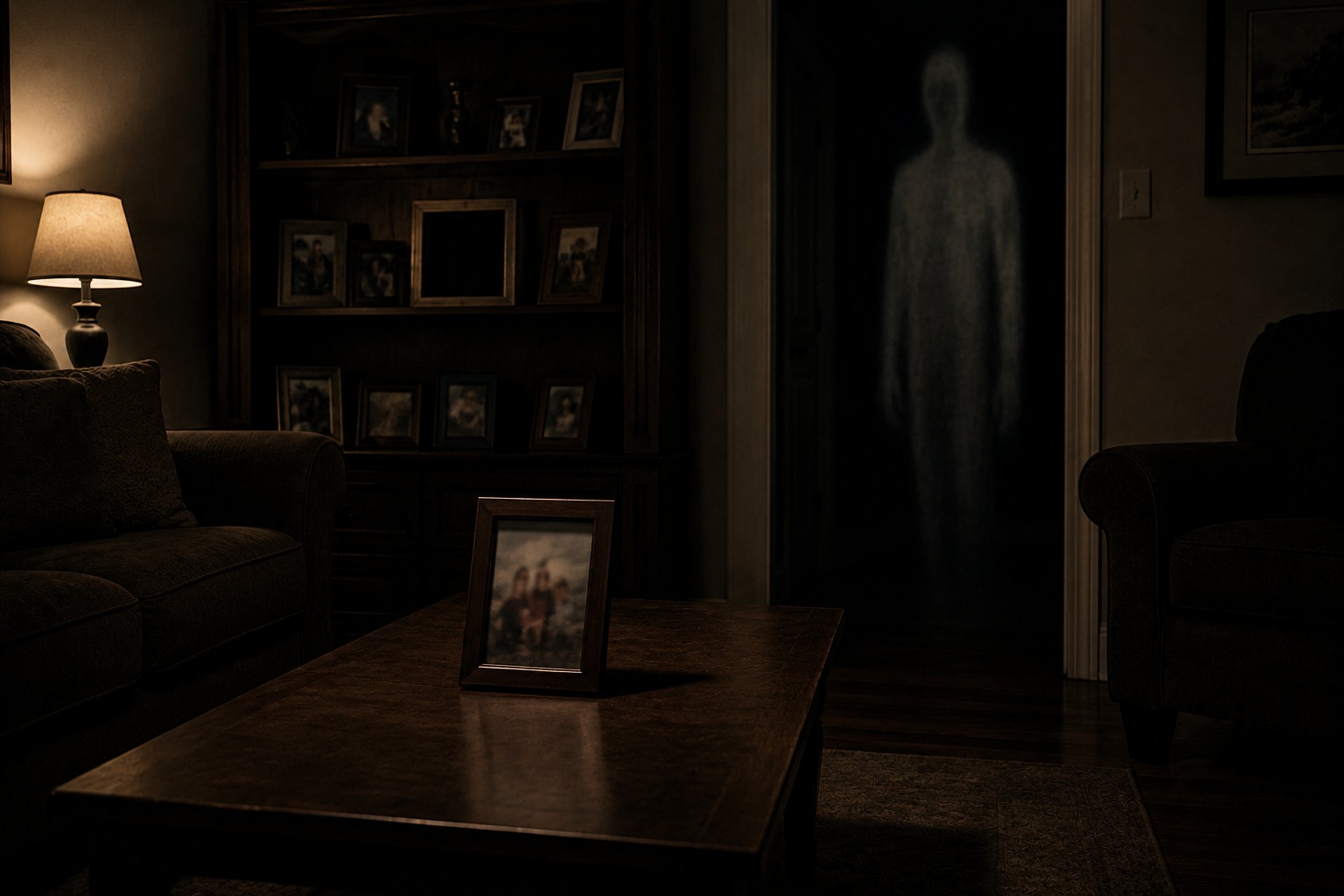
Personal objects also make a strange event feel personal. Imagine walking into an empty living room and discovering a cushion on the floor. Annoying, perhaps. Now imagine discovering a framed photograph of a deceased relative removed from a shelf and placed upright in the center of the coffee table.
The physical movement might be equally explainable. The second scene carries meaning. That is where ordinary uncertainty can turn into a ghost story. People naturally search for intention behind unusual arrangements. If the moved object has emotional significance, the question changes from "how did this fall?" to "why was this particular thing moved?"
What They Checked Afterward
That shift can happen very quickly. When Gravity and Vibration Become Less Convincing Normal explanations are strongest when they match the movement. A marble rolling downhill needs little mystery.
A lightweight door opening in a draft is easy to test. A poorly balanced frame falling from a shelf is common. Things become harder to explain when the proposed cause does not match what the object apparently did. Consider a heavy dining chair.
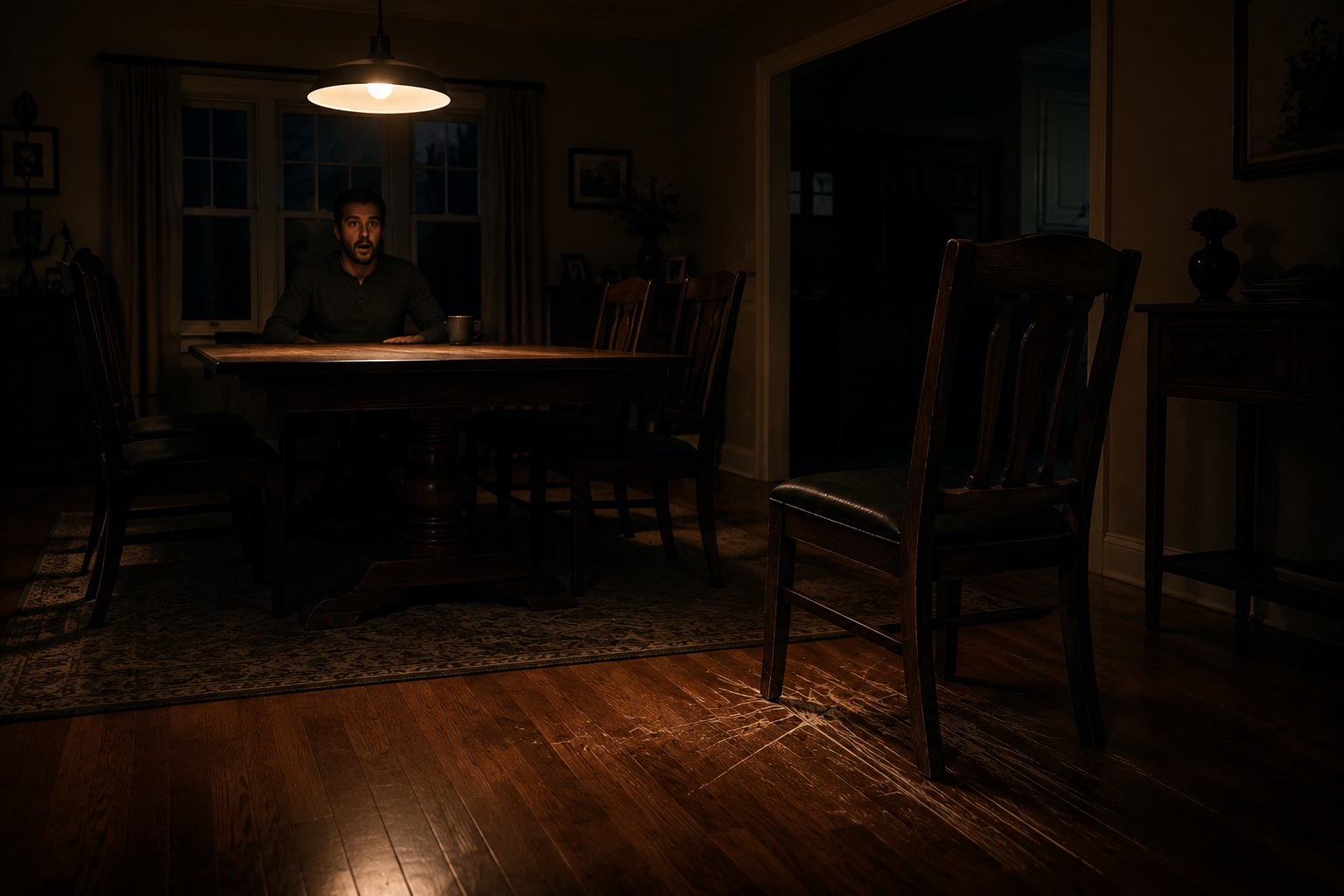
If someone finds it several inches from a table, memory or another person are reasonable possibilities. But if a witness is sitting alone in the room and watches the chair scrape backward across the floor, vibration becomes much less satisfying. The same applies to direction.
Gravity can pull an object down a slope. It does not normally make an object travel uphill. Airflow can move light items easily. It is less convincing for something heavy enough to require a deliberate push. Repeated movement can also make simple explanations weaker. Suppose a bedroom door opens every night. A pressure difference caused by heating may explain it perfectly.
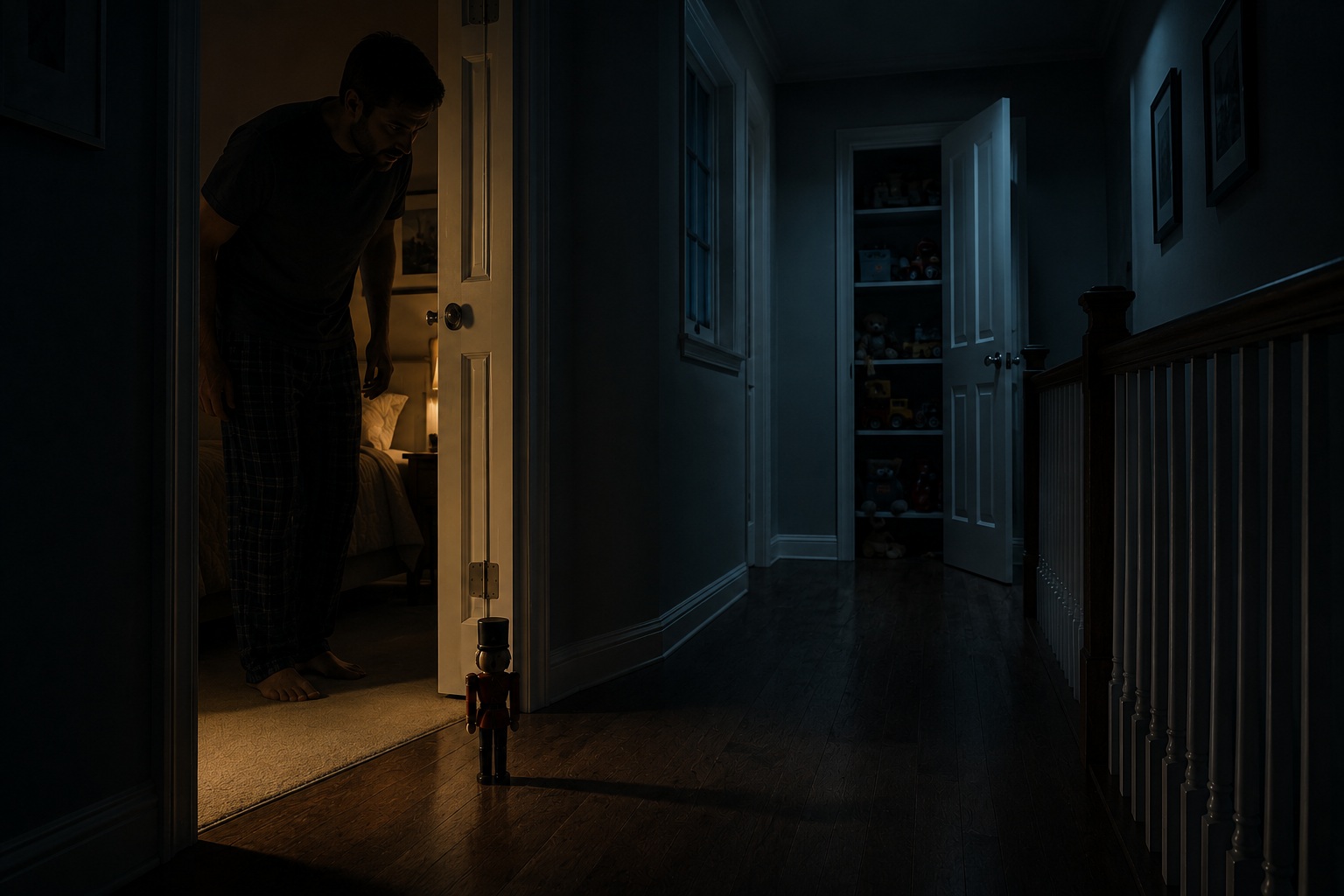
Suppose instead that a small wooden figure keeps being found standing outside the bedroom door after being returned to a shelf across the house. Now the question is not merely what force could move the object. It is how the same final arrangement keeps happening.
That still does not establish a paranormal cause. Human involvement, mistaken memory, sleep behavior, practical jokes, pets, and unnoticed routines remain possibilities. But it explains why repeated, organized movement occupies a special place in ghost stories. Random movement looks mechanical. Repeated placement looks like behavior.
The Moment It Became Harder To Ignore
The Scariest Reports Happen While Someone Is Watching There is a major difference between finding something moved and watching it move. Picture a quiet dining room late at night. A man is reading at one end of the table. Across from him is an empty wooden chair. Nothing dramatic happens at first.
Then comes a short scraping sound. The chair moves backward perhaps an inch. He stops reading. Several seconds pass.
The chair scrapes backward again. Not quickly. Not violently. Just enough for all four legs to shift across the floor. That kind of story is frightening because several easy explanations disappear at once. The witness is already present. There is no missing period during which another person could have entered the room.
Yet even direct observation needs careful interpretation. Floors can flex. Furniture can settle. Vibrations can travel through structures. Visual perception becomes less reliable in dim rooms, especially when someone is tired. Objects can also move in unexpectedly dramatic ways after stored tension is released. Something wedged against another object may suddenly slip. Materials warming or cooling can shift.
The strongest normal explanation is always one that can reproduce what happened. If closing a particular door makes the chair move, that matters. If a loose floorboard shifts it whenever someone walks upstairs, that matters too. But when a large object visibly moves across a stable surface without an obvious push, people remember it precisely because the normal possibilities become narrower.
Why Repetition Changes the Story One unexplained movement is usually just that: unexplained. Maybe someone forgot something. Maybe the floor is crooked.
Why People Avoided That Spot Later
Maybe the cat deserves another interrogation. Repetition changes how people respond because it gives them something to compare. Does the same object move? Does it happen at roughly the same time?
Does the object travel in the same direction? Does it only happen in one room? Does something else happen immediately before it, such as a door closing, heating switching on, a train passing, or someone walking across a particular section of floor? Patterns can actually make ordinary explanations easier to find.
If a glass shifts every time the washing machine enters its spin cycle, the mystery may disappear quickly. If a door opens whenever another door downstairs is slammed, pressure is a strong possibility. But repetition can also create much stranger situations. A family might repeatedly find one kitchen chair turned toward an empty doorway each morning. A toy returned to a box may repeatedly appear beneath the same window. A photograph may keep falling while the objects beside it remain untouched.
The important part is not that repetition makes a paranormal explanation more certain. It makes the event more testable. Instead of asking, "Did something weird happen?" someone can ask, "What remains the same every time this happens?" That question is far more useful.
And occasionally, the answer is what makes the story creepier. When a Moving Object Becomes a Ghost Story Objects moving without an obvious touch have been associated with haunted houses for generations because movement suggests interaction. A strange sound can come from the building itself.
Why The Story Still Gets Shared
A shadow can come from changing light. But when a physical object seems to respond to a room, a person, or another action, it creates the impression that something unseen is participating. Some stories describe knocking followed by an object falling. Others involve a door moving after someone speaks.
In darker versions, an object seems to move closer. Imagine leaving a small wooden toy on a shelf before bed. At 1 a.m., it is on the bedroom floor. You return it to the shelf.
At 2 a.m., it is in the hallway. You put it away again, this time inside a cabinet. In the morning, it is sitting upright beside your bed. There are plenty of reasons to question such a story before assuming anything supernatural. Who else had access to the house? Could someone be playing a joke? Could the witness have moved it while half asleep? Is the sequence remembered accurately?
Those questions matter. But they also reveal why moving-object stories survive so easily. The frightening part is not movement alone. It is the suggestion of intention.
A glass sliding across a counter is strange. A chair turning toward you is worse. And an object that seems to keep returning to the place where you sleep creates a thought much harder to shake: Maybe the important thing was never the object.
Maybe it was where something wanted you to look.