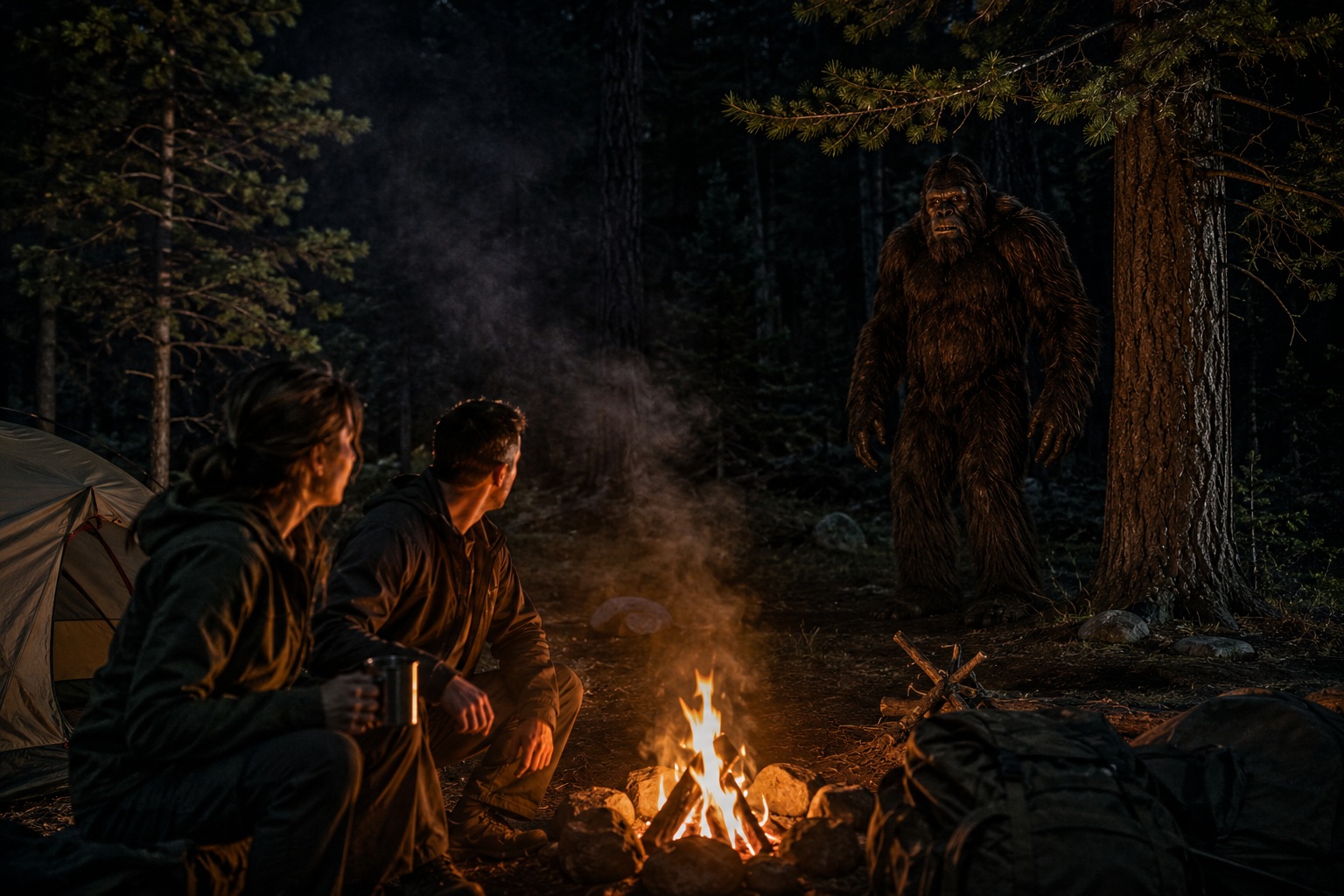
The smell reached the campsite before anything moved in the trees. It was strong enough that the man beside the fire stopped talking and looked toward the dark timber. He later described it as wet animal hair mixed with spoiled meat and something sour, almost like garbage left in summer heat. There had been no smell there a few minutes earlier.
Then the woods went quiet. Twenty yards beyond the firelight, something tall shifted between two pine trunks. For a moment it stood beside one of them, giving the witnesses a scale they could understand. The lowest branch was roughly seven feet above the ground. The dark, hair-covered shoulders appeared close to it.
Nobody walked closer. The figure moved behind the trees and disappeared downhill. The strange odor weakened soon afterward, as if whatever carried it had moved away too. That sequence appears again and again in Bigfoot stories: an unpleasant smell, followed by the realization that something large may be nearby. Sometimes witnesses see a huge hairy figure. Sometimes they hear heavy movement. Sometimes the smell is the only strange part of the encounter.
So why has odor become such a familiar detail in Bigfoot sightings? Why the Smell Sometimes Comes Before the Sighting Smell works differently from sight. You can smell an animal without knowing exactly where it is. Air moves around trees, brush, hills, buildings, and vehicles. An odor can reach someone while its source remains completely hidden.
That makes smell especially unsettling in forests. A person hiking through thick woods might only be able to see thirty or forty feet in some directions. Something larger could remain behind brush or terrain while wind carries its odor directly toward the trail. This also explains why Bigfoot stories involving smell can feel frightening even before anything visibly unusual happens.
The First Time It Happened
The witness has already learned something. Something nearby smells strongly enough to notice. But they do not yet know what it is. In some stories, the odor appears suddenly rather than gradually. Someone walks along a trail with normal forest smells around them, takes several more steps, and enters a pocket of powerful stink.
That can feel almost like crossing an invisible boundary. Then a branch snaps uphill. Or something moves through brush. Or a large upright shape becomes visible between the trees.
The smell does not establish what caused the encounter. But psychologically, it creates a warning before the witness understands what they are being warned about. What Bigfoot Witnesses Say the Odor Smells Like There is no single description. People use familiar smells because smell itself is difficult to describe. Instead of saying an odor has a precise quality, witnesses compare it to something they already know.
Common comparisons in Bigfoot stories include wet dog, dirty fur, body odor, rotten food, sewage, skunk, dead animals, damp clothing, manure, and garbage. Some descriptions combine several of these. A witness might say it smelled like a wet animal mixed with rotten eggs. Another might compare it to an extremely dirty person who had been wearing the same clothes for weeks.
That variation matters. If every story contained exactly the same dramatic description, repetition itself would deserve suspicion. Instead, the broad pattern is simpler: people often describe a powerful organic or animal-like stink. The intensity can be more memorable than the exact smell. Imagine walking through cool woods after sunset. The air smells of pine needles and damp soil. Then, within several steps, the air becomes thick with something sour and animal-like.
Why The Place Felt Wrong
You stop. The smell is strongest toward a stand of young trees. One of those "trees" then changes position. That combination of smell and movement is much more frightening than either detail alone.
Large Animals Can Produce Surprisingly Strong Smells
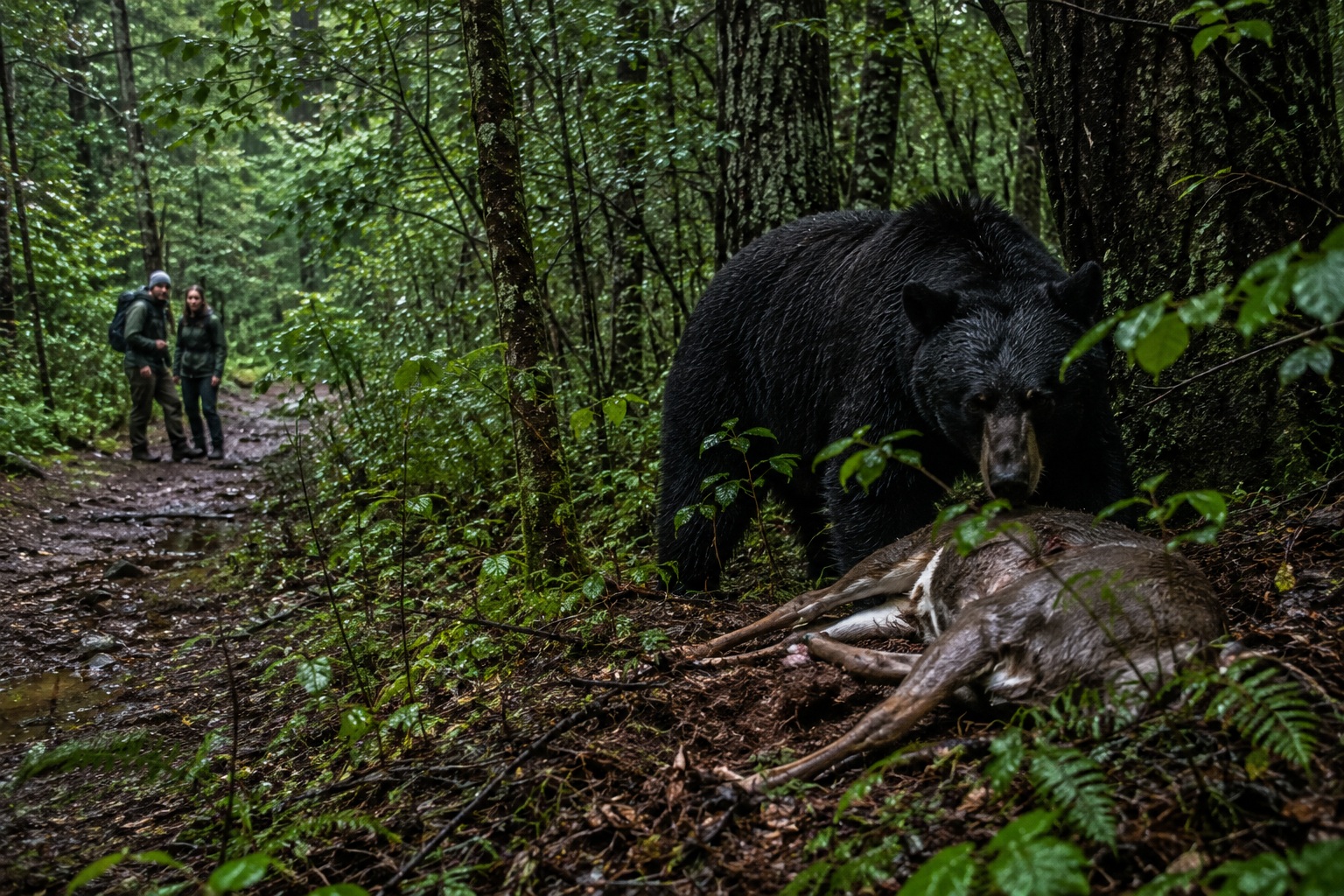
Before reaching for an unusual explanation, there are plenty of ordinary animals to consider. Bears can smell extremely strong, particularly when wet, dirty, feeding on something dead, or spending time around garbage. Deer have noticeable odors under some conditions. Wild pigs can create powerful smells. Foxes, mustelids, and other mammals can produce scents that seem remarkably intense.
A dead animal can be even more misleading. Decomposition odor may travel farther than expected and can seem to appear or disappear depending on the wind. Someone may smell something terrible in one patch of forest and nothing twenty yards away. Skunks are another obvious possibility in North America.
Their spray can travel, linger, and mix with other woodland smells. A person who never sees the animal may associate the odor with whatever they notice afterward. Even a large domestic dog that has rolled in something rotten can create an impressive stink. That means smell by itself is weak identification.
If someone reports nothing except a terrible odor in the forest, there are many ordinary possibilities. Bigfoot stories become more interesting to readers when the smell appears alongside another unusual detail: very large footsteps, heavy movement, strange vocal sounds, or a clearly visible upright hairy figure.
The combination is what creates the story. Wind Can Make the Source Seem Impossible to Locate Odor does not behave like a visible object. A person can point at a tree and say, "It is there." Doing the same with a smell is much harder.
The Detail Nobody Could Explain
Forest air is messy. Wind hits trunks, rocks, slopes, ravines, and thick vegetation. Small currents move in different directions. Cooler air can settle into low areas. An odor source that seems directly ahead may actually be off to one side or farther away. This can produce one of the strangest parts of smell-based Bigfoot stories.
The odor seems to follow someone. A hiker notices it on the trail, walks another hundred feet, and smells it again. After another stretch it disappears. Then it returns. That can create the feeling that something is moving parallel to the trail. Sometimes something might actually be moving nearby—a deer, bear, dog, or other animal.
But shifting air can produce a similar impression without the source moving much at all. The same problem occurs when witnesses say the smell vanished instantly. That sounds strange, but a small change in wind direction can remove an odor surprisingly quickly. A sudden disappearance therefore is not necessarily mysterious.
The harder situation to dismiss is when the odor seems to change location together with something witnesses can also hear or see. Why Smell Plus Heavy Movement Feels Different Suppose two hikers smell something foul. That alone is strange but easily explained.
Then they hear brush breaking fifty feet away. Still explainable. A deer or bear could be moving there. Then the sound continues roughly parallel to them while they walk. Now the experience becomes more uncomfortable.
What They Checked Afterward
Finally, they glimpse a large hair-covered shape standing upright beside a tree before it moves behind the trunk. At that point the smell becomes part of a larger set of details. This is why some Bigfoot witnesses remember odor so clearly. It was not necessarily the strangest part of what happened. It was the first part.
The smell told them something was nearby before they saw it. In particularly frightening stories, witnesses describe turning toward the odor and finding a huge figure much closer than expected. A six-foot person provides a useful comparison here. A supposed Bigfoot shape that barely reaches ordinary human height is visually weak and could represent a person, bear, stump, or simple mistake.
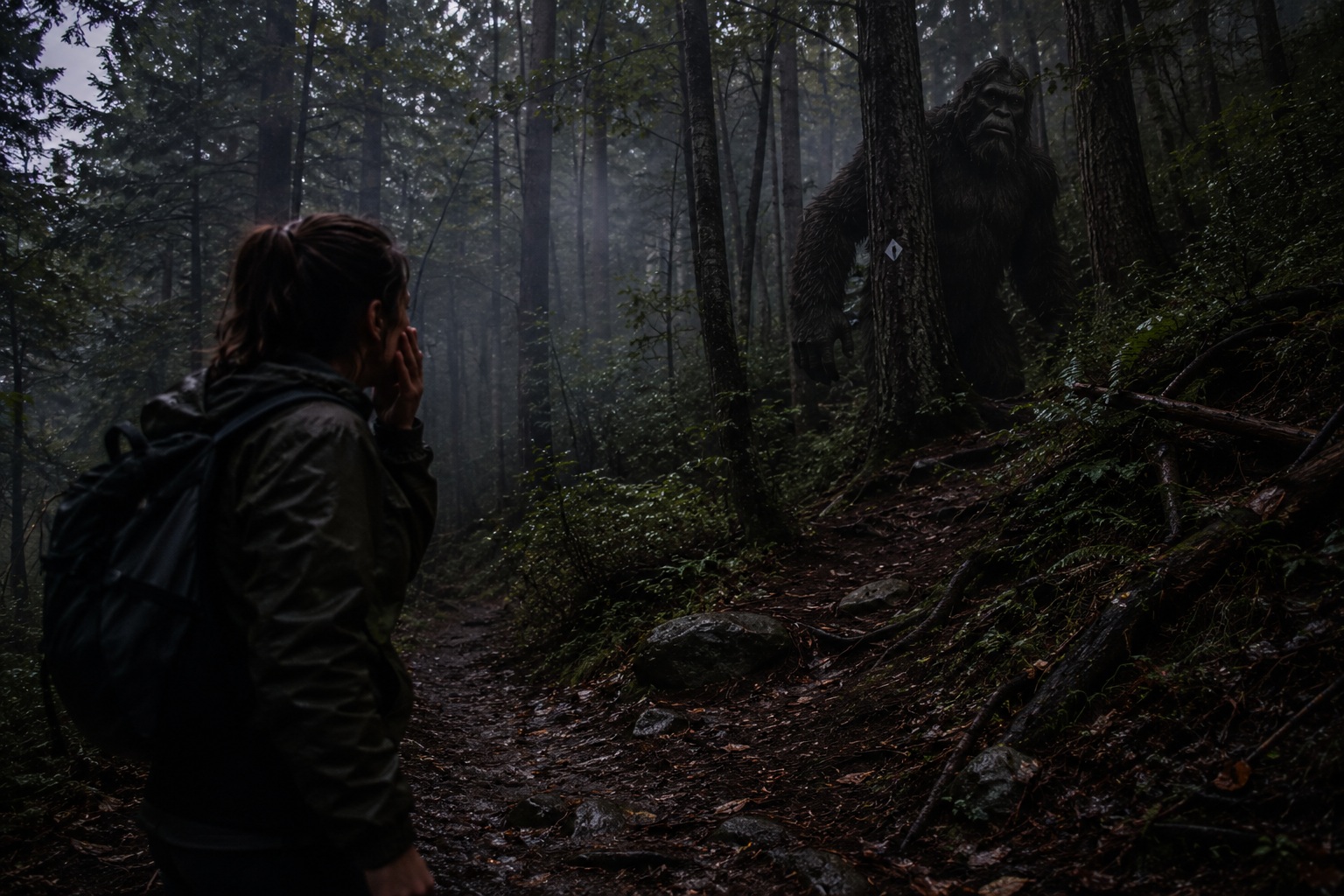
Reports become more visually striking when witnesses describe something obviously oversized beside a recognizable reference: a trail sign, pickup truck, shed roof, low branch, or another person. A readable scale clue changes the scene from "something dark in the woods" to "something unexpectedly large." And when a strong animal smell arrives at the same moment, the encounter becomes even harder for the witness to forget.
Could Fear Make the Smell Seem Stronger?
Memory does not work like a file stored perfectly in the brain. Frightening moments receive unusual attention. Someone who suddenly believes a large animal is standing nearby may remember small details with intense emotional weight: the direction of the wind, a cracking branch, how their dog behaved, or the smell in the air.
Later, those details become part of how the experience is told. This does not mean the witness invented the smell. It means fear can affect which parts of an experience become important. Smell is especially powerful because it is closely connected with memory. A familiar odor can bring back a place or moment years later with surprising force.
The Moment It Became Harder To Ignore
A frightening odor can do the same thing. Someone who once smelled a strong musky stink immediately before seeing a large shape in the woods may forever connect those two things. Years later, smelling something similar can bring the entire encounter back. That may help explain why odor descriptions survive in Bigfoot storytelling even when other details become fuzzy.
The witness might forget exactly how many seconds the figure was visible. They may forget which direction it walked. But they remember what the air smelled like when they realized they were not alone. When the Ordinary Explanations Get Weaker
The strongest normal explanation for a strange forest smell is usually simple: there was something smelly nearby. An animal. Carrion. Garbage.
Sewage. Mud. Standing water. A nearby farm.
Even another person. The first useful question is therefore not, "What kind of Bigfoot smell was it?" It is, "What ordinary source was nearby?" Location matters enormously.
A foul odor beside a campground dumpster is not surprising. Neither is one near a swamp, livestock field, roadkill, or wastewater area. Weather matters too. Was it windy? Had it rained? Was the smell strongest downhill? Did it remain in one location? Witnesses can also misidentify ordinary shapes once they become nervous.
Why People Avoided That Spot Later
A bear rising onto its hind legs is a classic example. Dense vegetation can hide the lower half of an animal and make its posture difficult to judge. Darkness removes depth and scale. A frightened person may only see a few seconds of movement. The normal explanations become less satisfying when several specific details happen together.
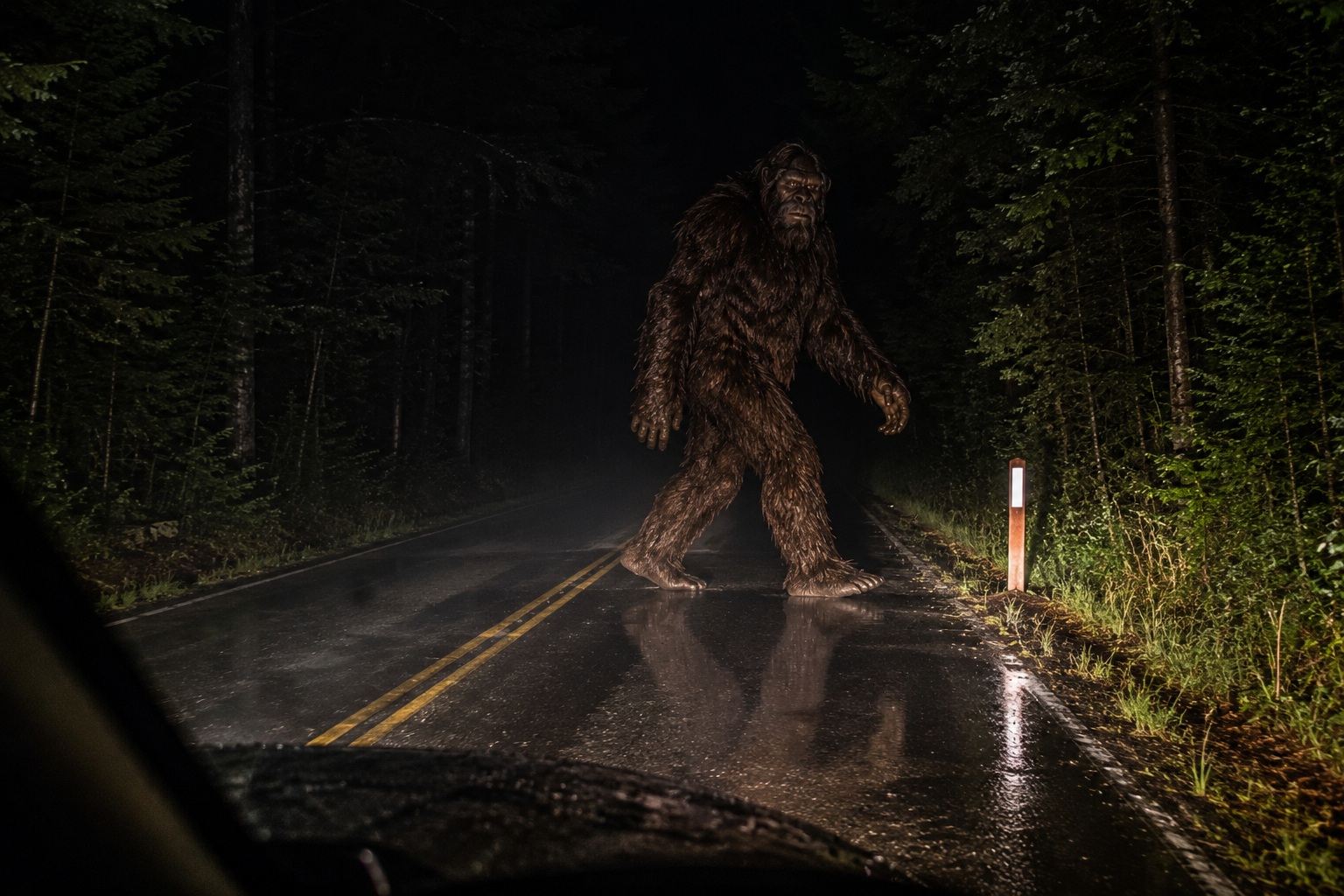
For example, imagine someone smells the odor on a quiet forest road and then sees a clearly upright, hair-covered figure cross the open road in headlights. It takes several long steps, passes beside a standard roadside marker that makes its unusual height obvious, and disappears into the trees.
The smell remains for a few moments and then fades. A bear may still be considered. So should a person, poor distance judgment, and mistakes caused by darkness. But now the odor is not being asked to carry the whole story. There is also movement, shape, posture, and scale to explain.
That is the important distinction. A strange smell alone is a strange smell. A strange smell attached to a clear encounter becomes one detail among several. Why This Detail Keeps Appearing in Bigfoot Stories
There is another reason smell fits Bigfoot stories so naturally: it matches what people expect from a huge wild mammal. If an unknown eight-foot hair-covered animal lived outdoors without washing, people would naturally imagine that it might smell. Once that idea becomes familiar, it can influence how stories are interpreted and retold.
Why The Story Still Gets Shared
Someone who encounters an unexplained odor may remember hearing that Bigfoot supposedly smells terrible. Someone sharing an old sighting may emphasize the smell because listeners recognize it as a classic Bigfoot detail. Popular culture reinforces the connection too. That does not automatically make every smell description meaningless. It simply means the pattern can feed itself.
There is also no reason to assume that every Bigfoot smell story has the same cause. One might involve a bear. Another might involve a dead deer hidden in brush. Another might involve a skunk.
Another could involve a witness who genuinely saw something they could not identify. The interesting part is not that one smell supposedly identifies Bigfoot. It does not. The interesting part is how often odor becomes the opening warning in these stories.
Someone notices the forest smells wrong. They stop walking. They listen. Something heavy moves where they cannot quite see it.
And sometimes, for only a few seconds, a huge hairy shape steps into the open. That is why the strange smell remains such a powerful part of Bigfoot stories. It reaches the witness before the answer does.