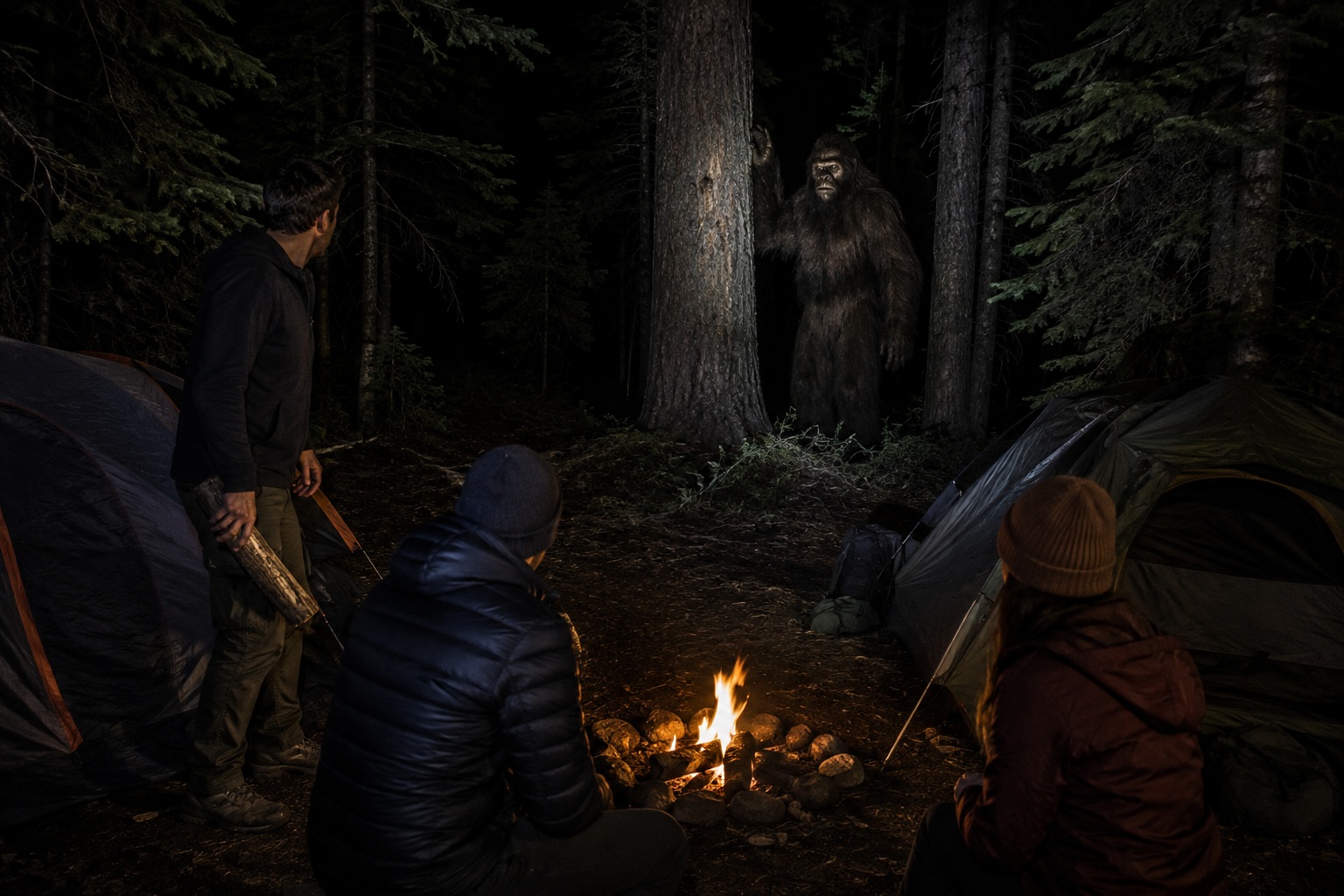
The second knock came from farther away than the first. A camper had been sitting beside a dying fire when a hard wooden crack came from the trees beyond the tents. It sounded deliberate: one solid hit, like someone swinging a thick branch against a trunk. Everyone stopped talking. After half a minute, one of them picked up a piece of firewood and struck it against a tree beside camp.
Knock. Nothing happened. Then, from deep in the woods, came another answer. Knock.
The strange part was the distance. The first sound had seemed perhaps fifty yards away. The reply sounded much farther uphill, beyond the reach of the firelight. A few minutes later there was another single crack from their left. Then another behind the tents. Nobody saw a person. Nobody heard footsteps. The forest simply seemed to be answering from different places.
Stories like this are common enough around campfires that "wood knocks" have become strongly connected with Bigfoot lore. But a sharp knock in the woods can come from far more ordinary sources too. So why do campers hear them, why do they sometimes seem to answer back, and what makes certain knocking stories much harder to dismiss than others?
Why One Knock Can Sound Deliberately Made
Forests are full of noise, but most nighttime forest sounds have some kind of texture. Leaves rustle. Branches scrape. Small animals produce quick bursts of movement. Wind makes trees creak, groan, and sway. Rain creates thousands of little impacts at once.
The First Time It Happened
A wood knock is different. The sound people describe is often short, hard, and surprisingly clean: clack. There may be no rustling before it and no crashing afterward. Instead of sounding like something moving through the woods, it can sound like someone intentionally hitting one solid object against another.
That distinction matters psychologically. Human beings are extremely sensitive to rhythm and intentional sound. A single sharp impact gets our attention because it resembles something a person might deliberately produce. Two separated impacts can feel even more purposeful. And darkness removes most of the information we would normally use to solve the mystery.
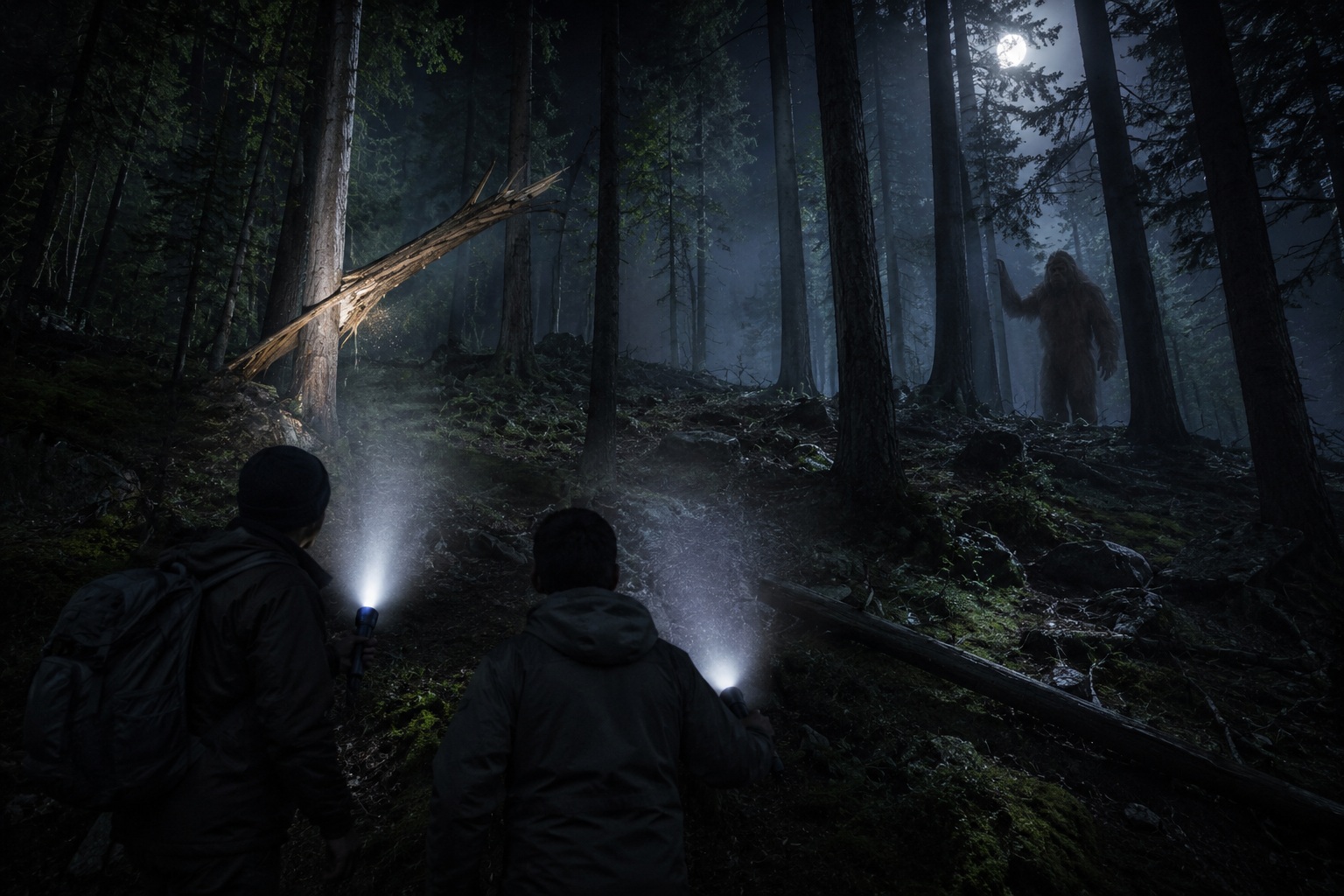
In daylight, you might see a dead branch hanging above another tree. At night, you hear only the impact. Your brain receives the sound without the explanation attached. Distance becomes difficult to judge too. A loud knock from a hollow log nearby can seem farther away than it really is. A sharp impact on a hillside can travel unexpectedly well. Terrain, trees, humidity, wind, and even the direction you are facing can change how a sound reaches you.
That can make one ordinary crack seem as if somebody is standing far beyond the edge of camp. Why Bigfoot Stories Became Connected To Wood Knocking Wood knocking has become one of the most recognizable sounds associated with Bigfoot searches. The basic idea is simple: if a large intelligent animal wanted to communicate through thick forest, striking wood could produce a loud signal without requiring it to expose itself.
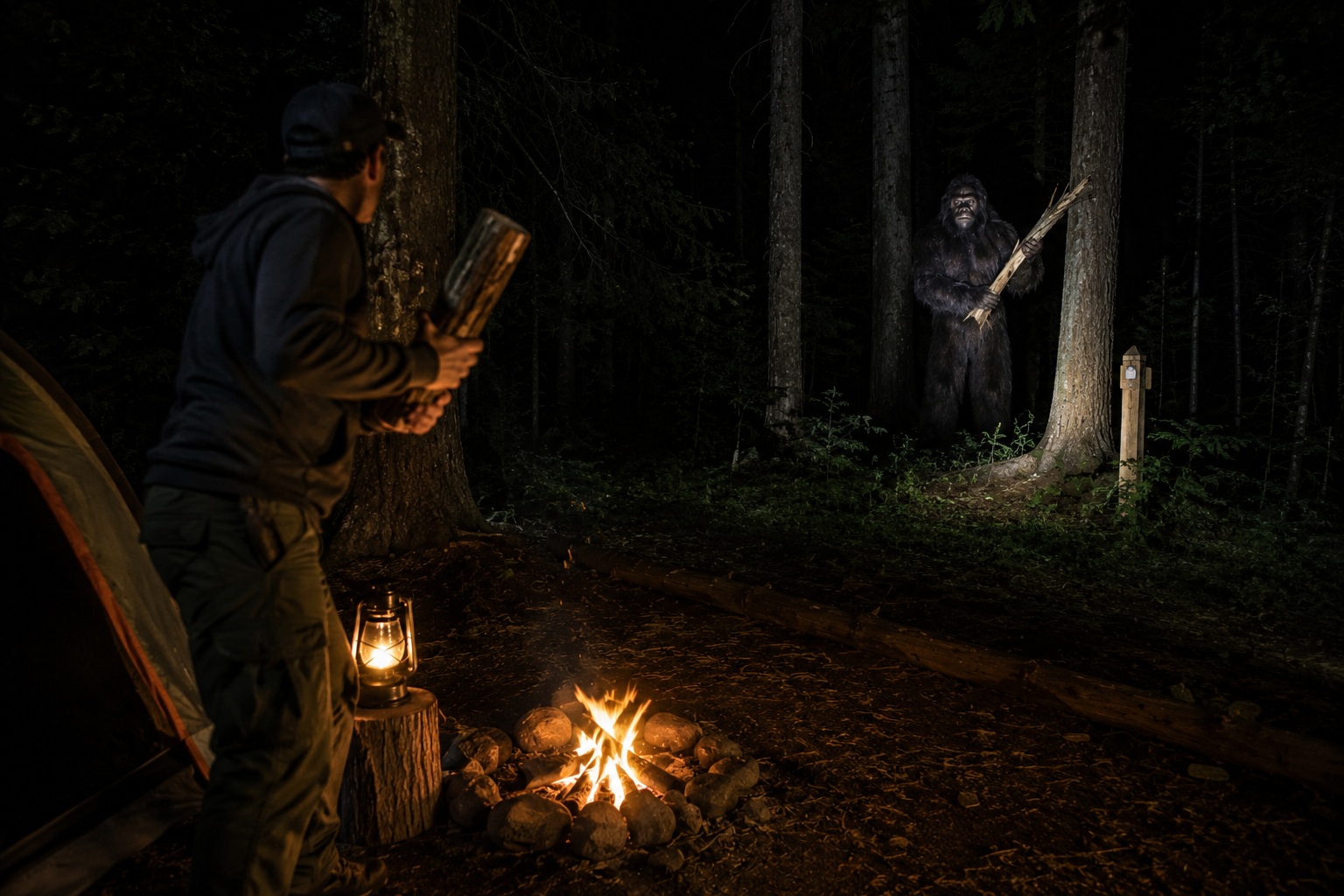
People searching for Bigfoot have therefore sometimes made their own knocks by striking branches, bats, or pieces of wood against trees and then waiting for a response. That practice creates an unusual situation. Someone deliberately knocks. Then everyone becomes silent.
Why The Place Felt Wrong
Now every distant crack matters. A branch falling five minutes earlier might have gone unnoticed. After someone deliberately makes a knock, the same sound becomes a possible reply. This does not mean everyone hearing an answer is imagining it. It means the setup makes ordinary forest noises much more noticeable.
Expectation changes listening. There is also a practical reason the idea remains compelling: knocking would work well as a long-distance signal in dense woods. You do not need a clear view. A loud impact can travel through trees farther than many quiet animal sounds.
That makes the behavior believable enough to keep people interested even though the sound alone cannot tell you what produced it. The truly unsettling stories usually contain something more specific than a random crack. The knock appears to react. The Pattern That Makes Campers Stop Talking
Imagine hearing one wooden impact at 1 a.m. Odd, perhaps. But forests contain falling branches. Now imagine someone at camp strikes a tree twice. Knock. Knock.
Ten seconds later: Knock. Knock. That is where the feeling changes. People naturally look for patterns. When a distant sound seems to copy the number, timing, or rhythm of a signal made at camp, coincidence becomes harder to accept emotionally.
The Detail Nobody Could Explain
Sometimes the reported pattern is even stranger. A knock comes from the north side of camp. Someone answers it. Another knock comes from the south. Or the sounds appear to move along a ridge without any obvious footsteps between them. In some Bigfoot stories, campers describe knocks appearing shortly after other unusual things happen: heavy steps outside the light, rocks landing nearby, strange vocal sounds, or a large shape briefly visible between trees.
Those extra details matter because a wood knock by itself is extremely ambiguous. A forest can make a knock. A forest has a harder time explaining a repeated sequence that appears to change in response to what people are doing. Still, "appears to respond" is important wording. Humans are excellent at finding meaningful patterns, especially when frightened and waiting for something to happen.
Two unrelated noises can accidentally form a convincing conversation. What Campers Usually Check First The first useful question is simple: was there wind? Trees do not need to be violently swaying for branches to collide. A light breeze high in the canopy may move dead limbs that are invisible from the ground.
A dead branch can also remain caught for hours before suddenly dropping. Temperature changes matter as well. Wood expands and contracts. Trees contain internal stresses. Dead limbs shift. Trunks can produce surprisingly abrupt pops and cracks. Campfires add another source. Burning logs can split sharply. Heated wood can crack with enough force to sound much louder than expected, especially during a quiet night.
Campers also check whether another campsite is nearby. A distant person chopping wood, driving a tent stake, closing a vehicle door, or moving equipment can produce sounds that become difficult to identify after traveling through forest. Then there are animals. Woodpeckers are an obvious possibility during daylight hours, although the timing and character of their tapping usually differ from the isolated nighttime knocks people describe.
What They Checked Afterward
Deer can strike branches while moving. Larger animals can step on deadwood. Squirrels or other small animals can dislodge branches that then fall onto logs below. The important point is that forests contain an enormous number of ways to produce one sharp wooden impact. One unexplained knock is therefore not especially mysterious.
A sequence is where things become more interesting. Why Sounds Can Seem To Move Around A Campsite One of the creepiest details in wood-knock stories is movement. The first sound comes from behind the tents.
The next comes from the ridge. Then another seems to come from beside the trail. Campers sometimes interpret this as something circling them. There are several reasons sound can create that impression.
Forests are terrible places for precise nighttime sound localization. Trees reflect and scatter sound. Hillsides can redirect it. Dense vegetation blocks some frequencies more effectively than others. Your ears are also much better at locating sounds when you can combine hearing with vision. Remove the visual reference and uncertainty increases.
A single distant source may therefore seem to shift position. There is another possibility: there really are several sources. Imagine several dead branches hanging throughout a forest during a breezy night. One strikes a trunk uphill. Minutes later another hits somewhere else. To people sitting in the middle, it can feel like one unseen thing is moving around them.
That explanation becomes weaker when movement is accompanied by something clearly physical. If campers hear a knock to their right and immediately hear heavy steps moving through leaves in the same direction, there is probably something moving there. The remaining question is what. When The Ordinary Explanations Start Feeling Weaker
The Moment It Became Harder To Ignore
The strongest wood-knock stories are not necessarily the loudest. They are the most structured. Suppose campers hear three knocks. Someone answers with two.
The forest returns two. They wait several minutes and try one. A single knock comes back. That still does not identify the source. Another camper could be nearby. Someone could even be deliberately messing with them.
But simple explanations like a falling branch become less satisfying because falling branches do not normally copy rhythms. Timing matters too. A random crack twenty minutes after someone knocks is easy to interpret as coincidence. A matching knock three seconds later is more interesting.
Location matters. If the reply repeatedly comes from exactly the same patch of woods, an unknown person or animal becomes more plausible than random tree movement. And then there are visual details. Some wood-knock stories become Bigfoot stories only after someone sees something.
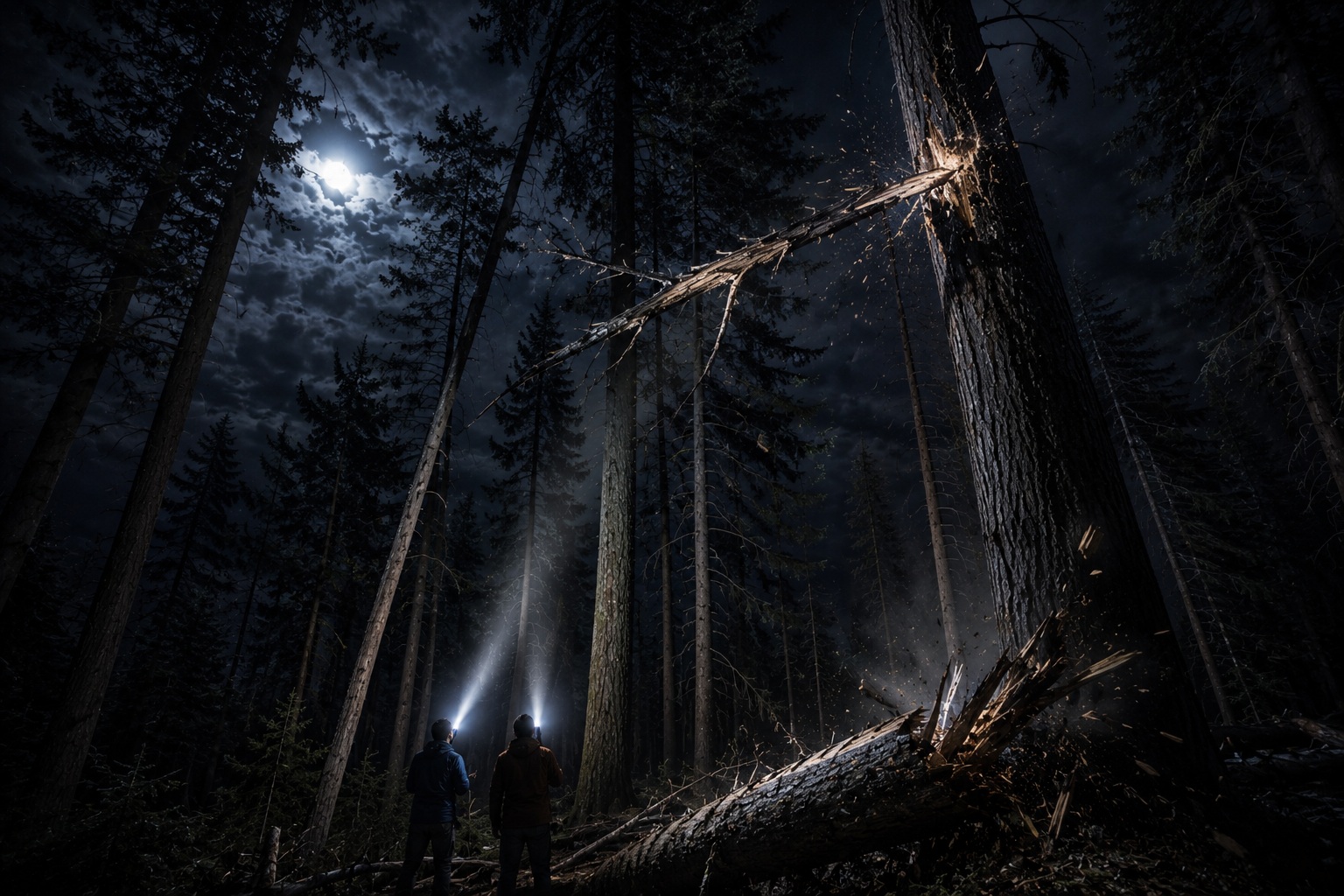
A camper shines a flashlight toward the sound and briefly sees a very large upright figure beside a tree. A silhouette crosses a logging road. Something tall enough to reach unusually high branches disappears behind a trunk. Those descriptions should still be treated carefully. Darkness destroys detail, flashlights create harsh shadows, and familiar animals can look enormous when distance is uncertain.
Why People Avoided That Spot Later
But once there is a readable physical shape connected to the sound, the question changes. It is no longer only, "What made that knock?" It becomes, "What was standing over there?" Why The Silence After A Knock Feels So Frightening
Oddly, the most frightening part is often not the sound. It is what happens afterward. A sharp crack cuts through the woods, and then everything seems quiet. Everyone at camp stops moving.
Nobody wants to speak because they are listening for the next one. That silence creates enormous tension because the sound has established a location outside the safe little circle of light. The fire illuminates perhaps twenty feet. The knock came from somewhere beyond that.
Now every tree becomes a possible hiding place. This is also why wood-knock stories remain memorable. They create an invisible presence without requiring people to see anything at all. A roar tells you an animal is there. Footsteps tell you something is moving.
A knock can feel different because it resembles a decision. Something hit the tree. And if it happens immediately after you hit one yourself, it can feel like something made another decision: to answer.
Why The Story Still Gets Shared
That interpretation may be wrong, but the emotional effect is powerful. It turns an ordinary forest sound into communication. So What Are Campers Actually Hearing? There is no single answer because "wood knock" describes a sound, not a known source.
Many reports almost certainly have ordinary causes: branches colliding, falling limbs, stressed trees, campfire wood, distant campers, animals, or sounds distorted by terrain. Some probably become stranger through expectation. Once people are listening specifically for replies, random impacts can begin to form patterns. But that does not make every story easy to explain.
The most interesting reports contain several details together: repeated clean impacts, quick responses, copied rhythms, apparent movement, nearby heavy footsteps, unusual calls, or a clearly seen large figure close to where the knocking occurred. None of those details alone settles what was in the woods.
They simply reduce the number of comfortable explanations. If you hear a single knock while camping, the forest probably made a forest sound. If you knock twice and something immediately knocks twice from the darkness, there are still plenty of possibilities. But most campers will do exactly the same thing.
They will stop talking. They will stare past the firelight. And they will wait to see whether the woods answer again.