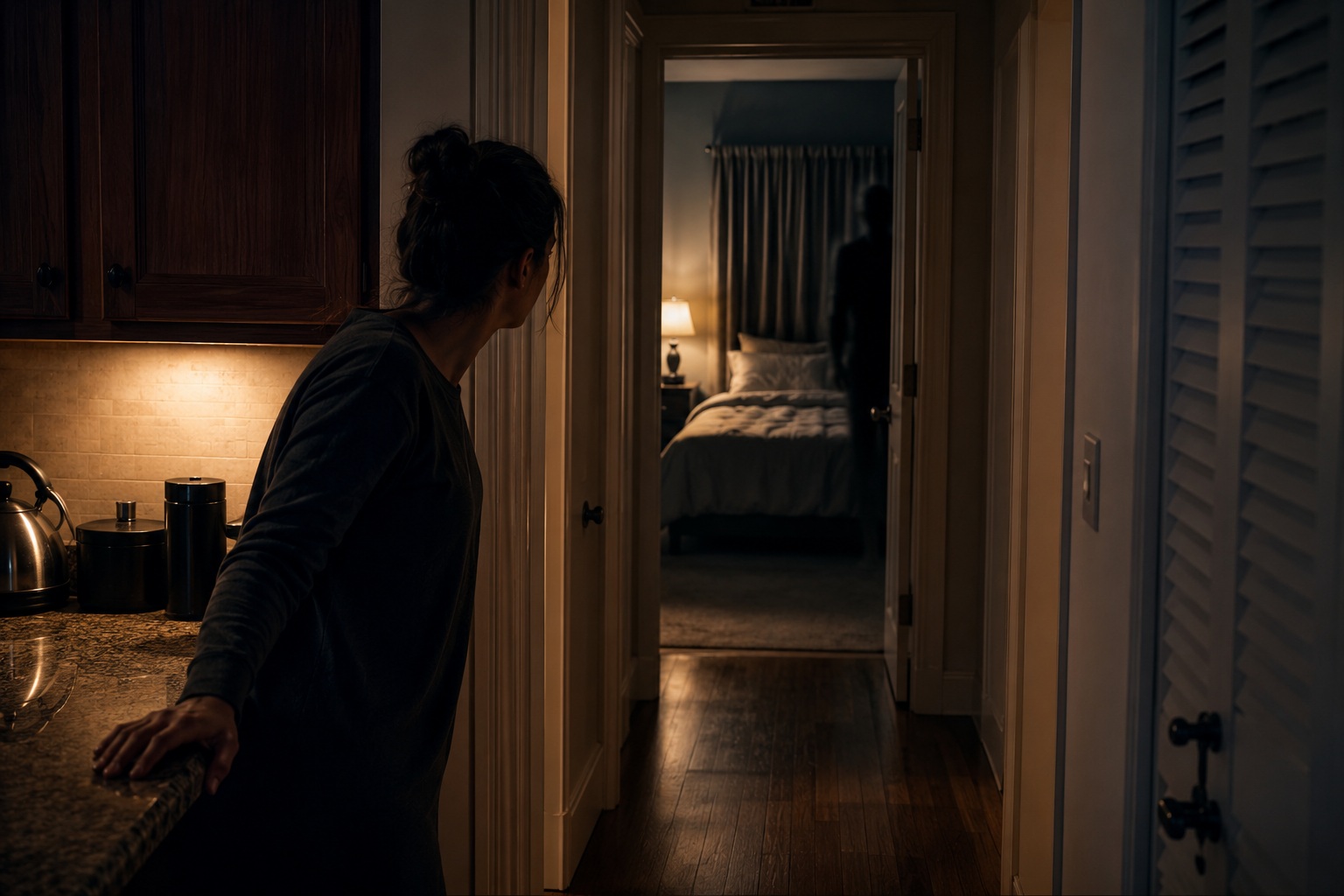
The whistling stopped the moment she stepped into the room. She had been standing in the kitchen just after midnight, rinsing a glass before bed, when she heard three slow notes from the spare bedroom down the hall. Not a kettle. Not wind shrieking around a window. It sounded like someone casually whistling a tune with their lips.
She waited. Three more notes came from the bedroom. The strange part was that the door was already open. From the kitchen, she could see the empty bed, the pale wall beside it, and part of the window. She walked down the hall and switched on the light.
Silence. The window was shut. The curtains were still. Nothing was running. She checked beneath the bed and opened the closet mostly because she could not think of anything else to do. Then she returned to the hallway and turned the bedroom light off. Before she reached the kitchen, one clear whistle came from behind her.
It was shorter this time. Almost like someone trying to get her attention. Stories about whistling in empty rooms appear in houses, hotels, workplaces, hospitals, cabins, and other places that become unnervingly quiet at night. Sometimes there is an ordinary explanation. Airflow, pipes, electronics, animals, and even the human ear can produce surprisingly convincing sounds.
But there is a reason a whistle feels different from an unexplained creak. It sounds intentional. Why a Whistle Feels More Human Than a Random Noise Most buildings make noises.
The First Time It Happened
Wood shifts as temperatures change. Heating systems click. refrigerators hum. Pipes knock. Wind pushes against windows and roof vents. People usually learn to ignore those sounds because they do not seem to be trying to communicate. Whistling is different. A clean rising or falling note resembles something produced deliberately by a person controlling their breath. Add a second or third note, especially with small pauses between them, and the brain begins hearing a pattern rather than simple noise.
That distinction matters. A squealing pipe is irritating. A whistle from the dark bedroom can feel as though someone has chosen to make that sound. The fear becomes stronger when the whistle changes after the listener reacts. Someone hears it from another room. They stop walking.
The whistle stops too. They continue moving. It starts again. Nothing supernatural is required for that sequence to happen. Intermittent airflow or mechanical sounds can easily start and stop.
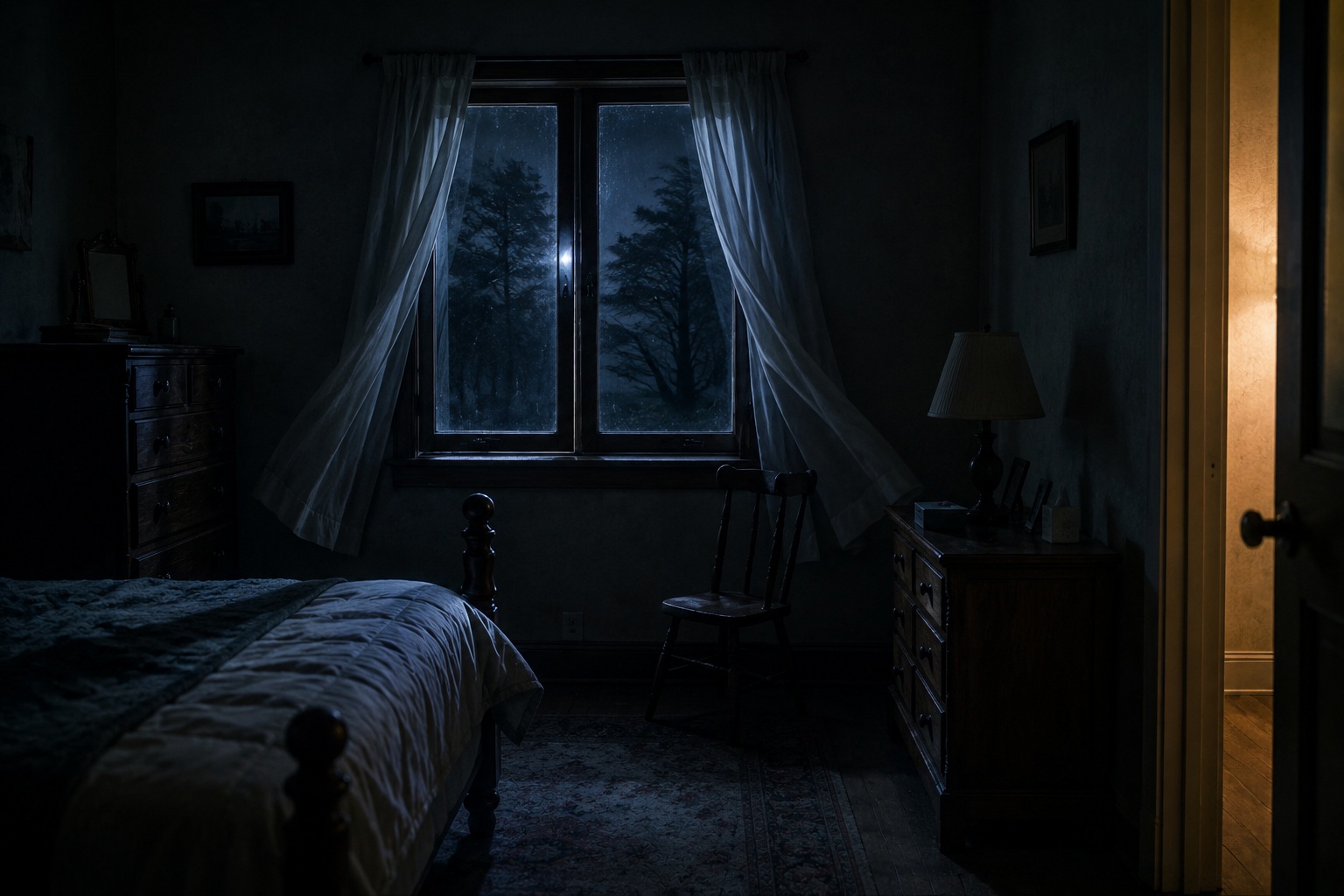
But emotionally, the timing creates the impression of awareness. That is often the moment an ordinary strange noise becomes a ghost story. Empty Rooms Can Produce Surprisingly Convincing Whistles Before imagining someone unseen standing in a room, there are several ordinary sources worth checking.
Air is one of the biggest. A small gap around a window frame can become a whistle when wind hits the building from the right direction. The same thing can happen around doors, vents, fireplaces, loose weather stripping, extractor ducts, attic openings, and even electrical outlets connected to drafty wall cavities.
The confusing part is that the sound may not seem to come from the gap producing it. Rooms reflect sound. A whistle created near a window can bounce from a wall or doorway and seem to originate several feet away. A person standing in a hallway might be convinced the sound is coming from the center of a bedroom when the real source is somewhere near the exterior wall.
Why The Place Felt Wrong
Wind also changes constantly. A gap may remain completely silent for hours and suddenly whistle when a gust reaches exactly the right speed and direction. By the time someone approaches the window, the pressure has changed and the sound has disappeared. That creates one of the classic details in these stories: the noise stops whenever someone enters the room.
It can feel responsive even when it is simply unstable airflow. Closing another door can also change pressure inside a house. So can turning on a bathroom fan, opening an exterior door, starting an HVAC system, or even moving through a hallway. That means the witness's own movement can accidentally make the mysterious whistle stop.
Pipes, Vents, and Electronics Can Hide the Source Plumbing produces another category of strange whistles. Water moving through partially closed valves can create high notes. Toilet fill valves sometimes squeal. Radiators can hiss or whistle. Pressure changes inside pipes can create noises far from the fixture being used.
A person may therefore hear something in an empty upstairs bedroom even though the cause is downstairs. Heating and ventilation systems make localization even harder. Ducts connect different parts of a building. A sound created near one vent can travel through metal passages and emerge somewhere else.
That becomes especially unsettling in hotels and apartment buildings. A faint sound from another room can travel through a shared vent and emerge clearly enough that someone thinks a person is standing nearby. Electronics can contribute too. Chargers, power supplies, televisions, speakers, smoke alarms, and other devices can produce high-frequency noises. Some are steady. Others change as components warm, cool, or alter power states.
The Detail Nobody Could Explain
Even appliances outside the room should be considered. A refrigerator compressor or distant fan may create a tone that becomes strangely whistle-like after passing through walls and doorways. The first useful test is therefore not simply, "Is anybody in there?" It is, "What changes when the sound happens?"
Wind. Heating. Water use. Fans. Doors. Electrical devices. Finding that relationship often makes the mysterious whistle much less mysterious. Animals Can Make the Empty Room Sound Occupied Another possibility is surprisingly easy to overlook: something living may actually be making the sound, just not a person.
Birds can produce remarkably human-sounding whistles. Depending on where someone lives, a bird outside a window, inside a chimney, near an attic vent, or beneath a roofline can create notes that seem to originate inside the house. Small animals moving through wall or roof spaces can add scratching or movement that makes the situation even creepier.
The acoustics of an enclosed room can disguise direction. Imagine a bird calling from a tree beside an upstairs window. From the yard, its location might be obvious. From a dark hallway inside the house, with the bedroom door open and the window reflecting sound, the same call may seem to come directly from beside the bed.
This becomes more confusing at night because visual information disappears. During daylight, you see the tree, the vent, the street, the neighboring house, and everything else that could contain a sound source. At 2 a.m., you see a black window. Your brain has much less information available to explain what your ears are hearing.
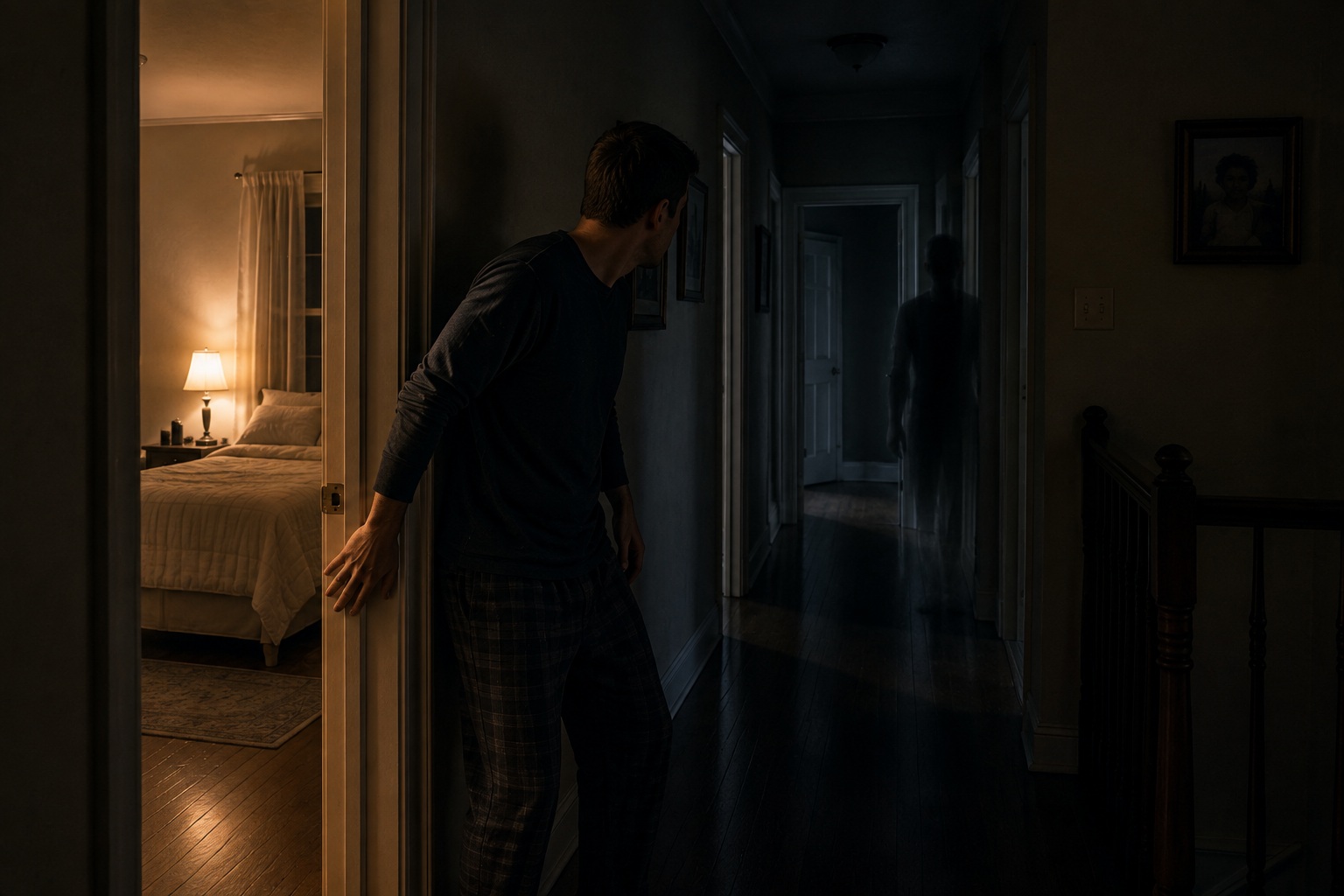
That uncertainty gives the whistle room to become something frightening. Sometimes the Sound Comes From the Listener There is another explanation that people may not consider because the whistle seems clearly external. The human auditory system can generate tones without an outside source.
What They Checked Afterward
Tinnitus is often described as ringing, but people can experience buzzing, humming, clicking, hissing, or high-pitched tones as well. Quiet rooms can make those sounds much easier to notice. During the day, traffic, conversation, appliances, music, and ordinary background noise can mask a faint internal tone. At night, when a house becomes silent, the sound suddenly seems prominent.
There is also a more general problem with hearing ambiguous noises. The brain is constantly trying to identify patterns. A distant mechanical tone mixed with several smaller noises can be interpreted as something familiar. Once someone thinks, "That sounds like whistling," the resemblance can become difficult to unhear.
This is similar to seeing a face in a random pattern. The sound itself may exist, but the brain supplies the meaningful shape. A fluctuating vent tone becomes three notes. Three notes become a tune.
A tune implies a person. And once a person is mentally placed inside the empty room, every silence afterward feels like that person waiting. The Creepiest Reports Seem to React to the Witness Most ordinary explanations become strongest when the whistle follows a predictable physical pattern.
It happens when the wind blows. It begins when the heating starts. It comes from the same window. It stops when a particular fan is switched off.
The Moment It Became Harder To Ignore
Those relationships give the sound a mechanism. The stories that remain disturbing are usually the ones where witnesses describe something that appears less mechanical. One commonly repeated detail is movement. A man hears whistling from the living room while standing upstairs. When he reaches the living room, the sound seems to come from the hallway he just crossed.
Another is apparent imitation. Someone whistles once experimentally. After several seconds, they hear a similar whistle from another room. Again, buildings and outdoor sounds can produce coincidences. Once someone is frightened and listening intensely, timing becomes especially memorable.
But an apparent answer is much harder to dismiss emotionally than an isolated noise. There is an old instinct buried inside that reaction. Calls and responses imply another living thing. If you knock and something knocks back, the second sound matters more than the first.
If you say hello and hear a voice answer, the answer changes everything. Whistling works the same way. That is why paranormal stories often focus not merely on hearing a whistle but on what happened immediately after the witness acknowledged it. When Whistling Turns Into an Apparition Story
In ghost stories, the whistle sometimes comes before someone sees anything unusual. The pattern is often simple. A person hears the same short whistle over several nights. It always seems to come from one room, doorway, or end of a hallway. They investigate repeatedly and find nothing.
Why People Avoided That Spot Later
Then one night, the sound happens while they are already looking toward its supposed source. This is where the visual detail matters. A convincing creepy reconstruction should not require a perfectly normal-looking stranger inexplicably standing inside the house. The disturbing image is usually simpler.
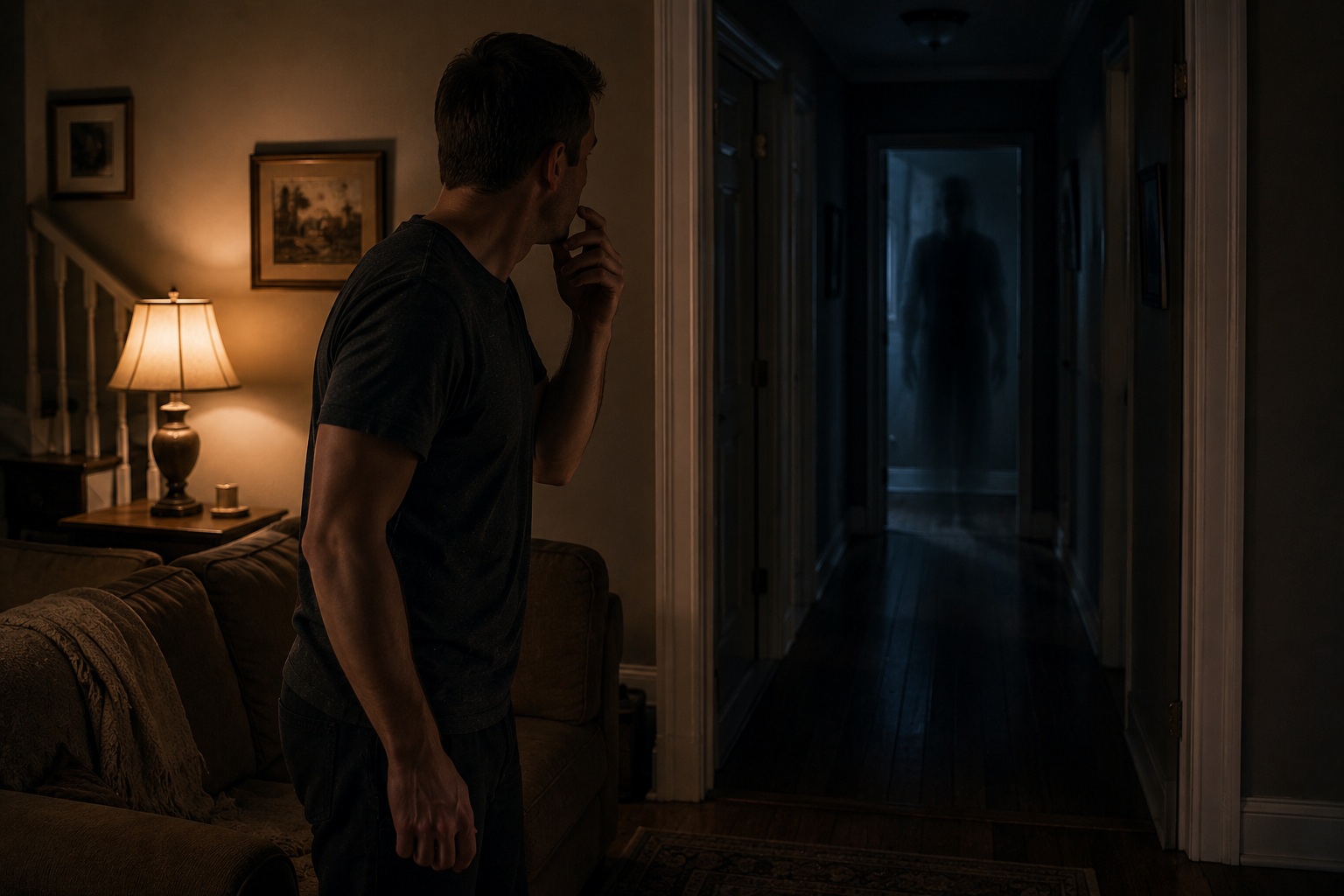
A pale human shape is visible beside the doorway, but the face has no readable features. A person-shaped figure appears beyond the open bedroom door but seems partly transparent below the waist. A tall blurred form occupies a corner where there is not enough space for someone to stand normally.
The whistle comes once. The shape is gone when the light is switched on. Such stories cannot establish what caused the experience merely because the normal explanations were not immediately obvious. Fear, darkness, expectation, reflections, exhaustion, and ambiguous shapes can all influence what someone thinks they saw.
But the combination is extremely effective as a ghost story because two uncertainties suddenly support each other. The unexplained sound gives the shape meaning. The unexplained shape gives the sound a source. That is much harder to forget than either one alone.
The Best Question Is What Changes the Whistle
When someone repeatedly hears whistling in an apparently empty room, the most useful approach is to look for patterns before deciding what it means. Notice the weather. Check windows and vents.
Pay attention to heating and cooling cycles. See whether water is running elsewhere in the building. Switch nearby electronics off one at a time. Listen from different positions rather than standing in the same doorway every time.
Why The Story Still Gets Shared
If possible, have another person listen independently without first telling them exactly where you think the sound originates. That last step can be revealing. Two people may hear the same whistle but point toward completely different parts of the room. Sound localization indoors is much less reliable than it feels.
There is also an important difference between "I cannot find the source" and "there cannot be a normal source." Buildings contain hidden spaces, pipes, ducts, cavities, electrical components, animals, moving air, and noises from outside. Sometimes the explanation remains hidden simply because the building is complicated.
Still, the reason whistling appears so often in unsettling stories is easy to understand. It sits directly on the boundary between noise and communication. A hum can belong to a machine. A creak can belong to a floor.
A whistle sounds like it belongs to someone. And when that whistle comes from a dark room you have already checked twice, stops as you enter, then begins again after you turn your back, knowing all the ordinary possibilities may not stop you from looking over your shoulder.
Because the question your brain asks first is rarely, "Which pressure change caused that tone?" It is much simpler. Who just whistled?