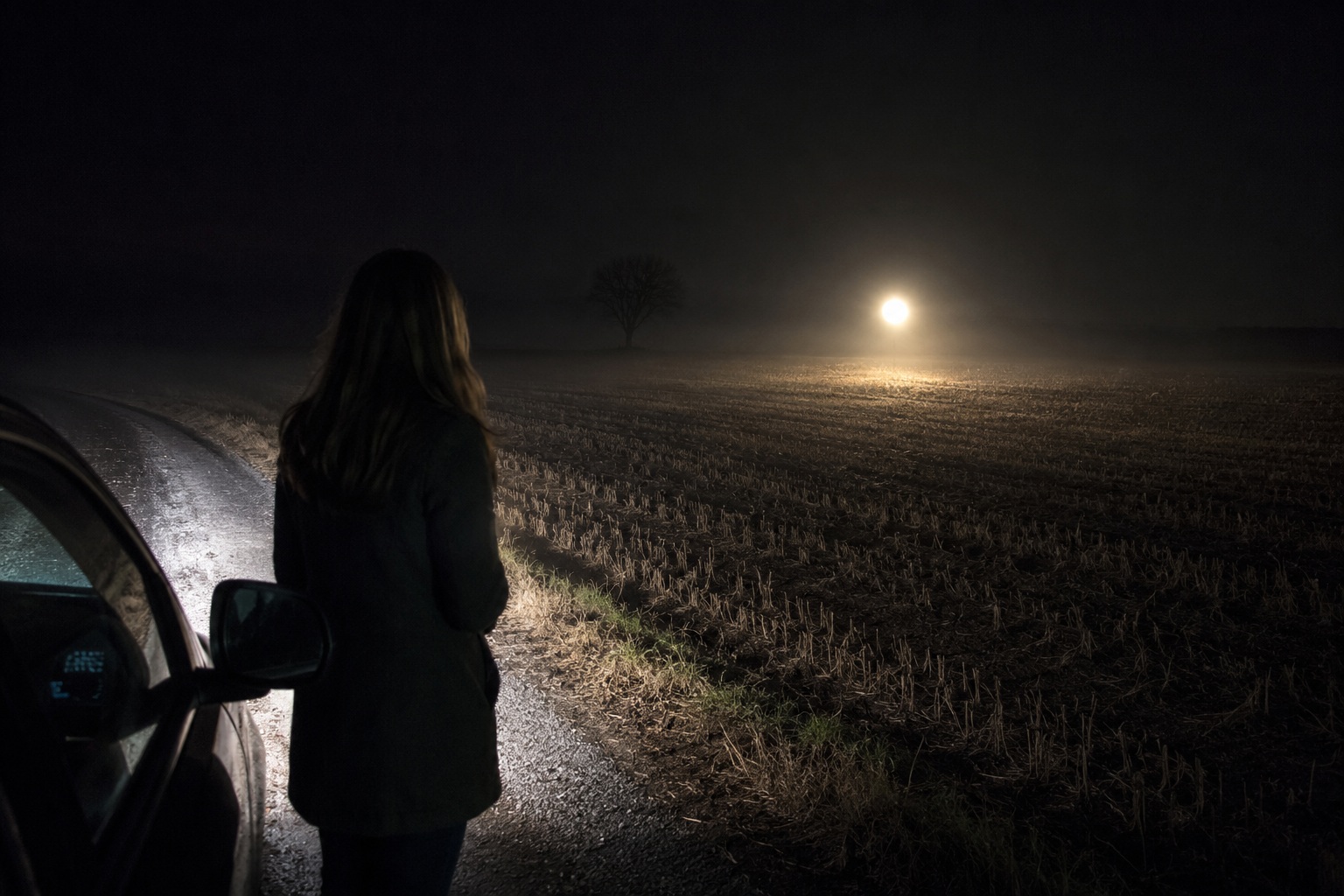
The light stopped when the car stopped.
A woman driving home along a narrow country road had been watching it for nearly a minute: a pale yellow-white glow floating over a harvested field to her left. At first she assumed it was a distant tractor. Then she reached a stretch where the field opened completely, and there was nothing beneath the light. No headlights. No building. No visible pole. Just a bright round glow hanging several feet above the dark stubble.
She slowed. The light moved with her. When she stopped beside the field, it stopped too. Then it crossed the field sideways.
There was no sweeping beam across the ground and no obvious object carrying it. The glow simply traveled over the rows, paused near a lone tree, and climbed until it appeared level with the upper branches. The woman drove away before discovering what it was.
Stories like this are surprisingly persistent in rural areas. People describe glowing balls, floating lights, strange colored orbs, and distant lights that seem to move deliberately over fields, marshes, hills, and empty roads. Some have ordinary explanations. Others become much harder to understand once distance, movement, weather, and the shape behind the light are taken into account.
Why an Ordinary Light Can Look Like It Is Floating A field at night removes many of the visual clues we normally use to judge distance. During the day, fences, trees, buildings, hills, telephone poles, and shadows tell your brain where something is. At night, most of those reference points disappear.
The First Time It Happened
A bright light survives while its surroundings vanish. That creates a surprisingly convincing illusion: something that may be hundreds of yards away can appear to be a small glowing object hovering just beyond the nearest fence line. A vehicle traveling along a distant road is one common example. If the road is hidden behind a slight rise, only the headlights may be visible. From another road, those lights can appear suspended over a field.
The same problem happens with farm equipment. Modern tractors and harvesters can carry extremely bright work lights. If the machine itself disappears into darkness, its lamps may look detached from anything physical. Terrain makes the illusion stronger. A road descending behind a hill can make headlights appear to sink toward the ground. A road climbing another slope can make them seem to rise into the sky. Curving roads can create lights that move sideways, stop, disappear, and return.
Someone unfamiliar with the hidden road may see movement that looks far stranger than the actual vehicle producing it. But this explanation has limits. Once a light clearly passes in front of nearby trees, illuminates the ground directly underneath itself, or changes direction somewhere no road exists, simple distance confusion becomes less convincing.
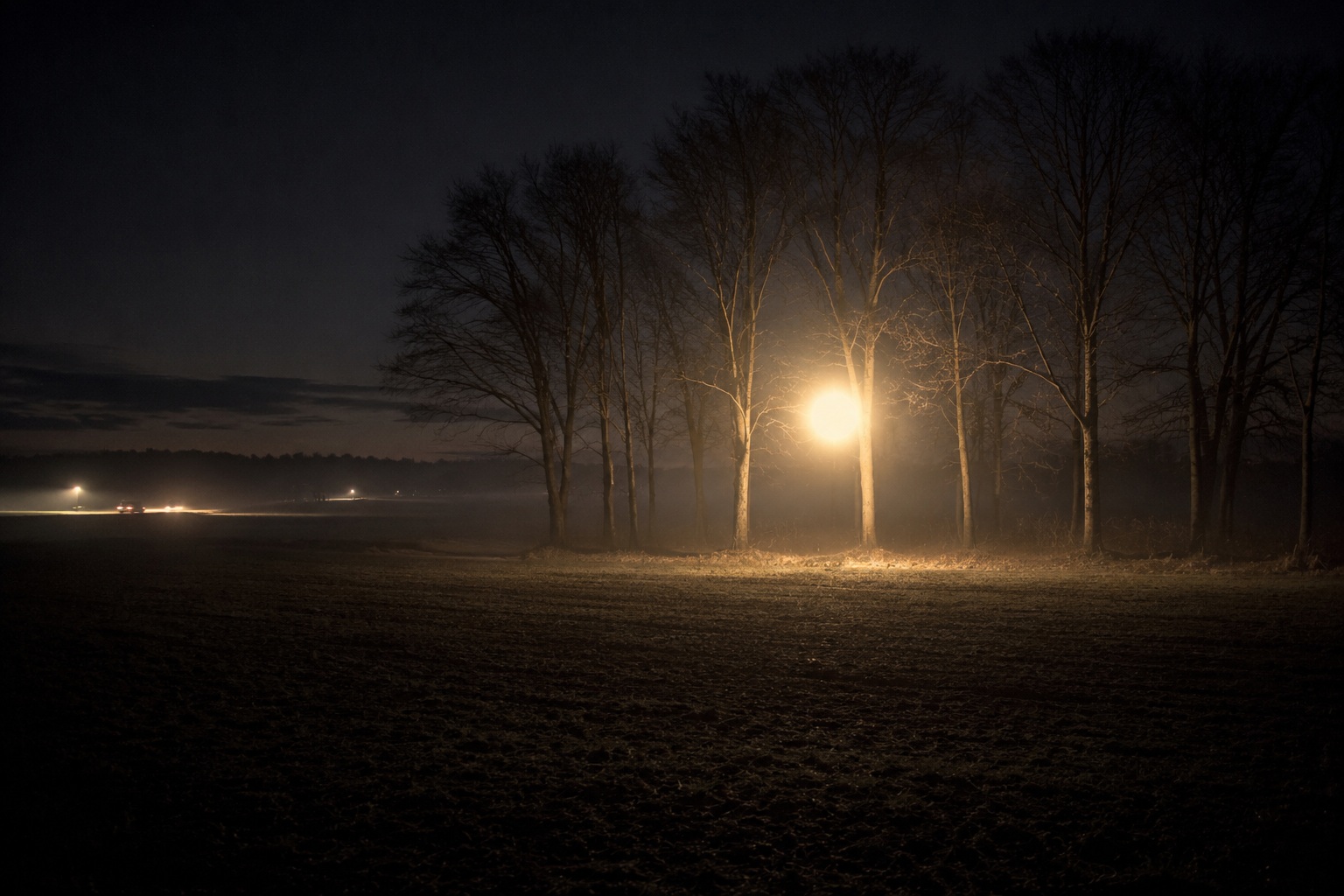
That is usually where an ordinary strange light becomes a story people remember. Why Fields Produce So Many Strange Light Stories Open farmland is almost perfectly designed for confusing nighttime sightings. There may be miles of unobstructed visibility, but very few illuminated objects providing reliable scale.
A light one mile away can therefore look strangely close. Fields also contain more possible light sources than they seem to. Farm vehicles move after dark. Irrigation equipment can carry lights or reflective surfaces. Houses may sit behind tree lines. Roads cross farmland at angles invisible from another road. Aircraft approach distant airports. Communication towers blink beyond hills.
Atmospheric conditions can distort all of them. Moisture, haze, fog, and temperature differences close to the ground can soften the edges of distant lights. Instead of seeing two obvious headlights, someone may see one fuzzy glowing mass. That glow can appear much larger than its actual source.
Even stars and planets can become surprisingly unsettling near the horizon. A bright planet seen through thin moving clouds may seem to pulse, change color, disappear, and return. What makes fields different from cities is the darkness around the light. In a city, a mysterious glow competes with hundreds of familiar lights.
Why The Place Felt Wrong
Over an empty field, it may be the only bright object visible. Your attention locks onto it. And when there is nothing nearby to show how large or distant it really is, the mind begins trying to solve the missing information. The Movement Witnesses Usually Notice First
Brightness alone rarely makes an orb story memorable. Movement does. A stationary white glow above the horizon can be a tower, planet, distant building, or vehicle facing toward the observer. A light that suddenly moves sideways is different.
People especially remember lights that appear to stop when they stop, pace a moving vehicle, descend toward a field, rise vertically, or make abrupt changes in direction. Some of these movements can still come from perspective. Imagine driving beside a distant light. Because you are moving while the light remains far away, its position against nearby trees and poles changes. That can create the impression that the light is following you.
This effect becomes much stronger on winding rural roads. A distant object may repeatedly vanish behind trees and reappear through openings. Every turn changes the angle. The result can feel like something is moving deliberately around the observer. Clouds create another trick. If thin clouds move across a bright moon, planet, or distant light, the glow itself may appear to drift.
But witnesses sometimes describe something more specific. The light passes between nearby trees. It disappears behind a barn and emerges from the other side. It throws a moving patch of light across the ground.
Or several lights maintain the same spacing while traveling together. Those details matter because they provide physical reference points. They give the observer something more useful than a bright dot against a black sky. What People Usually Check Before Calling It Strange
The first useful question is simple: what was behind the field? A road hidden by terrain can explain an astonishing number of floating-light sightings. So can a farmhouse, railway line, airport approach path, construction area, or farm track that was invisible in the darkness.
The Detail Nobody Could Explain
The second question is weather. Fog is especially good at transforming familiar lights into glowing balls. Headlights shining into mist can produce bright patches with no obvious connection to the vehicle. A strong lamp behind thin fog may appear larger, softer, and much closer than it actually is.
Rain on a windshield can make things even stranger. Small droplets scatter light. Reflections inside the glass can appear to move when the driver's head moves. A light behind the vehicle can sometimes reflect through windows and seem to hover somewhere ahead or beside the road.
That is why getting out of the vehicle, when safe, can completely change a sighting. Another useful check is aircraft. A plane approaching almost directly toward someone may appear stationary for several minutes. Its landing lights can look like a single intense orb. Then the aircraft turns.
Suddenly the apparently motionless light moves rapidly sideways, and blinking navigation lights become visible. Drones add another possibility. A drone with a bright forward-facing lamp can hover, climb vertically, move sideways, and change direction in ways that older rural light stories would have considered extremely unusual.
Today, that possibility has to be considered whenever a glowing object appears relatively low and moves in controlled patterns. When the Normal Explanations Start Getting Weaker A strange light becomes more interesting when the surroundings provide reliable scale. Suppose someone sees a glow beyond a distant tree line.
Almost anything could be happening. Now suppose the light moves in front of a tree only fifty yards away. That immediately tells the observer something important: the light cannot be a planet, star, distant tower, or vehicle several miles away. The same applies when an object passes behind something whose distance is known.
What They Checked Afterward
Trees are particularly useful because open farmland often provides long, clean views of isolated tree lines. A light moving behind one row of trees and then appearing in front of a closer row gives a much stronger sense of where it actually is. Illumination is another important detail.
A bright point can appear larger than it really is because of glare. But if the grass directly beneath it becomes visibly illuminated, the light is interacting with the nearby landscape. That narrows the possibilities. Multiple witnesses watching from different positions can also reduce some visual mistakes.
One person inside a moving car can misjudge reflections and distance easily. Several people standing outside and watching the same object cross the same part of a field have fewer opportunities for that particular mistake. None of this automatically tells us what the light was.
It simply removes some of the easiest answers. And occasionally the strangest part of an orb report is that the witness eventually realizes the light was not actually an orb at all. Sometimes the “Orb” Is Only the Brightest Part of Something Larger Bright lights can hide whatever surrounds them.
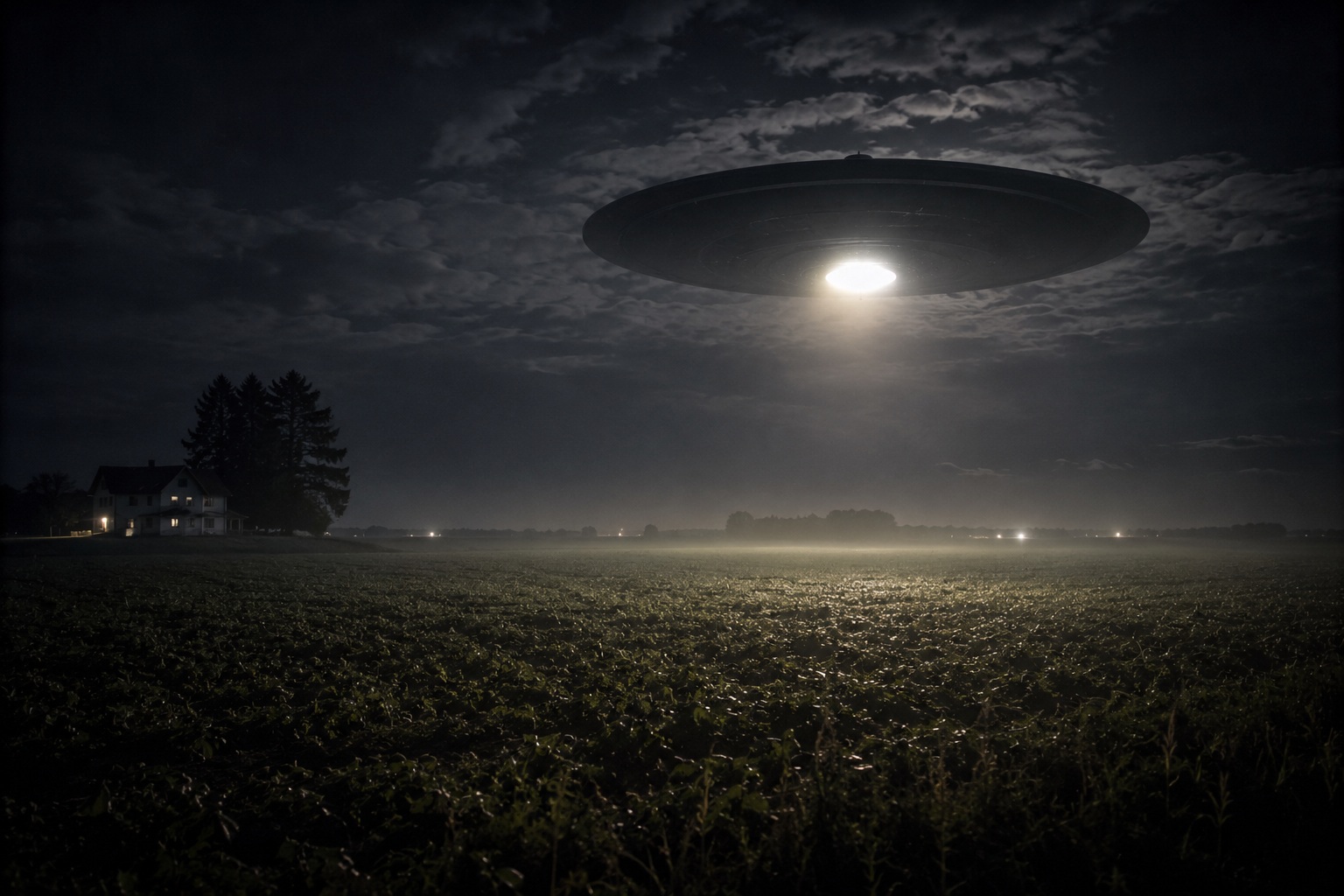
This is especially important in UFO-style sightings. At first, someone may see only a brilliant round glow because their eyes are adjusted to darkness. The light overwhelms the dimmer shape around it. Then the object moves against lighter clouds. Suddenly a dark body becomes visible.
A witness who thought they were watching one glowing ball may realize the light is attached to the front or underside of a larger object. This changes the sighting completely. Imagine a bright white light descending toward a field. Against a black sky, only the glow is visible.
The Moment It Became Harder To Ignore
It moves lower. Thin clouds brighten behind it. For several seconds, a broad dark shape appears around the light, blocking stars as it crosses the sky. Now the question is no longer simply, "What produces floating lights?"
The witness is describing an object carrying a light. This is why a clear physical shape matters so much in nighttime UFO stories. Lights by themselves are extremely difficult to judge. A visible body provides edges, orientation, apparent size, and movement.
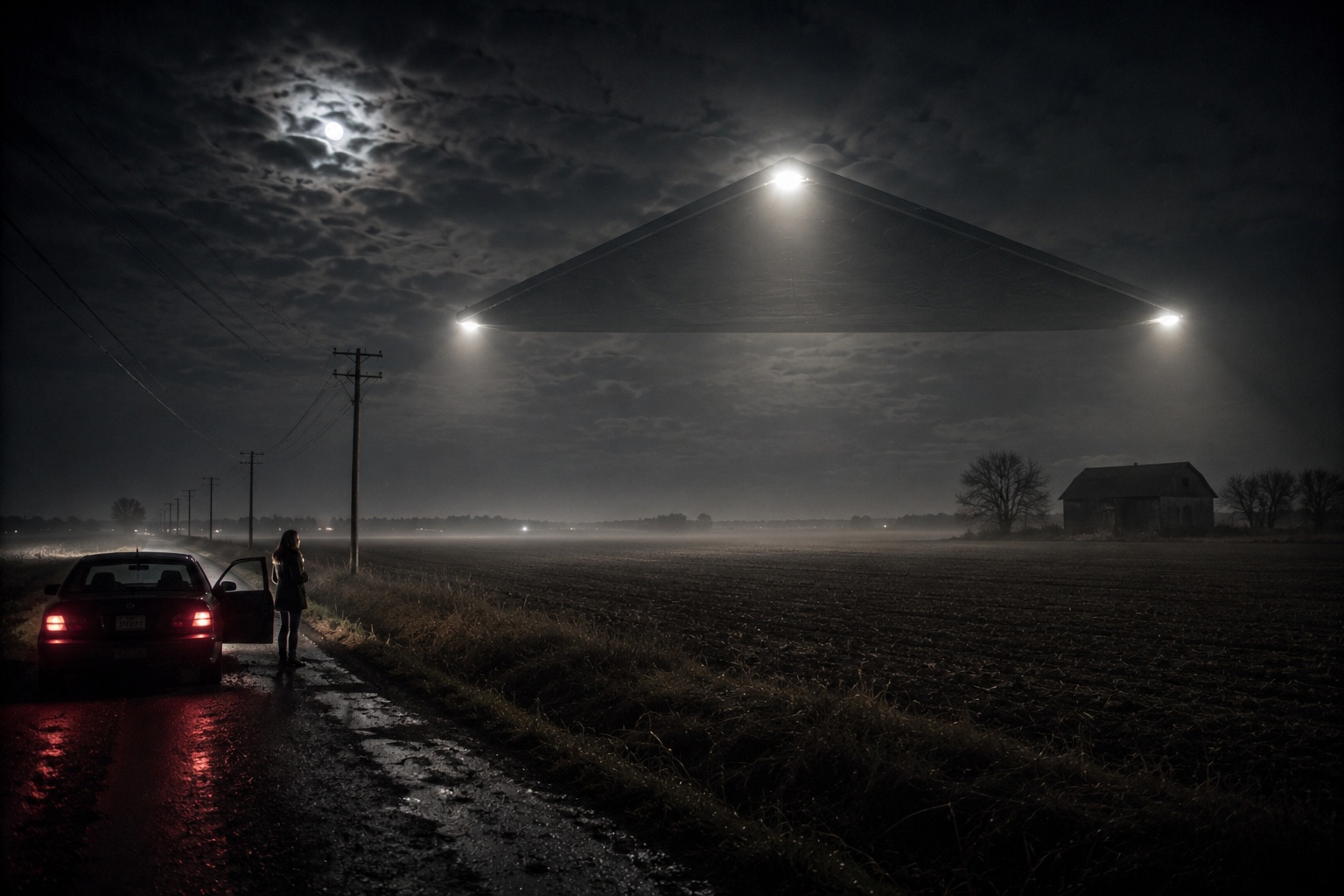
Several lights can do something similar if their positions remain fixed relative to each other. Three lights holding a perfect triangular arrangement while turning together suggest a different situation from three unrelated lights moving independently. Even then, aircraft and drones remain possibilities. The key is not simply that something glowed.
It is what the glow did, what surrounded it, and what nearby objects revealed about its position. Why Color Changes Can Look More Unnatural Than They Are People often describe field lights changing from white to orange, red, blue, or green. That sounds dramatic, but color changes can have surprisingly ordinary causes.
Atmosphere is one. A bright object low on the horizon passes through much more air than something directly overhead. Dust, moisture, and turbulence can make its apparent color shift. Stars are especially prone to rapid color flickering. Aircraft can also present different lights as they turn. A bright forward landing light may dominate at first. After the aircraft changes direction, red, green, or flashing white navigation lights become easier to see.
Drones can display several colors as well. But gradual atmospheric flickering looks different from a nearby object changing its entire glow. That distinction is worth remembering. A distant light that twinkles red, blue, and white near the horizon may be behaving exactly as expected.
A low object crossing a field while changing from steady white to intense red, illuminating nearby trees in each color, presents a different problem. Context matters more than the color itself. The same is true for apparent size. Bright lights bloom in human vision. A tiny but intense light can appear as a large glowing ball because your eyes cannot clearly resolve its edges.
Why People Avoided That Spot Later
That means estimates like "three feet wide" should be treated cautiously unless something nearby provides scale. If the glow passes beside a fence post, tree trunk, vehicle, or building at a known distance, size estimates become much more useful. Why These Sightings Feel So Personal
There is one behavior that turns a mysterious field light into a frightening encounter faster than almost anything else. It appears to respond. The driver speeds up, and the light accelerates. The driver stops, and it stops.
Someone steps into a field, and the glow moves away. Someone turns toward home, and it seems to follow along the tree line. Human beings are extremely sensitive to behavior that appears intentional. We constantly look for signs that another person or animal has noticed us.
A distant light accidentally matching our movement can trigger the same feeling. Sometimes geometry explains it. A faraway object can appear to maintain its position relative to a moving observer for a surprisingly long time. But when the light changes direction repeatedly in ways that correspond with the observer's actions, the experience becomes harder to dismiss emotionally, even if an explanation is eventually found.
This is why many old stories about strange rural lights describe them almost like living things. They wait. They follow. They retreat.
They approach. The language reflects what frightened the witness most: not that there was a light in the darkness, but that the light seemed aware of them. The Detail That Matters More Than the Glow Glowing orbs over fields are not one single mystery.
They are a visual pattern produced by many different things. Some are distant vehicles. Some are farm equipment. Some are aircraft or drones.
Why The Story Still Gets Shared
Some are planets, stars, reflections, fog, or lights distorted by terrain. And some reports contain details that leave the witness without an easy answer. The best way to think about these stories is to ignore the word "orb" at first. Ask where the light was.
What did it pass in front of? What did it pass behind? Did it illuminate anything nearby? Was the observer moving?
Could there have been a hidden road? Did the light eventually reveal navigation lights, a drone, a tractor, or another familiar source? Most importantly, was there a visible object around it? A glowing dot in an empty sky gives almost no scale.
A bright light crossing fifty feet above a field, passing in front of known trees, casting light across the grass, and briefly revealing a solid shape around itself gives far more information. That still does not automatically make the explanation extraordinary. It simply makes the observation harder to reduce to a distant light mistaken for something nearby.
And perhaps that is why these stories survive. A dark field is enormous when you cannot see its edges. One strange light gives your eyes something to follow. Then it stops above the crops.
You stop too. And for several quiet seconds, the unsettling question is no longer whether you can see it. It is whether it can see you.