The Camera Was Watching A Pool That Should Have Been Still
Municipal natatorium cameras are not installed for drama. They watch doors, chemical rooms, deck corners, and the long bright rectangle of water after lessons, lap swim, and staff cleaning are finished. On a normal night, nothing should happen except lights timing down and humidity fogging the far glass.
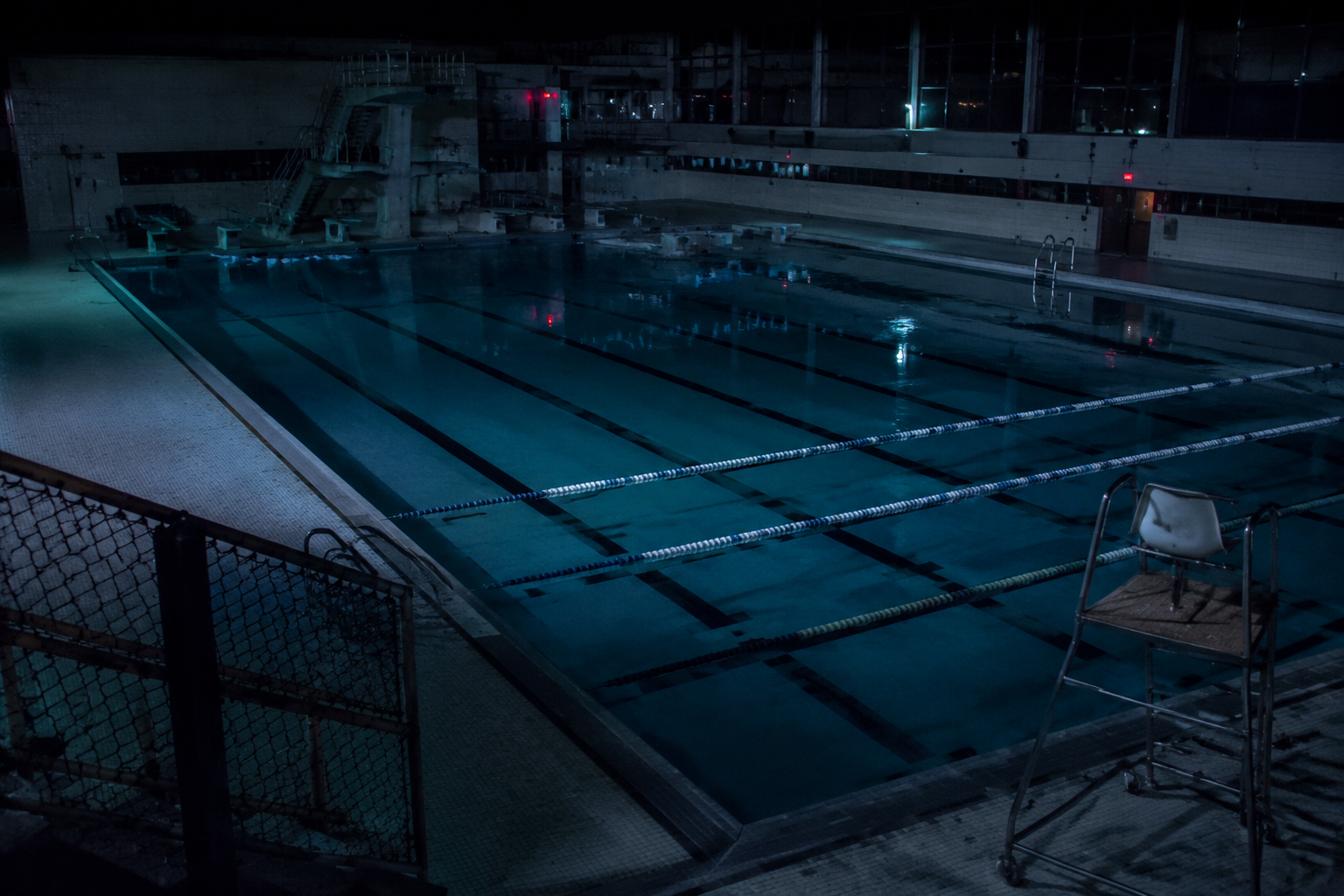
This report begins with that ordinary setup. The building was closed. The pool was empty. The overnight camera had a wide view of the deep end, several lane ropes, and a tall lifeguard chair near the deck edge.
The odd part was not a face in a window or a figure walking through a hallway. It started in the water. After the pumps were reportedly shut down, the lane ropes began to move as if something had disturbed the pool from below.
What Appears In The camera images
The first movement is described as a slow bowing of one lane rope. It pulls out of line, relaxes, then shifts again. A nearby rope follows with a smaller drift, making the surface look occupied even though no swimmer is visible.
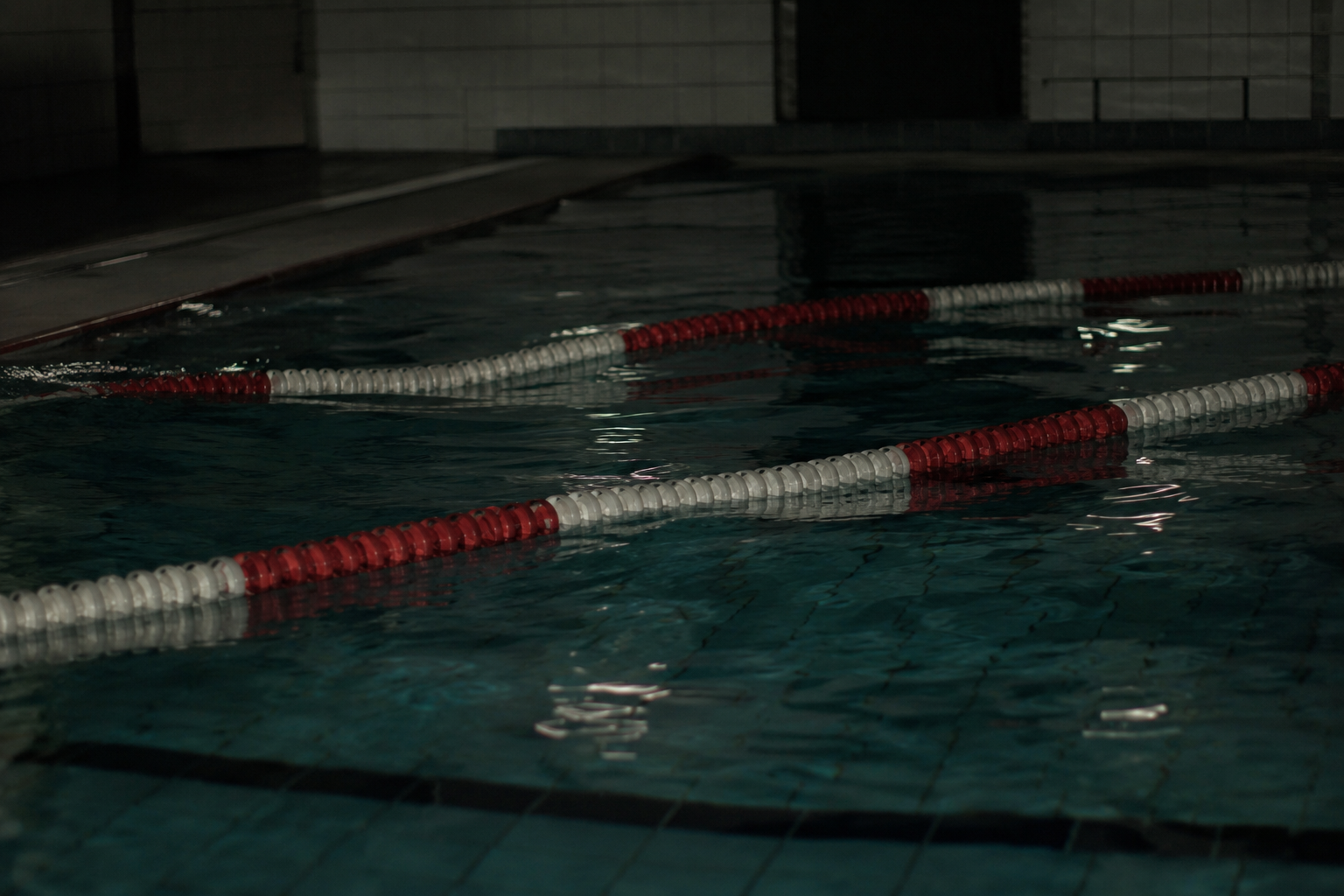
Minutes later, attention moves to the lifeguard chair. Behind it, against a darker wall area, a black vertical shape appears. It has the proportions of a standing person but no visible face, clothing detail, hands, or shine from shoes.
The shape is not reported as walking across the deck. It simply seems to be there, featureless and still, long enough for viewers to compare it with the chair and pool edge.
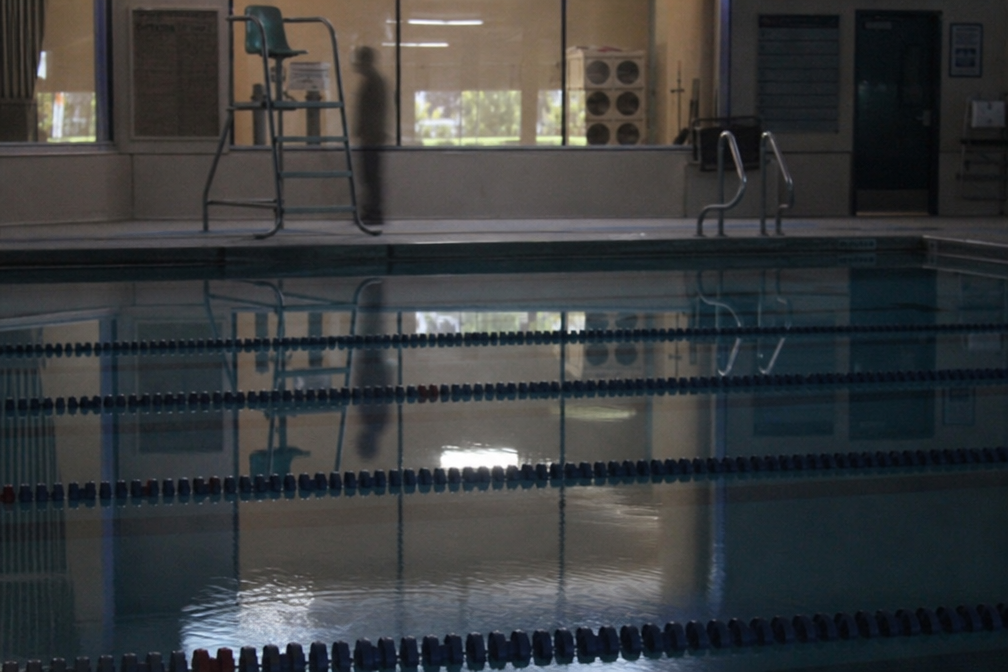
Then comes the detail that makes the camera still harder to ignore: a similar dark shape appears on the water as a reflection. It lines up near the same area where the figure stands behind the chair.
Why The Pump Shutdown Matters
Pools can look alive when machinery is running. Returns push water. Drains pull it. Ventilation can tremble the surface. Cleaning equipment can create tiny wakes that look larger on low-light cameras.
That is why the reported shutdown detail matters. Staff said the main circulation cycle had already ended before the lane ropes began shifting. If true, the pool should have been settling, not producing repeated rope movement across lanes.
A useful comparison would be other nights from the same week. If the ropes always drift at that hour, the answer is probably mechanical. If this night is the only one with that pattern, the report becomes harder to flatten into routine pool behavior.
This does not prove anything paranormal. Some systems have delayed valves, autofill lines, chemical feeders, or residual pressure after the main pump stops. A complete review would need mechanical logs, not just a posted schedule.
Still, the timing is the reason this belongs in an apparition evidence file rather than a simple shadow folder. The water appears to react before the figure becomes obvious.
The Lane Ropes Are The First Clue
The lane ropes may be the most important part of the report. A dark shape can be caused by a jacket, chair shadow, wet tile, or compression noise. Lane ropes require something more physical: water movement, tension change, or contact.
According to the description, the ropes do not just bob once and settle. They drift in short intervals, as if a disturbance passes beneath them. That pattern is why some viewers compare it to an unseen swimmer moving between lanes.
Caution is still needed. Security cameras flatten distance. A rope moving toward the lens can look like it is sliding sideways. Reflections from the ceiling or deck can exaggerate small ripples. Without the raw file, every claim about motion remains partly interpretive.
Even so, the order is unsettling: first the water behaves incorrectly, then the figure appears on the deck.
The Figure Behind The Lifeguard Chair
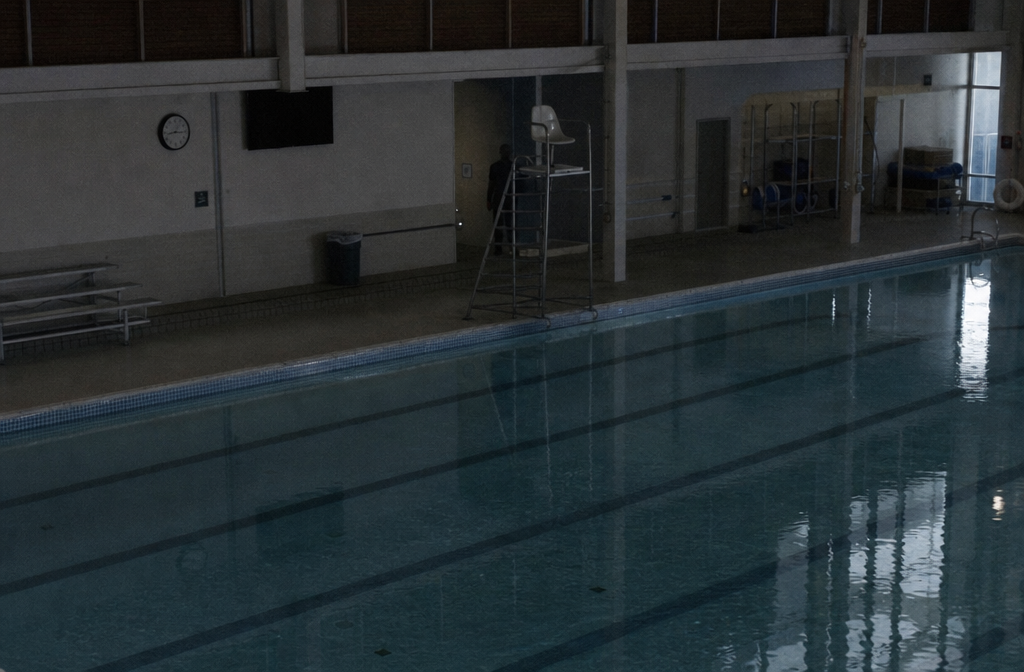
The lifeguard chair gives the scene scale. It also makes the alleged figure easier to judge frame by frame. A shape in an empty corner can be anything. A shape standing behind a fixed chair can be compared to earlier camera images from the same angle.
There is another reason the chair matters: it is a place staff know well. Lifeguards climb it, clean around it, move rescue equipment beside it, and notice when something is stored behind it. A dark form appearing there would be harder to miss during closing than a shadow in a distant corner.
The figure is described as solid black and featureless from top to bottom. There is no uniform stripe, no skin tone, no hair outline, and no clear separation between head and shoulders. It looks more like a human-shaped absence than a person caught in poor lighting.
That featureless quality cuts both ways. It is unsettling, but it also fits several camera problems. Low-light sensors crush detail. Wet walls create dark patches. A rescue tube, folded mat, or cover reel can change shape when the camera adjusts exposure.
The strongest version of the case would show the area behind the chair clearly empty before the lane ropes move, then show the dark figure appearing later without any door opening or staff entry.
The Reflection Is The Dividing Detail
The reflection may be the best evidence, or it may be the easiest part to misread. If the pool surface truly reflects the same dark figure seen behind the chair, that suggests something occupied space in the room. Reflections can help separate a real object from a camera artifact.
But indoor pools are reflection machines. Water mirrors ceiling beams, wall panels, windows, rails, warning signs, and equipment that may sit outside the obvious frame. Lane ropes break those reflections into strips, sometimes making random dark areas look more human.
A careful reviewer would ask whether the reflected shape appears and fades at the same time as the deck figure. Does it align with the chair correctly? Does it distort naturally with the ripples? Does it exist in earlier frames before anyone notices the figure?
Without those checks, the reflection remains compelling but not conclusive.
Ordinary Explanations To Rule Out
The first practical explanation is a person. A cleaner, contractor, employee, or trespasser could disturb the water and stand behind the chair. Door logs, keycard records, alarms, and motion sensors would be needed to test that.
The second is maintenance. Even after shutdown, a surge tank, valve, heater, chemical feeder, or automatic fill line could nudge the water. A robotic cleaner left in the pool would also explain rope movement.
The third is camera behavior. Exposure changes, infrared bounce, compression blocks, and lens moisture can all create black shapes in humid rooms.
The fourth is object placement. A moved rescue tube, stacked equipment, dark trash bin, or folded pool cover might look human only under night lighting.
None of these explanations fully erases the report. They are simply the list that has to be checked before anyone calls the camera images paranormal.
Why Viewers Keep Replaying It
The camera still works because the weirdness arrives in layers. The closed pool moves first. The lane ropes fall out of their expected lines. A dark featureless figure appears behind the lifeguard chair. Then the water seems to echo that figure back as a reflection.
That sequence is stronger than a single blurry silhouette. It gives viewers a small chain of events to follow, and each step appears to support the next.
The setting also matters. Empty natatoriums already feel slightly wrong at night. Sound carries too far. Emergency lights flatten the tile. Water throws pale reflections onto the ceiling. A pool built for public noise becomes a quiet, sealed room.
For now, this remains cautious evidence, not proof. The needed material would be the full uncut segment, at least ten minutes before the first rope movement and ten minutes after the figure fades, plus pump logs and entry records.
Until then, the report sits in the uneasy middle: not noted, not easily dismissed, and memorable because something seems to disturb the water before anyone appears on the deck.
Reader Context
This Weird Witnessed story is an editorial reconstruction, written as eerie visual storytelling rather than a verified report. For more context, see Apparitions and Hauntings Guide and How WeirdWitnessed Creates Reconstructed Horror Stories.