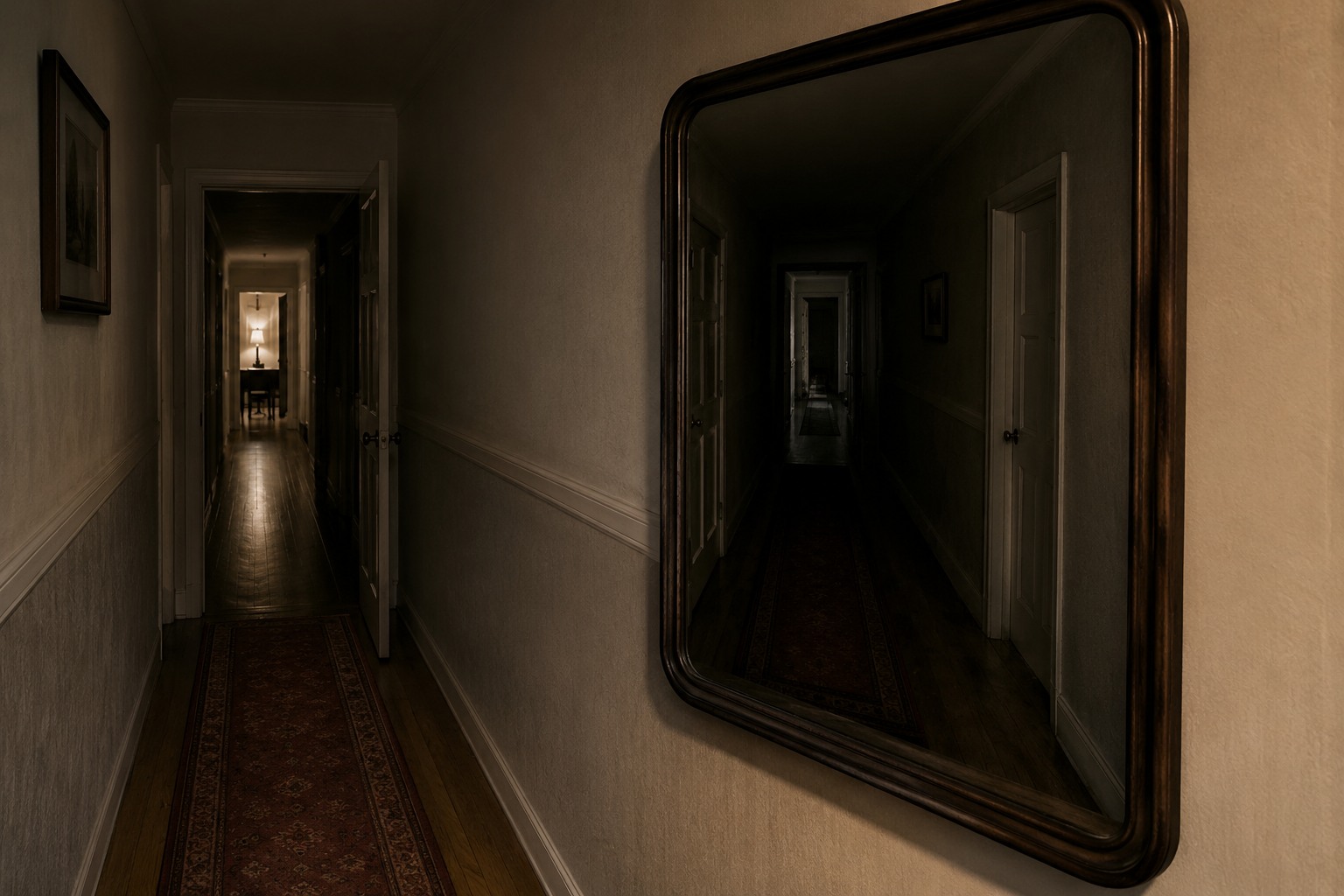
The reflection showed a person the hallway did not. A woman was walking from her kitchen toward the bedroom sometime after midnight, carrying a glass of water and using only the small lamp beside the living-room sofa. Halfway down the hall hung a tall rectangular mirror. She had passed it hundreds of times. That night, she glanced sideways and saw herself moving through the dark glass. But she was not alone in it. Behind her reflection stood a pale human-shaped figure near the far end of the hallway. It was tall enough to look like an adult, but its face had no readable features. Its lower body seemed to fade into the darkness beneath it. She stopped. Her reflection stopped. The figure did not move. She turned around. The hallway behind her was empty.
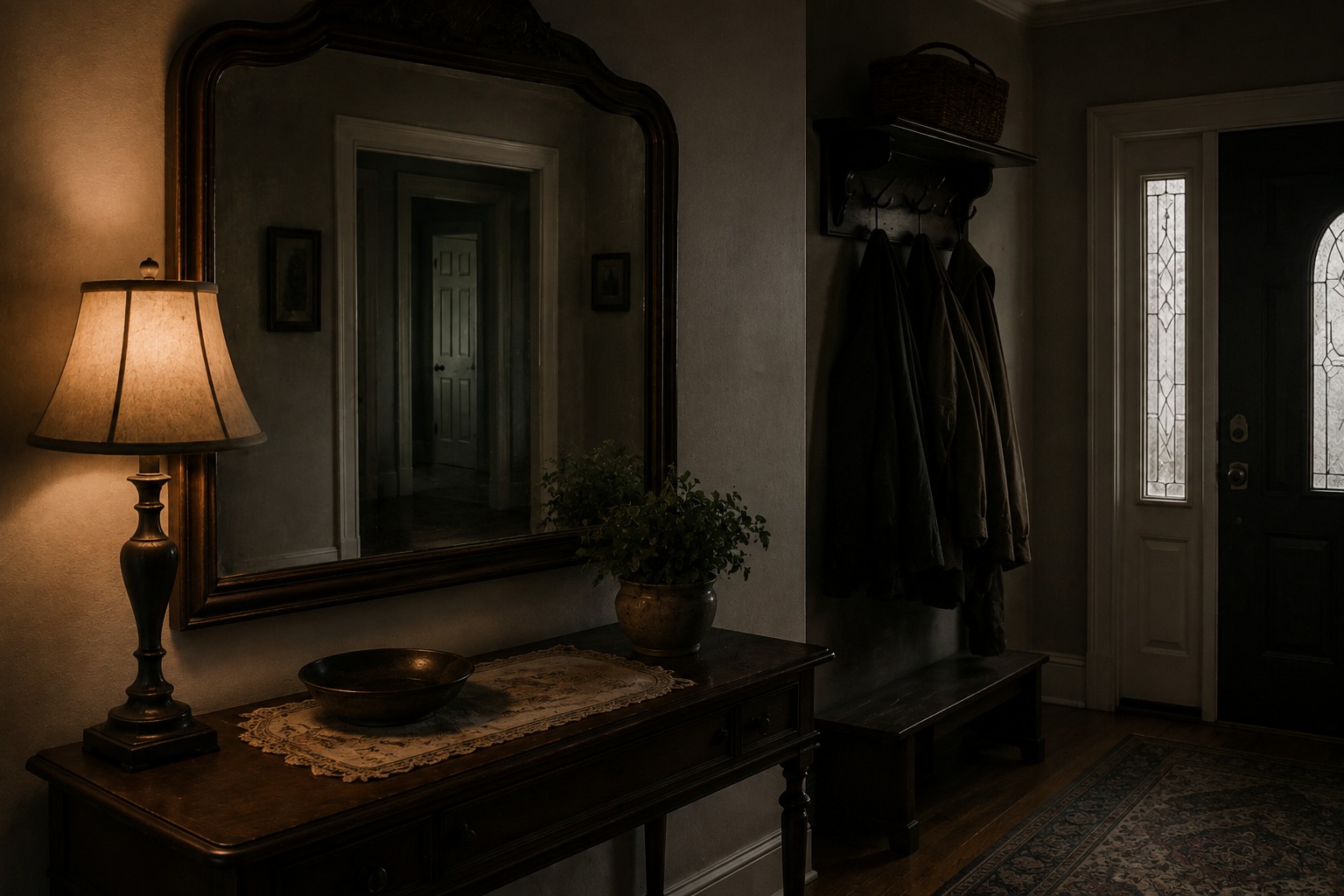
When she looked back into the mirror, there was only her own reflection and the dark doorway behind it. Stories like this are one reason mirrors can become frightening very quickly after dark. Yet even without a ghostly figure, people commonly describe hallway mirrors as looking strangely deep, distorted, occupied, or simply wrong at night. There are several good reasons for that. Darkness changes what a mirror can show, but it also changes what the brain does with incomplete faces, shadows, doorways, and movement. And sometimes the detail someone describes does not fit those easy explanations quite as neatly. A Dark Mirror Stops Feeling Like Ordinary Glass During the day, a hallway mirror usually behaves exactly as expected. You see your face, the wall behind you, perhaps a coat rack or an open bedroom door. There is enough light for everything in the reflection to have clear edges. You immediately understand where each reflected object belongs.
The Moment It Became Harder To Ignore
At night, that certainty disappears. A mirror does not create its own image. It can only return the light reaching it. When a hallway is dim, the brightest things may be your face, a lamp in another room, the edge of a doorway, or a pale wall. Everything else collapses toward darkness. That creates an unsettling visual effect. Instead of looking like a flat piece of glass reflecting a familiar home, the mirror can resemble a dark opening containing only fragments of the room. The reflected hallway may also appear deeper than the hallway feels when you look directly at it. That is especially noticeable with mirrors placed opposite doors, at hallway intersections, or near the ends of long corridors.
The mirror creates an apparent continuation of space, while darkness removes many of the visual clues that normally remind you that the space is only a reflection. For a moment, it can feel less like you are looking at a mirror and more like you are looking into another hallway. That alone is enough to make ordinary shadows much harder to ignore. Why faces become so unsettling in low light. Faces are one of the biggest reasons nighttime mirrors feel wrong. Small movements make the effect worse. A slight turn of the head changes which parts of the face receive light. Because the reflection is already unclear, those changes can seem larger than they really are. The face in the glass may briefly appear thinner, older, expressionless, or unfamiliar.
Why The Story Still Gets Shared
Staring makes this more noticeable. If you keep looking at one point while the surrounding image remains dim, details around that point can seem to weaken or change. Combined with normal eye movements and shifting shadows, your own reflection can appear to alter even though nothing supernatural is happening. This helps explain a surprisingly common version of the creepy-mirror experience: someone knows the reflection is their own, yet for a second it does not feel like their own face. The fear usually arrives before the person has consciously worked out what looked different. And once that happens, they start examining the rest of the glass. Hallways are unusually good places for frightening reflection mistakes. They tend to contain multiple doorframes, hanging coats, corners, furniture edges, and patches of light from other rooms.
A mirror can stack these shapes together in ways that are difficult to understand at a glance. Imagine a dark coat hanging beside a bedroom door. Viewed directly, you know exactly what it is. But reflected from fifteen feet away, the coat may overlap with the pale strip of a doorframe. The result can resemble dark shoulders surrounding a lighter face. A partly open door can produce an even stranger shape. One vertical edge becomes what looks like a body. A light switch or framed photograph can land roughly where a face should be. The illusion may survive only until you turn on the light. Movement introduces another problem. A person walking past one end of a hallway can appear in the mirror before you expect to see them directly. A pet crossing a doorway may create a brief low movement in the glass. Headlights passing outside can send shadows sliding across walls that appear to move independently inside the reflection.
The First Time It Happened
Even your own movement can create something frightening. When you turn your head quickly, your attention may jump from the real hallway to the reflected one. That transition can produce the powerful impression that something in the mirror moved separately. Usually, looking again with better light reveals the ordinary arrangement that caused it. But not always. The classic response to seeing something strange in a mirror is immediate. Turn around. That reaction matters because mirror scares often involve a mismatch between two views of the same room. If you see what looks like a person standing behind you, you naturally expect that person to exist when you look over your shoulder. When the space is empty, the experience becomes much more disturbing. But an empty hallway does not automatically mean the reflected shape was impossible.
The viewing angle has changed. The mirror may show part of a room that was hidden from your direct position. Something beside the mirror can appear far behind you in the reflection. A shadow visible from one angle may disappear when you turn. People therefore often check more than the spot where the supposed figure appeared. They switch on lights. They stand in the same position again. They look for coats, furniture, plants, photographs, curtains, or open doors that might combine into a person-like shape.
What They Checked Afterward
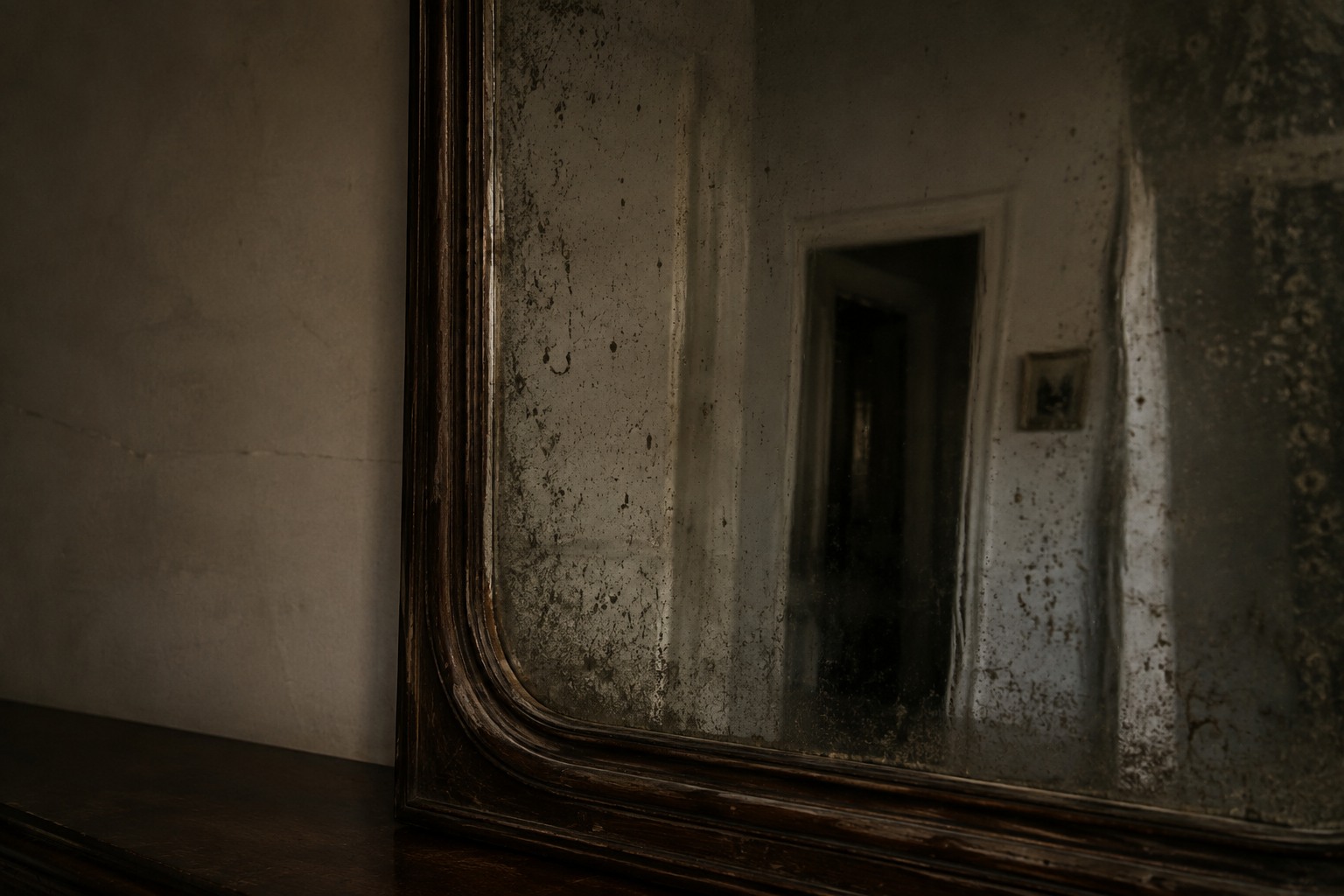
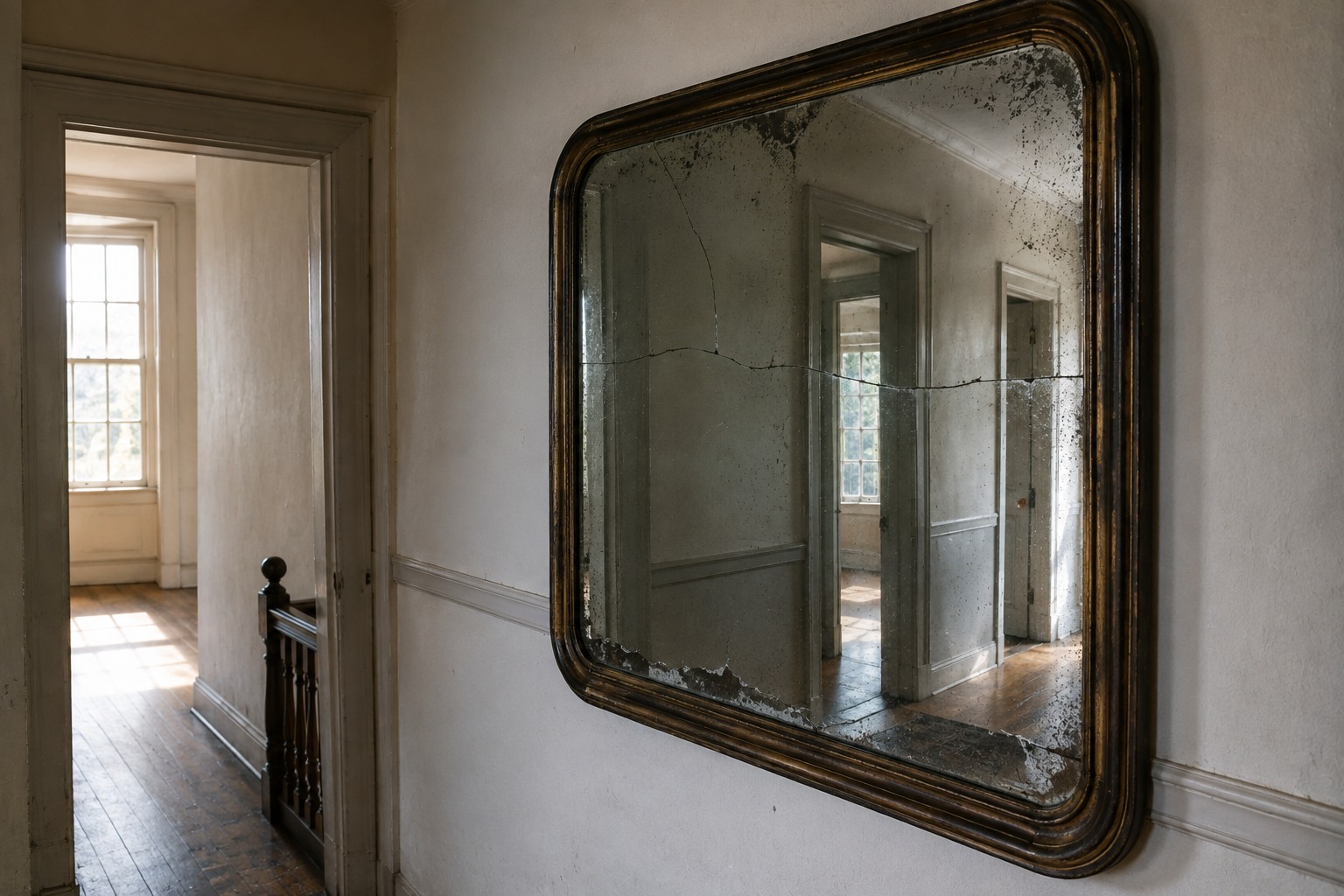
They may move through the hallway to see whether a reflection from another room crosses the same area. Those checks solve plenty of frightening moments. A hanging bathrobe becomes the tall person. A bedroom lamp becomes the pale face. A moving branch outside explains the shadow that seemed to lean around the doorway. The strongest normal explanation is usually the one that can recreate the same strange appearance from the same position. If moving a coat six inches makes the “woman in the mirror” appear again, the mystery has probably become much smaller. Old mirrors can add distortions of their own. Not every strange reflection begins in the brain. The mirror itself can contribute. Older mirrors may have uneven glass, deterioration behind the reflective layer, scratches, dark spots, or subtle warping.
Even newer inexpensive mirrors can bend reflections slightly if the glass or backing is not perfectly flat. In bright daylight, these flaws may be barely noticeable. At night, they become more important because there are fewer visible details competing with them. A dark patch in the mirror can overlap with your reflected face. Damage near the edge can look like movement when you walk past. Slight warping can make a doorway bend or cause a reflected person to appear narrower or broader in one area. Two mirrors facing each other can produce something stranger still. They create repeated reflections stretching backward, each one darker than the last. In weak lighting, those repetitions quickly lose detail. A person standing between the mirrors may therefore see multiple versions of themselves fading into blackness.
The distant copies can look less human simply because there is not enough light left to preserve facial detail. There is nothing mysterious about the mechanism. But knowing that does not necessarily make standing between those mirrors at 2 a.m. pleasant. When the easy explanation starts getting weaker. The more specific a mirror story becomes, the harder it is to explain with a general statement like “darkness plays tricks on your eyes.” A vague face appearing for half a second is easy to understand. A shadow near a doorway is also easy. Things become more interesting when someone describes a clearly human-shaped reflection that remains visible long enough for them to examine it.
The Detail Nobody Could Explain
Consider the difference. Someone walks past a mirror and thinks they saw movement. That can happen easily. Someone stops three feet from the mirror and sees a tall figure behind them, with shoulders, a head, and a body fading before reaching the floor. They look directly behind themselves and see nothing. They return their eyes to the mirror and the figure is still standing there. That is a much stranger story. It still does not automatically tell us what happened. Memory can change frightening moments. Lighting can create surprisingly stable illusions. Reflections from unexpected angles can remain difficult to identify even after someone searches the room. But the normal explanations become stronger or weaker depending on the details. Could the shape be recreated? Did it change when the lights came on?
Was there an object in the correct reflected position? Did another person standing in the same place see the same shape? Did the figure behave like a reflection of something physical, or did it appear somewhere no matching object could be found? One particularly disturbing detail in ghost stories is wrong placement. A reflected figure might appear partly inside a wall, too high above the floor, or standing in a section of reflected space that corresponds to an empty doorway. Those details are frightening because they break the geometry we expect from mirrors. A normal person reflected in glass must exist somewhere that makes sense. A person-shaped figure that does not seem to have such a place is harder to dismiss at a glance. People rarely forget the first strange thing they see in a mirror. But what often makes the experience memorable is the second look. The first glance contains uncertainty.
Why The Place Felt Wrong
You might have imagined it. Your eyes were adjusting. You were tired. Something moved. So you look again. Now you are actively searching for a face or figure. That changes the experience. Every dark patch becomes important. You notice tiny differences between the reflected room and your mental picture of the real room. Doorways seem darker. Corners seem deeper. Your own face becomes distracting. And you know that if something appears behind your shoulder, you will see it before you feel it. That expectation is a major part of why mirrors work so well in ghost stories. They allow two spaces to exist in front of you at once: the room you are standing in and the reversed version behind the glass. Normally those spaces agree perfectly. Fear begins when they seem not to.
A missing object can do it. Unexpected movement can do it. A face where no face should be can do it instantly. The most disturbing mirror stories are therefore not necessarily the ones with dramatic ghosts. Often they involve one small contradiction that is immediately understandable. The hallway is empty. The mirror is not. Hallways? Most nighttime mirror scares begin with ordinary ingredients working together. There is too little light. Faces lose detail.
Why People Avoided That Spot Later
Shadows merge. Doorframes and hanging objects combine into human shapes. Old glass distorts edges. Reflected spaces become difficult to map. And because people are extremely good at noticing possible faces and bodies, the brain tries to turn incomplete shapes into something recognizable. A hallway makes all of this stronger because it naturally contains distance, darkness, doorways, and hidden angles. That explains why someone can glance at a familiar mirror and suddenly feel that the reflection looks completely unfamiliar. It also explains why turning on the light solves so many stories. The strange face becomes your own. The waiting person becomes a coat. The moving shape becomes headlights crossing a wall. But there is a reason the mirror version of a ghost story remains effective even after those explanations are understood.
Mirrors create an expectation of perfect agreement. Whatever exists in the reflection should have a matching source somewhere outside it. So when someone describes a stable, clearly human shape in the glass and cannot find anything that could produce it, the question becomes much harder to settle from the story alone. Maybe an ordinary detail was missed. Maybe darkness turned several unrelated shapes into one convincing person. Maybe fear made a brief glimpse feel longer and clearer afterward. Those possibilities deserve to come first. Still, if you ever walk down a dark hallway and notice that your mirror seems deeper than usual, the easiest thing to do is turn on a light. Just remember why people find the next part frightening. Before reaching for the switch, you have to walk toward the reflection.