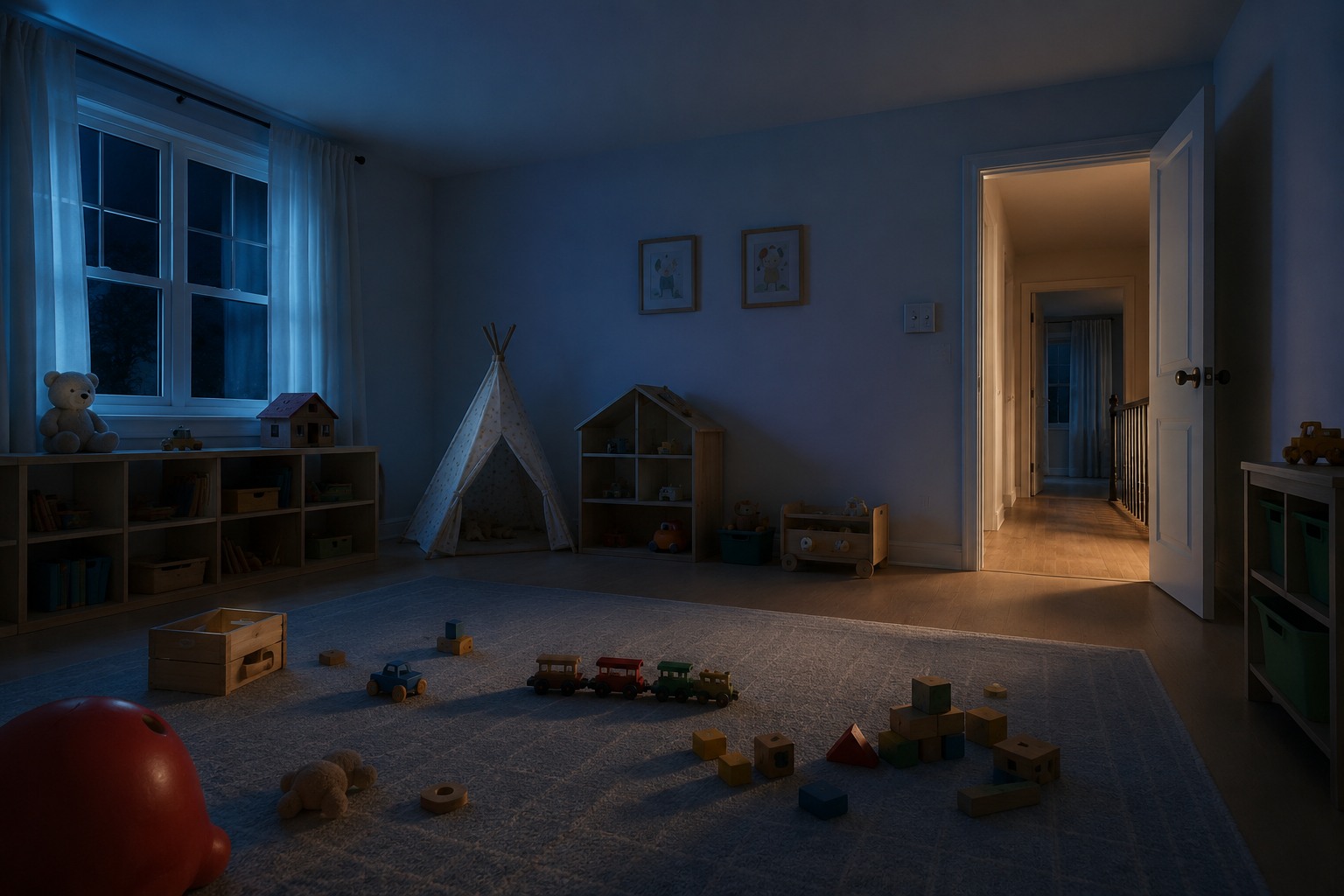
The laugh came from the bedroom at the end of the hall, but the door was already standing open. A woman staying alone in her parents' house had been reading downstairs when she heard it: a quick, breathy burst of laughter from the second floor. Not a scream. Not a television. It sounded like a child trying not to laugh too loudly. She froze and listened. The house had been empty except for her since that afternoon. There were no children next door, and the nearest television was downstairs with her. Then it happened again. This time the sound seemed to come from inside the open bedroom. She walked upstairs, switching on lights as she went. The room was empty. The closet was empty. The window was shut.
She was halfway back down the hall when a third laugh came from behind her. What frightened her wasn't simply that she had heard a strange noise. It was that her brain had identified something incredibly specific: a young child's laugh, coming from a room where no child could be found. Stories like this appear again and again in supposedly empty houses, quiet apartments, hotels, old buildings, and even ordinary modern homes. So why does a child's laugh become one of the most disturbing sounds people report hearing when nobody else is there? Why A Child's Laugh Is So Easy To Recognize Human hearing is extremely good at noticing voices. We spend our entire lives separating speech, crying, laughter, footsteps, and other human sounds from background noise.
We often recognize them even when they are faint or partly hidden by other sounds. Laughter is especially distinctive. A child's laugh tends to contain short bursts of sound with rapidly changing pitch. Those bursts can resemble several ordinary noises found inside houses: pipes clicking, birds outside, squeaking furniture, electronic toys, distant television audio, heating systems, or even several unrelated noises occurring close together. The strange part is what happens when those sounds reach us imperfectly. Imagine hearing three quick squeaks through a wall. If they arrive clearly, you might immediately recognize an old pipe. But reduce the volume, add a doorway, let the sound bounce down a hallway, and place the listener in a silent house at 2 a.m. The same sequence can suddenly acquire rhythm and pitch.
It can begin to sound almost human. Once the brain recognizes that possible pattern, the interpretation can become remarkably convincing. You aren't necessarily thinking, "That noise vaguely resembles laughter." You may simply hear laughter. And when the sound resembles a child rather than an adult, the emotional reaction can be much stronger.
Empty Houses Make Small Sounds Feel Human
An occupied house contains constant noise. People talk. Doors move. Water runs. Appliances operate. Someone walks across another room. Those sounds provide context. If you hear a faint giggle while three people are downstairs watching television, you probably assume it came from one of them or from the television itself. Remove everyone else, and the exact same sound becomes harder to place. Now every noise has a question attached to it. Who made that? Houses also become surprisingly active when they are quiet. Wood expands and contracts. Heating ducts shift. refrigerators cycle. Plumbing changes pressure. Wind moves vents and loose exterior pieces. Most of these sounds are harmless. But houses do not distribute sound neatly. A noise created inside one wall can travel through pipes or framing and emerge somewhere else.
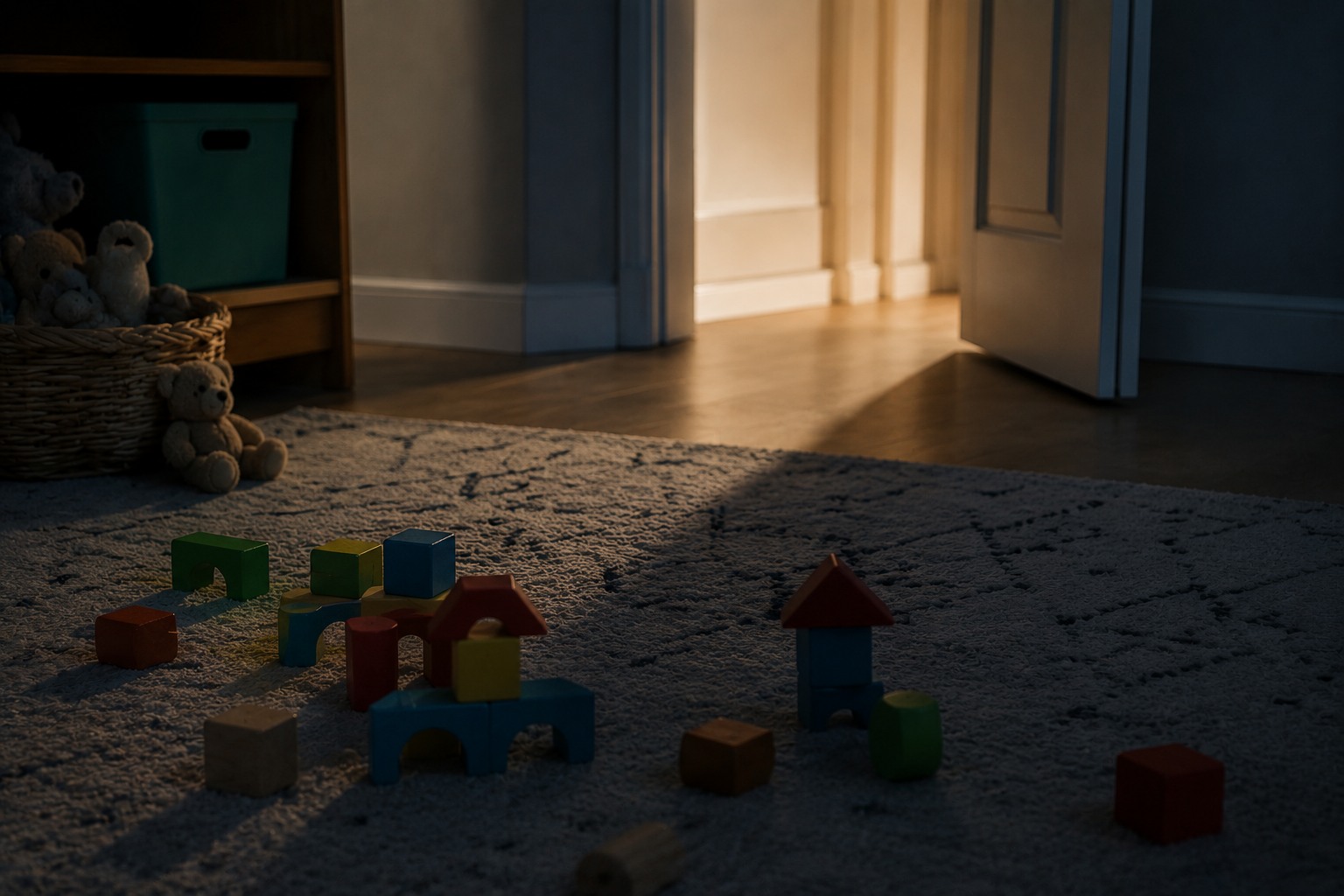
Something happening downstairs can appear to come from an upstairs room. Hallways make this worse. They create long reflective surfaces where sound can bounce between walls, floors, ceilings, and doorways. By the time a short noise reaches someone standing at the opposite end, its original direction may be difficult to judge. That explains an important feature of many creepy-house stories. The witness often searches the wrong room. Someone hears laughter from a bedroom, checks the bedroom, and finds nothing. The empty room then becomes part of the mystery even though the original sound may never have started there.
Why The Sound Often Seems To Come From Upstairs
There is a reason so many stories place the laughing child above the listener. People are not always good at judging the vertical direction of unfamiliar sounds indoors. A sound traveling through a ceiling, stairwell, ventilation opening, or wall cavity can create misleading clues about where it began. Suppose something makes a repeated squeaking noise near an upstairs heating duct. Someone downstairs hears the sound through the ceiling and naturally thinks, "That's upstairs." That conclusion may be correct. But locating it more precisely is harder. The sound may seem to come from the bedroom because the bedroom doorway changes how it reaches the hallway. Move several steps, and suddenly it appears to come from the stairs. This creates one of the classic frightening moments. A person follows the laugh.
They reach the place where they thought it happened. Nothing is there. Then they hear it somewhere else. It feels as though something moved. Sometimes, however, the listener moved while the source remained completely stationary. Their position relative to walls, stairs, ducts, and open doors changed, altering how the same sound reached their ears. That doesn't make the experience feel less frightening. In fact, it explains why searching the house can make the apparent movement seem more convincing.
What People Usually Check First
When someone hears what sounds unmistakably like a child in an empty home, most people do something surprisingly practical. They look for another person. Bedrooms, bathrooms, closets, hallways, basements, and staircases get checked. Exterior doors may be inspected. If a window is open, people look outside. Then attention usually turns toward electronics. Televisions are obvious suspects, but modern houses contain many less obvious sources of voice-like sounds. Phones can play media or notifications. Tablets may remain connected to apps. Smart speakers can activate unexpectedly. Toys sometimes contain batteries long after everyone has forgotten about them. Old electronic toys deserve particular attention in stories involving children's voices. A toy with weak batteries does not always play its sounds normally. Audio can become quieter, slower, distorted, or incomplete.
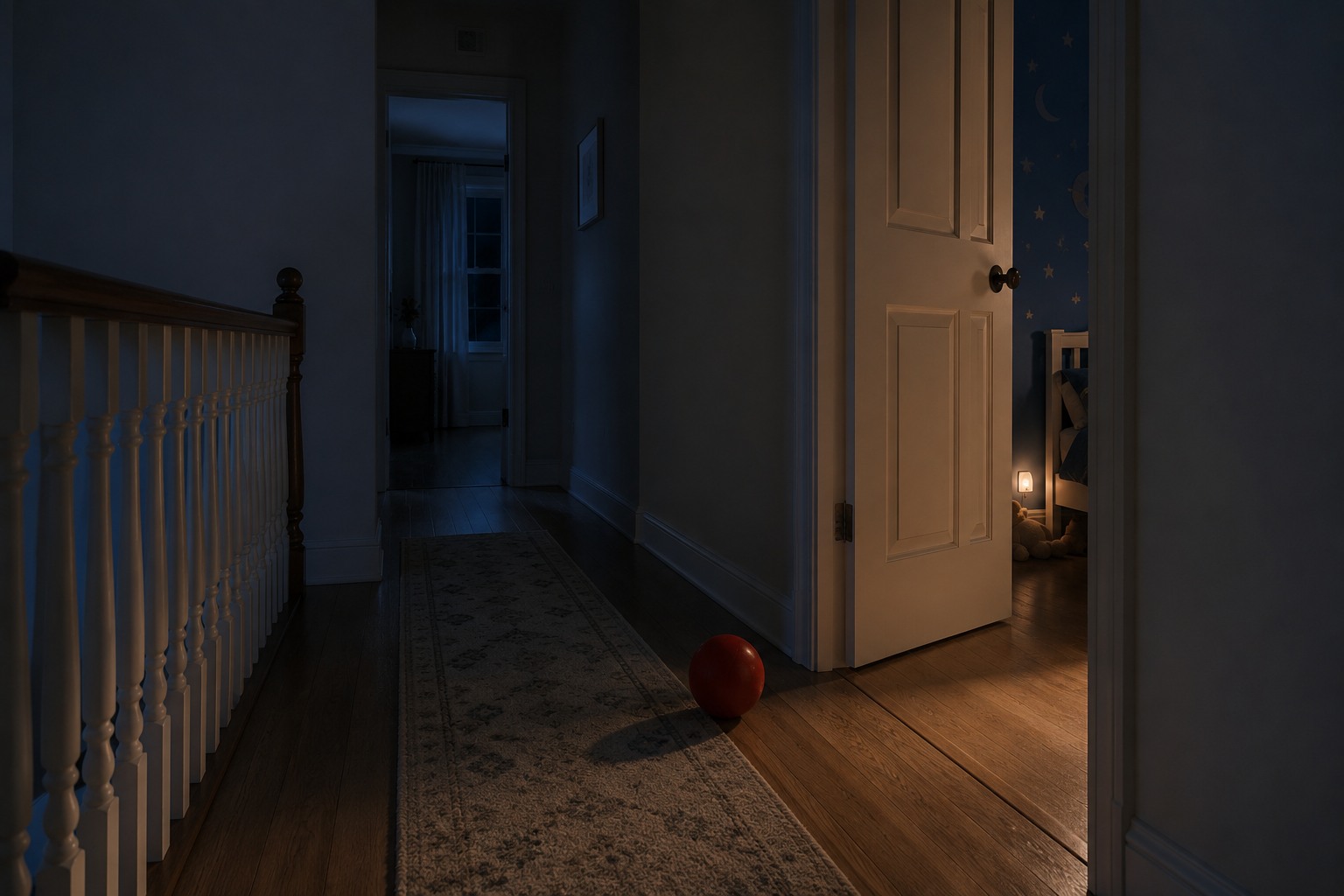
A cheerful recorded giggle heard clearly in daylight is one thing. A two-second fragment coming from a box in a dark spare room is another. Outside sound matters too. Children playing several houses away can sometimes be heard surprisingly clearly under the right conditions. Television audio can escape through an open window. A person outside may briefly pass within hearing range and disappear before anyone checks. Animals can create even stranger mistakes. Foxes, cats, certain birds, and other animals produce calls that can sound disturbingly human when heard without seeing the animal responsible. Usually, finding one of these sources ends the mystery. The stories people remember are the ones where it doesn't.
When The Ordinary Explanations Start Getting Weaker
One unexplained laugh is not difficult to imagine. It could be almost anything. The situation becomes stranger when several details begin lining up. Perhaps the sound happens repeatedly over several minutes while the listener changes position. Perhaps it clearly contains the breathy rise and fall associated with laughter rather than a single squeak. Maybe two people hear it simultaneously and independently point toward the same doorway. Or perhaps someone checks the obvious electronic sources and discovers they are unplugged or nowhere near the room where the sound seems strongest. None of those details automatically tells us what caused the noise. They simply remove some easy possibilities. Location matters as well. A faint laugh heard once through an apartment wall has an enormous number of possible sources.
A laugh heard repeatedly inside a detached rural house with nobody nearby is harder to dismiss with "probably the neighbors." Timing can make a story stranger too. Consider someone standing in an empty upstairs hallway who hears a child's laugh from a bedroom. They step toward the room. Silence. They step away. The laugh happens again. That pattern naturally feels responsive. People are extremely sensitive to apparent responses. If we knock and something knocks back, whistle and hear a whistle, or speak and then hear a voice-like sound, our attention immediately shifts from random noise toward interaction. Coincidence can create this effect. But when the timing becomes unusually precise or repeats several times, it is understandable why witnesses stop treating the sound as ordinary house noise.
Why Some Stories Add A Figure After The Laugh
The most frightening versions of these stories do not end with sound. Someone hears the laugh, follows it, and briefly sees a small figure. This changes the situation dramatically. A common description is not a perfectly visible child standing normally in a room. The shape is usually incomplete in some obvious way. It might be child-sized but strangely transparent. The face may be blurred or impossible to make out. The figure may appear halfway inside a doorway where a person could not stand. Sometimes only the upper body is visible before the shape fades into darkness below the waist. These details matter because a normal-looking child in a house creates an immediate practical explanation: there may actually be a child there. The story becomes paranormal only when something about the person appears physically wrong.
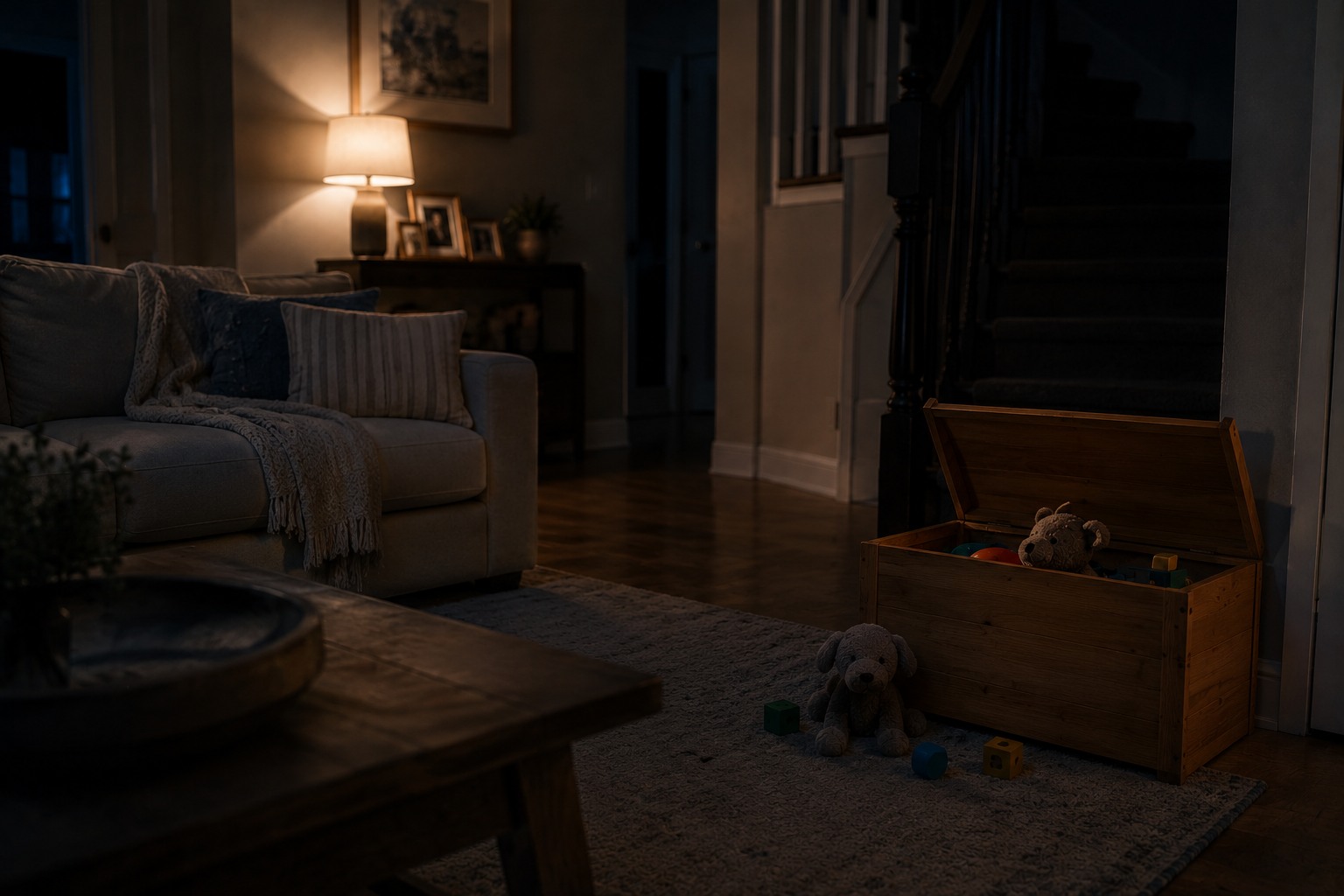
There are still ordinary reasons someone might briefly see a human shape. Low light reduces visual detail. Hanging clothes can resemble bodies. Reflections can place shapes where they do not belong. A partially illuminated chair, curtain, or coat can suddenly become a person when someone is already expecting to find one. That last point is important. After hearing what sounds like a child laughing, the brain is prepared to find a child. Ambiguous shapes become much easier to interpret that way. Yet this also explains why witnesses sometimes insist that seeing the figure frightened them differently from hearing the sound. A noise creates a question. A child-sized shape standing silently at the end of the hallway seems to answer it.
One of the creepiest patterns is apparent movement. The first laugh comes from upstairs. The second seems closer. The third sounds as though it came from the hallway. People naturally imagine a moving source. But indoor acoustics can create something remarkably similar. The listener moves through the building while investigating. Every new position changes which surfaces reflect the sound most strongly. An intermittent source makes this especially confusing. If a pipe squeaks only every thirty seconds, you cannot continuously track it. You hear one burst, move, wait, and hear another burst from a slightly different acoustic position. Your brain connects those separate moments. First it was in the bedroom. Now it's outside the bedroom. Now it's near the stairs. It followed me.
That sequence can be completely sincere even if nothing physically traveled down the hallway. There is another possibility people often overlook: there may be several similar sounds. One noise comes from plumbing. Another comes from the heating system. A third comes from outside. Because they resemble one another, the listener groups them together and imagines a single source changing locations. This is especially likely with very short sounds. A full ten-second laugh contains enough information to identify details about a voice. A half-second "hee-heh" leaves far more room for interpretation. That is why duration matters when considering these stories. The clearer, longer, and more structured the laughter is, the harder it becomes to explain as a random creak or two unrelated clicks.
Why People Remember This Sound For Years
There is something fundamentally wrong-feeling about hearing a happy sound in a place where nobody should be. A child's laughter normally signals safety, play, and other people nearby. Place it inside a dark empty house and its meaning reverses. The sound remains familiar, but the situation contradicts it. That contradiction is what makes the experience stick. A mysterious thump can remain just a mysterious thump. A child's laugh implies a child. The listener immediately imagines lungs, a mouth, a face, and someone standing somewhere nearby. That gives the noise an invisible body. It also creates a powerful expectation. After the first laugh, people start watching doorways. They listen to the stairs. They look into dark bedrooms differently. Every ordinary house noise becomes connected to the possibility that someone else is inside.
Most stories probably have explanations hidden somewhere among acoustics, electronics, animals, distant voices, and the strange ways our brains interpret incomplete sounds. But some stories remain uncomfortable because the reported details do not fit neatly into one of those boxes. Two people hear the same laugh. It repeats from the same empty room. The obvious sources are checked. Then, just as they decide there must be a reasonable explanation, it happens once more from somewhere much closer. That still does not tell us that a ghost was laughing. It tells us why these stories are so effective. An unexplained bang asks what fell. An unexplained child's laugh asks who is in the house. And in a silent hallway at night, that is a much worse question.