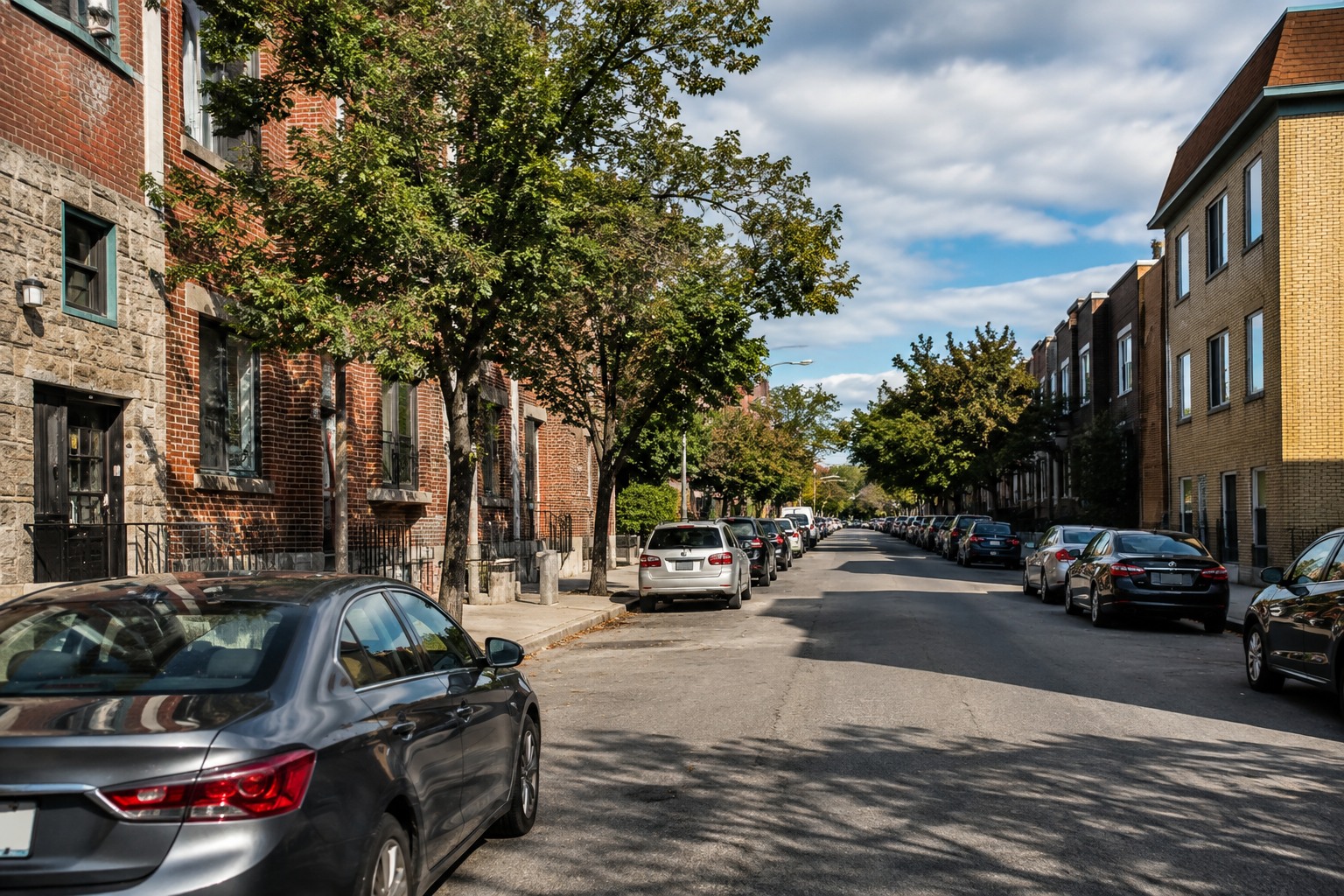
The parked cars were wrong. A woman walking home after dinner had taken the same side street hundreds of times. There was the pharmacy on the corner, the narrow row of brick houses, the bus shelter under the yellow streetlamp. But halfway down the block, she noticed that every car looked decades old. Not restored. Not displayed. Just ordinary old cars parked bumper to bumper as though they belonged there. Then she noticed the silence. The restaurant behind her had stopped making noise. No traffic came from the main road. The modern apartment building at the end of the street seemed to be gone, replaced by dark brick storefronts with unfamiliar signs. A man in a long coat crossed ahead of her without looking up. She turned around. The street behind her looked normal.
A bus hissed at the corner. Modern headlights swept across wet pavement. Someone was laughing outside the restaurant. When she looked forward again, the old cars were gone. Stories like this appear again and again in time-slip folklore: someone is doing something completely ordinary when a familiar place suddenly seems to belong to another year. Why do so many of these stories begin on normal streets instead of obviously mysterious places? Familiar streets make small changes feel impossible. A strange forest can hide almost anything. If someone becomes confused on an unfamiliar trail, they may simply have taken the wrong turn. Buildings can be hidden by trees. Distances are difficult to judge. Even familiar sounds behave strangely outdoors. A street you walk every week is different. You know where the supermarket should be.
You know which intersection has traffic lights. You recognize the apartment balconies, the bus stop, the ugly new office building and the convenience store that stays open late. That familiarity gives time-slip stories their most important ingredient: comparison. The person does not necessarily see anything supernatural. Instead, ordinary things stop matching memory. The road may suddenly have older-looking lamps. Cars may disappear. A building that was demolished years ago may seem to be standing again. People may be wearing clothes that look slightly out of place.
The First Detail People Remember
Sometimes the wrongness is even smaller. A shop has a different name. A doorway exists where there should be a blank wall. A street that is normally loud becomes completely quiet. These details work because the witness already knows what belongs there. A medieval-looking alley in an old European town is not especially strange. The same alley appearing where someone expects a modern shopping street is another matter. The fear comes from recognition colliding with contradiction. Why the Street Often Goes Quiet First One of the most common details in time-slip stories is not visual at all. It is silence. People describe traffic noise fading, conversations disappearing or the normal background hum of a city seeming to shut off. Sometimes the person notices this before seeing anything unusual.
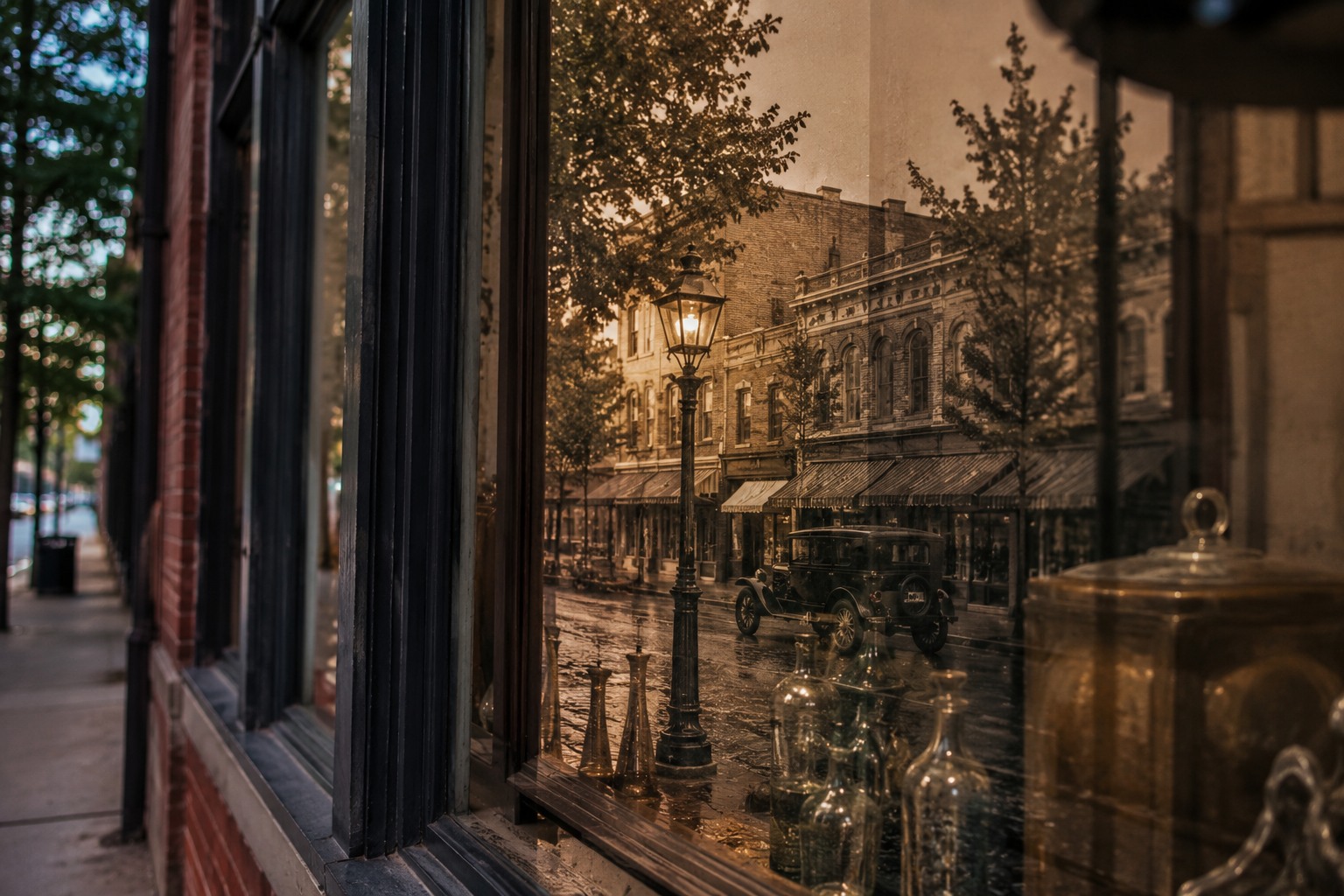
There are ordinary reasons a street can suddenly become quiet. Traffic lights create temporary gaps in cars. Buildings block sound unevenly. Wind direction changes what reaches your ears. Moving from a busy junction into a sheltered side street can make a city seem strangely dead within a few steps. Attention matters too. When something looks wrong, people often stop noticing background information. Your attention narrows toward whatever seems important. Someone staring at an unfamiliar storefront may temporarily stop registering distant traffic. But silence is especially powerful in a time-slip story because modern places are full of modern noise. Engines, ventilation systems, electrical equipment, music, aircraft and phones create a background layer we barely notice until it disappears. Remove that layer and an ordinary street can suddenly feel older. That is why a witness may describe the experience as if someone turned down the present before the past appeared.
Why The Scene Feels Wrong
The changes are usually. Ordinary, Not Spectacular Time-slip stories rarely begin with clocks spinning backward or glowing portals opening over the pavement. The strongest stories are much less dramatic. Someone notices an old-fashioned bus. A shop window contains products with unfamiliar packaging. Streetlights look different. A building appears cleaner, newer or completely changed. People nearby seem dressed for another decade. This matters because cities naturally contain different periods at the same time. An 1890 building can stand beside a 1970 office block across from a newly renovated café. Classic cars occasionally appear on public roads. Film productions temporarily transform streets. Historic districts preserve signs, lamps and storefronts designed to resemble earlier periods. Renovation can also expose older features beneath newer ones. Because of that, seeing one old-looking thing means very little.
Time-slip stories become unsettling when several details seem to change together. Imagine turning onto a familiar street and seeing a 1950s car. Interesting, but easily explained. Now imagine that the parking meters are different, the modern glass building is missing, everyone nearby is dressed strangely and the coffee shop you visited yesterday has become a hardware store. The individual details may each have explanations. Their apparent combination is what produces the feeling that the whole street has changed. What people usually check when everything looks wrong. The first reaction in many stories is surprisingly practical.
What Witnesses Usually Check First
People look for something familiar. A street name. A landmark. A recognizable building. Their phone. A clock. A modern vehicle. Essentially, they try to answer two questions. Am I where I think I am, and is this really happening around me? This checking behavior is important because human navigation is not perfect. A person can emerge from a building through a different exit and briefly believe they are somewhere familiar. Similar-looking streets can be surprisingly easy to confuse, especially at night or in cities built from repeating blocks. Memory also simplifies places. We do not store perfect mental photographs of every street we know. We remember useful landmarks and general layouts.
When a shop closes or a façade changes, people sometimes discover that their memory of the old version was much less precise than they assumed. Stress makes this worse. A tired person walking at night may notice three unusual details and unconsciously build them into one coherent impression: everything here is wrong. That does not mean the person is lying. It means the brain is trying to understand incomplete information quickly. This is why mundane checks matter. Reading the street sign, checking the route, returning in daylight or asking someone else what was there can sometimes turn a frightening experience into a recognizable mistake. Sometimes, however, the witness says those checks only made the experience stranger. Why walking can: Create the Perfect Time-Slip Feeling A large number of time-slip stories involve people on foot.
That makes sense. Walking gives the environment time to change gradually around you. In a car, scenery passes quickly and attention stays partly focused on driving. On foot, you can notice window displays, doorways, clothing, pavement, street furniture and faces. Walking also creates natural transition points.
The Ordinary Explanations That Come Up
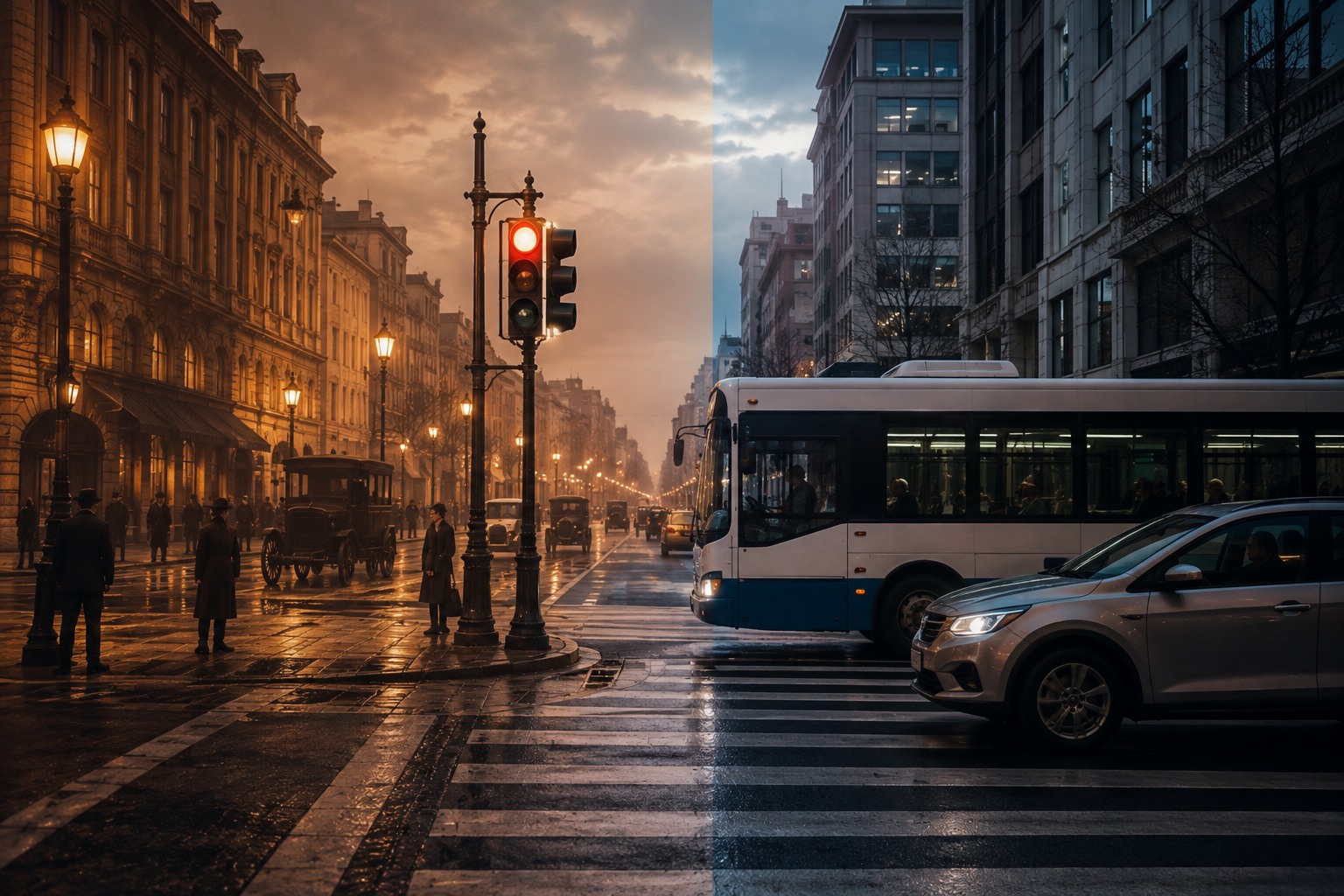
You turn a corner. Pass through an underpass. Cross a narrow lane. Walk beneath trees. Step from bright commercial lighting into a darker residential street. Those transitions can dramatically alter what you see and hear within seconds. Lighting is particularly important. Warm streetlamps can flatten colors. Mist can hide distant buildings. Rain makes pavement reflective and reduces visual detail. At dusk, modern materials such as glass and steel can disappear into darkness while older brick façades remain visible. For a few seconds, a familiar street may genuinely look like a different version of itself. There is also a psychological effect caused by expectation. If you know exactly what should appear around the next corner and something else appears instead, the surprise is much stronger than it would be in an unfamiliar place.
That instant of disorientation is often the beginning of the story. When normal explanations start feeling less satisfying. Most individual ingredients in a time-slip story have ordinary possibilities. An old car can be a collector's vehicle. Period clothing can come from an event. A changed storefront can be renovation. Silence can come from traffic patterns and attention. A missing building can be blocked by darkness, weather or an unusual viewing angle. Memory can fill gaps incorrectly.
The Detail That Keeps The Story Alive
The harder stories are those where several changes supposedly happen at once and then disappear when the person retraces a few steps. Consider the classic structure. Someone walks down a familiar street and notices that the road surface looks different. Modern signs are missing. Several vehicles seem old. A shop that normally has bright windows appears to have a completely different interior. The person becomes uncomfortable and turns back. Within moments, traffic returns and everything looks normal. If the description is accurate, a simple explanation must account not for one odd detail but for the sudden cluster of them. That is where time-slip stories survive. Not because an ordinary explanation is impossible, but because no single ordinary explanation feels satisfying to the person who experienced the whole sequence. Memory remains an important caution here.
People often tell frightening experiences after they have had time to think about them. Details can become organized during retelling. Two strange observations separated by several minutes may later feel simultaneous. The memory can be sincere while still becoming cleaner and stranger over time. That possibility is less exciting than stepping into another decade, but it matters whenever these stories are considered carefully. Why People From the “Past” Rarely Notice the Witness Another eerie feature appears in many versions of the story. The people on the changed street seem completely normal. They are not transparent ghosts. They do not stare at the witness with black eyes. They do not chase anyone. They shop, walk, talk or wait for buses. Often they barely acknowledge the frightened person standing among them. That ordinary behavior makes the scene more disturbing.
Why People Retell This Version
A ghost is expected to look wrong. A street full of ordinary people who apparently belong to another decade creates a different problem: perhaps the witness is the thing that does not belong. There are practical explanations for this detail. People in public spaces usually ignore strangers. Someone wearing unusual clothes in a city may receive fewer reactions than expected. If a witness is already confused, neutral behavior can feel strangely detached. There is also a storytelling reason. Time-slip tales are usually about displacement rather than attack. The frightening idea is not that something has entered our world. It is that the witness may have briefly entered somewhere else. That is why the most memorable figure might simply be a woman carrying groceries in outdated clothes, or a man waiting beneath an unfamiliar bus sign.
Nothing about the person needs to be monstrous. The street itself is the impossible thing. Why the experience often ends at a corner or threshold. Time-slip stories frequently end almost as casually as they begin. The witness turns around. Crosses the road. Walks back through an alley. Steps out of a shop. Passes the same corner again. Then the present returns. There is no flash.
What Makes The Question Linger
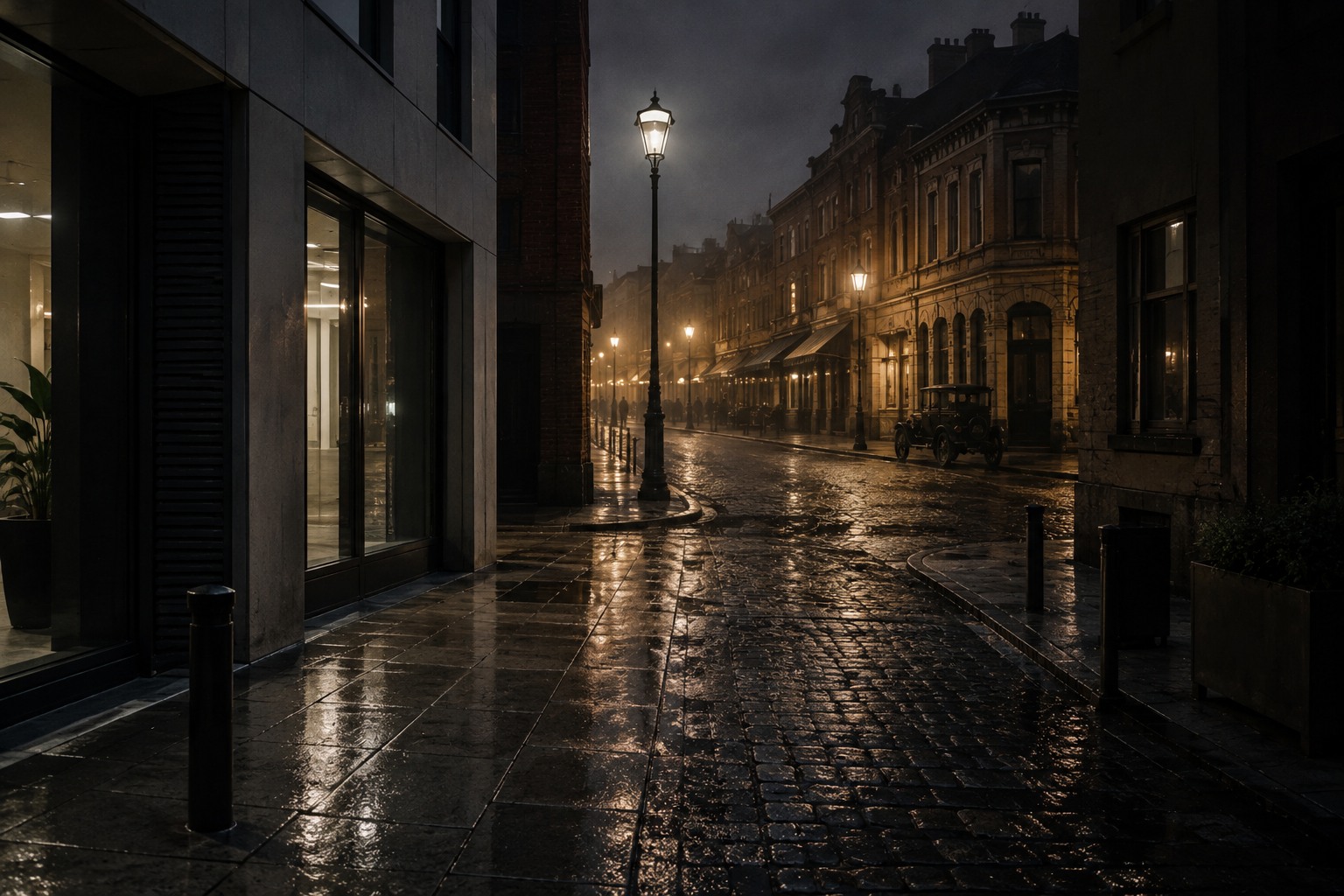
No dramatic sound. One version of the street simply gives way to another. This fits how perception works in real environments. Corners and thresholds divide scenes into pieces. Our brains update their mental picture of a place when entering a new visual space. It also fits ordinary navigation mistakes. If someone unknowingly turns onto a similar parallel street, retracing the route can instantly restore familiar landmarks and create the powerful impression that the strange place has vanished. But the threshold structure is also what gives these stories their lasting creepiness. The boundary is usually somewhere completely ordinary. A pedestrian crossing. A narrow lane between buildings. A railway bridge. The end of a block. Nothing marks it as special.
That suggests the frightening possibility at the center of time-slip folklore: if there were places where the present could briefly feel thin, you might walk through one without knowing until the world behind you stopped matching the world ahead. Most time-slip stories cannot tell us whether anything literally happened to time. Mistaken routes, unusual lighting, memory, attention and genuine changes to old streets can explain many of the details people report. But those explanations also reveal why ordinary streets are the perfect setting. We trust familiar places without thinking about it. We expect the same building to stand at the same corner. We expect modern cars outside the same shops. We expect the street behind us to belong to the same year as the street ahead. A time-slip story takes that quiet certainty and changes only a few things. Then it asks the witness to turn around.