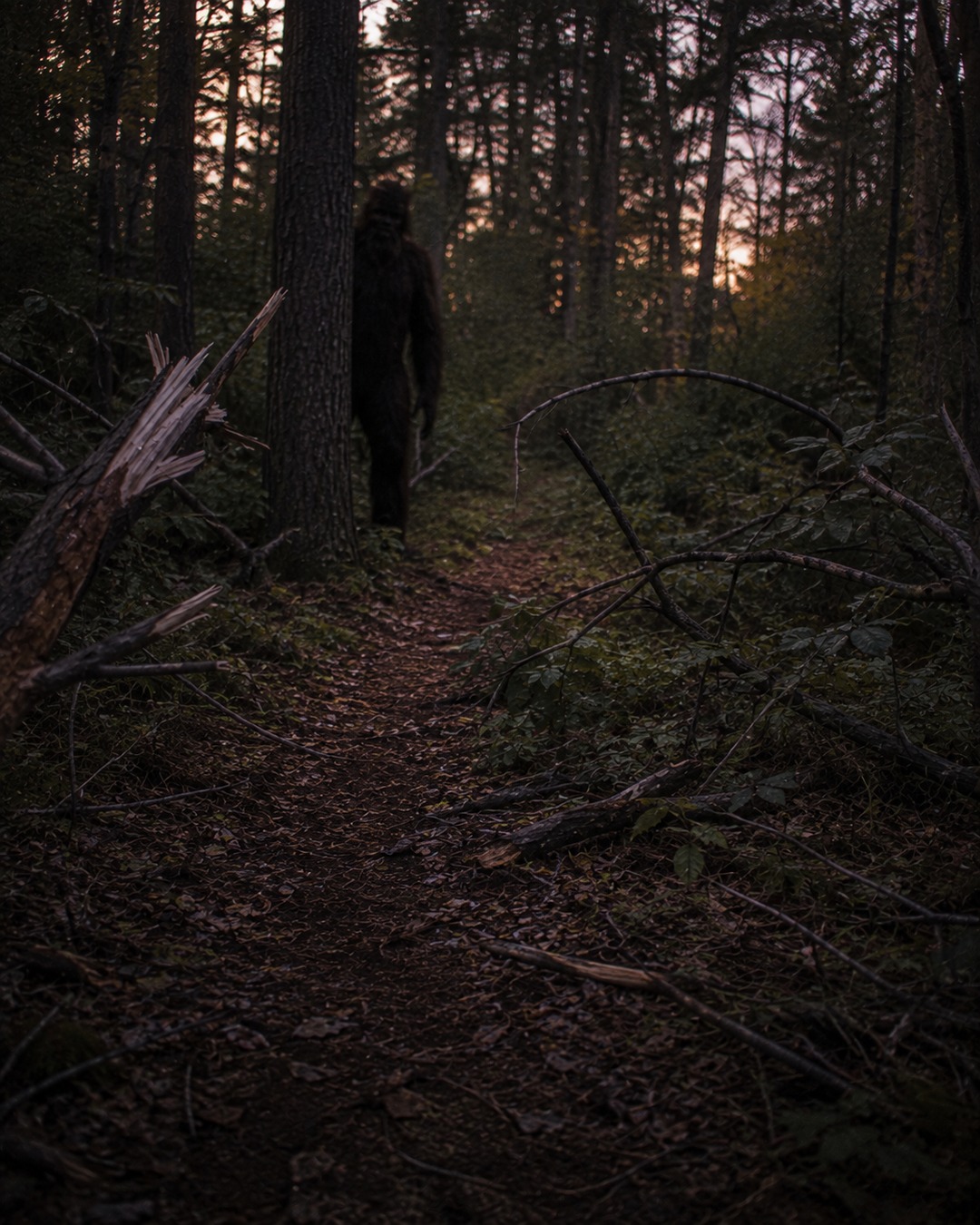
Illustrative reconstruction
The bent sapling was not enough by itself. Neither was the broken branch, the bark scrape, or the patch of crushed ferns beside the deer trail. But together, in a quiet stand of trees, they made the woods feel arranged.
Short answer
Claims about Bigfoot signs in the woods usually involve broken branches, bent trees, stick structures, bark damage, hair, disturbed vegetation or unusual trails. Many have ordinary explanations: wind, snow load, bears, deer, people, logging, disease, insects or tree growth. A sign becomes more interesting only when context, pattern and ordinary causes are documented carefully.
What investigators look for
People interested in Bigfoot often look for repeated breaks at unusual height, large impressions in vegetation, hair caught on bark, paths through brush, or branch arrangements that seem intentional. Those observations should be recorded as claims, not treated as established zoological evidence.
Ordinary explanations to check first
Wind and ice break branches. Snow bends saplings. Bears rub, climb and tear bark. Deer create trails and bedding areas. Humans cut, stack and move sticks. Disease weakens trees. Heavy rain and slope movement flatten plants. The forest is active without needing a hidden primate.
How to document woods signs
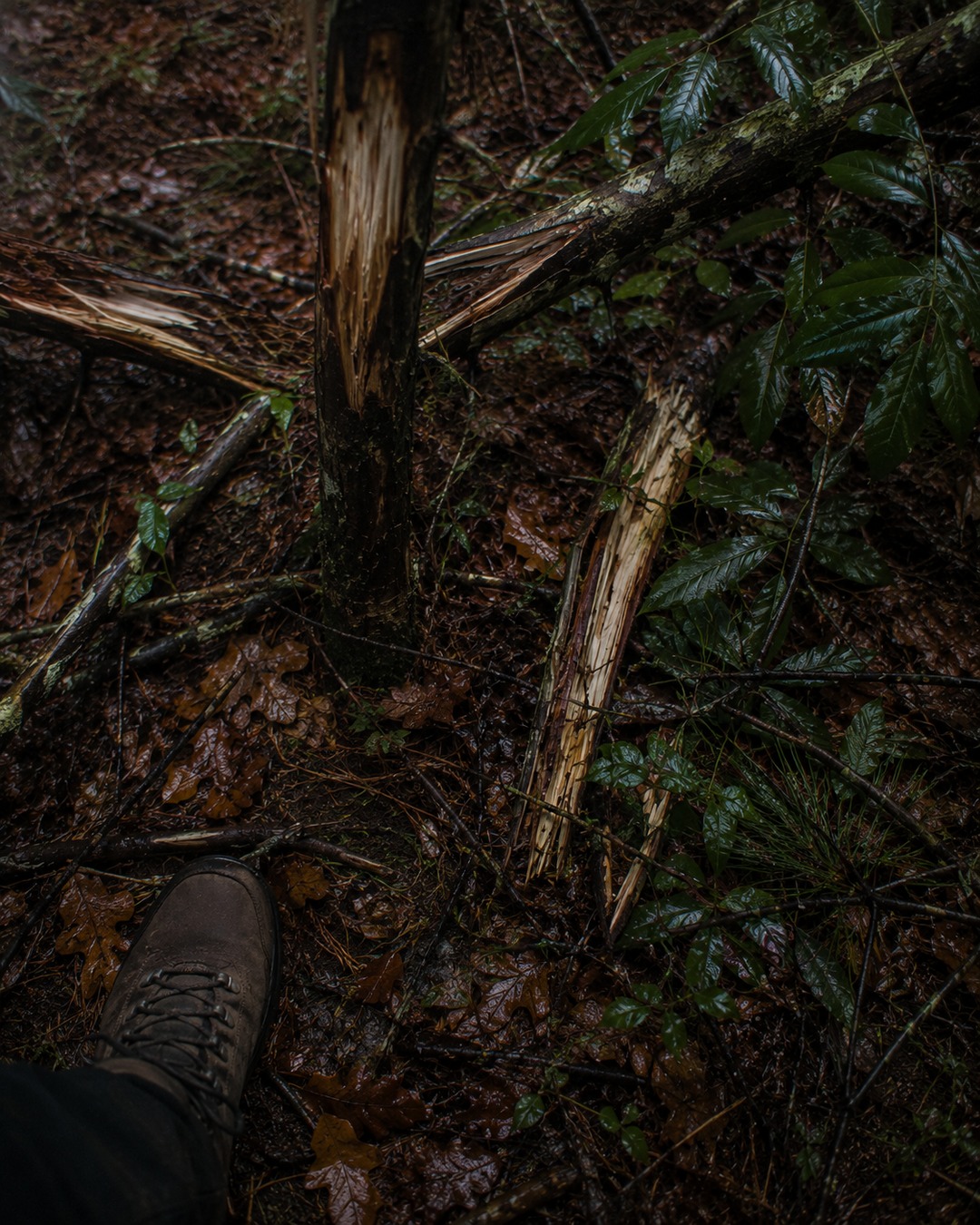
Photograph the wider area, not only the strange branch. Include scale and multiple angles. Note tree species, height, weather, slope, nearby trails, human access, animal sign and whether similar damage appears nearby. If hair is found, preserve it cleanly and document where it came from.
When the pattern is more interesting
A single bent tree is weak. A repeated pattern across a route, combined with tracks, audio, sightings or biological traces, is more interesting. Even then, “interesting” means worth documenting — not proof.
Broken branches are not a species marker
Branches break for many reasons: wind, ice, snow, disease, rot, falling trees, deer, bears, people and logging activity. A high break can look dramatic, but height alone does not identify the cause. The surrounding pattern matters more than one striking branch.
Bent trees and stick structures
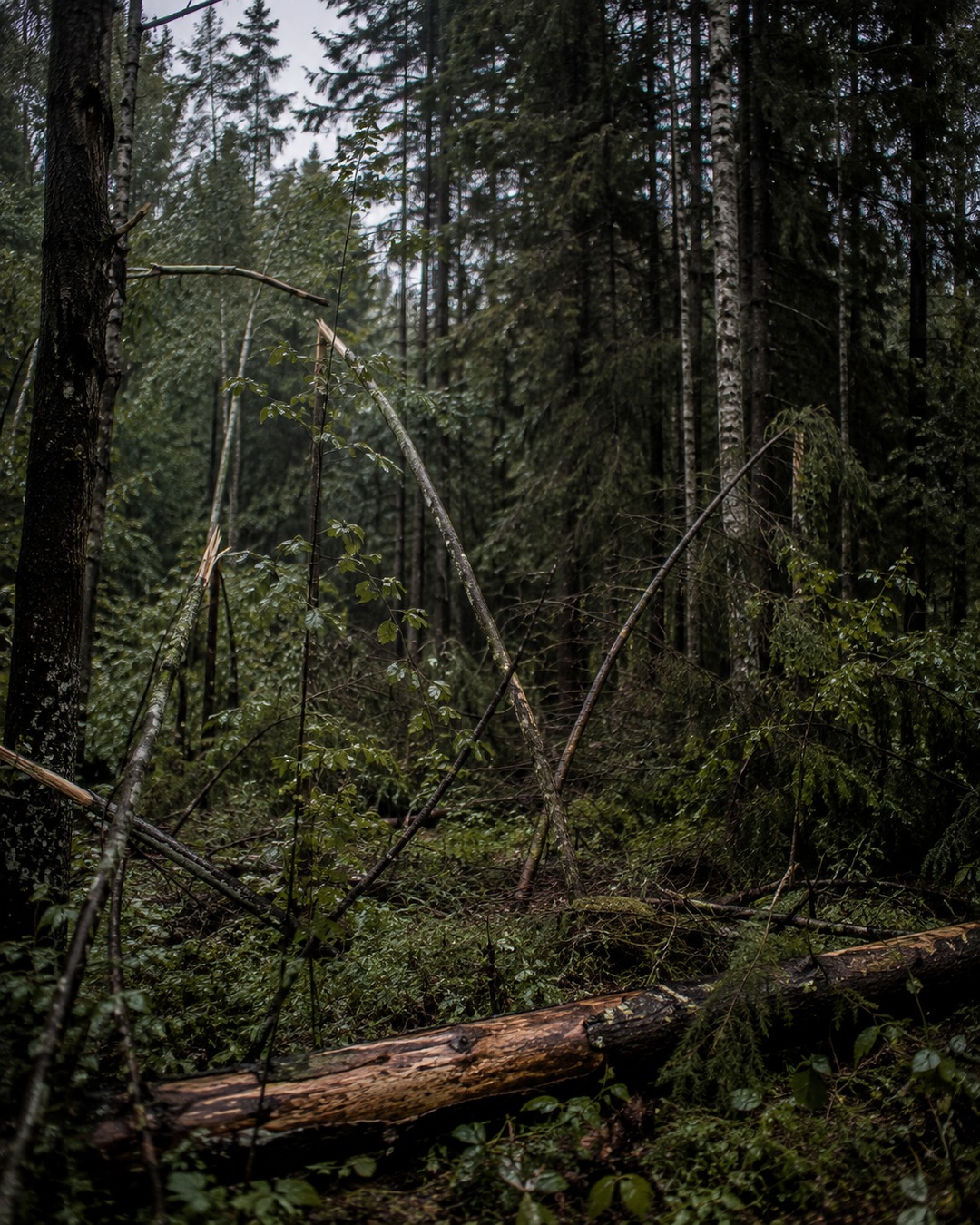
Some Bigfoot enthusiasts interpret bent saplings, arches and stick arrangements as communication or territory signs. Those interpretations should be presented as claims. Young trees can bend under snow or competition for light. People also build shelters, trail markers and art. A guide should ask how fresh the bend is, whether bark is damaged, whether the tree is alive, and whether similar bends appear nearby.
Hair, bark and contact traces
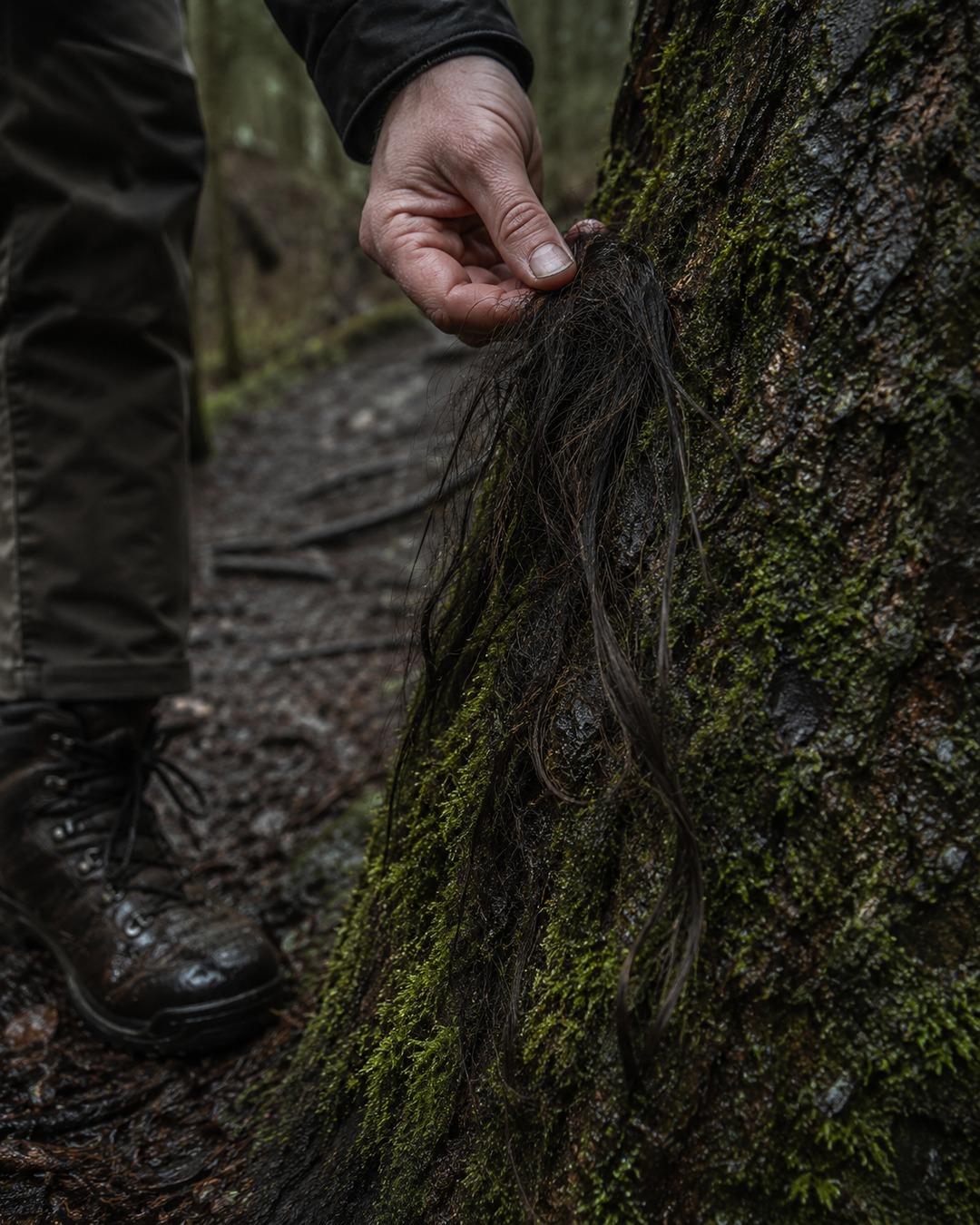
Hair caught on bark or wire is more interesting than a branch photo only if it is collected cleanly and documented. Without location notes and handling history, hair quickly loses value. Bark scrapes can come from bears, deer, tools, falling limbs or weather.
A woods-sign review checklist
Photograph wide, medium and close. Include scale. Record tree species, weather, slope, nearby trails, human access, animal sign and whether the same pattern repeats. Never crop away the ordinary forest context, because that context is where most explanations live.
When a sign becomes more interesting
A single bent branch is weak. Repeated signs along a route, combined with tracks, audio, sightings or biological material, create a better reason to document the area carefully. Better documentation does not prove Bigfoot; it simply makes the claim less vague.
Trail signs versus story signs
Some forest signs are useful because they can be tested: a scrape has height and direction, a track has measurements, a hair has a location, a break has freshness and bark damage. Other signs are mostly story signs: a branch that feels placed, a clearing that feels watched, a shape in brush. Both can be compelling, but only the first category gives much evidence to examine.
Animal behavior context
Bears rub trees, climb, break wood and leave hair. Deer create trails, bedding areas and browse lines. People make blinds, shelters and markers. Storms create dramatic breaks. A Bigfoot interpretation should only come after these ordinary forest actors are considered.
How to preserve a useful find
Do not move branches for a cleaner photo. Photograph the approach route and surrounding area. If hair is present, use clean tools and document location. If a structure is present, photograph every side and look for cut marks, footprints and nearby human trails. Evidence gets weaker when it is rearranged for drama.
A Woods-Sign Field Checklist
Start with the tree, not the story. Identify the species if possible. Note whether the break is fresh, whether bark fibers are torn or clean, whether the tree was alive, whether snow or wind recently stressed the area, and whether similar damage appears nearby. A single dramatic snap means less than a repeated pattern with context.
Look for ordinary actors. Bears rub and claw trees. Deer browse and make trails. People build blinds, shelters and markers. Storms drop limbs and bend saplings. Insects and disease weaken trunks. The forest is not a static background; it is constantly being altered by weather, animals and humans.
When Physical Context Raises the Stakes
A bent sapling near tracks, hair caught on bark, repeated breaks at consistent height and a route through difficult terrain is more interesting than an isolated branch. Biological traces only matter if they are collected cleanly and documented. Without location, date, handling notes and comparison photos, even a strange hair quickly becomes another loose story.
Logging Roads, Arches And Fresh Breaks
Many claimed Bigfoot sign reports happen near logging roads, trail edges or disturbed forest margins. Those places are important to document because they also provide ordinary explanations: machinery, cutover debris, dragged limbs, human access, vehicle disturbance, wind exposure, snow load and stressed young trees. A bent living sapling beside a logging road is more interesting when the observer records the larger pattern, not just the oddest-looking tree.
Branch arches across trails and bent-tree shapes can look intentional, especially when they appear to point toward a path or repeat in a line. That impression should be recorded carefully without jumping to a conclusion. Snow, wind, ice, disease, falling limbs, animals, people and natural growth can all create shapes that feel arranged after they are noticed.
Fresh breaks are different from old breaks, and placed branches are different from branches that simply fell. Useful notes include break height, whether the wood is bright or weathered, whether bark is twisted or cleanly snapped, whether similar damage appears nearby, whether the branch could have fallen from above, and whether ordinary tracks, saw marks, vehicle access or storm damage are present. A broken branch alone is not a species marker.
What we can and cannot say
We can say forests produce many strange-looking signs and that witnesses often connect them to Bigfoot. We cannot say broken branches or bent trees demonstrate Bigfoot without stronger evidence.
Related Weird Witnessed guides
- Bigfoot Footprints What Investigators Look For In Tracks
- Bigfoot Sounds Wood Knocks Howls Whistles Breathing Silence
Saplings, Arches And Doorway-Like Shapes
Some Bigfoot reports describe saplings bent into arches, doorway-like shapes or arrangements that seem too deliberate for ordinary forest damage. Those shapes are worth documenting, but they are weak evidence when separated from weather, snow load, animal movement, human activity, trail maintenance and natural regrowth patterns.
The useful details are practical: tree species, break height, bend direction, freshness, nearby logging or recreation, snow or wind history, repeated examples in the same stand, and whether the same pattern occurs away from the claimed sighting area. A formation becomes more interesting only when ordinary causes are carefully compared rather than assumed away.
Sources & Further Reading
- National Park Service — bear safety and behavior context
- National Wildlife Federation — black bear natural history
- USDA Forest Service — forest health and tree damage context
- BFRO — public Bigfoot reports database for claim context
Contact traces, height and surface checks
Some reports describe hand-shaped mud, hair, scrapes, or other contact marks high on bark, siding, windows, or other surfaces. A research-first review should document height from the ground, reachable branches or ledges, recent rain, mud source, animal access, human access, surface texture, and whether the mark could be transferred by a hand, paw, tool, or falling debris. A trace mark is strongest only when photographs include scale, the surrounding approach route, and repeatable context rather than a cropped close-up.
Barbed-wire hair transfer checks
Hair snagged on barbed wire or fence strands should be evaluated by strand height, fence purpose, nearby livestock, deer trails, wind direction, and whether the hair includes follicles suitable for testing. A fence snag is useful only when photographed with scale and compared against common local animals before any Bigfoot claim is considered.