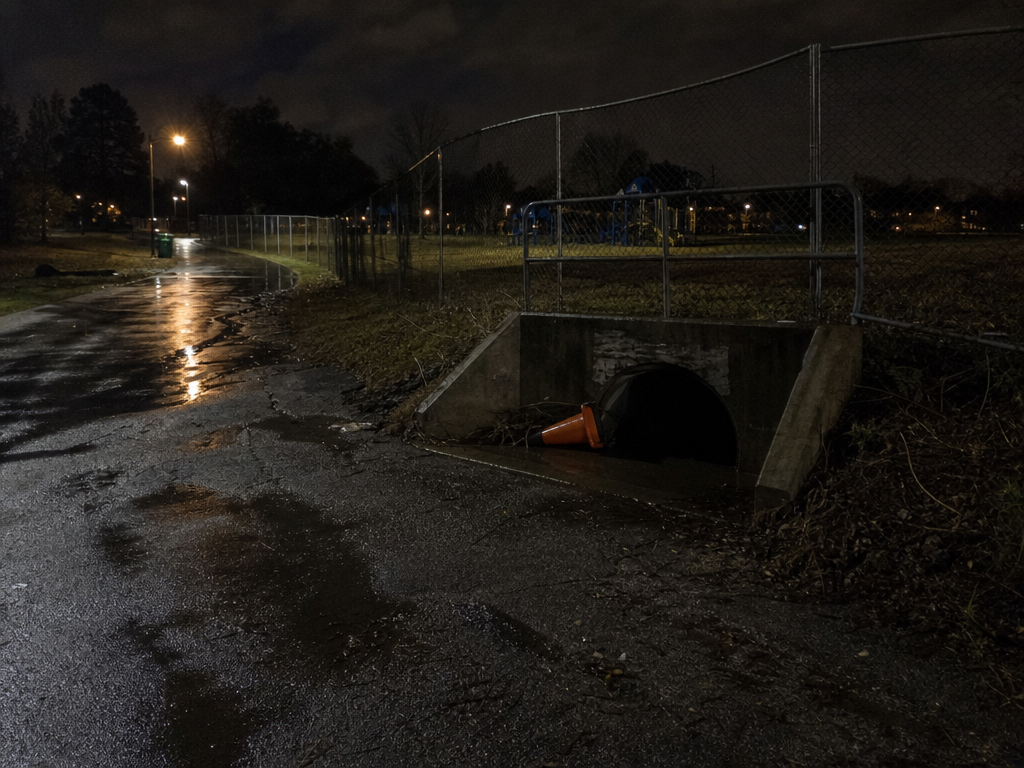
A bent orange cone is what people in the neighborhood remembered first, not the shape beside it.
The reported still came from a cheap night camera set near a storm-drain access road behind a dog park, where rainwater runs toward a concrete culvert after every hard storm.
At a glance, the account sounds like the usual mix of mud, motion blur, and animal panic that follows bad weather.
But the detail that kept the scary reconstructed moment circulating was not only the low, bent-limbed hairless form near the culvert. It was the way the cone, the scrape marks, and the wet ground seemed to line up like something had crossed the access road on purpose.
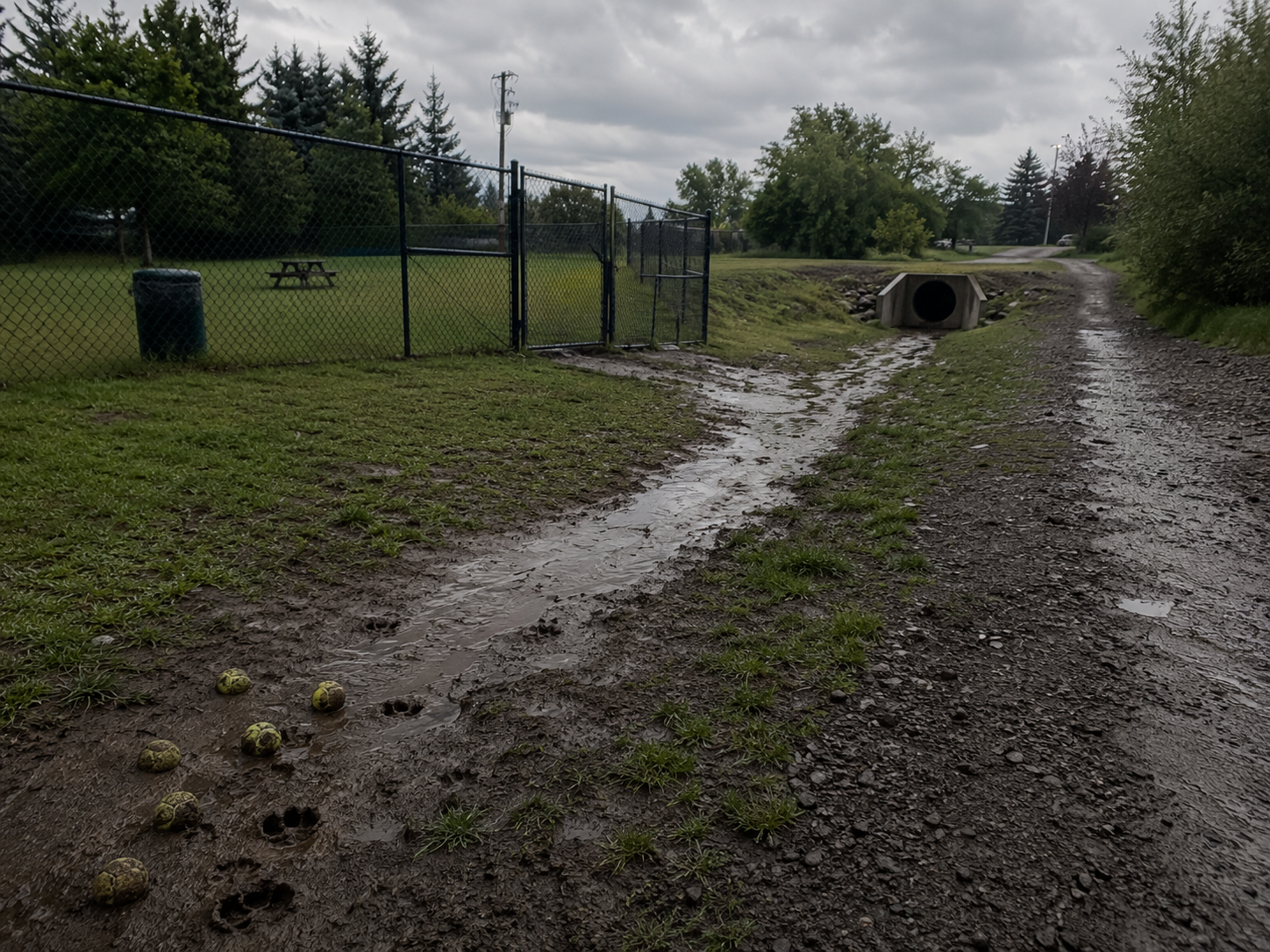
This is an editorial reconstruction of a recreated scary moment, not a claim of proof. The useful question is why ordinary storm-drain details combined into a story people kept repeating.
WHAT THE CAMERA WAS SAID TO SHOW:
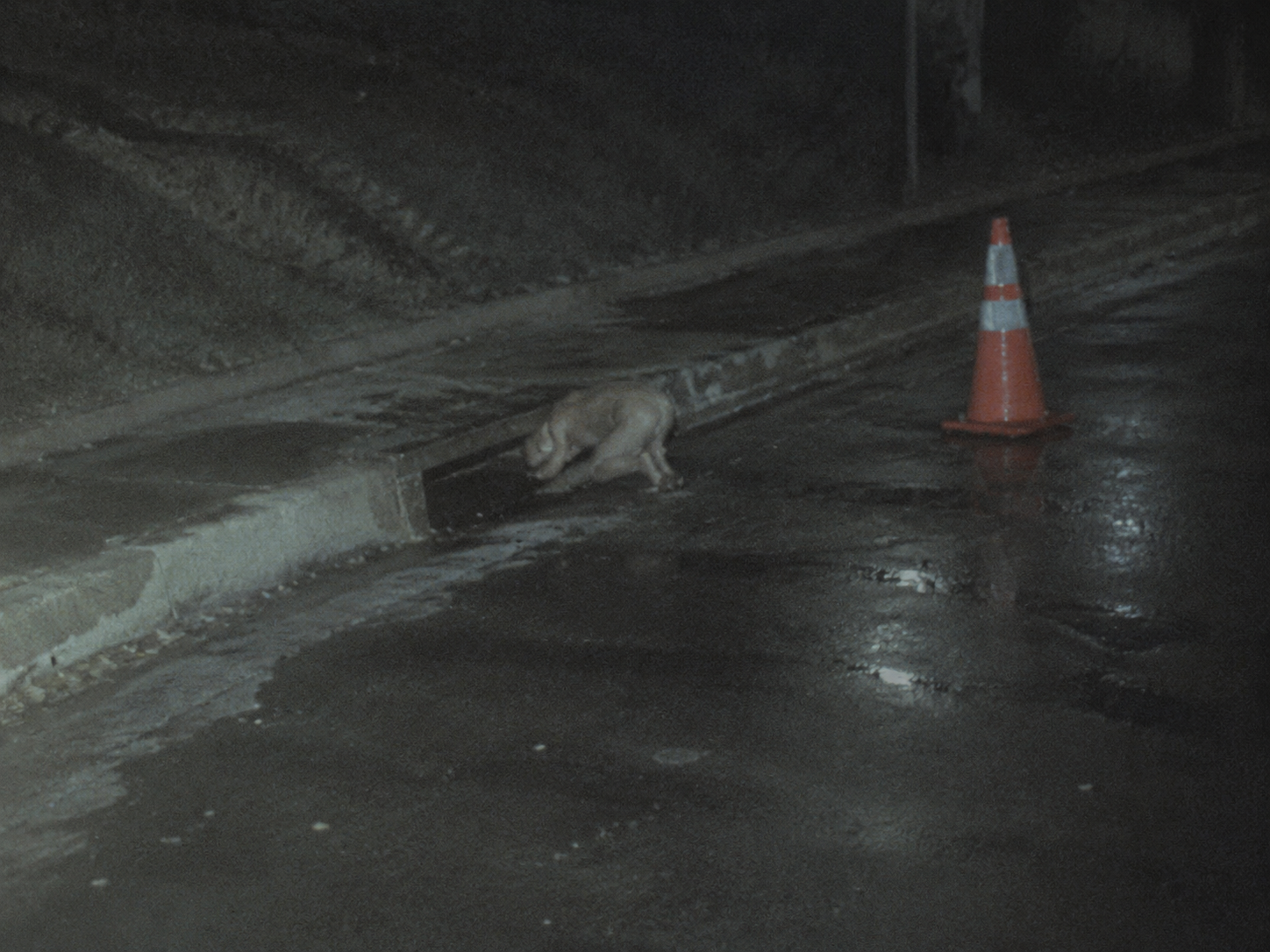
– A low, pale, hairless-looking shape near the culvert entrance.
– Front limbs or shoulders bent close to the ground.
– A traffic cone bent sideways beside the access road.
– Wet scrape marks running from the grass toward the drain lip.
– No clear face, no scale reference, and no verified original file released publicly.
– A dog park setting where ordinary animals and rumor could easily overlap.
1. The Bent Cone Made the Scene Feel Measurable
The orange cone reportedly sat near the edge of the maintenance road, where dog walkers were used to seeing it mark a soft shoulder after heavy rain.
In the still described by the account, the cone was not simply tipped over. It was bent at the middle, folded toward the culvert as if something had pressed into it while moving low.
That is why the cone became the anchor of the story. A strange shape alone can be dismissed as shadow, a raccoon, or a camera smear. A bent object beside it gives people something to compare against.
The shape was said to be lower than the cone but longer than expected for a house cat. Viewers argued over whether it looked crouched, crawling, or caught mid-step by a slow night sensor.
2. The Shape Looked Hairless, But the Camera Could Have Lied
The reported figure was described as pale, slick, and nearly hairless. That description is dramatic, but cheap infrared cameras often flatten texture.
Wet fur can turn into a smooth gray surface. A possum, fox, coyote pup, or mange-affected animal can look far stranger in rain than it would in daylight.
The dog park setting also matters. Food scraps, pet waste, standing water, and wooded drainage strips attract ordinary scavengers.
Still, the account lingered because the limbs were remembered as wrong. The front end appeared low and angular, with one limb bent sharply beneath the body. That may describe an injured animal, motion blur, or a normal animal stepping over the road edge just as the shutter caught it.
3. The Wet Scrape Marks Pointed Toward the Culvert
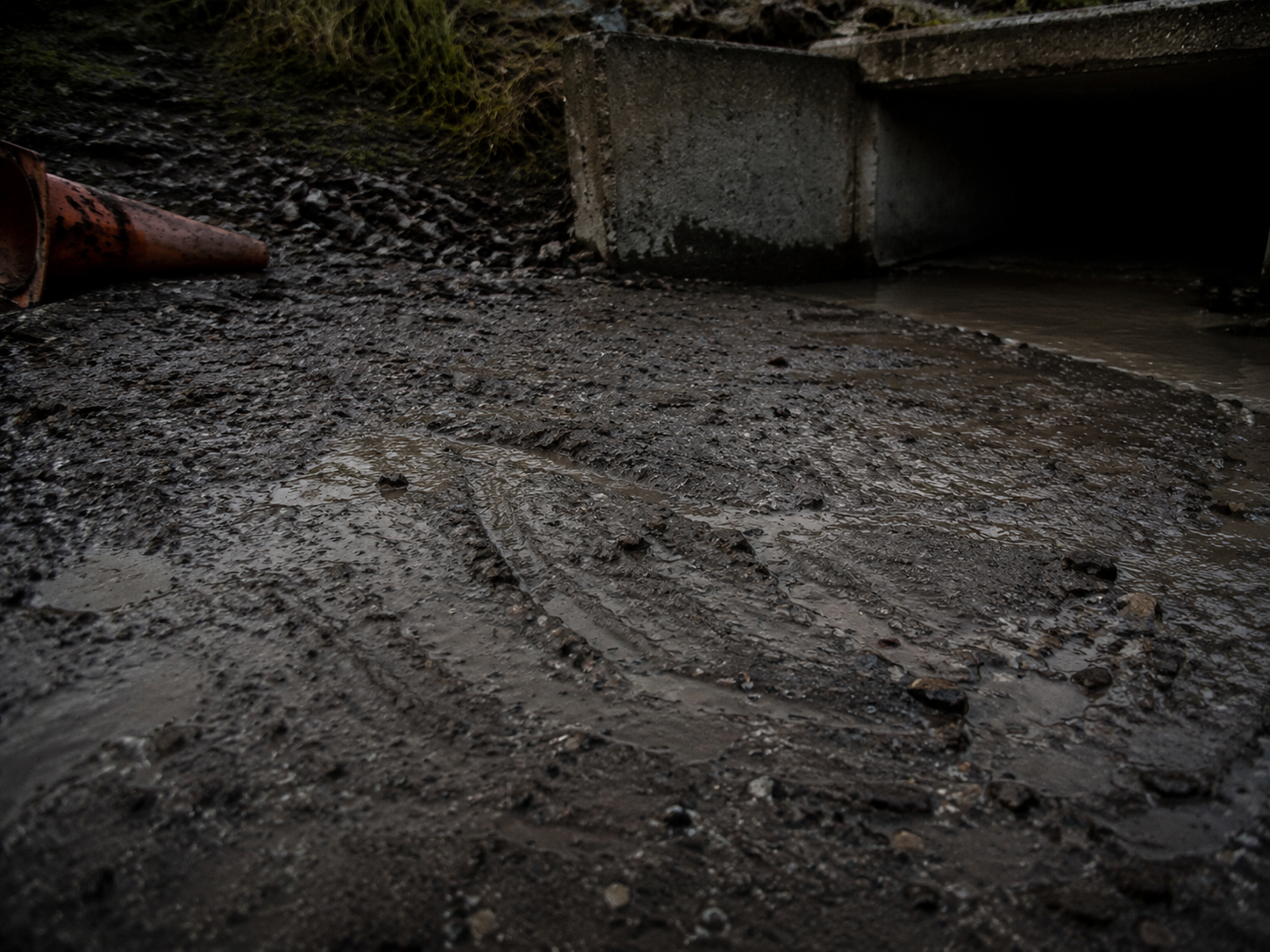
By morning, dog walkers reportedly noticed wet scrape marks near the concrete mouth of the storm drain.
They were not footprints in the clean sense. The account describes them as dragged streaks in shallow mud, broken by gravel, grass, and runoff.
A maintenance cart could have left them. A dog leash could have pulled through the mud. A branch washed down by the storm could have scraped the edge as water moved toward the culvert.
But to people already looking at the camera still, the marks felt connected. They appeared to run from the access road toward the dark opening, as if the shape had come out of the grass or gone back into the drain.
4. The Dog Park Added Noise to the Account
The location made the story more believable to some people and less believable to others.
A dog park is full of distractions. Dogs bark at raccoons, plastic bags, puddles, each other, and nothing at all. Owners remember what their pets reacted to, then rebuild the story around that reaction.
According to the local version, a few dogs had acted nervous near the back fence after storms. That may be meaningful, or it may be animals smelling runoff, wildlife, or unfamiliar mud.
The storm-drain road was not remote. It was a practical strip of pavement, grass, and chain-link fence, close enough to normal routines that a strange image could spread quickly.
5. The Culvert Gave the Story a Place to Hide
The culvert became the most important background detail. Storm drains already feel unfinished in the imagination. They connect visible places to hidden ones.
They collect trash, echo water, and turn small animal noises into something larger. In this account, the concrete opening sat behind the strange shape like an explanation and a threat at the same time.
If the figure was an animal, the drain could have been shelter. If it was a trick of light, the culvert provided the darkness that made the trick convincing.
If it was a local myth forming in real time, the drain gave the myth a doorway. No one needs to prove a creature lives in a culvert for the idea to take hold. A place only has to look like it could hide something.
The Most Reasonable Explanations Stay on the Table
The safest reading is still an ordinary animal in bad conditions. A wet fox with mange can appear hairless and thin. A raccoon turning sideways can look oddly bent. A possum near infrared light can seem pale and rubbery.
The cone may have been bent earlier by a mower, maintenance truck, bored teenager, or dog owner backing up at the wrong angle. The scrape marks may have been runoff, debris, or a leash dragged through mud.
The camera itself may have added the final layer. Low-end night cameras compress darkness, blow out pale surfaces, and stretch moving animals into shapes the eye tries to finish. None of these explanations are weak. They are exactly the explanations that should be considered first.
What an Editorial Reconstruction Can and Cannot Do
The images associated with this article should be understood as editorial reconstructions inspired by the account.
They can show the mood of the access road, the cone, the culvert, and the uneasy posture described by viewers. They cannot verify what the original camera recorded, who handled the file, or whether the scene looked the same before and after the storm.
AI-assisted visuals can help readers imagine a reported account, but they can also make a weak claim appear stronger than it is. The responsible approach is to keep the reconstruction labeled, cautious, and separate from proof language.
Why This Storm-Drain Story Still Lingers
The lasting question is not whether a named creature was captured near the dog park. The better question is why this particular scene felt wrong enough for people to remember it.
Maybe it was a sick fox. Maybe it was a possum made strange by rain and infrared light. Maybe the scrape marks and cone had nothing to do with the shape at all.
But the story has a clean visual grammar: a wet service road, a bent cone, a dark culvert, and something pale folded low beside the concrete. That is enough for a neighborhood myth to survive.
Most local legends do not begin with certainty. They begin with someone pausing at an image and saying, “What am I looking at?” This one leaves the same question behind.
The account is most believable when it stays local. It does not need to claim a new species. It only needs to preserve the way one wet corner of an access road briefly felt less familiar than it should have.
Storm drains give stories an easy doorway. They are visible enough to be photographed and hidden enough to keep the mind working after the image ends.
The dog park also gives the account a social engine. A single strange still can become a shared neighborhood question by the next morning because the same people walk the same fence line at the same time every day. They compare what their dogs noticed, what the rain changed, and what the maintenance crew moved. That repetition can sharpen a story, but it can also make coincidence feel coordinated.
That tension is why the storm-drain account works better as folklore than as proof. It belongs to the space between animal control, weather damage, and the uncomfortable thought that something unfamiliar may have used the drainage road while everyone else slept.
The most grounded follow-up would have been simple: daylight photos from the same angle, measurements of the cone, and close shots of the scrape marks before rain erased them. The account, as usually retold, does not have that full evidence chain. That limitation matters. It keeps the story in the category of recreated scary moment and reconstruction, not verified creature evidence. Still, the missing follow-up also explains why people kept talking. Without a clean resolution, every later rainstorm gave the culvert a new audience.
That question remained after sunrise.
Reader Context
This Weird Witnessed story is an editorial reconstruction, written as eerie visual storytelling rather than a verified report. For more context, see Creatures, Crawlers, and Cryptid Stories Guide and How WeirdWitnessed Creates Reconstructed Horror Stories.