The camera still is not loud. That may be why people kept watching it.
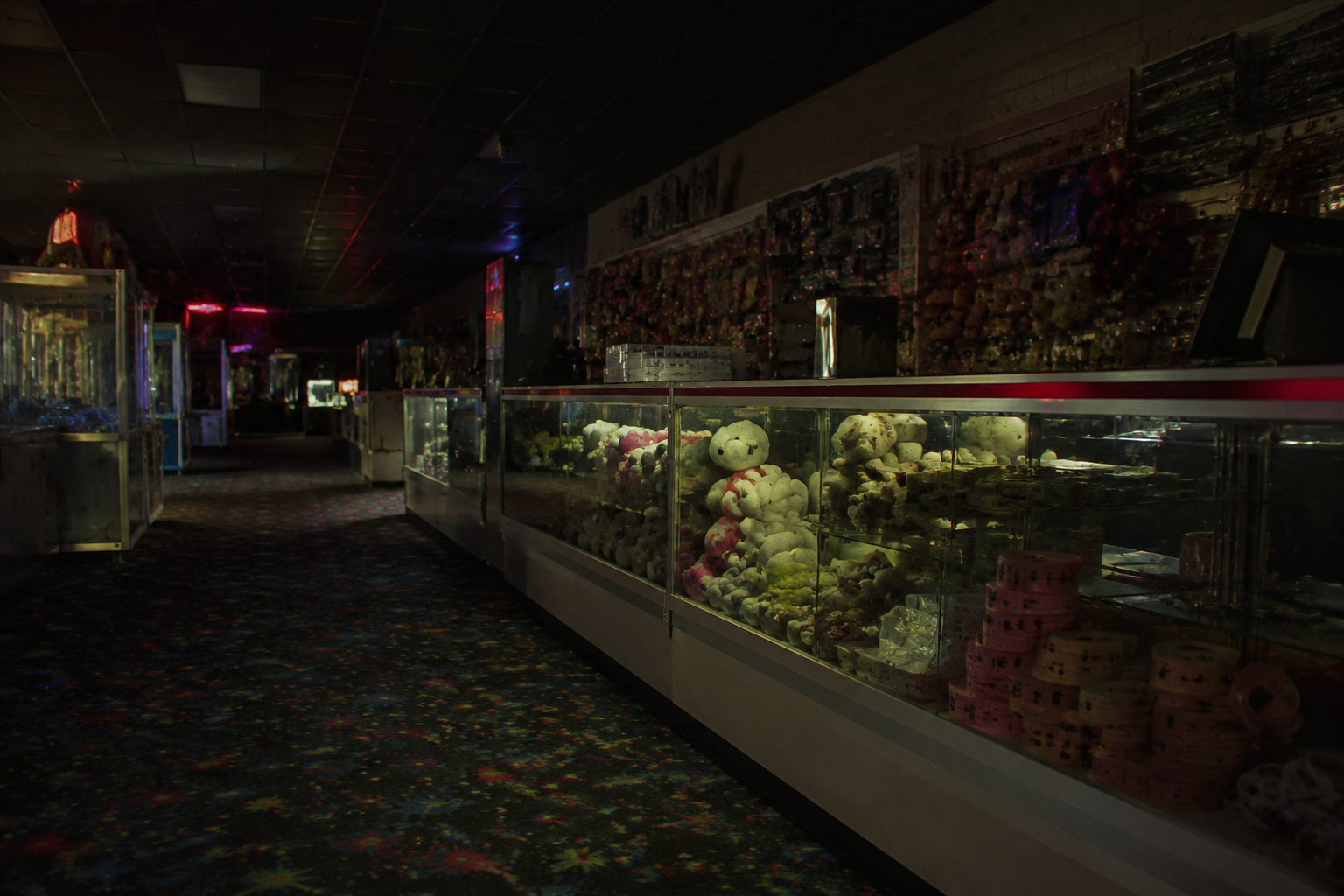
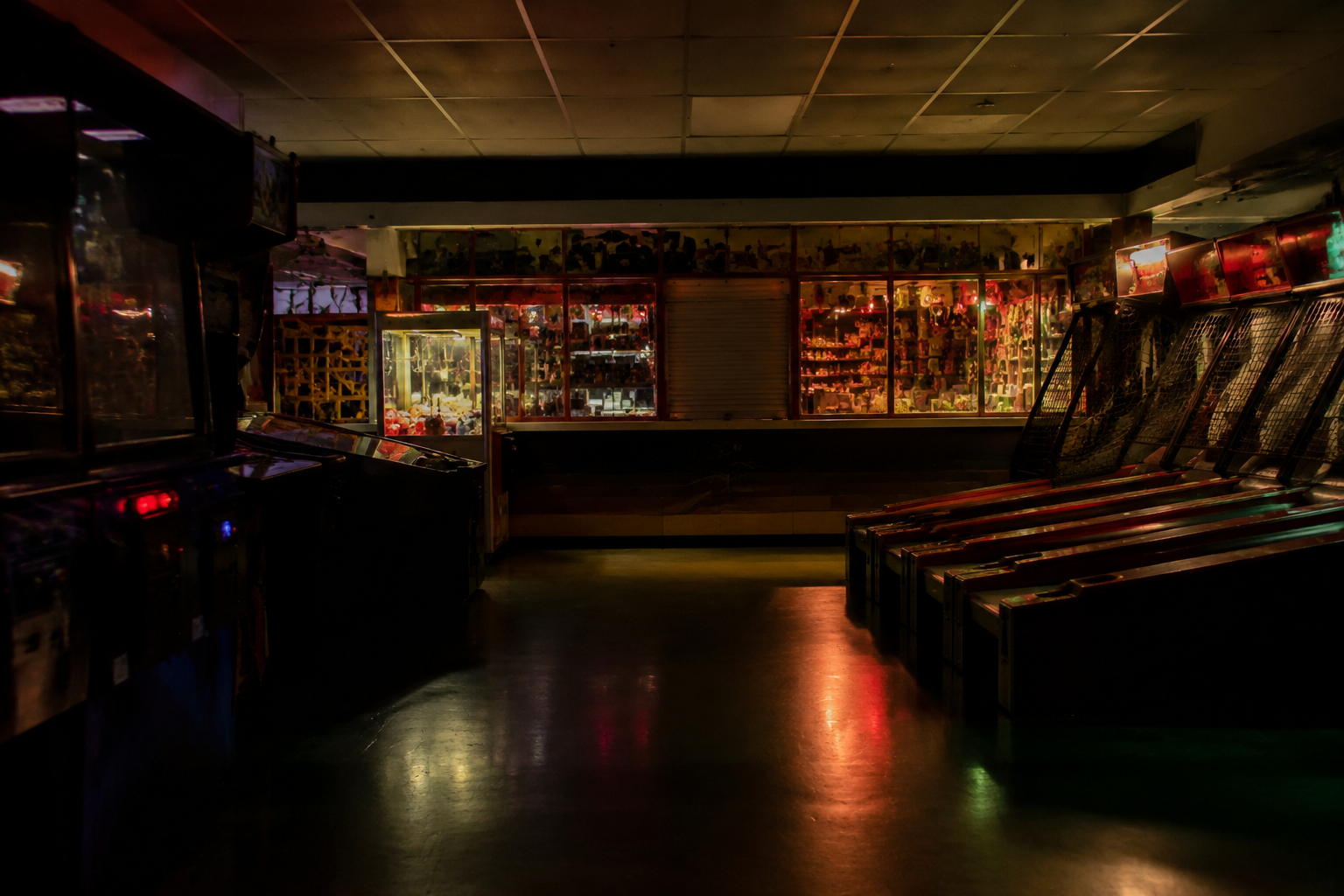
According to the local version, the camera images came from a family arcade after closing. The prize counter lights were still on, but staff had left the redemption area. The games were dark or half-asleep.
Nothing dramatic happens at first.
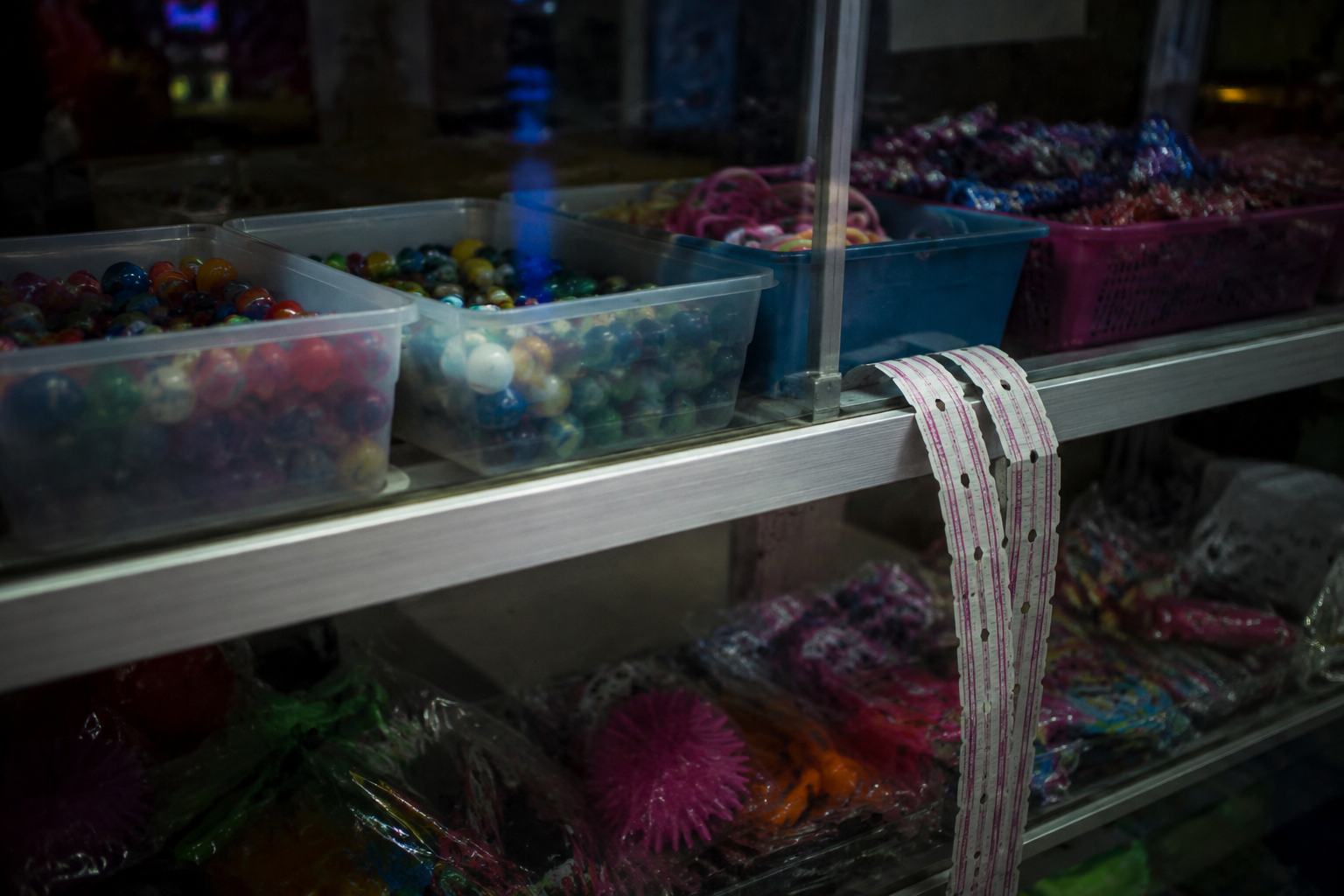
A camera looks across the prize counter from a high corner. Glass cases hold candy, plastic rings, small electronics, and plush animals. A strip of tickets hangs near the edge. Reflections blink across the glass even though nobody is standing there.
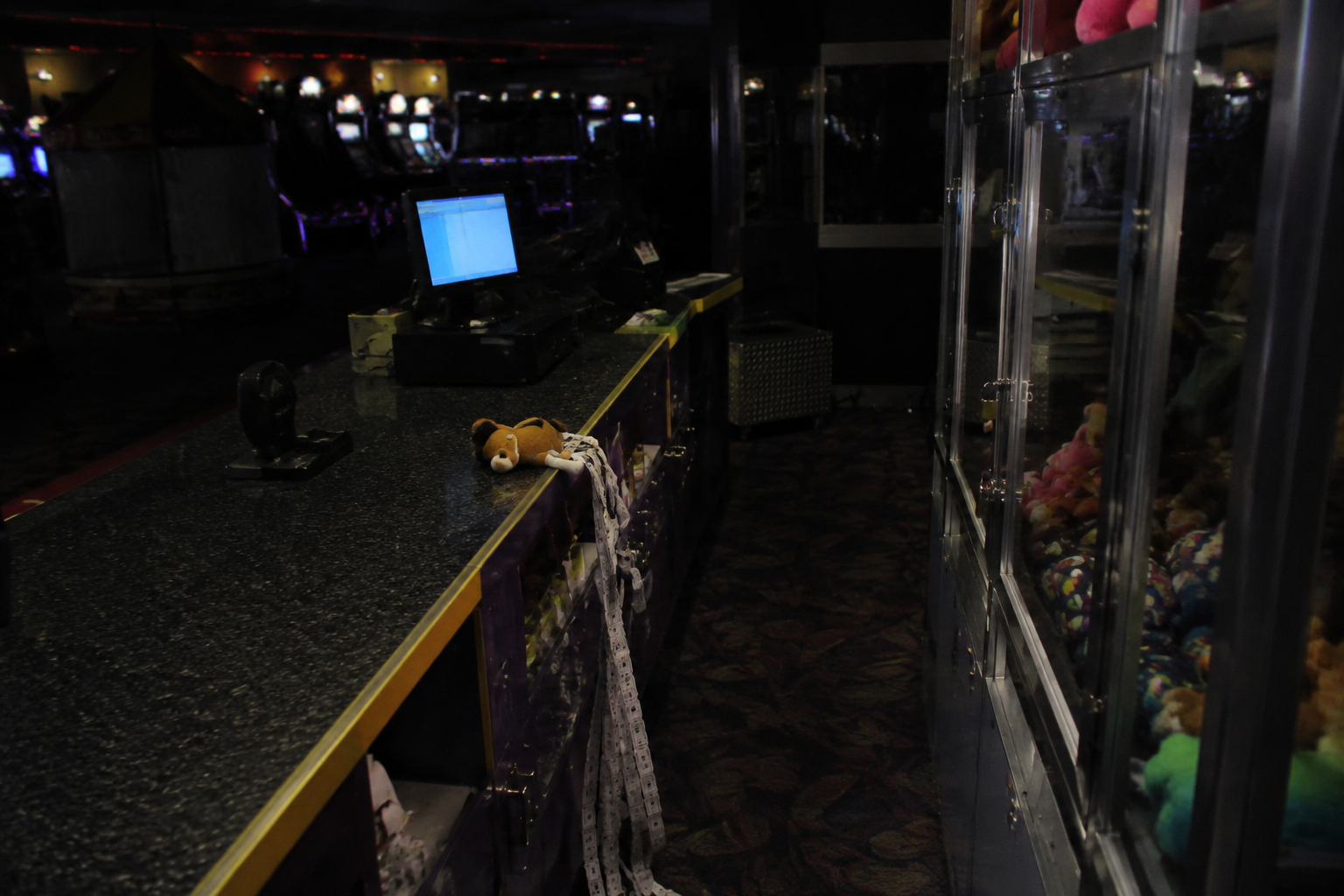
Then, in the section people replay, one small item near the counter appears to shift.
It is not enough to call a detail people read as anything. It could be a reflection, vibration, draft, camera artifact, or someone just out of frame. But the setting makes it feel stranger than it should.
WHAT THE camera images IS SAID TO SHOW
- A closed arcade redemption counter after hours.
- Locked glass prize cases with toys and candy.
- A dangling ticket strip near the edge.
- Reflections from idle game screens.
- One small prize area appearing different between moments.
1. The Prize Counter Was Supposed To Be Finished For The Night
The first reason the camera still bothers people is simple: a prize counter has a specific purpose. During business hours, it is one of the busiest places in an arcade. Kids lean over the glass. Parents count tickets. Staff unlock cases, hand over candy, and explain that one more game would not be enough for the bigger plush.
After closing, that same space becomes oddly formal.
Everything is supposed to stop. The prizes stay behind glass. The ticket scale goes quiet. The employee door is shut. The counter becomes a display nobody is meant to touch.
That shift gives the camera images its tension. If a ball moves on a skee-ball lane during the day, it is part of the business. If something shifts near the prize counter after closing, viewers read it differently.
The place has rules, and the camera still seems to show a small rule being bent.
2. The Camera Angle Makes The Scene Feel Unattended
The camera view reportedly looks like ordinary security camera images, not a dramatic phone camera file. Security cameras flatten a room. They do not follow a sound or zoom in on a figure. They sit in a corner and make everything look slightly far away.
That distance helps the story. The viewer can see enough to understand the layout, but not enough to settle every detail.
A person could be hidden behind a cabinet. A staff member could have stepped through a back door. A reflection could be coming from a game outside the frame. The camera does not clear those possibilities.
At the same time, the fixed angle makes the quiet feel convincing. No one is obviously performing for the lens. No hand reaches in. No face appears. The camera images has the dull patience of a camera that expected nothing.
That is why a tiny change gets attention.
3. Reflections Do A Lot Of Work In An Arcade
Any cautious reading has to start with reflections. Arcades are built from glass, plastic, chrome rails, glossy cabinets, and blinking screens. Even after closing, machines may throw color across a room.
A prize counter is especially tricky. Glass cases reflect the arcade, ceiling, camera light, and sometimes the person watching the monitor. A small bright shape can slide across the case and look like something inside has moved.
That could explain the camera still. A machine screen may have changed color. A rotating sign may have passed through its cycle. A monitor may have reflected in the glass at the wrong angle.
The problem is not that reflections are impossible. They are likely.
The reason viewers hesitate is that the movement seems tied to a real object near the counter: a ticket strip, a plush toy, or a small prize close to the edge. It looks less like light traveling over glass and more like a quiet adjustment in the display.
Looks can mislead, especially in low light. But they still bother people.
4. The Ticket Strip Became The Smallest Suspicious Detail
A dangling ticket strip is not frightening by itself. Tickets snag, tear unevenly, get left on counters, and hang from machines after someone forgets to feed them into the counter.
In the retelling, though, the strip is part of why the scene feels active.
Some viewers say it seems to sway or sit differently between moments. Others focus on the prize beside it. The exact object changes by retelling, which is a good reason to stay careful.
Still, the ticket strip works as a marker. If it hangs straight, then appears angled, people feel they have witnessed change.
Air conditioning could do that. A closing door could push air through the building. A loose paper strip can move from almost nothing.
But a ticket strip at a closed prize counter carries memory. It suggests customers who are no longer there, a game that ended but was not quite cleaned up.
That is the kind of detail scary reconstructed moments hold onto.
5. The Plush Prize Looked Too Deliberate To Some Viewers
The most repeated version involves a small plush prize near the glass. It does not fly across the counter or fall dramatically. It appears to shift, lean forward, or settle in a way people notice only after comparing seconds of camera images.
That kind of movement is easy to overstate online. Compression can blur edges. A changing reflection can make a toy seem to turn. Cheap plush animals slump over time.
There are also practical explanations. A shelf may not be level. A vibration from a soda machine, roof unit, or game cabinet could travel through the counter. If staff recently restocked prizes, one item might have been balanced poorly and slipped.
None of that ruins the story. It makes the story more interesting.
The camera still is remembered because the movement is small enough to feel accidental, but clear enough for people to argue about.
6. Empty Arcades Have A Strange Kind Of Silence
An arcade after closing is not the same as an empty office. It is designed to be noisy. The machines flash, beep, sing, reward, and interrupt one another. The prize counter is meant to be surrounded by voices.
When that noise is removed, the remaining lights feel out of place.
Many people who have worked in arcades, bowling alleys, or family entertainment centers know this feeling. After the doors are locked, the building still seems awake. A game cabinet clicks. A compressor hums. A machine restarts.
Those sounds do not point to anything supernatural. They point to electrical systems, cooling parts, and machines settling after heavy use.
But the mood matters. The closed arcade makes every small movement feel like it arrived late, after the crowd left.
That is why the prize counter camera still travels better than a similar camera file from a store shelf. The location carries stored noise, even when the camera record is quiet.
7. The Best Normal Explanations Are Still On The Table
There is no responsible way to discuss the camera images without leaving room for ordinary causes.
Someone may have been in the building. Staff move through areas after closing even when cameras make a room look empty. A cleaner, manager, technician, or late employee could have brushed the counter just out of view.
The object may not have moved at all. The change may be a reflection crossing glass, a camera exposure adjustment, or compression making edges pulse. Security systems are not designed for mystery analysis.
Airflow is another strong possibility. Doors open and close during shutdown. Heating and cooling systems kick on. Paper tickets and lightweight plush can react to air that people barely notice.
Vibration also fits. Prize counters sit near machines, refrigerators, change kiosks, and sometimes shared walls. A small motor can create a delayed slip if an object is already unstable.
These explanations do not feel as fun as a haunted arcade. But they are real, and they cover a lot.
8. Why The camera still Still Bothers People
The reason the closed arcade prize counter still bothers people is not that it provides a clean answer. It does the opposite.
It gives viewers a familiar place at the wrong time of day. It gives them glass that reflects too much, lights that keep moving, and cheerful objects sitting in a quiet row. Then it adds one small change that may or may not be movement.
That combination is hard to dismiss emotionally, even when the logical explanations are strong.
The camera still asks the viewer to do what people always do with unclear camera images: compare frames, watch the edges, look for a hidden hand, and decide whether the ordinary answer fully satisfies the feeling of the scene.
Maybe it was airflow. Maybe it was a reflection. Maybe an employee was nearby and the story lost that detail as it traveled.
Or maybe the camera still remains memorable because it captures something more common than a ghost: the discomfort of seeing a cheerful place after its purpose has been switched off.
The prize counter is closed. The games are quiet. The tickets no longer matter.
And for a few seconds, one little object seems unwilling to stay still.
Reader Context
This Weird Witnessed story is an editorial reconstruction, written as eerie visual storytelling rather than a verified report. For more context, see Camera Anomalies and Strange Images Guide and How WeirdWitnessed Creates Reconstructed Horror Stories.