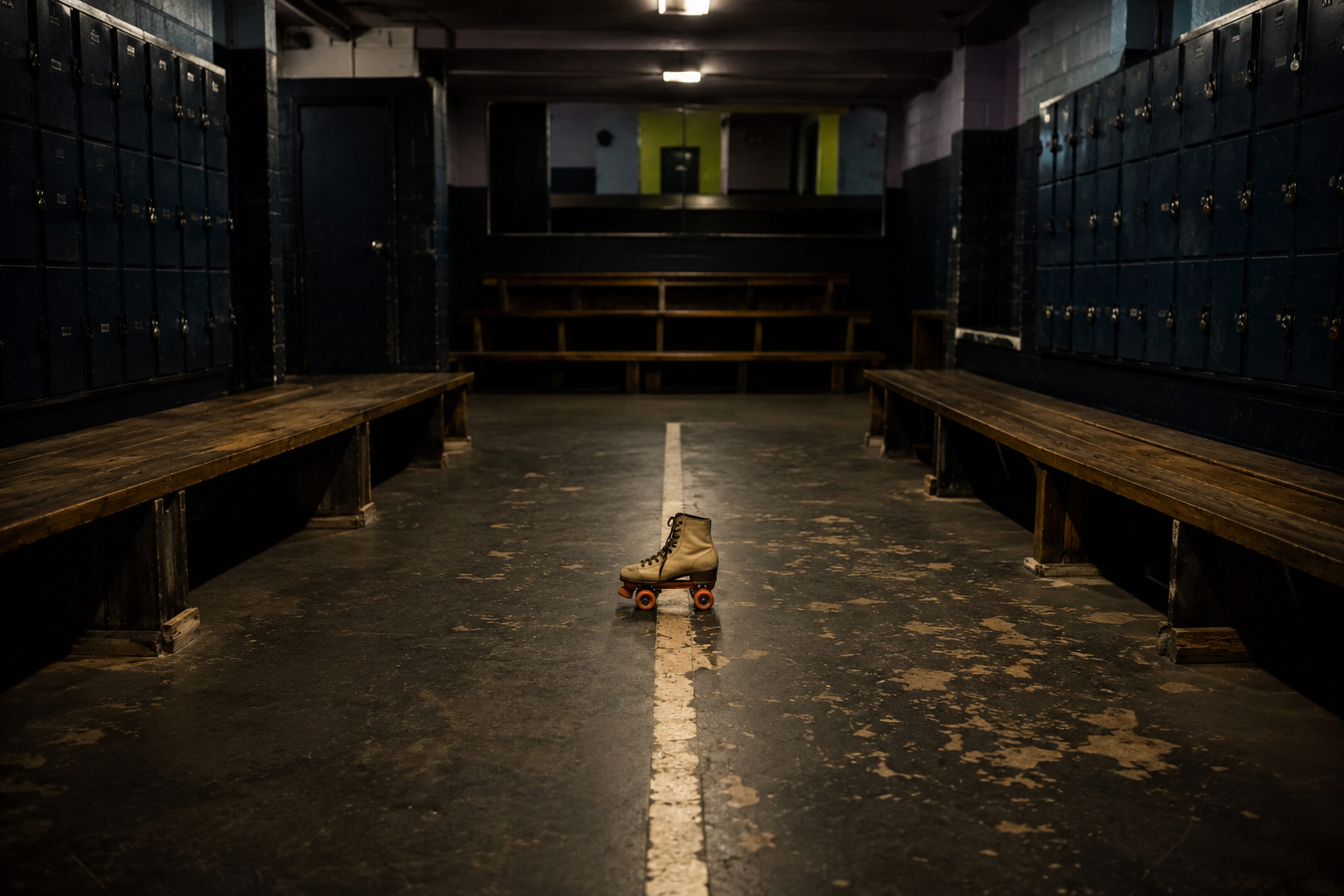
The photo is ordinary until you notice where the skate is sitting.
According to the rink story, it was taken after closing, when the music had been shut off and the rental shelves were being checked. The locker room was empty. The benches were clear. The floor had been swept enough to show the long center line running through the room.
On that line sat one rental skate.
Not a pair. Not a forgotten shoe tucked under a bench. One skate, upright, centered in a way that felt almost staged. The part that made staff uneasy was not only the skate itself. It was the wall mirror behind it, which seemed to reflect the room with a slightly different feeling than the room had in front of the camera.
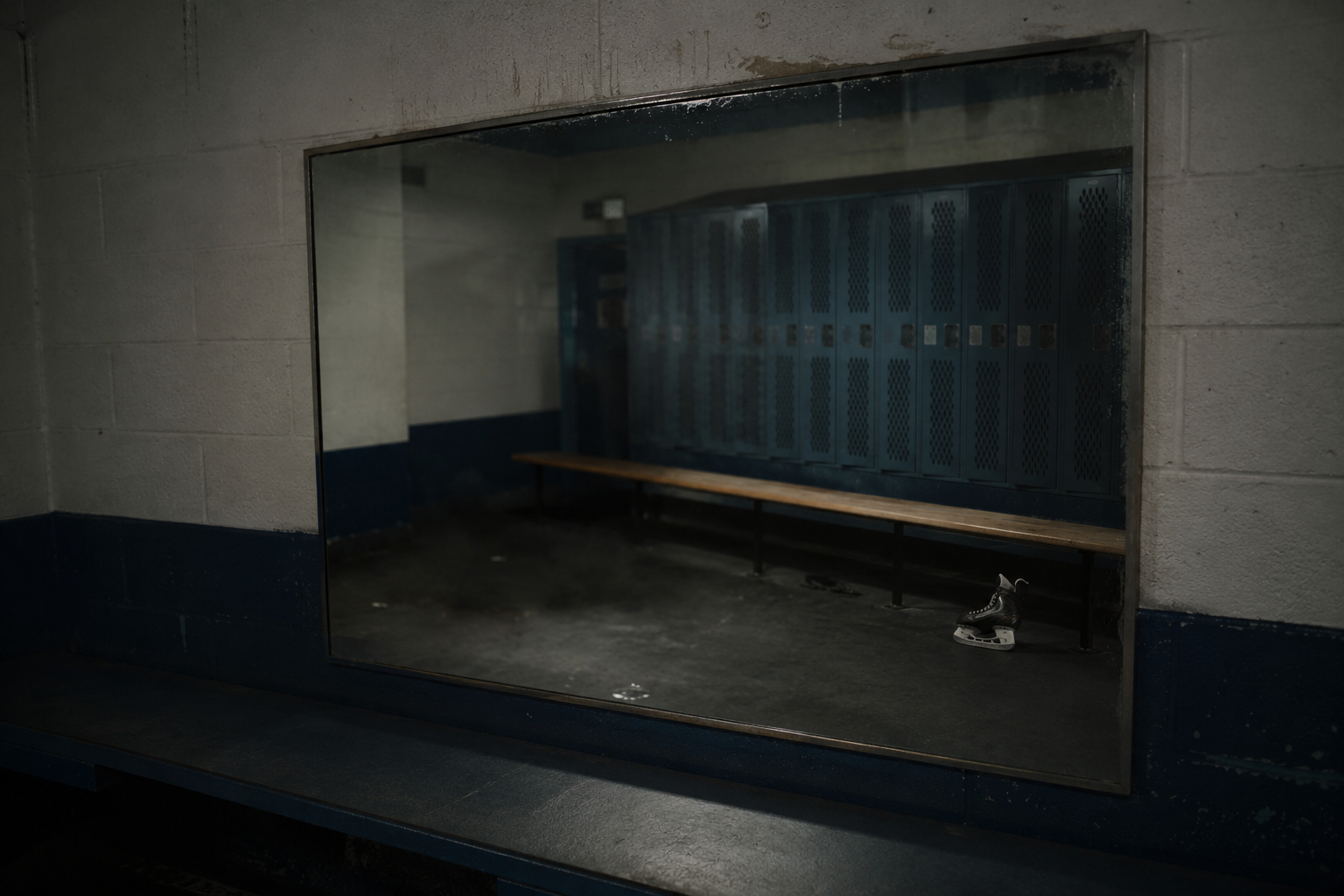
No one should treat the image as a detail people read as anything supernatural. A skate can be left behind. A mirror can bend a room into strange shapes. But the photo has the kind of quiet detail that makes people keep looking.
WHAT THE PHOTO IS SAID TO SHOW
- A closed skating rink locker room after hours.
- One rental skate sitting alone on the painted center line.
- Benches and lockers with no obvious person present.
- A wall mirror reflecting part of the empty room.
- Staff saying the reflection felt wrong enough to mention.
1. The Locker Room Was Supposed To Be Reset
Skating rink locker rooms have a rhythm. During open skate, they are noisy and half chaotic. Kids trade shoes for rentals. Parents lean on benches. Someone is always looking for the other skate, the right size, or the friend who already went back onto the floor.
After closing, the room changes quickly.
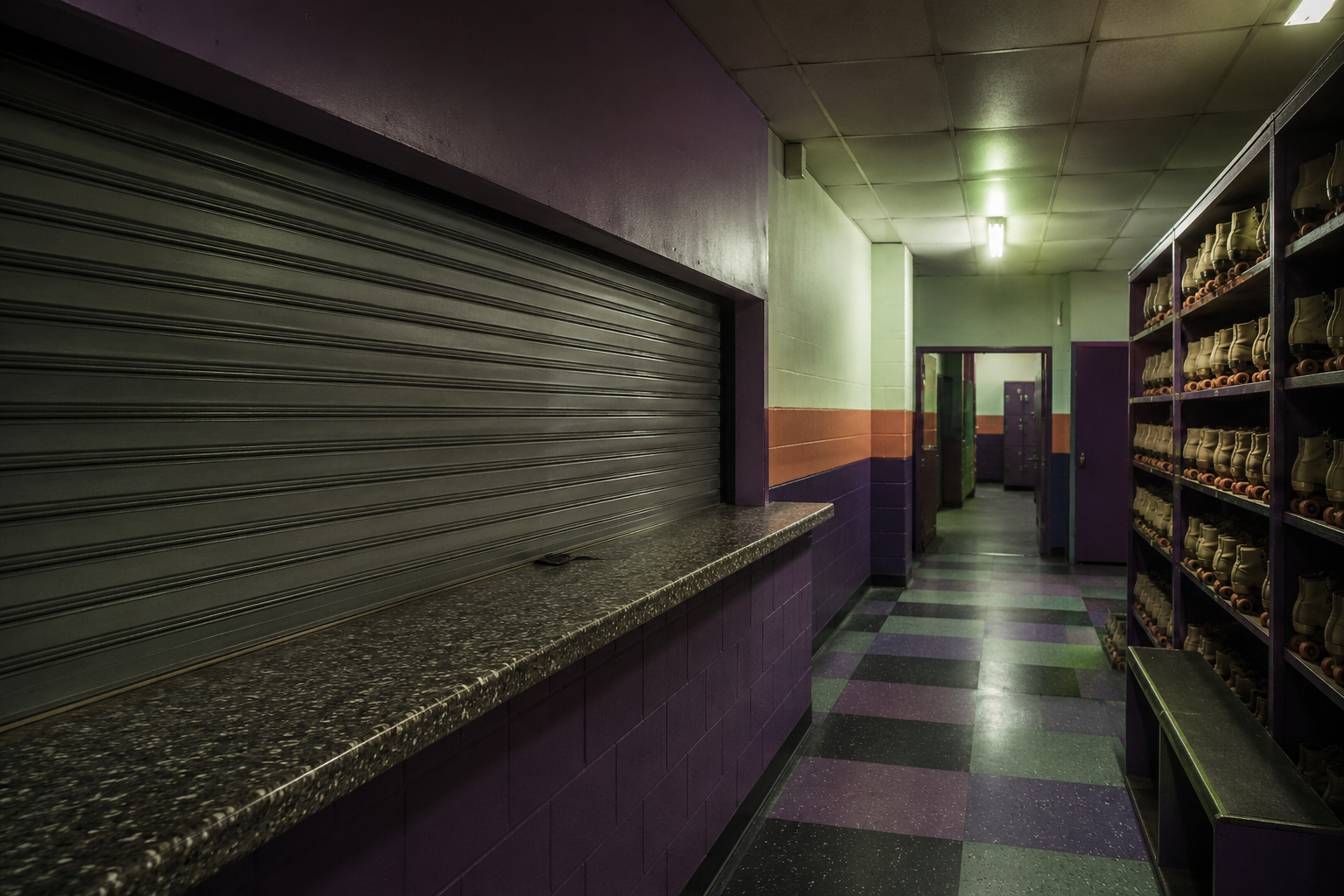
The benches get cleared. Rental skates go back to their shelves. Lost socks, wristbands, and water bottles are collected. The room is supposed to look boring again, because boring means the night is finished.
That is why one skate in the center matters to the story. It interrupts the reset. It is not hidden in a corner where a customer might forget it. It is not under a bench where it could have rolled. It sits where the eye naturally follows the line on the floor.
The placement gives the photo its pull.
2. A Single Skate Feels Stranger Than A Pair
A pair of skates would be easier to explain emotionally. Someone changed quickly and forgot both. A child carried shoes out in a hurry. A staff member set a pair down while cleaning.
One skate feels different.
It suggests an incomplete action. The matching skate must be somewhere else. Either someone separated the pair, or the lone skate came from a shelf, or it was already there and no one noticed until the room was quiet.
Of course, rental skates get separated constantly. Staff members know that better than anyone. One skate can be left near a bench while its mate is returned by mistake. A customer can carry one out and one back. A cleaning pass can move items without anyone remembering the exact order.
The unease comes from how intentional it looks in the photo. The skate is not dramatic. It is just too centered to ignore.
3. The Center Line Gives Viewers A Measuring Tool
The floor line is the most important visual detail. Without it, the skate would simply be somewhere in the room. With it, the skate appears placed.
Lines make people judge position. A line tells the viewer what counts as centered, crooked, or deliberate. If the skate sits directly over it, the room suddenly feels arranged around that object.
That may be a trick of composition. The person taking the photo may have stood in a spot that made the skate look more centered than it really was. Phone cameras can flatten distance. A slight angle can make a messy placement look exact.
Even so, the center line is why the image works as a local mystery. It turns a lost item into a marker.
People are not just asking why a skate was left. They are asking why it was left there.
4. The Mirror Is Where The Story Gets Uncomfortable
Mirrors complicate simple rooms. They create extra space that is not really there, show angles the camera did not mean to feature, and make viewers feel as if a second version of the scene is watching back.
In the skating rink photo, the mirror reportedly reflects benches, lockers, and part of the floor behind the camera angle. Nothing has to be visible in the reflection for it to feel strange. Sometimes the problem is the opposite: the reflected room looks empty, but not settled.
Staff who saw the photo allegedly said the mirror was what made them stop. The reflection seemed to make the locker room feel deeper than it was. Some viewers thought a dark vertical shape near the reflected lockers looked like someone standing off to the side. Others said it was probably a bench leg, a jacket hook, or the edge of the mirror frame.
Those ordinary possibilities are strong. Mirrors collect shadows and stretch them.
But once someone points at a reflection, the photo becomes harder to dismiss quickly.
5. Fluorescent Light Can Create False Figures
A cautious reading has to give the lighting its chance. Closed rink locker rooms are rarely lit like clean studio spaces. Fluorescent tubes flicker. Some panels are dimmer than others. Scuffed floors throw back long patches of light.
A mirror under that lighting can produce shapes that look almost human for a second. Dark lockers become shoulders. Bench gaps become legs. A reflected doorway becomes a narrow body. If the camera is slightly blurry, those shapes get softer and more suggestive.
That does not mean anyone lied about feeling uneasy. It means the room had the right ingredients for a false impression.
The strange part is how the skate and mirror work together. If the mirror alone looked odd, people might blame lighting. If the skate alone was centered, people might blame a staff member. Together, they make the scene feel arranged.
That feeling is not evidence, but it is memorable.
6. Staff Unease Is Part Of The Context, Not Proof
Creepy reconstructed moments often feel stronger when the setting has familiar workplace details. Staff know what belongs in a room. They know which door sticks, which shelf rattles, and which corner always looks creepy on camera.
That familiarity matters. If a stranger took the photo, the single skate might be easy to brush off. If employees were the ones bothered by it, listeners assume they noticed something outside the normal pattern.
Still, staff reaction should not be turned into proof. People working late are tired. Closing routines are repetitive. A quiet room that was full of noise an hour earlier can feel wrong for completely natural reasons.
The valuable part of the reaction is not that it confirms anything. It tells us why the image spread. Someone who knew the rink looked at the photo and did not like the way it felt.
That is enough for a WeirdWitnessed-style story.
7. The Missing Matching Skate Keeps The Question Open
One practical question sits under the whole photo: where was the other skate?
If the matching rental was on a shelf, the lone skate may have been carried out by mistake during cleanup. If it was under a bench, the center-line skate may have been nudged there by a mop, a foot, or a rushed employee. If it was never found that night, the story gets a little more interesting, but still not impossible.
Rental systems are messy. Sizes get mixed. Pairs get separated. Old skates are repaired, retired, or swapped between racks.
The reason the missing mate matters is that it gives the photo a before-and-after feeling. A pair belongs to daily business. A single skate on a line looks like a message, even when it probably is not one.
That is how ordinary objects become unsettling.
8. Why This Rink Photo Still Gets Shared
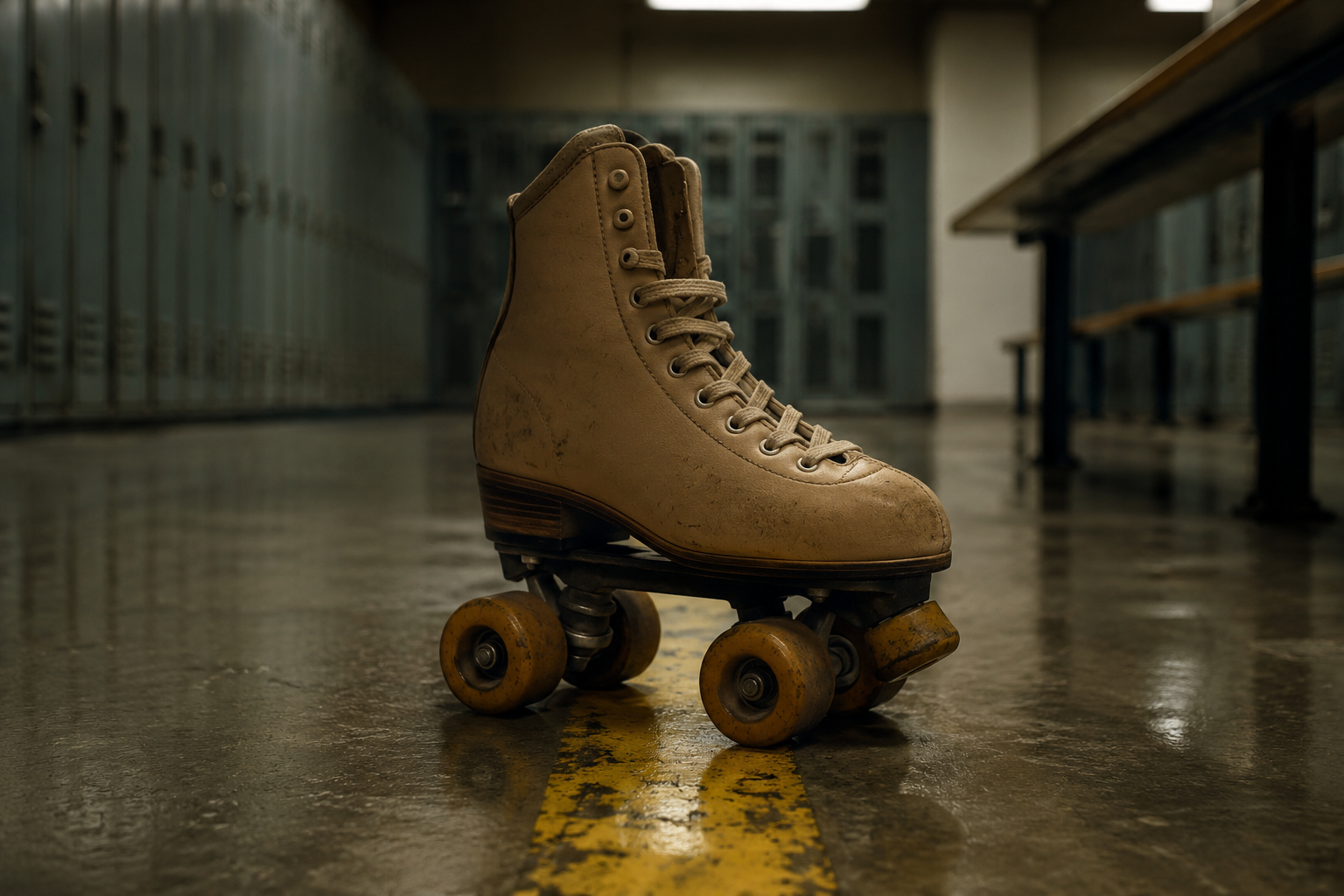
The image lasts because it does not ask viewers to accept too much. There is no clear ghost face, no floating object, and no dramatic claim. There is only an empty locker room, one skate in a too-noticeable place, and a mirror that invites inspection.
That restraint makes it easier to discuss. Skeptics can point to lighting, reflections, staff error, and camera angle. Believers can point to placement, timing, and the discomfort of people who knew the building.
Both readings can sit in the same room.
Maybe the skate was forgotten during cleanup. Maybe someone set it down for a joke and forgot to admit it. Maybe the mirror turned normal shadows into something with posture. The photo does not settle the question.
What it does capture is the exact moment an ordinary place stops feeling routine. A closed rink should be still, practical, and empty. In this story, it was almost all of those things.
Except for the skate on the line.
And the mirror behind it.
Reader Context
This Weird Witnessed story is an editorial reconstruction, written as eerie visual storytelling rather than a verified report. For more context, see Apparitions and Hauntings Guide and How WeirdWitnessed Creates Reconstructed Horror Stories.