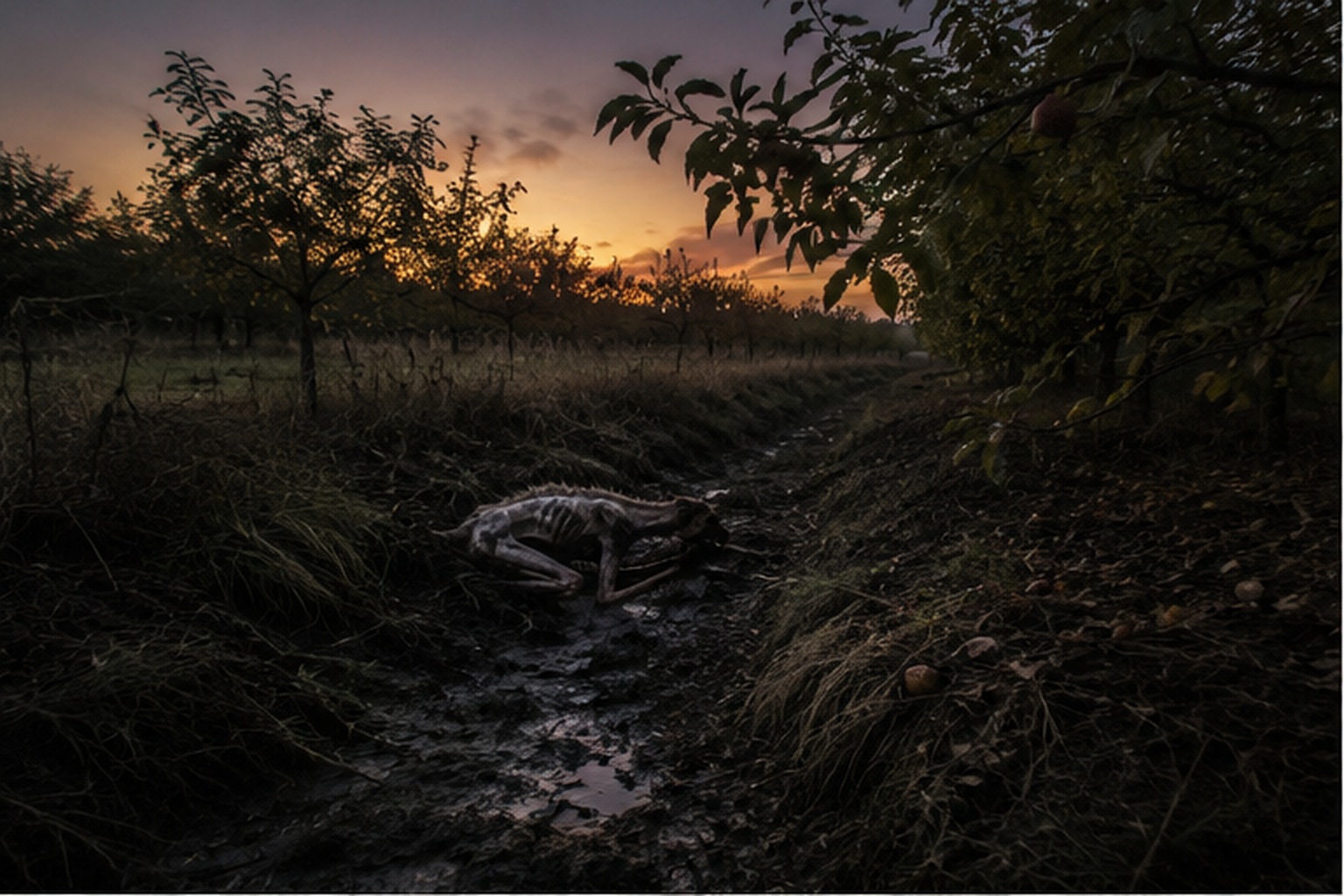
The first neighbor to mention the ditch said it sounded like wet sticks being dragged through leaves.
That was not unusual by itself. The abandoned apple orchard behind the houses was full of sounds after dark. Branches rubbed together. Raccoons fought over fallen fruit. Water moved through the drainage trench whenever rain came down hard enough to flood the back lots.
But the sound did not stay in one place. It traveled along the ditch line, slow and deliberate, with a soft scrape, a pause, then another scrape.
When a porch light clicked on, something in the weeds stopped. Then it went on crawling.
The Orchard Nobody Wanted To Walk Through
The apple orchard had been left alone for years. The owner died, the heirs argued, and the trees kept growing until their branches crossed over the rows and turned the place into a low tunnel of thorns, fruit rot, and old irrigation pipe.
A drainage ditch ran along the south edge, separating the orchard from a line of backyards. In summer, it was mostly dry, a cut in the ground filled with grass. After storms, brown water moved through it and carried leaves, apples, and field mice toward the culvert.
Children were told not to play there because of ticks, snakes, and broken glass. Adults avoided it because the orchard felt watched even at noon. By late October, the ditch had become a black seam behind the houses.
Something Low In The Grass
The second report came from a man taking garbage to his bin after dinner. His motion light snapped on and threw a harsh white square across the lawn. Beyond the fence, the ditch grass shifted.
At first he thought it was a deer bedded down in the weeds. Then the shape unfolded wrong. He described a narrow body, pale and dull, with ribs showing along the side like hoops under old leather. It was down in the ditch, not standing above it. Its back rose only a little higher than the grass. One limb reached forward and planted against the mud, thin as a branch and bent at a hard angle. The animal pulled itself ahead without lifting its belly much from the ground.
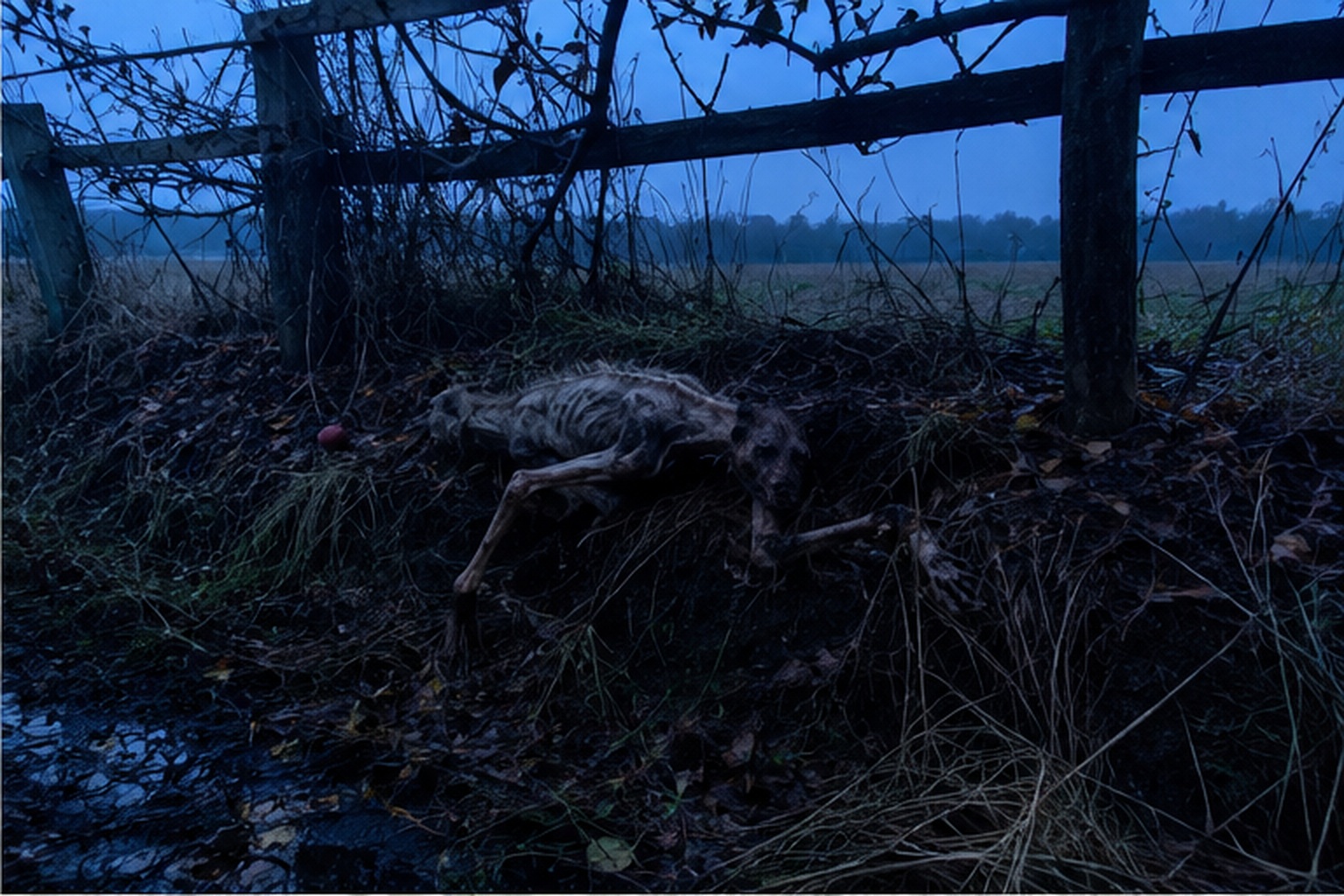
He said it was not a dog. It was not a coyote. It did not have the right shoulders, the right head height, or the quick bouncing trot of a canine. It moved like something built to crawl under things.
The Crooked Stick Limbs
Neighbors who compared stories kept returning to the same words: crooked, jointed, stick-like. Not paws exactly. Not hands. The forelimbs seemed too long for the body, with sharp bends that made them look broken even while they worked.
One woman saw the creature from her kitchen window as it passed under the old wire fence. She said the body was hairless in places and patchy in others, with dirty gray skin showing through sparse bristles. The spine made a ridge from shoulders to hips. The torso was narrow enough that she could see the grass behind it when it turned sideways.
The head stayed low and forward. She did not describe a face, only a wedge-like dark shape nosing through the ditch weeds.
That mattered. The stories did not turn it into a tall figure or a person pretending to be an animal. It was animalistic from every account, wrong in proportion but committed to the ground.
The Night At The Culvert
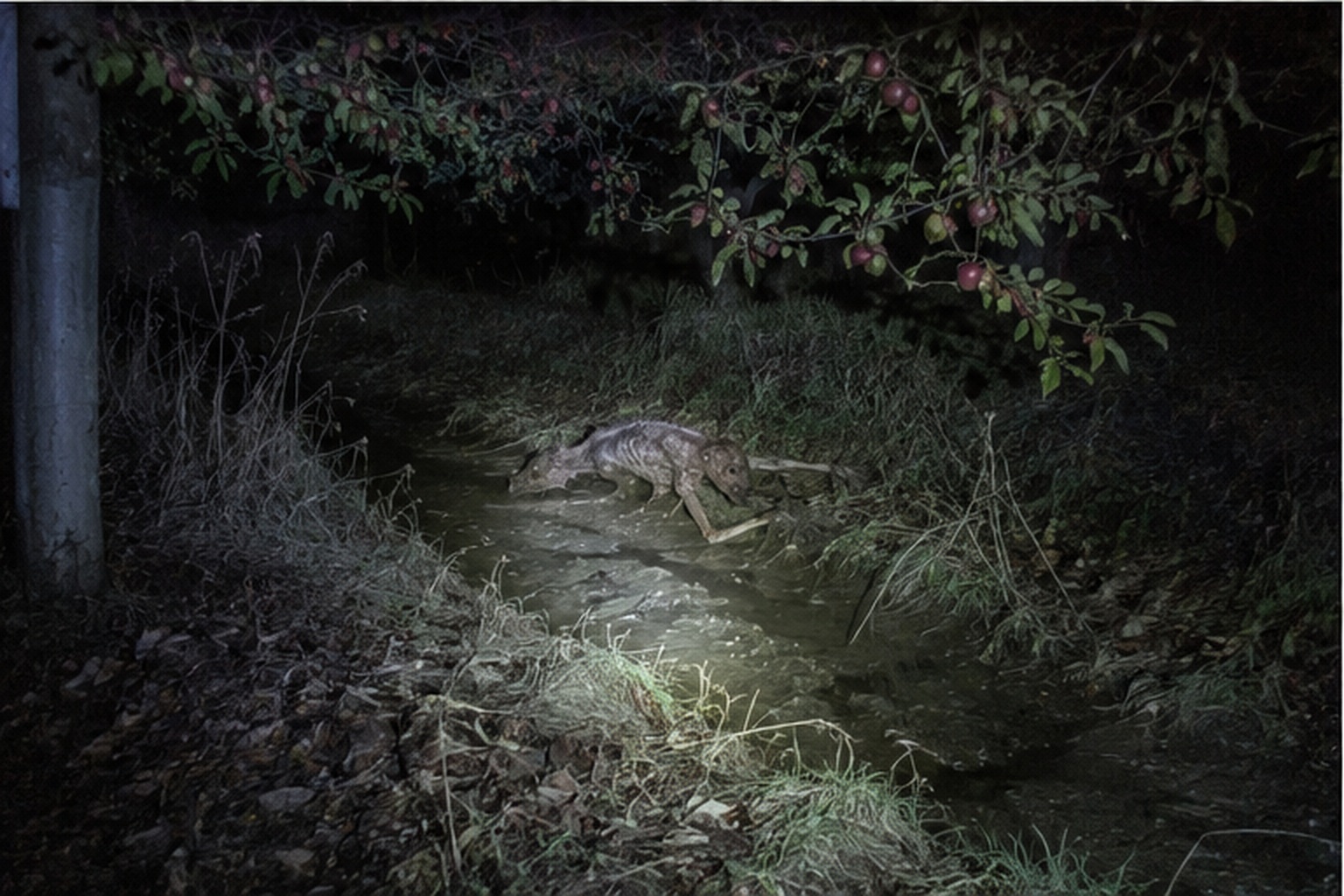
Water had pooled behind the road grate, and the ditch smelled of mud, fermenting apples, and wet fur. A neighbor went out with a flashlight because his small dog would not stop barking from inside the house. The dog was not at the fence. It was hiding under the kitchen table, barking toward the orchard with its hackles raised.
The man stepped into the yard and swept the beam along the ditch. At the culvert mouth, something pale pressed itself into the mud.
The light crossed a ribbed side, a slick shoulder, and two thin limbs folded under the body at angles that made his stomach twist. The creature was partly hidden by grass and a fallen apple branch, but he could see enough to know it was not shaped like any sick coyote he had ever seen.
It turned without standing. Not a leap. Not a run. A low pivot, as if the whole body were hinged close to the earth. Then it slid backward under the branch and vanished into the ditch grass.
What The Neighbors Found
The next morning, three neighbors walked the ditch together with boots and a shovel handle for poking through weeds. They found flattened grass along the bank and a trail through the mud where something had dragged its belly.
There were prints, but not clean ones. The soil had been too wet, and the ditch bottom was cluttered with roots. Some marks looked like narrow toes. Others looked like punctures from sticks. In a few places, the mud was scraped in pairs, as though thin limbs had pulled forward and sunk.
A patch of pale hair or fiber clung to a thorn near the fence. Nobody wanted to touch it. One person said it looked like deer hair. Another said it looked more like dry grass stuck with grease.
They also found half-eaten apples split open in the ditch, and one dead possum near the culvert, though scavengers could explain that easily. Nothing they found was enough to settle the question. It only made the ditch feel used.
The Sensible Explanations
Coyotes with mange can look hairless and skeletal. Sick foxes can move strangely when their skin burns and their joints ache. A deer injured by a fence or car might crawl through a ditch with its legs folded under it. Raccoons and possums can appear deformed when wet, especially in a flashlight beam through grass.
The orchard also distorts scale. Branches break up a body. Weeds hide legs. Fear adds length to limbs and hollows out faces in memory. A neighbor who expects a coyote may see one wrong angle and feel certain it is something else.
Those explanations are fair. They are probably where any serious conversation should begin. But the neighbors kept rejecting the simplest animal answers for the same reason: the thing was too low, too narrow, and too deliberate in the ditch.
Why It Was Called Skinwalker-Like
The word skinwalker entered the neighborhood the way such words often do: not as a careful cultural claim, but as a frightened shorthand for an animal that seemed dressed in the wrong body.
People used it because they lacked a better phrase. The creature was not described as a human-type figure. It did not stand, wave, grin, or look through windows with a human face. It was not a person on all fours. It was a gaunt, animalistic crawler with a ribbed body and limbs that looked grown from dry sticks.
That distinction matters because the fear came from its refusal to become familiar. A dog has a rhythm. A coyote has a silhouette. Even a mangy fox reveals itself after a few seconds.
This thing remained partial: flank, limb, shoulder, wedge of head, then grass. The more people tried to name it, the less it sounded like anything living nearby.
The Orchard After Midnight
After the culvert sighting, the houses along the orchard changed their habits. Porch lights stayed on. Trash went out before sunset. Dogs were called in early. Children were told that the ditch bank was collapsing, which was true enough to be useful.
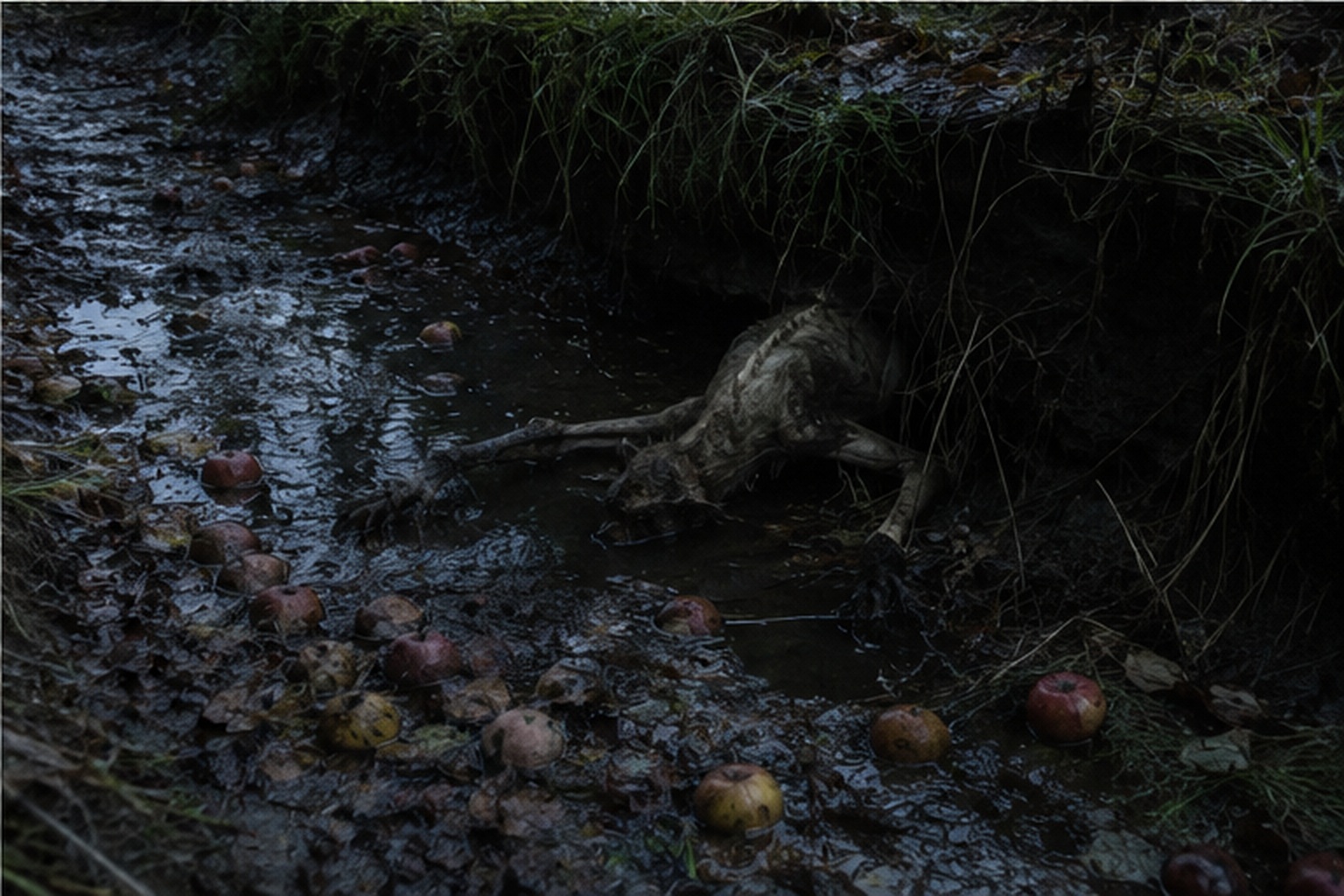
For several nights, neighbors heard movement after midnight. Slow scraping. A wet drag through leaves. Once, something knocked rotting apples down from a low branch and made a soft clicking noise in the dark while it fed.
Nobody went over the fence. One family set a trail camera facing the ditch, but rain fogged the lens, and the only clear images showed raccoons, cats, and one buck with a broken antler. That should have calmed everyone. Instead, it made the blank hours between images feel heavier. The ditch kept its secret by staying ordinary whenever anyone looked directly at it.
What Stayed In The Ditch
By winter, the noises faded. Frost flattened the grass and sealed the mud. The orchard became a black tangle of bare branches, less hidden but no more welcoming.
The neighbors never agreed on what they had seen. Some settled on a sick coyote because that was the nearest sensible answer. Others said no coyote moved with those folded, crooked limbs or carried a body so narrow that its ribs seemed to count themselves under the skin.
The worst part was how little the creature seemed to care about being seen. It did not charge fences or flee across open lawns. It kept to the ditch, using the cut earth as a tunnel, passing behind homes as if following a route older than the houses.
Maybe it was illness wearing an animal down to bones and angles. Maybe it was a deer ruined by injury, glimpsed in pieces until the mind rebuilt it into a monster. Maybe the orchard, with its rot and shadows, turned an ordinary scavenger into something almost mythic.
Or maybe a gaunt hairless crawler moved through that drainage ditch for weeks, animalistic and low, dragging its ribbed body beneath the abandoned apple trees on limbs like crooked sticks.
The neighbors can still point to the place where the flashlight found it by the culvert. Even in daylight, they do not step into the ditch.