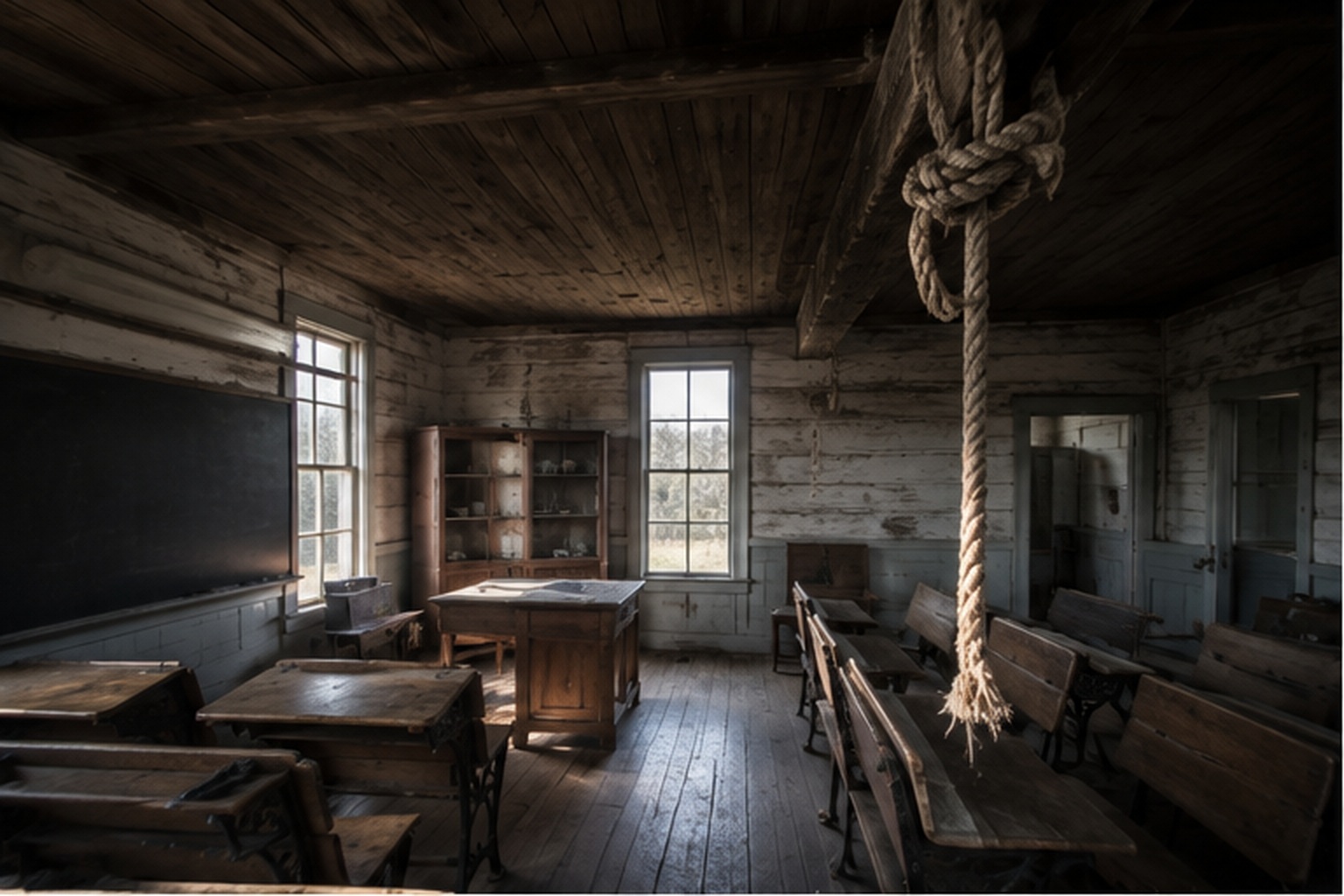
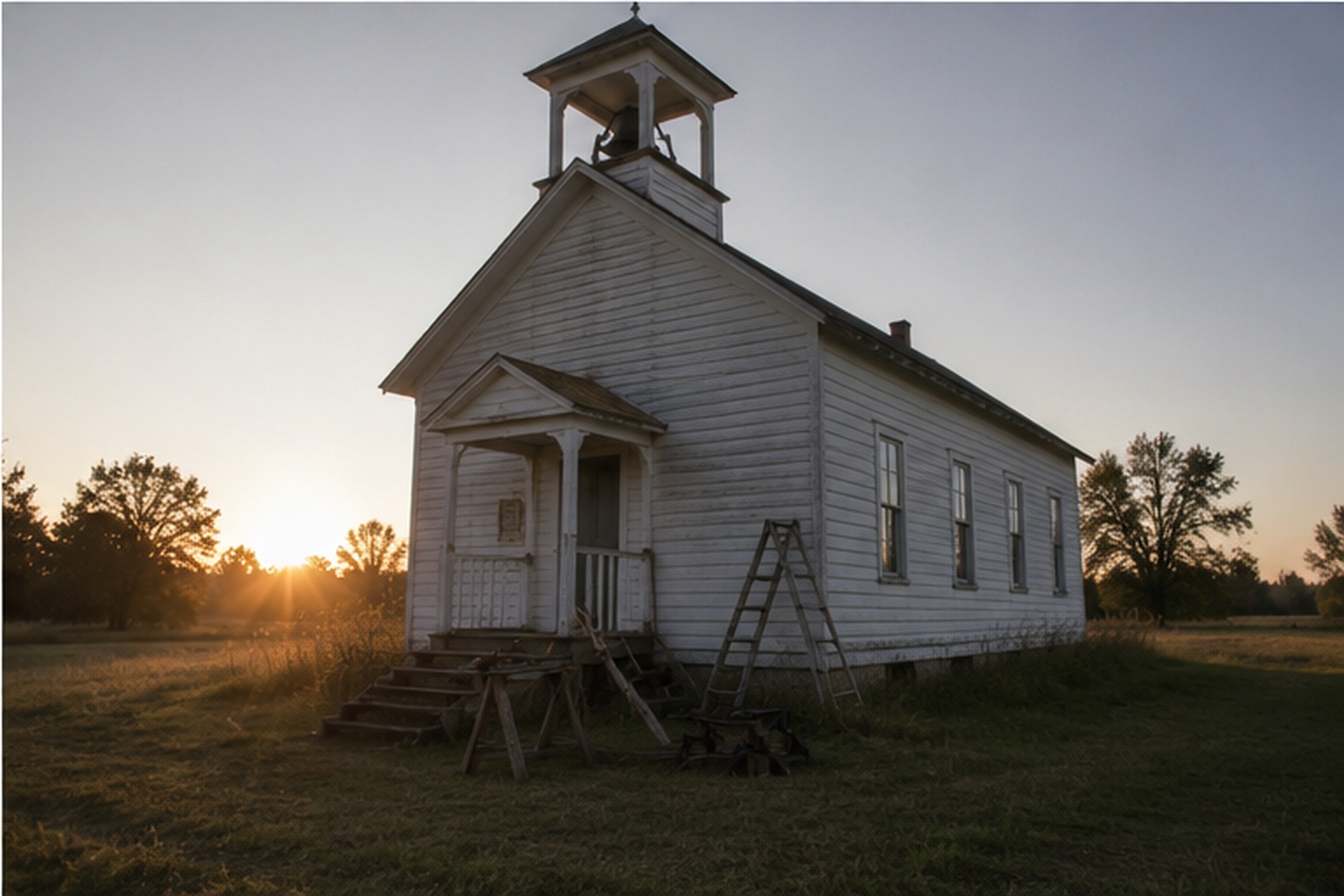
The bell had not rung in decades, but everyone still lowered their voices beneath it.
It hung in the little tower above the one-room schoolhouse, greened with age and quiet enough to seem decorative. The rope came down through a square opening in the ceiling and ended near the teacher's desk, where generations of children had once watched a single pull announce morning lessons, recess, dinner pails, and the long walk home.
During restoration, the volunteers treated the rope carefully. It was brittle in places, darkened by hands that were gone, and too important to replace unless there was no other choice. At the end of each workday, they tied it loosely to a wall cleat so nobody would trip on it or tug the bell by accident.
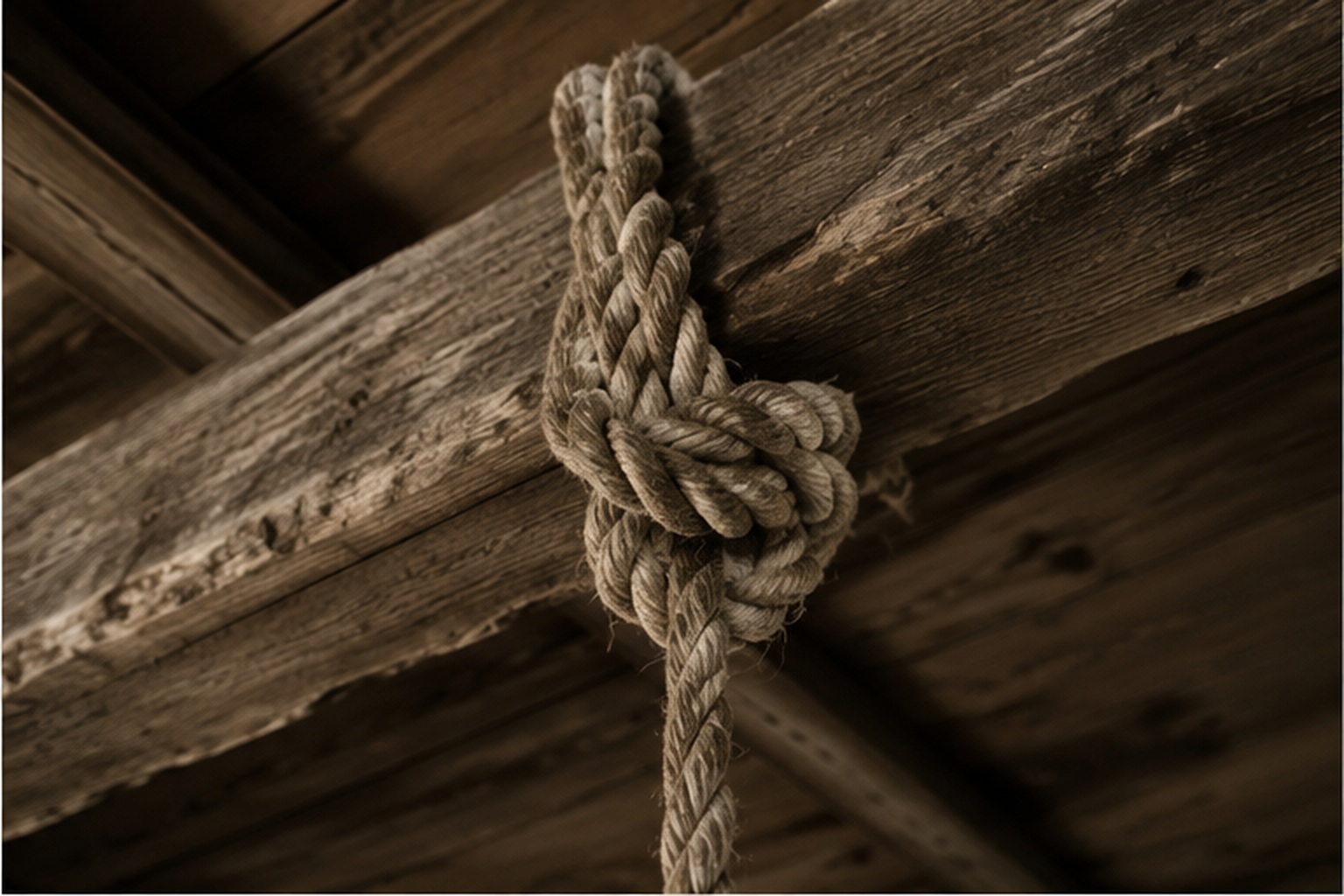
One morning, they found it wrapped around the ceiling beam. Not draped. Not snagged.
Knotted.
The Last Room Left Standing
The schoolhouse stood outside a farming town that had slowly moved its children into brick buildings, then buses, then consolidated districts miles away. The old place survived because it was useful as storage, then sentimental as a landmark, then finally too loved to let collapse.
It had one main room, six tall windows, a blackboard across the front wall, and a stove pipe hole patched with tin.
By the week of the rope incident, the restoration was going well. The roof had been sealed. The windows had been reglazed. The bell tower ladder was repaired but still blocked from visitors. A local history group hoped to open the building for school tours by autumn.
The work was ordinary and dusty, which made the discovery harder to dismiss. They knew how the room looked when they left.
Chalk Dust Under The Tower
The first strange thing was not the rope. It was the floor. A volunteer unlocked the door just after seven and saw pale smears near the teacher's platform, directly beneath the square opening where the rope descended. At first she thought plaster had fallen from the ceiling. Then she saw the smears had edges.
They looked like names written by a finger through chalk dust. Not full sentences. Not clean handwriting. Just old-fashioned first names and initials, scattered in a loose half circle where children might have stood waiting for the bell. Some were common enough to mean nothing. Elsie. Ruth. Thomas. J.W. A few were harder to read, broken by footprints from the first person inside.
The blackboard had been wiped the evening before. A box of chalk was stored in a covered crate. The floor had been swept because a photographer was expected later that week.
No one had planned to write names on the boards, much less on the floor. Then someone looked up.
The Rope Around The Beam
The rope no longer hung straight. It rose from the wall cleat, crossed the air at an angle, looped around the exposed ceiling beam beside the tower opening, and returned through itself in a tight knot. A second twist held it in place. The end dangled above head height, too high for a person standing on the floor to reach without a ladder.
The bell had not moved enough to ring. That detail was important to the volunteers. Nobody in the nearby houses reported hearing it during the night, and the clapper showed no new bright mark from striking the metal.
Whatever happened to the rope had been quiet. That made the knots feel deliberate. A prankster might ring the bell. A child might swing on the rope. An animal might tangle it.
But this looked as if someone had climbed near the ceiling and tied it with patient fingers.
The ladder to the bell tower was still chained. The rear windows were latched. The front door lock showed no fresh damage.
Names From The Old Register
The history group kept photocopies of the school registers in a plastic binder. They had been using them to create a display, matching class photographs to dates when possible.
After the discovery, one volunteer opened the binder and began checking the chalk-dust names. That was when the room changed temperature in everyone's mind. Elsie appeared in the 1911 roll. Ruth appeared in 1912 and 1913. Thomas J. was listed in 1909, absent for two winter weeks, then marked returned. The initials J.W. matched a boy from a family whose farm road no longer existed on maps.
None of those names were rare enough to be astonishing. Any person with access to the binder could have chosen them. Still, the volunteers insisted the binder had been boxed in the storage room overnight, and the names on the floor had not been part of any public display yet.
The schoolhouse seemed to have written its own attendance. Not loudly. Not neatly. Just enough to make people step around the dust.
A Room Built For Children
Old schoolhouses can be charming in daylight and oppressive in silence.
This one had the proportions of a memory. The desks faced forward in strict rows. The teacher's platform lifted one adult above everyone else. The blackboard still carried faint gray scars from lessons erased long ago. Hooks for coats lined the back wall at child height, each one waiting for a cap, a scarf, a lunch pail.
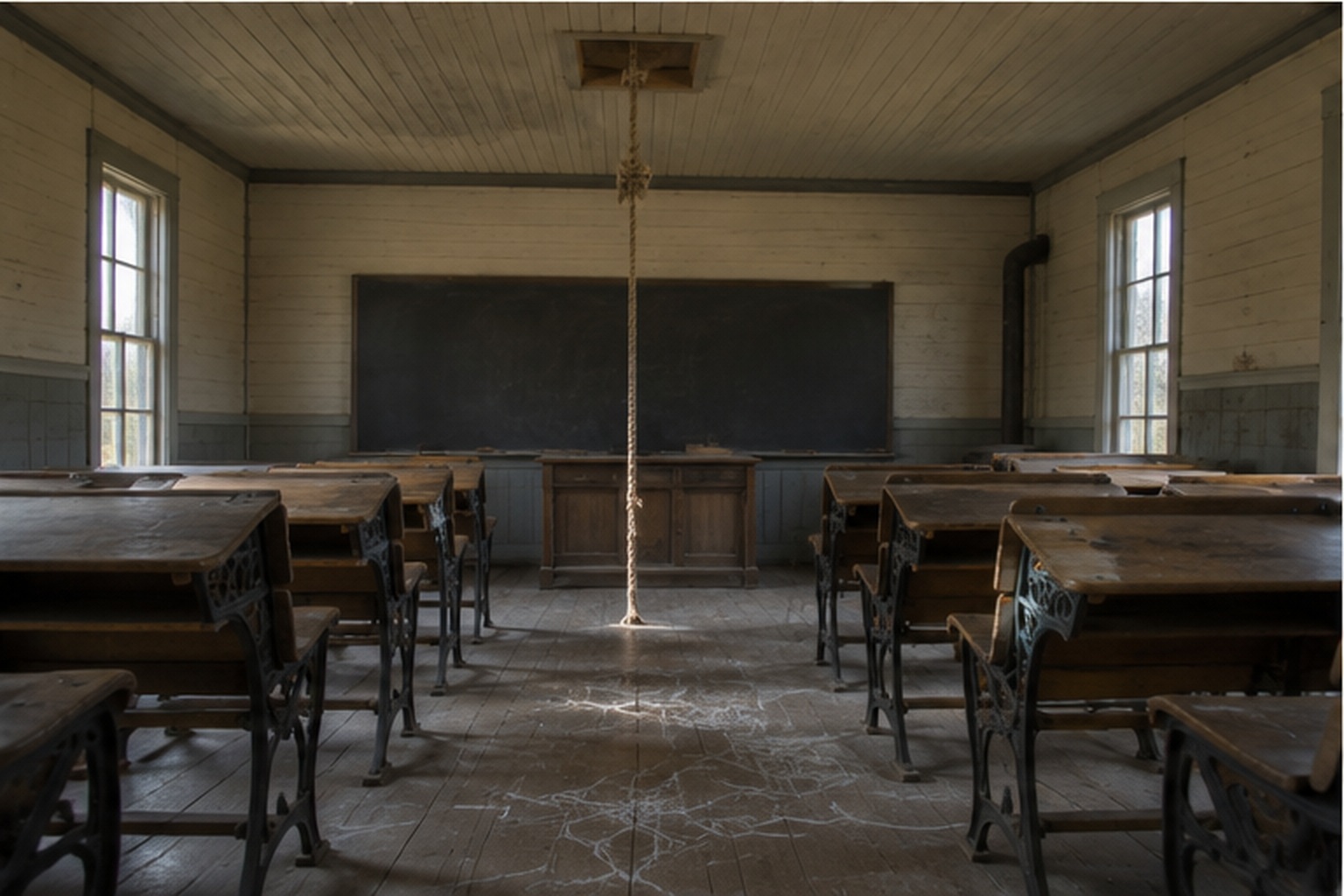
The bell rope was the room's spine. Children would have heard it before they saw the teacher.
Finding it tied out of reach felt like a refusal. As if someone had decided the bell should not call anyone anymore.
Or as if someone who remembered being called by it wanted to hold it still.
The Night Before
The volunteers reconstructed the previous evening because ordinary details suddenly mattered.
Three people had stayed late, sanding a windowsill and sorting donated books. They left together around 6:30 p.m. The sun was still up. The rope was loose, low, and reachable. The floor under the tower was clean enough to show footprints. The front door was locked with a new deadbolt. A volunteer drove past at nine and saw no lights.
By morning, the dust names were there and the rope was high.
No alarm system protected the building. That kept the explanation open. But no one came forward, and nothing else was stolen or disturbed.
Possible Explanations
The most grounded explanation is a prank. The restoration project had been in the local paper, and several people knew volunteers were preparing displays from old school records. A person with a key, curiosity, or enough determination could have entered the building, written names in chalk dust, climbed to the beam, and tied the rope.
The knot itself might not be as impossible as it first appeared. A tall person on a desk could reach higher than expected. The rope could have been thrown over the beam, looped, and tightened from below. Old fibers can hold shapes that look more intentional after being tugged and released. The chalk dust could have come from the blackboard tray, even if the box of chalk stayed covered.
None of that requires anything beyond a human visitor and a sense of theater. Yet the volunteers who found it kept returning to the quietness of the scene. A prank usually wants an audience. This felt private, staged for the building itself.
Taking The Rope Down
They photographed the room for their records, then debated whether to cut the rope free.
No one wanted to damage it. No one wanted to leave it knotted either. Eventually, a carpenter brought in a step ladder and worked the loops loose with both hands while another volunteer steadied the base. The knot was tight enough to leave a dark compressed band in the rope. When it came free, a little dust fell from the beam. The bell above gave one faint movement, not a ring, more like a breath held too long and released.
Everyone heard it because everyone was listening.
The chalk names were swept up last. The volunteer with the broom hesitated over them, then gathered the dust into a paper bag instead of throwing it away. It was labeled with the date and stored with the project notes.
That decision made people laugh nervously. Then nobody laughed.
What Stayed In The Schoolhouse
The schoolhouse did open for tours later that year. Children sat in the desks. Parents took pictures by the blackboard. Retired teachers explained ink wells and primers. The bell rope was shortened slightly and secured more firmly to the wall cleat, though guides still pointed it out as original to the building.
The story was not printed on the display cards.
Volunteers mentioned it only when asked why the rope had a darker band near the top, or why a small paper bag of chalk dust sat in the archive box with a date written on it.
Some visitors smiled and blamed bored teenagers. Some looked up at the tower and moved closer to the door.
The bell remained silent. That is the part people remember. Not a ringing in the night, not a shape in a window, not a message on the board. Just a rope tied where no one had left it, and names appearing under the place where children once gathered when called.
A schoolhouse is built to remember attendance. Maybe the dust did what the register once did. Maybe someone living wanted to stir the town's imagination. Or maybe, for one night, the old room counted its class again and tied off the bell before morning could dismiss them.